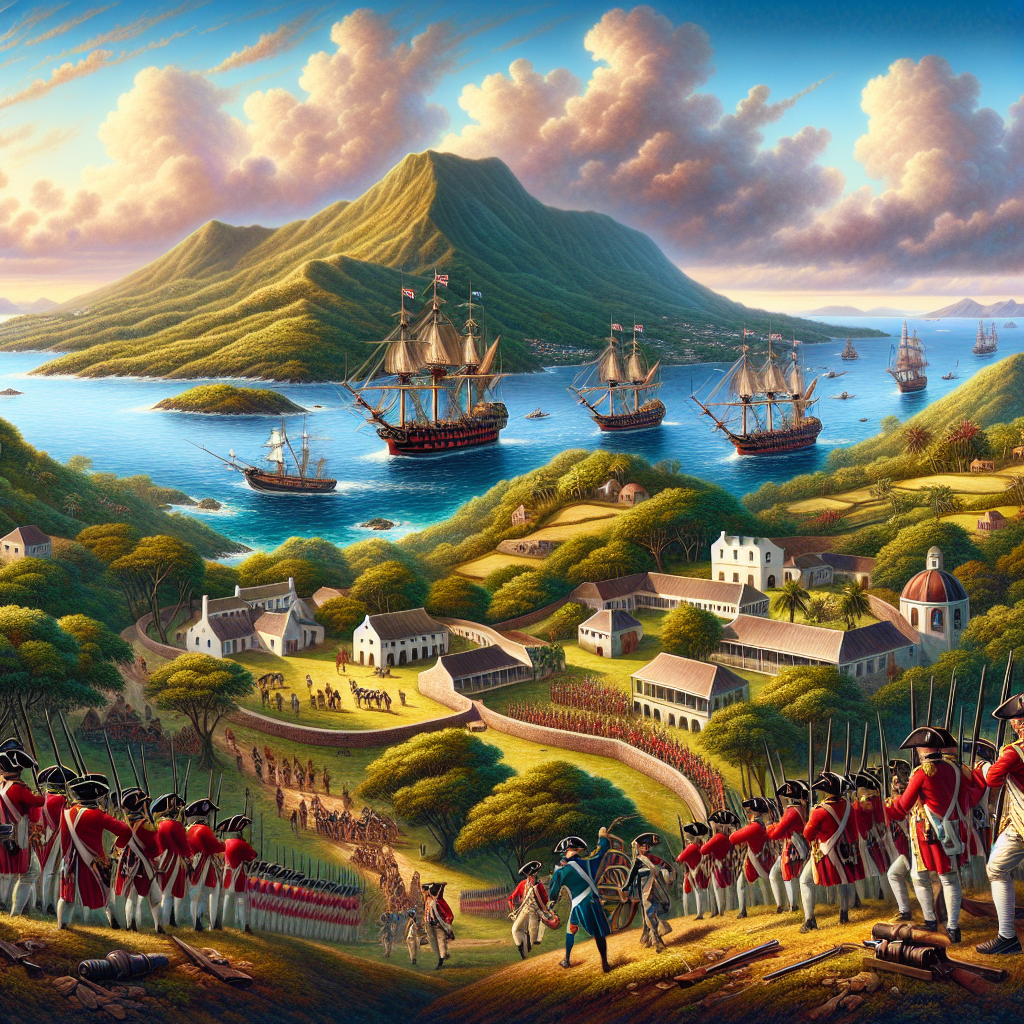
Saint Kitts and Nevis, a tropical paradise nestled in the Caribbean Sea, is renowned today for its pristine beaches, vibrant culture, and lush landscapes. Yet beyond its appealing tourist image lies a rich historical tapestry woven through centuries of colonial tension, strategic alliances, and battles. One of the most fascinating yet lesser-known chapters in the history of Saint Kitts is its involvement in the American Revolutionary War.
The small island of Saint Kitts played a surprisingly pivotal role in the conflict between Britain and its thirteen American colonies. In understanding Saint Kitts’ significance during this period, it’s essential to recognize the broader geopolitical landscape of the Caribbean during the 18th century, which was a hotbed of colonial rivalries and economic interests.
Often, the American Revolution is portrayed as a conflict confined primarily to the thirteen colonies and the Atlantic Ocean. However, the Caribbean, including the islands of Saint Kitts and Nevis, was also a central theater of war. Its sugar plantations were financial powerhouses, making these islands highly coveted prizes in the conflict among European powers.
This article aims to delve into the role of Saint Kitts during the American Revolutionary War, exploring its strategic importance, key events, and lasting impacts on the island’s history and culture. Join us on this historical journey as we uncover the critical involvement of Saint Kitts in shaping the outcome of the American Revolutionary War and, subsequently, its own destiny.
The Strategic Importance of Saint Kitts
Saint Kitts was a strategic gem in the Caribbean during the 18th century. The island’s position made it a central point in the trade routes of the Atlantic. Its fertile land was used primarily for sugar cane production, an industry that made it one of the richest colonies of the British Empire. The economic importance of sugar heightened the strategic value of Saint Kitts, making it a target for rival powers.
Located at the northern end of the Lesser Antilles, Saint Kitts’ proximity to both North and South America rendered it a critical logistical point for British military operations. Holding Saint Kitts meant controlling a crucial node of trade, supplies, and reinforcements. This situation exemplified why the British were determined to retain it despite growing challenges from rival colonial powers.
The presence of Brimstone Hill Fortress, often referred to as the “Gibraltar of the West Indies,” underscores the island’s strategic importance. This formidable stronghold was constructed by enslaved Africans under British command to serve as a bastion against French and Spanish forces. Its massive stone walls and elevated position signaled the determination of the British to maintain their hold over the island.
Additionally, Saint Kitts served as a base for privateers and the Royal Navy, who disrupted the supply lines and commerce of enemy nations. The island’s harbors provided safe anchorage for ships, making it a vital resupply point. Moreover, naval battles in the Caribbean seas often hinged on control of such strategically placed islands.
Saint Kitts and the French Involvement
The American Revolutionary War saw France entering the conflict in 1778, lending support to the American colonies in their quest for independence from Britain. As part of their military strategy, the French sought to weaken British forces by targeting their overseas colonies, including those in the Caribbean. Saint Kitts, due to its strategic value, became a focal point of French military efforts.
In 1782, the French, led by Admiral de Grasse, launched a significant offensive against Saint Kitts. They aimed not only to capture the island but to disrupt British control over the Caribbean and its vital resources. The French fleet’s arrival brought significant firepower and several thousand troops, making their intentions clear.
The Battle of Brimstone Hill, one of the most notable engagements during this period, saw French forces laying siege to the British-held fortress. Despite the formidable British defenses and the valor of the garrison, the French overwhelmed them with sheer numbers and coordinated assaults. The defenders, led by General Fraser, held out bravely but were ultimately forced to surrender after a prolonged and grueling siege.
The capture of Brimstone Hill and the subsequent French control of Saint Kitts marked a significant moment in the American Revolutionary War. It highlighted the broader global stakes in the revolution and the interconnected interests of European colonial powers. While the French occupation was relatively short-lived, it underscored the island’s strategic importance.

The Treaty of Paris and Its Impact
The Treaty of Paris, signed in 1783, brought an official end to the American Revolutionary War. The treaty had far-reaching consequences, not just for the American colonies gaining independence, but also for the Caribbean islands involved in the conflict. For Saint Kitts, the treaty was a turning point that affected its colonial status and future development.
Under the terms of the treaty, Saint Kitts was returned to British control, reaffirming its status as a British colony. The island’s economy continued to revolve around sugar production, with plantations remaining central to its prosperity. The return of British governance meant a restoration of pre-war administrative structures and economic policies.
The treaty also influenced the geopolitical landscape of the Caribbean, with several territorial adjustments among European powers. For instance, nearby Nevis and other British Caribbean territories were similarly reaffirmed under British control, while French territories saw minor adjustments. This rebalancing aimed at stabilizing the region and preventing further colonial conflicts.
Importantly, the return of Saint Kitts to British rule did not erase the impacts of the conflict. The war had inflicted damages on the island’s infrastructure and economy, necessitating rebuilding efforts. Additionally, the island saw a heightened awareness of its strategic importance, leading to continued military investments such as the fortification of Brimstone Hill.
Legacy of the American Revolutionary War on Saint Kitts
The legacy of the American Revolutionary War on Saint Kitts extends beyond immediate military and economic consequences. The war fostered a sense of resilience among the island’s inhabitants, who endured sieges and saw their territories contested by global powers. This period also cemented Saint Kitts’ role as a critical site within the British Empire.
One lasting legacy of the conflict was the further entrenchment of the plantation economy. Despite the war’s disruptions, the demand for sugar and other Caribbean commodities continued to fuel the plantation system. This economic model, heavily reliant on slave labor, had profound social and cultural implications, shaping the island’s demographic and cultural landscape.
The presence of Brimstone Hill Fortress as a historical monument serves as a physical reminder of Saint Kitts’ significant military role during the American Revolutionary War. Today, the fortress stands as a UNESCO World Heritage site, attracting visitors interested in the island’s rich history. It offers a tangible connection to the past and insights into the island’s strategic military importance.
Moreover, Saint Kitts’ involvement in the conflict contributed to a broader understanding of Caribbean history as integral to global historical events. It emphasizes the interconnectedness of regions and the global stakes of the American Revolutionary War. The island’s story during this period reflects themes of resilience, strategic importance, and the impacts of colonialism.
Saint Kitts Today: A Historical and Cultural Richness
Today, Saint Kitts stands as a testament to its rich historical and cultural heritage. The island’s involvement in the American Revolutionary War is just one chapter in a long and diverse history. Visitors to Saint Kitts can explore numerous historical sites, including Brimstone Hill Fortress, which offers a panoramic view of the island and an immersive historical experience.
The legacy of the 18th-century conflicts is evident in the island’s architecture, with colonial buildings and military structures scattered throughout the landscape. These sites provide insights into the past and the various influences that have shaped Saint Kitts over the centuries.
Saint Kitts also boasts a vibrant cultural scene, reflecting its diverse heritage. The island’s population is a blend of African, European, and Caribbean influences, creating a unique cultural mosaic. Local festivals, music, and cuisine celebrate this diversity, offering visitors a taste of the island’s rich cultural traditions.
The island’s tourism industry capitalizes on its historical significance, offering guided tours and educational programs about its role in global historical events. This focus on historical tourism provides both an appreciation of the past and economic benefits for the local community.
Conclusion
Saint Kitts’ involvement in the American Revolutionary War highlights the island’s strategic importance and the broader global context of the conflict. The island’s role during this period was marked by sieges, battles, and shifting colonial powers, all of which left an indelible mark on its history and development.
The legacy of this era is evident in Saint Kitts’ rich historical and cultural landscape. From the imposing Brimstone Hill Fortress to the vibrant cultural traditions of its people, the island offers a fascinating glimpse into its past while embracing its diverse heritage. Visitors to Saint Kitts can explore this legacy through historical sites and cultural experiences, gaining a deeper appreciation of the island’s role in shaping global history.
For those interested in the intricate tapestry of Caribbean history, Saint Kitts offers a unique opportunity to explore the interconnectedness of regions and the global stakes of historical events. Its involvement in the American Revolutionary War serves as a reminder of the island’s strategic importance and its enduring resilience.
In conclusion, Saint Kitts’ role in the American Revolutionary War is a testament to its historical significance and the broader geopolitical dynamics of the 18th century. The island’s story during this period underscores themes of strategic importance, resilience, and cultural richness, making it a fascinating destination for history enthusiasts and travelers alike.