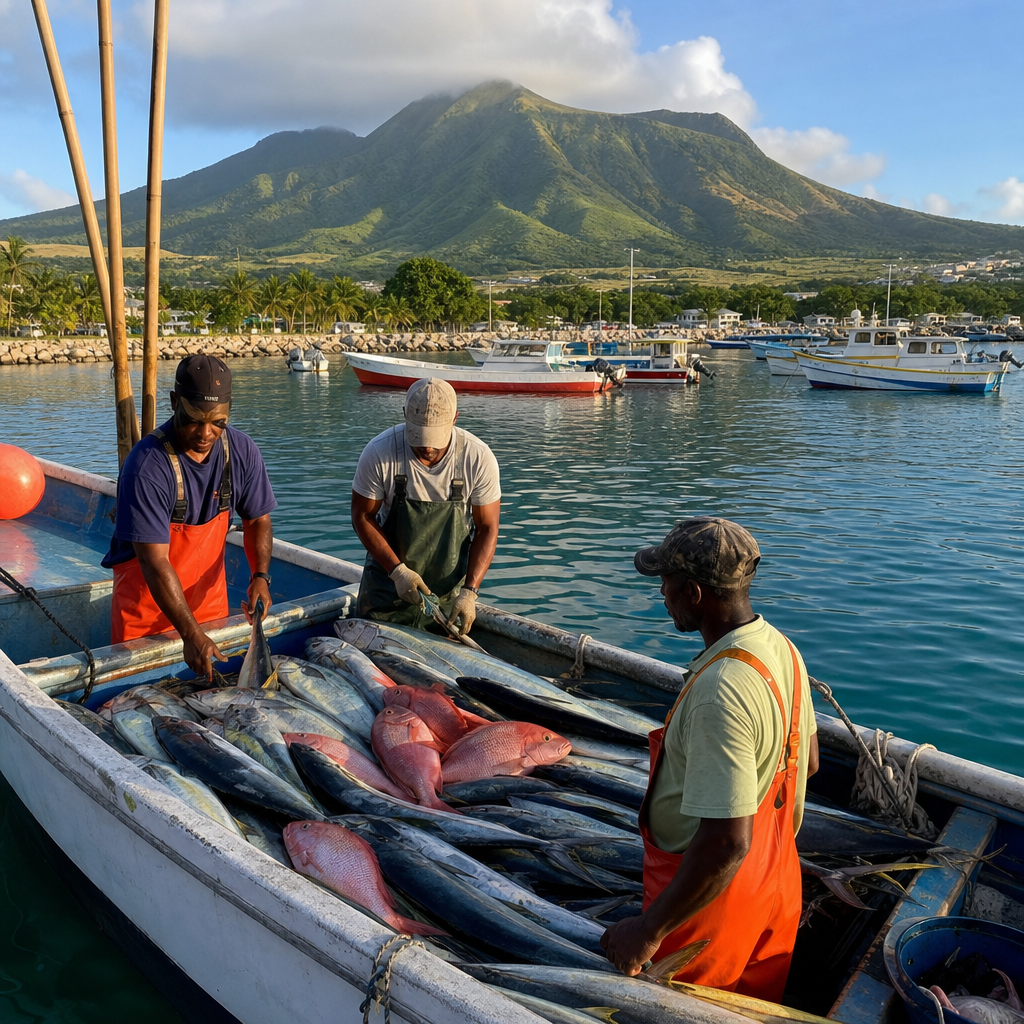
Exploring investment opportunities in Saint Kitts’ fisheries starts with understanding a simple fact: this small island economy sits in productive Caribbean waters, imports a meaningful share of its food, welcomes millions of tourism-related visitors through hotels and cruise traffic, and therefore offers a practical opening for investors who can improve seafood supply, processing, cold-chain logistics, aquaculture, and export readiness. In this context, fisheries means more than fishers landing snapper or lobster. It includes harvesting, vessel services, ice production, handling, storage, transportation, value-added processing, mariculture, digital traceability, restaurant supply contracts, training, and marine resource management. I have worked with island food systems and coastal supply chains long enough to know that fisheries investment succeeds when it is matched to local demand patterns, infrastructure limits, and conservation rules rather than broad regional assumptions. Saint Kitts and Nevis matters because it combines a blue-economy setting with a service-driven economy. Tourism creates steady institutional demand from resorts, marinas, caterers, and restaurants. At the same time, governments across the Caribbean increasingly support food security, climate resilience, and import substitution. For investors, that combination can support commercially viable ventures that also solve visible bottlenecks. The strongest opportunities are rarely speculative offshore plays. They are disciplined, mid-scale businesses that make seafood more available, safer, more consistent, and more valuable from boat to plate.
Saint Kitts’ fisheries sector is best viewed as a portfolio of linked opportunities rather than a single industry bet. Capture fisheries remain important, especially for reef and pelagic species, but the larger commercial story often sits around them. In practical terms, investors should evaluate where value is lost today: inconsistent landings, limited cold storage, post-harvest spoilage, fragmented purchasing, underdeveloped branding, and uneven compliance with export-grade handling standards. They should also ask where demand is already proven. Hotels need reliable quality and year-round supply. Supermarkets need packaged product with predictable weights and shelf life. Export buyers need traceability, hazard controls, and dependable shipment schedules. Local consumers increasingly respond to convenience formats such as cleaned fillets, smoked fish, marinated portions, and ready-to-cook packs. These are not abstract trends; they are recurring purchase behaviors that shape margins. The reason this matters for a hub article is that fisheries in Saint Kitts touches many miscellaneous investment tracks at once: equipment financing, marina services, renewable energy for ice plants, vocational training, waste utilization, software, insurance, and sustainability certification. Investors who understand those intersections can build businesses that are both resilient and easier to scale.
Market demand, species mix, and commercial reality
The first question most investors ask is straightforward: who will buy the product, and in what form? In Saint Kitts, seafood demand comes from households, hospitality operators, retailers, and, in some cases, export channels. The hospitality segment is particularly important because purchasing managers want consistency as much as price. A hotel kitchen can adapt to seasonal species availability, but it cannot tolerate unreliable delivery times, weak cold-chain discipline, or poor fillet yields. That creates room for suppliers who aggregate landings, grade product, chill immediately, and sell according to specification. In many island markets I have seen, a business that simply standardizes size, packaging, and delivery windows can win contracts from larger food-service buyers even before adding complex processing.
Species mix also shapes the investment case. Caribbean fisheries commonly include reef fish such as snapper and grouper, coastal pelagics, conch where permitted, and spiny lobster under regulated conditions. Offshore pelagics like mahi-mahi, tuna, and wahoo often present attractive value because they serve both local restaurants and premium retail. The commercial advantage of pelagic species is not only price; it is also the possibility of cleaner filleting lines, stronger menu recognition, and easier branding around freshness. However, seasonality, weather exposure, and fuel costs can quickly change profitability. A serious investor builds models around average annual landings, weather-disrupted fishing days, spoilage rates, and realistic ex-vessel prices rather than best-case assumptions.
Import substitution is another important demand driver. Many Caribbean islands import frozen seafood because local supply is fragmented or inconsistent. That means a domestic processor in Saint Kitts does not need to conquer export markets first. It can start by replacing part of the hotel and supermarket demand now met by imported products. If local product can match food safety, trimming standards, and delivery reliability, buyers often prefer it for freshness, provenance, and marketing value.
Where the strongest investment opportunities sit
The most attractive opportunities usually fall into five categories: post-harvest infrastructure, value-added processing, aquaculture and mariculture, fisheries services, and by-product utilization. Post-harvest infrastructure includes ice plants, blast chilling, insulated transport, refrigerated storage, and landing-site handling improvements. These assets directly reduce spoilage and raise realized prices. In one island project I advised, installing disciplined icing and insulated transport improved usable yield enough to change processor margins within a single season. That kind of operational gain matters more than optimistic volume forecasts.
Value-added processing offers another clear path. Instead of selling whole fish into a volatile market, processors can create fillets, vacuum-packed portions, smoked products, seasoned cuts, fish cakes, and frozen meal components. This serves local retail and tourism buyers that need labor-saving formats. Processing also smooths revenue by extending shelf life, though it requires strict hazard control, trained staff, and dependable power. A facility designed around Hazard Analysis and Critical Control Points principles, with documented sanitation standard operating procedures, is not optional if the goal includes premium buyers or export access.
Aquaculture and mariculture deserve careful consideration, but with measured expectations. Warm-water species culture, sea moss farming, shellfish where conditions permit, and pilot recirculating aquaculture systems can diversify supply and reduce pressure on wild stocks. The opportunity is real, yet site selection, water quality, feed economics, disease control, and storm resilience determine success. Small island aquaculture fails when it copies large continental models without adjusting for energy costs and logistics. The better approach is niche production tied to specific buyers, strong biosecurity, and modular expansion.
| Opportunity | Why it fits Saint Kitts | Main risk | What reduces the risk |
|---|---|---|---|
| Cold storage and ice production | Improves quality for hotels, retailers, and exporters | High energy costs | Solar support, efficient compressors, demand contracts |
| Seafood processing | Creates higher-margin retail and food-service products | Food safety failures | HACCP systems, staff training, audited procedures |
| Mariculture or aquaculture | Adds local supply and supports food security goals | Disease, storms, feed cost | Pilot scale, resilient design, species selection |
| Fishing vessel services | Supports the fleet with maintenance, gear, and electronics | Small domestic market | Serve regional vessels and marina traffic |
| Waste utilization | Turns skins, frames, and trimmings into value | Low volumes | Aggregate supply across processors and hotels |
Fisheries services are often overlooked. Repair yards, gear supply, marine electronics installation, outboard maintenance, insulated fish boxes, fuel management systems, and digital catch-record platforms all solve practical business problems. A service business may face fewer biological risks than a harvesting venture and still benefit from fisheries growth. By-product utilization is another miscellaneous area with genuine potential. Fish frames and trimmings can support stocks, pet food ingredients, compost inputs, or specialty products such as collagen-focused materials at the right scale. The volumes in Saint Kitts may not support a large rendering facility, but targeted micro-processing can still create incremental revenue while reducing waste disposal costs.
Regulation, sustainability, and operating standards
Any investor entering Saint Kitts’ fisheries must treat regulation and sustainability as part of the business model, not an external constraint. Fishing licenses, closed seasons, gear restrictions, marine protected areas, sanitary permits, labor rules, and environmental approvals all affect project design. This is especially true for spiny lobster, conch, and nearshore species that are sensitive to overfishing. Investors should verify current national rules and align projects with the wider standards used across Caribbean fisheries governance, including catch documentation, legal harvest sizes, and habitat protection. A venture built on non-compliant landings may show short-term cash flow, but it is not bankable and will struggle with institutional buyers.
Sustainability also has a direct commercial benefit. Hotels and premium restaurants increasingly ask where seafood was caught, whether it was in season, and how it was handled. Traceability systems do not need to be complex to be valuable. Even a disciplined lot-coding process linked to vessel, landing date, species, weight, and buyer can improve inventory control and buyer trust. For export-facing businesses, digital records, temperature logs, sanitation records, and chain-of-custody documentation become essential. These systems create management visibility, reduce disputes, and support insurance and financing conversations.
Climate resilience belongs in the same discussion. Hurricanes, storm surge, coral stress, and warming seas affect fish availability and physical assets. Investors should choose building locations carefully, elevate critical equipment, diversify species exposure, insure inventories, and design backup power for refrigeration. In island fisheries, resilience planning is not a premium feature; it is core infrastructure.
Financing models, partnerships, and execution strategy
Most successful fisheries investments in small island states use blended financing logic even when they are privately led. Commercial debt can fund equipment with clear cash flow, such as ice machines, delivery vehicles, or processing lines. Equity often suits ventures with longer development curves, such as aquaculture. Grants or concessional programs may support training, renewable energy integration, traceability software, or resilience upgrades because those features produce public benefits as well as private returns. Investors should map available support from development finance institutions, Caribbean regional programs, export agencies, and climate-related funds instead of relying only on local bank debt.
Partnerships are equally important. A processor without supply agreements with fishers will struggle. A mariculture venture without hospitality off-take discussions will scale too early. A cold-chain operator without retailer and restaurant commitments may underutilize assets. The strongest execution strategy usually begins with a narrow commercial wedge: one buyer segment, a few species, a documented quality system, and disciplined unit economics. Expand only after demonstrating reliable procurement, yields, and sales collection. I have seen island seafood businesses fail not because demand was absent, but because founders invested in oversized facilities before securing supply discipline and route density.
For investors exploring business and investment opportunities in Saint Kitts, fisheries offers a practical route into the blue economy with visible social and commercial upside. The sector can create jobs, reduce food import dependence, support tourism, and reward businesses that bring order to fragmented supply chains. The best opportunities are not generic. They are specific: cold storage that cuts spoilage, processing that meets buyer specifications, aquaculture pilots designed for island conditions, service businesses that keep boats productive, and traceability systems that make local seafood more trustworthy. Success depends on realistic demand mapping, regulatory compliance, resilient infrastructure, and partnerships with fishers, buyers, and public agencies. If you are evaluating Saint Kitts seriously, start with a site visit, buyer interviews, landing data, and a cold-chain audit. Then build the investment case around the bottlenecks you can measurably fix.
Frequently Asked Questions
1. Why is Saint Kitts’ fisheries sector attracting investor interest?
Saint Kitts’ fisheries sector is attracting interest because it sits at the intersection of food security, tourism demand, and import substitution. As a small island economy in the Caribbean, Saint Kitts has access to productive marine resources while also relying on imported food to meet a portion of domestic consumption. That combination creates a clear commercial opening: investors who can improve the local seafood value chain may be able to replace imports, serve hotels and restaurants more reliably, and build higher-value products for regional or international markets.
What makes the opportunity especially practical is that fisheries in Saint Kitts should not be viewed narrowly as only the catching of fish. The broader ecosystem includes landing infrastructure, ice production, cold storage, transportation, processing, packaging, traceability, quality control, aquaculture, and wholesale distribution. In many island markets, the challenge is not simply harvesting seafood; it is moving high-quality product efficiently from sea to buyer with minimal spoilage and consistent standards. Investors who solve those operational bottlenecks often create value faster than those focused only on increasing catch volume.
Tourism also strengthens the case. Saint Kitts benefits from hotel demand, restaurant demand, and cruise-related visitor traffic, all of which support year-round consumption of seafood products. Buyers in the hospitality sector typically want dependable supply, product uniformity, and food-safety assurance. That means there is room for well-managed businesses that can aggregate supply from local fishers, process it to consistent specifications, and deliver it in a way that meets commercial kitchen requirements. In short, the sector is attractive not because it is speculative, but because it addresses visible, recurring market needs.
2. What kinds of investment opportunities exist beyond simply catching more fish?
The strongest opportunities often lie beyond primary harvest. While vessel upgrades, gear modernization, and landing efficiency can matter, many of the most scalable and resilient investments are found in the supporting infrastructure that turns raw landings into market-ready products. Cold-chain logistics is a major example. Investments in ice plants, refrigerated storage, insulated transport, and temperature-controlled handling can dramatically reduce spoilage, improve product quality, and extend the selling window for local seafood. In island environments, these improvements can have an outsized commercial impact.
Seafood processing is another promising area. A business that can clean, fillet, portion, vacuum-pack, freeze, or otherwise prepare seafood for hotels, supermarkets, and export buyers can capture more value than one that sells only whole fish at landing. Processing allows differentiation by product type, quality grade, and customer segment. It also creates opportunities for branding, better inventory management, and use of species that may otherwise be under-marketed. For investors, this can mean stronger margins and more diversified revenue streams.
Aquaculture is also worth close attention. Depending on species selection, site conditions, environmental management, and regulatory approval, aquaculture can offer a more controlled production model than wild capture. It may help stabilize supply, reduce pressure on wild stocks, and support consistent delivery to hospitality clients. In addition, there may be opportunities in hatcheries, feed supply, technical services, and aquaculture-related equipment.
Other attractive niches include export-readiness services, seafood traceability systems, quality testing, marine input supply, and digital marketplace platforms that connect fishers to institutional buyers. Investors can also explore integrated models, such as combining procurement, cold storage, processing, and distribution into one operation. In Saint Kitts, the opportunity is often greatest where a business can improve reliability, efficiency, and product quality across the entire seafood chain rather than focusing on only one step.
3. How does tourism influence the commercial potential of fisheries investments in Saint Kitts?
Tourism is one of the most important demand drivers for fisheries-related investment in Saint Kitts because it creates a concentrated and relatively predictable market for seafood. Hotels, resorts, restaurants, and food-service operators serving visitors need fresh or properly frozen seafood on a regular basis. Cruise traffic can also increase food-service activity directly and indirectly by supporting broader hospitality and retail consumption. This steady demand can make fisheries investments more bankable, especially when compared with relying solely on informal local market sales.
From an investor’s perspective, tourism demand does more than increase volume; it raises the importance of quality, consistency, and presentation. Hospitality buyers generally prefer suppliers who can meet precise specifications for size, cut, cleanliness, packaging, and delivery timing. They also care deeply about food safety and reliability, since menu planning and guest experience depend on both. A fisheries business that can meet those expectations may command stronger pricing and build long-term commercial relationships.
Tourism also supports value-added products. Rather than selling only whole fish, businesses can target fillets, portion-controlled seafood, premium local catch selections, chef-ready products, and branded items that emphasize freshness and local sourcing. There is growing appeal in destination markets for seafood that is both authentic and professionally handled. This allows investors to position Saint Kitts seafood not just as a commodity, but as part of the island’s visitor experience and culinary identity.
That said, tourism-linked demand should be approached strategically. Visitor flows can be seasonal, and hospitality buyers often require dependable procurement systems. Investors should therefore focus on supply planning, cold-chain resilience, and diversified sales channels. A business that serves hotels while also selling to retailers, distributors, or export markets is often better insulated from fluctuations. In practical terms, tourism strengthens the opportunity, but the best investment models are those that translate that demand into efficient, year-round operations.
4. What are the main risks investors should evaluate before entering Saint Kitts’ fisheries sector?
As with any island-based primary sector, fisheries investment in Saint Kitts comes with a set of risks that should be assessed carefully. The first is supply variability. Wild capture fisheries are affected by seasonality, weather conditions, stock availability, and vessel capacity. Investors who assume uninterrupted landings may run into difficulties if they do not build realistic procurement models. This is why many successful fisheries businesses focus on aggregation, storage, diversified species sourcing, or supplemental aquaculture rather than depending on a single harvest pattern.
Infrastructure and utility risk is another key consideration. Cold storage, processing, and transportation systems depend on reliable power, equipment maintenance, and efficient logistics. On islands, interruptions in energy supply, imported spare parts, or transport scheduling can affect operations quickly. Investors should include backup systems, maintenance planning, and conservative assumptions in their business models.
Regulatory and environmental considerations are equally important. Fisheries are naturally linked to marine resource management, licensing, food safety rules, and environmental protections. Investors should understand the legal framework for harvesting, processing, aquaculture development, coastal use, export compliance, and sanitary standards before committing capital. A well-structured project should align profitability with sustainable resource use, not work against it. Businesses that build traceability, responsible sourcing, and compliance into operations from the start are usually better positioned for long-term success.
Market risk should also be examined. While local and tourism demand can be attractive, customer concentration can become a weakness if a business relies too heavily on a small number of hotel or wholesale accounts. Pricing pressure, import competition, and changes in visitor patterns can affect revenue. For that reason, investors should test multiple sales channels and ensure that product offerings match actual market needs rather than assumptions. In short, the risks are manageable, but only with disciplined due diligence, operational planning, and a clear understanding of island-market realities.
5. What does a strong investment strategy for Saint Kitts’ fisheries actually look like?
A strong investment strategy in Saint Kitts’ fisheries usually begins with solving a specific commercial problem rather than chasing a broad idea. For example, instead of entering the market with a vague plan to “invest in seafood,” a stronger approach would identify a gap such as inconsistent cold storage, insufficient processing capacity, unreliable hotel supply, limited traceability, or underdeveloped aquaculture infrastructure. The best projects tend to be those that improve efficiency and quality in a measurable way and can demonstrate immediate relevance to local buyers.
In practice, a sound strategy often includes three elements: dependable sourcing, value-added handling, and diversified sales. Dependable sourcing may involve partnerships with local fishers, supply agreements, collection systems, and quality-based procurement standards. Value-added handling could include icing, grading, filleting, freezing, packaging, and inventory management. Diversified sales means serving more than one end market, such as hospitality, retail, institutional buyers, and potentially exports. This reduces vulnerability and helps smooth revenue throughout the year.
Investors should also think in phases. A phased approach might begin with aggregation and cold-chain improvements, move into processing once volumes are stabilized, and later expand into branded products or aquaculture. This allows capital to be deployed more carefully, operating data to be gathered early, and market relationships to be built before scaling. It is often a smarter path than overbuilding infrastructure before supply and demand are fully validated.
Finally, the strongest strategies are those rooted in partnership and sustainability. Working with fishers, hospitality buyers, government stakeholders, and technical experts can improve execution and market fit. At the same time, investors should emphasize responsible harvesting, food safety, workforce training, and environmental stewardship. In a market like Saint Kitts, long-term value is created by building a reliable seafood system that supports local supply, meets tourism demand, and positions the island for higher-value participation