Film and media production in Saint Kitts is one of the Caribbean’s most overlooked business and investment opportunities, combining cinematic landscapes, English-speaking talent, political stability, and a growing need for locally rooted content services. In practical terms, film and media production includes feature films, television, commercials, documentaries, streaming content, animation support, post-production, branded content, event broadcasting, and the network of suppliers that makes shoots possible. When investors evaluate creative industries, they usually focus on tax incentives, crew depth, permitting speed, logistics, and market access. Saint Kitts deserves attention on each point. I have worked with location-based media planning across small island markets, and the same pattern keeps appearing: destinations with strong visuals and manageable scale can compete effectively when they package reliability with flexibility. That is exactly where Saint Kitts has room to grow. As a hub topic within business and investment opportunities, this article maps the miscellaneous opportunities surrounding production itself, from equipment rental and studio conversion to training, hospitality partnerships, digital distribution, and service exports. For entrepreneurs, the market matters because production spending ripples quickly across transport, accommodation, catering, construction, security, marketing, and technology. For policymakers and developers, it matters because intellectual property creates value beyond a single visitor season. For local businesses, the opportunity is not limited to attracting one major film. It is about building a repeatable ecosystem that serves regional advertising, corporate media, music videos, destination marketing, live events, and international co-productions.
Why Saint Kitts can compete as a production destination
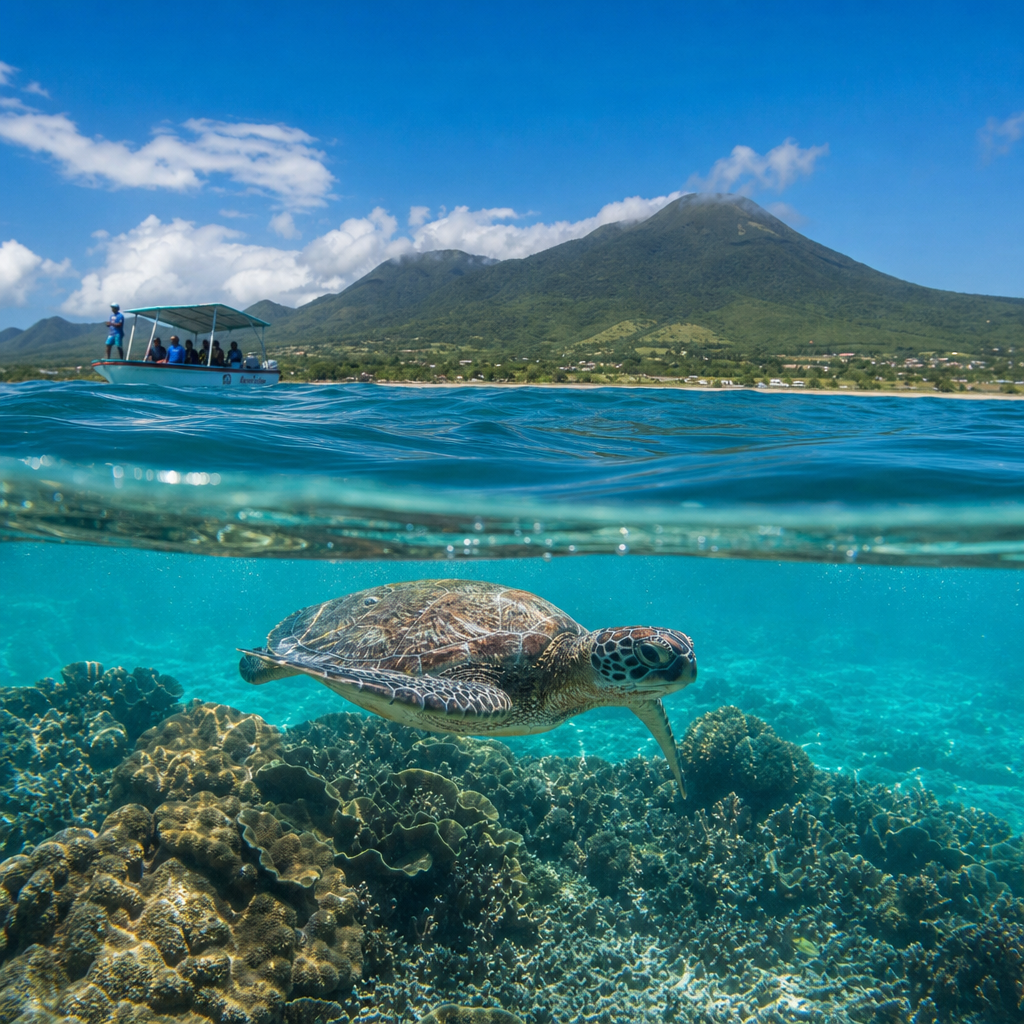
Saint Kitts has several structural advantages that are easy to underestimate if the discussion stays limited to headline tourism. First, the island offers highly varied backdrops within short travel times: beaches, rainforest, colonial architecture, luxury resorts, marinas, volcanic terrain, village streets, and elevated viewpoints. That density reduces company moves, which is a major budget saver in production. A commercial team can capture resort, urban, and nature scenes in one schedule without the transport complexity common in larger jurisdictions. Second, English is the primary business language, which lowers coordination friction for international clients. Third, the East Caribbean dollar’s peg to the US dollar supports predictable budgeting, a detail producers value because exchange volatility can destroy a tight shooting plan.
Connectivity also matters. While Saint Kitts is not a giant aviation hub, direct and connecting flights through regional gateways make it accessible for medium-sized productions, agency crews, documentary teams, and executive decision makers conducting recce trips. Reliable high-end accommodation is already present because of the tourism sector, and that matters more than many new investors expect. In my experience, line producers often reject visually ideal locations because they cannot house clients, agency representatives, or department heads at acceptable standards. Saint Kitts can. Add a compact geography, a service-oriented hospitality culture, and an established international brand image, and the island becomes a credible production base for content that needs tropical elegance, authenticity, and operational control.
The strongest immediate opportunity is not trying to outbid mature film jurisdictions on giant studio projects. It is serving the segments that best fit the island’s current capabilities: commercials, travel campaigns, fashion shoots, unscripted television, documentaries, branded content, music videos, social-first campaigns, wedding and luxury event media, and selective independent features. These formats move faster, require lighter infrastructure, and reward scenic diversity. They also generate repeat business. A resort group may shoot annually. A regional bank may need recurring campaigns. A tourism board may need a year-round content pipeline. Building around those realities is smarter than chasing prestige first and capacity later.
Core investment opportunities across the production value chain
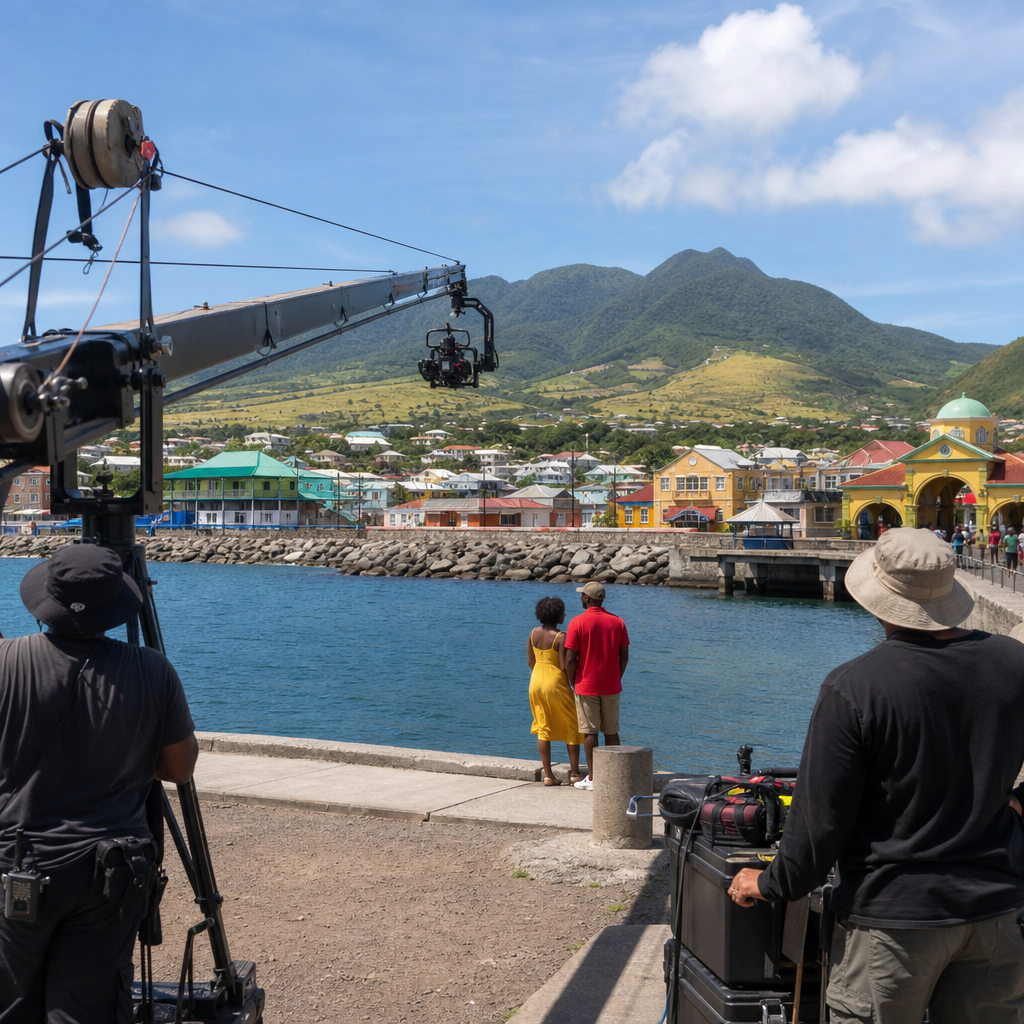
When people hear film investment, they often imagine financing movies. That is only one layer. The more durable opportunity in Saint Kitts lies in the wider production value chain, where recurring service revenue is easier to capture. Equipment rental is a clear example. Even a modest inventory of cinema cameras, lenses, lighting, grip, wireless audio kits, drones operated within regulation, generators, and data management stations can reduce dependence on imported gear. Productions pay heavily for freight, carnet administration, delays, and insurance complications. A reliable local vendor becomes immediately useful.
Studio and support space is another underdeveloped area. Saint Kitts does not need a mega-studio to become competitive. It needs flexible indoor facilities: sound-treated interview rooms, small cyc walls, wardrobe and makeup areas, secure gear storage, edit suites, rehearsal rooms, and converted warehouses for tabletop or product work. I have seen small markets unlock significant demand simply by creating dry, air-conditioned, power-stable spaces where agencies and crews can work without improvising in hotel conference rooms. Even one professionally managed multi-use media facility can anchor the local ecosystem.
Production services companies represent perhaps the most strategic business category. These firms handle permits, transport, casting, local crew booking, location scouting, customs coordination, accommodation blocks, call sheets, risk planning, and vendor management. International producers do not buy scenery alone; they buy certainty. A Saint Kitts production service company that answers quickly, budgets accurately, and solves problems professionally can win work before incentive packages fully mature. The same applies to specialist suppliers such as marine logistics providers, catering businesses that understand set operations, security firms trained for equipment handling, and construction teams able to build and strike temporary sets safely.
| Opportunity Area | What the Business Provides | Why Demand Exists in Saint Kitts |
|---|---|---|
| Equipment rental | Cameras, lenses, lighting, grip, audio, drones, monitors, data kits | Reduces freight costs and delays for visiting productions |
| Production services | Permits, crew sourcing, logistics, budgeting, location management | International teams need local execution and risk control |
| Studio conversion | Indoor shooting space, edit rooms, wardrobe, storage | Creates all-weather capability and supports repeat bookings |
| Post-production | Editing, color, sound cleanup, motion graphics, delivery | Extends revenue beyond the shoot and serves regional clients remotely |
| Training and casting | Crew development, performer databases, workshops | Builds labor depth and makes the island easier to staff |
Post-production deserves special attention because it is less constrained by geography. Editing, color correction, subtitle preparation, social cutdowns, animation, audio cleanup, and media asset management can all be delivered remotely to regional and global clients. Adobe Premiere Pro, DaVinci Resolve, Avid Media Composer, Pro Tools, and Frame.io have made distributed workflows standard. That means a Saint Kitts media company can earn export revenue without waiting for every project to shoot locally. For investors seeking resilience, this mix of on-island production services and off-island digital delivery is attractive.
Infrastructure, regulation, and operational readiness
A production market becomes investable when three questions can be answered clearly: Can crews enter and work lawfully? Can equipment move efficiently? Can production days run without avoidable disruption? Saint Kitts already has a foundation, but clarity and consistency will determine whether the market matures. Permitting should be centralized or at least coordinated through a visible process that covers public locations, drone operations, road control, heritage sites, beaches, and protected areas. Producers can work with strict rules; what they cannot absorb is uncertainty that appears late in prep.
Customs handling is another decisive factor. Temporary import procedures for gear should be straightforward, documented, and time-sensitive. Carnet familiarity among relevant officials matters. So does practical inspection scheduling around arrivals and departures. In small jurisdictions, a single missed handoff can derail an entire shoot day. Investors entering this space should think operationally, not abstractly. A bonded storage option, an airport runner service, or a specialist logistics firm can be commercially valuable because it removes friction at the exact points where production budgets are most vulnerable.
Utilities and digital infrastructure also shape competitiveness. Productions need stable power, backup generation for sensitive equipment, dependable mobile coverage, and upload capacity for dailies, proxies, and client review files. A boutique studio with enterprise internet and conditioned power can become a premium asset. Risk management should include weather planning, hurricane season protocols, medical support, marine safety where relevant, and public liability coverage. Established standards from bodies such as OSHA principles for workplace safety, the UK Health and Safety Executive’s production guidance, and standard film insurance practices provide useful templates even in smaller markets. Professionalizing these details signals seriousness to buyers.
Workforce development and local enterprise creation
No production destination grows sustainably without local skills. Visiting department heads can fill immediate gaps, but long-term value comes from building a trained local crew base in production management, camera assistance, gaffing, grip work, sound recording, art department support, costume, hair and makeup, location management, digital imaging, editing, and production accounting. Short-form content is ideal for training because turnaround is fast and crews get repeated exposure to core workflows. I have seen islands accelerate capability quickly by pairing local trainees with experienced incoming supervisors under clearly defined roles.
Saint Kitts can build this labor pool through partnerships among government agencies, colleges, tourism stakeholders, broadcasters, and private production firms. Training does not need to start with expensive degree programs. It can begin with structured workshops, certified safety courses, assistant-level shadowing, and paid trainee placements on active jobs. Adobe, Blackmagic Design, and Avid all offer training pathways that can be adapted for local use. Drone operations require formal compliance and should be treated carefully, but certified pilots can become valuable service providers across real estate, tourism, surveying, and media.
Entrepreneurship opportunities then multiply. A trained assistant editor may launch a post house. A location assistant may develop a scouting database. A stylist may specialize in campaign work for resorts and weddings. A carpenter with set experience may add scenic fabrication services. This is why film and media production should be viewed as an ecosystem investment, not a vanity sector. Skills transfer into marketing, events, digital commerce, and communications. The intellectual property generated can also elevate local musicians, chefs, designers, and historians by giving them professional visual platforms.
Market demand: who buys production services in Saint Kitts
The addressable market is broader than feature film. Tourism brands are the most obvious buyers, including hotels, villas, excursion operators, yachting businesses, restaurants, and destination agencies that need a constant stream of refreshed content. Global hospitality marketing has shifted toward high-volume content production for web, social, programmatic advertising, and booking platforms. That means one resort may require hero films, short vertical edits, room showcases, culinary footage, staff stories, drone sequences, and event coverage in multiple rounds each year.
Corporate demand is also real. Banks, insurers, telecom firms, universities, real estate developers, healthcare providers, and citizenship-related service businesses all require professional video communication. Regional organizations increasingly need explainers, livestreams, training modules, and executive interviews. Events create another revenue lane. Conferences, sports competitions, festivals, weddings, and luxury private functions often need multicamera capture, same-day edits, livestreaming, and documentary recaps. These are profitable services because clients value reliability and speed more than cinematic scale.
International broadcasters and streamers are potential buyers too, especially for factual content. Saint Kitts offers strong stories in heritage, marine life, conservation, sugar history, food culture, sailing, diaspora, and climate resilience. Documentaries and travel series usually operate with leaner crews than scripted drama, making them suitable entry points. Regional co-productions are especially promising. A company based in Saint Kitts can partner with producers in Barbados, Trinidad and Tobago, Jamaica, or Miami to service Caribbean stories with shared resources and lower costs.
Challenges, tradeoffs, and the path to scale
Saint Kitts is not a frictionless market, and credible investment analysis must say so plainly. Crew depth is still limited compared with larger production centers. Specialized gear may need importation for higher-end jobs. Flight schedules can constrain same-day movement. Weather risk is real. Some clients will ask first about formal incentives, and the island may lose projects if competing jurisdictions provide richer rebates or larger trained labor pools. These are not reasons to dismiss the sector. They are reasons to define the right market position.
The path to scale is sequential. First, simplify permitting and publish a production guide. Second, support a small cluster of dependable service companies. Third, create training pipelines and maintain a verified local crew directory. Fourth, develop a location library with permits, access notes, and sample imagery. Fifth, expand post-production capacity for exportable services. Sixth, evaluate targeted incentives that reward local spend, local hiring, and shoulder-season activity rather than trying to subsidize every project equally. This kind of phased approach is how smaller jurisdictions become credible. Consistency beats grand announcements.
For investors, the main benefit is diversification. Film and media production monetizes the island’s existing strengths in tourism, scenery, hospitality, and culture while creating higher-value service exports and local skills. For entrepreneurs, the opening is immediate: solve production problems better than competitors, and buyers will return. For public and private stakeholders, now is the moment to treat media not as a side activity but as infrastructure for economic storytelling, business development, and international visibility. Saint Kitts is an untapped market because its assets are already present, but the ecosystem remains underbuilt. The opportunity is to build it deliberately. Explore where your business fits in the production chain, form local partnerships, and move early while the market is still taking shape.
Frequently Asked Questions
Why is Saint Kitts considered an untapped market for film and media production?
Saint Kitts stands out as an untapped market because it offers many of the conditions producers look for, but without the saturation, competition, and rising costs found in more established filming destinations. The island combines visually striking natural locations, colonial architecture, beaches, lush inland scenery, and a recognizable Caribbean atmosphere within a relatively compact geographic area. That means production teams can capture multiple looks without excessive travel time, which helps control logistics and budgets.
Just as important, Saint Kitts operates in English, which simplifies communication across production planning, contracts, permits, crew coordination, and client relationships. The country also benefits from political stability and a business environment that is increasingly attractive to investors, service providers, and creative entrepreneurs. For international studios, agencies, and streaming content companies, that stability matters because it reduces operational uncertainty.
Another reason the market remains underdeveloped is that Saint Kitts has not yet been fully positioned globally as a production hub, even though it has many of the underlying ingredients. That creates opportunity. Early investors, production companies, equipment suppliers, post-production firms, and training institutions can enter a market where there is room to shape standards, build partnerships, and capture first-mover advantages. In practical terms, this is not only about feature films. It includes television projects, commercials, documentaries, corporate video, tourism campaigns, event broadcasting, branded content, digital media, animation support, and the wider supplier network that serves production activity. Taken together, those factors make Saint Kitts less of a speculative idea and more of a market with real, expandable potential.
What types of film and media production opportunities exist in Saint Kitts?
The opportunity set is much broader than traditional filmmaking alone. Saint Kitts can support location-based production such as feature films, television series, reality programming, documentaries, music videos, and commercial shoots. Its scenery and cultural identity make it especially suitable for travel content, lifestyle branding, destination advertising, hospitality campaigns, and scripted or unscripted projects that need a tropical or historically rich setting. For producers working with tight schedules, the island’s manageable size can be a practical advantage in moving between locations quickly.
Beyond principal photography, there are also strong opportunities in production services. These include line production, permitting support, local casting coordination, transportation, catering, set construction, wardrobe support, equipment rental, drone operations, marine logistics, security, and location management. Even if large international productions bring in key personnel, they still need a local ecosystem of vendors and coordinators to operate efficiently. That opens space for small and mid-sized businesses to participate in the value chain.
There is also substantial potential in media services tied to the digital economy. Streaming platforms, social media campaigns, branded storytelling, live event coverage, podcast video production, tourism marketing, educational content, and remote production support are all relevant. Saint Kitts can also develop capacity in post-production functions such as editing, color grading, motion graphics, subtitling, sound cleanup, and animation support, particularly if paired with training and digital infrastructure investment. In short, the market should be viewed as a full creative services sector rather than a narrow film niche. That broader perspective is what makes it commercially promising.
What makes Saint Kitts attractive to investors, producers, and international media companies?
From an investor and producer perspective, Saint Kitts offers a compelling combination of creative value and operational practicality. The island’s landscapes can deliver high production value on screen, which is critical for both entertainment and advertising work. At the same time, its English-speaking environment makes it easier to manage legal agreements, crew instructions, local partnerships, and stakeholder communication. This reduces friction, especially for companies entering the market for the first time.
Political stability is another major advantage. Media production is highly schedule-sensitive and budget-sensitive, so companies naturally favor jurisdictions where institutions are dependable and business operations are predictable. Saint Kitts benefits from that perception of stability, which can support long-term planning rather than one-off shoots. For investors, this matters because they are not only evaluating scenery; they are evaluating whether the country can support sustainable production infrastructure, workforce development, and recurring commercial activity.
There is also strategic upside in entering a market before it becomes crowded. In more mature production hubs, competition for locations, crews, accommodation, and vendor services can push up prices and create scheduling bottlenecks. In Saint Kitts, businesses that establish themselves early may be able to build brand recognition, preferred partnerships, and specialized service offerings ahead of future demand. That could include studios, boutique production companies, equipment providers, training academies, post-production houses, and media-tech firms. International media companies also increasingly need authentic, locally grounded content and regional production capacity. Saint Kitts is well positioned to serve that demand if the ecosystem continues to develop in a coordinated way.
What challenges does the film and media sector in Saint Kitts need to overcome to grow?
Like any emerging market, Saint Kitts faces practical constraints that must be addressed if it wants to compete more effectively at regional and international levels. One key challenge is infrastructure depth. While the island has clear location advantages, sustained sector growth requires reliable access to production equipment, trained crews, post-production services, location databases, permitting processes, and technical support. Without those systems in place, the market may still attract occasional projects but struggle to convert interest into repeat business.
Workforce development is another important area. Producers need dependable local talent across camera, lighting, sound, editing, production management, styling, digital media, and client services. Building that capacity takes training programs, mentorship, apprenticeships, and practical exposure to professional workflows. The good news is that because the country is relatively compact, targeted investment in education and creative industry development can have visible impact quickly if done well.
There is also a positioning challenge. Saint Kitts must clearly communicate its production advantages to the outside market. That means better promotion to film commissioners, agencies, studios, independent producers, and brand marketers who may not currently have the island on their shortlist. Clear permitting guidelines, location marketing, investor outreach, and case studies of successful projects can all help. Finally, digital infrastructure and policy support matter more than ever, especially as remote collaboration and cloud-based post-production become standard. Overcoming these issues is less about fixing a broken market and more about maturing an overlooked one. With the right coordination, these challenges are manageable and can become catalysts for long-term growth.
How can Saint Kitts build a sustainable film and media production industry rather than relying on occasional projects?
A sustainable industry requires more than attracting a few outside productions. It depends on building an ecosystem that allows local and international activity to reinforce one another. That starts with policy and institutional support: efficient permitting, transparent business procedures, investment-friendly frameworks, and a clear national strategy for creative industries. Producers are much more likely to return when they know what to expect operationally and can move quickly from inquiry to execution.
Local capacity building is equally essential. Saint Kitts can strengthen sustainability by developing talent pipelines through schools, technical programs, industry workshops, and partnerships with experienced regional and international professionals. The goal is not only to train creatives, but also to develop the full production workforce, including coordinators, accountants, editors, sound technicians, drone operators, set assistants, and digital marketers. A resilient media economy grows when local businesses can provide recurring services rather than depending entirely on imported expertise.
Diversification is another major factor. A healthy market should not rely solely on feature films. It should include tourism campaigns, branded content, live event broadcasting, social media production, documentaries, educational media, public information campaigns, wedding and event videography, streaming support, and post-production services. These smaller and more regular revenue streams help sustain businesses between larger projects. Finally, Saint Kitts should prioritize the development of locally rooted storytelling. International productions can bring visibility and capital, but local content builds cultural relevance, creative identity, and durable industry demand. When the country supports both inbound production and homegrown media creation, it creates a stronger, more stable foundation for long-term sector growth.