Saint Kitts rewards travelers who want more than a beach meal. Across the island, historic inns, plantation houses, and old estate kitchens preserve a dining culture shaped by sugar, sea trade, African foodways, British colonial habits, and modern Caribbean creativity. When people search for historic inns and their kitchens in Saint Kitts, they usually want three answers: where to eat, what makes these places historic, and which dishes express the island best. The most useful answer connects architecture, hospitality, and food. In Saint Kitts, dining in a former great house or an old sugar estate is not simply about nostalgia; it is one of the clearest ways to understand how the island evolved from plantation economy to contemporary tourism.
By historic inns, most visitors mean restored plantation inns, heritage hotels, and long-standing guest properties that operate inside buildings tied to the eighteenth, nineteenth, or early twentieth century. Their kitchens may be original service spaces, later reconstructions, or modern restaurant operations housed within old stone walls, courtyards, and verandas. The distinction matters because the setting changes the meal. Breadfruit served beside a pool is pleasant anywhere, but breadfruit prepared in a former estate house, with tamarind trees overhead and dry-stone walls nearby, tells a fuller story. I have found that guests consistently remember these meals because place sharpens flavor: sea breeze, cane-field views, old timber beams, and menus that fold local ingredients into refined service.
This subject matters for practical reasons too. Heritage dining helps travelers choose restaurants with character, supports preservation-minded businesses, and offers a gateway into local cuisine beyond cruise-port staples. It also matters culturally. Saint Kitts and Nevis National Trust, Brimstone Hill Fortress National Park, and heritage advocates across the federation have long emphasized that built history becomes more meaningful when people can actively experience it. Dining does exactly that. It turns an old estate from a static landmark into a lived environment. For anyone planning a culinary itinerary, this hub explains the key property types, signature dishes, service styles, and decision points that define dining in Saint Kitts’s historic inns and kitchens.
What Makes a Saint Kitts Inn Kitchen Historic
A historic kitchen in Saint Kitts is defined by context as much as age. Some are attached to plantation great houses established during the sugar era. Others occupy outbuildings, galleries, or terraces where estate life once revolved around storage, preparation, and service. On many former plantations, the original working kitchen was separated from the main house to reduce heat and fire risk, a common Caribbean design choice. Today, those spatial patterns still shape the guest experience: dining rooms open onto broad verandas, garden courtyards, or hillside lawns, while service routes follow old estate circulation lines. Even when equipment is modernized, the architecture preserves how hospitality functioned in a tropical colonial setting.
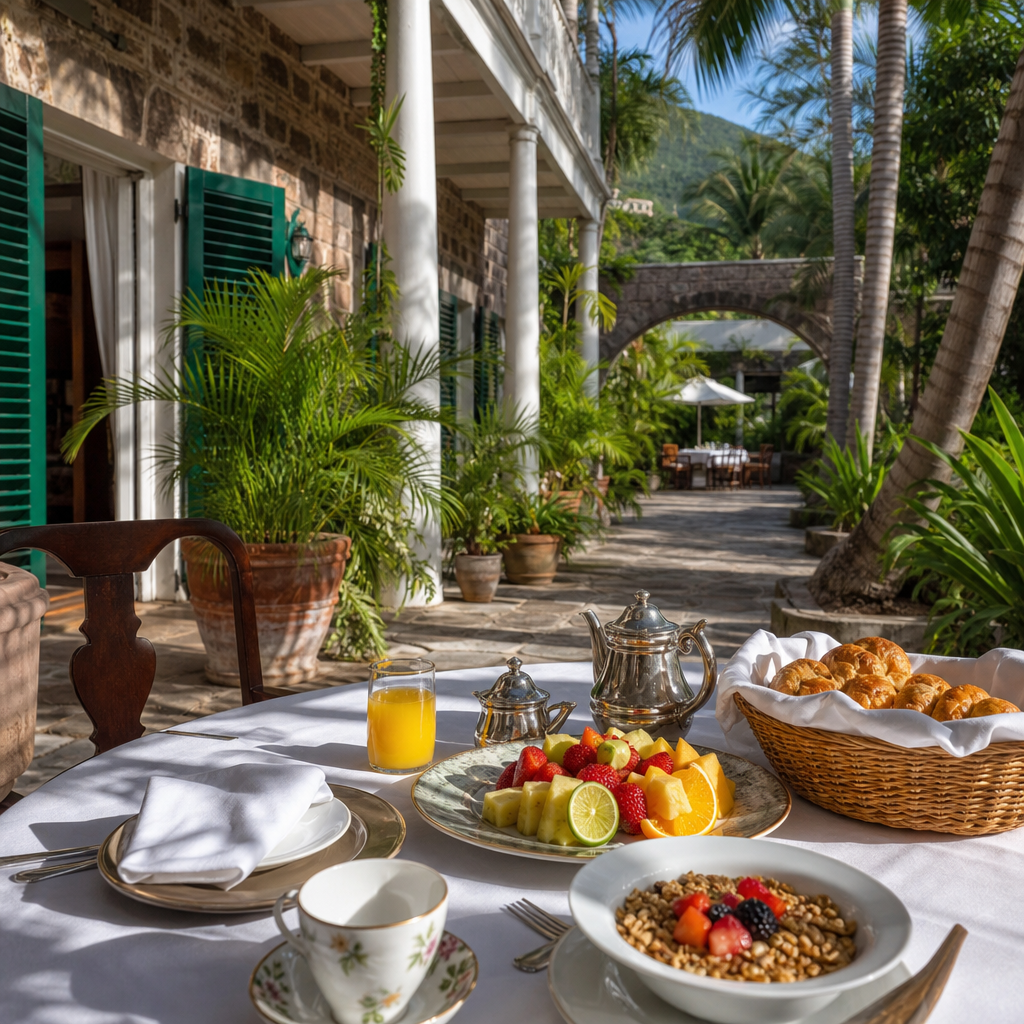
Several visible details help identify authentic heritage dining spaces. Look for volcanic stone walls, Georgian or West Indian architectural features, high ceilings for ventilation, louvered shutters, covered galleries, and broad staircases rising to a principal entrance. Original sugar estate sites often stand on elevated ground to catch cooling breezes and oversee former cane lands. In kitchens and dining areas, you may see cast-iron elements, brick ovens, antique sideboards, mahogany tables, and portraits or maps tied to estate ownership. These are not decorative accidents. They reflect the domestic and commercial systems that once organized plantation life and now frame a more respectful form of tourism when interpreted well.
The food itself becomes historic when menus draw on long-established island ingredients and techniques. Saltfish, coconut, pigeon peas, cassava, sweet potato, pumpkin, green fig, plantain, breadfruit, lobster, conch, and local herbs all belong to the culinary record of Saint Kitts. British influence appears in puddings, roasts, tarts, and afternoon tea habits, while African and wider Caribbean traditions shape one-pot dishes, stews, fritters, and provisions. The best inn kitchens do not pretend the past was elegant for everyone. Instead, they acknowledge that plantation dining carried deep inequalities and that today’s island cuisine emerged from adaptation, survival, and creativity. That honesty gives heritage meals more credibility and more value.
Where Historic Dining Lives on the Island
The most recognizable heritage dining addresses in Saint Kitts cluster around former plantation properties and old hospitality landmarks. Ottley’s Plantation Inn is a leading example, pairing a restored great house atmosphere with gardens and estate landscape that make dinner feel rooted in island history rather than staged for tourists. Rawlins Plantation, though its operating model has changed over time, has long stood as a reference point for plantation-style hospitality, with architecture and grounds that communicate the sugar-era legacy immediately. Golden Lemon Inn, in a different and more intimate register, shows how boutique hospitality can blend historical character with contemporary Caribbean dining.
Beyond named inns, travelers should also consider restaurants in Basseterre’s older quarters, heritage-adjacent properties near old estates, and hotels that preserve significant architectural fabric even if they market themselves more as resorts than inns. The island’s dining geography matters. Basseterre introduces urban colonial history, port influences, and easier access to fish markets and administrative-era buildings. Inland plantation zones offer cooler elevations, kitchen gardens, and the visual drama of former cane lands rolling toward the sea. On the southeast peninsula and along scenic coastal roads, newer dining rooms often borrow from plantation aesthetics, but the strongest heritage experience usually comes from places with documented links to estate life.
Because openings, closures, and management changes occur in island hospitality, the smartest approach is to treat heritage dining as a category rather than rely on a single famous booking. Ask whether the property occupies an original estate building, whether meals highlight Kittitian ingredients, and whether staff can explain the site’s history accurately. I always recommend checking recent service patterns, reservation requirements, and dinner nights directly with the property. Historic inns often operate with fewer covers than city restaurants, and some alternate between set menus, special events, and private dining. That smaller scale is part of the appeal, but it requires planning.
Signature Dishes You Should Expect to See
The menu at a serious Saint Kitts heritage kitchen should anchor itself in local staples while leaving room for finesse. Goat water is the island’s signature dish and remains the clearest benchmark. Despite the name, it is a rich, dark goat stew seasoned with bread, herbs, spices, and often a touch of heat; on Saint Kitts it is as culturally central as any national dish in the region. Conch fritters, saltfish preparations, grilled lobster when in season, and fish with creole or butter-based sauces often appear as starters or mains. Provisions such as breadfruit, plantain, yam, and sweet potato are not side notes. They are the backbone of the plate.
Desserts often reveal the deepest continuity between inn dining and older home cooking. Coconut tart, guava pastries, bread pudding, rum cake, tamarind chutney accents, and sugar-cake-style flavor profiles all connect the sweet course to the island’s agricultural history. Breakfast at historic inns can be equally revealing: bakes, saltfish, fresh fruit, johnnycakes, bush tea, and local jams often say more about place than a formal dinner menu does. When chefs modernize these dishes, the strongest results keep the ingredient identity obvious. A breadfruit purée should still taste unmistakably of breadfruit; a tamarind glaze should sharpen the dish rather than bury it under sweetness.
| Dish or Ingredient | Why It Matters in Heritage Dining | What to Look For |
|---|---|---|
| Goat water | Nationally recognized Kittitian specialty with deep communal roots | Dark, savory broth, tender goat, balanced spice, not watery |
| Breadfruit | Historic staple across plantation and village food systems | Roasted, fried, or mashed with clear natural flavor |
| Saltfish | Reflects preserved-food trade patterns and home-style cooking | Served with bakes, provisions, or sautéed vegetables |
| Lobster and reef fish | Links estate dining to coastal abundance and seasonal menus | Simple preparation that respects freshness |
| Coconut and tamarind desserts | Carry forward long-standing island sweet traditions | Moderate sweetness, strong fruit or coconut character |
A well-composed heritage menu also shows restraint. If every plate leans on imported steakhouse language, the kitchen is using the building as a backdrop rather than a source of culinary identity. The best chefs in Saint Kitts understand that visitors want recognizable comfort, but they also know that local black pineapple, sorrel, christophene, green seasoning, and fresh herbs can distinguish a meal instantly. That balance between familiarity and specificity is the hallmark of a kitchen worth recommending.
How Service, Setting, and Architecture Shape the Meal
Dining in a historic inn is multisensory. Service tends to be slower than in resort buffet settings, and that is usually a strength rather than a flaw. Old plantation houses were built for airflow, long views, and staged transitions from garden to gallery to dining room. Meals unfold through those spaces. Guests take a drink on a veranda, hear tree frogs at dusk, move through candlelit rooms, and settle into a pace that lets the setting do part of the work. In Saint Kitts, where evening temperatures can soften noticeably in elevated inland districts, the climate supports this style of dining beautifully.
Architecture also changes acoustics and intimacy. Thick masonry walls mute noise. Timber ceilings and shuttered windows create a softer soundscape than modern open-plan restaurants. A smaller number of tables means staff can explain dishes, describe ingredients from nearby farms, and adapt courses for dietary needs without making the experience feel transactional. In properties that do heritage dining well, front-of-house teams know at least the broad story of the estate, the age of the house, and the local origin of key produce or seafood. If they cannot answer basic questions about either the building or the plate, the experience usually feels thinner than the setting promises.
Even details such as table placement matter. The best tables are often on edge verandas or in rooms where historical features remain visible without overwhelming conversation. I generally advise diners to request sunset timing for inland estates and earlier reservations for lunch in warmer lowland locations. Clothing should match the property: smart casual works almost everywhere, but some plantation-style dinners still lean polished. Comfortable shoes are sensible because gravel paths, garden steps, and uneven stone surfaces are common on heritage sites. These practical considerations sound minor, yet they directly affect how enjoyable the evening becomes.
How to Choose the Right Historic Inn Dining Experience
The right choice depends on whether you prioritize culinary ambition, historical atmosphere, privacy, or price. For a celebratory dinner, a restored plantation inn with a focused evening menu usually offers the strongest blend of setting and service. For daytime exploration, a property that serves lunch or afternoon tea may be better because you can appreciate gardens, estate layouts, and mountain views more fully. Couples often prefer smaller inns where dining feels secluded. Families may do better at heritage properties that pair history with broader grounds and more flexible menus. The ideal booking is not the oldest building; it is the property that aligns history with the kind of meal you actually want.
Ask direct questions before reserving. Is the menu à la carte, prix fixe, or chef’s choice? Are local dishes always available, or only on themed nights? Can the kitchen accommodate vegetarian, gluten-free, or shellfish-free requests without reducing the meal to generic substitutions? Is transportation needed after dark, especially if the inn is inland? On Saint Kitts, taxis are reliable but should be arranged ahead for remote properties. If you are staying in Frigate Bay or near Basseterre, build in travel time. Heritage inns are part of the attraction precisely because they are not all concentrated in one tourist strip.
Budgeting is equally important. Historic inn dining usually costs more than a beach bar meal because labor, maintenance, and scale differ significantly. You are paying for preservation, ambiance, and curated service as much as for food. That said, price alone does not guarantee authenticity. I have had better heritage meals at modestly priced properties with disciplined menus than at expensive venues leaning too hard on imported luxury ingredients. Read recent guest feedback for consistency, but favor reviews that discuss dishes, setting, and service in concrete terms over vague praise.
Using This Hub to Explore Saint Kitts Dining Further
This page works best as a starting point for the broader local cuisine and dining journey. From here, travelers can branch into articles on goat water, plantation history, Basseterre restaurants, seafood dining, roadside food culture, rum and cocktails, breakfast traditions, and market ingredients. Historic inns tie all of those subjects together because they sit at the intersection of agriculture, architecture, and hospitality. A single dinner in a restored estate house can introduce the flavor of breadfruit, the logic of tropical building design, the legacy of sugar cultivation, and the current ambitions of Kittitian chefs trying to present local food with confidence.
The central lesson is simple: in Saint Kitts, the most memorable heritage meals are not museum pieces. They are living expressions of the island, shaped by old estates but judged by present standards of cooking and care. Choose places that respect their buildings, explain their history honestly, and serve food that tastes undeniably local. If you are planning a trip, make room for at least one dinner or lunch in a historic inn and use it as your entry point into the island’s wider food culture. Start with a reservation, ask questions, and let the kitchen tell you how Saint Kitts tastes.
Frequently Asked Questions
What makes dining at historic inns and estate kitchens in Saint Kitts different from eating at a standard beach restaurant?
Dining at a historic inn or old estate property in Saint Kitts offers more than a scenic meal; it places you inside the island’s layered cultural story. Many of these inns occupy former plantation houses, sugar estates, or buildings tied to the colonial period, and their kitchens often reflect that long history. Instead of focusing only on ocean views and casual resort fare, these venues connect architecture, landscape, and cuisine in one experience. You may dine on a veranda overlooking old cane fields, in a great house with Georgian influences, or near kitchens that once supported estate life. That setting changes how the meal is understood, because the food feels linked to the island’s past rather than detached from it.
The menus at these historic properties also tend to show a stronger sense of Saint Kitts’ culinary evolution. You are more likely to see dishes and ingredients that reveal the island’s blend of African food traditions, British colonial dining habits, maritime trade, and local Caribbean adaptation. Fresh fish, saltfish, root vegetables, coconut, breadfruit, stewed meats, pepper sauces, and seasonal produce may appear in ways that feel both traditional and refined. In many cases, chefs use the historic setting as a frame for modern Caribbean cooking, updating classic island flavors without losing their identity. The result is a dining experience that feels rooted, place-specific, and more memorable than a generic tourist menu.
Another difference is pace and atmosphere. Historic inns often emphasize hospitality, storytelling, and a sense of occasion. Staff may know the history of the building, the estate, or the family traditions behind certain recipes. That makes the meal part culinary outing and part cultural encounter. For travelers who want to understand Saint Kitts through food, these settings are often the most rewarding because they answer the deeper questions: not just what people eat, but why these flavors developed here and how they have survived, changed, and been reinterpreted over time.
Where should travelers look for historic dining experiences in Saint Kitts?
Travelers looking for historic dining in Saint Kitts should begin with former plantation inns, restored great houses, and heritage properties set away from the island’s most modern beachfront resort zones. Some of the most compelling meals are found in old estate settings where architecture and landscape still reflect the sugar era. These properties may be inland, on hillsides, or within older settled areas rather than directly on the sand. That is often a good sign, because the most historically meaningful dining venues are connected to the plantation economy, trade routes, and domestic kitchens that helped shape Kittitian food culture long before modern tourism arrived.
It is also worth seeking out restaurants operating within restored inns or boutique heritage accommodations, especially those that highlight local ingredients and regional cooking rather than offering only international hotel menus. When researching where to eat, look for language such as “plantation house,” “estate dining,” “historic inn,” “great house,” or “heritage restaurant.” These places usually emphasize the story of the property as part of the experience. Reviews that mention old stone buildings, antique interiors, estate grounds, traditional recipes, or chef-driven Caribbean cuisine can also point you in the right direction.
For the best results, travelers should not rely only on the phrase “historic” in marketing. A truly worthwhile stop usually combines three things: a genuine connection to the island’s past, a kitchen that takes Saint Kitts’ food traditions seriously, and a setting that preserves some physical sense of history. Asking locals, innkeepers, or cultural guides for recommendations can be especially helpful, because they often know which places deliver substance rather than just atmosphere. In Saint Kitts, the strongest historic dining experiences are the ones where the building, the menu, and the island’s story all reinforce one another.
Which dishes best express the culinary history of Saint Kitts when dining at a historic inn?
If you want to taste Saint Kitts’ history on a plate, start with dishes that reveal the island’s mix of African heritage, colonial influence, and local Caribbean resourcefulness. Goat water is one of the most important examples. This rich, slow-cooked stew, traditionally made with goat, spices, and bread, is deeply associated with Kittitian identity and shows how practical, communal cooking evolved into a celebrated national dish. It is hearty, layered, and unmistakably local. Saltfish preparations are also significant, since salt cod reflects older Atlantic trade patterns and became deeply woven into everyday Caribbean cooking. When paired with ground provisions, vegetables, or seasoning-rich sides, it tells a story of adaptation and survival.
Travelers should also look for breadfruit, plantain, coconut-based dishes, stewed chicken, fresh fish, conch when available, rice and peas, callaloo, and peppery sauces or gravies. These ingredients and preparations represent the island’s agricultural and maritime realities, as well as the influence of African culinary knowledge in transforming local crops into sustaining, flavorful food. In more historic or chef-led settings, these dishes may appear in polished forms, such as line-caught fish with breadfruit mash, goat water presented as a refined starter, or coconut-inflected desserts inspired by estate-era kitchens. That kind of interpretation can be especially rewarding when it respects the original flavor profile rather than obscuring it.
Desserts and baked goods can also be revealing. Old estate kitchens often depended on ingredients linked to the sugar economy, so sweets may reflect molasses, cane sugar, nutmeg, cinnamon, coconut, and tropical fruit. Even when a dish seems simple, it may carry historical echoes of plantation production, imported British tastes, and local adaptation. The best strategy is to ask what the house considers most traditional or most representative of Saint Kitts. In a strong historic inn, that question often opens the door to dishes that express not only flavor, but the island’s entire culinary journey.
How did Saint Kitts’ history shape the food served in its historic inns and plantation houses?
The food found in Saint Kitts’ historic inns and plantation houses is inseparable from the island’s broader history. Sugar cultivation played an enormous role in shaping land use, labor systems, trade, and daily cooking. Plantation estates were not just agricultural sites; they were centers of social hierarchy, imported goods, food production, and culinary exchange. The kitchens attached to these estates drew from what was grown locally, what arrived by sea, and what was preserved, rationed, or adapted over time. That meant a blending of African food knowledge, European dining customs, and Caribbean ingredients into a cuisine that was both practical and inventive.
African foodways were especially important in forming the backbone of the island’s cuisine. Enslaved Africans and their descendants transformed available ingredients into durable culinary traditions, using techniques of stewing, seasoning, one-pot cooking, and making the most of root crops, greens, salted proteins, and limited resources. At the same time, British colonial influence affected table manners, meal structures, baking traditions, and the use of certain imported ingredients and dishes. Maritime trade added still more layers, bringing salted cod, spices, flour, rum, and other staples that became part of everyday and festive cooking. Over generations, these influences merged into a cuisine that is distinctly Kittitian rather than simply borrowed from elsewhere.
Today, when a historic inn in Saint Kitts serves a menu inspired by estate life or traditional island recipes, it is often presenting the result of centuries of adaptation. That can be seen in a stew thickened and seasoned in a local style, a dessert shaped by the legacy of sugar, or a fish dish paired with provisions that sustained generations. The most thoughtful historic dining venues acknowledge that this history includes both beauty and hardship. They present food not as nostalgia alone, but as evidence of endurance, creativity, and cultural continuity. That is what makes dining in these places so meaningful: each meal reflects the island’s past while still living in the present.
What should travelers expect from the atmosphere, service, and overall experience at a historic inn restaurant in Saint Kitts?
Travelers should expect a more immersive and character-rich experience than they would find in a conventional tourist restaurant. Historic inn dining in Saint Kitts is often defined by setting first: old stonework, antique furnishings, wide galleries, estate gardens, shuttered windows, and views of hills, sea, or former cane lands. Even before the meal begins, the surroundings signal that the restaurant is part of a longer island story. This can make dinner feel more intimate, reflective, and destination-specific. Rather than simply eating near a landmark, you are often eating inside one.
Service at these properties is frequently more personal and narrative-driven. Staff may explain the history of the house, point out original architectural features, or recommend dishes that best represent Saint Kitts. In the strongest historic inns, hospitality feels less transactional and more interpretive. You might hear how a recipe connects to local festivals, why a certain ingredient matters in Kittitian cooking, or how a chef has updated a traditional dish. That added layer of context is part of the value, especially for travelers who want the meal to teach them something about the island as well as satisfy them.
In practical terms, travelers should expect a slower, more deliberate meal and often a slightly dressier or more reserved setting than a casual beach shack. Reservations are a good idea, especially at well-known heritage properties or during high season. Menus