Saint Kitts has become one of the Caribbean’s most interesting dining destinations because chefs are pairing local ingredients with global techniques, creating fusion restaurants that feel rooted in the island rather than imported onto it. In practical terms, a fusion restaurant in Saint Kitts blends Kittitian produce, seafood, spices, and cooking traditions with culinary ideas from places such as India, Italy, France, Lebanon, China, Latin America, and North America. The result is not random mashups. At its best, fusion cooking respects the flavor logic of both sides: breadfruit might become gnocchi, tamarind may season grilled snapper, and coconut milk can enrich a curry built around local lobster instead of distant ingredients. I have seen this shift clearly over years of tracking Caribbean food scenes. What once meant hotel dining aimed at visitors now includes chef-led kitchens, beach bars with serious menus, and independent restaurants that treat local sourcing as a creative advantage.
This matters for travelers and residents alike because food is one of the clearest ways to understand how Saint Kitts is changing. The island’s dining culture reflects agriculture, tourism, migration, trade routes, and the practical realities of small-island supply chains. Cane fields and old estate lands gave way to diversified farming, while imported pantry staples met ingredients grown in volcanic soil and caught in nearby waters. That created the foundation for a cuisine that is both local and outward-looking. For anyone exploring local cuisine and dining in Saint Kitts, fusion restaurants serve as a hub topic because they connect seafood, street food, fine dining, farm sourcing, rum culture, vegetarian cooking, and contemporary Caribbean identity in one place.
Key terms help frame the conversation. Local ingredients in Saint Kitts usually include wahoo, mahi-mahi, lobster, conch, saltfish, chicken, goat, breadfruit, plantain, pumpkin, sweet potato, callaloo, yam, cassava, coconut, mango, tamarind, sorrel, and herbs such as thyme and chive. Global flavors refer to seasoning systems, sauces, plating styles, and cooking methods shaped by other culinary traditions. Fusion restaurants then become places where those elements meet intentionally. Done well, they answer common questions diners ask: What is modern Kittitian food? Where can you taste the island without eating the same dishes every night? How do chefs make local produce feel new? The best answers come from restaurants that understand the island first and the trend second.
What Fusion Means in Saint Kitts
On Saint Kitts, fusion usually starts with what is available, not with a marketing concept. Menus are influenced by fresh catch, seasonal fruit, weather, shipping schedules, and the cost of imported goods. That reality often makes local sourcing the smart business decision as much as the culinary one. A chef may buy lionfish or snapper from local fishers, then apply a Mediterranean grilling method, an Asian glaze, or a Latin-style salsa. The plate looks global, but the center of gravity remains Kittitian. In restaurants near Basseterre, Frigate Bay, and the Southeast Peninsula, I have repeatedly seen chefs adjust menus around what arrived that day instead of forcing dishes built on imports.
There is also a historical reason fusion feels natural here. Saint Kitts has long sat within networks of African, British, French, Indian, and wider Caribbean influence. Traditional local cooking already contains layers: stews, curries, rotis, saltfish dishes, ground provisions, pepper sauces, and rum-based preparations tell a story of exchange. Modern fusion restaurants simply make that exchange more visible. A tamarind reduction on duck, for example, is contemporary plating, but tamarind itself is already familiar across the region. Coconut curry seafood is another common bridge, linking local shellfish to Indo-Caribbean flavor structure. This is why strong fusion dining on the island feels coherent rather than gimmicky.
For diners, the simplest definition is this: a fusion restaurant in Saint Kitts is one where local ingredients remain recognizable even when the cooking style borrows from elsewhere. If the fish could be from anywhere and the seasonings say nothing about the island, that is just international dining. If the dish uses Kittitian produce, Caribbean aromatics, regional sauces, or island seafood in a way that adds another culinary language, that is true fusion. This distinction matters when choosing where to eat, especially if your goal is to experience the island rather than escape it at dinnertime.
Signature Local Ingredients Chefs Build Around
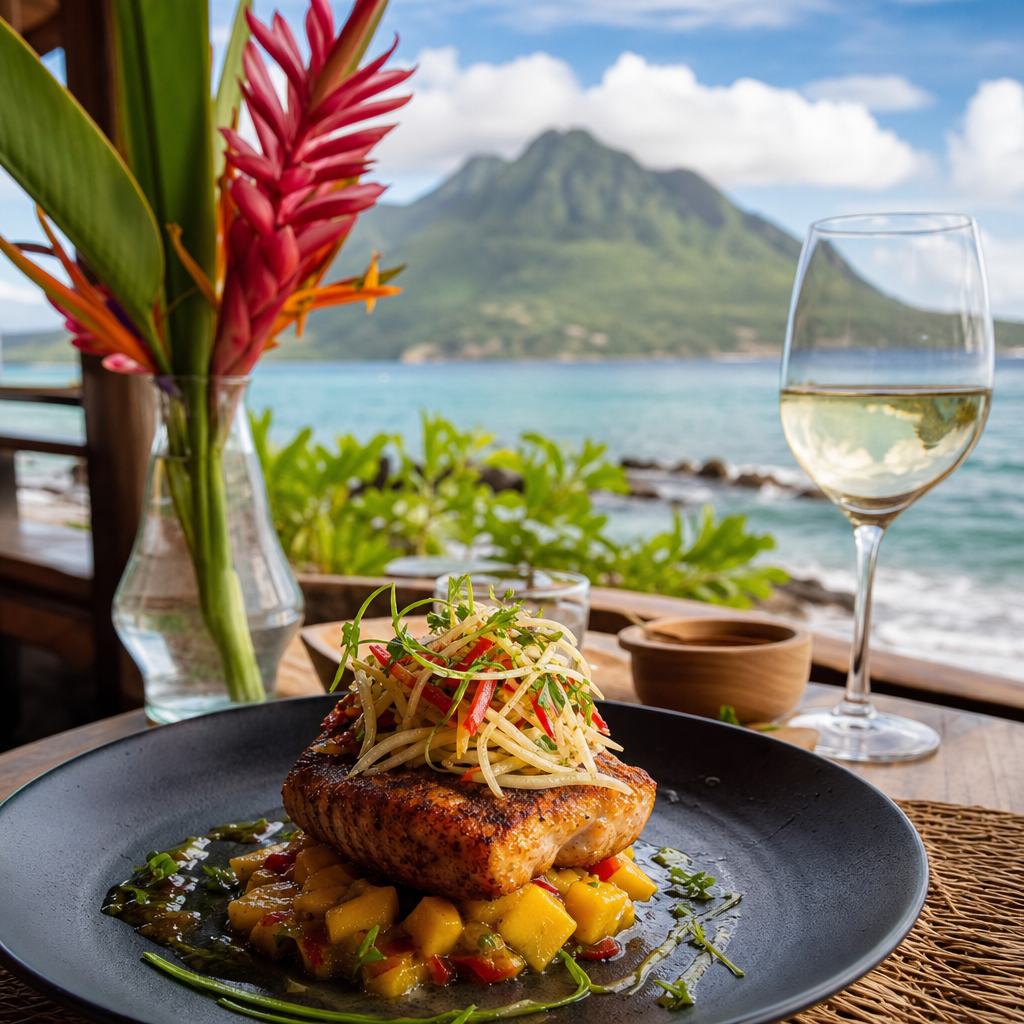
The most successful fusion menus begin with ingredients that define Saint Kitts. Seafood leads the list. Wahoo is prized for its clean flavor and firm texture, making it ideal for searing, blackening, ceviche-style preparations, and soy-ginger marinades. Mahi-mahi works well with tropical salsas and citrus-based sauces. Lobster appears grilled, curried, folded into pasta, or paired with beurre blanc brightened by lime. Conch, when available and properly tenderized, crosses easily into fritters, chowders, and spicy noodle dishes. Because freshness changes daily, smart restaurants treat species as flexible rather than writing rigid menus around one fish.
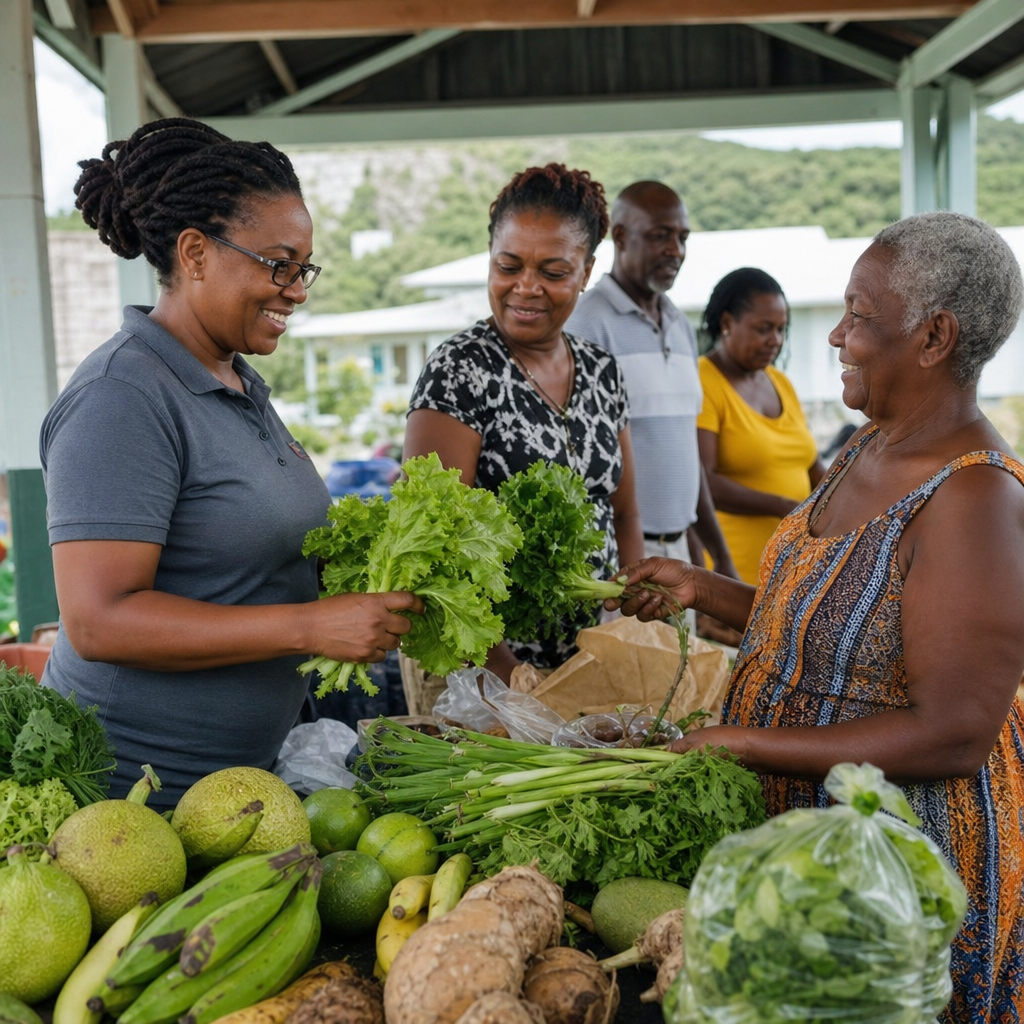
Produce gives fusion cooking its island identity. Breadfruit can be roasted, pureed, fried into chips, or turned into mash with the body of potato but a sweeter, nuttier note. Plantain moves between savory and sweet, appearing in tostones, mash, chips, and desserts. Pumpkin and sweet potato support soups, ravioli fillings, and side dishes. Callaloo adds depth to stews, creamy sauces, and rice preparations. Mango and pineapple are not only dessert fruits; they become chutneys, relishes, vinaigrettes, and glazes. Sorrel contributes tartness and color, especially in reductions and cocktails. Coconut shows up everywhere, from braises to panna cotta.
Proteins beyond seafood matter too. Goat is one of the island’s strongest traditional anchors, especially in curries and slow braises. In a fusion setting, I have seen it used in ragù over pasta, folded into tacos, or served with polenta-like cornmeal preparations. Chicken is adaptable and widely used, while pork appears in jerk-influenced or rum-glazed formats. Even simple pantry ingredients become markers of place. Thyme, scallion, Scotch bonnet, allspice, ginger, and garlic create the aromatic base for many dishes. These flavor foundations allow chefs to borrow globally without losing the Caribbean profile that diners came to find.
How Global Techniques Transform Island Dishes
Technique is where many Saint Kitts fusion restaurants distinguish themselves. A local ingredient can taste completely different depending on whether it is grilled over charcoal, slow-braised, confit-cooked, wood-fired, pan-seared, or served raw with acid. French technique often shows up in sauces, stocks, and plating discipline. Italian influence appears through handmade pasta, risotto, and wood-fired pizza topped with local seafood or vegetables. Asian methods contribute wok cooking, soy-based marinades, tempura batter, noodle applications, and balancing principles built around sweet, salty, sour, heat, and umami. Latin American styles bring ceviche logic, chimichurri, mole-inspired sauces, and grilled street-food formats.
Some of the most effective dishes are simple combinations executed precisely. Think grilled lobster finished with garlic-herb butter and lime, then served beside breadfruit gratin. Or seared tuna with sesame crust, pickled local cucumber, and tamarind glaze. A chef might take a familiar saltfish base and present it in croquettes with saffron aioli, making the dish accessible to visitors without stripping its regional character. Another kitchen may use jerk seasoning on pork belly, then pair it with silky pumpkin puree and cider reduction. These examples work because they preserve the sensory identity of the island while sharpening texture, balance, and presentation.
There are limits, and the best chefs know them. Overcomplication can flatten local ingredients instead of elevating them. Strong spice blends can bury delicate fish. Heavy cream sauces can overwhelm tropical produce. Menus also need to account for climate; diners in Saint Kitts often prefer food that feels bright and open rather than dense and wintry. That is why acid, herbs, char, and fruit play such an important role. Successful fusion cooking on the island is not about stacking influences endlessly. It is about choosing one or two global frameworks that make local ingredients clearer, fresher, and more memorable.
Where Diners Encounter Fusion on the Island
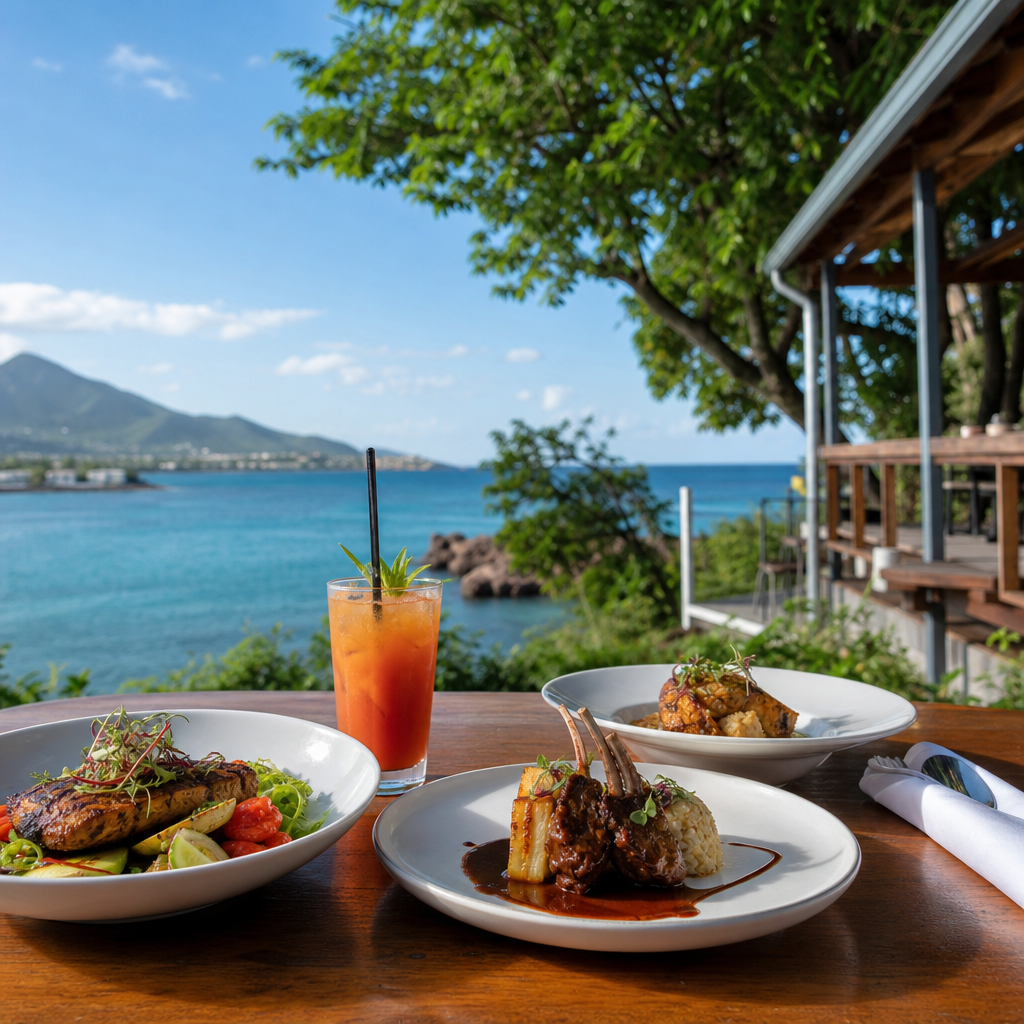
Fusion dining in Saint Kitts is not limited to one restaurant type. Upscale resort restaurants often have the resources to experiment with imported cheeses, premium wine programs, and refined service, but some of the most interesting food appears in independent venues. Beachfront restaurants in Frigate Bay may serve grilled catch with Thai chili glaze or coconut curry mussels alongside local rum cocktails. In Basseterre and nearby communities, smaller establishments sometimes blend Creole staples with continental or Asian touches in ways that feel more personal and less formal. Brunch spots, tapas bars, and chef-driven dinner rooms all contribute to the island’s broader dining map.
This variety matters because travelers often assume fusion means expensive tasting menus. On Saint Kitts, it can also mean a casual lunch of fish tacos with pineapple pepper relish, roti filled with slow-braised beef in a style influenced by Mexican barbacoa, or flatbread topped with jerk chicken and local vegetables. Hotel restaurants remain important because they introduce many visitors to island ingredients in a comfortable setting. Yet diners looking for range should explore beyond resort gates. The most rewarding local cuisine and dining experience usually comes from mixing polished venues with neighborhood favorites, roadside stops, and restaurants that shift their specials according to the market catch.
| Dining style | Typical fusion approach | What to order |
|---|---|---|
| Resort fine dining | French or Mediterranean technique with local seafood | Lobster pasta, seared snapper, tropical dessert |
| Beachfront casual | Caribbean base with Asian or Latin sauces | Fish tacos, grilled mahi-mahi, coconut curry |
| Independent bistro | Chef-led seasonal menu using island produce | Goat ragù, breadfruit sides, tamarind glaze dishes |
| Bar and tapas venue | Shareable plates with local ingredients in global formats | Saltfish croquettes, plantain chips, rum-glazed skewers |
When choosing among these options, ask direct questions. Which fish is local today? Is the breadfruit in season? Does the kitchen make its sauces in-house? How often does the menu change? Good fusion restaurants answer confidently because they know their supply chain. Those answers also tell you whether the meal will genuinely reflect Saint Kitts or simply borrow the island as décor.
What to Order and How to Judge Quality
If you want to identify a strong fusion restaurant quickly, start with dishes that force the kitchen to prove both sourcing and technique. Local fish is the best test. Fresh fish should have clean flavor, moist flesh, and cooking that respects thickness and species. Ask for preparations involving mango salsa, herb butter, citrus beurre blanc, coconut broth, or pepper relishes; these often reveal how the chef balances local sweetness, acidity, and heat. Breadfruit is another useful benchmark because it is easy to mishandle. Well-prepared breadfruit should be creamy or crisp as intended, never dry, mealy, or bland.
Goat dishes can separate competent kitchens from memorable ones. Properly braised goat becomes rich and tender, carrying spice deeply without tasting muddy. In a fusion context, look for pairings that make sense, such as goat with polenta, pappardelle, cassava mash, or roasted vegetables. Curries should show layered aromatics rather than one-dimensional heat. Desserts are also revealing. Coconut panna cotta with passion fruit, sorrel poached pears, rum cake with tropical compote, or mango cheesecake all show whether pastry teams understand island flavor beyond token garnish. A restaurant that takes dessert seriously usually has a more complete culinary point of view.
Quality also shows in restraint. The menu should not chase every trend at once. If you see sushi, pasta, tacos, curry, burgers, and French classics all treated with equal emphasis, the concept may be too broad to execute well. Better restaurants edit carefully. They may focus on seafood and tropical produce, then borrow selected methods from one or two traditions. Service matters as much as the plate. Staff should be able to explain ingredients, spice levels, and local references without vague language. When the front of house can describe why a sorrel reduction works with duck or how breadfruit compares to potato, that usually reflects a well-run operation.
Why Fusion Strengthens the Island’s Food Identity
Some diners worry that fusion dilutes local cuisine, but on Saint Kitts the opposite is often true. Thoughtful fusion gives chefs a practical way to feature local farmers, fishers, and heritage ingredients while speaking to a broad audience. Visitors may hesitate to order a traditional preparation they do not know, yet they will comfortably choose seared local fish with ginger-lime sauce or goat ravioli in thyme jus. Once they enjoy those flavors, they become more open to saltfish, ground provisions, callaloo, and stewed dishes elsewhere on the trip. In that sense, fusion restaurants often act as gateways to deeper culinary discovery.
There is an economic benefit as well. Menus built around local catch, tropical fruit, herbs, and vegetables can reduce dependence on imported goods that are costly and vulnerable to shipping delays. That matters on any island, especially when weather, fuel prices, and logistics affect availability. Restaurants that adapt around local supply are often more resilient. They also create a stronger story for tourism. Travelers increasingly look for destination-specific dining, not generic international menus they could eat anywhere. Saint Kitts gains when its restaurants show confidence in local flavor and present it with skill.
For anyone planning meals on the island, use fusion restaurants as a starting hub rather than an endpoint. Let them guide you toward fish shacks, rum bars, farm-linked kitchens, dessert spots, and traditional lunch counters. Order the local catch, ask what is in season, and notice which dishes could only make sense in Saint Kitts. That is the real promise of local ingredients and global flavors: food that is welcoming, inventive, and unmistakably tied to place. Build your dining itinerary around that principle, and you will understand the island far better than any menu alone can explain.
Frequently Asked Questions
What makes a fusion restaurant in Saint Kitts different from fusion dining elsewhere?
Fusion restaurants in Saint Kitts stand out because the best ones begin with the island itself. Rather than borrowing international flavors and simply placing them on a Caribbean menu, chefs typically build dishes around local seafood, tropical produce, herbs, spices, and familiar Kittitian cooking traditions. That means ingredients such as fresh fish, lobster, conch, breadfruit, plantain, pumpkin, coconut, tamarind, mango, and regional seasonings are not treated as side notes; they are the foundation of the plate.
What makes the experience especially distinctive is that global influence is used to highlight local character, not replace it. A chef may apply French sauces, Indian spice layering, Italian pasta techniques, Lebanese grilling methods, Chinese wok cooking, or Latin American marinades, but the finished dish still feels tied to Saint Kitts. Instead of seeming trendy for its own sake, this style of dining often reflects the island’s real cultural openness, tourism connections, and agricultural abundance. In other words, the strongest fusion restaurants in Saint Kitts feel rooted, balanced, and intentional, offering flavors that are recognizably international while still tasting unmistakably of place.
Which local ingredients are most commonly used in Saint Kitts fusion restaurants?
Several ingredients appear again and again because they naturally lend themselves to cross-cultural cooking. Seafood is one of the most important. Fresh fish, lobster, shrimp, and conch can be adapted beautifully into a wide range of global preparations, from pasta and risotto to curries, tacos, grilled platters, noodle dishes, and citrus-forward starters. Because freshness is such a major advantage on the island, chefs often rely on simple but precise techniques that allow the quality of the catch to remain central.
Produce also plays a major role. Breadfruit, sweet potato, green banana, plantain, cassava, pumpkin, callaloo, coconut, papaya, mango, and other tropical fruits and vegetables bring sweetness, starch, texture, and color to fusion menus. These ingredients can be roasted, puréed, fried, braised, pickled, or folded into sauces and salads, making them highly versatile across cuisines. Local herbs, peppers, and spice blends further deepen the flavor profile, allowing chefs to create dishes that reference Indian, Mediterranean, Latin American, or East Asian traditions while still maintaining a distinctly Caribbean backbone.
Another defining element is the use of local flavor memory. Even when a dish appears globally inspired, it may still echo familiar island tastes through marinades, pepper sauces, coconut-based preparations, charcoal grilling, or slow-cooked methods. That is why the ingredient list matters so much: fusion in Saint Kitts works best when the restaurant is not merely importing concepts, but translating them through what grows, swims, and thrives locally.
What kinds of global cuisines most often influence fusion menus in Saint Kitts?
Fusion menus in Saint Kitts commonly draw inspiration from a broad but practical range of international cuisines. Indian influence often appears through curries, spice blends, chutneys, tandoor-style cooking ideas, or layered seasoning techniques that pair especially well with local seafood and vegetables. Italian influence may show up in handmade pasta, wood-fired preparations, risottos, tomato-based sauces, or minimalist plating that lets high-quality ingredients speak clearly. French technique is also important, particularly in sauces, braising, pastry work, and refined presentation.
Mediterranean and Middle Eastern influences, including Lebanese elements, can be seen in grilled meats, herb-heavy dressings, yogurt-based components, skewers, mezze-style small plates, and bright citrus flavors. Chinese and broader Asian techniques often appear in stir-frying, noodle dishes, soy-based glazes, ginger-forward marinades, and balanced sweet-salty-acidic flavor structures. Latin American and North American influences also shape many menus through ceviche-inspired dishes, smoked or grilled meats, tacos, salsas, barbecue methods, and contemporary comfort-food reinterpretations.
The key point is that these influences are rarely used all at once or in a chaotic way. The most successful restaurants are selective. They choose methods and flavor pairings that make sense with local ingredients and with each other. That is what separates thoughtful fusion from novelty. In Saint Kitts, the goal is usually harmony: a dish that feels innovative and internationally informed, but still coherent, satisfying, and grounded in the island’s culinary identity.
How can diners tell whether a fusion restaurant in Saint Kitts is truly authentic to the island?
A good sign is whether the menu reflects local availability and seasonality rather than reading like a generic international restaurant that could be anywhere. If a restaurant highlights island seafood, regional produce, local seasonings, and recognizable Caribbean elements while also introducing global culinary technique, that is usually a strong indicator of authenticity. Menus that mention the source of ingredients, rotate dishes based on what is fresh, or reinterpret traditional flavors in thoughtful ways often show a more genuine connection to Saint Kitts.
Another clue is balance. In a truly island-rooted fusion restaurant, international influence should enhance the local ingredients instead of overwhelming them. For example, a curry should still allow the sweetness of pumpkin or freshness of seafood to come through. A pasta dish should not feel detached from the Caribbean if it incorporates local herbs, shellfish, or tropical produce in a meaningful way. The dish should make sense both culturally and culinarily.
The overall dining experience matters too. Authenticity can appear in how staff describe the food, how the restaurant presents local food stories, and whether the menu demonstrates respect for Kittitian flavors rather than using them as decoration. Diners should look for restaurants that show confidence in the island’s ingredients and traditions. The most compelling fusion restaurants in Saint Kitts do not imitate other food capitals; they interpret global ideas through a clearly local lens.
Why has Saint Kitts become such an appealing destination for fusion dining?
Saint Kitts is especially well positioned for fusion dining because it brings together strong local ingredients, culinary creativity, and a naturally international audience. As a Caribbean destination, the island has access to excellent seafood, abundant tropical produce, and a cooking heritage shaped by generations of adaptation and exchange. That creates an ideal foundation for chefs who want to experiment without losing a sense of place. Fusion becomes a natural extension of the island’s food culture rather than an artificial trend.
The dining scene has also benefited from the presence of travelers, expatriates, hospitality professionals, and chefs with experience across multiple cuisines. This exchange of ideas encourages menus that are more adventurous while still responding to what diners actually want: fresh ingredients, memorable flavor, and something they cannot easily find elsewhere. Saint Kitts offers exactly that when local products are combined with global methods in a way that feels seamless.
Ultimately, the island’s appeal lies in its ability to offer culinary contrast and cohesion at the same time. Diners can enjoy food that feels familiar in technique yet excitingly new in ingredient combination. A meal might carry traces of India, Italy, France, Lebanon, China, Latin America, or North America, but still arrive at the table with the unmistakable freshness and warmth of the Caribbean. That is why fusion restaurants in Saint Kitts continue to attract attention: they capture both the spirit of travel and the integrity of local cuisine in a single dining experience.