Saint Kitts’ sustainable festivals and events show how a small Caribbean island can celebrate culture, grow tourism, and protect natural and community resources at the same time. In practical terms, sustainable festivals are gatherings planned to reduce waste, limit environmental harm, support local livelihoods, respect heritage, and leave residents with lasting benefits after visitors go home. On Saint Kitts, that idea matters because the island’s appeal depends on fragile coastal ecosystems, historic towns, agricultural landscapes, and the authenticity of community life. If events damage beaches, overload roads, or push money away from local businesses, they weaken the very tourism product they are meant to promote.
I have worked on destination content and event evaluation for Caribbean travel brands, and Saint Kitts consistently stands out because its event calendar connects directly to place. Music, food, sailing, independence celebrations, sports weekends, and community fairs are not isolated entertainment products. They sit inside a wider sustainable tourism strategy that increasingly values local sourcing, heritage preservation, lower-impact transport, responsible visitor behavior, and broad community participation. That makes this topic larger than any single festival. It is a hub issue touching waste management, water use, energy planning, vendor policy, cruise and air arrivals, small business development, and the visitor experience.
For travelers, planners, hoteliers, and local entrepreneurs, understanding Saint Kitts’ sustainable festivals and events helps answer key questions quickly. Which events best reflect Kittitian culture? What makes an event environmentally responsible rather than simply popular? How can festivals strengthen the island’s economy without creating short-term strain? Which practices should organizers adopt to cut plastic, food waste, and emissions? This guide addresses those questions directly while mapping the miscellaneous event landscape under sustainable tourism. It explains how major celebrations and smaller community gatherings can serve as engines for conservation, cultural continuity, and more resilient tourism growth across Saint Kitts.
What sustainable festivals mean in Saint Kitts
On Saint Kitts, a sustainable festival is not defined by a reusable cup alone. It is an event designed across the full lifecycle: planning, procurement, transport, operations, crowd management, cleanup, and legacy. Organizers start by identifying environmental pressure points such as single-use plastics, diesel generator dependence, imported food, excess water use, and litter leakage into ghauts and coastal waters. They then match those issues with practical controls, including refill stations, sorted waste bins, local food purchasing, digital ticketing, shuttle transport, and post-event recovery plans. The result is a festival that delivers enjoyment without shifting hidden costs onto residents, public services, or the landscape.
Saint Kitts is especially suited to this approach because the island is compact and its tourism economy is closely linked to community identity. Basseterre’s historic core, the rainforest interior, the Southeast Peninsula, fishing communities, and former sugar lands all shape event design. A food festival can highlight breadfruit, cassava, goat water, and locally landed seafood. A heritage event can activate public understanding of Brimstone Hill Fortress National Park, a UNESCO World Heritage Site. A sports gathering can route participants through scenic areas while funding trail maintenance and local charities. Sustainability becomes tangible when event choices reinforce local strengths instead of importing a generic model.
The most useful way to judge Saint Kitts festivals is to ask four questions. Does the event keep spending in the local economy? Does it reduce avoidable environmental harm? Does it present culture accurately and respectfully? Does it improve the island after the closing ceremony? If the answer is yes across those areas, the event supports sustainable tourism. If not, popularity alone is not enough.
Key festival and event types that shape the island’s tourism offer
Saint Kitts’ event landscape is diverse, which is why this subtopic needs a hub article rather than a narrow guide. The island is known for national celebrations such as the St. Kitts-Nevis National Carnival, often called Sugar Mas, but sustainability also plays out in music showcases, culinary weekends, agricultural exhibitions, sailing and yachting activity, road races, community markets, church feasts, and holiday programming tied to the cruise season. Each category brings different operational challenges. Carnival must manage crowd density, street sanitation, security, and vendor regulation. Food events depend on local sourcing, composting, and safe handling. Marine events must consider reef protection, anchoring practices, and waterfront waste control.
Smaller events can sometimes outperform larger ones on sustainability because they are easier to manage and more deeply rooted in local networks. A village cultural fair that features school performances, heritage storytelling, and locally prepared dishes may generate less waste, stronger resident participation, and a clearer economic multiplier than a high-volume imported concert format. That does not mean major festivals are inherently unsustainable. It means scale requires stronger systems. The larger the attendance, the more disciplined the planning must be around traffic, waste hauling, emergency response, sanitation, and vendor standards.
| Event type | Main sustainability opportunity | Common risk | Better practice |
|---|---|---|---|
| Carnival and street festivals | Support local creatives, costume makers, food vendors | Litter, traffic congestion, noise conflicts | Street cleanup crews, recycling points, shuttle routes |
| Food and culinary events | Promote local farms, fishers, and traditional recipes | Single-use service ware, food waste | Reusable ware, composting, donation plans |
| Marine and sailing events | Showcase coastal assets and marina services | Fuel spills, reef damage, waterfront trash | Mooring controls, spill kits, no-dump enforcement |
| Sports and wellness events | Extend stays and disperse visitors island-wide | Trail erosion, road closures, bottle waste | Route management, refill stations, restoration fees |
| Heritage and community fairs | Preserve history and spread spending locally | Limited marketing reach | Partnerships with hotels and tour operators |
This variety matters for destination strategy. A balanced calendar reduces reliance on one peak event, spreads visitors over more months, and gives different communities a chance to benefit. It also helps hotels, taxi operators, guides, and restaurants plan staffing and inventory more efficiently. From a sustainable tourism perspective, a diversified event portfolio is more resilient than an economy anchored to a single celebration.
How major Saint Kitts celebrations can become more sustainable
Sugar Mas is the clearest example of why sustainability matters. As the island’s signature festival season, it drives occupancy, nightlife demand, costume production, food sales, and diaspora travel. It also concentrates pressure on waste systems, policing, transport, and public space management. The goal is not to dilute its energy or cultural importance. The goal is to run it with better controls. Event zones should have clearly labeled waste streams, enough portable sanitation, and vendor contracts that restrict expanded polystyrene and other hard-to-recover packaging. Parade logistics should include road reopening targets, cleanup timelines, and public transit coordination so private car use does not overwhelm town infrastructure.
Cultural integrity is equally important. Sustainable festival planning in Saint Kitts must protect the local character of celebrations rather than allowing them to drift toward a generic visitor spectacle. In practice, that means prioritizing Kittitian musicians, dancers, masquerade traditions, steelpan, oral history, and foodways in programming and promotion. Visitors generally respond well to authenticity when it is presented confidently. An event does not need to imitate larger regional festivals to compete. It needs to show what is distinctive about Saint Kitts.
Other recurring events offer similar opportunities. Restaurant-focused promotions can feature seasonal ingredients from island farmers and train participating kitchens on portion control and organics separation. Music nights can use noise monitoring and staggered closing procedures in mixed residential areas. Independence and heritage events can integrate educational signage, guided interpretation, and artisan booths that keep spending with local makers. In every case, the most effective upgrade is operational discipline. Sustainability succeeds when it is embedded in supplier rules, site plans, staff training, and post-event measurement, not treated as a slogan.
Environmental practices that make a visible difference
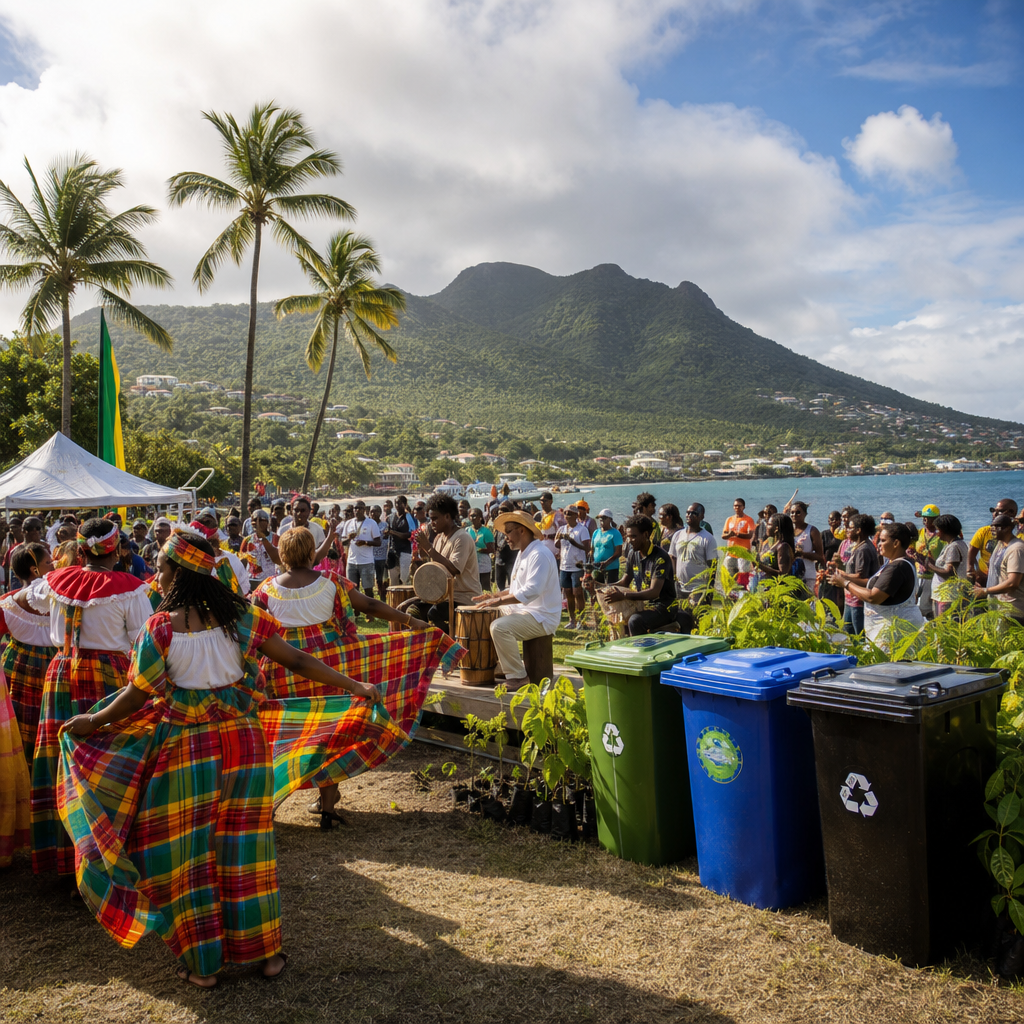
The highest-impact environmental improvements at Saint Kitts festivals are usually simple, measurable, and repeatable. Waste reduction comes first because litter is visible and expensive. Organizers should replace default single-use plastics with reusable cups where feasible, compostable service ware where reuse is unrealistic, and water refill points that cut bottled purchases. Clear signage matters. Mixed bins without staff supervision tend to produce contamination, making recycling ineffective. I have seen Caribbean events improve diversion rates sharply just by pairing bins with volunteers who guide disposal for the first few hours of peak attendance.
Energy and water planning are the next priorities. Outdoor events often rely on temporary power, and inefficient generator use raises both emissions and operating costs. Better scheduling, LED lighting, and shared power infrastructure can reduce fuel burn. Indoor venues can manage air-conditioning loads by setting practical temperatures and maintaining equipment before event periods. Water stewardship is just as important on islands facing utility constraints and seasonal variation. Low-flow wash stations, controlled hose use during cleanup, and smart placement of sanitation facilities prevent unnecessary consumption.
Transport is often the hidden sustainability issue. Visitors may associate an island event with walkability, but the cumulative effect of taxis, rental cars, service vehicles, and deliveries can be significant. Coordinated shuttle systems from hotels, park-and-ride points, and cruise terminals lower congestion and improve safety. If organizers publish arrival guidance in advance, visitors follow it. The final environmental piece is site protection. Beachfront events need dune and vegetation buffers, marine events need clear no-discharge rules, and trail-based events need restoration plans. A beautiful location is not a durable location unless event design actively protects it.
Economic and community benefits when planning is done well
Well-managed festivals create broad local value in Saint Kitts because spending touches many layers of the economy. Visitors book rooms, eat out, hire taxis, buy crafts, purchase costumes, and often extend their stays for sightseeing. Local farmers and fishers can benefit when menus favor island ingredients. Creative workers gain paid opportunities through music, design, production, photography, and performance. Small vendors, especially those without storefronts, get access to concentrated customer traffic that would be difficult to generate independently.
The strongest model is one that increases local retention of tourism revenue. That means sourcing from Saint Kitts first, using resident talent where possible, and building procurement rules that do not automatically favor large import-dependent suppliers. A festival that looks glamorous but imports most of its materials, headliners, food inputs, and management services may deliver weaker net benefit than a more modest event with deep local linkages. This is a critical distinction in sustainable tourism economics. Gross visitor spending is not the same as local value creation.
Community benefits also include less obvious gains. Events can fund scholarships, sports clubs, heritage restoration, or environmental cleanups. They can create training pathways in hospitality, sound engineering, stage management, event security, and digital marketing. They can help younger residents see cultural traditions as living assets rather than museum pieces. When residents feel included rather than burdened, festivals earn social license. That support becomes essential when organizers need volunteers, neighborhood cooperation, or public-private investment to improve the next edition.
What travelers, businesses, and organizers should do next
Travelers can support Saint Kitts’ sustainable festivals and events with straightforward choices. Book locally owned accommodation where possible, use refillable bottles, follow waste rules, respect parade routes and residential areas, and buy from licensed local vendors rather than informal resellers with unclear sourcing. Ask questions that reward good practice: Is food locally sourced? Are there refill stations? How does the event handle waste? Visitors influence standards more than they realize because organizers respond to demand signals.
Businesses should treat event sustainability as a commercial advantage, not a compliance burden. Hotels can package shuttle transport and reusable amenity options. Restaurants can design festival menus around seasonal island produce. Tour operators can build low-impact add-on experiences that disperse guests beyond Basseterre and reduce crowding at peak times. Sponsors should require basic reporting on waste, local procurement, and community outcomes before renewing support. Even small metrics matter because they create accountability and make future planning smarter.
For organizers, the path is clear: start with a baseline, then improve one system at a time. Measure attendance, waste volume, vendor mix, local sourcing share, transport mode, and cleanup time. Write sustainability expectations into contracts. Train staff and volunteers before gates open. Coordinate with public agencies early. The main benefit is durable tourism growth that protects what makes Saint Kitts special: culture, scenery, heritage, and community pride. If you are building or promoting events on the island, use this hub as your starting point and make sustainability part of every festival decision.
Frequently Asked Questions
What makes a festival or event in Saint Kitts “sustainable”?
A sustainable festival in Saint Kitts is more than a celebration with a few recycling bins. It is an event designed to balance enjoyment, cultural expression, tourism income, and long-term care for the island’s natural and community resources. In practice, that means organizers look at how the event affects beaches, coastal waters, public spaces, waste systems, traffic, energy use, and nearby neighborhoods. They also think carefully about who benefits economically, whether local vendors and artists are included, and how the event reflects Kittitian heritage rather than simply importing a generic tourism experience.
On an island like Saint Kitts, sustainability matters because the same landscapes and traditions that attract visitors can be damaged by poorly managed growth. A truly sustainable event aims to reduce single-use plastics, improve waste sorting and cleanup, manage crowd size responsibly, source food and services locally, and limit unnecessary strain on water and electricity supplies. It also protects the cultural side of sustainability by respecting local music, cuisine, craft traditions, and community values. The goal is not to make festivals smaller or less enjoyable, but to make them smarter, more resilient, and more beneficial for residents as well as visitors.
How do sustainable festivals help protect Saint Kitts’ environment?
Sustainable festivals help protect Saint Kitts’ environment by reducing the kinds of impacts that can quickly add up on a small island. Large gatherings can generate significant amounts of litter, food waste, wastewater, vehicle emissions, and pressure on sensitive coastal areas. When events are planned sustainably, organizers take steps to prevent that damage before it happens. This can include using reusable or compostable service ware, setting up clearly marked waste and recycling stations, arranging post-event cleanup teams, and choosing venues and layouts that avoid disturbing beaches, wetlands, or other vulnerable habitats.
Environmental protection also depends on logistics. Transportation planning can reduce congestion and emissions by encouraging shuttles, shared rides, or walkable event zones. Food and beverage planning can emphasize local sourcing, which lowers transport-related impacts while supporting Kittitian farmers and fishers. Water refill stations can reduce the need for bottled water, and better energy management can cut fuel consumption for temporary event infrastructure. Just as important, sustainable festivals often raise awareness. Visitors and residents alike are more likely to adopt better habits when they see visible examples of responsible event management. Over time, those practices can strengthen broader conservation efforts across Saint Kitts, especially in areas where tourism and environmental health are closely linked.
Why are local communities so important to sustainable events in Saint Kitts?
Local communities are central to sustainable events because they live with the outcomes long after the festival ends. If an event brings in revenue but leaves behind noise complaints, litter, traffic problems, or little economic benefit for residents, it is not truly sustainable. In Saint Kitts, community-centered planning helps ensure that festivals contribute to local well-being rather than placing extra pressure on daily life. This includes involving residents, small businesses, cultural groups, artisans, performers, and service providers in decision-making and in the economic opportunities created by the event.
Community importance is also cultural. Saint Kitts has a distinct identity shaped by history, music, food, storytelling, and shared traditions. Sustainable festivals work best when they showcase that identity authentically and respectfully. Hiring local entertainers, featuring local cuisine, sourcing decorations and products from island-based makers, and partnering with community organizations all help keep more value on the island. This approach strengthens local pride, supports livelihoods, and creates a visitor experience that feels genuine rather than manufactured. When residents see clear benefits and feel represented, festivals are more likely to earn trust, attract repeat support, and become lasting assets to the island’s social and economic fabric.
What are some practical ways event organizers in Saint Kitts can make festivals more sustainable?
There are many practical steps organizers in Saint Kitts can take, and the most effective approach is usually a combination of small, consistent actions across the entire event. Waste reduction should be a major focus. Organizers can work with vendors to minimize unnecessary packaging, ban or restrict certain single-use plastics, provide reusable cups or dishware where feasible, and make sorting stations easy to find and understand. Vendor agreements can include sustainability requirements, such as proper waste disposal, environmentally responsible packaging, and preference for local ingredients and products.
Planning can also improve sustainability in transportation, infrastructure, and community impact. Organizers can select venues that are accessible and appropriate for the expected crowd, coordinate shuttle services, encourage digital tickets and cashless options to reduce paper use, and schedule setup and breakdown to minimize disruption to local neighborhoods. Partnering with schools, nonprofits, or environmental groups for education campaigns and volunteer cleanup efforts can add lasting value. Measuring results is another important step. Tracking waste volumes, local supplier participation, energy use, and attendee feedback helps organizers improve year after year. Sustainability is most effective when it is built into budgeting, contracts, marketing, and operations from the beginning, rather than added as an afterthought.
How do sustainable festivals support tourism and the long-term future of Saint Kitts?
Sustainable festivals support tourism by helping Saint Kitts remain attractive, distinctive, and resilient. Visitors increasingly want experiences that feel authentic and responsible, not overcrowded or environmentally careless. Events that celebrate Kittitian culture while protecting public spaces and natural beauty can strengthen the island’s reputation as a destination that values both hospitality and stewardship. That kind of reputation matters in a competitive travel market. It encourages positive word of mouth, repeat visits, and stronger alignment with travelers who are willing to support quality experiences rooted in local culture.
The long-term future of Saint Kitts depends on avoiding the short-term mindset that can damage the very resources tourism relies on. Clean beaches, healthy marine and coastal ecosystems, vibrant town centers, and strong local traditions are not unlimited assets. Sustainable festivals help preserve those assets by directing tourism growth in a more responsible way. They also spread benefits more widely by supporting local entrepreneurs, artists, food producers, and service providers. When done well, these events create a cycle in which tourism revenue reinforces community strength and environmental care rather than undermining them. That is the real value of sustainability in Saint Kitts: it allows celebration, economic opportunity, and protection of the island’s character to move forward together.