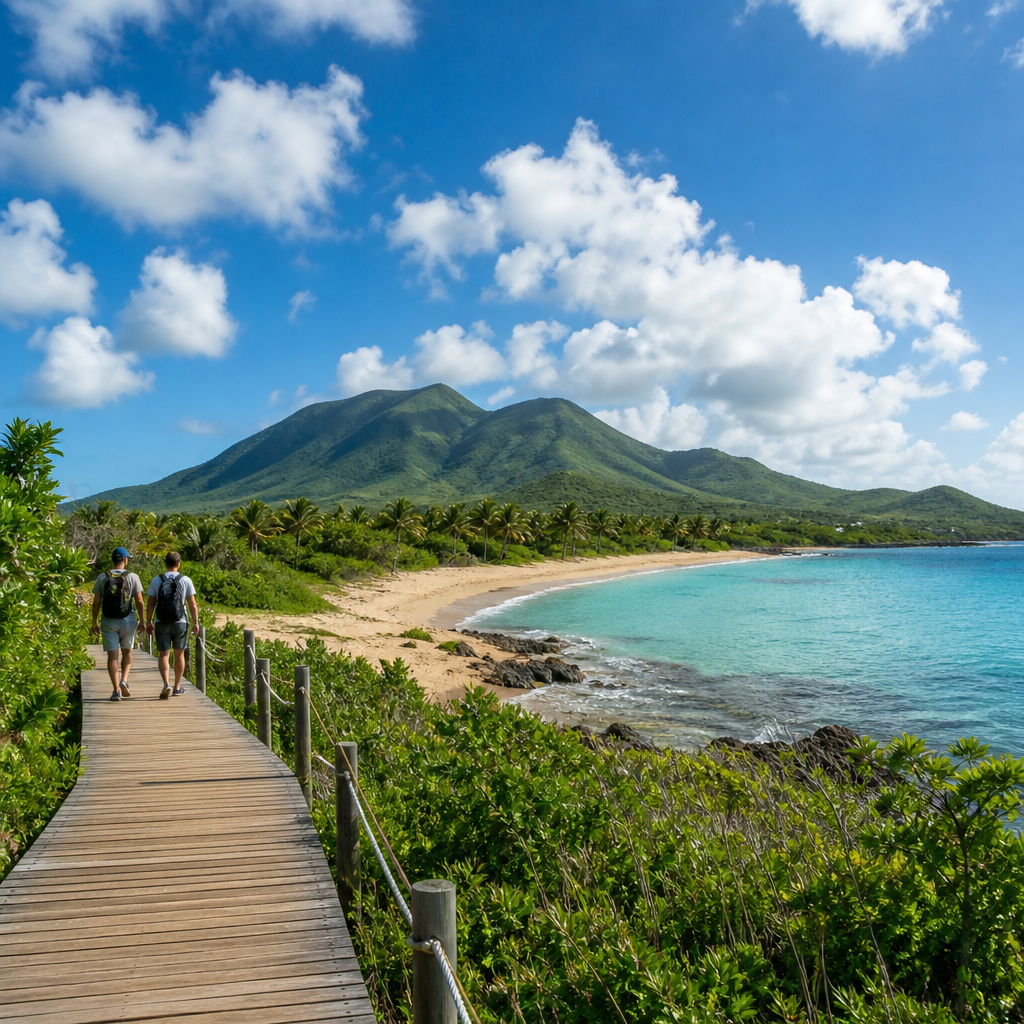
Nevis’ innovative approach to sustainable tourism shows how a small Caribbean island can protect natural resources, strengthen local livelihoods, and still deliver a high-value visitor experience. Sustainable tourism means managing travel so environmental systems, cultural heritage, and community well-being are preserved while the economy benefits over the long term. On Nevis, that definition is not abstract. It appears in how hotels source food, how trails are maintained, how beaches are protected, and how development decisions are debated. As a sub-pillar within sustainable tourism, this topic is broad by design, covering the connected issues that shape responsible travel beyond a single beach, hotel, or attraction.
Nevis matters because it operates at a human scale. The island, part of the Federation of Saint Kitts and Nevis, has a population of roughly twelve thousand people and a landscape dominated by Nevis Peak, coastal wetlands, coral ecosystems, and historic estates. Limited land, finite freshwater, imported energy, and exposure to hurricanes make sustainability a practical necessity rather than a branding exercise. In my work reviewing destination strategies across island markets, I have seen that smaller destinations often move fastest when policy makers, tourism operators, and residents can see the consequences of bad decisions immediately. Nevis fits that pattern. What happens to waste, water, reefs, roads, and employment is visible quickly, so accountability is harder to avoid.
The island’s tourism model also differs from volume-led destinations. Nevis has generally favored lower-density development, distinctive boutique hospitality, heritage assets, and nature-based experiences over mass cruise infrastructure or large all-inclusive clusters. That does not mean tourism is automatically sustainable. Air travel has a carbon cost, luxury properties can strain utilities, and any growing visitor economy can inflate land values and pressure local culture. The innovation lies in balancing those tensions through practical measures: conservation partnerships, support for local supply chains, attention to carrying capacity, and a stronger link between visitor spending and community value. This article serves as a comprehensive hub for the miscellaneous dimensions of sustainable tourism on Nevis, bringing together the environmental, economic, cultural, governance, and visitor-behavior factors that explain why the island is increasingly studied as a resilient destination.
Why Nevis Is Well Positioned for Sustainable Tourism
Nevis begins with structural advantages that many destinations try to create after overdevelopment has already occurred. Its tourism base is relatively compact, the road network and settlement pattern disperse pressure better than a dense resort strip, and many of its most attractive assets are inherently low-impact when managed properly: hiking routes, heritage sites, artisanal food production, marine recreation, and quiet beaches rather than high-capacity entertainment zones. From a destination management perspective, this gives Nevis room to shape demand around quality and length of stay instead of sheer arrival numbers.
The island’s positioning also benefits from traveler demand trends. Visitors increasingly ask whether a destination protects biodiversity, supports local communities, and offers authentic experiences. Nevis can answer those questions with credible assets rather than marketing slogans. A guest can stay in a historic plantation inn, eat produce grown nearby, join a guided rainforest hike, visit Charlestown’s heritage sites, and spend on locally owned services within a short radius. That circulation of spending matters. In sustainable tourism, the goal is not only more tourism revenue, but higher local retention of each visitor dollar. Destinations with strong local linkages tend to produce broader economic resilience and less dependence on imports.
Another advantage is governance scale. On a small island, collaboration between tourism authorities, conservation groups, hospitality operators, farmers, fishers, and transport providers is more feasible than in a large fragmented destination. When beach erosion worsens, water costs rise, or a trail network needs upgrading, the relevant stakeholders can often meet and act faster. The challenge, of course, is that limited budgets and institutional capacity can slow implementation. Nevis’ progress is notable because it has advanced sustainability through networks, practical partnerships, and consistent destination identity rather than through one dramatic mega-project.
Environmental Stewardship in Practice
Environmental protection is the foundation of Nevis’ tourism product. Without healthy beaches, clear coastal waters, forested slopes, and functioning ecosystems, the island loses the very qualities that attract visitors. Sustainable tourism on Nevis therefore starts with land and marine stewardship. This includes coastal management, habitat preservation, erosion control, responsible trail use, and efforts to reduce pollution entering nearshore waters. For island destinations, sediment runoff and wastewater mismanagement are especially damaging because they degrade reefs and seagrass beds that buffer coastlines and support marine life.
Properties that take sustainability seriously on Nevis increasingly focus on efficiency before expansion. In operational audits I have conducted for island hotels elsewhere, the quickest environmental wins usually come from LED retrofits, low-flow fixtures, leak detection, linen reuse programs, and kitchen waste reduction. Those same principles apply here. Water conservation is critical because small islands face seasonal variability, infrastructure constraints, and storm-related disruptions. Energy efficiency is equally important because electricity generation in Caribbean markets often depends heavily on imported fuels, creating both emissions and high operating costs. When hotels lower consumption, they improve margins and reduce environmental stress at the same time.
Nature-based tourism on Nevis also depends on visitor management. Hiking on Nevis Peak, for example, can be an outstanding low-impact activity when guided properly, but unmanaged foot traffic can damage trails, compact soils, and increase litter. The sustainable approach is simple: marked routes, trained guides, group size control, safety protocols, and ongoing maintenance. Similar logic applies offshore. Snorkeling, diving, sailing, and fishing excursions must operate with clear standards around anchoring, wildlife interaction, reef contact, and waste disposal. Sustainable tourism is not passive appreciation of nature; it is disciplined use of nature within ecological limits.
Community Benefit and the Local Economy
A destination is not sustainable if visitors enjoy the island while residents absorb the costs. Nevis’ more promising tourism practices recognize that community benefit must be designed into the system. Local hiring, training, supplier development, and support for small enterprises are central. When hotels buy from local farmers, restaurants feature Nevisian products, and tour operators work with local guides, tourism becomes a multiplier rather than an enclave. This is especially important in island economies where import leakage can be high.
One of the most effective ways to evaluate sustainable tourism is to ask where visitor spending goes after checkout. Does it remain on the island through wages, local procurement, and local ownership, or does it leave through imported goods and external service contracts? Nevis has opportunities to deepen retention by strengthening farm-to-table networks, artisanal manufacturing, cultural programming, and small-scale marine and land tours. These links not only support income but also make the visitor experience more distinctive. Travelers remember a breakfast featuring local fruit, a rum tasting tied to island history, or a craft purchase from the maker far more than standardized resort consumption.
There is also a social dimension. Tourism jobs must be decent jobs, with pathways to management, entrepreneurship, and skills transfer. Hospitality training in food safety, customer service, maintenance, digital booking systems, and environmental operations can raise service quality while improving career prospects for residents. Sustainable tourism succeeds when local people view the industry as something they shape and benefit from, not something imposed on them. On Nevis, that means protecting public access, respecting village character, and ensuring development decisions consider housing, traffic, utilities, and cultural continuity.
Culture, Heritage, and Sense of Place
Nevis has a strong advantage in heritage-led tourism because its history is visible in landscapes, architecture, and community memory. Charlestown, historic estates, churches, and plantation-era sites provide a framework for interpreting the island’s colonial past, emancipation history, and modern identity. Sustainable tourism does not sanitize that history. It presents it honestly, including the difficult parts, while giving visitors meaningful context. Destinations that do this well earn trust and create deeper engagement than those that offer only postcard scenery.
Protecting cultural assets requires active management. Historic buildings need conservation plans, maintenance funding, and adaptive reuse that respects original character. Festivals, music, food traditions, and oral histories need support so they are lived culture, not staged performances detached from local meaning. I have seen heritage products fail when they are packaged solely for tourists and local participation fades. On Nevis, the better model is community-centered interpretation, where residents, historians, artists, and guides shape the narrative and receive economic value from sharing it.
Food is one of the clearest bridges between sustainability and culture. Menus that feature local seafood sourced responsibly, seasonal produce, and traditional preparation methods reduce transport impacts and strengthen cultural identity. They also help smaller producers enter the tourism economy. For a sustainable tourism hub article, this matters because gastronomy connects agriculture, fisheries management, waste reduction, culinary training, and visitor education in one practical category.
Key Pillars That Support Nevis’ Model
| Pillar | Why It Matters | Nevis Example | Main Risk if Ignored |
|---|---|---|---|
| Low-density development | Reduces pressure on beaches, roads, and utilities | Boutique inns and spread-out accommodations | Overcrowding and infrastructure strain |
| Local supply chains | Keeps visitor spending in the island economy | Hotels sourcing produce and services locally | High import leakage |
| Marine and land conservation | Protects the assets visitors come to enjoy | Managed trails, reef-safe excursion practices | Habitat degradation and weaker destination appeal |
| Heritage preservation | Strengthens identity and diversifies experiences | Charlestown sites and plantation history interpretation | Loss of authenticity |
| Resilience planning | Prepares tourism for storms, drought, and energy shocks | Efficiency measures and risk-aware operations | Cost spikes and service disruption |
Resilience, Infrastructure, and Resource Management
Climate resilience is inseparable from sustainable tourism in the Caribbean. Nevis faces hurricane risk, coastal erosion, heat stress, and changing rainfall patterns. Any serious tourism strategy must therefore include resilient building standards, drainage management, backup systems, emergency planning, and protection of natural buffers such as reefs and vegetation. The most resilient destinations do not treat climate adaptation as a separate environmental project. They build it into hotel design, road maintenance, water systems, insurance decisions, and visitor communications.
Waste management is another practical test. Small islands often struggle with landfill constraints, plastics, food waste, and the logistics of recycling. Sustainable tourism operators can reduce pressure through procurement choices, refill systems, composting where feasible, and guest-facing policies that make responsible behavior easy. Waste is not glamorous, but it is one of the clearest indicators of whether a destination is managing growth responsibly. The same is true for wastewater treatment, which directly affects coastal water quality and public health.
Transportation deserves attention as well. Because Nevis is an island destination, aviation emissions are part of the tourism footprint, and they cannot be eliminated locally. What the island can control is on-island mobility and length-of-stay economics. Encouraging longer stays, shared transfers, walkable clusters, and well-planned excursion routing can improve the emissions profile per visitor day while reducing congestion. That is a more realistic strategy than claiming carbon neutrality through marketing language alone.
What Travelers, Businesses, and Policy Makers Should Do Next
For travelers, the most sustainable choices on Nevis are concrete. Stay longer rather than taking a rushed short trip. Choose accommodations with visible conservation practices. Book local guides. Respect trail rules. Use reef-safe behavior in the water. Eat local food, carry reusable bottles where refill options exist, and support businesses that employ and source locally. Responsible visitor behavior may seem small, but across a season it shapes demand and signals what kind of tourism market the island should cultivate.
For businesses, the next step is measurement. Track water use per occupied room, energy intensity, waste volumes, local procurement rates, and staff retention. Standards from organizations such as the Global Sustainable Tourism Council provide useful direction because they convert broad commitments into operational criteria. Certification is not the goal by itself, but disciplined benchmarking helps prevent sustainability from becoming vague public relations language. On Nevis, operators that measure performance can identify savings, support staff training, and communicate credibility to increasingly informed guests.
For policy makers, the priorities are clear: protect sensitive areas, maintain development discipline, invest in infrastructure, support small enterprises, and make sustainability data more visible. The long-term strength of Nevis lies in staying distinctive. It should resist growth models that chase volume at the expense of beaches, heritage, utility reliability, and community support. Nevis’ innovative approach to sustainable tourism works because it aligns visitor experience with environmental care and local value creation. That is the central lesson of this hub topic and the reason the island stands out. Explore the related articles in this sustainable tourism section to go deeper into conservation, community tourism, heritage, food systems, and resilient destination planning on Nevis.
Frequently Asked Questions
What makes Nevis’ approach to sustainable tourism different from traditional island tourism models?
Nevis stands out because it treats tourism as something that must work for the island first, not just for visitors. In many traditional tourism models, growth is measured mainly by arrival numbers, large-scale development, and short-term revenue. Nevis takes a more balanced view. Its approach focuses on protecting beaches, trails, marine ecosystems, and cultural heritage while supporting local businesses, farmers, fishers, guides, and artisans. That means tourism is designed to fit the island’s environmental limits and community priorities rather than overwhelm them.
In practical terms, this shows up in smaller-scale hospitality, stronger ties between tourism and local agriculture, and greater attention to preserving the character of the island. Hotels and restaurants that source locally help keep more tourism spending within the community. Well-maintained hiking routes, protected coastal areas, and thoughtful beach stewardship help preserve the natural assets visitors come to enjoy in the first place. The result is a high-value visitor experience built on authenticity, environmental care, and long-term resilience instead of mass volume.
How does sustainable tourism on Nevis support local livelihoods and the island economy?
Sustainable tourism strengthens the local economy by creating more direct links between visitor spending and local enterprise. Instead of relying heavily on imported goods and externally controlled services, Nevis benefits when hotels, villas, restaurants, and tour operators purchase food, crafts, transportation, and expertise from people on the island. This creates a multiplier effect: tourism revenue supports farmers growing fresh produce, fishers supplying seafood, craftspeople producing local goods, and guides leading heritage, nature, and wellness experiences.
Just as important, this model helps diversify income sources and improve economic durability. When tourism development includes local ownership and procurement, a greater share of earnings stays on Nevis rather than leaving the island. That strengthens community stability over time. It also encourages visitors to engage more meaningfully with the destination, whether by dining on locally grown ingredients, exploring historical landmarks with local experts, or choosing excursions led by residents who know the land and culture intimately. In that way, sustainable tourism is not only environmentally responsible; it is also a practical strategy for building broad-based prosperity.
Why is environmental protection so central to Nevis’ tourism strategy?
Environmental protection is central because Nevis’ tourism appeal depends directly on the health of its natural systems. Clean beaches, clear coastal waters, biodiverse marine habitats, scenic landscapes, and well-kept trails are not secondary features; they are the foundation of the visitor experience. If those resources are degraded through erosion, pollution, habitat loss, or unmanaged development, the island risks losing both its ecological integrity and its long-term tourism value.
That is why sustainable tourism on Nevis emphasizes stewardship rather than simple consumption of natural assets. Protecting shorelines helps preserve beach quality and coastal resilience. Maintaining trails reduces erosion and improves visitor access to nature in a controlled, lower-impact way. Responsible management of waste, water, and land use helps reduce pressure on fragile ecosystems. These measures also benefit residents by protecting public spaces, reducing environmental risk, and maintaining the beauty and livability of the island. In short, environmental care is not separate from tourism success on Nevis; it is the reason that success can continue over time.
How does Nevis balance a high-quality visitor experience with sustainability goals?
Nevis shows that sustainability and premium travel experiences can reinforce each other. A high-quality visitor experience does not have to mean overdevelopment or excessive resource use. In fact, many travelers now value destinations that feel distinctive, uncrowded, and rooted in place. Nevis can deliver that by emphasizing quality over quantity: personalized hospitality, beautiful natural settings, locally inspired cuisine, cultural depth, and outdoor experiences that are thoughtfully managed rather than mass-produced.
This balance is achieved when visitor comfort and environmental responsibility are planned together. Properties that use local ingredients, support conservation, and respect the landscape can still offer exceptional service. Guided hikes, heritage tours, and beach experiences become more meaningful when they are connected to preservation and local knowledge. Visitors increasingly recognize that a protected coastline, an authentic food scene, and a strong sense of community make a destination more memorable, not less luxurious. On Nevis, sustainability helps define the experience by adding depth, credibility, and a stronger connection to the island itself.
What can travelers do to support sustainable tourism when visiting Nevis?
Travelers play an important role in reinforcing the island’s sustainable tourism model. One of the most effective choices is to spend intentionally. Booking accommodations that demonstrate responsible practices, eating at restaurants that use local ingredients, hiring local guides, and purchasing locally made products all help direct tourism benefits into the community. These decisions support jobs, preserve traditional knowledge, and encourage businesses that align with the island’s long-term well-being.
Visitors can also reduce their environmental footprint by respecting beaches and trails, minimizing waste, conserving water and energy, and following local guidance in sensitive natural areas. Choosing experiences that highlight culture, history, agriculture, and nature can deepen the trip while supporting the kinds of tourism Nevis is working to expand. Equally important is adopting the right mindset: seeing the island not just as a resort setting, but as a living community with valuable ecosystems and heritage. When travelers engage thoughtfully, they help ensure that Nevis remains both a rewarding place to visit now and a healthy, resilient island for the future.