Saint Kitts’ capital, Basseterre, packs more adventure into a compact waterfront grid than many larger Caribbean cities, making it the natural starting point for travelers who want culture, history, food, shopping, and easy day trips in one walkable place. In Saint Kitts, “urban adventures” means exploring a living port city rather than chasing nightlife alone: it includes Georgian-era streets, public squares, market stalls, colonial landmarks, cruise terminals, local rum shops, museums, and the transport links that connect the capital to beaches, rainforest trails, and volcanic viewpoints. As the hub for miscellaneous adventures and activities on the island, Basseterre matters because it reveals how Saint Kitts actually works day to day. I have found that visitors who spend even half a day beyond the port gates understand the island better, spend money more meaningfully, and leave with sharper memories than those who only browse souvenir arcades. The capital is where national history, modern commerce, and everyday Kittitian life intersect. It is also where practical travel decisions get made, from booking taxis and ferries to choosing independent guides, tasting local dishes, and learning which attractions deserve a full excursion later in the trip.
Founded by the French in 1627 and later shaped by British rule, Basseterre sits on the southwest coast of Saint Kitts and serves as the administrative, commercial, and transport center of the federation of Saint Kitts and Nevis. The city is small by global standards, but that scale is an advantage. Key sites cluster around The Circus, Independence Square, the waterfront, and Fort Street, so travelers can cover a surprising amount on foot. The best urban exploration here blends orientation with curiosity: understand the city plan, then move between landmarks, cafés, churches, craft markets, and local businesses. This article functions as the central guide to miscellaneous Basseterre experiences, helping you decide what to do first, what to pair together, and how to connect city sightseeing with broader island adventures. If you want a practical, rewarding, and distinctly local way to experience Saint Kitts, the capital is not a stopover. It is the anchor.
Start with the historic core and waterfront
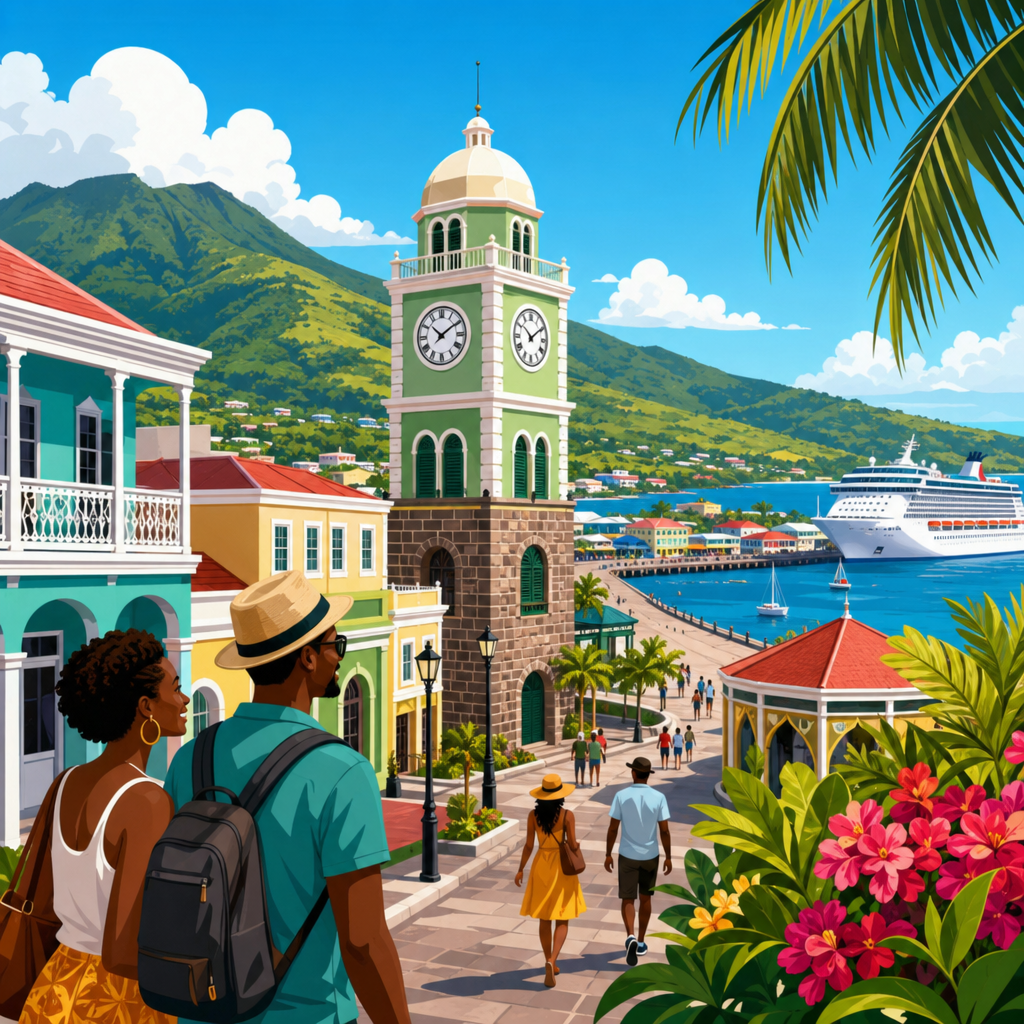
The most efficient way to explore Basseterre is to begin where visitors naturally arrive: Port Zante and the adjacent historic center. Port Zante is the cruise and retail zone, but it should be treated as a gateway rather than the whole experience. Walk inland toward The Circus, the city’s best-known roundabout, inspired by London’s Piccadilly Circus and marked by a green Victorian-style clock. From there, continue to Independence Square, one of the most important public spaces in Saint Kitts. Originally used during the colonial period as a market and, earlier, as a site connected to the trade in enslaved Africans, the square now functions as a civic gathering place lined with palms, pathways, and benches. Understanding that layered history changes the way the city feels; this is not decorative heritage, but a landscape shaped by power, labor, trade, and emancipation.
Nearby streets contain several of the capital’s most useful urban stops. The National Museum, housed in the old Treasury Building near the waterfront, is small enough for a short visit but valuable for context on indigenous history, plantation society, sugar production, and political development. Berkeley Memorial, co-cathedral churches, and surviving colonial architecture add dimension to a self-guided walk. I recommend travelers use Basseterre’s compact layout to build their own circuit: port, museum, The Circus, Independence Square, church, local café, public market, then back toward the bay. This pattern keeps the day manageable in tropical heat and allows time to stop for conversation or photos. The city is busiest when cruise ships are in port, so early morning and late afternoon often provide the best balance between activity and breathing room. If your goal is to understand the capital rather than simply pass through it, this core loop is the essential first experience.
Markets, street life, and local food worth seeking out
Urban adventure in Basseterre becomes memorable when you move beyond landmarks and pay attention to street-level life. The Public Market is one of the best places to do that. Depending on the day and season, vendors sell mangoes, soursop, breadfruit, pumpkins, plantains, seasonings, coconuts, and small-batch local products. You may also see imported goods, which reflects the island’s real supply chain rather than an idealized farm market image. Around the market and central streets, food stalls and casual eateries give visitors access to Kittitian flavors without the formality of a resort restaurant. Look for saltfish with coconut dumplings, goat water, barbecue chicken, johnny cakes, conch when available, and drinks made with tamarind, sorrel, or local fruit.
One of the most useful things I tell travelers is to ask where office workers eat lunch. In Caribbean capitals, that question often leads to better value and more authentic cooking than menus designed around quick visitor turnover. Basseterre is no exception. Small bakeries, lunch counters, and roadside grills can deliver the best meal of the day for modest cost. Rum shops and bars also play a role in understanding the city. They are not only drinking spots; they are social spaces where politics, cricket, and neighborhood news circulate. Visitors should approach respectfully, avoid photographing people without permission, and understand that a warm greeting goes a long way. If you want a food-focused day, pair the market with a local lunch, a stop for island ice cream or pastry, and a late-afternoon drink overlooking the bay. That sequence offers a fuller taste of Saint Kitts than any single formal dining reservation.
Museums, memorials, and the stories behind the streets
Basseterre rewards travelers who want more than surface sightseeing because many of its most meaningful sites are tied to the island’s difficult and important history. The National Museum is the clearest starting point, but the city itself is the larger archive. Independence Square, for example, should be interpreted in relation to slavery, public commerce, and later civic transformation. Churches, government buildings, and old commercial properties reveal the influence of French and British rule, while street names and monuments mark political transitions after colonialism. Saint Kitts and Nevis gained independence in 1983, and the capital still carries visual reminders of the institutions that preceded that moment.
For travelers interested in building a stronger historical itinerary, Basseterre is also the launch point for island sites connected to sugar and military defense. A city walk pairs naturally with later visits to Romney Manor, the UNESCO-listed Brimstone Hill Fortress National Park, and former plantation estates converted into inns or interpretation spaces. That matters because Basseterre was never separate from the plantation economy; it was one of the urban nodes through which labor, exports, and administration flowed. In practice, this means the city can be explored in layers. A casual visitor sees architecture and traffic. A curious visitor sees evidence of colonial competition, Atlantic trade, religious institutions, and post-independence identity. The difference comes from slowing down, reading plaques, entering museums, and asking local guides to explain what happened in a given square or building. Basseterre is not a polished heritage theme park. Its value lies in the fact that history remains embedded in ordinary civic space.
Easy urban adventures from Basseterre
The capital works best when used as an activity hub. Within a short taxi ride, travelers can transition from city streets to beaches, viewpoints, gardens, and transportation nodes for cross-island exploration. Basseterre’s central position makes it ideal for pairing “miscellaneous” interests that do not fit neatly into one category. You can shop in the morning, visit a museum before lunch, spend the afternoon at Frigate Bay, then return for dinner in town. You can arrange an island tour from the city, book a catamaran pickup, or connect to the ferry terminal for a trip to Nevis. The practical advantage is time efficiency: because Basseterre concentrates services, you can confirm tours, buy essentials, exchange information with drivers, and still fit in independent sightseeing.
| Adventure | Typical Time Needed | Why Start in Basseterre | Best For |
|---|---|---|---|
| Historic walking circuit | 2 to 3 hours | Sites are clustered near the port and downtown | First-time visitors, cruise passengers |
| Public Market and food crawl | 2 hours | Best access to local produce, bakeries, and lunch spots | Food-focused travelers |
| Frigate Bay add-on | Half day | Taxis are easy to arrange from the capital | Visitors mixing city and beach time |
| Ferry to Nevis | Half day to full day | Terminal and transport logistics are handled in town | Independent day-trippers |
| Brimstone Hill excursion | Half day | Most drivers and tours depart from Basseterre hotels or port | History lovers, photographers |
Among the simplest add-ons, the ferry connection is often overlooked. If schedules align, Basseterre allows for a practical Nevis day trip without changing accommodation. For beachgoers, South Friars Bay and Frigate Bay are straightforward extensions of a city morning. For shoppers, downtown boutiques and craft vendors can be combined with supermarket stops for local snacks, spices, or rum to take back to your hotel. In my experience, travelers get the most from Basseterre when they stop asking whether the city is a “full-day destination” and start treating it as a flexible base for several small, satisfying adventures.
Shopping, crafts, and practical city discoveries
Shopping in Basseterre is most rewarding when expectations are realistic. Port Zante offers the easiest browsing for jewelry, duty-free items, branded souvenirs, and cruise-oriented retail. Downtown streets and market areas provide better opportunities for independent purchases such as spices, handmade crafts, locally printed apparel, and food items with a clearer island connection. Not every product marketed as local is made on Saint Kitts, so ask direct questions. Vendors are used to this, and serious craft sellers usually explain materials and origin plainly. Batik products linked with Romney Manor are among the island’s most recognizable artisan goods, even if you buy them later outside the capital.
Practical shopping also matters. Basseterre is where many travelers pick up sunscreen, bottled water, medications, phone credit, toiletries, and snacks at more sensible prices than resort gift shops. This may not sound adventurous, but small logistical wins improve the rest of the trip. The city is also where you can observe everyday retail culture: hardware stores, banks, school supply shops, pharmacies, and street vendors all operating side by side. That mix is part of the urban experience. It reminds visitors that Basseterre is not staged solely for tourism. If you enjoy discovering a destination through ordinary commerce, spend an hour walking away from the waterfront. You will see delivery vans, office workers, uniforms, church notices, music from passing cars, and neighborhood interactions that reveal more about Saint Kitts than any curated shopping arcade can.
How to explore safely, comfortably, and with respect
Basseterre is straightforward for most visitors, but a better city experience comes from using normal urban awareness. Stay in well-trafficked areas if you are unfamiliar with the layout, especially when cruise crowds thin out. Carry only what you need, keep phones and wallets secure, and use licensed taxis for longer trips. Heat and humidity are often the biggest practical challenge, so bring water, wear light clothing, and plan indoor or shaded stops around midday. If you are arriving by ship, confirm all-aboard times carefully; traffic and queues near the port can tighten later in the day. On Sundays and public holidays, some businesses may close or operate shorter hours, which affects food and shopping plans.
Respect matters as much as logistics. Basseterre is photogenic, but everyday life is not a backdrop. Ask before photographing vendors, children, or people in bars. Greet shopkeepers when entering. If someone offers help, a polite no thank you is enough; there is no need to turn routine sales contact into conflict. When discussing history, especially slavery and colonialism, listen more than you speak. Residents may frame the city’s past differently from guidebooks, and those perspectives are part of the value of being there. The best urban adventures in Saint Kitts happen when visitors combine confidence with humility: walk attentively, spend locally, ask informed questions, and leave space for the city to show its own character.
Basseterre proves that adventure in Saint Kitts is not limited to beaches, catamarans, and rainforest hikes. The capital offers a different kind of discovery: one built from history, movement, conversation, food, architecture, and the practical rhythm of island life. For travelers using this miscellaneous activities hub, the city should be the connector between major excursions and smaller experiences that often become trip highlights. Start with the historic core, add the market and a local lunch, use museums and memorials to understand the island’s story, and then branch outward to beaches, fortresses, ferry trips, or craft stops. That approach turns Basseterre from a port call into a meaningful destination.
The main benefit of exploring the capital is clarity. You see how Saint Kitts fits together: colonial past and independent present, visitor economy and local routine, waterfront commerce and inland neighborhoods. Few places on the island provide that perspective as efficiently. Whether you have three hours or two days, Basseterre can deliver substance if you explore it deliberately. Make this page your starting point for the wider Adventure and Activities collection, then build your own urban itinerary around what interests you most. Walk beyond the obvious, ask better questions, and let the capital introduce the rest of Saint Kitts properly.
Frequently Asked Questions
What makes Basseterre the best place to begin an urban adventure in Saint Kitts?
Basseterre is the ideal starting point because it brings together many of the experiences travelers want from Saint Kitts in one compact, walkable capital. Rather than spreading history, food, shopping, and local culture across a wide area, the city places them close to the waterfront, public squares, and main streets, making it easy to explore without feeling rushed. Visitors can move from Georgian-era architecture and colonial landmarks to market stalls, churches, museums, and harbor views within a relatively short distance. That convenience is especially valuable for cruise passengers, first-time visitors, and independent travelers who want to make the most of limited time.
What truly sets Basseterre apart is that it feels like a living port city, not just a collection of attractions. You are not only visiting historic sites; you are also seeing everyday life unfold around them. Vendors set up near busy corners, residents move through the city on errands, taxis and minibuses connect the capital to the rest of the island, and local rum shops and small eateries offer a direct window into Kittitian flavor and hospitality. This mix of heritage and daily life gives urban exploration in Basseterre a more grounded, authentic feel than a destination built solely around tourism.
The capital also works well as a launch point for broader island discovery. After exploring the central district, travelers can easily arrange day trips to beaches, scenic viewpoints, historic plantations, and other landmarks beyond town. In practical terms, Basseterre offers strong logistics, recognizable landmarks, and a manageable layout, so visitors can enjoy both spontaneous wandering and structured sightseeing. For anyone interested in experiencing Saint Kitts through its culture, architecture, street life, and waterfront energy, Basseterre naturally serves as the island’s urban heart.
Which historic and cultural sites in Basseterre should travelers prioritize?
A good urban itinerary in Basseterre should begin with Independence Square, one of the city’s most recognizable gathering places and an important historical landmark. The square reflects layers of the island’s colonial past while also serving as a modern public space where visitors can pause, orient themselves, and observe local life. From there, many travelers head toward the Cathedral of the Immaculate Conception and St. George’s Anglican Church, both of which help tell the story of the capital through architecture, faith, and resilience. These sites are not only visually striking but also useful for understanding how Basseterre developed over time.
The National Museum is another priority for anyone who wants more than surface-level sightseeing. It provides context for the island’s history, including colonial influence, trade, slavery, cultural traditions, and the development of modern Saint Kitts and Nevis. Museums often help connect what travelers see on the streets with the deeper stories behind those places, and in a compact city like Basseterre, that context makes the walking experience much richer. Visitors who enjoy architecture should also pay attention to civic buildings, old facades, and street layouts that reflect the capital’s long-standing role as an administrative and commercial center.
Beyond major landmarks, part of Basseterre’s appeal lies in the smaller details. Market areas, traditional storefronts, and public monuments all add texture to the urban experience. Even a simple walk through central streets can reveal plaques, historic buildings, and long-established businesses that tell their own stories about trade, migration, religion, and local identity. The best approach is to combine a few headline attractions with time to wander. That balance allows travelers to appreciate both the formal historical sites and the everyday cultural character that gives Basseterre its personality.
Is Basseterre easy to explore on foot, and how should visitors plan a self-guided day in the capital?
Yes, Basseterre is generally well suited to walking, especially for visitors focused on the central waterfront and historic core. One of the city’s biggest advantages is its scale: many points of interest are close enough together to be visited in a single day without the need for constant transportation. This makes self-guided exploration practical for travelers who enjoy discovering a city at their own pace. Starting near the cruise terminal or waterfront is often the easiest choice, since it provides immediate access to shops, visitor services, and the streets that lead into the heart of town.
A smart self-guided day usually begins in the morning, when temperatures are more comfortable and streets feel energetic but manageable. From the waterfront, visitors can walk toward central landmarks such as Independence Square, nearby churches, historic buildings, and the museum, then continue into shopping streets and market areas. Along the way, it is worth leaving space for unscripted stops, whether that means browsing local crafts, trying a snack, stepping into a rum shop, or photographing architecture that catches your eye. Basseterre rewards curiosity, and some of the most memorable moments come from the spaces between the major attractions.
Planning should also take practical comfort into account. Wear lightweight clothing, comfortable shoes, and sun protection, and carry water, especially if exploring midday. If you want to combine the city with a nearby beach, scenic viewpoint, or plantation visit later in the day, Basseterre makes those onward connections relatively simple through taxis and tours. Travelers who prefer a deeper interpretation may enjoy beginning with a guided walk and then revisiting favorite areas independently. Either way, the city’s compact layout makes it easy to create a flexible itinerary that blends structure with spontaneity.
What kinds of local food, shopping, and street-level experiences can visitors expect in Basseterre?
Basseterre offers a broad range of street-level experiences that help visitors connect with Saint Kitts beyond the usual postcard attractions. Food is one of the easiest entry points. In and around the capital, travelers can find casual local eateries, small cafes, market snacks, and rum shops that reflect everyday island tastes. Depending on where you go and what is available that day, you may encounter Caribbean staples, fresh seafood, rice dishes, seasoned meats, baked goods, and tropical drinks. The setting matters as much as the menu: eating in Basseterre often comes with the sounds of traffic, conversation, port activity, and neighborhood life, all of which add to the sense of place.
Shopping in the capital ranges from practical local commerce to visitor-friendly souvenir browsing. Near the cruise port, travelers often find gifts, apparel, jewelry, spices, and island-made items geared toward short-term visitors. Deeper into town, shopping can feel more local and less polished, with everyday businesses, informal vendors, and market stalls offering a better feel for how residents actually use the city. This contrast is part of the appeal. You can browse for crafts and keepsakes while also seeing the rhythms of a working Caribbean capital, where trade and social interaction are still central to daily life.
The most rewarding urban adventures usually come from engaging respectfully with these everyday environments. Talk to shopkeepers, ask for local recommendations, and be open to trying something unfamiliar. A small rum shop, a produce stand, or a family-run lunch spot can reveal as much about Basseterre as a museum or monument. For travelers interested in authenticity, these experiences are not side attractions; they are a core part of understanding the city. Basseterre’s food and shopping scene is less about luxury and more about texture, personality, and connection, which is exactly what many visitors are looking for in a memorable urban stop.
Can Basseterre be combined with nearby day trips, or is it best explored as a standalone city experience?
Basseterre works very well both as a standalone destination and as a base for same-day island exploration. Because the capital is compact, many travelers can comfortably see its key sights in a morning or afternoon and still have time to venture farther afield. This flexibility is one of the city’s greatest strengths. Instead of choosing between urban culture and natural scenery, visitors can often enjoy both in a single day. After walking the historic center, it is easy to arrange a taxi or organized tour to beaches, hillside viewpoints, former plantation estates, or other scenic and historical attractions around Saint Kitts.
For cruise passengers or short-stay visitors, combining experiences is often the most efficient strategy. A few hours in Basseterre can provide insight into the island’s history, architecture, public life, and local commerce, while an afternoon excursion can add landscapes and coastal beauty to the itinerary. Travelers staying longer may prefer to give the city its own dedicated day, which allows more time for museums, churches, shopping, and unhurried meals before using later days for broader island touring. Both approaches are valid and depend largely on pace, interests, and transportation preferences.
The key is to treat Basseterre as more than a transit point. Even when paired with day trips, the capital deserves meaningful attention because it provides context for the rest of the island. Its streets, landmarks, and waterfront help explain Saint Kitts’ colonial history, commercial development, and present-day identity. Seen this way, Basseterre is not just where excursions begin; it is where many travelers first understand the island itself. That is why it remains such an important part of any well-rounded Saint Kitts itinerary.