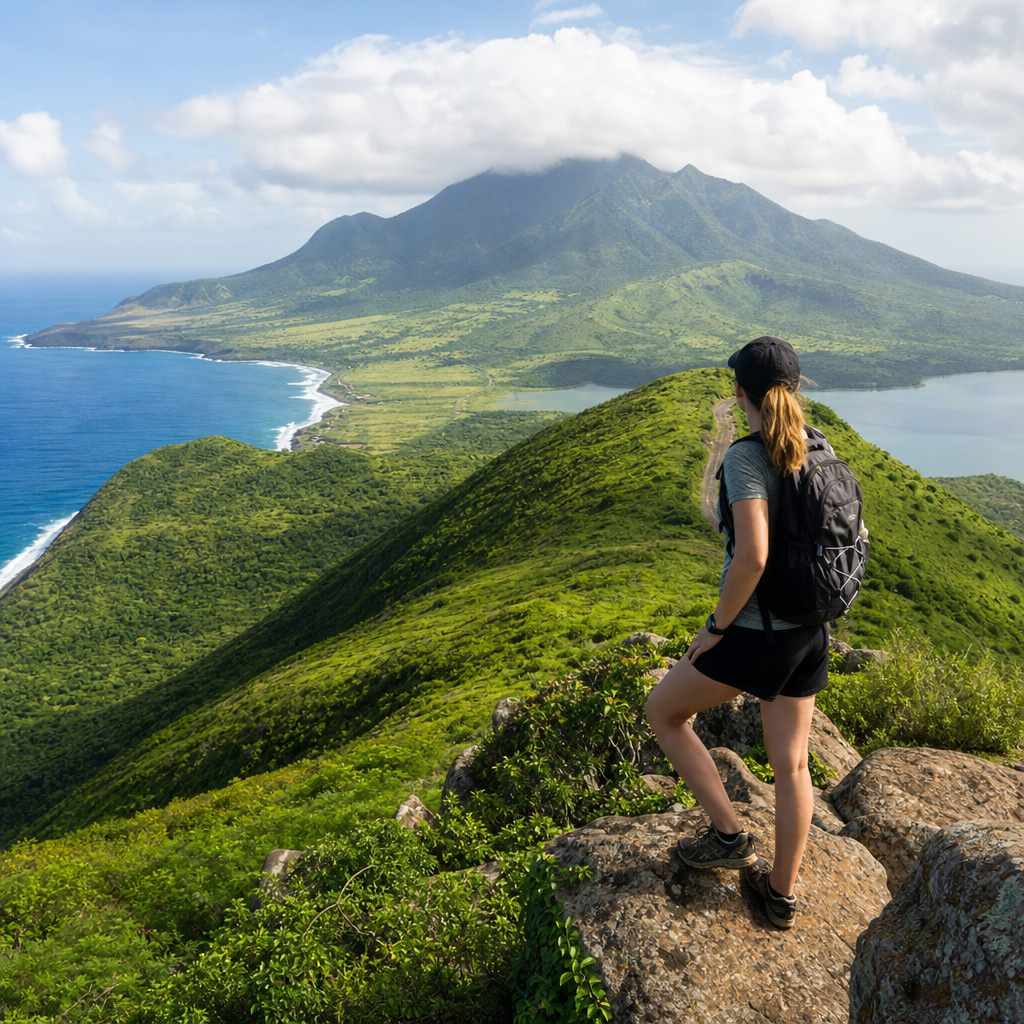
Adventure tourism in Saint Kitts is moving from a niche leisure activity into a credible business and investment opportunity, with room for better products, stronger local linkages, and higher visitor spending. In practical terms, adventure tourism includes guided hiking, mountain biking, ziplining, ATV excursions, sailing, diving, sport fishing, trail running, heritage walks, and nature-based experiences built around active participation rather than passive sightseeing. For Saint Kitts, that matters because the island already combines key ingredients investors look for: a compact geography, a dramatic volcanic interior, established cruise and air access, recognizable Caribbean branding, and a tourism economy seeking diversification beyond the traditional beach-and-resort model.
I have worked on tourism market positioning and destination content strategy long enough to see the pattern clearly: islands that depend too heavily on one visitor segment become vulnerable to seasonal swings, pricing pressure, and external shocks. Saint Kitts has genuine advantages in this regard. Mount Liamuiga offers one of the most compelling summit hikes in the Eastern Caribbean. The island’s rainforest, old sugar estate routes, coastline, and marine environment create a natural platform for multi-activity tourism. Add nearby Nevis and the federation can package soft adventure, luxury eco-experiences, and small-group expeditions in ways that increase length of stay and broaden the spending base.
As a sub-pillar hub within Business and Investment Opportunities, this article covers the miscellaneous opportunity set around adventure tourism in Saint Kitts: what the sector includes, why demand is rising, where revenue can be created, which operational gaps still exist, and how supporting businesses can plug into the value chain. The commercial case is straightforward. Adventure travelers often spend on guides, transport, gear, food, accommodation, insurance-linked services, photography, and add-on cultural experiences. They also tend to value authenticity, which means local operators, trained guides, landowners, marine service providers, and rural communities can capture income if products are designed well and safety standards are credible.
Why adventure tourism fits Saint Kitts
Saint Kitts is well suited to adventure tourism because it can deliver varied experiences within short travel times. A visitor can arrive by cruise ship or air, transfer quickly to a trailhead or marina, and complete a half-day or full-day excursion without the logistical friction found in larger destinations. That compactness is commercially important. It lowers transport cost, improves itinerary reliability, and allows operators to bundle activities such as rainforest hiking with beach recovery, rum tasting, or heritage touring. For independent travelers, it also creates confidence that a trip can include multiple active experiences without complicated planning.
The island’s physical landscape strengthens that proposition. Mount Liamuiga, a dormant stratovolcano rising above the island, is already a recognized draw for guided hikes. The central forest reserve, old plantation lands, rugged Atlantic-facing coast, and calmer Caribbean waters support a wide range of difficulty levels, from beginner nature walks to strenuous climbs. In destination development terms, this matters because not every adventure product needs high capital expenditure. Some of the most bankable offers are guide-led, interpretation-rich, small-group experiences built on trails, viewpoints, and natural assets that already exist, then improved through signage, training, safety protocols, and digital booking systems.
Demand is not hypothetical. The Caribbean Tourism Organization and regional tourism agencies have repeatedly emphasized experiential travel, community-based tourism, and sustainability as growth areas, particularly among travelers who want more than standardized resort time. Cruise passengers increasingly seek active shore excursions, while stayover visitors compare islands based on “things to do” beyond the beach. In search behavior, terms like hiking in Saint Kitts, Mount Liamuiga tour, ATV tours Saint Kitts, and catamaran snorkeling Saint Kitts signal intent from users already close to purchase. A destination that answers those needs clearly, safely, and consistently can convert interest into direct bookings and repeat visits.
Core adventure products and investable niches
The strongest near-term opportunities sit in products with existing market awareness but uneven execution. Hiking is the clearest example. Mount Liamuiga is already sellable, but operators can move beyond a single trek format by offering sunrise departures, birdwatching-focused hikes, fitness-grade climbs, educational geology tours, and premium private expeditions with food, photography, and transport included. That kind of product ladder matters because it raises average revenue per guest while serving different physical abilities and price points.
Marine adventure is another investable niche. Saint Kitts can support snorkeling charters, beginner dive experiences, certified scuba trips, freediving instruction, sport fishing, kayak eco-tours, and sailing excursions. Many visitors are not hardcore adventurers; they are “soft adventure” buyers who want manageable activity with strong safety oversight. For them, packaging is decisive. A half-day catamaran, reef snorkel, and beach lunch can outperform a technically excellent but poorly marketed marine excursion. Operators who understand this balance between experience design and operational discipline usually win more repeat business.
Land-based mobility experiences are also commercially attractive. ATV tours, off-road buggy routes where appropriate, e-bike rentals, and guided mountain biking can open inland areas to visitors who would not attempt a long hike. Here, route design and environmental management are essential. Uncontrolled vehicle tourism damages trails and creates community resistance quickly. Well-managed circuits, timed departures, and maintenance plans make the difference between a sustainable business and a short-lived one.
Adventure tourism in Saint Kitts also creates room for smaller ancillary ventures that many investors overlook. These businesses often require lower capital and can still benefit from sector growth.
| Opportunity | Typical customer | Revenue model | Key requirement |
|---|---|---|---|
| Guiding and interpretation services | Hikers, cruise groups, private travelers | Per tour, private premium pricing, tips | Training, first aid, route knowledge |
| Gear rental and retail | Independent and last-minute visitors | Daily rental, merchandise sales | Inventory management, liability waivers |
| Adventure transport | Tour operators and direct guests | Transfers, contracted rates, bundles | Reliable vehicles, scheduling |
| Trail food and rural hospitality | Day-trip participants | Meal add-ons, farm visits, tastings | Food safety, booking coordination |
| Photo and video services | Groups, weddings, influencers | Package upsells, digital downloads | Fast delivery, waterproof equipment |
This is why the miscellaneous category matters inside a business hub. The sector is not only about owning a tour company. It includes reservation software support, outdoor training, maintenance services, insurance brokerage, signage fabrication, event management, content production, and partnerships with hotels that need curated guest experiences. In mature destinations, these support layers often become the hidden profit centers.
Infrastructure, standards, and operational gaps
Opportunity does not remove the need for discipline. Adventure tourism succeeds only when safety, access, and consistency are handled professionally. In Saint Kitts, one recurring gap is product standardization. Visitors may find excellent guides, but the quality of briefing, equipment, route interpretation, and emergency planning can vary between operators. That inconsistency suppresses premium pricing. Travelers will pay more when they believe an activity is well managed, insured, and worth recommending.
Clear trail marking, maintained access roads, restroom availability at staging points, digital maps, weather communication, and formal emergency response procedures are not glamorous investments, but they are foundational. The Adventure Travel Trade Association has long emphasized that trained guides and risk management frameworks are central to destination competitiveness. The same principle applies here. If Saint Kitts wants to position itself as a serious adventure destination rather than an island with a few excursions, it needs visible standards across operators and public agencies.
Booking infrastructure is another weakness that often limits growth. Many small operators across the Caribbean still rely heavily on manual messaging, irregular response times, and cash-heavy transactions. That reduces conversion, especially for international travelers comparing multiple islands in real time. Online booking engines, card payment support, clear cancellation policies, and immediate confirmation emails are no longer optional. They are part of the product. I have seen well-run tours lose business simply because a traveler could book a competing destination in three minutes on mobile while waiting hours for a reply from a better local operator.
Insurance, licensing clarity, guide certification, and environmental oversight also deserve attention. Investors should not view these as bureaucratic obstacles. They are market enablers. When standards are visible, hotels and cruise partners are more willing to recommend operators, travel advisors are more comfortable selling them, and guests are less likely to hesitate at checkout. Professionalization expands distribution.
Who benefits across the value chain
One of the strongest arguments for expanding adventure tourism in Saint Kitts is that the income can spread more broadly than conventional enclave tourism. Active excursions pull spending into rural zones, transport networks, food suppliers, marine services, craft businesses, and freelance guiding. A summit hike, for example, may generate revenue for a booking agent, a driver, a certified guide, a snack supplier, a photographer, and a small restaurant used before or after the trip. The multiplier is not automatic, but it is achievable when local sourcing is built into product design.
Hotels benefit too. Properties that lack large on-site entertainment offerings can still compete by selling access to distinctive off-property experiences. Boutique hotels and villas are especially well placed here because their guests often want personalized activities rather than mass excursions. Cruise tourism can benefit as well, though the product must be timed precisely. Short, high-reliability adventure options near port access have the best fit for that market.
There is also a workforce development angle. Adventure tourism creates demand for wilderness first aid, marine safety, naturalist interpretation, route management, customer service, digital marketing, and equipment maintenance. These are transferable skills. They can support entrepreneurship, youth employment, and career progression into hospitality management or destination operations. For policymakers, that makes the sector attractive not only for visitor receipts but also for human capital development.
How Saint Kitts can grow the sector sustainably
Growth should be deliberate. The best strategy is not to chase every extreme sport category, but to build a credible portfolio around assets the island can deliver safely and distinctively. Priority areas include premium hiking, guided nature immersion, marine soft adventure, multi-activity day passes, and event-based products such as trail races or open-water challenges. These can be marketed without overstretching infrastructure.
Sustainability must be practical, not decorative. Carrying capacity assessments for popular trails, erosion control, waste management at launch points, reef protection briefings, and local community consultation are basic requirements. A damaged trail or overcrowded site quickly weakens the very product visitors came to experience. Likewise, operators should measure guest feedback, incident reports, repeat booking rates, and average spend per excursion. Good data supports better investment decisions.
Marketing should emphasize specificity. “Adventure in the Caribbean” is too generic. “Guided Mount Liamuiga summit with volcanic crater views,” “small-group reef snorkel with marine briefing,” and “rainforest-to-coast active day tour in Saint Kitts” are clearer and easier to sell. Strong photography, route details, physical difficulty ratings, inclusions, and transparent pricing improve conversion because they answer the traveler’s real questions upfront.
The takeaway is simple: adventure tourism in Saint Kitts is a sector with potential because the raw assets already exist, demand for active travel is rising, and the surrounding business ecosystem can capture value well beyond tour tickets alone. Investors, operators, and policymakers should focus on quality, safety, digital readiness, and local linkages rather than volume for its own sake. Done properly, this segment can diversify the tourism economy, extend visitor spending into more communities, and strengthen the island’s overall investment profile. If you are exploring business and investment opportunities in Saint Kitts, place adventure tourism high on your shortlist and assess where your capital, expertise, or partnership model can solve a real operational gap.
Frequently Asked Questions
1. What does adventure tourism include in Saint Kitts, and why is it gaining attention?
Adventure tourism in Saint Kitts covers a wide range of active, experience-driven activities that go beyond traditional beach holidays and passive sightseeing. It includes guided hiking on rainforest trails, mountain biking, ziplining, ATV excursions, sailing, scuba diving, snorkeling, sport fishing, trail running, heritage walks, and other nature-based experiences that encourage visitors to participate directly in the destination rather than simply observe it. This is important because global travel demand has been shifting toward immersive, memorable, and health-oriented experiences, and Saint Kitts has many of the natural and cultural assets needed to compete in that space.
The reason the sector is gaining attention is that it has the potential to increase visitor spending, lengthen stays, and diversify the island’s tourism economy. Travelers who book guided outdoor activities often spend more on transportation, equipment rental, food and beverage, local guides, and packaged excursions. They are also more likely to seek authentic connections with local communities, history, and the natural environment. For Saint Kitts, this creates an opportunity to move adventure tourism from a small leisure niche into a stronger commercial segment that supports jobs, entrepreneurship, and investment.
It is also gaining attention because it aligns well with the island’s geography and identity. Saint Kitts offers volcanic landscapes, lush interior areas, coastal waters, scenic elevation, historic sites, and rural spaces that can support a broad product mix. When these assets are organized into safe, well-managed, and professionally marketed experiences, adventure tourism can become a meaningful pillar of the visitor economy rather than an add-on sold only to a small subset of travelers.
2. Why is adventure tourism considered a real business and investment opportunity in Saint Kitts?
Adventure tourism is increasingly seen as a credible business and investment opportunity in Saint Kitts because it creates value across multiple parts of the local economy. Unlike highly centralized tourism models, adventure travel often depends on networks of small and medium-sized operators, transport providers, instructors, guides, farmers, food vendors, marina services, equipment suppliers, and accommodation providers. That means one well-designed adventure product can generate economic activity well beyond the company selling the tour. For investors and entrepreneurs, this creates room for scalable businesses, strategic partnerships, and repeat revenue.
There is also strong commercial logic behind the sector. Adventure travelers typically look for curated experiences, not just access. They are willing to pay for safety, expertise, storytelling, convenience, and uniqueness. A guided hike becomes more valuable when it includes interpretation of local ecology and history. A mountain biking route becomes more commercially viable when it is supported by quality bikes, trained guides, route maintenance, transport, and digital booking. A sailing or diving experience becomes more appealing when paired with professional service, strong environmental standards, and premium hospitality. In short, the business opportunity lies not only in the activity itself, but in the quality of the product surrounding it.
For Saint Kitts, the sector also offers room for product development where supply is still limited or uneven. Investors may find opportunities in eco-lodges, outdoor equipment rental, trail infrastructure, branded tour operations, marine experiences, event-based tourism such as trail races or fishing tournaments, and training services for guides and operators. Importantly, adventure tourism can help attract higher-spending visitors and reduce dependence on a narrower set of tourism activities. That diversification matters for resilience, especially in a competitive regional market where destinations need more than sun and sand to stand out.
3. What challenges must Saint Kitts address to unlock the full potential of adventure tourism?
To unlock the full potential of adventure tourism, Saint Kitts will need to strengthen several foundations at the same time. One of the biggest issues is product consistency. A destination may have excellent natural assets, but that alone does not guarantee a market-ready tourism offering. Visitors expect experiences that are professionally organized, clearly priced, easy to book, safe to participate in, and supported by trained personnel. If quality varies too much from one operator to another, the destination can struggle to build a strong reputation in the adventure market.
Safety and standards are especially important. Adventure travelers accept a degree of physical challenge, but they do not accept poor risk management. Operators need proper equipment, guide training, maintenance routines, emergency response procedures, insurance coverage where appropriate, and clear visitor briefings. Public and private stakeholders may also need to work together on trail management, signage, environmental protection, marine safety protocols, and transport access to activity sites. These are practical issues, but they directly affect both visitor satisfaction and business growth.
Another challenge is strengthening local linkages so that more tourism revenue stays within the island. If adventure tourism is developed in isolation, without stronger connections to local food producers, artisans, community groups, transport providers, and hospitality businesses, then much of its economic potential is lost. Better linkages can turn a single activity into a wider local value chain. Marketing is also a challenge. Saint Kitts needs compelling storytelling, digital visibility, strong imagery, and easy online booking pathways to reach travelers who actively search for outdoor and experiential trips. In many cases, the island’s opportunity is not a lack of assets, but a need for better packaging, coordination, and commercial execution.
4. How can adventure tourism create stronger local economic linkages in Saint Kitts?
Adventure tourism can create stronger local economic linkages in Saint Kitts because it naturally draws on a wide range of local inputs. A hiking tour can involve a trained local guide, snacks or meals sourced from local farmers, transportation by local drivers, and storytelling tied to local heritage and ecology. A sailing trip can use local provisioning, marina services, hospitality partners, and community-based cultural add-ons. A heritage walk can support historians, craft vendors, musicians, food businesses, and neighborhood enterprises. The more these connections are intentionally built into the tourism product, the more income circulates within the local economy.
This matters because the true value of tourism is not measured only by visitor arrivals, but by how deeply spending reaches local businesses and households. Adventure tourism tends to reward authenticity, specialization, and place-based knowledge, which gives local entrepreneurs a competitive advantage. Visitors are often looking for guided experiences that feel distinct to Saint Kitts rather than generic tours they could find anywhere. That creates space for community-led products, cultural interpretation, farm-to-table experiences linked to outdoor excursions, and small business participation in the tourism supply chain.
To make this work, the sector needs coordination and product design. Operators should think beyond the activity itself and ask what else can be bundled into the visitor journey. Can a mountain biking tour end with a local lunch? Can a trail run be tied to a community festival? Can a diving excursion include marine education and support for conservation groups? Can cruise or stayover visitors be encouraged to book multi-stop experiences rather than single short tours? These are the kinds of practical linkages that raise total visitor spend and create broader economic benefits. Done well, adventure tourism becomes not just an attraction, but a platform for local enterprise development.
5. What would it take for Saint Kitts to become a stronger adventure tourism destination in the Caribbean?
For Saint Kitts to become a stronger adventure tourism destination in the Caribbean, it would need a combination of strategic planning, product development, training, infrastructure support, and effective promotion. The island already has many of the core ingredients: compelling landscapes, marine resources, cultural history, and a scale that can support curated, high-quality experiences. The next step is turning those assets into a more clearly defined and market-ready adventure tourism ecosystem.
That means investing in quality experiences that are easy for visitors to discover and book. Trails should be maintained and interpreted. Water-based activities should meet clear service and safety standards. Operators should be supported with training in guiding, customer service, digital marketing, sustainability, and business management. There should also be stronger destination-level branding that presents Saint Kitts as a place for active exploration, not just relaxation. This kind of positioning helps the island stand out in a competitive tourism market and attract travelers who are specifically seeking outdoor, experiential holidays.
Long-term success will also depend on sustainability and collaboration. Adventure tourism must protect the very natural and cultural assets that make it attractive in the first place. That means managing carrying capacity, preserving trails and reefs, reducing environmental damage, and involving local communities in planning and benefit-sharing. Public agencies, tourism boards, private operators, and community stakeholders all have a role to play. If Saint Kitts can combine authentic experiences with professional delivery, environmental stewardship, and strong local participation, it has a genuine opportunity to build an adventure tourism sector that is both economically meaningful and regionally competitive.