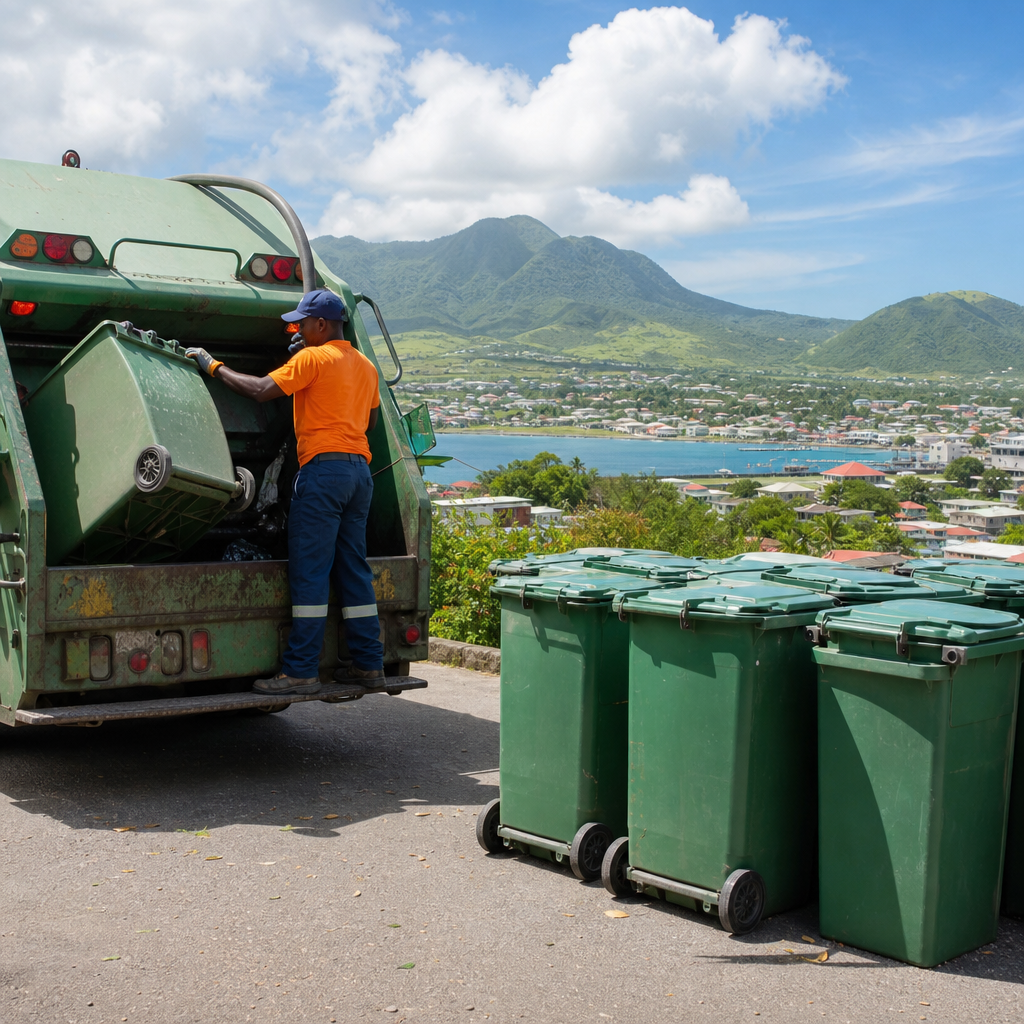
Saint Kitts’ waste management sector is moving from a basic public service into a practical investment arena, and that shift creates real business possibilities for operators, suppliers, processors, and service firms. Waste management includes the collection, transport, sorting, treatment, recycling, recovery, and final disposal of municipal solid waste, commercial waste, construction debris, hazardous streams, and wastewater byproducts. In Saint Kitts, the topic matters because the island economy depends on tourism, public health, coastal quality, and land use efficiency, all of which are affected directly by how waste is handled. A small-island state does not have the luxury of endless landfill space, cheap long-haul logistics, or the ability to ignore leakage into the marine environment. Every ton mismanaged becomes an economic issue as much as an environmental one.
From working across island markets, I have seen the same pattern repeatedly: once disposal costs rise, landfill space tightens, and visitor expectations increase, waste stops being an afterthought and becomes an infrastructure business. Saint Kitts is at that stage. Hotels need cleaner waste streams, retailers want reliable pickup, manufacturers need compliant disposal, and public agencies need systems that reduce open dumping, illegal burning, and recyclable loss. The opportunity is not limited to one large plant. It spans small and mid-sized ventures such as hauling, transfer logistics, baling, organics processing, used oil recovery, scrap aggregation, e-waste handling, and digital tracking. For investors studying business and investment opportunities in Saint Kitts, miscellaneous waste-related services form a hub category because they connect tourism, construction, utilities, agriculture, transport, and municipal operations. Understanding where value sits in that chain is the starting point for building profitable, resilient businesses.
Why Waste Management Is Becoming a Business Priority in Saint Kitts
Saint Kitts faces structural conditions that make waste management commercially relevant. First, land is finite. Landfills on small islands consume valuable acreage and carry long-term closure and remediation costs. Second, the tourism product depends on visible cleanliness, odor control, beach quality, and reliable public services. Third, imported goods dominate consumption patterns, which means high volumes of packaging, plastics, pallets, drums, and discarded equipment enter the island economy while export channels for secondary materials remain limited. These conditions create pressure on government systems and open space for private operators that can improve collection efficiency, material recovery, and compliance.
The sector also matters because waste generation follows economic activity. More hotel occupancy, construction, retail trade, and food service usually mean more cardboard, glass, organics, scrap metal, and mixed residual waste. In practice, that makes waste volumes a proxy for growth in several industries. Businesses that can separate recyclable streams at source, compact materials, reduce transport frequency, or aggregate enough volume for export can create margin where others see only disposal cost. I have watched this work especially well when operators focus on one pain point first, such as cardboard collection from supermarkets or food waste pickup from resorts, then expand into bundled service contracts.
Core Market Segments and Where Revenue Can Be Found
The most immediate business possibilities sit in distinct service lines rather than a single integrated model. Municipal solid waste collection remains foundational, but private revenue often comes from commercial contracts. Hotels, restaurants, marinas, schools, supermarkets, clinics, offices, and construction sites all generate recurring waste streams that can be priced by pickup frequency, container size, contamination level, and special handling requirements. Construction and demolition waste is another promising segment because building activity creates concrete, wood, metals, drywall, and excavated material that can be sorted and partly recovered instead of landfilled.
Recyclables aggregation is often underestimated. Cardboard from retail and hospitality businesses is usually clean and concentrated, making it one of the easier materials to bale and ship when freight economics work. Scrap metal can also be commercially viable because islands accumulate end-of-life vehicles, appliances, roofing sheets, and ferrous offcuts. Used cooking oil collection serves both compliance and recovery markets, especially where biodiesel export or industrial reuse channels exist. Electronic waste is smaller by volume but higher in compliance value, particularly for businesses replacing servers, point-of-sale equipment, telecom hardware, and household electronics. Green waste and food waste can support composting or mulch production if contamination is controlled and the end market, such as landscaping or agriculture, is clear.
| Segment | Typical Customers | Main Revenue Model | Key Operational Need |
|---|---|---|---|
| Commercial collection | Hotels, restaurants, retailers, offices | Monthly service contracts | Route density and reliable pickups |
| Cardboard and plastics recovery | Supermarkets, wholesalers, warehouses | Collection fees plus material sales | Baling and contamination control |
| Scrap metal aggregation | Contractors, garages, households | Purchase spread and export sales | Storage, sorting, shipping logistics |
| Organics processing | Hotels, markets, landscapers | Tipping fees and compost sales | Clean feedstock and odor management |
| Special waste handling | Clinics, utilities, workshops | Premium compliance pricing | Documentation and trained staff |
High-Potential Opportunities in Collection, Sorting, and Logistics
Collection is still the most bankable entry point because it generates recurring cash flow. A company with compactor trucks, skip bins, front-load containers, or smaller collection vehicles can build contract revenue before investing in processing infrastructure. In Saint Kitts, route design matters more than fleet size. Dense commercial corridors, hotel zones, and institutional clients can support efficient rounds with lower fuel burn and labor hours. GPS route planning, digital service logs, and preventive maintenance are not luxuries; they are what protect margins in island operations where spare parts and downtime are costly.
Sorting and transfer operations are the next layer. Many islands lose value because mixed waste reaches disposal before recoverable materials are removed. A modest materials recovery facility does not need to be fully automated to be useful. Even a well-run manual line with magnets, balers, and covered storage can recover cardboard, PET, HDPE, aluminum cans, and scrap metals if incoming loads are reasonably segregated. The lesson from projects I have reviewed is consistent: profitability depends less on sophisticated machinery than on feedstock agreements, contamination controls, and outbound shipping discipline. In other words, secure the material first, then scale the plant.
Logistics services also create standalone opportunities. Some businesses do not want to own processing assets at all; they earn by consolidating loads, arranging inter-island movement where permitted, managing container bookings, and handling export documentation for recyclables. This model can work well in Saint Kitts because freight coordination is often the bottleneck. A logistics-focused operator that understands bale specifications, container utilization, and buyer requirements can unlock value for smaller collectors that lack scale on their own.
Recycling, Organics, and Circular Economy Services
Recycling in Saint Kitts should be approached selectively. Not every material stream will support a viable business at local volumes. The practical strategy is to target materials with three characteristics: steady generation, low contamination, and clear downstream buyers. Cardboard, metals, certain plastics, batteries, and used oil usually fit better than mixed low-grade plastics or composite packaging. Deposit-style incentives, hotel back-of-house separation, and retailer take-back points can improve capture rates. The business case becomes stronger when recovery is paired with waste audits that show clients how segregation reduces disposal costs.
Organics offer another realistic path. Hotels, restaurants, produce markets, and landscaping operations generate food scraps and green waste that are expensive to landfill because of weight, moisture, and odor. Composting can work if the process is engineered correctly, with the right carbon-to-nitrogen ratio, leachate control, aeration, curing time, and pathogen reduction. On islands, the strongest offtake markets are usually landscaping, soil improvement for farmers, and erosion control on disturbed land. I have seen compost projects fail when developers assumed demand would appear automatically. It does not. Offtake agreements with resorts, public landscaping departments, and growers should be developed before site commissioning.
Circular economy services extend beyond material resale. There is room for repair and refurbishment businesses handling appliances, furniture, pallets, fixtures, and hotel equipment. A hospitality property replacing room furnishings may generate usable assets that can be restored and sold to smaller operators, landlords, or export channels. That kind of reuse business creates jobs, reduces imports, and diverts bulky waste from disposal. It also fits the miscellaneous hub nature of this subtopic because it intersects retail, maintenance, logistics, and light manufacturing.
Regulatory, Environmental, and Financing Considerations
No waste business in Saint Kitts should be evaluated without regulatory diligence. Investors need to confirm licensing rules, environmental permits, land-use approvals, vehicle compliance, occupational safety requirements, and any standards governing storage of hazardous or special waste. Medical waste, asbestos, chemicals, used oil, batteries, and electronic waste each carry different handling obligations. Projects near communities or sensitive coastal zones will face understandable scrutiny around odor, runoff, noise, traffic, fire risk, and visual impact. A strong environmental management plan is not a bureaucratic box; it is part of commercial risk control.
Financing can be challenging because many waste projects combine infrastructure characteristics with SME execution risk. Lenders want contracted revenues, predictable volumes, and proof that equipment will stay utilized. That is why phased models often work best. Start with collection contracts, add baling or composting once feedstock is secured, then expand into transfer or specialized processing. Blended financing can also help, especially where climate resilience, pollution prevention, or resource efficiency objectives align with development finance institutions. Equipment leasing for trucks, balers, shredders, bins, and compactors can reduce upfront capital strain if maintenance terms are clear.
Data is central to both compliance and finance. Investors should expect baseline studies covering waste composition, tonnage by source, seasonal variation, contamination rates, and transport distances. Hotels may produce more glass and food waste; construction firms produce episodic heavy loads; retail businesses generate cardboard peaks during import cycles. Without this information, pricing becomes guesswork. With it, operators can design tiered contracts, optimize labor, and defend their investment case to lenders or partners.
How Businesses Can Enter the Sector Strategically
The smartest entry strategy is usually narrow at first. Instead of promising total waste transformation, a new company might begin by servicing one customer class, one geography, or one material stream. For example, a collector focused on Basseterre commercial districts could offer scheduled cardboard pickup, secure bins, contamination training, and monthly diversion reports. Those reports become a sales tool for nearby clients. Another entrant might specialize in construction skips and debris sorting for contractors, capturing metal and reusable aggregate while charging haulage fees. Focus lowers complexity and reveals what customers will actually pay for.
Partnerships matter more than scale in the early stage. Hotels can provide clean separated volumes. Supermarkets provide predictable cardboard. Mechanics and utility fleets provide used oil, batteries, and scrap metal. Government agencies may support public education or concession arrangements where private firms complement municipal service. Technology vendors can supply route software, weighing systems, RFID tagging, and customer portals for service verification. The most credible operators use these tools to prove performance, not just to appear modern.
This miscellaneous hub is important because the sector is broader than collection alone. Adjacent opportunities include bin washing, landfill cover supply, litter control services for events, septic sludge transport support, public-space receptacle maintenance, environmental consultancy, and training in waste segregation for hospitality staff. Each solves a specific operational problem. For businesses exploring Saint Kitts, the message is simple: waste management is not one market but a cluster of linked markets, and well-chosen niches can become durable enterprises.
Saint Kitts’ waste management sector offers practical business possibilities because it sits at the intersection of public health, tourism standards, land scarcity, and operational efficiency. The strongest opportunities are not abstract. They include commercial collection, recyclables aggregation, organics processing, scrap recovery, special waste handling, logistics coordination, and adjacent support services. Small-island conditions make the stakes higher, but they also make service gaps easier to identify. When waste systems improve, businesses save money, communities see cleaner surroundings, and the island protects the assets that support long-term growth.
The key lesson is to match the business model to the material stream and the customer contract. Secure feedstock before buying equipment. Build route density before expanding fleet size. Confirm permits, environmental controls, and end markets before commissioning a facility. Use data to price services and prove results. Operators that follow those fundamentals can create resilient ventures in a sector that many still misread as purely municipal. For investors studying business and investment opportunities in Saint Kitts, this miscellaneous hub should be treated as a serious commercial category with room for disciplined entrants.
If you are evaluating the market, start with a waste audit, identify one high-value stream, and test demand with anchor customers. That first disciplined step often reveals the most profitable path forward.
Frequently Asked Questions
1. Why is Saint Kitts’ waste management sector becoming a real business opportunity?
Saint Kitts’ waste management sector is becoming a genuine business opportunity because the island is moving beyond a narrow, government-led sanitation model and toward a broader system that values efficiency, recovery, environmental protection, and commercial participation. On a small island economy, waste is not just a public cleanliness issue. It directly affects tourism appeal, land use, public health, infrastructure costs, import dependence, and environmental resilience. As population activity, commercial development, hospitality services, and construction generate more diverse waste streams, the need for specialized collection, transport, sorting, treatment, recycling, and disposal services increases as well.
That creates openings for private operators, equipment suppliers, recyclers, logistics firms, environmental consultants, and service contractors. Opportunities can emerge in routine municipal collection, commercial hauling, construction and demolition debris management, organics processing, hazardous waste handling, wastewater residuals treatment, and materials recovery. There is also room for businesses that support the sector indirectly, including fleet maintenance, route software, container supply, baling systems, compactors, transfer equipment, safety gear, and compliance services.
Another reason the sector is attractive is that island waste systems tend to face structural constraints that reward practical innovation. Land availability is limited, disposal costs can rise quickly, and imported goods often arrive heavily packaged, creating persistent waste volumes. Businesses that can reduce landfill dependence, improve separation, recover useful materials, or lower transport and operating costs can position themselves as valuable long-term partners. In short, Saint Kitts presents a market where environmental necessity and business logic increasingly point in the same direction.
2. What kinds of waste management businesses are most viable in Saint Kitts?
The most viable waste management businesses in Saint Kitts are typically those that solve immediate operational problems while fitting the scale and realities of an island market. Collection and hauling services are often among the clearest opportunities, especially for commercial clients such as hotels, restaurants, retailers, offices, and construction firms that need consistent, reliable pickup. Specialized collection can be particularly attractive where businesses generate cardboard, glass, food waste, scrap metal, used oil, or bulky waste that requires handling beyond standard municipal service.
Materials recovery and sorting businesses also have strong potential, especially if they focus on waste streams with relatively clear volumes and established value chains. Examples include cardboard, aluminum, metals, plastics with identifiable resale channels, and reusable construction materials. Organics management is another promising area. Food waste from hospitality and household sources can support composting or related treatment models, particularly if the output can serve landscaping, agriculture, or soil improvement uses. Construction and demolition waste processing may also be commercially relevant because development activity often creates recoverable materials such as concrete, aggregate, wood, and metal.
Support and enabling businesses can be just as viable as direct processing. Equipment leasing, bin placement, route optimization software, waste audits, environmental compliance consulting, facility design, staff training, and maintenance services can all serve a growing sector. For investors, the strongest business models are usually those built around predictable feedstock, contracted customers, manageable transport distances, and clear downstream outlets for recovered materials. Success often depends less on scale alone and more on designing operations that are efficient, flexible, and suited to the island’s logistics and regulatory environment.
3. What factors should investors evaluate before entering Saint Kitts’ waste management market?
Before entering Saint Kitts’ waste management market, investors should evaluate four main areas carefully: waste stream availability, infrastructure and logistics, regulation and public-sector alignment, and end-market economics. First, they need a realistic picture of waste volumes and composition. Not all waste categories are generated evenly, and business viability depends on understanding where material comes from, how consistently it is produced, and whether it can be separated at the source. A project built around organics, recyclables, hazardous streams, or construction debris will only work if the supply is regular enough to support collection and processing costs.
Second, logistics matter enormously on an island. Investors should assess haul distances, vehicle requirements, fuel costs, transfer needs, storage limitations, weather exposure, and equipment servicing capacity. Even a technically sound recycling or treatment concept can struggle if the collection network is inefficient or if the machinery depends on difficult-to-source parts. Third, regulatory and institutional issues are critical. Waste businesses often interact with public authorities, environmental standards, permitting systems, land use rules, and service contracts. Investors should understand the local approval process, compliance obligations, and whether partnership with government entities or public utilities will be necessary.
Fourth, investors should examine revenue structure and downstream demand. Income may come from collection fees, service contracts, tipping fees, recovered material sales, consulting, or hybrid arrangements. In some cases, the value of the recovered commodity alone will not support the business, so the model must rely on service-based revenue. Investors should also consider education needs, customer behavior, contamination rates, labor availability, and the possibility of phased implementation rather than immediate full-scale deployment. In Saint Kitts, the best market entries are usually grounded in practical due diligence, local partnerships, and a business plan that recognizes both the environmental need and the commercial limits of a small-island setting.
4. How does Saint Kitts’ tourism-based economy influence waste management business opportunities?
Tourism has a major influence on waste management business opportunities in Saint Kitts because it increases both the economic importance of waste control and the commercial demand for better services. Hotels, restaurants, villas, marinas, entertainment venues, cruise-linked businesses, and supporting retail operations produce sizable volumes of packaging waste, food waste, glass, cardboard, plastics, and general refuse. These businesses often need dependable, clean, and well-scheduled service because visible waste problems can affect guest experience, brand reputation, and destination competitiveness.
This creates opportunities for tailored commercial waste contracts, back-of-house sorting systems, organics diversion programs, used cooking oil collection, glass handling, cardboard compaction, and sustainability reporting services. Tourism-facing businesses are also more likely than some other sectors to value environmental branding. That means waste management firms that can offer measurable diversion rates, recycling programs, cleaner storage systems, and compliance support may be able to compete on service quality rather than price alone. In practical terms, a company that helps hospitality operators reduce overflow, odors, pests, and landfill dependence is solving a direct business problem for those clients.
Tourism also raises the stakes for environmental performance more broadly. Beaches, roadsides, public spaces, and coastal areas are central to the island’s appeal, so inefficient waste handling can damage the very assets that drive revenue into the economy. That makes improved waste management not just a utility function, but part of economic infrastructure. For entrepreneurs and investors, this means there is value in solutions that are reliable, visually clean, and aligned with sustainability goals. Businesses that understand the rhythm of visitor activity, seasonal volume shifts, and hospitality service standards can be especially well positioned in the Saint Kitts market.
5. What are the biggest challenges in Saint Kitts’ waste management sector, and how can businesses respond?
The biggest challenges in Saint Kitts’ waste management sector typically include limited scale, constrained land availability, inconsistent material separation, high equipment and transport costs, and the difficulty of building reliable end markets for recovered materials. Small island markets do not always generate enough volume to support every type of processing facility at full efficiency. Some recyclable or reusable materials may need aggregation, temporary storage, or export arrangements before they become commercially viable. At the same time, importing specialized equipment can be expensive, and maintenance delays can disrupt operations if spare parts or technical support are not readily available.
Another challenge is behavioral and institutional. Waste systems work best when households, businesses, haulers, processors, and public agencies coordinate effectively. If waste is heavily contaminated, collection schedules are inconsistent, or disposal pricing does not encourage diversion, even well-designed private ventures can face avoidable friction. Land-use and permitting issues may also affect siting for transfer stations, recovery yards, composting operations, or treatment facilities. In addition, public expectations may be high while willingness to pay for improved services develops more gradually, especially in markets transitioning from basic public provision to more specialized and cost-reflective systems.
Businesses can respond by designing resilient, right-sized models instead of copying large-country systems that do not fit local realities. That may mean starting with targeted waste streams, securing anchor clients, using modular equipment, and building revenue from service contracts rather than relying solely on commodity sales. Education and customer onboarding are also important. Companies that help clients separate materials correctly, reduce contamination, and understand service value can improve margins and operational performance over time. Strong partnerships with government bodies, tourism operators, construction firms, and community organizations can further reduce risk. In Saint Kitts, the companies most likely to succeed are those that combine technical competence with flexibility, local understanding, and a clear plan for turning a necessary public function into a dependable commercial service.