Investing in Nevis’ sustainable agriculture is no longer a niche idea reserved for environmental advocates; it is a practical business strategy tied to food security, tourism demand, climate resilience, and export differentiation. Nevis, the smaller island in the Federation of Saint Kitts and Nevis, has long relied on services, tourism, and imported food, yet its agricultural base is gaining renewed strategic value as global buyers, hotels, and residents seek fresher, traceable, and lower-impact produce. In this context, sustainable agriculture means farming systems designed to preserve soil, water, biodiversity, and long-term productivity while generating reliable commercial returns. Organic agriculture is one part of that picture, generally defined by restricted synthetic inputs and standards-based production, but sustainable agriculture in Nevis goes further to include climate-smart irrigation, regenerative soil management, protected cropping, agro-processing, renewable energy integration, and waste-to-input circular systems.
I have worked with small-island agricultural projects where investors underestimated logistics, labor, and market timing, then discovered that the best returns came not from volume alone but from solving local supply gaps with disciplined production planning. That lesson applies directly in Nevis. The island’s compact geography, growing culinary market, strong brand appeal, and policy interest in economic diversification create an unusually attractive setting for targeted agricultural investment. Why does this matter now? First, import substitution is economically important because Caribbean islands often import a high share of what they eat, exposing businesses to freight shocks and supply chain disruption. Second, premium tourism creates demand for herbs, salad greens, microgreens, tropical fruit, specialty eggs, artisanal products, and wellness-linked foods that can command higher margins than commodity crops. Third, sustainable production methods reduce input volatility, protect natural assets, and align with the expectations of modern consumers, hotel buyers, and international partners. For investors evaluating business and investment opportunities in Nevis, this hub article maps the landscape, explains the main models, and shows where organic and beyond-organic strategies can create durable value.
Why Nevis is positioned for sustainable agriculture investment
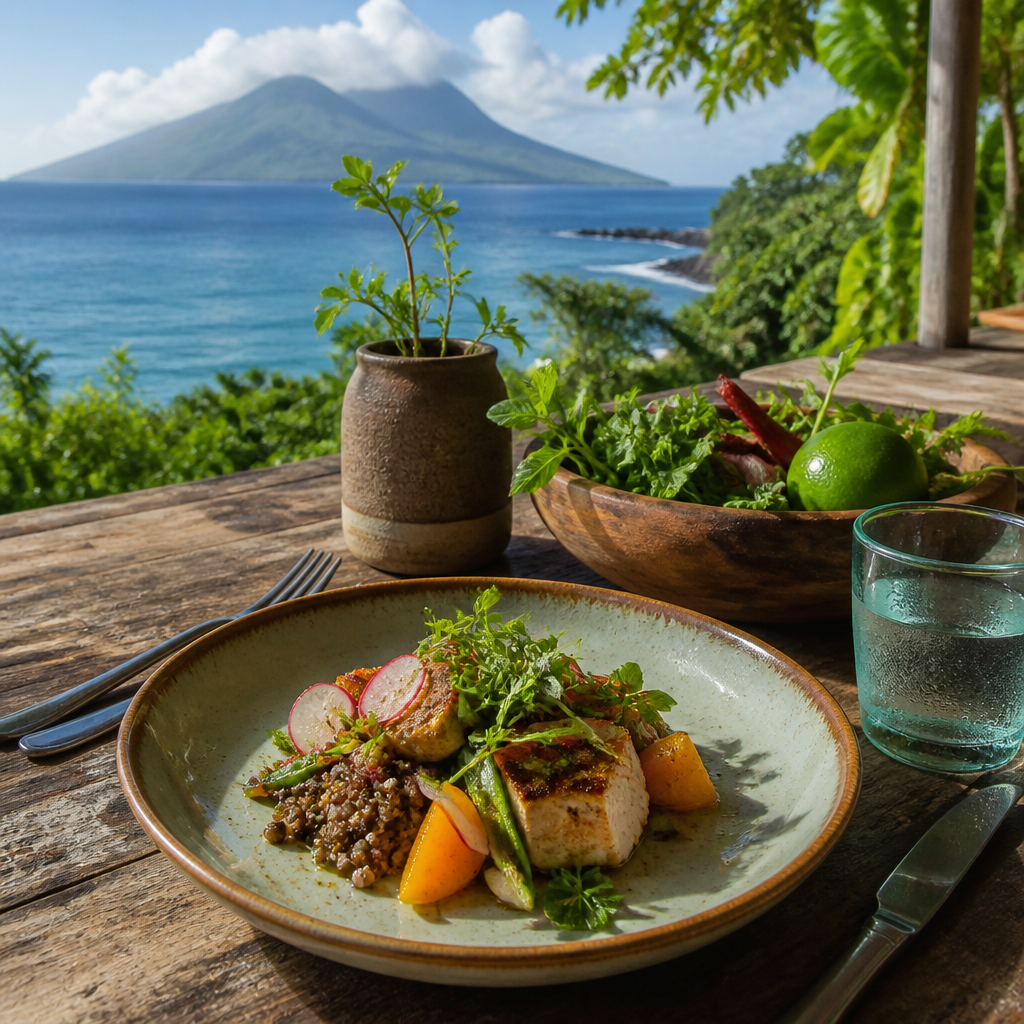
Nevis has several structural advantages that make sustainable agriculture commercially credible when projects are designed around the island’s scale. The first is proximity between production and consumption. Farms can supply local households, supermarkets, restaurants, villas, cruise-linked food service, and hotels without the long inland transport chains that erode freshness and margins elsewhere. The second is brand association. Nevis is already marketed through hospitality, wellness, heritage, and natural beauty, and agriculture can fit neatly into that identity through farm-to-table dining, agritourism experiences, branded value-added goods, and locally sourced menus. The third is the opportunity to reduce import dependence. According to regional development reporting across the Caribbean, food import bills remain high and have been pressured by inflation, shipping costs, and weather-related disruptions. On a small island, replacing even a narrow band of imported products can generate meaningful commercial traction.
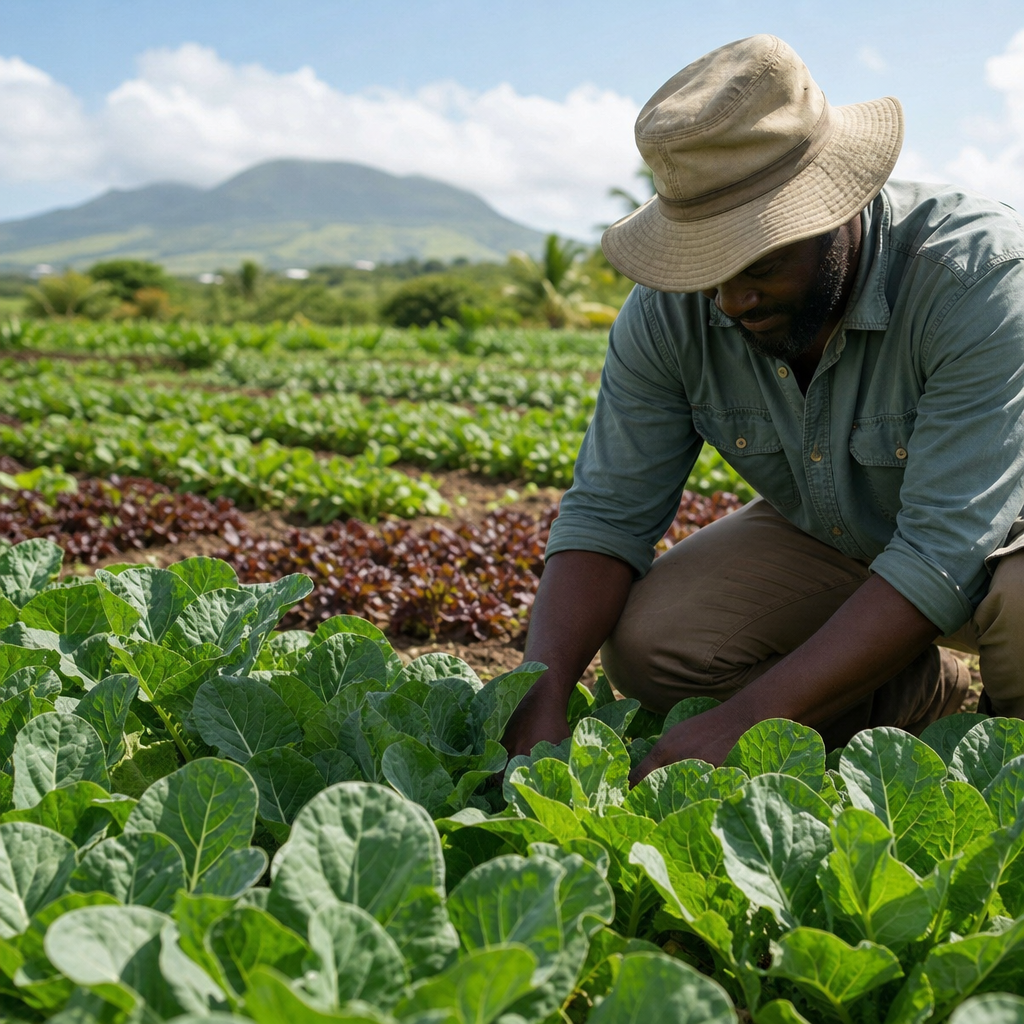
Climate and land conditions also shape the opportunity. Nevis benefits from fertile zones and diversified microclimates, but it also faces the same constraints common to small island developing states: irregular rainfall, hurricane exposure, water management pressure, and limited economies of scale. That is exactly why sustainable agriculture is the right frame. Investors should not assume that large monoculture systems will outperform. In my experience, resilient mixed-production systems often do better because they spread risk, support cash flow through staggered harvests, and protect soils that are expensive to rehabilitate once degraded. A greenhouse producing lettuce, basil, and cucumbers for hotels, paired with open-field root crops and a composting operation using local organic waste, can be more profitable and more robust than a single-crop venture chasing volume.
Organic farming opportunities and realistic constraints
Organic agriculture is often the first investment concept people raise because it carries clear market appeal. In Nevis, organic production can work especially well in high-value categories such as leafy greens, culinary herbs, seasonings, tropical fruit, medicinal plants, cocoa derivatives, and specialty processed products. Organic methods emphasize soil fertility, biological pest management, crop rotation, compost, and restricted chemical use. For local hospitality buyers, the selling point is not certification alone; it is dependable access to clean, fresh, story-rich produce grown on island. For export or premium retail, certification can matter more, but investors should be careful. Certification can be administratively demanding, and on a small island the market may reward “sustainably grown” and “local traceability” faster than fully certified organic status, especially in the early years.
The realistic constraint is that organic systems require strong technical management. Weed pressure, pest cycles, post-harvest losses, and nutrient balancing do not disappear because a farm is branded organic. They become management tasks that demand skill and data. I have seen operations underperform simply because they lacked integrated pest management protocols, irrigation scheduling, and disciplined recordkeeping. A workable Nevis strategy is to phase the model. Start with production methods that minimize synthetic inputs, build compost capacity, use mulching and drip irrigation, install insect netting or protected structures where justified, and validate demand through buyer contracts. Then decide whether formal organic certification will generate enough additional revenue to outweigh compliance cost. That sequence reduces execution risk while preserving the premium narrative that local and visitor markets increasingly value.
Beyond organic: regenerative, climate-smart, and circular models
The strongest investment cases in Nevis often sit beyond a narrow organic label. Regenerative agriculture focuses on rebuilding soil organic matter, improving water infiltration, reducing erosion, and increasing biological activity through practices such as cover cropping, reduced tillage, compost application, rotational grazing, and agroforestry. Climate-smart agriculture emphasizes adaptation and mitigation, including drought-tolerant varieties, protected cultivation, rainwater harvesting, efficient irrigation, shade management, and renewable energy for pumping or cooling. Circular agriculture treats waste streams as inputs, turning crop residues, food scraps, and livestock manure into compost, biogas feedstock, or value-added products. These models are commercially relevant because they cut input dependence and build resilience in a place where imported fertilizer, packaging, and fuel can quickly undermine margins.
In practical terms, a Nevis investor might combine a protected-farming unit with solar-powered irrigation, fertigation calibrated to crop stage, on-site composting, and a small processing kitchen for sauces, dried herbs, or fruit preserves. Another model is agroforestry built around breadfruit, mango, coconut, moringa, cocoa, or soursop, with understory herbs and beekeeping to diversify income. Livestock integration can also be viable when managed carefully; poultry can support egg production and nutrient cycling, while small ruminants can help with vegetation control in rotational systems. The point is not to stack sustainability buzzwords. The point is to design a system where each component improves another component’s economics. On small islands, that systems thinking often determines whether an agricultural venture survives its first difficult season.
High-potential investment segments in Nevis
Not every agricultural business in Nevis should start with land acquisition and raw production. Some of the best opportunities sit along the value chain, where modest capital can address bottlenecks and capture premium margins. Investors should assess demand by product category, buyer consistency, perishability, and operational complexity. The following segments are especially relevant.
| Segment | Why it fits Nevis | Example revenue logic |
|---|---|---|
| Protected vegetables and herbs | Reliable supply for hotels and restaurants; better control of weather and pests | Premium pricing for lettuce, basil, arugula, tomatoes, cucumbers, and microgreens sold on weekly contracts |
| Tropical fruit and tree crops | Strong local identity, agritourism appeal, and processing potential | Fresh sales plus juices, jams, dried fruit, and branded gift products |
| Agro-processing | Extends shelf life and reduces post-harvest loss | Hot sauces, spice blends, herbal teas, preserves, cassava products, and wellness foods |
| Compost and soil inputs | Supports farms, landscaping, and waste diversion | Sales of compost, mulch, seedling media, and soil amendment services |
| Seedlings and nursery services | Lowers grower risk and improves crop planning | Contract-grown transplants for farms, households, hotels, and landscaping projects |
| Agritourism and education | Matches Nevis’ hospitality economy and visitor profile | Farm tours, tasting events, workshops, and branded on-farm dining experiences |
Among these, protected agriculture deserves special attention. Greenhouses and shade houses are not magic solutions, but in humid tropical environments they can stabilize quality, reduce rainfall-related disease pressure, and support production scheduling for premium buyers. Agro-processing is equally important because fresh produce margins can vanish when gluts occur. A processing line that turns excess peppers into sauce or herbs into dried blends converts risk into shelf-stable inventory. That is how smart investors in island agriculture create defensible businesses rather than seasonal experiments.
Market demand, buyers, and route-to-market strategy
A sustainable agriculture project in Nevis succeeds when it begins with the buyer, not the crop. Local demand comes from households, supermarkets, roadside vendors, institutions, and food service, but the hospitality sector often provides the clearest premium segment. Hotels and villas want consistency, food safety, freshness, and menu-appropriate varieties. Chefs are typically interested in herbs, edible flowers, specialty greens, vine-ripened tomatoes, peppers, cucumbers, and fruit with a story. Wellness-oriented properties may also want herbal teas, cold-pressed juices, and nutrient-dense ingredients. If a farm can deliver these products on a dependable schedule with good post-harvest handling, it can become a preferred supplier quickly.
That said, concentration risk matters. I advise investors not to rely on one hotel or one distributor. Build a route-to-market mix: contract supply to hospitality buyers, standing relationships with retailers, direct-to-consumer boxes, and value-added products that move through gift shops or online channels. Packaging and cold chain matter more than many first-time investors expect. A premium lettuce grown sustainably loses value if it arrives bruised, warm, or inconsistently packed. Simple investments in harvest timing, washing protocols, food-safe containers, refrigerated storage, and delivery scheduling often deliver better returns than expanding acreage too early. In Nevis, trust-based buyer relationships are a major asset, but they are sustained by execution, not promises.
Operations, risk management, and financing considerations
The operational side of sustainable agriculture in Nevis demands disciplined planning. Water security is central. Drip irrigation, moisture monitoring, storage tanks, and rainwater harvesting are not optional extras; they are core infrastructure. Soil testing should guide fertility plans, especially when compost and organic amendments are used. Pest management should follow integrated methods that combine monitoring, sanitation, resistant varieties, beneficial controls where available, and targeted intervention only when thresholds justify it. Post-harvest handling must be designed before planting begins, because perishability defines cash flow. Labor planning is equally important on a small island where skilled agricultural labor may be limited and training can determine whether quality targets are met.
Investors should also map the risk profile carefully. Hurricanes, drought, market fluctuations, and input delays are predictable realities. Protected structures need engineering appropriate to local wind conditions. Crop insurance availability may be limited, so diversification and contingency planning become financial tools. Financing structures should reflect agricultural cash cycles, with enough working capital to carry the business through establishment periods and seasonal volatility. Public incentives, development finance, blended capital, and partnerships with hospitality groups can all improve viability when aligned correctly. Governance matters too. The best projects have clear production KPIs, procurement standards, buyer agreements, traceability records, and realistic assumptions about yield. For those exploring related opportunities, this hub connects naturally to deeper articles on agro-processing, renewable energy for agribusiness, tourism-linked ventures, land development, and small-business financing in Nevis.
Nevis offers a compelling case for sustainable agriculture investment because it combines urgent local need with premium market potential. The island does not need copy-and-paste industrial farming models; it needs commercially disciplined systems that match its size, ecology, and tourism-driven demand. Organic farming can play a valuable role, especially in high-value categories, but the strongest opportunities often blend organic principles with regenerative soil management, climate-smart infrastructure, protected cultivation, and value-added processing. Investors who understand this broader lens are better positioned to build businesses that can withstand weather shocks, supply disruption, and changing consumer expectations.
The central lesson is simple: profitability in Nevisian agriculture comes from solving real market problems with resilient production and smart distribution. Fresh local supply for hotels, branded specialty foods for visitors, compost and nursery services for growers, and agritourism experiences for the hospitality economy are all viable pieces of the same ecosystem. Success depends on buyer-led planning, operational rigor, water and soil management, and enough capital to avoid underbuilding critical infrastructure. If you are assessing business and investment opportunities in Nevis, use this page as your starting point, then move into the linked subtopics most relevant to your goals. The opportunity is real for investors prepared to treat sustainable agriculture as a serious, modern enterprise rather than a lifestyle concept.
Frequently Asked Questions
Why is sustainable agriculture in Nevis becoming an attractive investment opportunity?
Sustainable agriculture in Nevis is gaining attention because it sits at the intersection of several powerful economic trends. The island has traditionally relied heavily on tourism, services, and imported food, which creates a clear opening for local agricultural production that can supply hotels, restaurants, retailers, and households with fresher and more dependable products. For investors, that means demand is not theoretical. It is tied to a real and ongoing need to strengthen food security, reduce import dependence, and create more resilient local supply chains.
What makes the opportunity especially compelling is that sustainable farming is not limited to one model or one crop. It can include organic produce, protected agriculture, regenerative methods, hydroponics, agro-processing, herbs and spices, fruit orchards, livestock integration, and value-added products aimed at both residents and visitors. Nevis also benefits from a tourism market that increasingly values provenance, freshness, and environmental responsibility. Hotels and villas can market farm-to-table experiences, restaurants can differentiate menus through local sourcing, and wellness-oriented travelers often respond well to traceable, low-impact food systems.
From an investment standpoint, sustainable agriculture can also provide a stronger long-term proposition than purely volume-driven farming. Investors are often able to compete on quality, reliability, branding, and niche positioning rather than trying to outproduce larger agricultural jurisdictions. In a place like Nevis, where land and scale are more limited, premium positioning matters. Sustainable agriculture therefore becomes a strategic business category, not simply an environmental gesture.
What types of sustainable agriculture investments make the most sense in Nevis?
The most viable investments in Nevis are typically those that align with local market demand, climate realities, and the island’s scale. High-value crops are often more attractive than bulk commodity farming. These can include leafy greens, vegetables for hotels and restaurants, culinary herbs, tropical fruits, specialty root crops, and greenhouse-grown produce that can improve consistency and reduce weather-related losses. Investors may also find opportunities in medicinal plants, floriculture, or premium export-focused niches if quality standards and logistics are managed carefully.
Beyond primary production, some of the strongest business cases may lie in integrated models. For example, an operation that combines sustainable cultivation with cold storage, washing and packing, branded distribution, or light processing can capture more value than a farm that sells raw output alone. Agro-processing opportunities such as sauces, dried herbs, fruit preserves, teas, condiments, and specialty packaged foods may appeal to both tourists and export buyers looking for authentic Caribbean products with traceable sourcing.
Technology-enabled and climate-smart systems also deserve serious consideration. Drip irrigation, rainwater harvesting, soil improvement programs, shade houses, protected growing systems, composting infrastructure, solar-powered operations, and digital farm management tools can all improve efficiency and resilience. In Nevis, where climate variability and import costs can affect production economics, these tools are not luxuries; they can be central to profitability. The best investment models are usually those that combine sound agronomy, dependable local demand, and a clear route to premium pricing.
How does sustainable agriculture support tourism, food security, and climate resilience in Nevis?
Sustainable agriculture contributes to tourism by helping the island offer a more distinctive and locally rooted visitor experience. Restaurants, hotels, and hospitality operators increasingly want produce, herbs, fruits, and specialty goods that can be sourced nearby and presented as part of an authentic Nevisian identity. This strengthens destination branding and creates supply relationships that are commercially useful for growers. Farm-to-table dining, culinary tourism, wellness retreats, and eco-conscious travel all benefit from a stronger local food system.
Its food security role is equally important. Because islands are often vulnerable to supply chain disruptions, imported food inflation, and shipping delays, developing reliable domestic production is a strategic necessity. Sustainable agriculture helps diversify food sources, shorten supply chains, and improve local availability of fresh products. This can reduce exposure to global volatility while supporting public health through better access to quality produce. For investors, food security is not just a policy goal; it is a durable demand driver that supports local market sales.
Climate resilience is another major advantage. Sustainable farming methods can improve soil health, manage water more efficiently, reduce erosion, and lower dependence on external chemical inputs that may become costly or difficult to source. Practices such as mulching, composting, crop rotation, agroforestry, protected cultivation, and efficient irrigation can make farms more adaptable to drought, intense rainfall, and changing weather patterns. In a small-island context, resilience has direct financial value. Businesses that can continue producing through climatic stress are often better positioned to maintain contracts, protect margins, and preserve long-term enterprise value.
What are the main risks and challenges investors should evaluate before entering Nevis’ agricultural sector?
As with any agricultural investment, the opportunity in Nevis comes with risks that should be assessed carefully and realistically. Climate exposure is one of the most obvious. Storms, drought periods, excessive rainfall, pests, and shifting seasonal conditions can affect yields and operating costs. Investors should account for this by emphasizing climate-smart design, crop selection, water systems, and infrastructure that can reduce vulnerability. A strong business plan in Nevis should treat resilience as a core investment principle rather than a secondary feature.
Land suitability, labor availability, and logistics also matter. Not every parcel is appropriate for every crop, and soil quality, drainage, access roads, water access, and proximity to buyers can significantly influence performance. Labor and management capacity can affect consistency, especially when aiming for premium quality or certification standards. Investors also need to understand post-harvest handling, cold chain needs, transportation coordination, and the seasonal buying patterns of tourism-linked customers.
Market access and certification complexity can be additional hurdles, especially for export-oriented ventures. Organic or sustainability claims must be backed by credible production systems, documentation, and in some cases formal certification, depending on the target market. That takes time, expertise, and ongoing compliance. There may also be scale limitations if a business tries to pursue export channels before proving itself locally or regionally. The most successful investors generally move in phases: validate demand, build operational discipline, establish reliable quality, and then expand into higher-value segments with stronger branding and traceability.
Can investors profit from agriculture in Nevis without focusing exclusively on certified organic production?
Yes. While certified organic production can be attractive, profitable sustainable agriculture in Nevis does not need to be limited to formal organic certification. Many buyers care deeply about freshness, safe production practices, traceability, low environmental impact, and consistent local supply even if a farm is not officially certified organic. In fact, some businesses may achieve stronger early returns by adopting practical sustainable methods first, building a trusted reputation, and only pursuing certification when the economics and market access clearly justify the added cost and administrative effort.
This is where the phrase “organic and beyond” becomes especially relevant. Investors can build value through regenerative practices, reduced-input systems, integrated pest management, water conservation, soil restoration, renewable energy use, and transparent sourcing. These approaches can support premium pricing, customer loyalty, and hotel or restaurant partnerships without requiring an immediate certification pathway. In hospitality markets, chefs and buyers often prioritize reliability, taste, shelf life, and local story just as much as labels.
There is also profit potential in adjacent parts of the value chain. Investors can back aggregation platforms, packing operations, branded local food distribution, greenhouse infrastructure, compost production, agri-tech services, farm tourism experiences, and value-added food manufacturing. In Nevis, the strongest returns may come from businesses that understand agriculture as part of a broader economic ecosystem tied to tourism, wellness, sustainability, and import substitution. Organic production can absolutely be part of that picture, but it is not the only route to creating a durable and differentiated agricultural business.