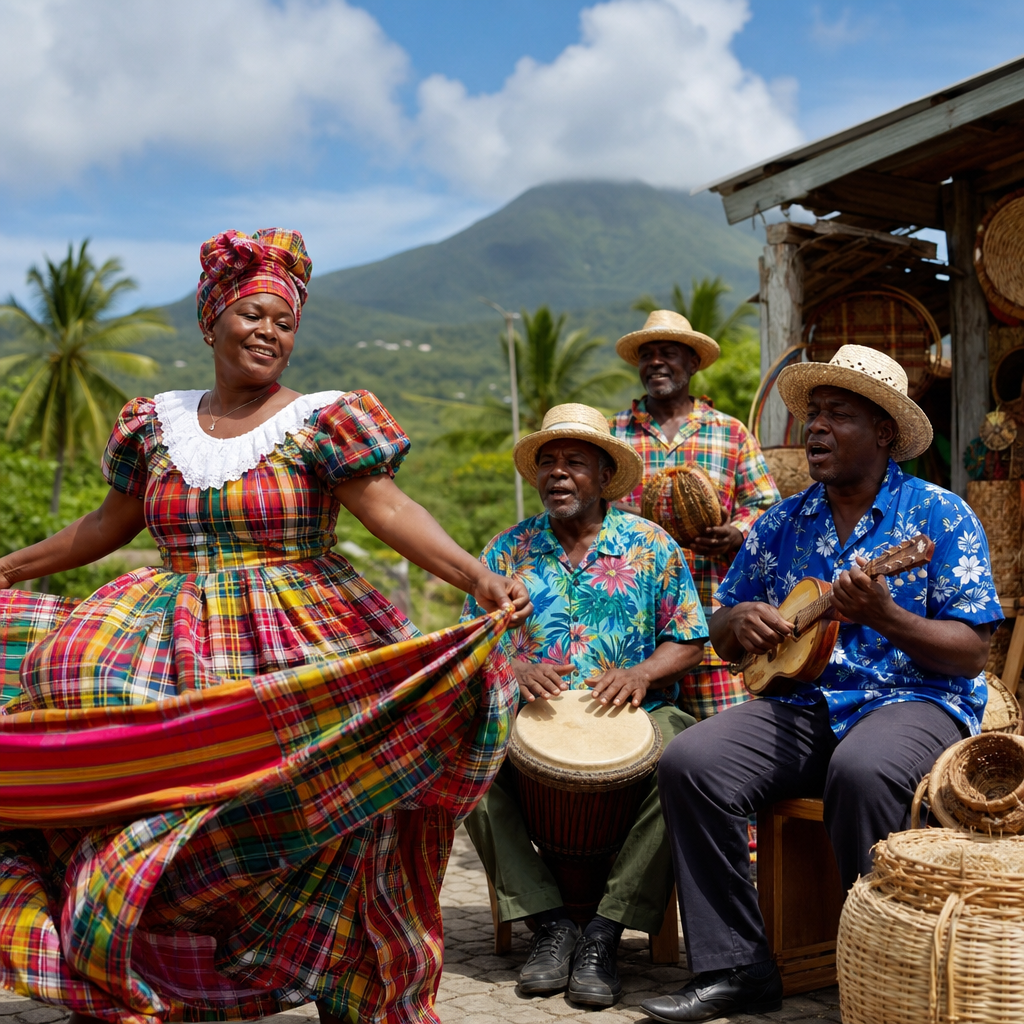
Nevis’ cultural exploration reveals far more than scenic beaches and volcanic slopes; it opens a living archive of Caribbean memory expressed through music, dance, storytelling, and local crafts. For travelers focused on adventure and activities, culture is not a side attraction on Nevis. It is one of the most rewarding ways to understand the island’s identity, because everyday creative traditions connect visitors to village life, plantation history, African heritage, religious observance, and modern community pride. When people search for things to do on Nevis beyond hiking, sailing, or beach time, they usually want authentic experiences. This is where cultural exploration matters most.
On the ground, I have found that Nevis rewards slow attention. A steelpan performance at a community event, the rhythm of masquerade dancers on a holiday route, or a hand-shaped piece of pottery bought directly from an artisan often says more about the island than a standard tour ever could. Music on Nevis is not simply entertainment. Dance is not just a staged show. Local crafts are not generic souvenirs. Each reflects a social history shaped by enslavement, emancipation, migration, religion, and resilience. The result is a cultural landscape that feels intimate, layered, and deeply rooted.
This hub article covers the miscellaneous cultural experiences that complete an adventure itinerary on Nevis. It defines what visitors can expect, explains how local traditions developed, and shows where cultural activities fit into a broader trip. It also serves as a starting point for related articles on festivals, heritage sites, food experiences, and community events. If you want meaningful activities on Nevis, understanding its music, dance, and crafts will make every other excursion richer, from visiting Charlestown to exploring village celebrations inland.
Why Culture Is Essential to a Nevis Adventure Itinerary
Adventure travel on Nevis is often marketed around Peak trails, horseback rides, catamaran trips, and thermal springs, yet culture turns those activities into context rather than isolated moments. A hike through former estate lands means more when you understand how plantation economies shaped village settlement. A walk through Charlestown becomes more memorable when you can identify the sound of calypso drifting from an event space or recognize handcrafted goods influenced by generations of domestic and agricultural skill. Cultural exploration gives the island narrative depth.
Nevis is part of the Federation of Saint Kitts and Nevis, but it maintains a distinct local identity that visitors notice quickly. The island’s relatively small size contributes to that feeling. Traditions remain community-centered, and many performances still happen in local settings rather than only in tourist venues. That matters for travelers seeking authentic experiences because participation often feels personal. You may speak directly with a drummer, craftsperson, choir member, or dance organizer rather than viewing culture from a distance.
For trip planning, cultural activities also balance weather, budget, and energy levels. If sea conditions cancel a boat excursion or an afternoon shower interrupts beach plans, museum stops, artisan visits, music events, and heritage walks provide strong alternatives. They are especially valuable for multigenerational groups because they are accessible to travelers who may not want physically demanding excursions. In practical terms, this category belongs in any well-built Nevis itinerary because it expands options while deepening understanding.
Music on Nevis: Soundtracks of Memory, Celebration, and Identity
Music on Nevis reflects both continuity and adaptation. Across the island, visitors may encounter calypso, soca, gospel, string band traditions, steelpan, choir performances, and drumming tied to festive events. Each style serves a different social function. Calypso historically comments on public life with wit and critique. Soca drives celebratory energy and carnival movement. Gospel anchors church and community gatherings. Steelpan adds a distinctly Caribbean sonic texture that is festive yet technically sophisticated. Together, these forms create the island’s public soundscape.
One of the most useful things to know is that music on Nevis is often seasonal. During Culturama, the island’s signature festival, performance activity intensifies dramatically. Calypso tents, road events, pageants, and live bands create repeated chances to hear contemporary and traditional sounds in context. Outside festival periods, music is more dispersed. Hotel lounges may host small ensembles, churches may present choral programs, and community gatherings may feature drumming or amplified local bands. Visitors who only ask for nightlife can miss these more meaningful formats, so it helps to ask specifically about live local music.
I have seen travelers respond most strongly when they understand the role of participation. On Nevis, audiences clap, sing back, dance, and engage with performers. This is not passive concert culture. Even a modest community event can carry deep atmosphere because music is shared rather than consumed. That immediacy is one reason music experiences here feel memorable. The best approach is to go where residents go, arrive on time, and listen before reaching for a camera.
Dance Traditions and Performance Culture on the Island
Dance on Nevis combines ceremonial expression, communal celebration, and stage performance. Some visitors first encounter dance through carnival-related festivities, but the island’s movement traditions reach wider than festival spectacle. Traditional masquerade elements, folk forms, school performances, and church or community presentations all contribute to the cultural picture. Costuming, percussion, and procession remain central features, especially in public celebrations where dance is inseparable from rhythm and route.
Masquerade traditions across the Eastern Caribbean have complex roots, blending African retention, colonial-era inversion, and local creativity. On Nevis, these performances can include elaborate costumes, synchronized movement, and dramatic visual detail. They matter because they preserve older patterns of celebration while remaining adaptable for modern audiences. Visitors often remember the visual impact first, but the deeper significance lies in continuity: communities keep performing identity in public space, generation after generation.
Dance also survives through schools and youth groups, which is important for the island’s cultural future. When local children perform at national celebrations or community showcases, they are not merely entertaining attendees. They are actively learning timing, repertoire, and the social meaning of performance. For travelers, these events can be among the most revealing experiences because they show culture as a lived inheritance rather than a recreated display.
| Cultural experience | What visitors will see | Why it matters |
|---|---|---|
| Calypso or soca event | Live singers, band accompaniment, crowd participation | Shows how music comments on society and drives celebration |
| Masquerade or festival dance | Costumes, percussion, street movement, coordinated steps | Preserves community tradition and public identity |
| Artisan market visit | Handmade jewelry, textiles, carved or crafted goods | Connects purchasing to local skill and small-business support |
| Church or school performance | Choirs, formal dress, rehearsed presentations | Reveals intergenerational transmission of culture |
Local Crafts: What to Buy, How It Is Made, and Why It Matters
Local crafts on Nevis are best understood as practical heritage translated into contemporary objects. Depending on where you shop, you may find pottery, paintings, woven items, jewelry, candles, woodcraft, textiles, and food products made in small batches. The strongest purchases are not the cheapest souvenirs. They are the pieces tied clearly to a maker, material, or story. That could mean hand-built ceramics influenced by island landscapes, jewelry incorporating Caribbean motifs, or stitched goods reflecting household making traditions that long predate tourism.
Craft matters economically because Nevis has a small-scale economy where artisan income can directly support households and microenterprises. Buying from a local maker has a measurable impact in a way that mass-import purchases do not. It also matters culturally because craft skill is one of the most durable ways islands retain identity under pressure from global retail sameness. When visitors choose locally made work, they help keep specialized knowledge viable.
The best way to shop is to ask questions. What materials were used? Was the piece made on Nevis? How long does production take? Is the design traditional, contemporary, or both? Serious artisans usually answer with pride and precision. In my experience, those conversations often become as valuable as the item itself. They reveal the labor behind the object and help travelers distinguish authentic local crafts from imported goods sold in tourist-heavy environments.
Where to Experience Nevisian Culture in Practical Terms
Charlestown is the logical starting point because it concentrates heritage buildings, galleries, public institutions, and event information. The Nevis Heritage Village, the Museum of Nevis History, and local public spaces provide orientation to the island’s past and present. Heritage interpretation helps visitors recognize names, symbols, and social references that later appear in songs, crafts, and performances. Without that foundation, some cultural details can be easy to overlook.
Festival periods offer the highest concentration of experiences. Culturama is the clearest example, bringing together music competitions, dance, parades, pageantry, and food-centered gatherings. If your travel dates align with it, plan early. Accommodation fills more quickly, event schedules change, and the best experience comes from building several days around the festival rather than dropping in for one night. Outside major festivals, ask hotels, guesthouses, taxi drivers, and heritage staff about village events, church programs, and weekend entertainment. On islands like Nevis, current knowledge is often local and conversational rather than perfectly centralized online.
Craft shopping works best when combined with heritage stops and food outings. That approach turns browsing into a broader cultural circuit rather than a separate errand. Visitors can spend a morning in Charlestown, pause at a museum, have lunch at a local restaurant, then visit artisan vendors or galleries in the afternoon. This pattern is efficient, but more importantly, it helps connect objects with the places and histories that inform them.
How to Engage Respectfully and Get More From the Experience
Respectful cultural travel on Nevis begins with attention. Ask before photographing performers or artisans, especially in intimate community settings. Buy something when you have spent significant time with a maker. Dress appropriately for church events and formal performances. Listen to introductions and explanations instead of treating them as delays. Small courtesies make a major difference on an island where community ties are close and reputations travel quickly.
Visitors should also understand that not every event is designed primarily for tourists, and that is often a good sign. Local celebrations may start later than scheduled, use insider references, or shift with weather and community needs. Rather than judging that through a rigid visitor lens, approach it as part of the island’s social rhythm. Some of the best cultural memories come from events that feel organic rather than packaged.
Finally, use this hub as a gateway to go deeper. Explore related articles on Nevis festivals, heritage sites, local cuisine, and community-based activities to build a fuller itinerary. The main benefit of cultural exploration is simple: it turns a pleasant trip into an informed one. Music lets you hear Nevis thinking out loud. Dance lets you watch history move. Crafts let you carry home something made with intention. If you want a richer island experience, make space for culture on your Nevis plans and seek out the people keeping it alive today.
Frequently Asked Questions
What makes Nevis’ music scene an important part of the island’s cultural identity?
Nevis’ music scene is central to understanding the island because it carries history, community values, spiritual memory, and everyday storytelling in a way that visitors can hear and feel immediately. Music on Nevis reflects a layered cultural heritage shaped by African traditions, colonial history, church life, village celebrations, and wider Caribbean influence. Rhythms heard during festivals, public gatherings, and local performances are not simply entertainment; they are part of a living cultural language that connects generations. Drumming traditions, call-and-response patterns, string band influences, choir singing, and carnival sounds all reveal how the island has preserved and adapted expressive forms over time.
For travelers, engaging with music in Nevis offers direct access to the social heartbeat of the island. Local performances often unfold in community-centered settings rather than highly staged environments, which means visitors may experience music as residents do: as part of celebration, remembrance, worship, and collective identity. This makes musical encounters more meaningful than a typical tourist show. Whether heard during a seasonal festival, at a neighborhood event, or in a cultural demonstration, Nevisian music helps explain the island’s resilience, creativity, and deep sense of belonging. It is one of the most immediate ways to move beyond the landscape and into the lived experience of Nevis itself.
Which traditional dances and performance styles should visitors look for in Nevis?
Visitors interested in Nevis’ cultural life should look for traditional and community-rooted performance styles that reflect both ceremony and celebration. Folk dance, masquerade-inspired movement, festival performance, and social dance traditions can all offer insight into the island’s heritage. In many Caribbean contexts, including Nevis, dance is rarely separated from music, costume, storytelling, and occasion. That means a dance performance may communicate much more than movement alone. It may reference ancestral memory, emancipation-era expression, village humor, courtship customs, religious influence, or carnival energy.
One of the best ways to appreciate dance on Nevis is to observe how it functions within local events rather than expecting a single formal genre presented in isolation. Festival periods, cultural showcases, school presentations, and heritage celebrations often reveal the strongest examples of traditional movement. Costumes, masks, rhythmic footwork, drum-led sequences, and coordinated group formations can all be part of the experience. Some performances are exuberant and theatrical, while others are restrained and ceremonial. Travelers who approach these events with curiosity and respect will gain a much deeper understanding of how dance on Nevis preserves identity, transmits memory, and keeps community traditions active in the present.
What kinds of local crafts are most closely associated with Nevisian culture?
Local crafts in Nevis are closely tied to practical skill, natural materials, inherited techniques, and the creative interpretation of island life. Visitors may encounter handmade items such as woven goods, carved objects, pottery, textile work, jewelry, painted pieces, and decorative art inspired by flora, fauna, village architecture, and Afro-Caribbean heritage. What makes these crafts culturally significant is not only their appearance, but also the knowledge behind them. Many handmade objects reflect traditions of resourcefulness and adaptation, with artisans drawing on techniques passed through families or shaped by long-standing community practice.
Craft traditions on Nevis often reveal the island’s agricultural past, domestic customs, and relationship with the natural environment. Handmade baskets, household items, folk art, and souvenir pieces may all carry references to plantation-era history, fishing life, market culture, or religious symbolism. Even contemporary craftwork frequently draws from older forms, blending heritage with modern creativity. For travelers, purchasing local crafts can be one of the most meaningful ways to support cultural preservation, especially when buying directly from artisans, community markets, or heritage-focused workshops. A well-made Nevisian craft object is more than a keepsake; it is often a material expression of memory, identity, and local pride.
How can travelers experience Nevis’ culture respectfully and authentically?
The most respectful and authentic way to experience Nevis’ culture is to approach it as a living community tradition rather than a packaged attraction. That starts with choosing local spaces whenever possible: village events, cultural centers, artisan markets, small performances, heritage tours, and community festivals often offer more genuine insight than purely commercial experiences. Travelers should listen carefully, ask thoughtful questions, and remain open to learning how music, dance, storytelling, and crafts fit into daily life. On Nevis, culture is not confined to museums or stage productions. It is present in conversation, food traditions, religious observance, seasonal celebration, and the creative habits that continue across generations.
Respect also means understanding context. If attending a performance or visiting a workshop, visitors should avoid treating people as backdrops for photos and instead engage with the meaning behind what they are seeing. Asking permission before taking close-up images, supporting local artists through purchases, and participating with humility all go a long way. It is also valuable to learn a bit about Nevis’ history before arrival, especially the island’s connections to African heritage, plantation society, emancipation, and community resilience. The more informed a traveler is, the more rewarding cultural encounters become. Authenticity on Nevis comes not from finding something untouched by modern life, but from recognizing how tradition continues to evolve while remaining deeply rooted in place.
Why are music, dance, storytelling, and crafts especially meaningful for travelers seeking adventure and activities on Nevis?
For travelers who usually focus on hiking, water sports, or outdoor exploration, Nevis’ cultural traditions add another dimension of adventure: the chance to explore the island’s human landscape as deeply as its natural one. Music, dance, storytelling, and local crafts reveal the emotional and historical terrain behind the beaches, trails, and volcanic scenery. They show how communities have interpreted their environment, remembered hardship, celebrated continuity, and transformed daily life into creative expression. In that sense, cultural discovery on Nevis is not separate from adventure travel. It is an immersive activity in its own right, one that expands a trip from sightseeing into genuine understanding.
Cultural experiences also provide balance. After physical activities, travelers can connect with the island in slower but equally memorable ways by attending a performance, speaking with a craft maker, visiting a heritage site, or listening to stories that explain local customs and historical turning points. These moments often become the most enduring memories because they create personal connection. Instead of simply moving through Nevis, travelers begin to understand how the island thinks, celebrates, remembers, and creates. That richer perspective makes every other activity more meaningful, from walking through villages to visiting old estates or watching a festival procession. On Nevis, cultural exploration is one of the most rewarding adventures available because it brings the island’s identity fully into view.