Mountain climbing in Saint Kitts offers far more than a tropical vacation activity; it is a full-spectrum outdoor experience that combines volcanic geography, rainforest ecology, local history, and demanding physical effort on a compact Caribbean island. For travelers researching mountain climbing in Saint Kitts, the term covers everything from guided summit hikes on Mount Liamuiga to ridge walks, crater exploration, forest ascents, and linked adventures such as trail running, birdwatching, heritage stops, and coastal recovery days. I have planned Caribbean hiking itineraries and worked with travelers who arrive expecting simple beach excursions, then discover that Saint Kitts delivers one of the most rewarding peak experiences in the Eastern Caribbean. That matters because a hub page should not just name activities; it should explain what is available, who it suits, how difficult it is, when to go, and how each climb connects to the wider adventure scene. This guide does exactly that, giving you a practical overview of the island’s mountain landscape and the related experiences that turn a single hike into a broader adventure itinerary.
The mountain landscape of Saint Kitts
Saint Kitts is defined by volcanic topography. The island’s interior rises steeply from coastal plains into forested highlands, with Mount Liamuiga as the dominant peak at roughly 1,156 meters, or 3,792 feet. This dormant stratovolcano is the island’s headline climb and the route most visitors mean when they search for mountain climbing in Saint Kitts. Yet the broader landscape matters just as much. Secondary ridges, old estate trails, steep ravines called ghauts, and rainforest slopes create a network of adventure opportunities beyond the summit itself. Because the island is relatively small, climbers can move from sea level to cloud forest within a short drive, which gives Saint Kitts a unique advantage over larger destinations where access logistics consume an entire day.
From an adventure planning perspective, the terrain is varied enough to support multiple skill levels. Beginners can tackle shorter uphill rainforest walks with a guide, while fit hikers can attempt the Liamuiga crater route, which includes muddy grades, root tangles, rope-assisted sections on some descents, and uneven footing near the summit rim. The island’s volcanic soils retain moisture, so even in dry months many trails stay slick under canopy. That single fact shapes footwear, pacing, and safety decisions. Climbers who understand Saint Kitts well do not judge difficulty by elevation alone; they judge it by humidity, traction, route maintenance, and the ability to keep moving steadily in tropical conditions.
Mount Liamuiga: the signature climb
Mount Liamuiga is the centerpiece of any serious article about mountain climbing in Saint Kitts because it is the island’s highest point and most established summit experience. Most climbs begin with an early transfer to a trailhead near former plantation lands in the northwestern part of the island. From there, the route moves through shaded farmland margins into dense tropical forest, then upward across increasingly steep and rugged volcanic terrain. A typical guided outing takes four to six hours round trip, though total time varies with fitness, trail conditions, and whether the group approaches the crater edge. Strong hikers may move faster, but heat and mud regularly humble people who train only on dry, cool trails.
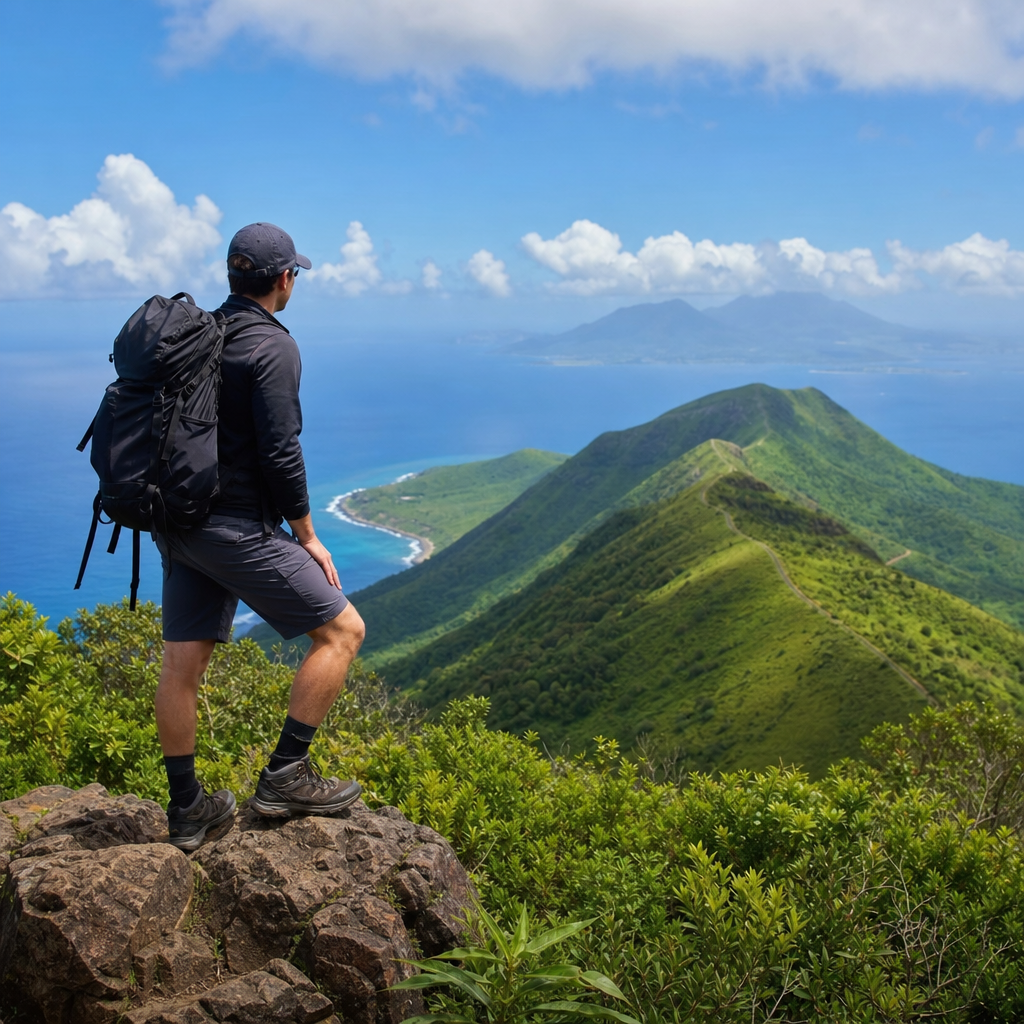
The reward is exceptional. On clear days, climbers can see the island’s rolling interior, the Caribbean Sea, neighboring islands such as Saint Eustatius and sometimes Saba, and the dramatic crater itself, lined with lush vegetation. The crater is a major attraction because it turns the climb from a simple peak bagging exercise into a geological encounter. Guides often explain that the mountain’s former name, Mount Misery, was replaced after independence, and the present name, Liamuiga, comes from a Kalinago word often translated as “fertile island.” That historical context matters. The climb is not just scenic exercise; it is a route through the island’s ecological and cultural identity.
For most visitors, the smartest choice is a guided ascent. Local operators know trail conditions, weather patterns, and safe turnaround points. They also set realistic expectations: this is not a technical alpine climb requiring crampons or ropes for protection, but it is still strenuous mountain travel in a tropical environment. Visitors sometimes underestimate the final sections because they associate the Caribbean with casual recreation. In practice, Liamuiga demands balance, endurance, hydration discipline, and respect for changing conditions.
Who should climb and what difficulty to expect
Mountain climbing in Saint Kitts suits several traveler profiles, but not every route fits every person. Families with older children, active cruise visitors, general hikers, trail runners, and experienced adventure travelers can all find worthwhile options. The key is matching expectations to terrain. Mount Liamuiga is best for people with solid cardiovascular fitness and some experience on uneven trails. You do not need technical climbing skills, but you should be comfortable stepping over roots, climbing short steep sections with hand support, and hiking for several hours in humid conditions.
One common planning mistake is to compare Saint Kitts only by elevation with mainland mountains. A 1,156-meter peak may look moderate on paper, yet tropical heat index, abrupt grades, and muddy footing can make the effort feel harder than a higher but drier route elsewhere. In my experience, travelers who regularly walk hills, train on stairs, or do moderate endurance exercise tend to enjoy the climb most. People with knee instability, poor heat tolerance, or no hiking background may be happier on shorter forest excursions paired with ziplining, beach recovery, or a scenic railway day.
If your group has mixed ability, use the mountain as part of a layered itinerary rather than the sole event. Stronger members can climb Liamuiga while others choose rainforest walks, cultural tours, snorkeling, or catamaran excursions. That flexibility is one reason this subject works well within the island’s broader adventure and activities category. A hub page should point outward: the mountain is central, but it links naturally to nature tourism, heritage tourism, and soft adventure options across Saint Kitts.
Best time to go, weather patterns, and trail conditions
The best time for mountain climbing in Saint Kitts is generally the drier season, often considered December through April, when rainfall is lower and visibility can be better. However, “best” does not mean guaranteed dry trails. The mountain creates its own microclimate, and cloud buildup is common. Morning starts are standard because they improve comfort, reduce thunderstorm risk, and increase the chance of summit views before clouds thicken. During the wetter months, usually late spring through autumn, the island becomes greener and quieter, but mud deepens, route conditions can deteriorate, and downpours may force last-minute changes.
Hurricane season is another consideration. Even when a storm is nowhere near Saint Kitts, regional weather systems can bring heavy rain and unstable conditions. Reputable guides monitor forecasts and will cancel or reroute if necessary. That is not a drawback; it is evidence of good risk management. If you want the highest chance of a successful summit day, book early in your trip rather than on the final morning. That gives you a buffer in case weather requires rescheduling.
| Factor | What to Expect | Best Practice |
|---|---|---|
| Season | Drier months usually offer better visibility and firmer trails | Plan major climbs between December and April when possible |
| Start time | Heat and cloud cover increase later in the day | Choose an early morning departure |
| Trail surface | Roots, wet soil, and mud are common year-round | Wear aggressive-grip hiking shoes or boots |
| Rain risk | Showers can arrive quickly, especially in the highlands | Pack waterproof layers and protect electronics |
| Visibility | Crater and coastal views depend on moving cloud | Stay flexible and listen to guide timing decisions |
Essential gear, safety, and guided logistics
The gear list for Saint Kitts is simple but non-negotiable. Wear trail shoes or light boots with reliable grip, not flat-soled sneakers. Quick-dry clothing is better than cotton because humidity saturates fabric fast. Bring at least two liters of water per person for a summit hike, plus electrolyte tablets or sports drink mix. A small backpack, rain shell, sun protection, insect repellent, and a dry bag for your phone are all practical essentials. Trekking poles help some hikers on descents, though many prefer free hands for grabbing roots and stable holds on steeper sections.
Safety on the mountain depends more on judgment than equipment. The main risks are slips, dehydration, overexertion, and poor visibility, not technical climbing hazards. That is why licensed or well-established local guides add real value. They know where the trail narrows, when mud makes a section unsafe for hesitant hikers, and how fast a group should move. They also coordinate transport, which matters because trailheads are not designed for casual self-drive tourism in the way many national park systems are elsewhere.
Visitors should also think about post-hike recovery. Rehydration, food, and a cooldown stop are part of a smart climbing day. Many travelers pair the hike with a late lunch near the coast, a relaxed afternoon at South Friars Bay, or a restorative stop at a resort spa. That may sound secondary, but itinerary design affects safety and enjoyment. Exhausted hikers rushed straight to evening commitments often feel worse than those who schedule proper recovery.
Miscellaneous adventures linked to mountain climbing in Saint Kitts
As a hub page for miscellaneous content within adventure and activities, this section matters because mountain climbing in Saint Kitts rarely stands alone. The most useful trip plans combine the summit experience with related outdoor and cultural activities that deepen understanding of the island. Rainforest tours are the closest match. These can include naturalist-led walks focused on medicinal plants, endemic and migratory birds, monkeys, and volcanic ecology. Travelers who do not want the full Liamuiga ascent often choose these routes as a lower-intensity alternative.
Another strong pairing is estate heritage exploration. Former sugar plantations such as Romney Manor connect the mountain landscape to colonial history, land use, and the island’s economic past. After a climb, many visitors better understand how dramatically the terrain shaped settlement patterns. Scenic rail experiences and island drives also work well as complementary activities because they reveal the contrast between coastal development and the densely vegetated interior.
For travelers seeking a bigger adventure portfolio, Saint Kitts also supports ATV tours, off-road excursions in some areas, snorkeling, sailing, and day trips that frame the island from sea level after you have seen it from above. Photographers often appreciate this sequence. Climbers can capture crater forest textures in the morning, then broad coastal panoramas at sunset. If you are building a content cluster beneath this hub, the obvious supporting articles include Mount Liamuiga trail guides, rainforest wildlife, packing lists, weather planning, family-friendly hikes, and combination itineraries that mix hiking with marine activities.
How to plan a successful climbing itinerary
The best mountain climbing itinerary in Saint Kitts starts with honest self-assessment. Ask three questions: How fit is your group, how much weather risk can you accept, and what else do you want from the island? If the summit is the priority, schedule it early, book a reputable guide, and keep the day before relatively light so you start rested. If your trip is short, such as a cruise stop, do not force an overly ambitious ascent unless the timing, transport, and fitness level align. A rushed mountain day is usually less enjoyable than a well-paced partial adventure.
Accommodation location also affects planning. Basseterre and the Southeast Peninsula offer easy access to dining and beaches, but northern departures for Liamuiga require earlier starts. That is manageable, yet it should be factored into wake-up times, breakfast, and transport coordination. If you are staying at a resort, confirm whether packed breakfasts and wet gear handling are available. Small operational details make a measurable difference on active trips.
Finally, treat mountain climbing in Saint Kitts as the anchor, not the entire trip. The island is at its best when active days alternate between effort and recovery. A sample structure that works well is summit hike, easy beach day, heritage and rainforest touring, then water-based adventure. That rhythm reduces fatigue and lets each experience stand out. It also reflects how Saint Kitts is actually enjoyed by repeat visitors: not as a single checklist climb, but as a compact adventure destination where mountain, forest, culture, and coast reinforce one another.
Mountain climbing in Saint Kitts is compelling because it condenses a surprising range of adventure into one accessible island: a genuine volcanic summit, dense rainforest, striking crater views, meaningful local history, and numerous related activities that suit different ages and fitness levels. The key facts are straightforward. Mount Liamuiga is the flagship climb, guided ascents are the safest and most practical option, early starts and seasonal awareness improve success, and tropical trail conditions demand more respect than the elevation figure suggests. Just as important, the mountain works best as part of a broader plan that includes rainforest experiences, heritage sites, coastal downtime, and other outdoor activities.
For travelers, the main benefit is variety without complexity. You can challenge yourself on a serious hike in the morning, then spend the next day recovering by the sea or exploring the island’s cultural landscape. For trip planners and content readers, that makes this page a true hub for the miscellaneous side of adventure in Saint Kitts: it connects the headline climb to the supporting experiences that complete the destination. Use this guide as your starting point, then map out the specific trails, tours, and recovery days that match your fitness, schedule, and curiosity. If Saint Kitts is on your list, book the climb early and build the rest of your adventure around it.
Frequently Asked Questions
What is the best mountain climbing experience in Saint Kitts for most visitors?
For most travelers, the standout mountain climbing experience in Saint Kitts is a guided ascent of Mount Liamuiga, the island’s highest peak and dormant volcano. It brings together everything people typically want from climbing on the island: a challenging uphill trek, dense rainforest scenery, excellent opportunities to learn about local plants and wildlife, and the dramatic reward of reaching the crater rim. Unlike destinations where climbing may mean technical rock routes, mountain climbing in Saint Kitts is usually focused on strenuous hiking and trekking through volcanic terrain, so Mount Liamuiga offers an ideal introduction to the island’s style of adventure.
The route is physically demanding rather than technical, with steep sections, uneven footing, roots, rocks, mud, and occasional scrambling near the upper slopes. That makes it accessible to active beginners in good condition while still being satisfying for experienced hikers. A guide is strongly recommended and, in practice, expected for most visitors, because local guides know the safest lines, trail conditions, weather patterns, and ecological highlights along the way. They also add valuable context about the island’s volcanic formation, colonial-era history, and the surrounding rainforest environment.
What makes the climb especially memorable is the variety packed into one outing. You move from lower agricultural and forest zones into lush tropical vegetation, then into steeper volcanic ground with broader views over Saint Kitts and neighboring islands. On clear days, the summit area can provide remarkable panoramas, while the crater itself is a major highlight for travelers interested in geology. In short, if someone asks where to begin with mountain climbing in Saint Kitts, Mount Liamuiga is usually the answer because it delivers the island’s most complete and iconic peak experience.
How difficult is mountain climbing in Saint Kitts, and do you need prior experience?
Mountain climbing in Saint Kitts is best described as moderately to highly strenuous, depending on the trail, weather, and your fitness level. Most climbs on the island do not require technical mountaineering skills, ropes, or specialized climbing equipment, but they do demand stamina, balance, and comfort on steep, sometimes slippery terrain. Trails can be narrow, muddy, root-covered, and humid, and the tropical environment often makes climbs feel harder than the mileage alone would suggest. The challenge comes from elevation gain, heat, footing, and the sustained effort of moving uphill in a rainforest setting.
You do not necessarily need prior mountain climbing experience to enjoy Saint Kitts, but you should be honest about your conditioning. Many first-time mountain trekkers successfully complete guided climbs, especially if they are already active through walking, running, gym training, or other outdoor sports. The key is understanding that this is not a casual stroll. Even on the most popular routes, you may encounter steep inclines, short scrambling sections, and changing conditions caused by recent rain. Good cardiovascular endurance, sturdy footwear, and a willingness to move carefully are more important than having formal climbing experience.
For travelers with less hiking background, hiring a guide and choosing an outing that matches your ability is the smart approach. Guides can set a manageable pace, recommend rest points, and help you decide whether to attempt a full summit, a shorter forest ascent, or a route that combines mountain scenery with birdwatching or nature interpretation. More experienced hikers may find the island compact but surprisingly rewarding, especially because the volcanic topography and dense vegetation create a sense of remoteness and effort far beyond what many expect from a Caribbean destination. In practical terms, Saint Kitts is very approachable for fit beginners, but it should still be treated as serious outdoor activity rather than a resort excursion.
What should you bring for a mountain climb in Saint Kitts?
Packing properly is one of the most important parts of having a safe and enjoyable climb in Saint Kitts. Start with sturdy trail shoes or hiking boots that have strong grip, because volcanic dirt, wet roots, loose stones, and mud can make the trail slippery. Lightweight, breathable clothing is ideal for the tropical climate, but avoid anything too minimal, since long sleeves or quick-dry layers can help protect against scratches, insects, and dense vegetation. A small daypack should carry water, snacks, sun protection, insect repellent, and a light rain layer, since weather in the mountains can shift quickly.
Hydration is especially important. Even relatively short climbs can become exhausting in Caribbean humidity, so bringing more water than you think you need is wise. Energy snacks such as fruit, trail mix, or bars are helpful for maintaining stamina on steep ascents. A hat and sunscreen are useful, particularly on exposed sections or before entering forest cover, though many routes spend significant time under the canopy. If you plan to take photos, use a secure phone case or a small waterproof pouch, because moisture, sweat, and sudden rain are common realities on the trail.
Some hikers also benefit from trekking poles, especially on the descent, when slick terrain can be harder on the knees and balance. If you are joining a guided climb, ask in advance what is provided and what is not, since some operators may include transport, refreshments, or basic safety advice but expect you to bring your own essentials. It is also smart to carry any personal medications and to let your guide know about relevant health concerns before departure. Overall, the best packing strategy for mountain climbing in Saint Kitts is to prepare for heat, moisture, uneven ground, and a full active day outdoors.
Is it necessary to hire a guide for mountain climbing in Saint Kitts?
In most cases, yes, hiring a guide is the best and most responsible choice for mountain climbing in Saint Kitts. While some visitors may assume a compact island is easy to navigate independently, the reality is that mountain routes often pass through dense rainforest, unofficial junctions, private access points, and areas where trail conditions can change after rain or storms. Local guides understand the terrain, know how to judge weather and footing, and can safely manage the pace and route based on the group’s ability. For a climb such as Mount Liamuiga, a guide is not just a convenience; it is often central to the experience.
Safety is only one reason. A good guide also turns the outing into a deeper exploration of the island. Along the way, they can point out endemic or notable bird species, explain the volcanic origins of the mountain, identify medicinal plants and rainforest trees, and share stories tied to local communities and the island’s colonial and plantation-era past. That added knowledge is especially valuable in Saint Kitts, where mountain climbing often overlaps with ecology, heritage, and nature tourism rather than existing as a purely athletic activity.
There is also a practical benefit to guided climbing on a tropical island: efficiency. A local operator can usually help with transportation to trailheads, start times that avoid the hottest part of the day, and decisions about whether conditions are suitable for a summit push or better suited to an alternate route. For independent-minded travelers, it may be tempting to go alone, but the combination of humidity, steep forest trails, and variable visibility makes local expertise worthwhile. If your goal is to climb responsibly, support local outdoor professionals, and get the most from the island’s mountains, booking a reputable guide is the standard recommendation.
What else can you combine with mountain climbing in Saint Kitts?
One of the biggest advantages of mountain climbing in Saint Kitts is how easily it connects with other outdoor and cultural experiences. Because the island is small yet geographically diverse, a climbing day can be part of a broader adventure that includes rainforest hiking, crater exploration, trail running, birdwatching, historical sightseeing, or even recovery time on the coast. Many visitors start with a summit-focused excursion such as Mount Liamuiga, then build the rest of their itinerary around related experiences that highlight the island’s volcanic landscapes and ecological richness.
Birdwatching is a natural pairing, especially in forested mountain zones where guides can help identify species that casual visitors might miss. Nature lovers also appreciate combining climbs with broader rainforest walks that emphasize plant life, local ecology, and scenic overlooks rather than only the summit objective. For highly active travelers, mountain climbing can complement trail running, longer ridge traverses, or linked hiking outings that explore different parts of the island over several days. The volcanic setting gives each route a distinct character, from crater rims and steep ascents to quieter forest trails with a more immersive wilderness feel.
There is also a strong cultural angle. Depending on your itinerary, climbing can be paired with visits to historic estates, former plantation areas, or heritage sites that help explain how Saint Kitts developed over time. That combination makes the trip more meaningful, because the mountains are not isolated from the island’s history; they are part of a landscape shaped by geology, agriculture, settlement, and modern tourism. After a demanding climb, many travelers also enjoy balancing the effort with beach time, local food, or a scenic drive through villages and coastal viewpoints. In that sense, mountain climbing in Saint Kitts works best not as a single activity in isolation, but as the adventurous core of a well-rounded island experience.