Nevisian art and artists reveal the island’s history in ways official records never can, preserving memory through painting, craft, music, festival design, architecture, and everyday making. On Nevis, art is not confined to galleries or tourist shops. It appears in village celebrations, church interiors, roadside studios, restored plantation houses, hand-built pottery, textile work, masquerade traditions, and the visual language of public events. When I have studied Caribbean cultural landscapes, Nevis has stood out because its artistic identity feels intimate yet layered: African inheritance, British colonial influence, local religious practice, maritime life, and contemporary Caribbean creativity all coexist in a compact island setting. Understanding Nevisian art means understanding how a small community transforms history, environment, and resilience into form.
The term Nevisian art includes fine art, decorative art, vernacular craft, performance-linked visual culture, and heritage-based design. Nevisian artists include painters, sculptors, printmakers, photographers, woodworkers, ceramicists, costume makers, muralists, and multidisciplinary cultural practitioners. The island is part of the Federation of Saint Kitts and Nevis, but Nevis maintains a distinct cultural voice shaped by its geography, economy, and social memory. That distinctiveness matters because small-island art scenes are often flattened into broad labels such as Caribbean art, which can obscure local styles, materials, and concerns. A serious cultural exploration should instead ask practical questions: what themes recur in Nevisian work, where do artists learn and exhibit, how do heritage sites influence visual expression, and what pressures affect artistic production today?
This hub article answers those questions and maps the miscellaneous cultural terrain surrounding Nevisian art and artists. It looks at historical roots, major themes, notable creative spaces, traditional crafts, festival aesthetics, tourism’s influence, and the challenges of sustaining an art ecosystem on a small island. It also serves as a gateway topic for deeper reading across culture and history, because no single medium tells the whole story. If you want to understand Nevis beyond beaches and heritage brochures, start with the work its people make. Art on Nevis is both record and argument: a record of who has lived there, and an argument about how the island wishes to be seen now.
Historical foundations of Nevisian art
Nevisian art grew from overlapping histories rather than a single school or movement. Before contemporary studios and exhibitions, the island’s visual culture was shaped by practical making: building houses suited to climate, carving useful objects, sewing garments, decorating churches, and creating ceremonial items for communal events. Enslaved Africans and their descendants carried aesthetic knowledge into pottery, basketry, pattern, rhythm, and masquerade traditions, even when colonial systems denied formal recognition of their creativity. European influence entered through plantation architecture, portrait conventions, Anglican and Catholic visual culture, imported furnishings, and later through colonial education. The result was not simple imitation. Local makers adapted outside forms to local materials, local weather, and local meaning.
Historic sites still shape how art is produced and interpreted on the island. The Hamilton estate and museum context tie Nevis to Atlantic history, including birth narratives linked to Alexander Hamilton and wider plantation-era realities. The Bath Hotel and spring area evoke an earlier visitor culture that influenced architecture, decorative taste, and social display. Ruined sugar estates, stone walls, churches, and windmill remains give artists powerful motifs: endurance, loss, labor, and reclamation. I have seen again and again in Caribbean island art that ruins are never just picturesque subjects. On Nevis, they function as visual evidence of extraction, hierarchy, and survival, and artists often paint them with an emotional charge that goes beyond landscape tradition.
By the twentieth century, formal art education remained limited compared with larger countries, so much artistic development happened through self-teaching, apprenticeship, school encouragement, church work, and regional exchange. This matters because Nevisian art should not be judged by metropolitan institutional pathways. Its credibility comes from continuity of practice and cultural intelligence, not from how closely it mirrors big-city art markets.
Core themes in Nevisian visual culture
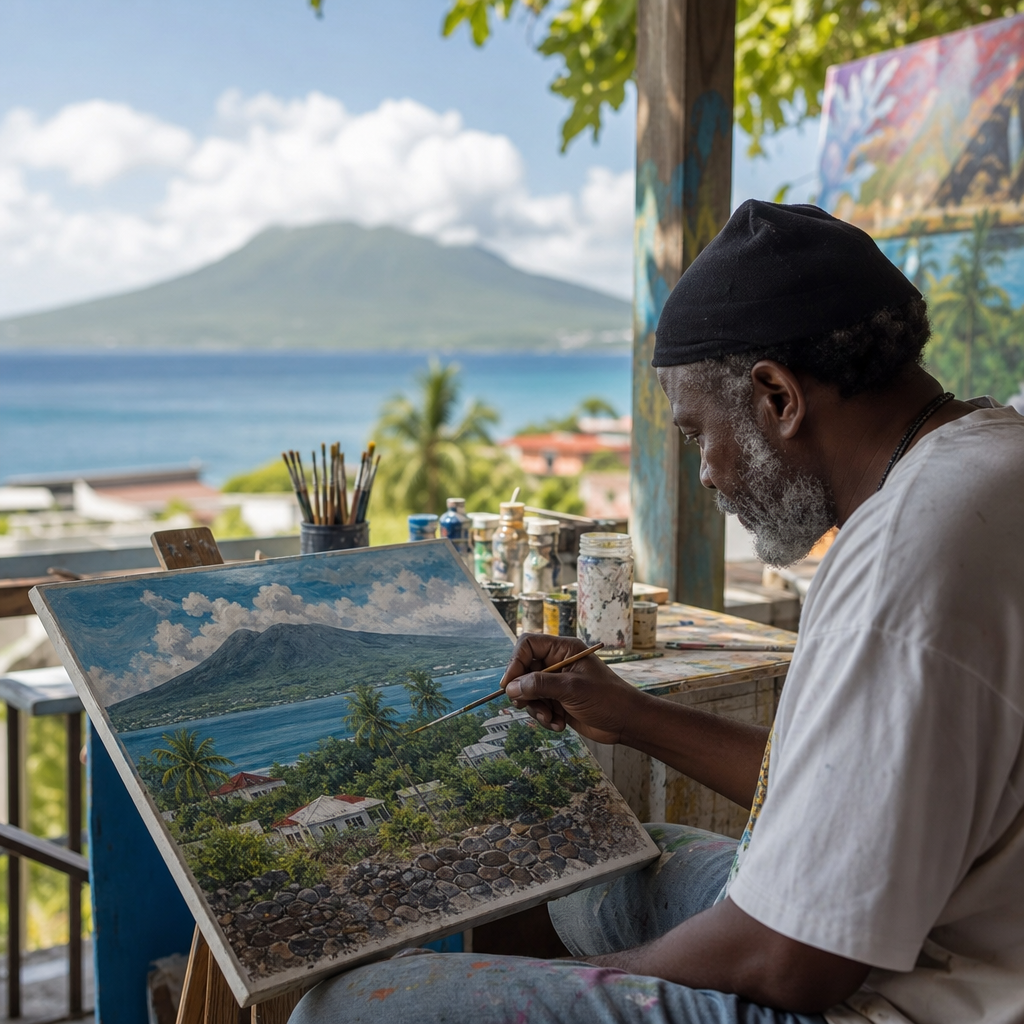
Several themes appear consistently across Nevisian art. Landscape is the most obvious, but on Nevis it is rarely generic scenery. Nevis Peak, coastal light, village roads, fishing areas, and tropical vegetation become markers of belonging. Artists return to the mountain because it anchors the island physically and symbolically. Sea views often carry economic and emotional meaning at once, reflecting trade, fishing, migration, hurricanes, and tourism. Portraiture and figurative work frequently center ordinary people rather than elite sitters: market vendors, elders, schoolchildren, musicians, and workers. That choice reflects a democratic visual ethic common in many Caribbean communities, where art often validates lives omitted from formal archives.
Memory is another defining theme. Nevisian artists repeatedly engage enslavement, plantation labor, emancipation, village continuity, and family inheritance. Some do this directly through historical scenes or symbolic imagery; others do it indirectly through material choices such as reclaimed wood, weathered metal, or traditional textile references. Spiritual life also appears through church architecture, devotional objects, cemetery imagery, and festival symbolism. Because Nevis is small, artists often move fluidly between documentary, decorative, and expressive functions. A mural may beautify a space, commemorate an event, educate children, and support tourism messaging at the same time.
Color use often reflects local light conditions rather than imported expectations of tropical brightness. Skilled painters on Nevis know that the island contains subtle greys, volcanic greens, rust tones from old stone, and dramatic shifts before rain. This is one reason the strongest local work feels rooted rather than stereotyped. It observes the island carefully instead of reproducing postcard formulas.
Artists, studios, and cultural spaces
No discussion of Nevisian art and artists is complete without recognizing the island’s mixed infrastructure. There are working artists with private studios, makers who sell through craft markets and hotels, educators who nurture talent in schools, and heritage sites that function as informal exhibition spaces. The Nevis Heritage Trail and museum-related institutions provide historical framing that influences contemporary creators. Galleries may be smaller and less frequent than on larger islands, but cultural visibility often comes through restaurants, inns, public buildings, festivals, and community events. In practical terms, that means a visitor interested in Nevisian art should look beyond conventional gallery models.
Local and regional exhibitions matter because they connect Nevisian practitioners to wider Caribbean networks. Artists often build reputations through group shows, seasonal markets, tourism partnerships, and commissions rather than through a single permanent venue. This structure has strengths and weaknesses. It keeps art close to everyday life, but it can make archiving, criticism, and long-term career development harder. I have seen excellent island artists across the region lose visibility simply because their work was dispersed through hotels and private homes without proper documentation. Nevis faces that same challenge, which is why photography, cataloging, and oral history are essential to preserving artistic legacy.
| Area of activity | What it includes on Nevis | Why it matters |
|---|---|---|
| Studio practice | Painting, drawing, sculpture, photography, mixed media | Builds individual artistic voices and collectible work |
| Heritage spaces | Museums, historic estates, trails, restored buildings | Provides historical subjects and educational context |
| Craft production | Textiles, woodwork, ceramics, jewelry, souvenir design | Links cultural tradition with income generation |
| Festival design | Costumes, signage, stage decoration, masquerade elements | Keeps communal creativity visible and intergenerational |
| Public display | Hotels, restaurants, schools, government spaces | Expands access beyond formal gallery audiences |
For a hub page, the key point is that Nevisian art lives in an ecosystem, not a single institution. Any serious exploration should connect artist biographies, heritage places, festivals, and local commerce rather than separating them.
Craft traditions and everyday artistry
Craft is central to Nevisian cultural expression, and treating it as secondary to fine art would be a mistake. On small islands, craft traditions preserve technique, iconography, and social memory with remarkable efficiency. Woodworking, sewn goods, embroidery, jewelry, ceramics, and household decorative objects all carry artistic value. A hand-carved bowl or stitched textile may express local aesthetics as clearly as a framed painting. In Nevis, craft also intersects with practical economics. Makers often sell to residents, diaspora buyers, and visitors, so objects must balance authenticity, usability, transportability, and price.
Traditional skills are often learned through family or community transmission rather than academies. That makes elder knowledge especially important. When a seamstress understands ceremonial dress construction, or a carpenter knows the proportions of historic wooden houses and shutters, that is artistic knowledge with heritage significance. Across the Caribbean, loss of such knowledge can happen quickly when younger people move into service work or leave for education abroad. Nevis is not immune. Supporting craft on the island therefore means supporting apprenticeships, school programs, local markets, and public respect for handmade work.
Craft also complicates the common idea that authenticity requires old-fashioned appearance. Many Nevisian makers work in contemporary styles while still drawing on local motifs, marine forms, island woods, botanical references, and inherited patterns. That blend is healthy. Living traditions survive by adapting, not by freezing themselves for display.
Festival, performance, and public art
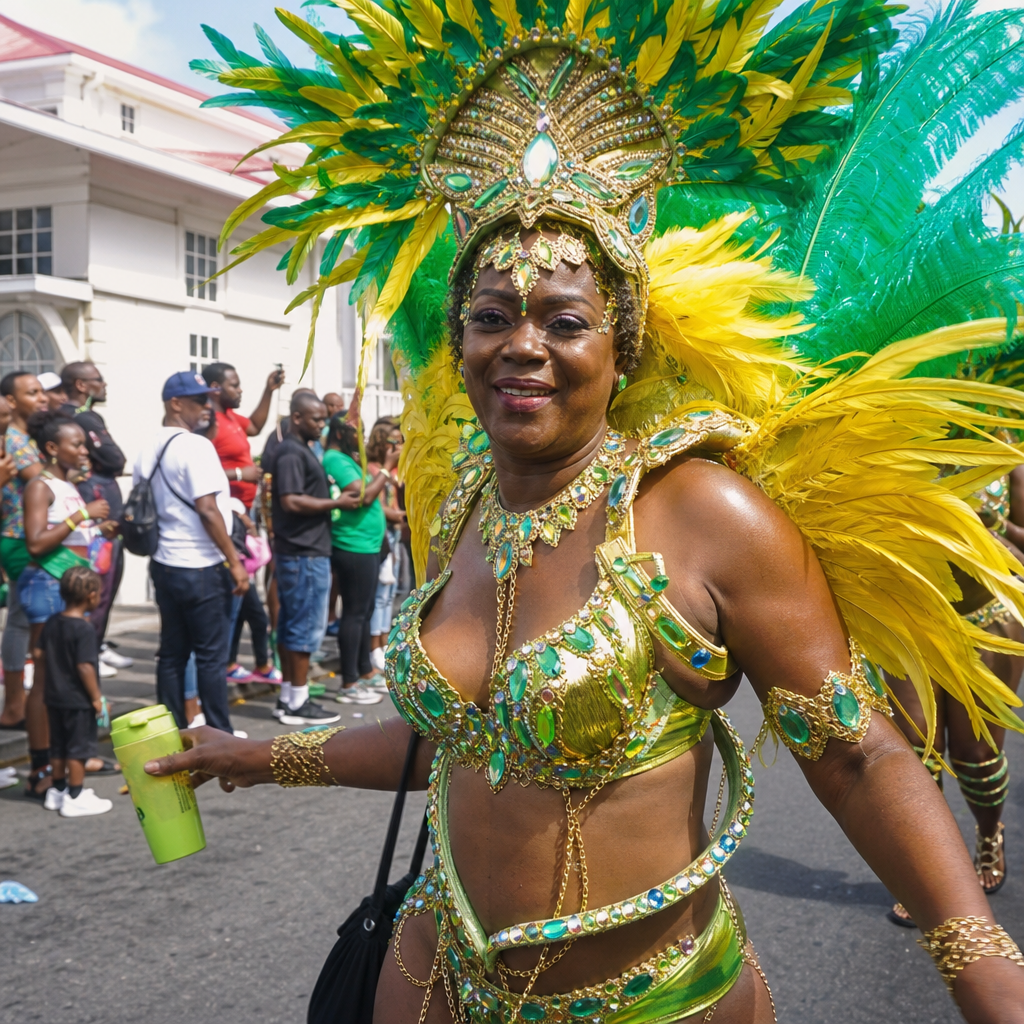
Some of the most dynamic Nevisian art is temporary. Festival culture, especially around Culturama, turns the island into a stage for costume design, set building, color strategy, textile work, body adornment, and visual storytelling. These forms deserve to be treated as art history, not merely entertainment. A carnival costume requires concept development, material sourcing, structural engineering, movement planning, and symbolic communication. The same is true of parade banners, troupe identities, and community staging. Because these works are often ephemeral, they can be underdocumented, yet they reveal the island’s creative energy more immediately than many permanent collections.
Masquerade traditions and folk performance connect visual design to rhythm and movement. In that setting, the artist is not just making an object but shaping how the body occupies public space. Public murals and commemorative installations serve similar functions in fixed form. They can mark historic figures, celebrate emancipation, encourage civic pride, or brighten schools and transport areas. When done well, public art on Nevis does more than decorate. It places local narratives in shared view and counters the tendency for visitor-facing images to dominate the island’s visual identity.
For researchers and travelers alike, this is an important insight: if you only look for framed works on walls, you will miss much of Nevisian artistic life. Watch festivals, study costumes, examine church furnishings, and notice how public events are visually organized.
Tourism, markets, and the pressure of representation
Tourism creates opportunity for Nevisian artists, but it also shapes what gets made and sold. Visitors often seek landscapes, heritage scenes, bright colors, and portable crafts, which can encourage repetition of familiar motifs. There is nothing inherently wrong with market-friendly work; many skilled artists sustain their practice through it. The problem arises when outside demand narrows the perceived definition of Nevisian art. If buyers only reward picturesque beaches and plantation nostalgia, then harder subjects such as labor history, migration, class, or environmental vulnerability may receive less space.
At the same time, tourism can fund preservation and visibility. Hotels commission local art, heritage properties host exhibitions, and cultural branding introduces visitors to island makers they might never otherwise find. The most successful Nevisian artists often navigate both worlds: they produce accessible work for broad audiences while maintaining a deeper personal practice. This balancing act is common throughout the Caribbean and requires business skill as much as talent. Pricing, framing, shipping, digital promotion, and provenance all matter, especially for artists trying to reach collectors beyond the island.
Representation is another pressure point. Small islands are frequently marketed through simplified imagery. Serious Nevisian art pushes back by showing the island as inhabited, historical, and contemporary rather than merely scenic. That corrective function gives local artists cultural importance beyond the art market.
Preservation, education, and the future of Nevisian art
The future of Nevisian art depends on documentation, education, and sustained local investment. Small art ecosystems are vulnerable because a few lost archives, a closed gallery, or an aging generation of makers can erase decades of cultural memory. The practical response is clear: record artist interviews, photograph works systematically, catalog private collections, integrate local art into school curricula, and build stronger exhibition opportunities on and off the island. Partnerships with museums, heritage organizations, libraries, and regional universities can help, but local leadership remains essential.
Digital platforms are especially important for Nevis. An artist with a strong online portfolio, accurate captions, and clear biography can now reach diaspora communities, curators, and buyers globally. Yet digital presence should support, not replace, physical cultural infrastructure. Children need to encounter local art in classrooms and public spaces, not only on screens. Emerging artists need mentors, critique, and access to materials. Policymakers need to see cultural work as part of development, not an optional extra attached to tourism.
Nevisian art and artists deserve attention because they offer a precise view of how culture survives on a small island: through making, remembering, adapting, and teaching. Explore local collections, visit heritage sites, attend festivals, and follow working artists directly. The more closely you look at Nevisian art, the more clearly you see Nevis itself.
Frequently Asked Questions
What makes Nevisian art distinct within the wider Caribbean cultural landscape?
Nevisian art stands out because it is deeply rooted in the island’s scale, memory, and daily life. While it shares important Caribbean themes such as colonial history, African heritage, resilience, spirituality, and creolized identity, art on Nevis often feels especially intimate and place-based. The island’s artistic expression is not limited to formal painting or sculpture. It includes architecture, festival costume, music, woodworking, pottery, textiles, church decoration, and the handmade visual culture embedded in community events. This broad definition matters because on Nevis, creativity has long functioned as a living archive, preserving stories that written records either ignored or flattened.
Another defining feature is the way Nevisian art reflects layered histories through ordinary materials and spaces. Restored plantation houses, village churches, handcrafted objects, roadside studios, and public celebrations all tell part of the island’s story. Artists and makers often work in conversation with ancestry, land, and social memory rather than in isolation from them. That means Nevisian art frequently carries evidence of migration, enslavement, emancipation, local craftsmanship, religious life, and changing economic realities. The result is an artistic culture that feels less compartmentalized than in places where art is primarily institutional. On Nevis, visual and material expression is woven into how people remember, celebrate, mourn, and represent themselves.
How does Nevisian art preserve the island’s history beyond official records?
Nevisian art preserves history by holding onto lived experience, emotional truth, and community memory in ways documents alone rarely can. Official records tend to prioritize administration, ownership, law, and colonial perspective. Art, by contrast, keeps track of gesture, atmosphere, belief, labor, and identity. A painting of a village street, a hand-built ceramic vessel, a festival mask, or the decorative details inside a church can reveal how people understood themselves and their world at a particular moment. These forms capture nuance: the colors people favored, the symbols they trusted, the celebrations they sustained, and the spaces they transformed into sites of belonging.
This is especially important on an island where so much history has passed through oral tradition, inherited practice, and communal performance. Festival design, masquerade traditions, textile work, and music all function as cultural records. They transmit rhythms, symbols, and narratives across generations, even when those narratives were never formally written down. Architecture does this too. A restored plantation house, for example, can expose the social hierarchies of an earlier era, while local adaptations in building style reveal how Nevisians made spaces livable, expressive, and culturally meaningful. In that sense, art on Nevis is not just decorative or commemorative. It is evidence. It tells us what mattered to people, how they endured change, and how they encoded memory into things that could be seen, heard, worn, built, and used.
What forms of art should visitors and researchers pay attention to on Nevis besides gallery painting?
Anyone exploring Nevisian art should look far beyond galleries because some of the island’s richest cultural expression appears in everyday and community settings. Festival arts are a major place to start. Costumes, banners, masquerade elements, and public event design all reveal local aesthetics, symbolism, and craftsmanship. These forms are often collaborative and temporary, but they can be among the most culturally revealing because they show how communities choose to represent themselves in shared public space. Music and performance traditions also deserve close attention, since they often intersect with visual design, ritual, and memory.
Craft traditions are equally important. Pottery, textile work, carving, furniture making, and decorative domestic arts can say a great deal about resourcefulness, inherited skill, and the relationship between utility and beauty. Roadside studios and home-based workshops often provide a more direct encounter with local creative practice than formal exhibition venues. Visitors should also pay attention to architecture, especially churches, historic homes, vernacular buildings, and restored plantation sites. These spaces hold visual clues in layout, ornament, materials, and preservation choices. Even interior details such as painted surfaces, altars, memorial objects, and handcrafted furnishings can reveal cultural values and artistic continuity. In short, the best way to understand Nevisian art is to treat the island itself as a cultural landscape, where making happens in public, domestic, spiritual, and ceremonial life as much as in designated art spaces.
How are Nevisian artists influenced by history, community, and the island environment?
Nevisian artists are shaped by a powerful combination of historical inheritance, close community networks, and a highly visible natural environment. The island’s history is impossible to ignore. Legacies of colonization, plantation society, African-descended cultural survival, emancipation, migration, and tourism all form part of the creative backdrop. Artists often respond to these histories directly through subject matter, symbolism, and material choice, or indirectly through concerns with memory, dignity, identity, and belonging. Even when a work seems focused on landscape or everyday life, it may still carry historical meaning because on Nevis, land itself is never neutral. It is tied to labor, ownership, ancestry, and transformation.
Community influence is just as significant. On a smaller island, artistic practice is often observed, discussed, and embedded in relationships. Artists may draw inspiration from village life, family traditions, church communities, neighborhood celebrations, and the visual culture of public gatherings. This can create work that feels socially connected rather than detached from local audiences. The environment also plays a major role. Nevis’s light, vegetation, coastline, mountain presence, and built landscape all affect color palette, texture, mood, and composition. But the influence of environment is not simply scenic. It is experiential. Weathered wood, volcanic earth, sea air, cultivated grounds, and historic ruins all contribute to how artists interpret endurance, beauty, and change. Together, history, community, and environment give Nevisian art its layered character: grounded, expressive, and inseparable from the life of the island itself.
Why is it important to support and study Nevisian artists today?
Supporting and studying Nevisian artists matters because their work protects cultural knowledge that can easily be overlooked, commercialized, or lost. Small-island artistic traditions are often simplified for outside audiences, especially through tourism-driven expectations that favor easily marketable images over deeper cultural complexity. Serious attention to Nevisian artists helps correct that pattern. It acknowledges that the island’s creative life is intellectually rich, historically important, and central to understanding Nevis on its own terms. Artists do not merely illustrate culture; they interpret it, challenge it, preserve it, and carry it forward.
This support is important at both cultural and practical levels. Culturally, it strengthens intergenerational memory by valuing the makers who sustain techniques, symbols, and stories rooted in local experience. It also broadens how people think about heritage, moving beyond monuments and official narratives to include craft, performance, design, and everyday making. Practically, supporting artists through documentation, exhibition, education, patronage, and community investment helps ensure that creative knowledge remains active rather than becoming static folklore. For researchers, Nevisian artists offer a vital entry point into the island’s social history, religious life, built environment, and evolving identity. For residents and visitors alike, engaging seriously with their work creates a more honest understanding of Nevis: not just as a beautiful destination, but as a place shaped by memory, skill, imagination, and ongoing cultural expression.