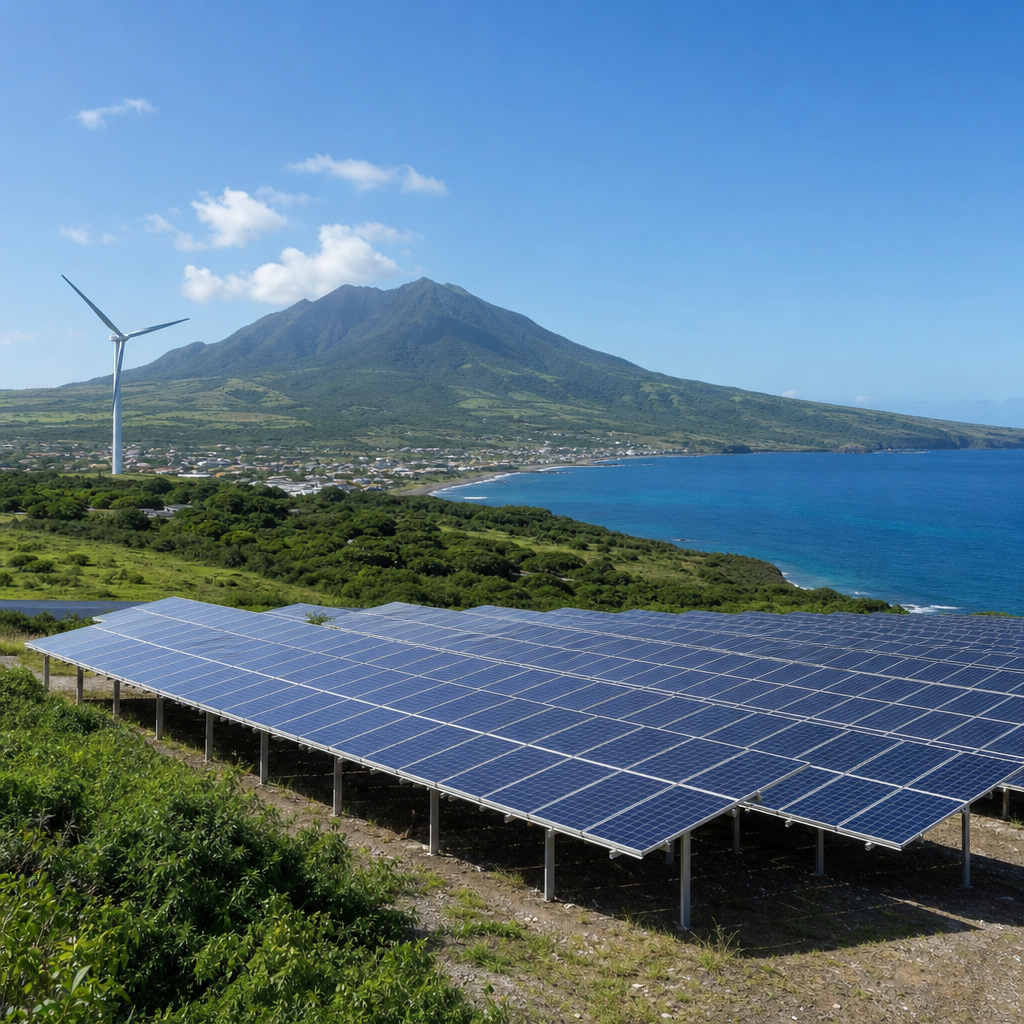
Renewable energy projects in Nevis are moving from policy ambition to practical investment themes, making the island one of the most closely watched small-market energy transitions in the Eastern Caribbean. In this context, renewable energy means electricity and thermal energy generated from naturally replenished resources such as geothermal heat, solar radiation, wind, and organic waste. For Nevis, the term matters beyond climate language. Energy costs shape tourism margins, government operating expenses, water production, transport electrification, and the competitiveness of every business that depends on reliable power. I have worked on Caribbean market assessments where fuel price volatility repeatedly disrupted project models, and Nevis stands out because it combines high imported-fuel exposure with an unusual local resource advantage: geothermal potential.
Nevis is part of the Federation of Saint Kitts and Nevis, a small island state where electricity systems have historically depended on imported diesel generation. That model creates structural challenges. Imported fuel exposes the grid to shipping costs, currency movements, and global oil price swings. Small utility systems also lack the economies of scale available to large countries. When a diesel unit fails on a small island grid, the effect can be immediate: outages, expensive emergency maintenance, and pressure on public finances. Renewable energy projects in Nevis matter because they address all three vulnerabilities at once by lowering fuel imports, diversifying generation, and improving long-term price stability.
This article serves as a hub for the miscellaneous side of business and investment opportunities tied to Nevis’s energy transition. That includes core power projects, supporting infrastructure, specialized services, financing models, workforce needs, land use considerations, tourism linkages, and emerging sectors such as battery storage and electric mobility. Investors, developers, consultants, equipment suppliers, and local entrepreneurs all have a stake in how these projects evolve. The future outlook is not a single project timeline. It is an ecosystem story involving regulation, grid readiness, environmental review, capital structuring, and community acceptance. Understanding that broader landscape is essential for anyone evaluating renewable energy projects in Nevis.
The strongest reason for optimism is that Nevis has a clearer strategic narrative than many islands of comparable size. It is not relying on one technology alone. Geothermal energy offers potential baseload supply, solar can be deployed faster in modular form, battery systems can support grid stability, and energy efficiency can reduce immediate demand pressure. Together, these elements create a practical roadmap rather than an abstract sustainability goal. The sections below examine how that roadmap is taking shape, where the opportunities are strongest, what constraints still matter, and why Nevis could become a model for small-island clean energy investment if execution remains disciplined.
Why Nevis Has Unusual Renewable Energy Potential
Nevis’s renewable energy outlook begins with geology. The island is volcanic, and that matters because geothermal systems form where underground heat can be accessed through drilling and converted into electricity. In Caribbean energy planning, geothermal is especially valuable because it can provide baseload power, unlike solar and wind, which vary with weather and daylight. For a small island grid, baseload renewable power is transformative. It reduces dependence on diesel generators that must otherwise run continuously to maintain system stability. Nevis has long been identified as one of the Eastern Caribbean locations with meaningful geothermal promise, and that single resource distinction changes the investment conversation dramatically.
Solar also has a strong role. Nevis benefits from high solar irradiation typical of the Caribbean, making photovoltaic systems commercially sensible for public facilities, hotels, businesses, and eventually utility-scale plants where land and grid conditions permit. In practice, solar projects in island systems often move faster than geothermal because they require less exploratory risk and shorter development timelines. I have seen investors use solar as an early-entry strategy in frontier energy markets: it builds local confidence, demonstrates savings, and creates operational familiarity while larger projects are still advancing through permitting and financing. That pattern makes sense for Nevis as well.
Another advantage is scale discipline. Because Nevis is a small market, renewable projects must be designed carefully around actual demand, reserve margins, and grid absorption capacity. That may sound like a limitation, but it can be a strength. Developers cannot hide behind oversized assumptions. Projects have to be grounded in realistic load forecasts, utility dispatch practices, and phased expansion. In small-island energy systems, disciplined sizing often produces more bankable outcomes than ambitious but poorly integrated mega-project proposals.
Key Project Types and What They Mean for Investors
The renewable energy opportunity set in Nevis can be divided into several practical categories. Each has a different risk profile, capital requirement, and revenue logic.
| Project type | Main opportunity | Primary challenge | Typical investors or partners |
|---|---|---|---|
| Geothermal power | Baseload renewable generation with export potential | Exploration risk, drilling cost, long development cycle | Infrastructure funds, multilaterals, specialist developers |
| Utility-scale solar | Faster deployment and predictable operating costs | Land use, intermittency, grid integration | Independent power producers, utilities, EPC firms |
| Commercial rooftop solar | Immediate bill savings for hotels and businesses | Interconnection rules, financing access, roof suitability | Local installers, banks, leasing firms |
| Battery energy storage | Frequency support, peak shaving, renewable smoothing | Upfront cost, dispatch optimization, replacement planning | Utilities, technology vendors, grid operators |
| Waste-to-energy and bioenergy | Niche circular-economy applications | Feedstock reliability and small-scale economics | Municipal partners, private waste firms |
Geothermal remains the flagship opportunity because of its potential scale and strategic impact. A successful geothermal plant could materially reduce diesel imports and possibly support electricity exports to neighboring islands if transmission economics and regional agreements align. However, geothermal development is capital intensive. Exploration drilling is the decisive step, and it is expensive because investors are funding resource confirmation before full commercial certainty exists. In global geothermal markets, public-sector participation, concessional finance, and risk-sharing instruments are common for exactly this reason.
Utility-scale and distributed solar projects are usually easier to finance because the technology is standardized and performance is well understood. Hotels, villas, public buildings, schools, and health facilities can all benefit from on-site generation. For tourism-led economies, visible solar adoption also signals operating resilience and environmental credibility to international travelers and institutional partners. Battery storage then becomes the enabling layer that lets more variable renewable power enter the system without compromising reliability.
Grid Readiness, Regulation, and Project Bankability
No renewable energy project in Nevis succeeds on resource quality alone. Grid readiness and regulatory clarity determine bankability. On a small island grid, technical constraints are immediate and measurable: frequency control, spinning reserve needs, fault response, voltage stability, and interconnection standards all influence how much renewable generation can be added safely. Developers who ignore those realities tend to underestimate curtailment risk or overstate achievable capacity factors.
Bankable projects typically require a transparent power purchase agreement, a credible offtaker, clear tariff methodology, land access certainty, and an environmental review process that is rigorous but efficient. In island markets, the utility’s financial position matters enormously because lenders assess whether contracted revenues will actually be paid on time. Multilateral institutions such as the Caribbean Development Bank, World Bank affiliates, and regional climate finance facilities often play a catalytic role by supporting feasibility work, transaction advisory services, or concessional funding windows.
From experience, one of the most important practical issues is sequencing. It is tempting for policymakers to announce generation targets first and solve grid issues later. The stronger approach is the reverse: complete resource studies, update grid modeling, define interconnection rules, establish procurement mechanisms, and then release projects in phases. That creates confidence for serious investors and lowers the chance of renegotiation. For Nevis, regulatory consistency will matter as much as technology choice. Investors can handle complexity; they struggle more with uncertainty.
Business Opportunities Beyond Power Generation
The future outlook for renewable energy projects in Nevis is broader than building power plants. Every serious project generates surrounding demand for specialized services and support businesses. This is where local and regional firms can participate even if they are not infrastructure investors.
Engineering, procurement, and construction support is the most obvious category. Civil works, road access improvement, fencing, drainage, electrical installation, geotechnical surveys, and marine logistics all create local procurement opportunities. Geothermal projects require even more specialized inputs, including drilling support, fluid handling systems, well pad preparation, and environmental monitoring. These services often begin before financial close, meaning advisory and technical firms can enter early.
Operations and maintenance is another durable opportunity. Solar installations need cleaning protocols, inverter maintenance, vegetation control, and performance monitoring. Battery systems require software oversight, thermal management, and replacement planning. Geothermal facilities need highly trained technicians for wells, turbines, separators, and reinjection systems. In small islands, the companies that build strong maintenance capability often become indispensable because imported expertise is expensive and slow to mobilize.
Professional services should not be overlooked. Renewable energy projects need lawyers familiar with land leases and power contracts, accountants who understand project finance structures, insurers able to evaluate natural catastrophe exposure, and environmental consultants who can manage impact assessments and stakeholder engagement. Training providers, vocational institutions, and digital monitoring firms also have a place in the value chain.
Tourism and real estate can benefit directly. Hotels with solar-plus-storage systems can lower operating costs and improve resilience during grid disturbances. Eco-oriented villa developments can market reduced carbon intensity and backup capability. Cold storage, desalination, and food processing businesses can become more competitive if electricity costs fall and reliability improves. In other words, renewable energy projects in Nevis are not an isolated utility story; they influence the economics of the wider island business environment.
Risks, Constraints, and What Could Slow Progress
Strong potential does not eliminate risk. The first major constraint is financing cost. Small-island infrastructure often carries higher perceived risk because projects are smaller, markets are less liquid, and transaction costs consume a larger share of total capital. Even excellent renewable resources can struggle if debt pricing is too high or if developers cannot secure long-tenor financing.
Second, geothermal projects carry subsurface uncertainty. Until drilling confirms temperature, permeability, and reservoir characteristics, the resource case remains probabilistic. That is why geothermal finance usually requires patient capital and public-private risk sharing. Third, land use can become contentious. Utility-scale solar needs space, and projects must avoid conflict with agriculture, conservation priorities, tourism viewsheds, and community expectations.
Fourth, climate resilience must be built into every design decision. Caribbean infrastructure faces hurricanes, stormwater surges, corrosion, and heat stress. Solar mounting systems, battery enclosures, substations, and communication networks all need robust standards. Developers who treat resilience as an add-on usually pay for it later through downtime and insurance claims. Fifth, workforce constraints can delay execution. If local labor markets lack specialized electricians, control system technicians, drill support teams, or high-voltage engineers, commissioning schedules can slip.
Finally, political and institutional continuity matters. Energy transitions often span election cycles, but private capital depends on predictable policy direction. If procurement rules, tariff assumptions, or concession terms change abruptly, investment slows. For Nevis, the practical test will be whether project preparation remains steady enough to move from promising concept to repeatable delivery.
Future Outlook: What Success Could Look Like
The most realistic future outlook for renewable energy projects in Nevis is phased diversification rather than a single dramatic breakthrough. In the near term, distributed solar, selected public-sector installations, and grid modernization measures are the most actionable steps. These projects can reduce fuel consumption quickly, create visible wins, and generate performance data for lenders and policymakers. Battery deployment is likely to expand alongside them because storage improves the operational value of solar on a constrained island grid.
In the medium term, the biggest catalyst would be successful geothermal advancement supported by credible technical studies, disciplined procurement, and blended financing. If geothermal reaches commercial operation, Nevis could materially reshape its electricity cost structure and establish a stronger energy-security position than many peer islands. That would have spillover benefits for tourism, digital business, agro-processing, and foreign direct investment because power reliability and cost certainty are core location factors.
Longer term, Nevis could evolve into a demonstration market for integrated island energy planning. That means pairing renewable generation with efficiency standards, electric vehicle charging, smart metering, demand management, resilient microgrids for critical facilities, and better building design. Success would not mean eliminating every diesel generator overnight. It would mean using diesel as a diminishing backup resource rather than the system’s economic foundation.
For investors and businesses, the key takeaway is clear: renewable energy projects in Nevis are not a niche sustainability theme but a serious infrastructure and commercial opportunity. The island’s geothermal profile, strong solar conditions, and need for lower-cost reliable power create a persuasive investment case, provided projects are structured carefully and sequenced realistically. For local firms, the opportunity extends well beyond generation into construction, maintenance, professional services, tourism operations, and resilience planning. For policymakers, the goal is consistent execution: transparent regulation, investable contracts, and grid upgrades that match project ambition. For readers tracking business and investment opportunities in Nevis, now is the right time to follow this space closely, identify where your expertise fits, and prepare for a market that is likely to reward early, informed participation.
Frequently Asked Questions
Why is Nevis attracting so much attention for renewable energy development?
Nevis is drawing unusual regional and international interest because it combines a strong renewable resource base with a very practical economic case for energy transition. On many small islands, electricity costs are heavily influenced by imported fossil fuels, exposure to fuel-price volatility, and the added expense of operating isolated grids. In Nevis, that reality affects nearly every part of the economy, from hotel operating costs and public infrastructure budgets to household utility bills and long-term business planning. Renewable energy projects therefore are not just environmental initiatives; they are increasingly seen as core economic development tools.
What makes Nevis especially compelling is the range of renewable options under discussion or development, particularly geothermal energy, which has the potential to provide stable, utility-scale baseload power. Unlike some renewable sources that depend on weather conditions, geothermal can operate more continuously if the resource proves commercially viable at scale. That creates the possibility of improving grid reliability while also reducing dependence on imported diesel generation. Solar power also has a role, especially for distributed generation, peak shaving, and resilience planning. Together, these resources position Nevis as more than a small island trying to lower emissions. It is increasingly viewed as a test case for how a compact Caribbean economy can use local energy resources to strengthen competitiveness, improve energy security, and attract long-term infrastructure investment.
What renewable energy sources are most promising for Nevis?
Geothermal energy is widely considered the flagship opportunity for Nevis because of the island’s volcanic geology and the long-standing expectation that underground heat resources could support major electricity generation. If successfully developed, geothermal could transform the local energy landscape by providing a more consistent and potentially lower-cost source of power than imported fossil fuels. That matters because firm power is particularly valuable on island grids, where maintaining stability and meeting demand reliably are essential. A viable geothermal project would not only reduce fuel imports but could also support economic planning by making energy costs more predictable over time.
Solar energy is also highly promising, though its role is somewhat different. Nevis benefits from strong solar irradiation, making solar photovoltaic systems a logical fit for public buildings, homes, businesses, resorts, and utility-scale installations where land and grid conditions allow. Solar can help offset daytime demand, lower peak generation costs, and diversify the energy mix. In addition, battery storage can improve the usefulness of solar by allowing more power to be shifted into evening periods or used during grid disturbances. Wind and organic waste may also have niche applications depending on site-specific feasibility, environmental constraints, and system economics. In practice, the most realistic future for Nevis is likely a balanced portfolio in which geothermal provides dependable backbone generation while solar, storage, efficiency upgrades, and possibly waste-to-energy solutions strengthen flexibility and resilience.
How could renewable energy projects affect Nevis’s economy and daily life?
The economic implications could be substantial. Energy is a foundational cost in island economies, and when electricity is expensive, that burden is felt across tourism, retail, agriculture, transport support services, public administration, and household spending. For Nevis, a successful renewable energy buildout could gradually lower exposure to international oil price shocks and reduce the uncertainty that often complicates long-term budgeting for both government and private businesses. Hotels and tourism-related properties, in particular, stand to benefit from improved cost predictability because energy-intensive operations such as air conditioning, refrigeration, water heating, and laundry services play a major role in operating margins.
For residents, the benefits could extend beyond the utility bill. More stable and modernized energy systems can improve service reliability, support digital infrastructure, reduce vulnerability during supply disruptions, and create local employment opportunities tied to construction, maintenance, technical services, and project management. There may also be indirect benefits through public finance if lower fuel import dependence improves macroeconomic resilience or frees up budgetary room over time. That said, the impact will depend on project structure, financing terms, tariff design, and how effectively the benefits of new generation are passed through to consumers. Renewable energy does not automatically guarantee lower prices overnight, especially when major capital investments must be financed first. Still, the broader direction is important: a successful transition can help Nevis move from energy vulnerability toward a model where local resources support greater affordability, competitiveness, and resilience.
What are the biggest challenges facing renewable energy projects in Nevis?
The greatest challenges are not limited to technology. Financing, execution, regulation, and grid integration are just as important. Large-scale renewable projects, particularly geothermal, require significant upfront capital and careful risk assessment before commercial operations begin. Exploration and drilling can be expensive, and the resource must be proven to support long-term production at the expected scale and cost. That means investors, lenders, insurers, and public authorities all need confidence in the technical data, legal framework, and project governance. In small markets, these issues are magnified because there is less room for cost overruns, delays, or institutional misalignment.
Grid readiness is another major consideration. Even when a renewable resource is strong, the local electricity system must be able to absorb and manage new generation efficiently. That may require transmission upgrades, distribution improvements, storage solutions, system controls, and revised operating practices. Regulatory clarity is equally important. Developers need predictable permitting processes, transparent power-purchase arrangements, and confidence that tariffs, interconnection rules, and environmental standards will be handled consistently. Public trust also matters. Communities want to know how projects will affect land use, water resources, visual landscapes, and local economic participation. In short, Nevis’s renewable energy future depends not only on resource potential but on disciplined implementation. The islands that succeed in energy transition are usually the ones that pair ambition with strong institutions, realistic timelines, and credible delivery structures.
What does the future outlook for renewable energy in Nevis look like over the next decade?
The outlook is broadly positive, but it is best understood as a staged transition rather than a single breakthrough moment. Over the next decade, Nevis is likely to remain a closely watched market because its renewable energy pathway could demonstrate how small island states translate policy goals into investable infrastructure. If geothermal development advances successfully, it could become the defining structural change in the energy sector, potentially reshaping generation economics and reducing imported fuel dependence in a lasting way. At the same time, solar deployment is likely to grow as a complementary resource, especially where it can be paired with storage, energy efficiency measures, and targeted grid modernization.
The pace of progress will depend on several factors: project financing, technical confirmation of resource quality, institutional coordination, and the ability to align public objectives with private investment requirements. Even so, the strategic direction appears clear. Nevis has strong incentives to pursue a more diversified and locally anchored energy system because the benefits extend across energy security, tourism competitiveness, climate resilience, and fiscal planning. In the most optimistic scenario, the island could emerge as a regional model for small-market clean energy development, showing that renewable investment can be practical, bankable, and economically transformative. In a more measured scenario, progress may come through phased project delivery, incremental grid improvements, and a blended resource mix rather than one dominant solution. Either way, renewable energy is likely to remain central to Nevis’s long-term development outlook, not as a symbolic climate policy, but as a real economic strategy with broad national significance.