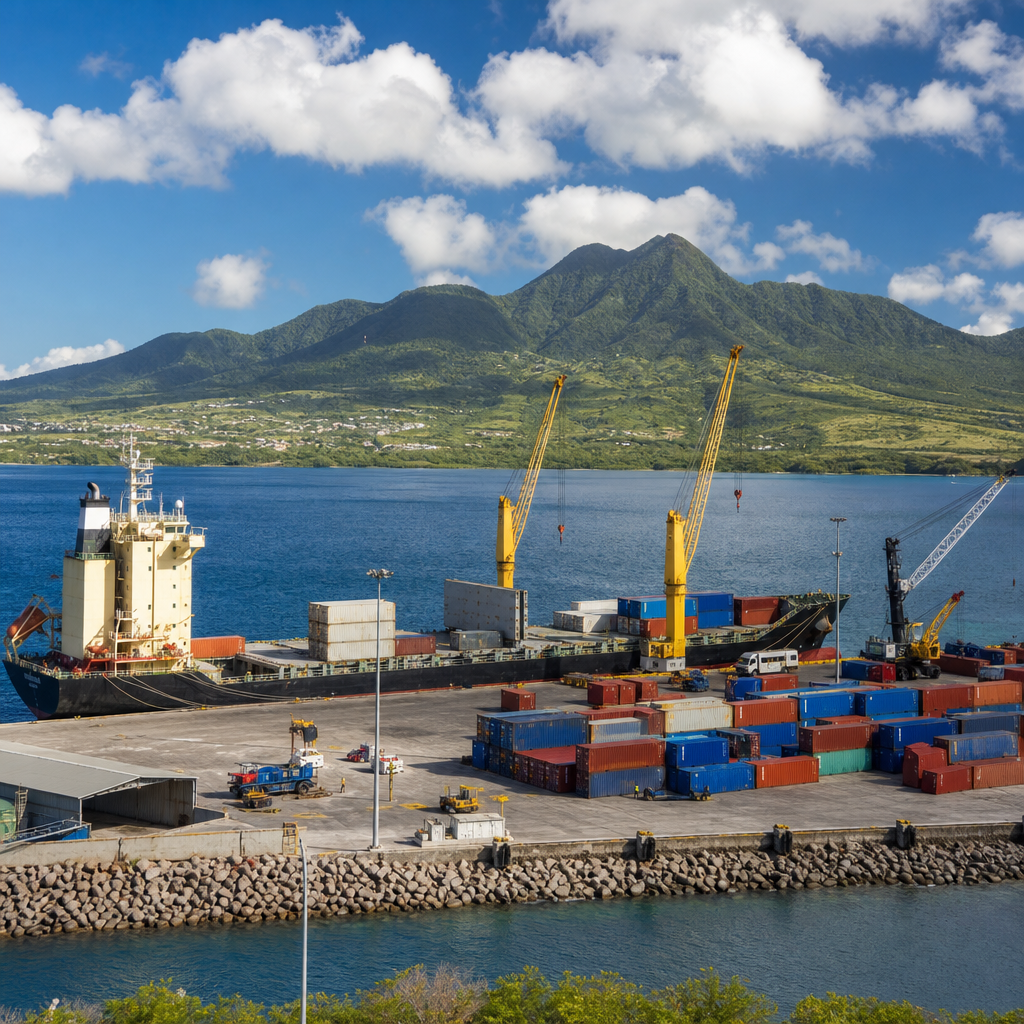
Saint Kitts’ cargo and shipping industry sits at the center of the federation’s trade, tourism, construction, and retail economy, making it one of the most practical lenses through which investors can assess commercial opportunity. In this context, cargo and shipping industry refers to the full system that moves goods into, out of, and across Saint Kitts and Nevis: port infrastructure, customs processes, freight forwarding, warehousing, trucking, packaging, maritime services, and the businesses that depend on reliable imports and exports. For a small island state, shipping is not a side issue. It determines inventory costs, building timelines, food availability, fuel security, and the competitiveness of local enterprises. I have seen repeatedly that when shipping lanes tighten or port delays increase even modestly, the effects spread quickly through supermarkets, construction sites, hospitality suppliers, and manufacturers. That is why any serious business outlook for Saint Kitts must include a close reading of maritime logistics, not just headline sectors such as tourism or real estate.
Saint Kitts and Nevis operates within the wider Eastern Caribbean trade environment, where import dependence is structurally high and freight economics are shaped by geography, vessel size, transshipment patterns, and weather risk. The federation relies heavily on inbound containerized cargo, breakbulk shipments for construction and industrial projects, and fuel and food imports that sustain domestic consumption and visitor activity. At the same time, the country benefits from established port facilities, a strategic position within regional shipping routes, and commercial demand that remains relatively resilient because so many essential goods must continue to move regardless of business cycles. For investors, operators, and suppliers, this creates a market defined less by explosive scale and more by recurring necessity. Opportunity comes from solving friction points: improving last-mile delivery, reducing customs bottlenecks, adding specialized storage, supporting e-commerce fulfillment, and providing dependable maritime-adjacent services to local businesses and visiting vessels.
As a hub article under business and investment opportunities, this overview covers the broad “miscellaneous” landscape around Saint Kitts’ cargo and shipping industry and maps the subtopics that deserve deeper analysis. Those subtopics include port operations, customs brokerage, bonded warehousing, cold chain logistics, inter-island transport, marine maintenance, freight technology, insurance, compliance, and sustainability. The goal is straightforward: explain how the industry works, where the commercial openings are, what constraints shape returns, and why disciplined execution matters more than abstract optimism.
Why Cargo and Shipping Matter to the Wider Economy
The cargo and shipping industry in Saint Kitts matters because nearly every other economic sector depends on it. Hotels need imported food, beverages, linens, fixtures, cleaning chemicals, and replacement equipment. Construction projects require cement, steel, tiles, lumber, HVAC systems, generators, and finish materials. Retailers rely on predictable inbound freight for inventory planning. Healthcare providers need pharmaceuticals and medical devices shipped under strict handling standards. Even digital-first businesses that sell online depend on parcel logistics, customs clearance, and returns processing. In practice, maritime logistics functions as foundational infrastructure for commerce.
This dependence increases the value of competent service providers. A freight forwarder that consistently secures space during peak periods can become indispensable to importers. A customs broker who understands tariff classifications and documentation requirements can reduce demurrage and storage charges. A warehouse operator with good inventory controls can help retailers lower stockouts without over-ordering. In small markets, reputation compounds quickly. Businesses tend to stay with logistics partners that save time, communicate clearly, and prevent costly mistakes at the port.
Saint Kitts also benefits from demand generated by tourism and property development. These sectors increase throughput for imported furnishings, food products, appliances, and project cargo. The result is a logistics market with recurring base demand plus periodic surges tied to hotel refurbishments, villa construction, and public infrastructure works. For investors, that pattern supports niche specialization rather than one-size-fits-all operations.
Port Infrastructure, Throughput, and Operational Reality
The backbone of the sector is port infrastructure. In Saint Kitts, commercial shipping activity is tied to facilities that handle containers, general cargo, fuel, and cruise-related traffic. Investors evaluating the market should focus less on headline capacity and more on operational realities: berth availability, crane access, container handling efficiency, yard space, truck turn times, and the consistency of customs and inspection workflows. A port can be strategically located yet still create costly friction if gate operations, documentation processes, or storage management are weak.
From experience in island logistics environments, the most important practical question is not whether cargo can arrive, but how smoothly it moves after discharge. A shipment delayed two days at the terminal can disrupt a contractor’s labor schedule, force a retailer into emergency airfreight, or leave a restaurant group short on core supplies. That is why ancillary services around the port often present stronger investment cases than pure transport alone. Companies that solve unloading coordination, drayage, temporary storage, palletization, and customs document preparation can capture value with lower capital intensity than vessel ownership.
Seasonality also matters. Peak tourism months, holiday inventory cycles, and storm preparedness periods can all change cargo demand patterns. Businesses that build flexible staffing and accurate forecasting into their operating model generally outperform operators that treat every month the same. In Saint Kitts, resilience is a commercial asset.
Business Opportunities Across the Cargo Value Chain
The strongest business outlook lies in service gaps around the movement of goods. Import-heavy economies reward firms that make logistics more predictable, transparent, and compliant. In Saint Kitts, viable openings exist in freight forwarding, customs brokerage, warehousing, refrigerated storage, distribution, marine supplies, equipment leasing, packaging, and port support services. E-commerce has also created incremental demand for parcel consolidation, business-to-consumer delivery, and reverse logistics, especially for residents and small firms buying from overseas suppliers.
Some of the best opportunities are operationally unglamorous but financially durable. Temperature-controlled storage, for example, is critical for food service, pharmaceuticals, and specialty retail. A secure bonded warehouse can attract importers seeking flexibility on duty timing and inventory release. Project cargo coordination for hotel renovations or infrastructure works can command premium margins because mistakes are expensive and schedules are tight. Marine chandlery and technical support for commercial and visiting vessels can also generate recurring revenue when paired with strong supplier relationships.
| Opportunity | Primary Customers | Why Demand Exists | Main Risk |
|---|---|---|---|
| Customs brokerage | Importers, retailers, contractors | Documentation complexity and need to avoid port delays | Regulatory errors and staffing quality |
| Cold storage | Hotels, supermarkets, clinics | Essential perishables and temperature-sensitive goods | Energy costs and equipment downtime |
| Warehousing and distribution | Retailers, wholesalers, e-commerce sellers | Need for buffer stock and faster local delivery | Inventory shrinkage and underutilization |
| Project cargo management | Developers, public works, resorts | Construction imports require coordination and specialized handling | Schedule overruns and handling damage |
| Marine supplies and servicing | Commercial vessels, yachts, port users | Recurring need for provisions, parts, and technical support | Supplier dependency and uneven demand |
For smaller investors, partnerships can reduce entry risk. A local operator may align with an international freight brand, software provider, or cold chain specialist to import systems and credibility without building everything from scratch. That model often works well in island markets where scale is limited but service expectations are rising.
Regulation, Customs, and Compliance Standards
No business outlook for shipping is complete without regulation. Cargo businesses in Saint Kitts must work within customs rules, import licensing requirements where applicable, taxation frameworks, port authority procedures, and health and safety standards. The exact commercial burden varies by product category. Food imports may involve sanitary controls. Pharmaceuticals and chemicals carry stricter handling and documentation obligations. Fuel and hazardous materials require specialist compliance. Investors should assume that regulatory competence is not optional; it is part of the product.
In practical terms, profitable operators build compliance into daily workflow. They use standardized commercial invoices, packing lists, bills of lading, harmonized tariff classifications, and arrival notices; they track duty payments carefully; and they maintain clear records for audits or disputes. Many of the most avoidable losses in Caribbean logistics come from simple documentation errors that trigger inspections, storage fees, or customer claims. Software helps, but disciplined process design matters more. A business with average equipment and excellent controls will usually outperform one with better hardware and weak paperwork.
International standards also influence credibility. Importers increasingly expect traceability, cargo insurance discipline, and security procedures aligned with recognized maritime and supply-chain practices. Operators that can demonstrate consistent handling protocols, documented chain of custody, and clear service-level commitments are more likely to win contracts from hotels, healthcare clients, and multinational suppliers.
Technology, Data, and Service Differentiation
Technology is now a competitive necessity in cargo and shipping, even in smaller markets. The baseline is no longer just phone calls and spreadsheets. Customers expect shipment visibility, digital document sharing, inventory reporting, and faster exception management. In Saint Kitts, companies that adopt practical logistics technology can differentiate themselves quickly because many importers are trying to reduce uncertainty rather than simply chase the lowest quoted price.
Useful tools include transportation management systems, warehouse management systems, barcode scanning, customer portals, temperature monitoring for refrigerated goods, and accounting integrations that tie landed cost to inventory decisions. For e-commerce and parcel logistics, address validation, proof-of-delivery capture, and automated customer notifications improve trust and reduce failed deliveries. None of these tools is revolutionary on its own. Their value comes from creating measurable reliability: fewer missing cartons, faster release times, cleaner billing, and better forecasting.
Data also supports smarter investment decisions. By analyzing inbound product mix, average dwell time, seasonal peaks, and customer concentration, an operator can decide whether to expand warehouse space, add reefer capacity, adjust staffing, or renegotiate carrier contracts. In my experience, the most resilient logistics businesses are obsessive about small metrics. They know where delays happen, which clients generate the most exceptions, and how often manual workarounds are masking structural problems.
Constraints, Risks, and What Investors Should Watch
The outlook is positive, but it is not frictionless. Saint Kitts’ cargo and shipping industry faces the structural constraints common to small island economies: limited market size, dependence on imported fuel, exposure to external freight rate volatility, vulnerability to hurricanes and rough seas, and a customer base that can be price sensitive. Port congestion in larger transshipment hubs can ripple into local schedules. Global container imbalances, geopolitical disruptions, or sudden insurance cost increases can affect landed prices even when local demand remains steady.
Energy is a particularly important cost driver for warehouses, cold storage, and trucking. Businesses with inefficient refrigeration, aging generators, or poor route planning can lose margin quickly. Labor is another consideration. Specialized skills in customs compliance, equipment maintenance, reefer handling, and inventory control are valuable, and turnover can be expensive in a service business where customer relationships depend on staff competence. Insurance, cyber risk, cargo liability, and business continuity planning should also be evaluated seriously rather than treated as back-office concerns.
Investors should test management quality before they test market size. In this sector, execution determines returns. Ask how the business handles damaged cargo claims, power outages, misdeclared shipments, customs inspections, and vessel delays. Review customer concentration, debtor days, maintenance schedules, and software usage. A smaller company with disciplined operations and strong client retention may be a better investment than a larger one growing through underpriced contracts.
The Strategic Outlook for a Miscellaneous Hub
As a miscellaneous hub within the broader business and investment opportunities theme, Saint Kitts’ cargo and shipping industry connects multiple subtopics that merit dedicated follow-on analysis. Port development affects real estate and construction logistics. Customs modernization influences retail margins and pharmaceutical supply reliability. Cold chain expansion supports food security, hospitality performance, and healthcare resilience. Marine services link commercial shipping with yachting, repair, and tourism spending. Sustainable logistics, including solar-assisted cold storage, route optimization, and lower-emission equipment, will become more relevant as energy costs and environmental expectations rise.
The strategic conclusion is clear. This is not a market defined by sheer volume; it is a market defined by the value of dependable movement. Businesses that reduce uncertainty, shorten delays, protect cargo quality, and help clients plan inventory more accurately can build defensible positions in Saint Kitts. For investors, the best prospects are often adjacent to the port rather than on the water itself: brokerage, storage, distribution, compliance, marine support, and logistics technology adapted to island conditions.
Saint Kitts’ cargo and shipping industry deserves attention because it quietly underpins commerce across the federation. The core opportunity is to build or back companies that make trade easier for everyone else. If you are exploring business and investment opportunities in Saint Kitts, start by mapping the logistics pain points behind local demand, then identify where operational excellence can turn an essential service into a durable enterprise.
Frequently Asked Questions
Why is Saint Kitts’ cargo and shipping industry so important to the country’s business outlook?
Saint Kitts’ cargo and shipping industry is a core commercial enabler because the federation depends heavily on imported goods, regional trade connections, and efficient movement of supplies that support tourism, construction, retail, food distribution, and public infrastructure. As a small island economy, Saint Kitts and Nevis does not have the same domestic manufacturing base as larger countries, so the reliability, speed, and cost of shipping directly influence the price and availability of everything from building materials and consumer goods to hotel supplies, medical equipment, and wholesale inventory. This makes the sector far more than a transport function; it is a practical indicator of how smoothly the wider economy operates.
From an investor’s perspective, the industry offers a useful window into business demand across multiple sectors at once. Strong cargo volumes can reflect active hotel development, healthy retail activity, and sustained demand from households and businesses. At the same time, the quality of port handling, customs administration, warehousing capacity, and inland logistics can shape the competitiveness of local enterprises. Companies that rely on timely imports or regional redistribution need predictability, and where that predictability improves, business confidence typically rises. In that sense, the cargo and shipping ecosystem acts as both an economic backbone and a business barometer for the federation.
What parts of the cargo and shipping value chain create the most business opportunities in Saint Kitts?
The strongest opportunities are usually found not only at the port itself, but across the full logistics chain that surrounds cargo movement. Port operations and terminal services are important, but much of the investable potential sits in freight forwarding, customs brokerage, trucking, last-mile delivery, warehousing, cold storage, packaging, inventory management, and marine support services. Businesses importing goods into Saint Kitts often need reliable partners to coordinate documentation, clear shipments efficiently, store goods securely, and distribute them to retailers, hotels, construction sites, and institutional buyers. Any company that can reduce delays, lower spoilage, improve visibility, or make procurement more predictable can become commercially valuable in this market.
There is also meaningful potential in specialized services. Temperature-controlled logistics can support food, beverage, and pharmaceutical supply chains. Construction-linked logistics can benefit from steady demand for cement, steel, fixtures, equipment, and finishing materials. Tourism creates recurring shipping needs for hospitality products, furniture, maintenance supplies, and food imports. Maritime services such as vessel support, equipment maintenance, packaging solutions, and supply coordination can also add value. In smaller island markets, businesses that offer integrated service bundles often stand out, because customers prefer providers who can manage several logistics steps at once rather than requiring multiple intermediaries.
How do port infrastructure and customs processes affect commercial success in Saint Kitts?
Port infrastructure and customs efficiency have a direct impact on cost, timing, and business reliability. If cargo can be unloaded, processed, inspected, and released quickly, importers can keep leaner inventories, reduce storage expenses, and maintain more predictable supply schedules. If the system is slow or inconsistent, businesses may be forced to carry excess stock, pay additional demurrage or handling charges, and absorb delays that disrupt construction projects, retail replenishment, and hotel operations. In an island economy where so many sectors depend on imported inputs, these operational details can materially affect profitability.
For that reason, investors should assess more than the physical port alone. The true commercial picture includes berth capacity, cargo handling equipment, road connectivity, container processing, documentation workflows, digitalization levels, inspection procedures, and the responsiveness of customs-related services. Even where a port functions adequately, bottlenecks can emerge from paperwork inefficiencies, fragmented coordination, or limited storage and trucking support. By contrast, improvements in transparency, turnaround times, and logistics coordination can create multiplier effects throughout the economy. Businesses are more likely to expand when they trust that shipments will arrive and clear in a consistent and manageable way. That is why port and customs performance is one of the most practical indicators of logistics-sector opportunity in Saint Kitts.
What risks and constraints should investors consider before entering Saint Kitts’ shipping and logistics market?
Investors should begin with the realities of scale. Saint Kitts is a small market, and while that can create room for agile, service-oriented operators, it also means cargo volumes may be more limited than in larger Caribbean hubs. Demand can be concentrated in a few major sectors, especially tourism, construction, and import-driven retail. This creates exposure to cyclical swings, project-based fluctuations, and external shocks such as changes in travel demand, global freight rates, supply chain disruptions, severe weather, or inflation in imported goods. A business model that depends on steady high volume without flexibility may struggle in this environment.
There are also operational considerations, including the cost of equipment, fuel, labor availability, storage space, technology adoption, and compliance with customs and regulatory requirements. Investors may encounter challenges related to shipping frequency, dependence on regional and international carrier schedules, and the complexity of synchronizing port clearance with inland delivery. Because island logistics can be sensitive to delays, resilience matters as much as efficiency. Successful entrants usually plan for contingencies, maintain strong relationships with port and customs stakeholders, and build service offerings around reliability, communication, and problem-solving. In Saint Kitts, disciplined execution and local market understanding often matter more than sheer scale.
What should businesses look for when evaluating long-term opportunity in Saint Kitts’ cargo and shipping industry?
Long-term opportunity should be evaluated through a broad economic lens rather than through shipping volume alone. Investors should examine whether tourism development is expanding, whether construction activity is sustained, whether retail and wholesale demand remain stable, and whether public and private sector projects are likely to increase import needs. They should also assess how efficiently goods move from vessel to customer, because the strongest logistics markets are not simply busy; they are coordinated. If warehousing, trucking, customs support, and freight services are fragmented or underdeveloped, that can actually signal opportunity for capable operators who can professionalize service and close performance gaps.
It is also wise to focus on businesses that improve resilience and service quality over time. In Saint Kitts, this may include technology-enabled shipment tracking, better inventory planning, niche warehousing solutions, specialized handling for hospitality and construction clients, and integrated logistics support for import-heavy businesses. Long-term winners are likely to be companies that understand the federation’s practical needs: dependable supply for hotels, timely deliveries for building projects, secure movement of retail inventory, and efficient coordination across Saint Kitts and Nevis. In short, the most attractive opportunities are usually those that solve recurring logistical friction in an economy where cargo movement is essential to everyday commerce.