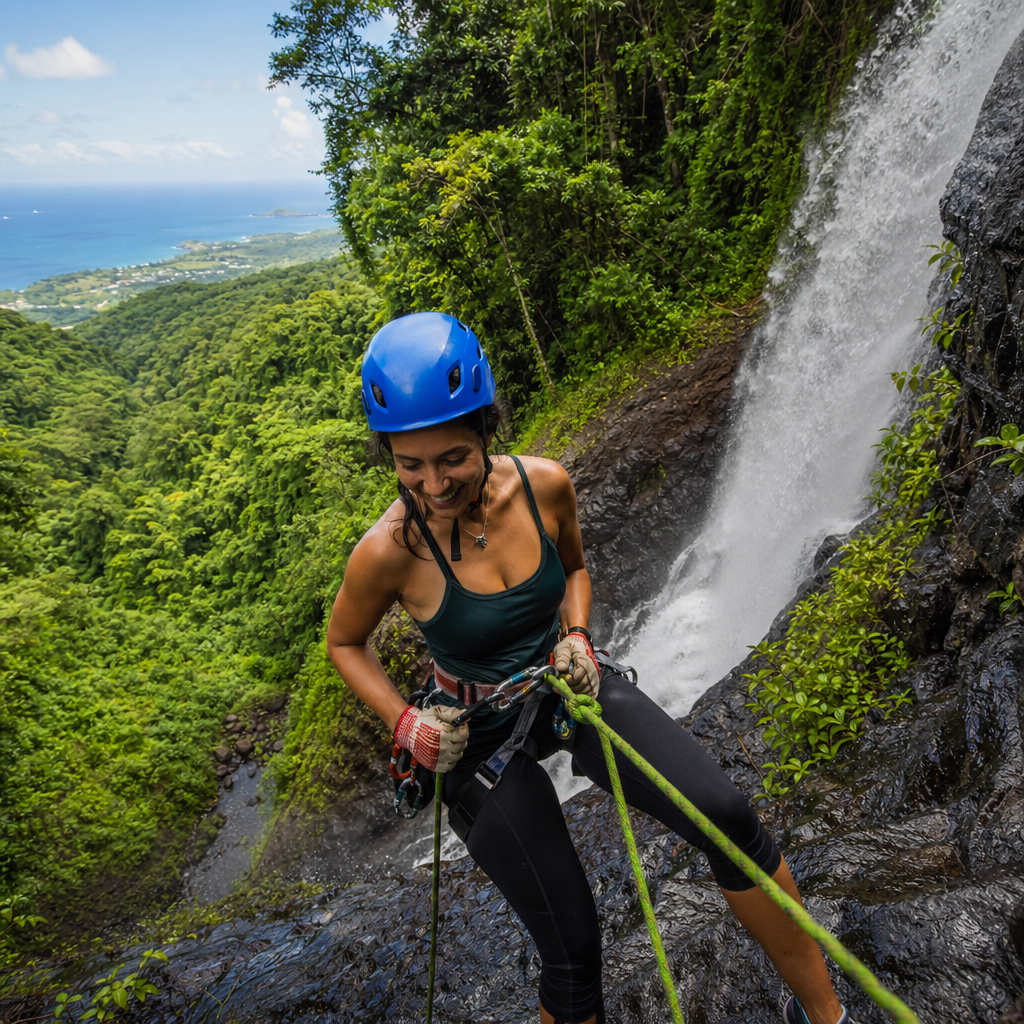
Saint Kitts’ rainforest rappelling turns a tropical hike into a vertical adventure, combining jungle exploration, cliff descent, and close contact with one of the Caribbean’s richest natural landscapes. In practical terms, rainforest rappelling means using ropes, harnesses, helmets, and controlled belay systems to descend rock faces, gullies, or wet escarpments inside forested terrain rather than on a dry open cliff. In Saint Kitts, that setting matters as much as the technique. The island’s volcanic geography, steep interior slopes, and dense canopy create the conditions that make this activity memorable: shaded trails, slick rock, hidden streams, and dramatic views that shift as you move from the coast into the mountains.
For travelers exploring Adventure and Activities in Saint Kitts, this topic belongs in the miscellaneous hub because it overlaps hiking, eco-tours, shore excursions, family adventure, and soft adrenaline experiences without fitting neatly into only one category. I have found that many visitors first ask a simple question: is rainforest rappelling more about thrills or nature? The honest answer is both, and that balance is exactly why it deserves a central place in trip planning. You get technical instruction and an adrenaline spike, but you also learn how the rainforest functions, why the island’s volcanic slopes hold moisture, and how local guides read terrain, weather, and plant life in real time. That mix gives the excursion broader appeal than many single-purpose tours.
It matters for another reason as well: Saint Kitts is often associated with beaches, cruise stops, and historic sites, yet the island’s interior remains one of its strongest differentiators. Travelers who only stay on the coast miss the ecosystem that defines the nation’s physical character. Rainforest rappelling offers an accessible entry point into that environment. You do not need to be an expert climber, but you do need a reputable operator, suitable fitness, and realistic expectations about mud, humidity, and changing conditions. Done well, it becomes more than a novelty. It becomes a grounded way to experience the island’s terrain, support local guiding businesses, and understand why Saint Kitts stands out among Caribbean adventure destinations.
What rainforest rappelling in Saint Kitts actually involves
The experience usually begins with a transfer from a hotel, villa, or cruise port to a trailhead near the island’s interior highlands. Operators typically start with a safety briefing covering harness fit, braking hand position, clipping procedures, communication signals, and how to lean back correctly while descending. On Saint Kitts, the approach hike is part of the product, not a formality. Trails may pass through farmland edges before narrowing into wetter forest where roots, leaf litter, and volcanic rock require stable footing. During this segment, guides often point out bamboo, giant ferns, mountain cabbage palms, and the broadleaf canopy that traps humidity and keeps the forest markedly cooler than the coast.
Once at the rappel point, guides set anchors and backup systems, often using established natural or fixed anchor locations assessed for load-bearing reliability. Reputable companies use climbing-grade ropes, locking carabiners, helmets, gloves when needed, and tested harnesses sized for different body types. The descent itself can vary from a short introductory wall to multiple pitches over mossy rock or beside small cascades, depending on rainfall and route conditions. The key challenge is not pure height but terrain management. Wet stone changes friction, runoff can affect visibility, and narrow footing demands deliberate movement. That is why guided control matters more here than bravado.
Most first-timers are relieved to learn that technical skill is less important than listening well and staying calm. Guides manage the system; participants focus on body position, foot placement, and controlled movement. A common instruction is simple and effective: trust the rope, keep your hips low, and walk your feet down the wall. In my experience, the moment people stop trying to hug the rock is the moment they begin to enjoy the descent. That shift from tension to confidence is one reason rainforest rappelling remains one of the most satisfying soft-adventure activities on the island.
Why Saint Kitts is uniquely suited to this adventure
Saint Kitts is a volcanic island, and its topography explains why rainforest rappelling works so well here. The central mountain spine rises sharply from the coast, creating short travel times between beach resorts and dense forest. Moisture-laden trade winds feed the interior, supporting a tropical ecosystem with steep ravines, shaded slopes, and seasonal water flow over rock surfaces. This means visitors can move from a cruise terminal or seaside hotel into a legitimate rainforest environment without needing a full expedition. Few Caribbean islands deliver that transition so efficiently.
The island’s highest peak, Mount Liamuiga, dominates the landscape and helps define drainage patterns and microclimates across the interior. Even tours that do not approach the summit are influenced by this mountainous structure. Lower elevation forests can still feel immersive, with thick vegetation, filtered light, and audible birdlife replacing coastal traffic and resort noise. Green vervet monkeys are among the species visitors may spot, though responsible guides avoid promising wildlife sightings as if they were guaranteed. The more reliable attraction is the landscape itself: a layered rainforest with volcanic soils, natural water channels, and panoramic openings where the sea reappears through the canopy.
Another advantage is scale. Saint Kitts is compact enough that tour logistics stay manageable, yet varied enough to support different adventure profiles. Couples wanting a half-day excursion, cruise passengers working within a port schedule, and active families seeking a guided challenge can all find rainforest-based options. That versatility is valuable for a miscellaneous hub page because it connects with many related experiences, including ziplining, ATV tours, hiking, snorkeling add-ons, and private island sightseeing. Rainforest rappelling is not isolated from the wider activity market. It complements it and often becomes the most memorable contrast to a beach-focused itinerary.
Who should try it, what to expect, and how to choose an operator
Rainforest rappelling in Saint Kitts is best for travelers who want guided adventure without needing advanced climbing experience. Most operators design trips for beginners, but participants still need moderate mobility, comfort with heights, and the ability to walk on uneven ground in humid conditions. Children may be accepted above a minimum age or size threshold, while older adults often do well if they have balance and baseline fitness. The right question is not “Am I athletic enough?” but “Can I follow instructions, manage a short hike, and stay composed on rope?” If the answer is yes, you are probably a strong candidate.
Choosing the right operator affects safety, enjoyment, and environmental impact. Ask whether guides are trained in technical rope systems, wilderness first aid, or rescue procedures. Confirm that helmets and harnesses are provided in multiple sizes and inspected regularly. Look for operators who limit group sizes, explain weather-related cancellations clearly, and avoid pressuring hesitant guests into descents they are not ready to complete. Cruise passengers should verify total tour duration, transport timing, and return-to-port policies. Hotel guests should ask whether pickup is included and whether the route changes seasonally after heavy rain.
| What to Check | Why It Matters | Good Sign |
|---|---|---|
| Guide training | Technical descents require rope competence and emergency response | Operator names certifications, rescue process, and briefing steps |
| Equipment quality | Worn gear increases risk and reduces comfort | Modern helmets, locking carabiners, adjustable harnesses, visible inspections |
| Group size | Smaller groups mean better supervision and less waiting | Guide-to-guest ratio is stated before booking |
| Weather policy | Rain changes footing, runoff, and route suitability | Flexible rescheduling or route modification policies |
| Transport timing | Cruise and resort guests need reliable logistics | Pickup windows and return times are clearly confirmed |
Expect to arrive in clothes that can get muddy and wet. Closed-toe shoes with grip are usually essential; water shoes are not always adequate unless specifically approved. Bring insect repellent, a small towel, and a change of clothes for the ride back. Leave valuables behind unless they are secured in a waterproof pouch. Most guests also benefit from a mindset adjustment: this is not a polished theme-park attraction. Roots, rain, mud, and uneven surfaces are part of the appeal. When travelers understand that beforehand, satisfaction is much higher.
Safety, environmental responsibility, and common misconceptions
The biggest misconception about rainforest rappelling is that it is dangerous by definition. Like any guided adventure activity, risk exists, but it is managed through systems, training, route selection, and participant screening. The standard safety principle is redundancy: secure anchors, belay oversight, equipment checks, and instructor supervision at critical points. Good operators conduct pre-descent checks every time, not only at the start of the tour. They also adapt routes to conditions. If rainfall has increased water flow or made a face too slick, the route should change or the activity should be postponed. That is professionalism, not inconvenience.
Another misconception is that the rainforest is simply a scenic backdrop. In reality, it is a sensitive environment that can be degraded by poor tour design. Trail widening, litter, noise, and off-route foot traffic damage vegetation and accelerate erosion. Responsible operators stick to established access paths, keep group numbers manageable, and explain why guests should avoid grabbing plants, disturbing wildlife, or leaving any gear behind. On islands with limited land area, cumulative impact matters. A well-run excursion protects the very setting it markets.
Travelers should also understand physical limits. Fear of heights can be manageable, but severe vertigo or certain knee, ankle, or back issues may make the activity uncomfortable. Heat and humidity can surprise people who feel fit at home but are not acclimatized to tropical conditions. Hydration matters before the tour, not only during it. If you are arriving by cruise ship after a late night or planning this immediately after heavy drinking, reschedule. Most negative experiences stem from poor preparation rather than from the rappel itself. Book with care, ask candid questions, and treat the excursion as an outdoor activity that deserves respect.
How rainforest rappelling fits a broader Saint Kitts itinerary
As a hub topic within miscellaneous adventure activities, rainforest rappelling works best when travelers see it as a building block rather than a standalone thrill. On a short stay, it pairs naturally with scenic rail excursions, beach recovery time, or a Brimstone Hill Fortress visit that adds historical context to the island’s landscape. On a longer trip, it can anchor a nature-focused itinerary that includes hiking, birdwatching, catamaran sailing, snorkeling, or a day trip to nearby Nevis. The contrast between marine and mountain environments is one of Saint Kitts’ strongest travel advantages.
For cruise passengers, this tour often fills the need for a memorable inland experience without consuming an entire day. For resort guests, it breaks up pool and beach time with something active and place-specific. For repeat Caribbean travelers, it offers a differentiator from islands where adventure options are more motorized or more commercialized. That is why this article sits comfortably in a miscellaneous subtopic hub: rainforest rappelling connects multiple visitor interests at once, from eco-tourism and wellness through active travel and family bonding. It is flexible, distinctive, and rooted in the island’s terrain rather than imported entertainment concepts.
Saint Kitts’ rainforest rappelling delivers the rare combination of technical adventure and genuine environmental immersion. It introduces visitors to the island’s volcanic interior, teaches practical rope skills in a controlled setting, and reveals a side of Saint Kitts that many beach-focused itineraries never reach. The best tours succeed because they treat the rainforest as more than scenery, using trained guides, sound equipment, and realistic pacing to make the activity accessible to beginners while still feeling exciting.
The main takeaway is simple: if you want an adventure in Saint Kitts that is active, memorable, and tied directly to the island’s natural character, rainforest rappelling is one of the smartest choices available. It suits travelers who value experience over spectacle and want a story richer than “we booked an excursion.” Plan ahead, choose a reputable operator, dress for mud and humidity, and ask how the route changes with weather and ability level. Then use this miscellaneous hub as your starting point for related activities across Saint Kitts, from hiking and ziplining to coastal tours that round out a balanced island itinerary.
Frequently Asked Questions
What is rainforest rappelling in Saint Kitts, and how is it different from regular rappelling?
Rainforest rappelling in Saint Kitts is a guided outdoor adventure that combines hiking through tropical forest with controlled rope descents down natural rock features such as cliffs, gullies, and wet escarpments. Unlike traditional rappelling on dry, exposed rock walls, this experience takes place inside a living, humid rainforest environment where the terrain is shaped by volcanic geology, flowing water, dense vegetation, and changing weather conditions. That means participants are not just descending a rock face—they are moving through a layered natural setting filled with vines, moss, tree cover, birdsong, and dramatic elevation changes.
The biggest difference is that in Saint Kitts, the rainforest itself is part of the attraction. The island’s rugged interior creates a more immersive adventure, where every stage of the outing can feel dynamic. You may begin on a jungle trail, cross uneven ground, hear water moving nearby, and then arrive at a descent point framed by thick greenery and volcanic stone. The result is a blend of eco-adventure and technical activity. It appeals to travelers who want more than a standard adrenaline rush, because it offers both physical excitement and close contact with one of the Caribbean’s richest natural landscapes.
From a technical standpoint, rainforest rappelling still relies on the same core safety principles as standard rappelling: a secure anchor system, a fitted harness, a helmet, ropes designed for controlled descent, and a belay or backup system managed by trained guides. However, the rainforest environment introduces additional considerations such as slippery surfaces, moisture, mud, roots, and reduced visibility from canopy cover. That is why guided instruction is especially important. In Saint Kitts, reputable operators adapt the route and pace to the conditions, helping participants enjoy the challenge while staying safe and confident throughout the experience.
Is rainforest rappelling in Saint Kitts safe for beginners?
Yes, rainforest rappelling in Saint Kitts can be very safe for beginners when the tour is run by experienced, professional guides and participants follow instructions carefully. Most first-time rappellers are surprised by how structured the experience is. Before anyone begins a descent, guides typically provide a safety briefing, explain how the equipment works, demonstrate proper body position, and walk each participant through the braking and stepping technique used to control the descent. This hands-on instruction is designed to turn something that sounds intimidating into a manageable and rewarding activity.
Safety depends heavily on the quality of the operator. A reputable company will use well-maintained ropes, harnesses, helmets, carabiners, and anchor systems, and the guides should be trained in both technical rope work and emergency procedures. In rainforest terrain, this matters even more because wet rock, steep slopes, and tropical weather can affect footing and movement. Good guides know how to assess route conditions, space participants appropriately, check gear fit, and decide whether a section should be modified or delayed due to rain or other environmental factors. They also provide encouragement and direct coaching during the descent, which can make a major difference for nervous beginners.
That said, “beginner-friendly” does not mean effortless. Participants should still expect uneven trails, humidity, and some physical exertion. If you have a strong fear of heights, limited mobility, or a medical condition that affects balance, stamina, or grip strength, it is wise to discuss that with the tour operator in advance. Many companies can explain the route difficulty, age or weight guidelines, and whether the excursion is suitable for your fitness level. For most healthy travelers with a basic level of mobility and a willingness to listen, rainforest rappelling in Saint Kitts is an accessible introduction to adventure travel in a spectacular natural setting.
What should I wear and bring for a rainforest rappelling excursion in Saint Kitts?
The best clothing for rainforest rappelling in Saint Kitts is lightweight, breathable, and suitable for moisture, mud, and movement. Quick-drying athletic wear is usually ideal. Many travelers choose a moisture-wicking shirt and flexible shorts or leggings that allow easy leg movement while wearing a harness. Closed-toe shoes with good grip are essential, especially because rainforest terrain can be slick from water, moss, or loose soil. Trail shoes or sturdy sport shoes typically work better than casual sneakers, while sandals and flip-flops are generally not appropriate for safety reasons.
You should also prepare for the tropical environment itself. Saint Kitts can be warm and humid, and even if the day begins sunny, the forest interior can feel cooler, wetter, and more shaded. Insect repellent is often useful, and sunscreen may still be worthwhile for exposed sections before or after the forest portion of the tour. Some people bring a small towel, a change of clothes for afterward, and a waterproof bag for personal items left at the meeting point or in transport. If the tour includes water crossings or particularly wet descents, expect to get at least partially wet and avoid bringing anything delicate or difficult to secure.
In terms of gear, the technical equipment is usually provided by the tour operator. That commonly includes the harness, helmet, ropes, and belay devices or connected safety systems. You generally do not need to bring your own climbing equipment unless a specific operator says otherwise. It is also smart to carry water, especially in warm weather, but keep your hands free once the technical portion begins. If you want photos, ask in advance whether guides take them or whether you can bring a securely mounted action camera. The main goal is to pack light, dress for traction and comfort, and let the supplied safety gear do its job without interference from bulky accessories.
What can I expect during the actual rainforest rappelling experience?
A typical rainforest rappelling excursion in Saint Kitts usually begins with check-in, a gear fitting, and a safety orientation. Guides will make sure your harness and helmet fit properly, explain the route, and show you how the rope system works. Even if you have no previous experience, you will usually be given a clear step-by-step demonstration of how to lean back, trust the harness, keep your feet planted, and control your descent. This introductory phase is important because it sets the tone for the entire outing and helps transform uncertainty into confidence.
After the briefing, the group normally hikes into the rainforest to reach the descent area. This part of the excursion is often an attraction in itself. Saint Kitts’ interior is known for lush vegetation, volcanic terrain, and dramatic natural contours, so the approach may include forest paths, rocky ground, shaded ravines, and scenic viewpoints. Depending on the route, you may encounter damp rock walls, trickling water, tangled roots, or dense canopy overhead. The setting creates a strong sense of immersion, making the adventure feel less like a single activity and more like an unfolding journey through the island’s wild landscape.
Once at the rappel point, guides typically attach each participant to the rope system individually and talk them through the first steps over the edge. This is often the most mentally challenging moment, especially for beginners, but it is also the point where people realize how controlled the process really is. As you descend, you may be moving beside wet stone, tropical plants, and narrow forested drop-offs rather than a broad open cliff. Some routes involve multiple descents of varying heights, and the pace is generally steady rather than rushed. Between descents, there may be short walks, rest periods, and opportunities to appreciate the scenery.
By the end of the excursion, most participants come away with a mix of accomplishment and appreciation for the environment. Rainforest rappelling in Saint Kitts is not just about adrenaline; it is about interacting with the island’s terrain in a direct, memorable way. You can expect a combination of instruction, physical activity, sensory immersion, and scenic beauty, all tied together by the guidance of professionals who help make the experience both adventurous and approachable.
Why is Saint Kitts such a special destination for rainforest rappelling?
Saint Kitts stands out because its landscape naturally supports the kind of adventure that rainforest rappelling is meant to deliver. The island’s interior is shaped by volcanic forces, creating rugged elevations, rocky escarpments, deep vegetation zones, and dramatic contours that work beautifully for guided descents. Instead of experiencing rappelling in an isolated technical setting, visitors in Saint Kitts encounter it as part of a broader natural environment where geology, climate, and biodiversity all contribute to the adventure. That combination gives the activity a strong sense of place.
The rainforest setting also adds depth that many travelers do not expect from a Caribbean destination. Saint Kitts is often associated with beaches and coastal relaxation, but its inland terrain reveals a very different side of the island—cooler, greener, and more untamed. Rappelling through this environment allows visitors to appreciate the island beyond the shoreline. The sounds, textures, and shifting light of the forest create a multi-sensory experience that feels immersive and distinctive. For many travelers, that balance between tropical beauty and physical challenge is exactly what makes the activity memorable.
Another reason Saint Kitts is special is that the adventure can appeal to a broad range of travelers. It is exciting enough for people seeking something active and unique, yet it is often structured in a way that remains approachable for first-timers. That makes it ideal for visitors who want a meaningful outdoor experience without needing advanced climbing skills. When done with a knowledgeable guide, rainforest rappelling becomes more than an adventure sport—it becomes a way to connect