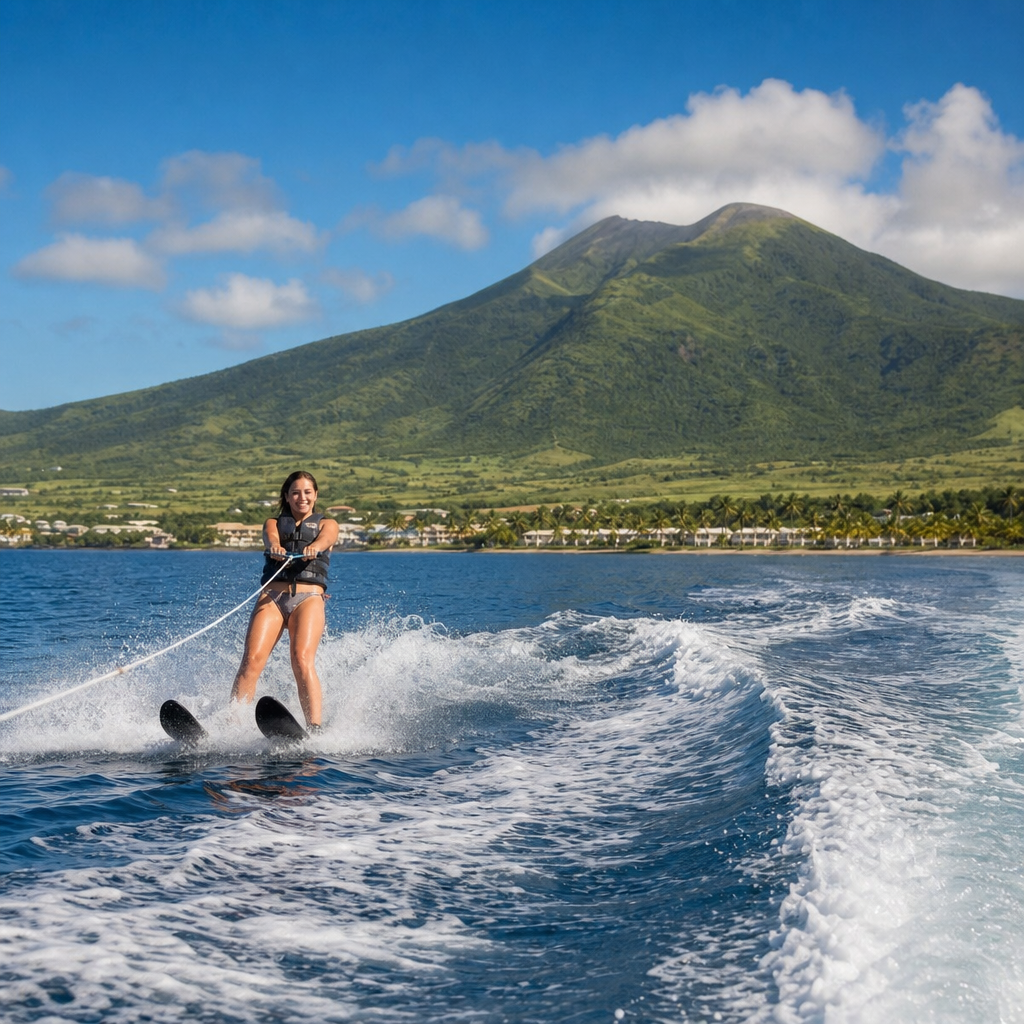
Waterskiing and wakeboarding in Nevis turn a calm Caribbean bay into an active summer playground, combining warm water, steady conditions, and expert boat support into one of the island’s most enjoyable adventure activities. For visitors building an itinerary under the broader Adventure and Activities theme, this Miscellaneous hub covers the practical side of getting on the water, from choosing between waterskiing and wakeboarding to understanding local conditions, safety standards, beginner progression, family suitability, equipment, booking, and what a session in Nevis actually feels like. Waterskiing uses two skis or a slalom ski to plane over the surface while being towed by a motorboat; wakeboarding uses a single wider board with bindings and relies on the boat’s wake for edging, carving, and jumping. Both sports reward balance, timing, and body position more than brute strength, which is why complete beginners often succeed in a single lesson. Nevis matters here because it offers protected stretches of water, consistently warm sea temperatures, and a relaxed tourism profile that makes sessions feel personal rather than crowded. I have worked with first-time riders, strong swimmers, and cautious families in similar island settings, and the same truth applies every time: the best experience comes from matching the rider’s skill level to the right boat speed, water state, and instructor cues. That practical alignment is what transforms summer water fun from a novelty into a memorable highlight of a Nevis holiday.
Why Nevis Works So Well for Towed Watersports
Nevis is unusually well suited to waterskiing and wakeboarding because it combines tropical warmth with accessible shoreline launch points and relatively manageable sea conditions during many summer mornings. Unlike destinations built around large surf or heavy marine traffic, Nevis often delivers smoother water close to shore, especially early in the day before the wind freshens. Smooth water matters because beginners need a predictable pull from the boat and less chop hitting the board or skis. Advanced riders benefit too, particularly slalom skiers who want cleaner edge changes and wakeboarders practicing surface tricks, wake jumps, or controlled switch riding. The island’s smaller scale is another advantage. Travel times from hotel to marina or beach launch are usually short, which means families can fit a session into a half day instead of sacrificing an entire excursion day.
The Caribbean climate adds another layer of appeal. Water temperatures are typically warm enough that riders rarely need more than a rash guard or impact vest, and that reduces the friction new participants often feel when gearing up. Summer showers can pass through, but many days still offer workable windows on the water. Operators who know Nevis well usually schedule around wind direction, boat traffic, and cloud cover, prioritizing sheltered areas when conditions shift. This local judgment is more valuable than travelers realize. In towed watersports, a location that looks beautiful from shore can still be poor for learning if the water is crossed up, the pickup zone is awkward, or the run length is too short. Nevis’s experienced captains and instructors help solve those variables.
Waterskiing vs Wakeboarding: Which Should You Choose?
If you are deciding between waterskiing and wakeboarding in Nevis, the right choice depends on stance, fitness, and the kind of learning curve you enjoy. Waterskiing often appeals to guests who like classic technique and straightforward speed. Two skis give beginners a stable start once they learn to keep their knees bent, arms straight, and weight centered while the boat lifts them onto plane. Slalom skiing, usually attempted later, is more technical and rewards strong edging and lower-body control. Wakeboarding generally feels more approachable to younger riders and board-sport enthusiasts because both feet are fixed to one board, which can make starts feel more unified. It also opens the door to carving, wake crossing, small jumps, and trick progression.
In practical terms, beginners often find deep-water starts easier on a wakeboard if they already snowboard, skateboard, or surf. Travelers with no board-sport background sometimes stand up faster on two skis because each ski tracks independently and resists side-to-side wobble once moving. Neither sport is automatically easier. The key variable is coaching. A good instructor will adjust rope length, boat speed, and verbal cues to the rider, not force every guest through the same sequence. In Nevis, where many sessions are relatively personal, that customization can make a major difference.
| Factor | Waterskiing | Wakeboarding |
|---|---|---|
| Best for | Guests who enjoy classic technique and smooth speed | Guests who like board sports and playful carving |
| Beginner start | Usually on two skis with moderate boat speed | Usually with a wider board and slower, steady pull |
| Body position | Hips up, knees bent, skis together, arms straight | Compact crouch, heelside or toeside edge control |
| Progression path | Two skis to slalom turns and stronger cuts | Surface turns to wake crossings and small jumps |
| Common mistake | Pulling with the arms too early | Standing up before the board planes |
What a Session in Nevis Typically Includes
A standard waterskiing or wakeboarding session in Nevis usually begins with a shore briefing or dockside setup. The instructor checks your stance, foot size, swimming confidence, and any previous experience. From there, you are fitted with a properly sized life jacket, and often an impact vest if available. The boat crew explains hand signals, how to hold the handle, and what to do after a fall. This matters because clear communication reduces fatigue and anxiety. On the water, sessions are typically structured as a series of towing runs rather than one continuous tow. That gives the rider time to reset, receive feedback, and adjust position.
For beginners, the first goal is not speed or tricks. It is a controlled start and a stable ride outside the most turbulent section of the wake. Instructors often ask riders to keep their knees close to the chest, let the boat do the work, and avoid yanking the handle. Once standing consistently, guests practice tracking, gentle turns, and crossing small wake lines. Intermediate riders may work on stronger edge control, wake-to-wake crossings, switch stance, or single-ski refinement. A quality operator in Nevis will tailor the run length to conditions and rider stamina, because tropical heat can tire people faster than expected even when the activity looks effortless from shore.
Safety Standards, Supervision, and Weather Awareness
Safe waterskiing and wakeboarding in Nevis depend on boat handling, equipment quality, and local weather judgment. The baseline requirements are straightforward: a correctly fitted buoyancy aid, a competent driver, an observer or instructor watching the rider, and a tow rope and handle in good condition. Reputable operators follow established boating practices, maintain engine reliability, and choose riding zones clear of swimmers, moorings, reefs, and heavy traffic. They also brief riders on stop signals and retrieval procedures. When I assess an operator, I always look at the little things first: whether bindings are adjusted carefully, whether life jackets are snug, whether the captain scans continuously, and whether the team delays the session when wind or chop rises beyond beginner-friendly levels.
Weather awareness is especially important in summer. Warm conditions can create a false sense of security, but offshore squalls, glare, and afternoon chop affect performance and safety. Morning sessions are often preferable because wind tends to be lighter and the water cleaner. Sunscreen, hydration, and UV-protective clothing are not optional extras in the Caribbean; they directly affect concentration and stamina. Families should also ask whether children meet minimum age, size, and swimming requirements. Some younger guests do well on trainer skis or lower-speed introductory rides, but these should be supervised closely and never rushed.
Beginner Tips That Make the First Ride Easier
Most first attempts fail for simple reasons, and most of those reasons are fixable within minutes. The biggest mistake is trying to stand too early. In both waterskiing and wakeboarding, the boat should pull you into position while you stay compact. Think of your body as a passenger at first, not the engine of the movement. Keep your arms straight, eyes forward, and knees bent. On skis, keep the tips up and close together. On a wakeboard, let the board rotate naturally until it planes, then rise gradually. These cues sound basic, but they are the difference between being dragged and getting up smoothly.
Another common issue is overgripping the handle and tensing the shoulders. Relaxed arms connected to a stable core transfer the boat’s pull much better than brute force. Breathing matters too. Nervous riders often hold their breath during the start and lose coordination immediately. A good instructor in Nevis will give one or two clear cues only, because too much information overloads beginners. If you fall, that is normal. In fact, repeated short attempts usually work better than one long exhausting pull. Most successful first sessions are built on patient repetition, not dramatic breakthroughs.
Equipment, Boat Setup, and Technique Progression
The quality of equipment affects comfort and learning speed more than many travelers expect. Beginner waterskis are usually wider and more forgiving, sometimes linked at the tips for stability during starts. Wakeboards used in lessons often have continuous rocker profiles, center fins, and softer bindings that simplify edging and reduce harsh landings. Rope choice matters as well. A low-stretch line gives cleaner feedback, while handle width influences shoulder comfort and control. Boats used for these sports need enough torque for smooth starts and a driver who can deliver a consistent pull. For wakeboarding, ballast and wake shape matter more as skill increases, but beginners generally benefit from a moderate, predictable wake rather than a huge one.
Progression should follow a logical sequence. Waterskiers move from stable starts to controlled gliding, then to wake crossings and stronger cuts. Wakeboarders progress from getting up to directional control, then heelside and toeside edging, wake awareness, small one-wake jumps, and eventually surface tricks or grabs. Advanced instruction may introduce line tension management, progressive edging, and body alignment through the hips rather than the shoulders. These are not abstract coaching terms. They are the mechanics that keep the rider balanced while the boat supplies force. In Nevis, where many visitors are trying the sport during a holiday, the best programs focus on one or two durable improvements per set rather than pushing too many advanced goals too quickly.
Who It Suits: Families, Couples, Groups, and Strong Riders
As a Miscellaneous hub within Adventure and Activities, this page should answer the practical question many travelers ask: who is waterskiing or wakeboarding in Nevis really for? The short answer is that it suits more people than expected. Families like it because one boat can support mixed abilities, allowing one child to try an introductory ride while a parent takes a more technical set. Couples often book a session because it combines instruction, scenery, and a memorable challenge in a compact time window. Groups enjoy the shared energy of rotating turns and cheering each other on. Stronger riders value the chance to refine technique in warm water without bulky gear.
There are limits, and they should be stated clearly. Guests with recent shoulder injuries, serious back issues, or limited mobility should seek medical guidance before towing sports. Non-swimmers may still be able to participate in controlled conditions with proper flotation, but confidence in the water helps significantly. Sea state can also change the suitability of a session. On choppy afternoons, an absolute beginner may be better served by another activity and a rescheduled early run. Choosing well is part of a good holiday, and the best operators in Nevis will say no when conditions do not support a safe or enjoyable experience.
Waterskiing and wakeboarding in Nevis deliver exactly what many summer travelers want from Caribbean adventure: warm water, visible progress, and a session that feels active without becoming complicated to arrange. The most important takeaway is that success depends less on athletic background than on matching the rider to the right conditions, equipment, and instruction. Nevis stands out because it offers approachable water, short travel logistics, and operators who can adapt a run to families, first-timers, and returning riders alike. If you are planning your Adventure and Activities itinerary, use this Miscellaneous hub as your starting point, then compare lesson formats, ask about boat setup and safety procedures, and reserve an early-morning session for the best water. Book with a reputable local operator, arrive hydrated, listen to the briefing, and let Nevis show you how satisfying summer water fun can be.
Frequently Asked Questions
Is Nevis a good place for beginners to try waterskiing or wakeboarding?
Yes, Nevis is an excellent place for beginners to learn either waterskiing or wakeboarding. One of the biggest advantages is the island’s generally calm Caribbean water, especially in sheltered bay areas where operators typically run lessons and towing sessions. Warm water also makes the experience more comfortable and far less intimidating for first-timers, since falling in is part of the learning process. Instead of worrying about cold temperatures, most visitors can focus on balance, body position, and listening to coaching instructions from the boat crew.
Beginners often find that wakeboarding feels more approachable because both feet are fixed to one board, which can create a more stable starting position once basic technique is explained. Waterskiing, however, appeals to travelers who want a classic on-the-water experience and are interested in progressing into slalom or combo skiing later on. A good local operator will explain the differences clearly, match the activity to your comfort level, and adjust speed, rope length, and starting method to suit your experience.
Professional boat support is especially important for new riders. In Nevis, reputable providers typically offer instruction on how to hold the handle, keep your knees bent, let the boat do the work during the start, and maintain a relaxed posture once up on the water. Many first-time participants are surprised by how quickly they improve with a few simple corrections. As long as you choose a safety-conscious operator and come ready to follow directions, Nevis offers very beginner-friendly conditions for getting started.
How do I choose between waterskiing and wakeboarding while visiting Nevis?
The best choice depends on your goals, comfort level, and the kind of experience you want on the water. Waterskiing is the more traditional option and often appeals to visitors who like speed, classic technique, and the sensation of gliding cleanly across flatter water. It can feel athletic and elegant, and it is a great fit for travelers who enjoy mastering body mechanics and building confidence through repetition. Some people also prefer waterskiing because it connects to a long-established watersports tradition.
Wakeboarding has a slightly different personality. It tends to attract visitors looking for a modern, playful ride with more emphasis on carving across the wake and, for advanced riders, potentially learning small jumps or surface tricks. For many beginners, wakeboarding can be easier to start because your stance stays fixed on a single board. That said, not everyone finds one easier than the other, which is why a conversation with the operator before booking is valuable.
If you are traveling with family or a mixed-ability group, ask whether the provider offers both activities in the same outing. That flexibility allows each person to try what suits them best. If your priority is a classic watersports experience, waterskiing may be the better fit. If you want something beginner-accessible with room for progression and a fun, contemporary feel, wakeboarding is often the preferred choice. In Nevis, where conditions are usually warm and inviting, either option can become a highlight of an adventure-focused itinerary.
What are water and weather conditions like for waterskiing and wakeboarding in Nevis during summer?
Summer in Nevis is generally very favorable for tow sports because the sea is warm, inviting, and often suitable for activity in calmer coastal areas. The island’s protected bays can provide smoother surfaces that are ideal for beginners learning deep-water starts as well as intermediate riders practicing balance and edge control. While conditions are not identical every day, local operators understand how wind, boat traffic, and shifting weather patterns affect ride quality and typically schedule sessions when water is at its best.
Morning outings are often especially popular because water can be calmer before breezes build later in the day. If your main goal is to learn efficiently or enjoy the smoothest ride possible, an early session is usually a smart choice. Visibility is also typically strong, and the tropical setting adds to the appeal, with scenic coastal views making the outing feel like more than just a lesson. Even experienced riders often appreciate how Nevis combines a relaxed island environment with practical towing conditions.
Because summer weather in the Caribbean can change, it is wise to stay flexible. Passing showers, changing wind, or rougher chop may lead operators to modify timing or location for comfort and safety. Reputable providers will always prioritize manageable conditions over sticking rigidly to a schedule. If you are planning waterskiing or wakeboarding as part of a larger Nevis itinerary, building in some flexibility can help you get the best possible experience on the water.
What safety standards should I look for when booking a waterskiing or wakeboarding session in Nevis?
Safety should be one of your top considerations when choosing any watersports operator in Nevis. Start by looking for a provider that uses well-maintained boats, quality tow equipment, properly fitted life jackets, and clear communication before the session begins. A professional operator should explain hand signals, starting technique, how to fall safely, what to do if you lose the handle, and how the pickup process works after a fall. These details matter because they create a predictable, controlled environment for both beginners and experienced riders.
You should also expect attentive boat support. That means a driver who understands towing speeds, route selection, and rider ability, and ideally additional crew support to help monitor the person in the water. The best operators adapt the experience rather than using one standard setup for everyone. Children, nervous first-timers, and returning riders all need different pacing and instruction. If a company asks about your experience level, swimming ability, and any physical concerns before departure, that is usually a very good sign.
It is also worth asking practical questions before booking: Are life vests included? Is beginner instruction part of the session? How many riders are on the boat at once? What happens if conditions turn rough? Is there a weather policy? An operator who answers clearly and confidently is more likely to run a professional program. In a destination like Nevis, where the atmosphere is relaxed, the best watersports experiences combine that easygoing island feel with disciplined safety procedures behind the scenes.
What should I bring, wear, and expect on the day of a waterskiing or wakeboarding trip in Nevis?
For most sessions in Nevis, you should plan to wear comfortable swimwear and bring sun protection, a towel, and dry clothes for afterward. A rash guard or fitted athletic swim top can be a smart addition, especially if you want extra sun coverage or a little more comfort from the life vest. Sunscreen is essential, but apply it in a reef-conscious and practical way before departure so it has time to absorb. Sunglasses can be useful before and after the ride, although many people remove them on the water unless they have a secure strap.
You do not usually need to bring technical gear, since reputable operators provide the skis, wakeboards, ropes, handles, and buoyancy equipment. What matters more is arriving ready to listen, staying hydrated, and setting realistic expectations. Most beginners do not stand up perfectly on the first attempt, and that is completely normal. The first few pulls are often about learning timing and body position. Improvement usually comes quickly once you relax and let the boat’s pull bring you into position instead of trying to force the movement.
On the day itself, expect a short safety briefing, equipment fitting, and instruction tailored to your ability. If you are nervous, let the crew know in advance; experienced instructors can simplify the process and build confidence step by step. If you are traveling with others, there may be some waiting between runs, so having water and a patient mindset helps. Above all, expect a memorable adventure that blends skill, scenery, and warm Caribbean conditions. In Nevis, waterskiing and wakeboarding are not just high-energy activities; they are also a fun and scenic way to experience the island from the water.