Saint Kitts’ national park safari tours offer one of the most practical ways to understand the island beyond its beaches, because they combine wildlife viewing, volcanic landscapes, farming history, and local guiding knowledge in a single experience. For travelers exploring the wider Adventure and Activities category, this Miscellaneous hub matters because many of the island’s most memorable encounters do not fit neatly into hiking, sailing, or cultural touring alone. A safari through protected landscapes on Saint Kitts can include vervet monkeys in roadside trees, mongoose crossing dry stone walls, pelicans and frigatebirds over coastal wetlands, and native vegetation climbing the slopes of the central mountain range. In my experience planning Caribbean activity content and reviewing excursion routes, Saint Kitts stands out because the terrain changes quickly. Within one outing, visitors can move from cane-field lowlands to rainforest edges and lookout points with broad views of the Caribbean Sea and Atlantic Ocean.
To set expectations clearly, “national park safari tours” on Saint Kitts usually refers to guided off-road or open-air vehicle excursions through protected or semi-protected natural areas, commonly centered on the Liamuiga region, former sugar estate lands, scenic interior roads, and habitats near the island’s forest reserve. The term wildlife here does not mean East African-style big game. It means island fauna: green vervet monkeys, small mammals such as mongoose, reptiles including lizards, and a rich variety of resident and migratory birds. On Saint Kitts, the star of many tours is the African green monkey, introduced centuries ago and now deeply associated with the island’s identity. The ecological story is more complex than the photo opportunity, and good guides explain both the charm and the management challenges of an introduced species living alongside agriculture and native habitats.
Why does this topic deserve a dedicated hub page? Because travelers searching for Saint Kitts safari tours often have layered questions: Which parks or reserves are involved, what wildlife is realistic to see, when is the best time to go, how rugged are the roads, and which related activities fit before or after the tour. This article answers those questions directly while connecting the broader Miscellaneous subtopic under Adventure and Activities. It is designed to help independent travelers, cruise visitors with limited port time, and repeat Caribbean visitors who want something more grounded than a standard island drive. The core benefit is simple: a well-chosen safari tour turns scenery into understanding. Instead of merely passing through the landscape, you begin to read it, from volcanic soils and old estate ruins to feeding behavior in monkeys and bird movement around seasonal water sources.
What Saint Kitts Safari Tours Actually Include
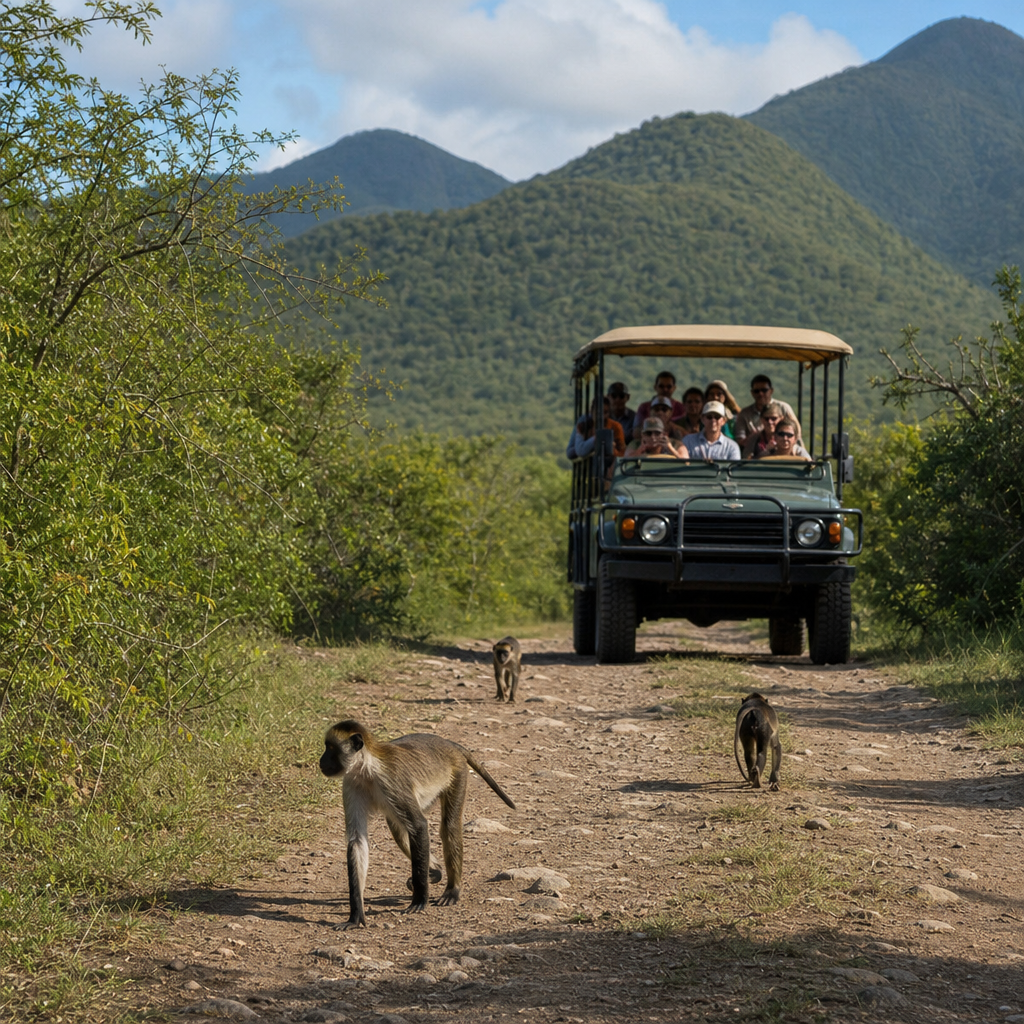
Most Saint Kitts safari tours use modified 4×4 vehicles, open-back trucks with bench seating, or sturdier excursion buses built for uneven rural roads. Routes vary by operator, but the strongest itineraries usually blend interior viewpoints, estate tracks, villages on the outskirts of Basseterre, and sections approaching the rainforest belt below Mount Liamuiga, the island’s dormant volcano. Expect a guide-led format rather than a silent wildlife drive. Saint Kitts is an interpretive destination: the guide explains ecology, agriculture, and local history while stopping at clear vantage points. On a typical half-day route, guests may start near the coast, climb through former sugar lands, pass breadfruit, mango, and flamboyant trees, and then enter cooler elevations where dense vegetation supports more bird activity and frequent monkey sightings.
The experience is shaped as much by observation technique as by route design. Good guides watch fruiting trees, scan power lines and fence posts for birds, and slow down near ghauts, the seasonal ravines that can concentrate moisture and plant growth. Wildlife on Saint Kitts is often seen at habitat edges rather than deep forest interiors, especially during short excursions. That is why estate roads, transitional woodland, and cultivated margins are productive. Travelers expecting a fenced park with ticket gates may be surprised; on Saint Kitts, the safari concept is more landscape-based. Protected areas, scenic reserves, public roads, and historical lands overlap in practical touring patterns. The result feels less like a theme attraction and more like a moving field trip across the island’s ecological and cultural layers.
Wildlife You Are Most Likely to See
The animal most visitors ask about is the vervet monkey, and yes, sightings are common enough that many tours market them as a highlight. These monkeys are active, adaptable, and comfortable around disturbed landscapes, especially where fruit trees, water, and human activity create opportunities. The memorable part is not simply seeing one monkey; it is watching troop behavior. Guides often point out lookout positions in trees, juveniles shadowing adults, and the cautious way monkeys approach open ground. Because they are introduced, they also provide an entry point into conversation about conservation tradeoffs. They are charismatic, but they can damage crops and influence how people manage land. That nuance is important if you want a realistic understanding of wildlife on Saint Kitts rather than a postcard version.
Birdlife is often the most underrated part of a Saint Kitts safari. Depending on route and season, visitors may see brown pelicans gliding near the coast, frigatebirds soaring on thermals, herons near wet areas, and smaller land birds in scrub and forest edge. The island sits within a migratory network, so timing affects variety. Reptiles are common but less celebrated: anoles, larger ground lizards, and occasional iguanas appear in warmer, open habitats. Mongooses are regularly mentioned by guides because they move quickly across roadsides and stone boundaries. Their presence reflects another Caribbean ecological story, as they were introduced historically for pest control and had consequences for native fauna. Together, these species make Saint Kitts safari tours educational because nearly every sighting links to a bigger historical pattern of colonization, agriculture, and adaptation.
Best Safari Areas and What Makes Them Distinct
Several parts of Saint Kitts consistently produce rewarding safari experiences. The interior roads below Mount Liamuiga offer elevation, thicker vegetation, and cooler air, making them ideal for combining scenery with wildlife spotting. Former sugar estate zones, especially where abandoned infrastructure meets regrown habitat, are excellent for monkeys and birds because food sources and cover are close together. The southeast peninsula, while drier and more coastal than the central mountain region, delivers striking contrasts between scrubland, salt ponds, and sea views. In practice, many operators build loops that sample more than one landscape type because variety increases the chance of sightings and keeps the tour dynamic for mixed-interest groups.
| Safari Area | Typical Wildlife | Landscape Character | Best For |
|---|---|---|---|
| Mount Liamuiga foothills | Vervet monkeys, forest-edge birds, lizards | Rainforest margins, steep roads, volcanic slopes | Scenic depth and cooler habitats |
| Former sugar estate lands | Monkeys, mongoose, open-country birds | Ruins, fields, secondary growth | History plus wildlife in accessible terrain |
| Southeast peninsula | Seabirds, shorebirds, reptiles | Dry scrub, ponds, dramatic coastal views | Photography and coastal ecology |
| Village and ghaut corridors | Small birds, mongoose, occasional monkeys | Mixed-use landscapes, ravines, roadside vegetation | Understanding everyday island ecology |
From a planning standpoint, the best area depends on your goal. If your priority is broad wildlife variety, choose tours that combine lowland and upland zones. If you care most about landscape photography, the peninsula and high lookouts are stronger than dense interior tracks. If you are traveling with children or older adults, estate routes with smoother surfaces are usually more comfortable than steeper mountain approaches. This is where a hub page is useful: “safari” on Saint Kitts is not one fixed product. It is a category of experiences shaped by geography, weather, and guide expertise. Read route descriptions carefully and look for operators that name specific regions rather than relying on generic promises about island adventure.
When to Go, What to Bring, and How to Choose a Tour
Saint Kitts can be visited year-round, but safari conditions change with rainfall, heat, and cruise traffic. The drier months, generally from December through April, usually provide clearer views, firmer road surfaces, and more comfortable temperatures for open-air touring. The greener months can be beautiful as well, especially in the interior, though showers may reduce visibility and make rough roads muddier. Morning tours are usually best for wildlife activity and photography because the light is softer and animals are more active before midday heat. If you are arriving by cruise ship, confirm tour duration against all-aboard times and choose an operator with a solid record of port coordination. On compact islands, delays can still happen when roads narrow or weather shifts.
Bring binoculars if you care about birds, closed shoes if your excursion includes short walks, and sun protection even on cloudy days. A small camera with zoom is more useful than a phone alone, especially for monkeys in trees or birds over water. In my experience, the travelers happiest with Saint Kitts safari tours are the ones who approach them as natural history experiences rather than animal-encounter shows. Ask practical questions before booking: How much time is spent off-road? Is the vehicle shaded? Are drinks included? Does the guide discuss ecology and island history, or is the focus mostly scenic stops? Strong operators answer directly, limit crowding where possible, and avoid encouraging unsafe wildlife interaction. That last point matters. Feeding or baiting animals may increase sightings in the short term, but it degrades the quality and ethics of the experience.
How Safari Tours Connect With Other Saint Kitts Activities
As the Miscellaneous hub under Adventure and Activities, this topic also connects to several adjacent experiences across Saint Kitts. Safari tours pair naturally with rainforest hiking because a drive through lower and mid-elevation habitats helps visitors understand the terrain before attempting a more strenuous trail. They also complement scenic railway excursions, which reveal the island’s sugar history from a different perspective. If you are building a fuller itinerary, consider combining a safari day with Brimstone Hill Fortress, Romney Manor, or a beach stop on the southeast peninsula. The sequence matters. A morning safari followed by a historical site works well because you first see the landscape that shaped the island’s economy, then visit a location that interprets that history directly.
For families, safari tours are often easier than long hikes because they deliver frequent points of interest without requiring advanced fitness. For photographers, they provide access to mixed habitats in a short time window. For repeat visitors who have already covered the standard highlights, they reveal the living systems behind the scenery. That is why this page serves as a hub for the Miscellaneous subtopic: it points toward birdwatching, countryside drives, estate heritage, eco-photography, and wildlife-focused shore excursions, all of which overlap in practice on Saint Kitts. If you want a trip with more texture than a resort-to-beach routine, start here. Choose a route that names real places, go early, watch the edges of the landscape, and let a knowledgeable guide show you how wildlife, history, and geography fit together on this small but remarkably varied island.
Saint Kitts’ national park safari tours are valuable because they turn the island into a connected story instead of a list of attractions. You see how volcanic topography shapes rainfall, how former sugar estates became wildlife corridors, and why introduced species such as vervet monkeys and mongoose remain central to the modern landscape. The best tours do not promise impossible sightings. They deliver context, careful observation, and access to places many visitors would never find alone. That makes them one of the most worthwhile entries in the broader Adventure and Activities category, especially for travelers who want substance along with scenery.
The main takeaway is straightforward: choose safari tours on Saint Kitts for understanding, not just transportation. Prioritize operators that explain route specifics, use experienced guides, and treat wildlife responsibly. Pack for heat, book morning departures when possible, and match the route to your interests, whether that is photography, birdlife, history, or family-friendly exploration. If you are mapping out the Miscellaneous side of your Saint Kitts trip, use this hub as your starting point, then build outward into related eco-adventures and heritage experiences. A well-planned safari will give you more than good views; it will give you a sharper way to read the island.
Frequently Asked Questions
What can travelers expect to see on a Saint Kitts national park safari tour?
Most Saint Kitts national park safari tours are designed to show visitors a side of the island that goes far beyond the shoreline. Depending on the route, travelers may pass through protected forest zones, volcanic foothills, old sugar estates, small farming communities, and scenic ridgelines with broad views of the Caribbean Sea and Atlantic coast. Wildlife sightings often include vervet monkeys, a wide range of tropical birds, lizards, and native plant life adapted to the island’s varied elevations and rainfall patterns. While no responsible operator can guarantee constant animal encounters, the combination of habitat diversity and knowledgeable local guides gives guests an excellent opportunity to notice species and ecological details they would likely miss on their own.
These tours are also valuable because they connect wildlife viewing with landscape interpretation. Guides commonly explain how volcanic soils support agriculture, how protected areas help preserve water sources and habitat, and how human history has shaped the terrain visitors see today. In that sense, a safari is not simply a drive through nature. It is often a practical introduction to the island’s ecology, rural life, and conservation story, making it one of the most well-rounded excursions available in Saint Kitts.
Are safari tours in Saint Kitts suitable for families, older travelers, and first-time visitors?
In many cases, yes. One reason safari tours are so popular in Saint Kitts is that they allow visitors to experience remote, elevated, and ecologically important parts of the island without requiring the physical effort of a long hike. Families with children, older travelers, and first-time visitors often find these tours especially appealing because they combine accessibility with meaningful sightseeing. Guests can enjoy panoramic viewpoints, wildlife spotting, and historical commentary from the comfort of a safari-style vehicle, typically with stops for photos and short walks where terrain permits.
That said, comfort levels can vary by operator and route. Some excursions use open-air vehicles and travel over uneven roads, which may feel bumpy at times. Travelers with back issues, mobility concerns, or sensitivity to heat, wind, or rain should ask in advance about vehicle style, ride duration, restroom availability, and how much walking is involved at stops. Reputable operators are usually transparent about what to expect and can help guests choose a tour that fits their needs. For many visitors, safari tours strike an ideal balance: more immersive than a standard sightseeing drive, but less demanding than a full trekking excursion.
Why are Saint Kitts safari tours considered a good way to learn about the island’s wildlife and environment?
Safari tours are especially effective because they bring together several parts of the Saint Kitts experience in one outing. Rather than focusing only on a single activity, such as hiking or beachgoing, these tours often move through multiple ecosystems and cultural landscapes in a relatively short period of time. Visitors may see how dense vegetation changes with elevation, how old plantation lands transitioned into modern farming areas, and how wildlife uses forest edges, roadside trees, and protected habitats. This layered perspective helps travelers understand that the island’s natural life is deeply connected to its geological origins, land use history, and present-day conservation efforts.
Another major advantage is the role of local guides. A trained guide can point out bird calls, identify medicinal or agricultural plants, explain monkey behavior, and describe how weather and season influence what visitors are likely to see. Without that interpretation, many details blend into the background. With it, even a short stop can become a lesson in ecology and island history. That is why safari tours fit so well within the wider Adventure and Activities category: they offer an experience that is part wildlife excursion, part scenic exploration, and part educational journey through the living landscape of Saint Kitts.
What should visitors bring and wear for a national park safari in Saint Kitts?
Light, breathable clothing is usually the best choice, since conditions on Saint Kitts can be warm and humid even when a tour includes cooler, breezier mountain areas. Closed-toe shoes or sturdy sandals are recommended, especially if the itinerary includes photo stops, short walks, or uneven ground near viewpoints or forested sections. Sunscreen, sunglasses, and a hat are also helpful because many safari vehicles are open or partially open, leaving guests exposed to direct sun for portions of the trip. A small bottle of water is essential, and bringing extra hydration is wise if the excursion lasts several hours.
Visitors interested in wildlife viewing should consider bringing binoculars and a camera with a zoom lens, since animals and birds are often best appreciated from a respectful distance. A light rain jacket or compact poncho can also be useful, particularly in higher or greener areas where weather can shift quickly. Insect repellent may be worth packing as well, especially after rain or in lush zones with more vegetation. Overall, the goal is to be prepared for changing island conditions while staying comfortable enough to fully enjoy the scenery, wildlife, and commentary throughout the tour.
How do safari tours support a deeper appreciation of Saint Kitts beyond its beaches?
Saint Kitts is often first imagined as a beach destination, but safari tours reveal how much of the island’s identity is rooted inland. By traveling into national park areas, volcanic slopes, and agricultural districts, visitors gain a fuller sense of the island’s geography and the way its communities have interacted with the land over time. The scenery alone often surprises people: thick green valleys, elevated viewpoints, dramatic cloud-covered peaks, and stretches of countryside that feel completely different from the resort coast. Seeing those contrasts helps travelers appreciate Saint Kitts as a place with ecological and historical depth, not just a shoreline escape.
These tours also show that some of the island’s most memorable experiences do not fit neatly into one travel category. A safari can include wildlife encounters, scenic photography, local storytelling, traces of colonial-era farming history, and insight into how protected lands are managed today. For travelers exploring the broader Adventure and Activities landscape, that versatility is exactly what makes safari excursions so rewarding. They create a stronger connection to the island by placing nature, heritage, and everyday local knowledge in the same frame, offering an experience that is both enjoyable in the moment and meaningful long after the tour ends.