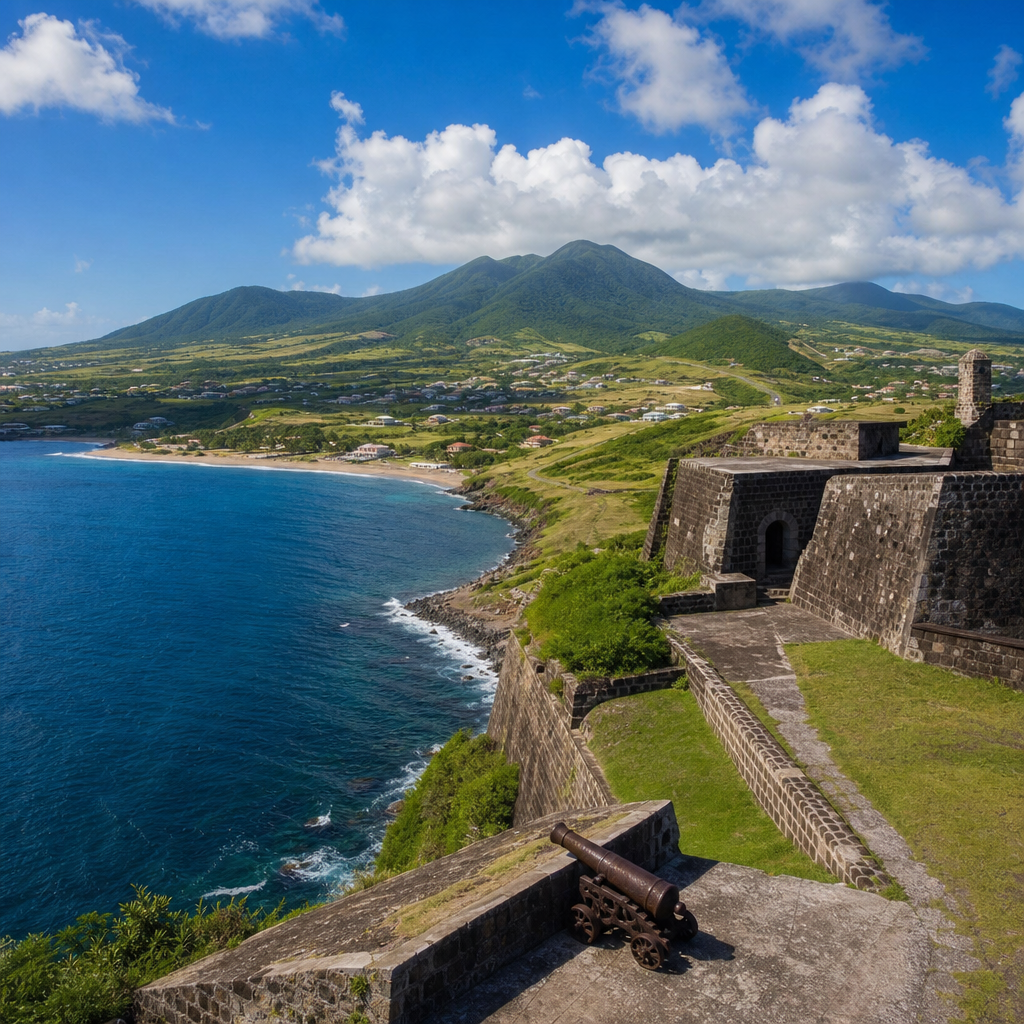
Investment opportunities in Saint Kitts’ cultural tourism are expanding as the island positions heritage, festivals, cuisine, and community experiences alongside beach travel. Cultural tourism refers to travel motivated by a destination’s history, arts, architecture, religion, traditions, and everyday way of life. In Saint Kitts, that includes Brimstone Hill Fortress National Park, former sugar estates, village celebrations, craft traditions, music, storytelling, and the Creole influences that shape local identity. For investors, the appeal is straightforward: cultural assets already exist, they differentiate the island from competing Caribbean destinations, and they can support higher-value visitor spending across tours, hospitality, retail, transport, and digital services.
This matters because tourism demand is shifting. Travelers increasingly want authentic, place-based experiences rather than standardized resort packages alone. Advisors, tour operators, and booking platforms now highlight culinary trails, heritage walks, and festival calendars as decision factors. I have seen this pattern repeatedly in island markets: the businesses that win are those that turn local character into bookable, well-managed products without stripping away authenticity. Saint Kitts is well placed to do that. It combines a compact geography, strong English-language accessibility, established air and cruise connections, and a recognizable historic narrative tied to colonial trade, emancipation, and the sugar industry.
From an investment perspective, cultural tourism also spreads economic benefits more widely than enclave resort development. A restored great house needs contractors, guides, curators, chefs, gardeners, musicians, and transport providers. A food festival creates opportunities for farmers, rum producers, caterers, event planners, and payment processors. A heritage district can lift surrounding retail rents and encourage adaptive reuse of older buildings. These linkages matter for both returns and resilience. They reduce dependence on one customer type and create multiple revenue streams, including admissions, food and beverage, merchandising, event tickets, sponsorships, licensing, and premium private experiences.
Saint Kitts’ policy environment strengthens the case. The federation’s broader investment narrative already includes tourism, real estate, infrastructure, and services. Cultural tourism can sit within that framework while offering a more distinctive proposition than another generic accommodation product. The opportunity is not limited to large investors. Small and midsize ventures can be profitable if they are professionally designed, legally compliant, and connected to distribution channels. The key is to treat cultural tourism as a business system, not a loose collection of attractions. That means market validation, conservation standards, community participation, pricing discipline, and strong partnerships with hotels, cruise operators, destination marketers, and local government.
Why Saint Kitts Is Well Positioned for Cultural Tourism Investment
Saint Kitts has several structural advantages. First, it already attracts international visitors through cruise calls, stayover travel, and regional movement. That existing demand lowers customer acquisition costs compared with building a destination from scratch. Second, the island’s history is unusually legible. Brimstone Hill Fortress, a UNESCO World Heritage Site, provides global recognition and a clear heritage anchor. The sugar plantation landscape, churches, rail history, and surviving estate architecture create a network of interpretable sites rather than a single monument. Third, the island’s scale is an advantage. Investors can create multi-stop itineraries in one day, which is ideal for cruise shore excursions and short-stay travelers.
The market fit is broad. Cruise visitors often want half-day, high-certainty experiences with transport, narration, shopping, and photo points. Stayover visitors usually accept deeper itineraries such as culinary workshops, architecture tours, wellness experiences tied to local traditions, or evening performances. Diaspora travelers and regional visitors are another segment, particularly during holidays, reunion periods, and festivals. Educational travel is also realistic. Schools, universities, and special-interest groups book around archaeology, Atlantic history, military history, botany, and post-emancipation social change. Each segment has different price sensitivity and operational needs, which is why investors should design modular products instead of relying on a single tour format.
Importantly, cultural tourism can improve seasonality. Sun-and-sea destinations often face booking swings linked to weather, airfare, and school calendars. Festivals, exhibitions, culinary events, and heritage programming create reasons to visit in shoulder periods. In my experience, this is where many island businesses underestimate the value of programming. A site by itself may produce modest admissions. The same site, when activated with a calendar of workshops, performances, night tours, weddings, conferences, and school visits, becomes a year-round commercial platform. Saint Kitts has enough historical depth and community talent to support that kind of activation if investors approach it with discipline.
High-Potential Investment Models Across the Cultural Tourism Value Chain
The most promising opportunities sit across several categories rather than one flagship project. Heritage accommodation is one. Restoring estate houses, merchant homes, or historically sympathetic boutique properties can command premium rates when the experience includes guided interpretation, local cuisine, and access to nearby attractions. Experience-led tour companies are another strong category. Well-produced heritage walks, cemetery tours, rum and food pairings, railway storytelling, village music nights, and artisan studio visits can all be sold through hotel concierges, online travel agencies, cruise partners, and direct booking engines. Investors should also look at event infrastructure, including small venues, staging, lighting, ticketing systems, and mobile food service equipment.
Museums and interpretation centers remain underdeveloped revenue opportunities in many Caribbean markets because they are often treated as public amenities rather than commercial assets. A professionally curated center with multilingual exhibits, retail, school programming, and rentable event space can generate steady cash flow. Digital products matter too. Audio guides, augmented reality overlays, virtual tours, and heritage apps extend reach before and after the trip. These tools also improve margins by serving more visitors without proportional staffing increases. Another overlooked area is supply-chain investment: craft cooperatives, specialty food production, signage fabrication, conservation trades, and transportation services are all investable businesses linked directly to cultural tourism growth.
| Investment model | Main revenue streams | Typical customer | Key risk | Practical mitigation |
|---|---|---|---|---|
| Boutique heritage hotel | Room nights, dining, events, weddings | Stayover leisure travelers | High restoration cost | Phase works, secure tax advice, diversify events |
| Guided cultural tours | Ticket sales, private bookings, commissions | Cruise and stayover visitors | Demand volatility | Contract with hotels and cruise handlers |
| Museum or interpretation center | Admissions, retail, venue hire, education | Families, schools, groups | Low repeat visitation | Rotate exhibits and program events |
| Festival and event production | Tickets, sponsorship, food concessions | Residents, diaspora, tourists | Weather and logistics | Insurance, indoor backup, vendor standards |
| Digital heritage platform | Licensing, subscriptions, tour bundles | Independent travelers and schools | Weak adoption | Bundle with physical experiences |
Food and beverage deserves special attention because it is often the fastest route to cultural tourism monetization. Travelers remember what they ate and where they ate it. Saint Kitts can package plantation-era food history, contemporary Kittitian cooking, rum education, farm visits, and chef-led classes into premium experiences. A compact island circuit might include a market stop, a bread-making demonstration, a cane and rum narrative, and dinner in a restored heritage setting. That product sells because it combines learning, entertainment, and social media appeal. Investors who control both venue and programming usually outperform those who only provide one component of the experience.
How to Evaluate Viability, Operations, and Returns
Good cultural tourism investments start with disciplined feasibility work. The first question is not whether an asset is beautiful or historically important; it is whether enough people will pay for the specific experience you plan to deliver. Measure addressable demand by segment, map current competitors, and test achievable pricing. For cruise-focused products, examine ship schedules, berth capacity, dispatch windows, and maximum group sizes. For stayover products, look at average length of stay, hotel occupancy patterns, and seasonal airfare trends. Investors should also review visitor reviews of comparable Caribbean experiences to understand what guests praise and what they criticize, especially around timing, comfort, authenticity, and guide quality.
Operating economics are often misunderstood. A cultural attraction with low fixed overhead can outperform a glamorous project with constant maintenance and weak throughput. Track metrics such as revenue per visitor, conversion rate from inquiry to booking, guide utilization, retail spend per head, cancellation rate, and net promoter score. If transport is included, fleet uptime and dispatch efficiency matter. If food is involved, labor scheduling and waste control can determine whether the margin holds. I generally advise investors to build a conservative base case around realistic occupancy or ticketing levels, then test downside scenarios for weather, airlift changes, cruise fluctuations, and temporary site closures caused by restoration needs.
Capital structure should match asset type. A restored hotel or museum may justify longer-term financing because the asset has staying power and collateral value. Event businesses and tour companies often need lighter structures, more working capital flexibility, and faster marketing feedback loops. Public-private models can work when a site has conservation significance but also commercial potential. In those cases, clarity on maintenance obligations, use rights, admissions policy, and event permissions is essential. The best investors separate heritage conservation costs from commercial operating costs so they can see the true business performance instead of masking weak operations behind ongoing restoration spending.
Execution Priorities: Authenticity, Compliance, Partnerships, and Marketing
Authenticity is a commercial asset, but it must be managed carefully. Visitors can detect staged experiences that flatten culture into costume. The strongest projects involve local historians, artists, elders, chefs, musicians, and community groups from the beginning. That improves credibility and also creates local advocates. Compensation should be transparent and structured, not ad hoc. Compliance is equally important. Depending on the model, investors may need approvals related to land use, heritage preservation, food handling, alcohol service, events, transportation, employment, music licensing, and visitor safety. Insurance is not optional. Public liability, event cancellation cover, property insurance, and professional coverage for operators are basic requirements.
Partnerships drive distribution. Hotels need reliable excursion partners that deliver on time and protect guest satisfaction. Cruise ground handlers need products that fit dispatch windows and can process volume without confusion at the port. Destination marketers need high-quality photography, clear descriptions, and booking-ready inventory. Investors should build these relationships early and provide professional sales collateral, rate sheets, operating procedures, and emergency protocols. A site that is difficult to book or hard to understand will be ignored, even if the concept is strong. Direct-to-consumer marketing also matters, especially through search, maps, review platforms, and short-form video that shows exactly what guests will experience.
Programming and storytelling are where many projects either become memorable or remain forgettable. Every tour should answer simple visitor questions clearly: What will I see, how long will it take, why does it matter, what should I bring, and what makes this experience unique to Saint Kitts? Interpretation should be factually sound, emotionally engaging, and accessible to different knowledge levels. Investors should train guides like front-line brand managers, because they shape reviews more than architecture does. Finally, connect the hub to adjacent opportunities. Cultural tourism links naturally to hospitality, transport, real estate, events, food production, education, and creative industries, creating a wider pipeline of business and investment opportunities.
Conclusion
Saint Kitts has a credible, investable cultural tourism proposition because it combines recognized heritage assets, living traditions, manageable geography, and an established visitor economy. The strongest opportunities are not abstract. They include heritage hotels, guided experiences, museums, food-based concepts, event production, digital interpretation tools, and the supporting services that make those products work at scale. Success depends on disciplined feasibility analysis, realistic pricing, strong operations, community participation, and partnerships that turn cultural assets into bookable, repeatable experiences. Investors who treat authenticity as a core product feature, not a marketing slogan, will build stronger brands and more defensible margins.
For businesses exploring the broader Business and Investment Opportunities landscape, this hub page should be the starting point for the miscellaneous cultural tourism segment. Use it to identify which asset class fits your capital, timeline, and risk tolerance, then map links to related opportunities in hospitality, infrastructure, services, events, and creative enterprise. Saint Kitts does not need more generic tourism supply. It needs well-executed ventures rooted in its own story. If you are evaluating the market now, begin with one concrete step: commission a feasibility study for a culturally distinctive, partnership-ready product that can launch with operational discipline and grow into a lasting island brand.
Frequently Asked Questions
1. What makes Saint Kitts’ cultural tourism sector attractive for investors right now?
Saint Kitts’ cultural tourism sector is becoming increasingly attractive because the island is broadening its visitor appeal beyond traditional sun-and-sea travel. Travelers are looking for more meaningful, place-based experiences, and Saint Kitts is well positioned to meet that demand through its historic landmarks, community traditions, cuisine, music, architecture, and living heritage. This creates an investment environment where cultural attractions are not simply add-ons to resort tourism, but part of a larger strategy to diversify the visitor economy and extend tourism spending into local communities.
From an investment perspective, the sector benefits from several converging trends. Global tourism demand has shifted toward authenticity, heritage interpretation, local food experiences, festivals, and smaller-scale immersive activities. Saint Kitts offers strong raw material for these experiences, including Brimstone Hill Fortress National Park, former sugar estates, village life, craft traditions, religious heritage, oral storytelling, and Afro-Caribbean and Creole cultural influences. Investors who can package these assets professionally and responsibly may be able to capture higher-value travelers seeking depth rather than volume alone.
Another key advantage is that cultural tourism can complement existing tourism infrastructure instead of competing with it. Cruise passengers, hotel guests, villa travelers, and independent visitors can all be introduced to curated cultural products such as heritage tours, culinary trails, restored estate experiences, artisan marketplaces, music events, and community festivals. That means investors have multiple customer channels and can build partnerships with hotels, tour operators, transportation providers, and local organizations. In practical terms, this allows cultural tourism ventures to generate revenue from admissions, guided tours, retail sales, food and beverage offerings, workshops, licensing, and event programming.
Perhaps most importantly, cultural tourism in Saint Kitts offers room for differentiation. Investors are not entering an overcrowded space where every destination offers the same product. Well-designed projects can be distinctive because they are rooted in the island’s specific history and cultural identity. That originality can support stronger branding, repeat visitation, and positive community relationships when development is handled with care.
2. What types of investment opportunities exist within Saint Kitts’ cultural tourism market?
The opportunity set is broad and includes both direct tourism ventures and supporting businesses that improve the visitor experience. One major area is heritage site development and adaptive reuse. Former sugar estates, historic buildings, plantation houses, and old industrial properties can potentially be restored and repurposed into museums, boutique accommodations, event venues, interpretive centers, restaurants, or mixed-use heritage attractions. These projects can create memorable visitor experiences while preserving important parts of the island’s story.
Another promising category is experiential tourism. Investors can develop guided cultural excursions, storytelling tours, culinary workshops, rum and local food tastings, music and dance experiences, village immersion programs, craft demonstrations, and heritage trails that connect multiple sites. These products often require less capital than large hospitality projects, but they can deliver strong value when they are professionally curated, well marketed, and integrated into the wider tourism supply chain.
Festivals and events also present meaningful opportunities. Saint Kitts has cultural energy that can be translated into ticketed festivals, seasonal markets, performance series, art fairs, culinary weekends, and heritage celebrations. Investors may participate through event ownership, venue development, sponsorship structures, hospitality packages, merchandising, or production services. When done well, event-based tourism can stimulate off-peak demand and increase average visitor spending.
There is also opportunity in creative industries linked to tourism. Artisan production, locally made fashion, music recording and performance spaces, cultural retail, publishing, digital storytelling, and branded souvenir lines can all benefit from stronger cultural tourism traffic. In addition, hospitality concepts with a clear cultural identity—such as heritage inns, chef-led local cuisine restaurants, or eco-cultural lodges—can attract visitors who want a more distinctive and educational stay.
Finally, enabling investments should not be overlooked. Transportation services, booking platforms, destination apps, interpretation technology, signage systems, training institutes, and marketing agencies that specialize in cultural tourism can all play valuable roles. In many emerging cultural tourism markets, the strongest returns may come not only from flagship attractions, but from businesses that help organize, elevate, and distribute cultural experiences effectively.
3. How can investors develop cultural tourism projects in Saint Kitts without undermining local heritage and community value?
The most successful cultural tourism investments are built on stewardship, not extraction. In Saint Kitts, that means investors should approach heritage and community life as assets to be respected, interpreted carefully, and shared responsibly. A project may be commercially viable, but if it feels staged, disconnected, or exploitative, it will struggle to earn trust and long-term relevance. Investors should begin with genuine consultation, especially when projects involve historic sites, village traditions, religious spaces, or cultural practices that carry deep meaning for residents.
A practical first step is to work with local historians, cultural practitioners, community leaders, artisans, and tourism stakeholders from the earliest planning stage. Their input can shape accurate storytelling, appropriate design, community benefit structures, and realistic operating models. Investors should also prioritize local employment, skills development, and procurement so that communities see tangible value from the project. Hiring local guides, chefs, performers, craftspeople, curators, and managers helps preserve authenticity while keeping income within the island economy.
Design and interpretation matter as well. Restoration and redevelopment should respect architectural character and historical context rather than erase it. Signage, exhibitions, performances, and visitor programming should be educational, balanced, and rooted in real research. The strongest projects tend to present culture as living and evolving, not frozen for display. That means creating room for contemporary artists, active traditions, community participation, and locally led storytelling rather than relying only on polished tourist narratives.
Investors should also think carefully about visitor capacity and social impact. Some cultural sites and events can be harmed by over-commercialization or excessive traffic. Sustainable operating plans, timed entry systems, code-of-conduct standards, and reinvestment into conservation or community initiatives can help protect the resource over time. In short, preserving cultural value is not separate from business strategy—it is central to it. Responsible projects are more likely to build credibility, attract quality visitors, and maintain their appeal for years to come.
4. What are the main risks and challenges investors should evaluate in Saint Kitts’ cultural tourism sector?
Like any tourism-related market, cultural tourism in Saint Kitts comes with operational, commercial, and structural risks that deserve careful due diligence. One of the most common challenges is demand variability. Visitor numbers may fluctuate seasonally, and some cultural products depend heavily on cruise arrivals, international air access, festival timing, or broader economic conditions in key source markets. Investors should avoid assuming constant demand and instead build flexible models that can serve both tourists and local audiences where possible.
Another challenge is product readiness. Cultural assets may be rich in content, but not immediately ready for commercial tourism without investment in restoration, interpretation, staff training, accessibility, safety standards, and visitor services. A historic site, for example, may require significant work before it can function as a revenue-generating attraction. This can affect timelines, capital requirements, insurance considerations, and permitting. Investors should therefore assess not just the attractiveness of the concept, but the real cost of bringing it to a professional market standard.
There is also reputational risk if projects mishandle heritage or fail to deliver authentic quality. Visitors who choose cultural tourism are often discerning; they notice superficiality, poor storytelling, and generic programming. At the same time, local communities may resist projects that appear to privatize shared heritage, distort history, or offer too little local benefit. Strong stakeholder engagement, transparent partnerships, and credible cultural leadership can reduce these risks significantly.
Infrastructure and scale can be additional considerations. Depending on the location of a project, investors may need to evaluate road access, signage, utilities, digital connectivity, transportation coordination, and integration with wider tour networks. Cultural tourism ventures can also take longer to build momentum than conventional tourism products, because audience education and brand development are often required. The most resilient investors plan for phased growth, strategic partnerships, and multiple revenue streams rather than relying on a single attraction format.
Finally, investors should account for environmental and climate-related risks common to Caribbean destinations, especially for heritage properties and outdoor experiences. Conservation, disaster resilience, and maintenance planning are essential. When these issues are addressed realistically from the outset, cultural tourism investments in Saint Kitts can be far more durable and competitive.
5. What strategies can help a cultural tourism investment in Saint Kitts become profitable and sustainable over the long term?
Long-term success usually comes from combining authenticity, professional execution, and diversified income. In Saint Kitts, a profitable cultural tourism project should not rely on a single transaction such as an entrance fee alone. Instead, investors should design layered revenue models that may include guided experiences, food and beverage sales, retail, workshops, special events, venue rentals, educational programming, private group bookings, and partnerships with hotels or cruise operators. The richer the visitor journey, the stronger the commercial potential.
Brand positioning is equally important. Travelers respond to stories, and Saint Kitts has compelling ones to tell through its fortifications, colonial and post-emancipation history, sugar legacy, village traditions, music, craft, and culinary identity. Investors who create a clear and credible brand around these themes can