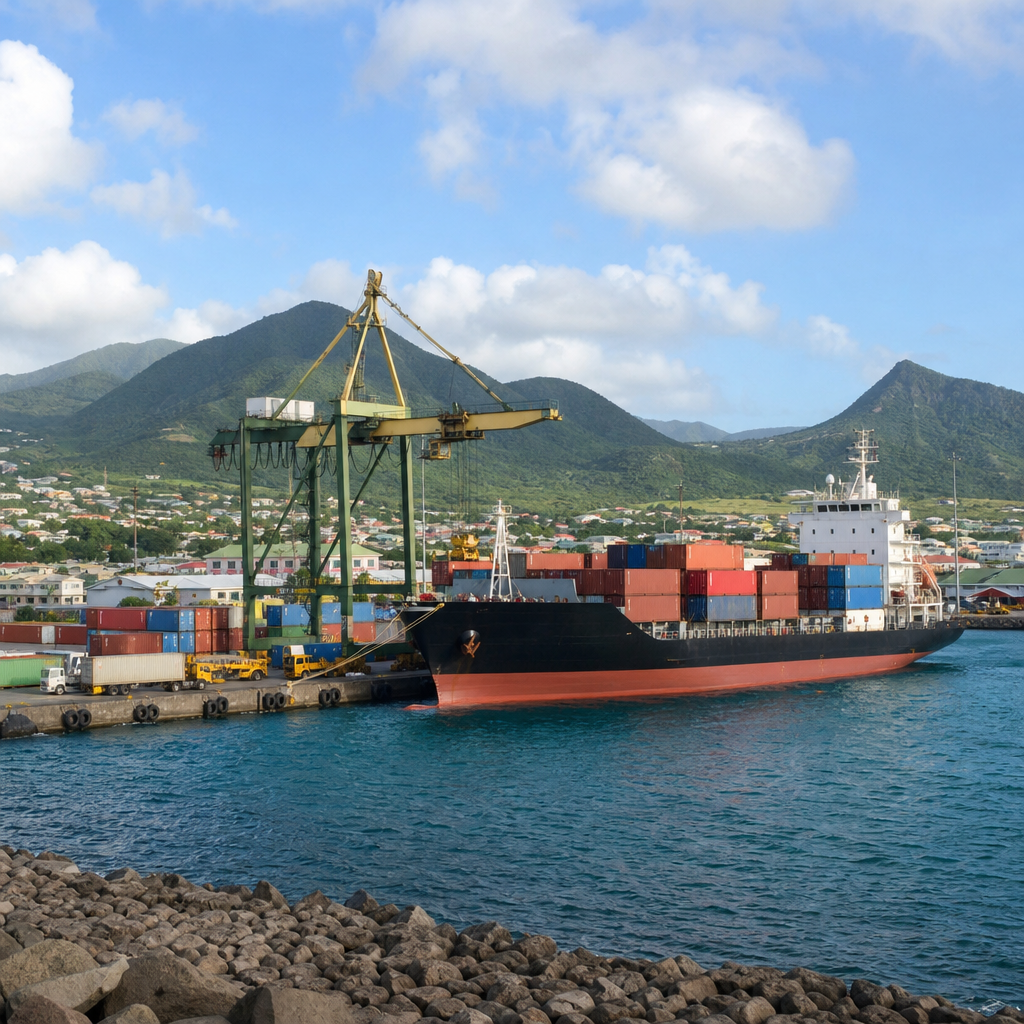
International trade is one of the central forces shaping Saint Kitts’ economy, linking a small island state to global markets, regional partners, and investment flows that would be impossible to generate from domestic demand alone. In practical terms, international trade means the exchange of goods and services across borders: imports bring in food, fuel, machinery, vehicles, pharmaceuticals, and construction materials, while exports include tourism services, financial services, manufactured products, and specialized agricultural output. For Saint Kitts and Nevis, trade is not a side activity. It is the operating system of the economy.
I have worked with Caribbean market-entry plans and trade-focused business cases long enough to see the same pattern repeatedly: small island economies prosper when they manage external linkages well, and they struggle when shipping costs, narrow export baskets, or policy delays weaken those links. Saint Kitts illustrates that reality clearly. With limited land, a modest population, and high exposure to imported essentials, the federation depends on efficient trade policy, resilient ports, and access to foreign exchange. At the same time, trade creates opportunity. It supports jobs in tourism, wholesale distribution, transport, construction, professional services, and light industry. It also gives local firms a path to regional expansion through CARICOM and to broader reach through digital services.
This article serves as a hub for the broader miscellaneous trade and business landscape under business and investment opportunities. It explains how international trade affects growth, prices, employment, government revenue, and investor confidence. It also covers the supporting systems behind trade, including infrastructure, regulation, logistics, sector diversification, and external risks. For decision-makers, the key point is straightforward: understanding the role of international trade in Saint Kitts’ economy is essential for evaluating investment potential, operating costs, and long-term competitiveness.
Why trade matters in a small island economy
Saint Kitts and Nevis is a classic small open economy. That term describes a country whose domestic market is too small to sustain broad-based production at scale and whose living standards depend heavily on cross-border exchange. In such economies, imports are structurally necessary. Supermarkets rely on imported staples; hotels rely on imported equipment and beverages; infrastructure projects rely on imported cement, steel, electrical components, and heavy machinery. Even sectors that earn foreign exchange, such as tourism, consume large volumes of imported inputs.
The effect is two-sided. On one hand, trade expands consumer choice and allows businesses to access technologies and products that are unavailable locally. On the other, it exposes the economy to external inflation, shipping disruptions, and exchange-rate pressures. When global freight rates surged during the pandemic period, islands across the Caribbean faced higher landed costs, and Saint Kitts was no exception. Businesses had to absorb some of those costs, pass some to consumers, and redesign inventory practices to avoid stockouts. That experience confirmed a basic truth: trade resilience is as important as trade volume.
Trade also matters because it determines how foreign exchange enters and exits the economy. Visitor spending, offshore-oriented services, remittances, and investment inflows help finance the import bill. If export earnings weaken while import demand remains strong, pressure builds across the economy. For investors, that means sectors that generate foreign exchange have outsized strategic value.
The structure of Saint Kitts’ trade profile
Saint Kitts’ trade profile reflects its transition from a sugar-based economy to a service-led economy. After the closure of the sugar industry in 2005, the country shifted more decisively toward tourism, real estate development, education-linked services, and niche manufacturing. That change matters because many people still think of trade only in terms of shipping physical goods. In reality, service exports are fundamental. When visitors stay in hotels, dine in restaurants, book excursions, or pay marina fees, those transactions function as exports because overseas consumers are purchasing domestic services.
Goods imports remain broad and significant. Fuel is especially important because energy costs influence transportation, electricity generation, and operating expenses across nearly every industry. Food imports are also substantial, reflecting limited domestic agricultural scale and the preferences of both residents and tourists. Capital goods, vehicles, and building materials rise when investment activity is strong, particularly during hotel expansion, residential development, and public infrastructure projects.
Exports of goods are more limited but still relevant. Some manufacturing activity, including beverages and assembled products for regional markets, contributes to external earnings. Agricultural output can serve domestic substitution and selected export niches, though scale constraints limit volume. The broader lesson is that Saint Kitts does not need a massive goods-export complex to benefit from trade; it needs a balanced portfolio of foreign exchange earners and reliable supply chains.
Tourism as the leading trade engine
In operational terms, tourism is Saint Kitts’ dominant export sector. The country earns external income by selling accommodation, food service, entertainment, transportation, retail, and experiences to international visitors. Air arrivals, cruise traffic, yachting, and event-driven travel all feed the trade account. This is why tourism performance has effects far beyond hotels. It influences taxi earnings, retail turnover, agricultural demand, government taxes, and property development.
I have seen investors underestimate how tightly tourism and trade are linked. A resort is not just a hospitality asset; it is part of an export ecosystem. It buys imported fixtures and local labor, pays utilities, contracts maintenance firms, markets abroad, and generates foreign exchange once guests arrive. The same logic applies to restaurants, dive operators, transport providers, and duty-free retail. In Saint Kitts, tourism-led trade supports a wide business network rather than a single industry silo.
Cruise tourism deserves separate mention because it can create high-volume demand in short windows. Retailers, tour operators, and transport services benefit directly, but the spending pattern differs from stayover tourism, which typically produces deeper per-visitor expenditure. A balanced strategy therefore matters. Economies that rely too heavily on one visitor segment become vulnerable to itinerary changes, recession in source markets, or weather-related disruptions. Saint Kitts gains when it maintains diverse tourism channels and improves local linkages so more visitor spending remains in the domestic economy.
Key channels through which trade affects growth
International trade influences Saint Kitts’ economy through several measurable channels: employment, prices, investment, productivity, and fiscal revenue. Employment effects are visible in ports, customs brokerage, trucking, warehousing, distribution, retail, hospitality, and professional services. Every imported container and every foreign visitor generates economic activity beyond the initial transaction. Trade also affects prices because imported inflation passes quickly into consumer costs, especially in food and energy.
Investment responds to trade conditions as well. Businesses invest where supply chains are predictable, customs procedures are manageable, and export demand is stable. A developer assessing a hotel project or light manufacturing facility will examine shipping frequency, port handling, duties, standards compliance, labor availability, and regional market access. Productivity improves when firms can import better machinery, software, and inputs at reasonable cost. Government revenue is influenced by customs duties, consumption taxes applied to imported goods, corporate taxes generated by trade-linked sectors, and fees connected to port activity and licensing.
| Trade channel | How it affects the economy | Example in Saint Kitts |
|---|---|---|
| Imports | Supply essential goods, fuel, and equipment | Construction projects depend on imported steel, cement, and machinery |
| Service exports | Bring in foreign exchange and create jobs | Tourism spending supports hotels, taxis, restaurants, and excursions |
| Goods exports | Diversify earnings and reduce reliance on one sector | Regional sales of manufactured or specialty products |
| Trade infrastructure | Reduces cost and delay across the economy | Efficient port clearance lowers inventory risk for wholesalers |
| Trade agreements | Expand market access and shape standards | CARICOM access helps firms sell within the region |
Regional integration, agreements, and market access
Saint Kitts and Nevis benefits from regional integration through CARICOM and the OECS framework, both of which matter for trade policy and business strategy. CARICOM supports reduced barriers among member states and provides a platform for movement of certain goods, services, capital, and skilled people. For a local business, that can mean easier regional distribution, better recognition of standards, and a more practical route to scale than trying to jump immediately into North American or European markets.
The Eastern Caribbean Currency Union also provides macroeconomic support through a common currency, the Eastern Caribbean dollar, which is pegged to the US dollar. That exchange-rate stability reduces currency uncertainty for importers and investors. In trade planning, predictability is valuable. It does not eliminate external shocks, but it makes pricing, contracts, and debt service easier to model than in economies with frequent currency swings.
Market access, however, is not automatic success. Businesses still need compliant labeling, quality control, logistics discipline, and realistic product-market fit. I have seen firms assume regional access alone guarantees sales; it does not. Distribution partnerships, reliable production schedules, and cost control matter more than tariff preferences if a product reaches shelves late or at the wrong price point.
Ports, logistics, and trade facilitation
No discussion of international trade in Saint Kitts is complete without logistics. Port efficiency affects almost every business balance sheet. Delays at the border increase demurrage, warehousing costs, spoilage risk, and working capital pressure. Efficient customs clearance, transparent valuation procedures, digital documentation, and coordinated inspections are not administrative details; they are competitiveness tools.
Basseterre’s port infrastructure supports cargo, cruise activity, and broader maritime connectivity. For the private sector, what matters most is reliability: vessel schedules, turnaround time, handling quality, and inland distribution capacity. A wholesaler importing food products, for example, needs predictable clearance to maintain freshness and reduce stockholding costs. A contractor importing project materials needs timing accuracy because delays can stall labor crews and raise financing costs.
Trade facilitation also affects small and medium-sized enterprises. Large firms can absorb compliance complexity more easily, but smaller companies often struggle with documentation, classification, and inventory planning. Practical improvements such as single-window systems, clearer import guidance, and better interagency coordination can materially lower barriers to entry. When trade becomes easier to navigate, entrepreneurship becomes more viable.
Diversification beyond tourism
Tourism will remain central, but a resilient trade strategy for Saint Kitts requires diversification. The strongest candidates are sectors that either earn foreign exchange directly or reduce import dependence without compromising quality. Agro-processing, specialty agriculture, renewable energy services, digital business services, education-linked exports, health and wellness niches, and selected light manufacturing all have potential if supported by sound economics.
Agro-processing is especially useful because it can create value from local raw materials while replacing some imported finished goods. A local sauce, beverage, or packaged food brand that meets regional standards can supply hotels, supermarkets, and export channels at the same time. Renewable energy matters because imported fuel is a structural cost driver. Every credible move toward solar, storage, or efficiency reduces vulnerability to oil-price swings. Digital services offer another route because they are less constrained by shipping costs. Firms providing accounting support, software development, design, customer service, or online education can export expertise with relatively low physical infrastructure requirements.
Diversification should be disciplined, not fashionable. Policymakers and investors should prioritize sectors with real demand, manageable compliance burdens, and clear talent pathways. Not every promising idea is scalable, but well-chosen niches can materially strengthen the trade balance over time.
Risks, constraints, and what investors should watch
Saint Kitts’ trade-dependent model comes with known constraints. The first is scale. Small populations limit domestic demand and make some production lines uneconomic. The second is concentration risk, particularly in tourism and imported energy. The third is exposure to external shocks, including hurricanes, pandemics, geopolitical supply disruptions, and inflation in major supplier markets. Climate risk is especially important because stronger storms can damage ports, roads, utilities, and tourism assets while also disrupting shipping schedules.
Investors should also watch labor availability, utility costs, regulatory timelines, and shipping frequency. A project can look attractive on paper but struggle if imported inputs arrive inconsistently or if staffing requirements exceed the available local skills base. Due diligence should include logistics mapping, customs cost modeling, disaster resilience planning, and sensitivity analysis for fuel and freight prices.
The encouraging point is that these risks are identifiable and manageable. Strong projects in Saint Kitts usually share the same features: realistic assumptions, multiple supplier relationships, adequate inventory strategy, insurance discipline, and a clear plan for foreign exchange earnings. International trade will continue to shape the economy, but the winners will be businesses that treat trade management as a core competency rather than a background function.
International trade underpins Saint Kitts’ economy by supplying essentials, generating foreign exchange, supporting employment, and connecting local enterprise to regional and global demand. For a small island state, trade is not optional infrastructure around the economy; it is the mechanism through which the economy functions. Tourism leads the export side, but imports of food, fuel, machinery, and materials remain equally critical to daily life and business activity. That combination makes trade policy, logistics, and diversification central to long-term resilience.
The most important takeaway is that Saint Kitts benefits when it strengthens both sides of the trade equation: efficient import systems that lower costs and reliable export engines that bring in external income. Regional integration, port performance, service-sector growth, and carefully chosen diversification all support that goal. Businesses that understand these dynamics can make better decisions about pricing, sourcing, expansion, and risk management. Investors can also identify where value is most likely to compound, especially in sectors that improve supply reliability or earn foreign exchange.
As you explore business and investment opportunities in Saint Kitts, use international trade as a practical lens. Examine how a sector earns, saves, or depends on foreign exchange; how exposed it is to shipping and energy costs; and how effectively it can use regional market access. That approach leads to clearer strategy and better investments.
Frequently Asked Questions
Why is international trade so important to Saint Kitts’ economy?
International trade is essential to Saint Kitts’ economy because it allows a small island nation with a limited domestic market to access goods, services, capital, and customers far beyond its own borders. Without trade, the country would struggle to secure many of the everyday necessities and development inputs it relies on, including food, fuel, medical supplies, vehicles, machinery, and building materials. At the same time, trade gives Saint Kitts a way to earn foreign exchange by selling services and other outputs to international markets, especially through tourism, financial and professional services, and selected manufactured products. This outward connection helps support employment, government revenue, private investment, and business growth.
Trade also plays a strategic role in economic resilience and modernization. Because Saint Kitts cannot produce everything efficiently at home, participation in global and regional trade networks helps reduce supply constraints and broadens consumer and business access to competitively priced imports. It also encourages better infrastructure, stronger logistics, improved regulatory systems, and closer integration with Caribbean and global partners. In short, international trade is not a side feature of the economy; it is one of the main mechanisms through which Saint Kitts sustains living standards, supports key industries, and creates opportunities that would be impossible to generate from domestic demand alone.
What does Saint Kitts import and export, and why do those trade flows matter?
Saint Kitts imports a wide range of goods because its small land area, production base, and resource constraints make it impractical to produce many essentials domestically. Major imports typically include food products, fuel, pharmaceuticals, machinery, motor vehicles, consumer goods, and construction materials. These imports are vital for both households and businesses. Food and medicine support public welfare, fuel powers transportation and electricity generation, machinery helps businesses operate more efficiently, and construction materials are necessary for housing, tourism development, and public infrastructure projects. In many cases, imports are directly tied to the country’s ability to maintain economic activity and quality of life.
On the export side, Saint Kitts relies heavily on services rather than large-scale goods production. Tourism is one of the most important exports because spending by international visitors effectively brings foreign income into the country. Financial and professional services can also contribute to export earnings, alongside limited manufactured goods and niche products where the country can remain competitive. These export flows matter because they generate the foreign exchange needed to pay for imports, strengthen business activity, and support jobs across multiple sectors. The relationship between imports and exports is therefore deeply interconnected: imports supply the economy with what it lacks, while exports provide the income that helps finance those imports.
How does international trade affect jobs, incomes, and local businesses in Saint Kitts?
International trade influences employment and income in Saint Kitts in both direct and indirect ways. Directly, trade supports jobs in tourism, shipping, retail, transport, customs services, hospitality, finance, and import distribution. When tourists arrive, hotels, restaurants, taxi operators, tour providers, and small vendors all benefit from export-driven service activity. When businesses import machinery, raw materials, or inventory, they are often better able to operate, expand, and hire workers. In that sense, trade is closely tied to the functioning of the private sector and the earning potential of many households.
For local businesses, international trade creates both opportunities and competitive pressure. On one hand, firms can access better equipment, more varied inventory, and new regional or international customers. This can improve productivity, raise standards, and encourage innovation. On the other hand, imported goods can compete with locally produced items, making it harder for some domestic businesses to gain market share if they cannot match price, quality, or volume. The overall effect depends on how well the country supports entrepreneurship, workforce development, logistics, and business competitiveness. When managed well, trade can strengthen local enterprise by connecting it to larger supply chains and higher-value markets rather than isolating it within a very small domestic economy.
What are the biggest challenges Saint Kitts faces in international trade?
One of the biggest challenges Saint Kitts faces is its structural dependence on imports. Because the country must bring in so many essential goods from abroad, it is highly exposed to global price shocks, shipping disruptions, inflation, and currency pressures. A rise in fuel prices, for example, can quickly increase transportation and electricity costs, which then affects businesses and consumers across the economy. Similarly, disruptions in international supply chains can delay access to food, medicine, equipment, and construction inputs. For a small island state, these vulnerabilities are more pronounced because there are fewer domestic substitutes and less room to absorb prolonged external shocks.
Another major challenge is limited export diversification. If export earnings are concentrated in a narrow set of sectors, such as tourism, the economy becomes vulnerable to external downturns, natural disasters, public health crises, and shifts in global travel demand. Saint Kitts also faces common small-state constraints such as high shipping costs, limited economies of scale, infrastructure needs, and the administrative burden of meeting international standards and regulations. In addition, competition from larger countries can make it difficult to expand goods exports. Addressing these challenges usually requires a long-term strategy focused on export diversification, trade facilitation, digital modernization, resilient infrastructure, and stronger regional cooperation.
How can international trade help shape Saint Kitts’ long-term economic future?
International trade can play a defining role in Saint Kitts’ long-term development by helping the country move beyond simple import dependence toward a more competitive, diversified, and resilient economic model. In practical terms, this means using trade not only to bring in necessary goods, but also to expand the sectors in which Saint Kitts can earn foreign exchange and create higher-value jobs. Tourism will likely remain central, but trade can also support growth in specialized services, digital business activity, light manufacturing, creative industries, and value-added niche exports. With the right policies, trade can become a platform for innovation, investment attraction, and broader economic transformation.
Looking ahead, the strongest gains are likely to come from improving trade efficiency and building capacity. Better port operations, customs modernization, digital systems, and transport links can lower costs and make the economy more attractive to investors and trading partners. Stronger education and skills development can prepare workers and entrepreneurs to participate in service exports and globally connected industries. Regional integration through Caribbean trade arrangements can also expand market access and create opportunities for cooperation. Ultimately, international trade gives Saint Kitts a way to overcome the limits of size and geography. If the country continues to strengthen competitiveness and resilience, trade can remain one of the most powerful drivers of growth, stability, and long-term prosperity.