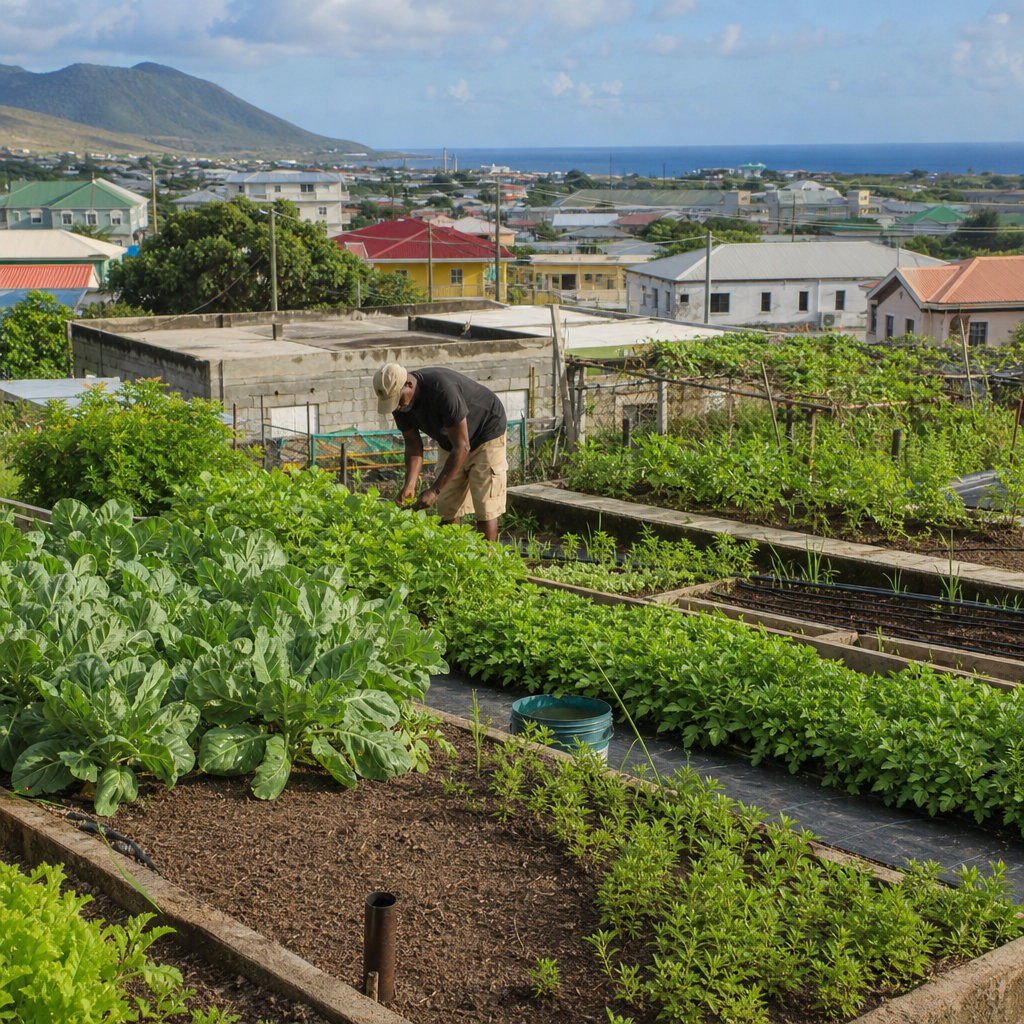
Sustainable urban farming in Saint Kitts is moving from a niche practice to a practical business and investment opportunity because it addresses food security, import dependence, tourism demand, youth employment, and climate resilience at the same time. In this context, urban farming means growing food within or near towns through backyard plots, container gardens, rooftop systems, hydroponics, aquaponics, community farms, and small commercial greenhouses. Sustainability means these systems conserve water, build or protect soil, reduce waste, lower transport emissions, and remain financially viable over time. For Saint Kitts, where arable land is limited, storms can disrupt supply chains, and hotels, restaurants, and households depend heavily on imported produce, urban agriculture has strategic value well beyond hobby gardening.
I have worked with Caribbean agribusiness operators evaluating small-footprint food production, and the lesson is consistent: the best urban farm projects succeed when they are designed as businesses first and gardens second. Saint Kitts offers a useful setting for this approach. Basseterre and surrounding communities create concentrated demand for leafy greens, herbs, peppers, microgreens, eggs, seedlings, and value-added foods that can be produced closer to buyers than conventional rural farms. Investors also have access to a supportive regional conversation around food sovereignty, climate-smart agriculture, renewable energy, and circular waste management. A well-planned urban farming venture can link these priorities into one commercially credible model.
This hub article explains the sustainable urban farming landscape in Saint Kitts, the most viable production models, startup considerations, operating economics, regulatory and infrastructure realities, and the wider ecosystem of suppliers, buyers, and service providers. It also highlights why this subtopic matters within business and investment opportunities. Urban farming is not a replacement for traditional agriculture, and it will not solve every food system challenge. However, it can produce high-value crops efficiently, shorten supply chains, create visible community benefits, and open room for innovation in technology, logistics, training, and agri-tourism. For entrepreneurs, developers, educators, and policymakers, it is one of the clearest miscellaneous opportunity areas now emerging in Saint Kitts.
Why sustainable urban farming fits Saint Kitts
Saint Kitts has structural reasons to explore urban farming seriously. Like many small island states, it imports a large share of its food, especially temperate vegetables, packaged goods, and inputs for hospitality. That dependence exposes businesses and consumers to freight costs, foreign exchange pressures, port delays, and weather-related interruptions. Urban farming reduces part of that risk by placing production near demand centers. A hotel in or near Basseterre that buys basil, lettuce, pak choi, mint, cucumbers, and edible flowers from a local controlled-environment grower is less exposed to shipping disruption than one relying solely on imports.
Climate conditions also support targeted urban production. Saint Kitts has strong sunlight, warm temperatures, and a year-round growing window, but it also faces drought periods, intense rainfall, high winds, and occasional hurricane threats. Sustainable systems work around that reality. Shade houses, insect netting, rainwater capture, drip irrigation, coco coir substrates, and nutrient monitoring can protect yields while reducing water loss. In my experience, Caribbean operators who shift from open-field trial-and-error to measured irrigation and protected cultivation usually improve consistency first, then margins. Consistency matters because chefs, supermarkets, and institutional buyers will pay for reliability more readily than for novelty alone.
There is also a social fit. Urban farming can use vacant lots, underused residential land, school compounds, church grounds, and rooftops that would otherwise generate little economic value. It can employ young people who are interested in technology-enabled agriculture but not in the image of large-scale field labor. It can support nutrition education and local procurement goals at the same time. For Saint Kitts, this matters because business opportunity is strongest when commercial return overlaps with public benefit. Urban farms are visible enterprises. When residents can see food being grown, sold, and reinvested locally, the market gains trust faster.
Business models with the strongest potential
The most investable urban farming ventures in Saint Kitts tend to fall into a handful of models. The first is premium fresh produce for hospitality and retail. This includes hydroponic lettuce, specialty greens, herbs, cherry tomatoes, sweet peppers, and microgreens sold to hotels, restaurants, villas, supermarkets, and health-conscious households. The second is nursery production: seedlings, ornamentals, culinary herb starts, and fruit tree propagation for homeowners and landscapers. The third is integrated circular systems such as composting operations linked to food production, where green waste from households, landscaping firms, or hospitality properties becomes a growing input.
A fourth model is educational and experiential agriculture. A compact farm can generate revenue from workshops, school programs, farm tours, corporate events, and tourist experiences alongside produce sales. This hybrid model is often more resilient than produce-only operations because service revenue cushions agricultural volatility. A fifth model is distributed neighborhood growing supported by a central brand. In that structure, one company manages inputs, training, collection, quality standards, packaging, and sales, while smaller growers produce under contract in backyards or micro-sites. That approach can scale faster than one physical farm and creates a stronger internal linking effect across the subtopic because logistics, training, finance, and technology all connect to it.
High-volume staples are usually less suitable for dense urban settings because margins are thinner and land efficiency matters. Urban farming works best when the crop has one or more of these traits: high value per square foot, frequent harvest cycles, perishability that favors local supply, premium quality potential, or a clear buyer segment. A small greenhouse producing uniform lettuce weekly often outperforms a larger urban plot growing mixed low-value crops without committed buyers. The principle is simple: in Saint Kitts, successful urban agriculture businesses sell freshness, reliability, and proximity, not just produce.
Production systems, costs, and practical tradeoffs
Choosing the right system determines whether a venture can sustain itself. Soil-based raised beds are the lowest-cost entry point and work well for herbs, callaloo, peppers, okra, scallions, and some root crops. They allow compost use and straightforward training, but they require active weed, pest, and runoff management. Container farming offers flexibility on paved or rented spaces, though root-zone temperatures can rise quickly in tropical sun. Hydroponics improves water efficiency and can produce clean leafy greens at commercial consistency, but it requires reliable electricity, nutrient management, sanitation discipline, and backup planning. Aquaponics adds fish production and a compelling circular narrative, yet it is more technically demanding and less forgiving of operator error.
| System | Best Uses in Saint Kitts | Main Advantages | Main Constraints |
|---|---|---|---|
| Raised-bed soil farming | Herbs, peppers, leafy local crops, community projects | Low startup cost, uses compost, easy to train staff | Weeds, pests, soil variability, heavier water use |
| Container growing | Backyards, patios, temporary sites, nursery stock | Flexible layout, scalable, good for renters | Heat stress, frequent irrigation, media replacement |
| Hydroponics | Lettuce, basil, microgreens, premium restaurant supply | High yield, efficient water use, clean presentation | Higher capital cost, technical monitoring, power dependence |
| Protected greenhouse or shade house | Tomatoes, cucumbers, peppers, nursery operations | Weather protection, improved consistency, pest control | Upfront investment, ventilation design, storm preparation |
Cost discipline is critical. In projects I have assessed, founders often underestimate packaging, post-harvest cooling, nutrient replacement, labor for seeding and harvesting, and transport for multiple small deliveries. Those expenses can erase margins if pricing is based only on field-farm assumptions. The strongest operators build simple unit economics before expanding: expected yield per square foot, harvest frequency, spoilage rate, labor hours per crop cycle, average selling price, and buyer payment terms. They also choose one anchor product line. In Saint Kitts, that anchor is often lettuce, basil, microgreens, seedlings, or mixed herb packs because demand is frequent and branding is straightforward.
Markets, partnerships, and investment pathways
Demand is broad enough in Saint Kitts to support several urban farming pathways if products match buyer needs. Hospitality remains the clearest premium market. Hotels and restaurants want clean, uniform, traceable produce delivered on schedule. They also value storytelling. A property that can tell guests its salad greens were grown minutes away has a marketing advantage, especially when sustainability claims are visible and credible. Supermarkets represent a second channel, but they usually require tighter packaging standards, barcoding, and consistent shelf-ready supply. Direct-to-consumer sales through subscription boxes, farmers markets, WhatsApp ordering, and neighborhood delivery can produce stronger margins, though order aggregation and route planning must be efficient.
Institutional markets deserve more attention than they usually receive. Schools, hospitals, corporate cafeterias, and public feeding programs can provide predictable demand for selected crops if procurement rules are workable. Real estate developers are another overlooked partner. Mixed-use developments, apartment complexes, and hospitality projects can integrate rooftop gardens, edible landscaping, compost systems, or resident farm plots as amenities. This creates opportunities for operators who do not want to own land but can manage production and resident engagement. Financially, these ventures may be funded through owner capital, bank lending, impact-oriented investors, supplier credit, grants for climate adaptation, or partnerships with NGOs and education institutions.
Investment decisions should focus on market access, operational capability, and resilience rather than trend appeal. A beautiful greenhouse without sales contracts is speculative. A smaller facility with signed purchase agreements, a trained grower, backup water storage, and straightforward accounting is investable. Saint Kitts also has room for supporting businesses around the core farm: irrigation installation, compost collection, seedling supply, nutrient blending, cold-chain delivery, farm software setup, training services, and branded local produce distribution. That is why sustainable urban farming belongs within a business and investment hub. The opportunity is not only in growing crops; it is in building the service ecosystem around urban food production.
Policy, risk management, and what success looks like
No urban farming strategy works without attention to regulation and risk. Site selection should account for land tenure, water access, drainage, vehicle access, and potential contamination from prior industrial or waste uses. Commercial operators need clarity on business registration, labor obligations, food handling requirements, and any local planning or zoning considerations for structures such as greenhouses, tanks, shade houses, or rooftop systems. If produce is sold to hotels or retailers, record keeping matters. Basic traceability, harvest logs, cleaning protocols, and input records build buyer confidence and protect the business if quality issues arise.
Risk management in Saint Kitts begins with weather and utilities. Water storage, guttering, filtration, and efficient irrigation are essential, not optional. Structures must be designed for high winds, with realistic plans for storm shutdown and crop recovery. Backup power for pumps and cooling can protect valuable inventory. Pest management should prioritize prevention through sanitation, netting, airflow, resistant varieties, and scouting before chemical control. Financially, operators should avoid overbuilding in year one. Start with one or two crops, validate demand, standardize processes, then expand. The most successful urban farms I have seen in island markets share the same pattern: they master repeatable weekly production, maintain disciplined buyer communication, and keep records tight enough to know which crops truly make money.
Sustainable urban farming in Saint Kitts is ultimately a practical local-growth opportunity. It can supply fresher food, reduce some import exposure, create jobs, support tourism differentiation, and turn underused urban spaces into productive assets. The strongest projects choose the right crops, match system design to climate realities, secure buyers early, and manage operations with the rigor of any other business. As this miscellaneous hub expands, readers should explore related topics such as greenhouse investment, hydroponic startup costs, agritourism, compost enterprises, food distribution, and local procurement strategy. If you are evaluating business and investment opportunities in Saint Kitts, put sustainable urban farming on the shortlist and assess it with clear numbers, practical partnerships, and a long-term operating plan.
Frequently Asked Questions
What does sustainable urban farming in Saint Kitts actually include?
Sustainable urban farming in Saint Kitts includes a wide range of food-growing systems located within or close to towns, villages, and built-up communities. In practical terms, that can mean backyard kitchen gardens, raised beds, container gardens on patios, rooftop growing spaces, hydroponic and aquaponic systems, community plots, school gardens, and compact commercial greenhouses that supply nearby households, restaurants, hotels, and markets. The “urban” part refers to proximity to where people live and consume food, while the “sustainable” part means these systems are designed to conserve water, protect soil health, reduce waste, use land efficiently, and remain productive over the long term.
In the Saint Kitts context, sustainability also means adapting food production to local realities. Farmers and entrepreneurs often need methods that work with limited land, variable rainfall, high heat, salt exposure in some coastal areas, and the economic pressure created by imported food. That is why efficient irrigation, composting, rainwater harvesting, integrated pest management, shade control, crop rotation, and protected cultivation are so important. A sustainable urban farm is not simply a small garden in town; it is a system that aims to produce healthy food consistently while lowering environmental impact and improving local resilience.
This model matters because Saint Kitts faces several challenges at once: dependence on imported food, vulnerability to shipping disruptions, climate-related weather risks, and the need for more diverse income opportunities. Urban farming helps respond to those issues by shortening supply chains and creating local production closer to demand centers. It can serve household food needs, support micro-enterprises, or scale into businesses that supply fresh herbs, leafy greens, peppers, tomatoes, specialty crops, eggs, or value-added products. In that sense, sustainable urban farming is both a community development strategy and a business platform.
Why is sustainable urban farming becoming a real business and investment opportunity in Saint Kitts?
Sustainable urban farming is becoming commercially attractive in Saint Kitts because it solves real economic problems while serving growing market demand. The island imports a large share of its food, which creates exposure to freight costs, currency pressure, shipping delays, and external price shocks. When local growers can reliably produce fresh vegetables, herbs, fruits, fish, or seedlings near population centers, they offer a practical substitute for at least part of that import bill. That creates room for viable businesses, especially in product categories where freshness, consistency, and rapid delivery matter.
Tourism is another major driver. Hotels, restaurants, villas, and food-service operators often want fresh, high-quality produce with dependable supply and a local story that appeals to visitors. Sustainable urban farms can meet this demand with shorter harvest-to-table times and customized production. A hydroponic farm can deliver clean leafy greens year-round, a greenhouse can stabilize supply during difficult weather periods, and a community-linked commercial plot can specialize in herbs and premium crops used by chefs. For hospitality buyers, local sourcing can improve menu quality and strengthen sustainability branding. For farmers, that creates a higher-value market than simple commodity sales.
The investment case also improves because urban farming can be modular. A business does not always need a large tract of land to begin. Entrepreneurs can start with containers, vertical systems, a small greenhouse, or a controlled hydroponic setup, then expand as contracts and demand grow. That lowers initial barriers compared with some traditional agricultural models. Investors often look for opportunities with scalable infrastructure, recurring demand, and multiple revenue channels, and urban farming can offer exactly that through fresh produce sales, seedlings, agri-tourism experiences, training services, subscription boxes, farm-to-table partnerships, and value-added products.
Just as important, urban farming aligns with broader development priorities in Saint Kitts, including food security, youth employment, entrepreneurship, climate resilience, and more efficient land use. Businesses that can clearly show they reduce import dependence, use water responsibly, create jobs, and strengthen local supply chains are often better positioned to attract partnerships, public support, private capital, and customer loyalty. That combination of social value and market potential is why sustainable urban farming is shifting from a niche activity into a serious economic opportunity.
Which urban farming methods are most practical and profitable for Saint Kitts?
The most practical and profitable methods in Saint Kitts are usually the ones that match local climate conditions, available space, target market, and management capacity. For households and small entrepreneurs, container gardens, raised beds, and protected backyard plots are often the easiest starting point. They require relatively modest investment, can be installed quickly, and work well for herbs, peppers, leafy greens, seasonings, and short-cycle vegetables. These systems are especially effective when paired with composting, mulching, drip irrigation, and simple pest-control practices that reduce input costs and improve reliability.
For commercial operations, small greenhouses and shade houses are often strong options because they help manage heavy rain, intense sun, wind, and pest pressure. Protected cultivation can improve consistency, reduce crop losses, and support more predictable production for wholesale buyers. This is critical if the goal is to serve restaurants, supermarkets, or hotels that expect uniform quality and regular deliveries. Crops such as lettuce, kale, pak choi, cucumbers, sweet peppers, tomatoes, basil, mint, and microgreens can perform well when production is carefully managed and tied to real market demand.
Hydroponics is particularly promising in Saint Kitts because it uses water efficiently, works in compact spaces, and can produce high yields of premium crops near urban buyers. It is well suited for leafy greens and herbs that are frequently imported but highly valued fresh. Aquaponics can also be attractive, especially for operators interested in combining vegetable production with fish. However, these systems require stronger technical knowledge, consistent monitoring, backup planning for equipment issues, and careful nutrient management. They are not “easy money,” but they can be highly productive when run professionally.
Profitability depends less on the trendiness of the system and more on execution. The best method is usually one that can deliver a specific crop mix at reliable quality, at a cost that makes sense for a defined customer base. In Saint Kitts, many successful models are likely to be mixed systems rather than one single approach: a greenhouse for high-value vegetables, containers for herbs, composting for waste reduction, rainwater harvesting for resilience, and direct relationships with chefs or local retailers for stable sales. In short, practicality and profitability come from matching production technology to market needs, not simply adopting the newest farming format.
How does sustainable urban farming improve food security and climate resilience in Saint Kitts?
Sustainable urban farming improves food security in Saint Kitts by increasing the amount of food that can be produced locally and consumed quickly. Because these farms are close to homes, markets, schools, and restaurants, they reduce dependence on long import chains that can be disrupted by bad weather, rising shipping costs, regional port issues, or international supply shocks. Even if urban farming does not replace all imported food, it can strengthen local availability of highly perishable items such as greens, herbs, tomatoes, and other vegetables that are essential for daily diets and expensive to import consistently.
It also improves resilience by diversifying where food comes from. Instead of relying heavily on a few large sources, the island can benefit from many smaller growing sites spread across communities. Backyard growers, community farms, schools, rooftop systems, and small commercial operators all add capacity to the food system. That distributed model can recover faster after disruptions because losses in one location do not stop all production. It also builds community knowledge around growing food, which is valuable during emergencies and periods of economic uncertainty.
From a climate perspective, sustainable urban farming can reduce environmental stress when done properly. Water-efficient irrigation, hydroponics, mulching, organic matter management, rainwater capture, and protected structures help farms remain productive during dry periods and intense weather shifts. Composting food and yard waste into growing media reduces landfill pressure and returns nutrients to production. Shade houses and greenhouses can protect crops from harsh sun, wind, and heavy rainfall. Integrated pest management can lower dependence on excessive chemical use and support healthier local ecosystems.
There is also a social resilience benefit. Urban farming can create skills, jobs, and supplemental income, especially for young people, households, and small entrepreneurs. Communities that know how to produce some of their own food are generally better equipped to manage external shocks. For Saint Kitts, this matters because climate resilience is not only about infrastructure; it is also about local systems that can adapt, recover, and continue functioning under pressure. Sustainable urban farming contributes directly to that goal by making food production more local, flexible, and resource-conscious.
What should someone consider before starting or investing in an urban farming project in Saint Kitts?
Before starting or investing in an urban farming project in Saint Kitts, the first priority should be understanding the market. A farm should not begin with the question, “What can we grow?” but rather, “Who will buy, how often, at what price, and in what quantity?” The most successful projects usually identify clear customers from the start, such as households, restaurants, supermarkets, hotels, caterers, or specialty health-food buyers. Market research should cover product preferences, seasonal demand, required quality standards, packaging expectations, delivery schedules, and the prices of imported alternatives. Without that information, even technically sound farms can struggle commercially.
The second major