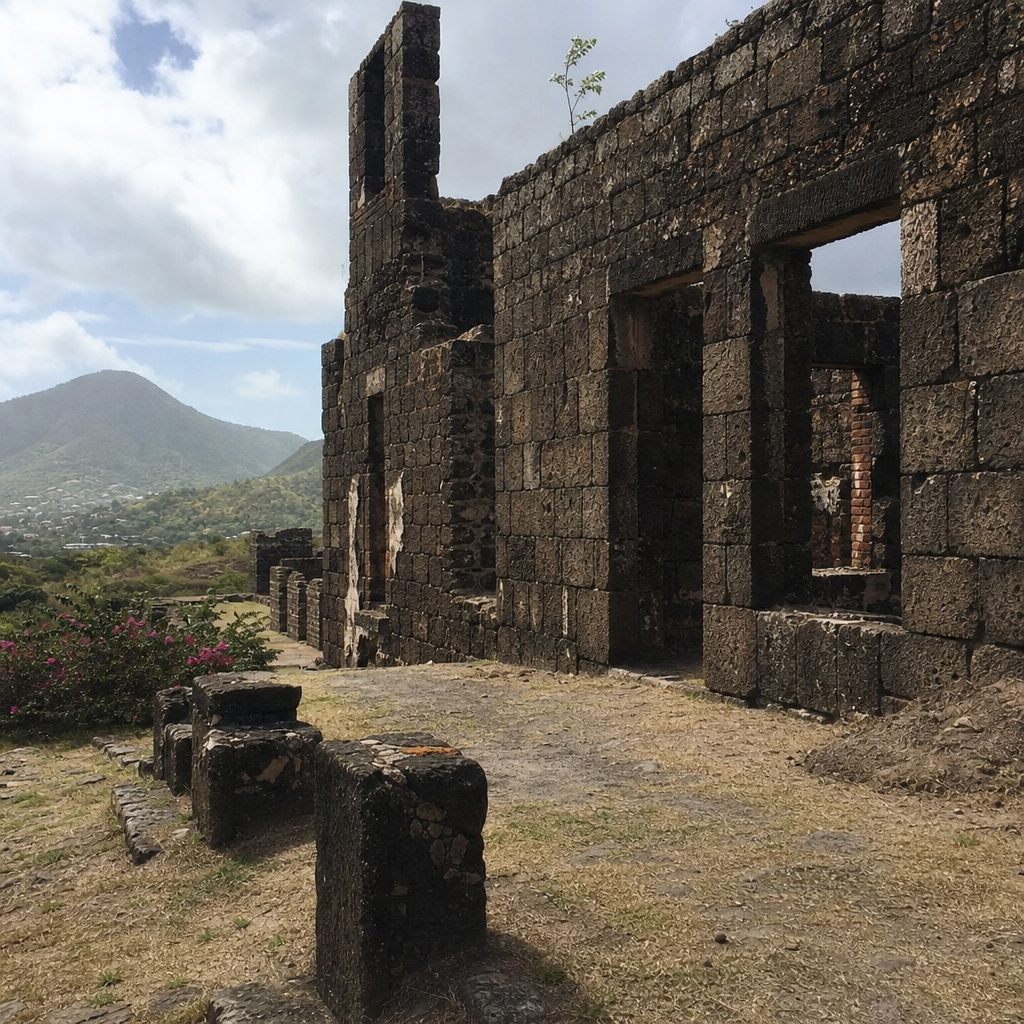
The legacy of slavery in Nevis shapes the island’s landscape, family histories, economy, and cultural memory, making any serious study of Nevisian culture incomplete without understanding how forced labor built the colony and how emancipation changed, but did not erase, old hierarchies. In this context, slavery in Nevis refers to the system of chattel slavery imposed by British colonial rule, under which enslaved Africans and their descendants were legally treated as property and compelled to work primarily on sugar plantations. Legacy means the continuing effects of that system after formal emancipation in 1834 and apprenticeship until 1838, including land inequality, social stratification, migration patterns, language, religion, resistance traditions, and public debates over heritage. I have found that readers often approach this subject through ruined estate houses, church registers, or family surnames, but the deeper story is structural: slavery organized labor, law, trade, punishment, and profit across the island. Nevis matters because, though small, it was deeply tied to the plantation complex that transformed the Caribbean and enriched Britain. Its history illuminates how empire functioned at a local level and how communities carried trauma and resilience forward. This hub article introduces the main themes, answers the core questions, and provides a framework for exploring related topics across Nevis’s broader culture and history.
How Slavery Took Root in Nevis
Nevis became one of Britain’s earliest and most profitable Caribbean colonies in the seventeenth century. English settlement began in the 1620s, and within decades tobacco gave way to sugar, a crop that demanded heavy capital investment, large tracts of land, milling infrastructure, and an abundant labor force. Planters first used indentured Europeans, but sugar’s scale and brutality accelerated the turn to enslaved African labor. By the late seventeenth century, Nevis had developed into a classic plantation society: a small white elite controlled land and political power, while a large enslaved majority produced export wealth under coercion. This shift was not accidental. Sugar generated high returns in European markets, and imperial trade networks, marine insurance, merchant credit, and slave trading companies made the system durable.
On Nevis, estates combined cane fields, boiling houses, curing houses, livestock pens, water systems, and slave villages. Enslaved people cut cane, fed mills, stoked furnaces, built roads, tended provision grounds, cooked, sewed, cared for children, and served in domestic roles. Mortality was high because labor was relentless and diets were constrained. Punishment was embedded in plantation management, enforced through whipping, confinement, branding in some Caribbean contexts, and legal codes designed to suppress autonomy. Surviving records from the Leeward Islands show the administrative coldness of the system: inventories listed human beings alongside mules, coppers, and buildings. That documentary style still shocks modern readers because it reveals slavery not as a vague injustice but as organized accounting.
Nevis also sat within a wider inter-island world. Merchants, enslavers, sailors, free people of color, and enslaved laborers moved among St. Kitts, Antigua, Montserrat, and other colonies. Ideas traveled too, including techniques of resistance, religious practices, and news of war or rebellion. Understanding slavery in Nevis therefore requires seeing both the local plantation and the Atlantic economy. The island’s compact size can mislead visitors into assuming its past was marginal. In fact, small islands were often highly integrated, and Nevis’s sugar economy was central to the wealth and violence of the British Caribbean.
Daily Life, Resistance, and Community Under Enslavement
What was daily life like for enslaved people in Nevis? It was harsh, tightly supervised, and shaped by constant negotiation. Field laborers worked from before sunrise through long tropical days, especially during crop time, when cane had to be processed quickly before sucrose levels declined. Domestic workers had somewhat different duties but remained unfree and vulnerable to exploitation. Enslaved women faced the dual burden of productive and reproductive labor, while children were drawn into work early. Yet plantation records tell only part of the story. Archaeology, oral tradition, and comparative Caribbean research show that enslaved people formed families, cultivated provision grounds, traded in local markets when permitted, maintained African-derived spiritual practices, and created communal support networks that colonial authorities never fully controlled.
Resistance took many forms. The most visible was revolt or escape, but in Nevis, as elsewhere, everyday resistance mattered just as much: work slowdowns, feigned illness, sabotage, covert literacy, preserving naming traditions, and maintaining kinship ties across estates. Marronage was harder on smaller islands than on larger territories with mountainous interiors, yet temporary flight still occurred, and the threat of running away forced planters to devote resources to surveillance. Religion was another complex arena. Anglican institutions supported colonial order, but Methodist and Moravian missions sometimes opened limited spaces for literacy, congregational life, and moral critique, even while missionaries could remain paternalistic. Enslaved people used those spaces selectively, adapting Christianity to their own needs rather than simply receiving it.
The record of resistance in Nevis should not be romanticized; plantation power was real, and punishment could be lethal. Still, no plantation regime achieved total domination. I have seen how estate ruins and archival fragments become more meaningful when read against that reality. A broken mill is not only evidence of sugar technology; it is evidence of labor extracted under threat. A baptism register is not merely a church document; it can also preserve a trace of someone navigating an imposed world. The legacy of slavery in Nevis includes this persistent creativity under oppression, which later fed village life, political activism, and cultural continuity.
Emancipation, Apprenticeship, and the Limits of Freedom
Emancipation in the British Caribbean is often misunderstood as a clean break. In Nevis, as across British colonies, slavery legally ended in 1834, but most formerly enslaved people entered apprenticeship, a transitional labor regime that lasted until 1838. Apprentices were no longer property, yet they were still compelled to work for former enslavers for a set number of hours and remained subject to discipline. In practice, apprenticeship protected plantation interests and slowed genuine freedom. Its abolition in 1838 was a major victory, driven in part by criticism from reformers, missionaries, and formerly enslaved communities themselves. Even then, freedom came without compensation to the emancipated. The British state compensated enslavers for the loss of “property,” reinforcing the economic injustice at slavery’s core.
After emancipation, former plantation owners still controlled most of the land, credit, and export infrastructure. That imbalance defined post-slavery Nevis. Freed people sought wages, tenancy, small plots, and room to build independent households, but plantation economies limited those options. Many had to remain tied to estates through low-paid work, share arrangements, debt, or lack of available land. This is one reason the legacy of slavery is not only about memory; it is also about development. Wealth accumulated through slavery did not vanish in 1838. It influenced who owned productive land, who accessed education, and who held political office well into the modern era.
| Period | What Changed | What Stayed the Same |
|---|---|---|
| Before 1834 | Enslaved Africans and descendants were legally property | Plantation elite dominated land, law, and trade |
| 1834–1838 | Apprenticeship replaced slavery in law | Compulsory labor and estate discipline continued |
| After 1838 | Full legal freedom from apprenticeship | Land inequality, labor dependence, and racial hierarchy persisted |
This transition also affected family strategies. Some freed people moved, searched for relatives, changed surnames, joined churches on new terms, or prioritized schooling for children. Others left the island temporarily or permanently in search of better opportunities. The period reveals both hope and constraint. Freedom was real and hard won, but it unfolded inside a system built to preserve planter advantage.
How Slavery Shaped Land, Class, and the Economy
One of the clearest ways to understand the legacy of slavery in Nevis is to follow the land. Sugar estates were assembled through colonial grants, purchase, consolidation, and the violent displacement of labor onto bounded plantations. Because enslaved people could not legally accumulate secure property under slavery, emancipation began from a profoundly unequal baseline. In Nevis, this translated into a rural economy where estates remained disproportionately influential. When sugar prices fluctuated or the industry declined, the burden fell heavily on laboring people, not on those whose families had already benefited from generations of coerced production.
Class in Nevis cannot be separated from this history. A planter and merchant stratum accumulated wealth, social prestige, and access to imperial networks. Free people of color occupied a complex middle position before emancipation, sometimes owning property and in some cases enslaved people, while still facing racial restrictions. After emancipation, village communities expanded, but mobility remained uneven. Education, migration, remittances, and state employment gradually opened new paths, yet structural inequality had deep roots. Modern patterns of landholding, housing, and local influence still often echo nineteenth-century arrangements.
Tourism adds another layer. Visitors may encounter plantation inns, restored great houses, or scenic estate ruins marketed as heritage attractions. These sites can support economic development and historical awareness, but interpretation matters. When a former estate is presented only as elegant architecture or tropical romance, the labor that made it possible disappears. Good heritage practice names the enslaved workforce, explains sugar production, and situates beauty alongside brutality. The same applies to genealogy and cultural tourism. Family research in Nevis can uncover baptismal entries, estate names, and migration links, but records often reflect the priorities of owners and officials rather than the voices of the enslaved. Reading them critically is essential.
Memory, Culture, and Historical Interpretation in Nevis Today
The legacy of slavery in Nevis survives in language, music, foodways, religious life, and community values, but also in silence. Some families preserve stories of ancestors who worked particular estates, resisted overseers, or acquired small holdings after emancipation. Others know only fragments because slavery disrupted names, kinship lines, and written documentation. That gap is itself part of the inheritance. Across the Caribbean, public history has often favored colonial governors, military events, or elite architecture over enslaved people’s lived experience. Nevis has made progress, yet interpretation remains uneven across museums, historic sites, schools, and tourism materials.
Cultural continuity can be subtle. Market traditions, herbal knowledge, funeral practices, village festivals, and oral storytelling all carry traces of African Caribbean adaptation. At the same time, identity in Nevis is not frozen in the plantation era. Migration to places such as St. Kitts, the United Kingdom, the United States, and the Virgin Islands has layered new influences onto older social forms. That is why a hub article on this miscellaneous branch of culture and history needs breadth. Related topics include plantation archaeology, church records, family names, labor history, emancipation commemorations, colonial law, estate architecture, sugar technology, migration, and heritage tourism. Each reveals a different angle on the same central fact: slavery was foundational, and its consequences did not end when the legal institution ended.
For readers asking how to engage responsibly with this history, start with place-based evidence. Visit estate remains with informed guides. Read local historians alongside Caribbean scholars such as Hilary Beckles, Verene Shepherd, and Richard Sheridan on slavery, economy, and society in the British West Indies. Consult archival collections, but pay attention to what they omit. Ask who created the record, for what purpose, and whose labor or suffering is being flattened into numbers. The most accurate understanding of Nevis comes from combining documents, archaeology, oral history, and lived community knowledge.
Understanding the past of Nevis means confronting slavery as more than a chapter in colonial history; it was the system that shaped the island’s demography, labor patterns, land ownership, and cultural development. The key points are clear. Slavery expanded in Nevis because sugar demanded coercive labor and imperial markets rewarded plantation production. Enslaved people endured severe exploitation but built families, communities, and resistant traditions that outlasted the plantation regime. Emancipation brought legal freedom, yet apprenticeship delayed justice and post-slavery inequality kept many former estates and elites in powerful positions. Those patterns continued to influence class, migration, education, heritage, and memory long after 1838.
This matters today because the island’s historic sites, surnames, villages, and economic structures still carry the imprint of that past. To understand Nevisian culture fully, readers need to connect scenic landscapes with the labor history beneath them and read colonial records with both care and skepticism. As a hub page within culture and history, this article should serve as your starting point for deeper exploration of plantation life, emancipation, genealogy, religion, archaeology, and local heritage interpretation. Continue by exploring related articles, visiting historical sites with critical attention, and asking better questions about whose stories are remembered, whose were erased, and how Nevis continues to live with the legacy of slavery.
Frequently Asked Questions
What does “the legacy of slavery in Nevis” actually mean?
The legacy of slavery in Nevis refers to the long-lasting effects of British colonial slavery on the island’s society, land use, economy, institutions, and cultural identity. In Nevis, slavery was not simply a labor system of the past; it was a foundational structure that helped build the colony itself. Enslaved Africans and their descendants were forced to work primarily on sugar plantations, and their labor generated wealth for plantation owners, merchants, and the wider British Empire. That wealth shaped settlement patterns, estate boundaries, roads, ports, churches, and political power in ways that did not disappear when slavery officially ended.
When people speak about this legacy today, they are also referring to the ways inequality survived emancipation. Formerly enslaved people gained legal freedom, but they did not receive broad access to land, compensation, or equal power. Many old hierarchies remained in place, especially around property ownership and social status. As a result, the aftereffects of slavery continued to influence who controlled resources, whose histories were recorded, and whose voices were marginalized.
The legacy is also deeply personal and cultural. It lives in family histories, oral traditions, place names, community memory, religious practices, foodways, and the resilience of Nevisian people whose ancestors survived profound violence and displacement. Understanding this legacy means recognizing both the brutality of the system and the ways African-descended communities in Nevis preserved identity, built families, and shaped the island’s culture despite oppression.
How did slavery shape the development of Nevis during the colonial period?
Slavery shaped nearly every major aspect of colonial Nevis. The island became part of the British plantation economy, with sugar production at the center of its development. That system required enormous amounts of labor, and enslaved Africans were forced to provide it under harsh and often deadly conditions. Plantations were not isolated workplaces; they were the basic economic and social units of the colony. The wealth produced on estates influenced trade, architecture, infrastructure, and the distribution of political authority across the island.
Because enslaved labor was treated as a source of profit, colonial institutions were built to protect plantation owners and maintain control. Laws, policing, punishment systems, and local governance were designed in large part to defend slavery as a legal and economic order. This meant that race and status became central to how Nevisian society was organized. A small elite benefited from landownership and imperial connections, while the majority of the population lived under severe coercion and surveillance.
Slavery also transformed the physical landscape of Nevis. Plantation estates, sugar works, mills, great houses, and village patterns emerged from that history. Even where structures have vanished, land divisions and settlement patterns can still reflect the plantation era. In this sense, the island’s geography itself bears the imprint of slavery. To study the colonial development of Nevis without centering enslaved labor would be to overlook the human force that made the colony function.
What changed after emancipation in Nevis, and what stayed the same?
Emancipation marked a major legal turning point, but it did not erase the social and economic structures built under slavery. After enslaved people were formally freed in the British Caribbean in the 1830s, they were no longer legally property. That change mattered enormously. It meant the end of chattel slavery as a legal system and opened new possibilities for family autonomy, wage labor, mobility, worship, education, and community life. Formerly enslaved people could make choices that had long been denied to them, even though those choices were still constrained by inequality.
At the same time, many of the core imbalances of plantation society remained intact. Land continued to be concentrated in the hands of elites, and former slaveholders generally retained economic power. In many cases across the British Caribbean, compensation was paid to slave owners rather than to the people who had been enslaved, reinforcing the injustice at the heart of the system. Without broad land redistribution or full economic inclusion, many freed people remained dependent on plantation work or other poorly paid labor.
Social attitudes also changed slowly. Racial hierarchy, class barriers, and colonial control did not vanish overnight. This is why historians often stress that emancipation was a beginning, not a complete break from the past. In Nevis, as elsewhere, freedom brought important gains, but it did not immediately produce equality. Understanding both what changed and what stayed the same is essential to understanding why the effects of slavery continued long after abolition.
How is the history of slavery remembered in Nevis today?
The history of slavery in Nevis is remembered through a combination of historical research, family storytelling, local memory, cultural practice, and the visible remains of the plantation era. For many people, memory is preserved not only in archives or museums but also in the stories passed down through generations. These stories may include family origins, local traditions, accounts of hardship and survival, and memories tied to particular estates, villages, or ancestral communities.
Physical sites also play an important role. Plantation ruins, sugar mills, estate lands, churches, burial grounds, and colonial buildings can serve as reminders of the world slavery created. These places often carry layered meanings. They may be presented as heritage landmarks, but they are also spaces connected to forced labor, punishment, resistance, and endurance. A thoughtful interpretation of these sites requires acknowledging the people whose labor built them, not just the owners who profited from them.
Remembering slavery today also involves difficult but necessary public conversations about justice, identity, and historical truth. In many Caribbean societies, including Nevis, there is growing interest in telling fuller histories that center enslaved and freed people rather than only colonial elites. This includes greater attention to African heritage, resistance, emancipation, and the continuing consequences of colonial exploitation. Honest remembrance is not about dwelling in the past for its own sake; it is about understanding how history shapes the present and why that history still matters.
Why is it important to study slavery when learning about Nevisian culture and society?
It is important because slavery is not a side topic in Nevisian history; it is central to how the island was shaped. Any serious effort to understand Nevisian culture, social structure, or historical development must account for the fact that forced labor under British colonial rule helped create the economic and political foundations of the island. Ignoring slavery would distort the story of Nevis by removing the experiences of the majority population whose labor sustained the colony.
Studying slavery also helps explain the deeper roots of modern issues. Patterns of inequality, land ownership, labor relations, and social status do not emerge out of nowhere. They are often connected to earlier systems of power. By examining slavery and its aftermath, readers can better understand how past injustices influenced later opportunities, institutions, and community life. This makes the study of slavery relevant not only to historians but to anyone interested in identity, citizenship, heritage, or social change in Nevis.
Just as importantly, studying this history honors the lives of the people who endured slavery and contributed fundamentally to Nevisian society. Their experiences should not be treated as a footnote. They are part of the island’s core story. Learning about slavery in Nevis allows for a fuller, more honest understanding of resilience, creativity, resistance, and cultural survival. It deepens appreciation for Nevisian heritage by showing how a people subjected to extreme oppression still shaped the island in lasting and meaningful ways.