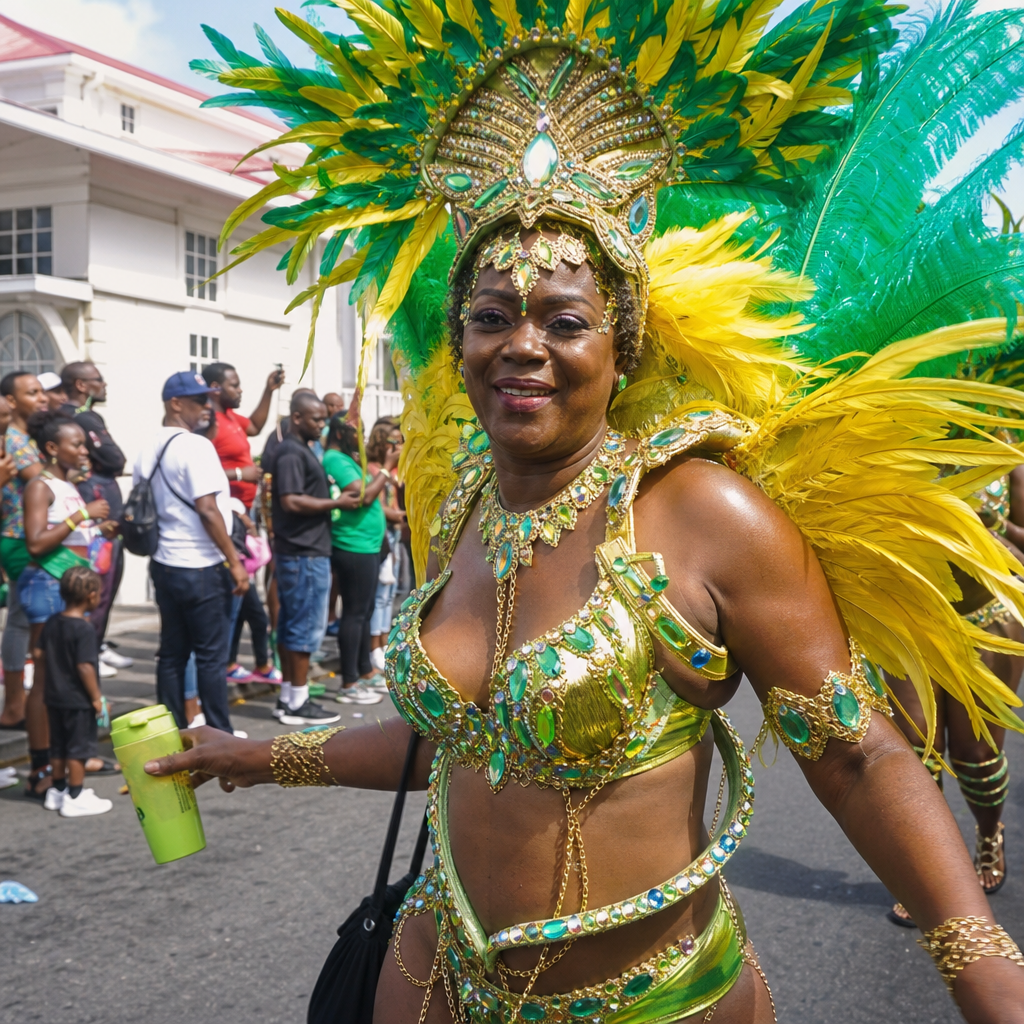
Carnival in Saint Kitts is far more than a festive season of music, costumes, and street parades; it is a living historical record of the island’s struggles, adaptations, and cultural triumphs. In Saint Kitts, carnival refers to the annual national festival now widely known as Sugar Mas, usually staged from Christmas through early January and culminating around New Year celebrations. Historical significance means the deeper social meaning behind the event: how it preserves memory, reflects political and economic change, and gives public form to identity. Having studied Caribbean festival history and worked through archival and oral-history material from the Eastern Caribbean, I have found that Saint Kitts carnival stands out because it merges African-derived performance traditions, European masquerade customs, plantation-era social structures, and modern nation-building into one evolving public ritual. That makes it essential to any serious understanding of Kittitian culture and history.
The importance of carnival in Saint Kitts begins with the island’s colonial past. Saint Kitts, often called the mother colony of the English-speaking Caribbean, was shaped by British and French rivalry, plantation agriculture, and the forced labor of enslaved Africans. Those forces did not remain confined to estates or government records; they entered music, speech, movement, dress, and communal celebration. Carnival became one of the clearest places where ordinary people could reinterpret inherited structures on their own terms. During festival season, satire, performance, and masquerade allowed social commentary that was not always possible in formal political spaces. The festival also gave continuity to community memory. Families, villages, bands, and performers passed down specific roles, rhythms, and costume practices long before cultural policy treated them as heritage. Today, anyone asking what carnival in Saint Kitts means is really asking how history survives in public life, and why a seasonal celebration remains one of the island’s strongest expressions of collective identity.
Colonial roots and the making of a national festival
The origins of carnival in Saint Kitts lie in the contact zone created by empire and plantation society. European settlers brought pre-Lenten masquerade and Christmas festivity customs, including masked balls, elite social gatherings, and processional forms. Enslaved Africans, denied freedom but not creativity, preserved and reshaped performance traditions through drumming, dance, song, mimicry, and masquerade. On plantations across the Caribbean, periods around Christmas often allowed limited relaxation from regular labor routines, and those openings became crucial cultural spaces. In Saint Kitts, as on neighboring islands, festive forms developed under surveillance, pressure, and hierarchy. That context matters because carnival was never simply imported from Europe or retained unchanged from Africa. It emerged through creolization: the making of something new from unequal encounters.
After emancipation in 1834 and full freedom in 1838, formerly enslaved communities could participate more openly in public celebration, though class controls remained strong. Carnival traditions expanded beyond estate boundaries into villages and towns, and performance became a medium for self-representation. This transition is historically significant because it marked a shift from coerced invisibility to public cultural presence. In practical terms, the masks, bands, dance troupes, and street processions associated with Saint Kitts carnival became ways for Black Kittitians to claim space in a society still structured by plantation wealth and colonial administration. Over time, the festival grew from dispersed seasonal customs into an organized national event. The modern name Sugar Mas itself carries historical weight: it references the sugar industry that dominated the island’s economy for centuries, while transforming that legacy into a celebratory and self-aware cultural symbol.
African retention, creole creativity, and signature masquerades
One of the strongest reasons carnival in Saint Kitts matters historically is that it preserves African-derived expressive culture in forms people can still see, hear, and join. The best known example is the Masquerade tradition, often called simply Mas. Kittitian Mas performers are recognized by elaborate costumes, jingling decorations, wirework, ribbons, and highly athletic movement patterns that combine dance, acrobatics, and martial precision. The performance is not random entertainment. It encodes layered inheritances, including West and Central African movement vocabularies, stick-fighting echoes found elsewhere in the Caribbean, and adaptation to local village culture. Scholars of Caribbean performance often point to masquerade traditions as archives of embodied memory, and Saint Kitts offers a clear case.
Other traditional carnival characters reinforce that historical depth. Moko-Jumbies, the towering stilt walkers found across parts of the Caribbean, carry meanings linked to spiritual guardianship and African cosmology, even as they have become popular public spectacles. Clowns in Saint Kitts developed a distinctive style centered on rhythm, color, and coordinated movement. Bull troupes, actors, and comic figures add satire and theatricality. Together, these forms demonstrate that carnival is not one performance but a layered cultural system. I have seen how local audiences respond differently to these traditional characters than to imported party aesthetics; there is recognition, pride, and often a sense that these performers represent continuity with ancestors. That response is historically important. It shows that carnival remains a place where inherited forms are actively interpreted rather than passively displayed.
Carnival as social commentary, resistance, and public voice
Carnival in Saint Kitts has long functioned as a forum for critique. In colonial and postcolonial societies alike, festival performance created room for irony, inversion, and commentary on power. Costumes could parody authority, songs could expose hypocrisy, and road performances could dramatize tensions around class, race, gender, and governance. This does not mean every troupe sets out to make a political statement. It means the festival historically created a public language in which communities could speak about social realities through wit and performance. That role matters in small island societies, where public life is intimate and memory is long.
Calypso is especially important here. Though Saint Kitts shares the calypso tradition with Trinidad and other Caribbean territories, local calypsonians have used the art form to address specifically Kittitian issues, from labor disputes and election tensions to social behavior and national aspirations. A calypso tent or competition is not just entertainment; it is a civic arena. The pointed lyrics, double meanings, and topical references make carnival a seasonal record of what the society is debating. Later developments such as soca brought more emphasis on dance energy and mass participation, yet the older function of commentary never entirely disappeared. When researchers want to understand public feeling in a particular year, carnival music is often one of the richest sources available.
| Element | Historical role in Saint Kitts carnival | Why it still matters |
|---|---|---|
| Masquerade | Preserved African-derived movement, costume symbolism, and village performance traditions | Links modern audiences to ancestral creativity and local identity |
| Calypso | Created a public forum for satire, political criticism, and storytelling | Documents social issues in language people remember |
| Moko-Jumbies | Carried spiritual and protective meanings adapted through Caribbean history | Visible symbol of continuity across generations |
| Street parade | Turned public space into a stage for visibility after emancipation and decolonization | Reaffirms community ownership of national culture |
| Sugar Mas branding | Reframed the sugar economy’s legacy within a national festival | Transforms painful history into reflective cultural memory |
From sugar colony to independent nation: why Sugar Mas carries extra meaning
No explanation of the historical significance of carnival in Saint Kitts is complete without the sugar industry. For centuries, sugar organized land, labor, wealth, and social hierarchy on the island. Enslaved Africans and later wage laborers carried the human cost of an economy that enriched planters and imperial networks. Even after emancipation, sugar continued to dominate the island’s structure, and its effects reached housing, education, migration, and politics. When Saint Kitts embraced the modern festival identity of Sugar Mas, it did something culturally sophisticated: it took the name of the industry that shaped collective suffering and turned it into the label for collective celebration. That does not erase plantation violence. Instead, it reframes historical memory through cultural ownership.
This symbolism became even more powerful after political modernization and independence. Saint Kitts and Nevis achieved independence in 1983, and national institutions increasingly treated carnival as a platform for cultural presentation, tourism, and shared identity. The closure of the state-owned sugar industry in 2005 added another layer. Once sugar ceased to function as the island’s central economic engine, Sugar Mas became an even clearer memorial to the era that had defined Saint Kitts for generations. In this sense, carnival operates like a public history museum without walls. It keeps the language of the past alive while allowing communities to reinterpret what that past means. Festivals elsewhere may celebrate harvests or saints; in Saint Kitts, the very name of the carnival invites reflection on labor, endurance, and transformation.
Community identity, tourism, and the tension between heritage and spectacle
Modern carnival in Saint Kitts also matters because it sits at the meeting point of local identity and international visibility. The festival includes pageants, J’ouvert, band launches, fetes, steelpan, calypso monarch contests, soca competitions, street jams, and traditional performances. These events draw returning nationals, regional visitors, and tourists, creating clear economic benefits for hotels, vendors, transportation providers, designers, musicians, and food businesses. Tourism boards and event promoters understandably market carnival as a vibrant Caribbean experience. That strategy supports jobs and extends Saint Kitts’s cultural reach.
Yet commercialization creates real tradeoffs. Across the Caribbean, festivals can drift toward standardized party imagery that obscures distinctive local traditions. Saint Kitts has faced that pressure too. Large music trucks and contemporary costume bands may capture attention more easily than traditional masquerade or clown troupes, especially on digital platforms. When that happens, heritage forms can be pushed to the margins unless schools, community organizations, cultural officers, and older performers actively transmit them. In my experience, the healthiest carnival ecosystems are the ones that allow both innovation and preservation. Saint Kitts has made meaningful efforts in that direction by keeping competitive platforms for calypso and by showcasing traditional characters alongside newer revelry formats. The historical significance of carnival depends on maintaining that balance. If the festival loses its rooted forms, it becomes easier to market but less valuable as a cultural archive.
Why this festival remains central to culture and history
Carnival in Saint Kitts remains historically significant because it joins memory, performance, and national identity in one recurring event. It preserves traces of African inheritance, records the afterlife of plantation society, and transforms the language of sugar from economic domination into cultural agency. It has served as a public stage for resistance, satire, artistry, and belonging from emancipation through independence and into the present. Few institutions carry so much historical meaning while still attracting children in village troupes, veteran calypsonians, costume makers, musicians, and visitors in the same season.
For readers exploring Saint Kitts under the wider Culture and History topic, carnival is the hub that connects many related subjects: slavery and emancipation, folk performance, music history, nationalism, tourism, community ritual, and the legacy of sugar. To understand the island fully, study the festival not only as entertainment but as evidence. Listen to the lyrics, watch the masqueraders’ footwork, ask why Sugar Mas carries its name, and notice which traditions communities fight to keep alive. That is where the real historical significance lies. If you are building a deeper picture of Kittitian heritage, let carnival be your starting point and then follow its links into every other part of the story.
Frequently Asked Questions
1. Why is Carnival in Saint Kitts considered historically significant rather than just a holiday celebration?
Carnival in Saint Kitts, now widely recognized as Sugar Mas, is historically significant because it functions as a cultural archive as much as a festival. While it is known for lively music, elaborate costumes, pageantry, and street processions, its deeper meaning lies in how it carries the memory of the island’s colonial past, plantation economy, African heritage, and long struggle for cultural self-definition. The celebration emerged in a society shaped by slavery, emancipation, and later social change, so many of its traditions reflect the ways ordinary people preserved identity and community under difficult conditions.
Its significance also comes from the fact that carnival gave generations of Kittitians a public space to express creativity, satire, resilience, and pride. In societies once dominated by rigid social hierarchies, festive performance often became one of the few arenas where power could be challenged symbolically through music, masquerade, humor, and role reversal. In that sense, Carnival in Saint Kitts is not merely entertainment; it is a living expression of historical memory. It shows how people transformed inherited hardship into art, celebration, and national identity. That combination of remembrance and renewal is what makes it historically important.
2. How did slavery, emancipation, and plantation society influence the development of Carnival in Saint Kitts?
The historical roots of Carnival in Saint Kitts cannot be separated from the island’s plantation past. Like much of the Caribbean, Saint Kitts was shaped by a colonial economy built on sugar production and enslaved African labor. Social life was deeply unequal, and cultural expression evolved within that reality. During the colonial era, European festive customs existed alongside African-derived traditions of music, dance, rhythm, costume, and communal performance. Over time, these influences interacted, clashed, and blended, producing forms of celebration that reflected the island’s complex social history.
After emancipation, formerly enslaved people and their descendants gained greater room to celebrate publicly, reinterpret traditions, and make their own cultural imprint more visible. Carnival became one of the clearest examples of this transformation. It offered a way to reclaim space, memory, and voice in a society still marked by economic inequality and colonial attitudes. Festive practices, including masquerade and street performance, often carried hidden layers of meaning connected to freedom, survival, and resistance. Even when not explicitly political, the act of gathering, performing, and celebrating African-Caribbean identity in public had historical weight.
The sugar industry’s importance to the island further shaped the character of the festival, which is one reason the modern celebration is popularly called Sugar Mas. The very name links the event to the economic system that defined Saint Kitts for centuries. Yet the festival does not simply glorify that past. Instead, it reflects how the people of Saint Kitts transformed the symbols of plantation history into expressions of national culture. That is a powerful historical shift: what was once the framework of exploitation became part of a festival through which people assert creativity, continuity, and ownership of their story.
3. What does Sugar Mas reveal about the identity and cultural heritage of Saint Kitts?
Sugar Mas reveals that the identity of Saint Kitts is layered, resilient, and deeply rooted in shared historical experience. The festival is a showcase of the island’s music, language patterns, performance traditions, costume artistry, and communal values. It brings together older folk customs and newer popular forms, showing that Kittitian culture is not static but constantly adapting while still honoring its foundations. This balance between preservation and innovation is one of the clearest signs of a living cultural heritage.
The festival also shows how Saint Kitts understands itself as a society formed through endurance and creativity. Many carnival elements are not random entertainments; they reflect inherited memory. Traditional masquerades, drumming, dance, and performance styles connect the present to African ancestry and Caribbean folk practice. Calypso and related musical traditions give people a platform to comment on social issues, celebrate local heroes, critique leadership, and record public feeling in ways that become part of the historical record. Through these art forms, Sugar Mas preserves not only customs but also the voice of the people.
Just as importantly, Sugar Mas expresses national unity. Although individuals may participate as performers, organizers, vendors, musicians, or spectators, the festival creates a shared public experience that crosses age groups and social backgrounds. It reminds Kittitians at home and abroad of a common heritage tied to memory, place, and community. In that way, the festival is not simply about amusement at the end of the year. It is one of the strongest annual affirmations of what it means to belong to Saint Kitts.
4. In what ways has Carnival in Saint Kitts served as a form of social and political expression?
Carnival in Saint Kitts has long served as more than a colorful public event; it has also worked as a platform for commentary, critique, and collective expression. Across the Caribbean, carnival traditions often allow communities to speak in ways that formal settings do not. In Saint Kitts, music, performance, satire, costume themes, and public pageantry have all helped people respond to social tensions, economic pressures, and political issues. This makes the festival historically important not only as a mirror of society but also as a space where society talks back to itself.
One of the clearest examples is found in performance traditions that use wit, symbolism, and lyrical commentary to address current events. Carnival music can celebrate community achievements, but it can also expose hypocrisy, challenge leaders, and reflect public frustrations. That kind of cultural expression matters historically because it records the emotional and political climate of different eras. Even playful elements of carnival may contain serious messages about class, justice, identity, or national direction.
The public nature of the festival is also significant. When people take to the streets in performance, they are participating in a ritual of visibility. Groups that may once have been marginalized in formal power structures gain a stage, an audience, and a collective voice. Historically, this has made carnival a valuable democratic space in cultural terms. It allows people to remember, to question, and to imagine. For Saint Kitts, that role has helped Carnival remain relevant across generations, not as a relic of the past but as an active part of civic and cultural life.
5. Why is preserving the history of Carnival in Saint Kitts important for future generations?
Preserving the history of Carnival in Saint Kitts is important because the festival contains lessons about who the people of the island are, where they came from, and how they endured change. Without historical understanding, carnival can easily be reduced to spectacle alone. But when future generations learn the deeper meaning behind Sugar Mas, they see that the event is tied to emancipation, cultural survival, artistic innovation, and national development. That knowledge strengthens cultural confidence and helps prevent important traditions from becoming disconnected from their roots.
Preservation also matters because carnival history records voices and experiences that may not always appear fully in official documents. Community memories, folk performances, songs, costume traditions, and annual rituals preserve valuable evidence about everyday life, public sentiment, and changing identity over time. These are essential parts of the historical record. By studying and safeguarding them, Saint Kitts protects more than a festival calendar; it protects an inheritance of meaning.
For younger generations especially, understanding Carnival’s historical significance encourages pride without romanticizing the past. It teaches that many of the island’s most joyful traditions were shaped in response to hardship and social struggle. That perspective builds respect for ancestors, performers, culture bearers, and communities that carried these traditions forward. It also helps ensure that as Sugar Mas evolves, it remains grounded in the historical realities that gave it power in the first place. In short, preserving carnival history is an investment in cultural continuity, national memory, and the future identity of Saint Kitts.