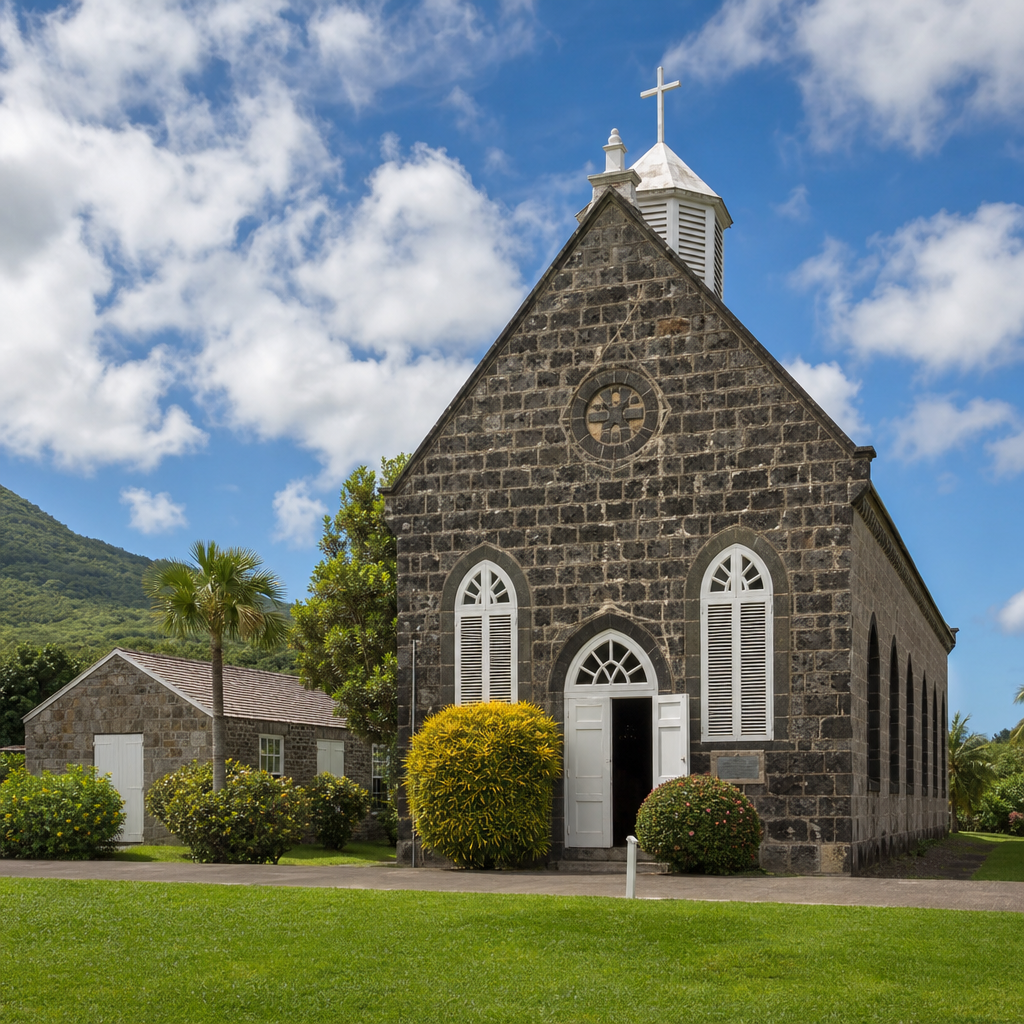
Nevis is small enough to cross in an afternoon, yet its churches hold centuries of Caribbean history within stone walls, timber roofs, weathered graveyards, and parish records. Historical churches of Nevis are more than places of worship; they are sanctuaries of memory that reveal how colonial settlement, African enslavement, emancipation, hurricanes, earthquakes, and modern heritage efforts shaped the island. For anyone exploring Nevis culture and history, these sites form an essential hub because they connect architecture, genealogy, community traditions, education, music, and preservation in one landscape.
When discussing historical churches of Nevis, the term includes Anglican parish churches established during British rule, Methodist and Moravian chapels tied to missionary work, Catholic spaces serving later communities, and surviving ruins that mark vanished plantations and villages. On Nevis, a church often functioned as courthouse annex, registry office, hurricane refuge, and social center. I have found that reading the island through its churches gives a clearer picture than reading dates alone, because each sanctuary shows how people actually lived: who held power, who was excluded, who built with local stone, and who kept congregations alive after disasters.
This matters today for three reasons. First, church buildings are among the island’s most visible historic landmarks, and they anchor heritage tourism beyond beaches and resorts. Second, they preserve documentary evidence such as baptismal registers, marriage records, cemetery inscriptions, and memorial plaques that help families trace Nevisian roots. Third, they remain active community spaces, so preservation is not just about ruins; it is about maintaining living heritage. A useful guide to Nevis churches must therefore cover architecture, history, denominations, local customs, and practical context, while pointing readers toward related culture and history topics across this wider miscellaneous hub.
Why Nevisian churches are central to the island’s story
Nevis was one of Britain’s earliest and wealthiest Caribbean colonies during the sugar era, and churches developed alongside parish administration. Anglican churches in Charlestown, Gingerland, St. John Figtree, and other districts reflected the parish system that organized land, governance, and social life. These buildings were rarely isolated religious monuments. They sat near roads, estates, schools, burial grounds, and markets, making them focal points of everyday life. In practice, if you want to understand settlement patterns on Nevis, start by mapping church locations against old plantation zones and present villages.
The social meaning of these churches is layered. For planters and colonial officials, parish churches represented order, legitimacy, and ties to the British Empire. For enslaved Africans, church history is more complicated. Established churches often reflected the inequalities of plantation society, yet missionary movements gradually created spaces for literacy, communal organization, and later leadership among freed people. After emancipation in 1834, chapels and churches became even more important as places where Nevisians built independent community life. That dual legacy makes church history on Nevis honest, not decorative: it includes faith, coercion, resistance, adaptation, and renewal.
Natural disaster also shaped this story. Caribbean churches routinely faced hurricanes, termites, salt air, and seismic events. Nevis in particular experienced severe earthquake damage in the nineteenth century, and many religious structures were repaired, rebuilt, or relocated over time. As a result, the “age” of a church can be misleading unless you distinguish between the original parish foundation, the present structure, and later restoration campaigns. Heritage interpretation on Nevis works best when it explains these building phases clearly rather than treating every old wall as untouched colonial fabric.
Key churches, ruins, and heritage sites to know
The best-known church landmark is St. Thomas’ Lowland Church, often cited for its striking setting and association with the wedding of Horatio Nelson and Fanny Nisbet in 1787. That connection gives the site international recognition, but its real importance is broader. It illustrates how parish churches linked plantation elites, imperial naval history, and local community identity. Visitors often arrive for the Nelson story and leave with a stronger sense of Nevis’s wider eighteenth-century world, including the island’s role in British Atlantic networks.
In Charlestown, St. Paul’s Anglican Church and related parish spaces represent the urban religious heart of the island. The capital’s churches matter because Charlestown concentrated administration, trade, schooling, and burial activity. Walking the town, you can see how churchyards, civic buildings, and commercial streets developed together. Nearby cemeteries and memorials preserve surnames that recur across Nevisian history, from planter families to clergy, merchants, and local residents whose descendants still live on the island or abroad.
Gingerland, one of the island’s most historically significant districts, contains church sites that speak to both plantation wealth and village continuity. St. George’s parish church and neighboring cemeteries reveal the importance of the interior highlands, where cooler elevations supported settlement patterns distinct from Charlestown. Other churches and chapel remains across St. John Figtree, St. James Windward, and St. Thomas Lowland deepen that picture. Some survive as active sanctuaries; others remain as partial ruins, with boundary walls, headstones, and foundations telling the story.
| Site or area | Why it matters | What to look for |
|---|---|---|
| St. Thomas’ Lowland | Linked to Nelson and Fanny Nisbet; strong parish identity | Historic church fabric, graveyard, marriage association, landscape setting |
| Charlestown churches | Connect religion, governance, and urban development | Memorial plaques, burial records, nearby civic heritage sites |
| Gingerland parish sites | Show inland settlement and long community continuity | Older graves, rebuilt structures, links to estate history |
| Village chapels and ruins | Reflect post-emancipation worship and local resilience | Modest architecture, oral history, adaptive reuse or partial remains |
This hub approach matters because “miscellaneous” church heritage on Nevis is not one monument. It is a network of sites that should be read together: major parish churches, lesser-known chapels, church schools, graveyards, roadside ruins, and archives. Travelers, students, and family historians benefit most when they treat the island as a connected historical landscape rather than chasing one famous building.
Architecture, materials, and what the buildings reveal
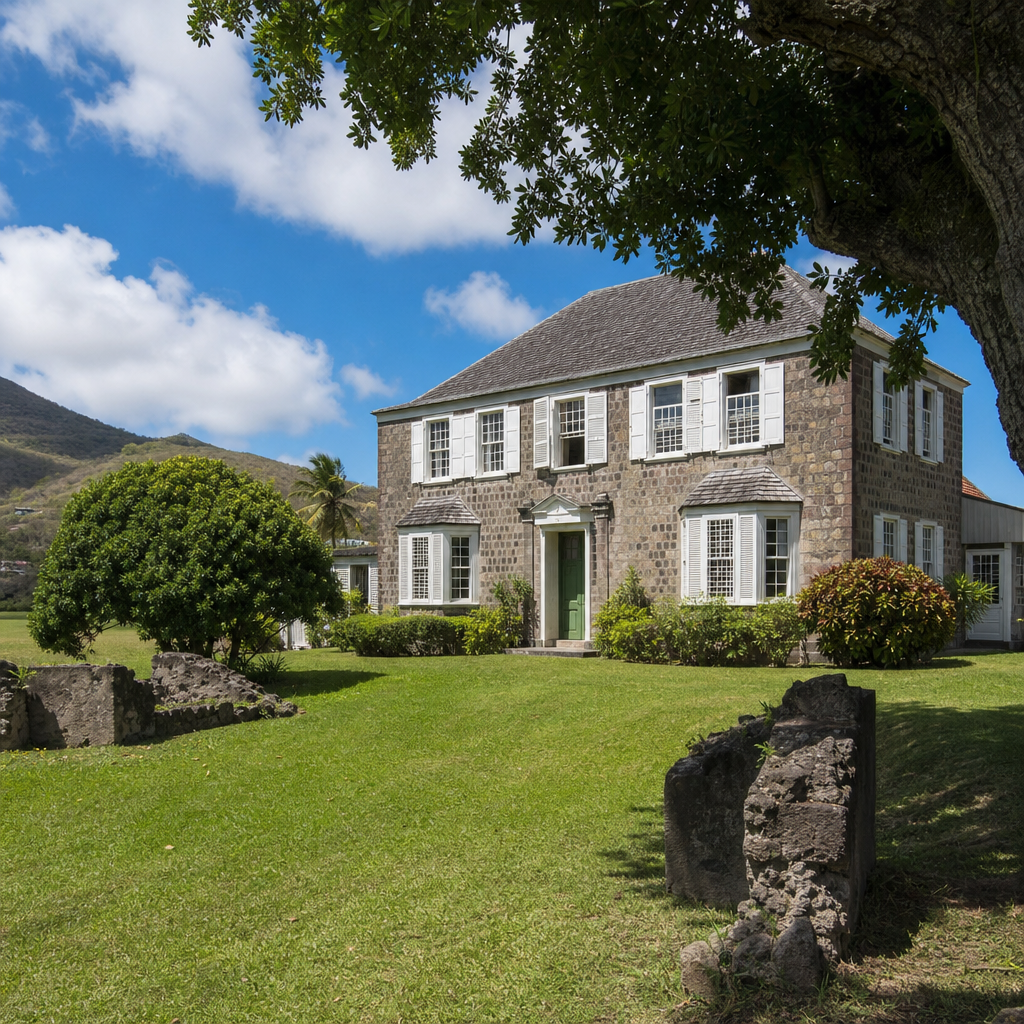
Historical church architecture on Nevis is practical, climatic, and adaptive. Stone walls, timber framing, shuttered windows, steep roofs, and elevated sites were not aesthetic accidents. Builders responded to heat, rain, wind, and available materials. Coral stone, volcanic stone, lime mortar, imported hardware, and local timber all appear in Nevisian church construction. When repairs followed storms or earthquakes, replacement materials often changed the look of a building, which is why close observation matters. A single church may combine eighteenth-century masonry, nineteenth-century roof work, and twentieth-century concrete reinforcement.
Inside these churches, the details are often as revealing as the facades. Memorial tablets can identify donors, rectors, military officers, and prominent families. Pew layouts may indicate older social hierarchies. Fonts, communion rails, bells, and floor slabs show how liturgical practice changed over time. In some churches, later additions such as electric lighting or hurricane straps are visible reminders that preservation is always negotiated between historic character and present use. From experience, the most informative visit is not the quickest photo stop; it is the one where you read plaques, inspect masonry joints, and ask who carried out repairs after major storms.
Churchyards are equally important sources. Tombstone inscriptions provide dates, occupations, family connections, and evidence of epidemics or infant mortality. Weathering can make older inscriptions hard to read, but even fragmentary stones show burial customs, imported funerary styles, and local carving traditions. On Nevis, graveyards also underscore social gaps, because the most durable markers usually belong to people with resources. Researchers should therefore pair cemetery evidence with parish registers and oral history to avoid mistaking survival of stone for a complete record of the past.
Faith, community life, and the legacy of emancipation
To understand why historical churches of Nevis still matter, look beyond architecture to community life. Churches hosted Sunday worship, feast days, choirs, youth instruction, charity efforts, and public announcements. In many villages, the church calendar helped organize the year. Bells marked time, weddings created social alliances, funerals reinforced kinship networks, and holiday services blended formal liturgy with local music and food traditions. Even residents who were not regular worshippers often experienced church spaces as central public institutions.
After emancipation, churches and chapels became especially significant for education and social mobility. Mission schools connected to denominations taught reading, writing, scripture, and practical discipline, creating pathways that extended far beyond religion. Across the British Caribbean, nonconformist denominations such as Methodists and Moravians often played major roles in reaching formerly enslaved communities, and Nevis followed that regional pattern. The result was not uniform harmony; denominational competition, class distinctions, and colonial paternalism all remained. Still, churches helped create literate communities able to organize around family, land, and civic aspiration.
Music is another overlooked part of this history. Hymn singing, choir traditions, organ accompaniment where available, and later gospel influences shaped the soundscape of Nevisian worship. Many elders remember churches not first as buildings, but as voices: Christmas services, Easter processions, harvest thanksgiving decorations, and funerals where the whole village turned out. That living memory explains why preservation debates can become emotional. When a roof fails or records deteriorate, communities do not see only material loss; they see the weakening of a place that carried births, marriages, mourning, and collective identity across generations.
Research, preservation, and how to explore respectfully
Anyone using this miscellaneous hub to plan deeper research should think in layers. Start with site visits, then add archives, oral testimony, and regional context. Parish registers can help with genealogy, but access may depend on church custody, diocesan arrangements, or government archives. Cemetery surveys are useful, though tropical wear means inscriptions should be photographed under angled light and cross-checked against written records. Historical maps, estate papers, and old travel accounts can clarify when a church was founded, rebuilt, or damaged. On the ground, local historians, clergy, and long-standing congregants are often the best guides because they can explain what changed within living memory.
Preservation on Nevis faces familiar Caribbean challenges: limited funding, a harsh marine climate, seismic risk, invasive vegetation, and the need to keep active churches functional. Good conservation is not simply repainting old walls. It requires condition assessments, compatible lime-based repairs where appropriate, drainage control, termite management, careful roof maintenance, and documentation before alteration. Standards used internationally by organizations such as UNESCO and ICOMOS are helpful reference points, but successful preservation on Nevis must also respect local building knowledge, volunteer capacity, and congregational priorities.
Visitors can help by approaching these sites as living heritage. Dress modestly when services are in progress, ask before photographing interiors or graves, avoid stepping on tomb slabs, and support local guides or heritage programs where possible. If you are building a broader itinerary, connect church visits with museums, plantation remains, Charlestown heritage walks, and family history research. That is the real value of this hub page within Nevis culture and history: it gives you a framework for exploring many related articles and sites without isolating churches from the island’s wider historical landscape.
Historical churches of Nevis remain among the clearest windows into the island’s past because they gather so many strands of history in one place. They show colonial administration, plantation wealth, missionary expansion, emancipation, disaster recovery, craftsmanship, music, education, and family memory. They also remind us that heritage is not frozen. A church can be an eighteenth-century site, a nineteenth-century rebuild, a twentieth-century repair project, and a twenty-first-century community anchor all at once. That layered reality is exactly what makes Nevis so compelling to study and visit.
For readers using this article as a hub under culture and history, the key takeaway is simple: do not treat Nevisian churches as isolated tourist stops. Read them as connected evidence. Compare parishes, examine graveyards, ask about denominations, notice repairs, and link every sanctuary to the village, estate, or town around it. Doing that turns a short visit into a serious understanding of Nevis. It also helps explain why local people continue to care deeply about preserving these buildings, even when restoration is costly and slow.
If you plan to explore Nevis further, use these churches as your starting map. Visit the best-known sanctuaries, seek out lesser-known chapels and ruins, and follow the records, stories, and landscapes that radiate from them. The more closely you look, the more clearly Nevis reveals itself.
Frequently Asked Questions
Why are the historical churches of Nevis so important to understanding the island’s past?
The historical churches of Nevis are important because they preserve the island’s story in a way few other places can. Within their stonework, wooden interiors, burial grounds, and parish archives, visitors can trace the development of Nevis from an early colonial settlement into a society shaped by plantation wealth, forced labor, emancipation, natural disaster, and cultural resilience. These churches were not only religious centers; they were also community landmarks where baptisms, marriages, funerals, and major public events were recorded, making them key sources for understanding daily life across generations.
They also reveal the social structure of earlier Nevis. During the colonial era, churches often stood at the center of parish life, closely tied to local governance and plantation society. At the same time, they existed within the harsh realities of African enslavement and inequality, which makes them powerful historical sites rather than simply beautiful old buildings. Their graveyards, memorial tablets, and registers can provide clues about prominent families, clergy, laborers, and shifting populations. For travelers and history enthusiasts, these sanctuaries offer a uniquely concentrated view of Nevisian history, where architecture, faith, memory, and the broader Caribbean experience come together in one place.
What architectural features make Nevis’s historic churches distinctive?
Nevis’s historic churches stand out for their blend of European ecclesiastical design and practical Caribbean adaptation. Many were originally built with sturdy stone walls to withstand the tropical climate and the passage of time, while their timber roofs, shutters, and interior details reflect both local building traditions and the realities of island construction. The result is architecture that often feels modest in scale yet deeply atmospheric, with weathered masonry, simple bell towers, arched windows, and graveyards that seem inseparable from the landscape.
What makes these churches especially distinctive is that their architecture tells a survival story. Over the centuries, Nevis has faced hurricanes, earthquakes, humidity, salt air, and periods of economic change, all of which have affected how churches were built, repaired, and restored. In many cases, the buildings visitors see today are the result of repeated rebuilding or careful preservation rather than untouched originals. Signs of wear, replacement materials, and altered layouts are part of their authenticity. Instead of polished monuments frozen in time, Nevis’s historic churches often feel lived-in and resilient, reflecting centuries of adaptation by congregations determined to preserve sacred and communal spaces in a challenging island environment.
How do these churches reflect the history of slavery, emancipation, and community life on Nevis?
The churches of Nevis reflect the history of slavery and emancipation by showing how religion operated within a deeply unequal colonial society while also becoming part of the island’s longer story of endurance and transformation. During the plantation era, churches existed in a world shaped by forced African labor and European control. Parish records, memorials, and burial sites can reveal the presence of slaveholding families and colonial officials, but they also point historians toward the lives, identities, and transitions of the broader population, including enslaved and later freed people whose experiences shaped Nevis in fundamental ways.
After emancipation, churches often took on an even stronger role in community life. They became places where education, mutual support, social organization, and intergenerational memory could take root more visibly. Weddings, christenings, funerals, feast days, and parish gatherings helped bind villages and families together, especially in a small island society where institutions were deeply interconnected. For modern visitors, this means the churches should be understood not only as colonial relics but also as evolving community spaces. Their significance lies in both what they reveal about injustice and what they demonstrate about survival, faith, and the ability of Nevisian communities to reshape inherited structures into places of belonging and memory.
What can visitors expect when exploring historical churches and churchyards on Nevis?
Visitors exploring historical churches on Nevis can expect an experience that is quiet, reflective, and rich in detail rather than crowded or heavily commercialized. Because Nevis is small and retains a strong sense of place, many church visits feel personal and close to the rhythms of local life. A visitor may encounter old stone walls softened by age, wooden pews and high timber ceilings, plaques commemorating past residents, and churchyards with weathered headstones that open a window into centuries of family history. Even when the buildings are modest, the atmosphere is often powerful because so much of the island’s story is concentrated in these spaces.
Churchyards are especially rewarding for those interested in heritage. Inscriptions can reveal names, dates, social standing, migration patterns, and moments of loss linked to disease, storms, or historical upheaval. Visitors should also be prepared to approach these sites respectfully, as many remain active places of worship and remembrance rather than museum pieces. It is wise to dress appropriately, ask permission where needed, and allow time to absorb the setting instead of rushing through. For anyone interested in Nevis culture and history, visiting these churches offers more than sightseeing; it provides a grounded way to connect with the island’s human story through architecture, landscape, and memory.
Are Nevis’s historic churches being preserved, and why does preservation matter?
Yes, preservation matters greatly, and many of Nevis’s historic churches benefit from ongoing care by congregations, heritage advocates, local communities, and restoration-minded supporters. These buildings are vulnerable to the same conditions that have challenged them for centuries: hurricanes, earthquakes, erosion, moisture, insects, and the general wear that comes with age. Preservation can involve structural repairs, roof replacement, stone conservation, documentation of burial grounds, protection of parish records, and sensitive restoration that maintains historical character while keeping the buildings usable. On an island where history is deeply tied to place, protecting these churches is essential to protecting the wider cultural landscape.
The value of preservation goes beyond saving attractive old buildings. Historic churches hold evidence of how Nevis developed socially, spiritually, and economically, and once damaged or lost, that evidence cannot be fully recreated. Their registers and monuments can support genealogical research, their architecture can inform studies of Caribbean adaptation and colonial design, and their continued use keeps history connected to living communities rather than isolating it in textbooks. Preservation also supports cultural tourism in a meaningful way by giving visitors access to authentic sites that deepen understanding of the island. In that sense, safeguarding Nevis’s historical churches helps ensure that future generations can continue to read the island’s past in the very spaces where it unfolded.