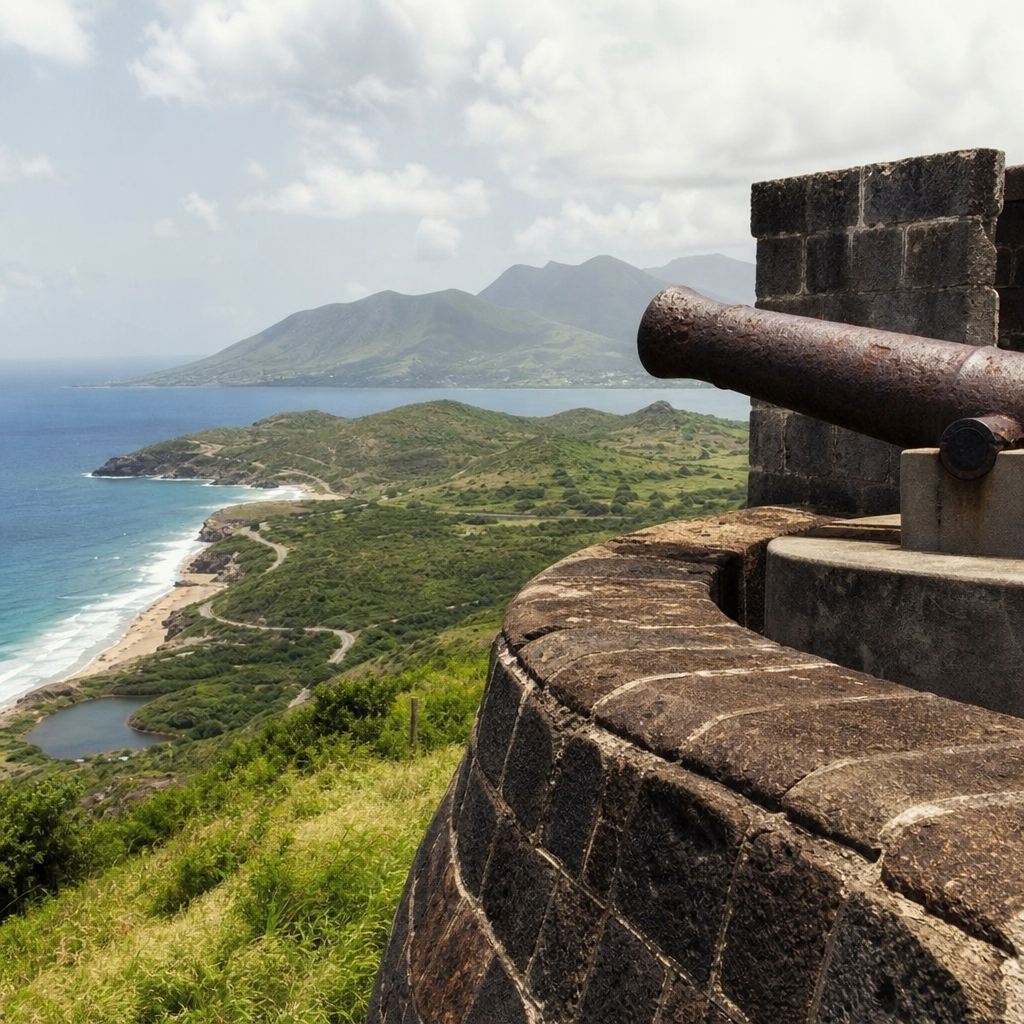
Nevis’ Revolutionary Era reshaped the island’s politics, economy, and social identity, linking a small Caribbean colony to the sweeping Atlantic upheavals of the late eighteenth and early nineteenth centuries. In this context, “revolutionary era” refers not to a single local rebellion alone, but to the interconnected age of the American Revolution, the French Revolution, the Haitian Revolution, and the subsequent struggles over slavery, imperial power, and constitutional rule. On Nevis, these forces were felt through trade disruption, military anxiety, political debate, shifting labor systems, and the growing challenge to plantation society. The island’s experience matters because it shows how global ideas about liberty and sovereignty collided with the realities of sugar, enslavement, and imperial competition. Having worked through plantation records, legislative correspondence, and regional histories, I have found that Nevis is often treated as a footnote to larger islands, yet its story offers a precise view of how revolutionary change reached smaller British Caribbean colonies. For readers exploring Culture and History, this hub on Miscellaneous themes ties together military history, slavery, religion, law, migration, and memory. Understanding Nevis during this era clarifies why the island developed distinctive institutions, why emancipation had uneven effects, and why historical memory in Nevis still reflects tensions between elite colonial narratives and the lived experiences of enslaved and free people.
Atlantic revolutions and Nevis’ strategic setting
Nevis was deeply embedded in the Atlantic world long before revolutionary rhetoric arrived. By the eighteenth century, the island was a mature sugar colony within the British Empire, with wealth concentrated in estates worked by enslaved Africans and their descendants. Its port activity connected it to St. Kitts, Antigua, Montserrat, London, Bristol, and North American markets. Because sugar islands depended on imported food, livestock, lumber, and credit, events in continental colonies and European capitals had immediate effects on local survival. During the American Revolution, for example, British Caribbean colonies lost dependable North American supplies while facing naval warfare and privateering. That was not an abstract imperial problem; it meant shortages, higher insurance rates, rising prices, and uncertainty for planters and merchants on Nevis.
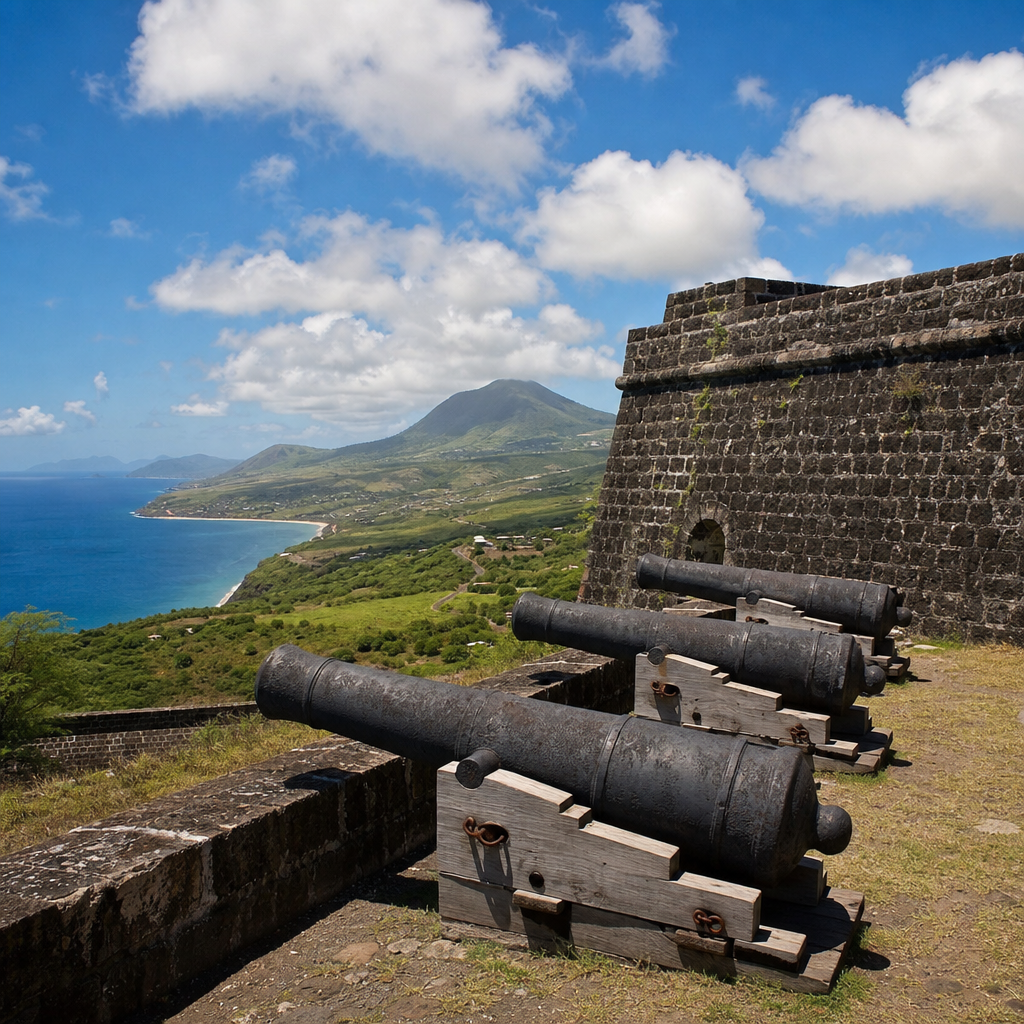
Nevis’ location in the Leeward Islands also made it strategically exposed. The island stood near imperial fault lines contested by Britain and France, and any conflict in the eastern Caribbean threatened local security. Colonial assemblies and governors had to think in military terms: fortifications, militia readiness, harbor defense, and surveillance of both enemy ships and potentially rebellious enslaved populations. In practice, external war and internal control were linked. Whenever French power expanded or revolutionary language circulated, white elites feared invasion from abroad and insurrection from within. Those fears shaped legislation, policing, and everyday plantation discipline.
The French and Haitian revolutions intensified this climate. News traveled through sailors, newspapers, merchants, soldiers, and refugees. Even when officials tried to suppress dangerous ideas, information crossed the sea quickly. Liberty, equality, republicanism, abolition, and Black self-emancipation were discussed across the Caribbean, though often in fragmented or distorted forms. On Nevis, white planters interpreted these developments through the lens of risk. Free people of color, enslaved laborers, mariners, and artisans saw something else: proof that empires were not invincible and that social hierarchies could be challenged.
Plantation society under strain
To understand outcomes in Nevis, it is essential to define the social order before major change took hold. The island’s economy was built on sugar monoculture, supported by enslaved field gangs, skilled workers, domestic laborers, and estate managers. This system generated profit, but it was structurally fragile. Soil exhaustion, hurricane damage, market fluctuations, debt, and war repeatedly destabilized plantation management. Many estates were heavily mortgaged, and absentee ownership weakened local resilience. In prosperous years, sugar wealth concealed these vulnerabilities. In crisis years, they became obvious.
Revolutionary pressures exposed those weaknesses. Wartime disruptions raised shipping costs and cut off markets. Insurance became more expensive. Credit tightened. Some planters struggled to maintain equipment, replace livestock, or buy imported provisions. When food prices rose, enslaved communities bore the burden first, often through reduced rations or harsher demands to cultivate provision grounds. I have seen this pattern across Leeward plantation accounts: the financial language of “economy” on the estate usually translated into intensified labor and deprivation below it.
Social strain also widened divisions within the white population. Large planters, small proprietors, merchants, attorneys, and officials did not always share the same interests. Debates over taxation, defense spending, imperial regulation, and trade policy could be sharp. Meanwhile, free people of color occupied an uneasy intermediate position. Some accumulated property, practiced trades, or served in militia roles, yet legal discrimination remained significant. The revolutionary era sharpened these contradictions. An island that depended on rigid hierarchy was being forced to confront a wider Atlantic discourse that questioned inherited authority.
Demography magnified the tension. Like many sugar colonies, Nevis had an overwhelming enslaved majority. That fact shaped every official response to unrest. Planters knew they governed through coercion, not consent. As a result, even rumor could trigger new restrictions on movement, assembly, manumission, and communication. The revolutionary era did not create fear in Nevis; it intensified a preexisting fear embedded in slave society itself.
How outside revolutions changed local policy
External revolutions influenced Nevis less through direct constitutional transformation than through a chain of practical responses. The American Revolution altered trade networks and showed that colonial dependence on metropolitan power could be contested. The French Revolution introduced the language of universal rights, but in the eastern Caribbean it also brought military instability and fears of republican contagion. The Haitian Revolution had the deepest psychological impact because it demonstrated that enslaved people could overthrow plantation slavery, defeat European armies, and establish a Black-led state.
On Nevis, authorities responded with tighter security and closer imperial coordination. Governors across the British Caribbean strengthened intelligence gathering, monitored shipping, and restricted the circulation of suspect persons and publications. Militia preparedness became a standing concern. In many islands, including those in the Leewards, laws governing enslaved people were reviewed and often reinforced. These measures sought to preserve order, yet they also confirmed that the old order was vulnerable.
The influence extended beyond repression. British policymakers increasingly understood that Caribbean colonies could not be managed solely through planter interests. The late eighteenth and early nineteenth centuries saw stronger metropolitan intervention in questions of trade, defense, and eventually slavery. Debates in Parliament, pressure from abolitionists, and missionary testimony all weakened the claim that colonial assemblies should have near-total authority over labor and discipline. For Nevis, that meant local elites gradually operated within a narrower political field. They retained power, but they no longer controlled the terms of imperial debate as completely as before.
| Atlantic event | Main influence on Nevis | Local outcome |
|---|---|---|
| American Revolution | Trade disruption and supply shortages | Higher costs, food insecurity, commercial anxiety |
| French Revolution | War risk and spread of radical political ideas | Security measures, militia vigilance, censorship concerns |
| Haitian Revolution | Proof that slavery could be overthrown by force | Intensified surveillance and fear of insurrection |
| British abolition campaign | Metropolitan scrutiny of slave systems | Pressure for reform, legal transition toward emancipation |
Enslaved resistance, rumor, and the politics of fear
One of the most important miscellaneous themes in Nevis’ revolutionary era is the role of resistance outside formal battles or famous declarations. Resistance took many forms: work slowdowns, theft, sabotage, flight, maintenance of independent cultural networks, and the spread of political rumor. In plantation societies, rumor was not trivial. It carried news of war, emancipation decrees, troop landings, royal orders, or imagined freedoms. Officials dismissed many reports as dangerous falsehoods, but rumor often reflected rational interpretation by people excluded from formal channels of information.
Nevis’ enslaved population lived within a regional communication system. Sailors, dockworkers, market women, domestic servants, and inter-island travelers moved information across colonial boundaries. The Haitian Revolution especially energized this informal network. Even when exact details were unclear, the central message was unmistakable: enslaved people elsewhere had fought and altered history. That possibility unsettled planters because it changed the horizon of expectation on every estate.
At the same time, historians must be careful not to impose dramatic narratives where evidence is thin. Nevis did not produce a revolution on the scale of Saint-Domingue. The surviving record, much of it written by officials and planters, is uneven and self-serving. Yet absence of large-scale revolt does not equal social peace. In my experience, smaller colonies often preserved stronger coercive routines precisely because authorities understood how precarious their position was. Everyday resistance and the fear of coordinated resistance were part of the island’s political reality.
Religion also intersected with resistance. Missionary activity, particularly from Protestant groups, could alarm slaveholders who worried that literacy, congregational life, and moral claims about human equality would erode discipline. Missionaries were not revolutionaries in a simple sense, but they often documented cruelty and advanced ideas about marriage, family stability, and spiritual worth that challenged planter assumptions. On Nevis, as elsewhere, such changes accumulated slowly but significantly.
From abolition of the slave trade to emancipation
The abolition of the British slave trade in 1807 marked a turning point, though not an immediate end to plantation exploitation. For Nevis, the ban reduced legal access to imported captives and increased pressure to sustain the existing enslaved labor force through reproduction and stricter managerial control. Planters sometimes presented this as humanitarian improvement, but the reality was mixed. Better preservation of labor could mean marginally improved provisioning in some places, yet it also meant closer surveillance of women, children, health, and productivity. Economic logic remained dominant.
The path from ending the slave trade to ending slavery itself was shaped by metropolitan politics. Abolitionists such as William Wilberforce, Thomas Clarkson, and allied religious networks gathered evidence, mobilized petitions, and reframed slavery as a moral crisis for the British state. Caribbean assemblies resisted, arguing that emancipation would destroy property rights and social order. Nevis’ planter class broadly shared those concerns. They feared labor withdrawal, declining sugar output, and revenge from the formerly enslaved.
When emancipation arrived in the British Empire in 1834, it came with apprenticeship, a transitional labor regime that preserved many coercive features until full freedom in 1838. In practical terms, apprenticeship required formerly enslaved people to continue unpaid labor for part of the week while maintaining subordination to estate authority. Across the Caribbean, it was deeply unpopular. On Nevis, as on neighboring islands, apprenticeship exposed the limits of reform from above. Freedom delayed was understood as freedom denied.
The post-1838 outcome was neither social equality nor economic independence. Formerly enslaved Nevisians gained legal freedom, family autonomy, and greater mobility, but land access remained limited and plantation influence endured. Wages were low, opportunities constrained, and colonial institutions still favored property holders. Even so, emancipation transformed the island irrevocably. It ended the legal foundation of human ownership and opened space for new religious communities, village life, education efforts, migration strategies, and political claims.
Long-term outcomes for culture, politics, and historical memory
The most lasting outcomes of Nevis’ revolutionary era can be grouped into three areas: institutional change, cultural adaptation, and memory. Institutionally, the period strengthened imperial oversight while weakening the absolute confidence of local planter rule. Colonial governance after emancipation relied more heavily on administrative regulation, policing, and negotiated labor control than on inherited assumptions of unquestioned mastery. Over time, this contributed to broader constitutional developments in the Leeward Islands and to later debates about federation, local representation, and citizenship.
Culturally, the era deepened creolization rather than interrupting it. African-derived practices, Christian worship, language patterns, foodways, kinship strategies, and market exchange all evolved under pressure but did not disappear. Emancipation allowed some traditions to become more visible in public life, though always within economic constraints. Nevisian identity today still carries traces of that transition: reverence for endurance, skepticism toward elite authority, and strong local memory tied to estates, villages, churches, and family lines.
Historical memory remains contested. Older narratives often emphasized governors, military defense, and planter achievement, while minimizing enslaved agency. More recent scholarship and public history initiatives shift the focus toward labor, resistance, and the social worlds built by Black Nevisians under and after slavery. That shift matters for a hub article on Miscellaneous topics because many related subjects branch from it: genealogy, architecture, oral tradition, burial grounds, maritime movement, natural disasters, and heritage tourism all intersect with the revolutionary era. A plantation ruin is not only an architectural site; it is evidence of Atlantic capitalism, coerced labor, environmental change, and contested remembrance.
Nevis’ Revolutionary Era was therefore not a brief episode but a transformative period in which global revolutions tested the island’s colonial order and produced consequences that lasted well beyond emancipation. The key influences were Atlantic warfare, radical political ideas, Black revolution in Haiti, imperial reform, and abolitionist pressure. The key outcomes were tighter colonial security, economic strain on sugar society, the gradual erosion of planter autonomy, emancipation, and a new social landscape shaped by free but constrained communities. For anyone exploring Nevis under Culture and History, this topic serves as a hub because it connects military events, slavery, religion, law, migration, and memory into one coherent story. The central lesson is clear: even a small island was never peripheral to the age of revolution; it was one of the places where the era’s biggest arguments were lived in daily reality. Continue through the related articles in this section to trace those connections in greater detail and to see how Nevis’ past still informs its cultural identity today.
Frequently Asked Questions
What does “Nevis’ Revolutionary Era” actually refer to?
In the case of Nevis, the “Revolutionary Era” does not describe one isolated uprising on the island. Instead, it refers to a broader historical period in which Nevis was deeply affected by the major Atlantic revolutions of the late eighteenth and early nineteenth centuries. These included the American Revolution, the French Revolution, and the Haitian Revolution, along with the wider struggles over slavery, colonial authority, trade, military security, and constitutional government. Although Nevis was a small British Caribbean colony, it was tied into these events through commerce, imperial policy, plantation agriculture, and the constant movement of people, news, and ideas across the Atlantic world.
This era mattered because events elsewhere directly influenced local life on Nevis. Changes in imperial trade disrupted markets and shipping. Wars between European powers increased military anxiety in the Caribbean. Revolutionary ideas about liberty, rights, and citizenship unsettled colonial elites even as they tried to preserve plantation slavery. At the same time, enslaved and free people of African descent understood that these upheavals could alter the balance of power. So when historians discuss Nevis’ Revolutionary Era, they are describing a period in which global revolutions and imperial conflict transformed the island’s politics, economy, and social structure in lasting ways.
How did the American, French, and Haitian Revolutions influence Nevis?
Each of these revolutions affected Nevis differently, but together they created a climate of uncertainty and change. The American Revolution disrupted longstanding trade patterns within the British Atlantic economy. Caribbean colonies like Nevis had been closely connected to mainland North America through the exchange of foodstuffs, timber, livestock, and manufactured goods. When war broke out and imperial relationships shifted, island planters and merchants had to adapt to new commercial realities. This exposed how vulnerable a plantation colony could be when dependent on external trade and imperial protection.
The French Revolution added another layer of instability because it contributed to wider war between Britain and France, turning the Caribbean into a strategic battleground. For Nevis, that meant heightened concerns about invasion, privateering, and the defense of valuable sugar-producing territories. It also meant that revolutionary political language about rights and sovereignty circulated even in places where local elites wanted to suppress it. The Haitian Revolution, however, had perhaps the deepest psychological and political effect. The successful uprising in Saint-Domingue demonstrated that enslaved people could overthrow a slave system and challenge European imperial power. To slaveholders on Nevis, that was a terrifying possibility. To enslaved people, it was a powerful example of resistance and historical change. The result was a more tense and heavily policed society, shaped by both fear and hope.
What impact did the Revolutionary Era have on slavery and social relations on Nevis?
The Revolutionary Era sharpened every contradiction at the heart of Nevisian society. Nevis was built on plantation slavery, and the wealth of the island’s elite depended on the labor of enslaved Africans and their descendants. As revolutionary movements elsewhere promoted ideals such as freedom, equality, and popular sovereignty, colonial society on Nevis faced a profound moral and political contradiction: the language of liberty was spreading throughout the Atlantic world while slavery remained central to the island’s economy. This tension did not automatically produce emancipation, but it did intensify debate, surveillance, and resistance.
For slaveholders, the era brought fear of rebellion, especially after the Haitian Revolution proved that plantation slavery could be violently overturned. Colonial authorities responded by tightening control, strengthening militias, and monitoring enslaved populations more aggressively. Yet repression was only part of the story. Enslaved people were not passive observers. They absorbed news, interpreted events, and used the instability of the period to press for better conditions, assert community ties, and sustain forms of resistance that ranged from everyday defiance to more organized opposition. Free people of color also occupied a complicated position, sometimes gaining limited opportunities while still confronting racial barriers. Over time, these pressures contributed to the weakening of the old planter order and helped prepare the ground for later emancipation struggles and social transformation.
How did Nevis’ economy change during and after the Revolutionary Era?
Nevis’ economy was heavily dependent on sugar and the plantation system, so it was especially vulnerable to the upheavals of the Revolutionary Era. Warfare in the Atlantic disrupted shipping routes, insurance costs, and export markets. Trade relationships that had once seemed dependable became unstable, and small colonies like Nevis had little control over these larger imperial and military developments. Planters faced fluctuating prices, labor anxieties, and rising uncertainty about the long-term viability of the sugar economy. Even when production continued, the surrounding conditions had become far less predictable.
In the longer term, the era exposed structural weaknesses that would shape Nevis well into the nineteenth century. Competition from other producers, changing imperial priorities, and the growing challenge to slavery all affected the island’s prosperity. As abolitionist pressure increased within the British Empire, plantation societies had to confront the fact that their economic model was under strain not just from war, but from moral and political opposition to slave labor itself. The eventual abolition of the British slave trade and later emancipation transformed labor relations and undermined the foundations of the old plantation regime. While these changes did not immediately create a fairer or more prosperous economy, they marked a decisive shift away from the unquestioned dominance of the earlier sugar-slave system.
What were the long-term political and cultural outcomes of Nevis’ Revolutionary Era?
Politically, the Revolutionary Era helped tie Nevis more tightly to the major constitutional and imperial debates of the British Atlantic world. Questions about authority, colonial governance, security, and rights became more urgent as revolution and war reshaped the region. Local elites sought to preserve order and their own power, but they could not completely insulate the island from broader changes in imperial rule. Over time, the old assumptions of unquestioned planter dominance weakened, especially as abolition, reform, and new ideas about governance gained force in the nineteenth century. The era did not bring immediate democracy to Nevis, but it did help set in motion a longer process of political adjustment and redefinition.
Culturally and socially, the period contributed to a more complex Nevisian identity. It revealed that the island was not a remote outpost standing apart from world events, but an active part of a wider Atlantic system shaped by migration, warfare, slavery, resistance, and political transformation. The memories and consequences of this era remained embedded in class relations, racial hierarchy, and public life long after the wars had ended. In that sense, Nevis’ Revolutionary Era was foundational: it altered how power was organized, how economic life functioned, and how people understood their place in a changing Caribbean and Atlantic world. Its legacy can still be seen in the island’s historical consciousness and in the broader story of how small Caribbean societies navigated global upheaval.