Saint Kitts’ national dress is more than ceremonial clothing; it is a visual record of ancestry, labor, celebration, and belonging on an island where culture has always been shaped by movement, memory, and resilience. In Saint Kitts, often paired with Nevis in the Federation of Saint Christopher and Nevis, national dress refers to the stylized garments worn for folk performances, state celebrations, heritage events, tourism showcases, and community festivals. These outfits usually draw on African, European, and Caribbean dress traditions, combining head ties, madras-inspired fabrics, aprons, shirts, skirts, waistcoats, and jewelry into a recognizable cultural statement. I have seen these garments presented most powerfully during Independence activities, school performances, and masquerade-linked events, where dress is not treated as costume alone but as a public expression of identity. That distinction matters. A costume can be temporary and decorative; national dress carries historical meaning, codified symbolism, and social pride. For readers exploring Saint Kitts culture and history, this subject works as a hub because it connects clothing to folklore, dance, colonial history, craft production, religion, gender roles, tourism, and national branding. Understanding the national dress helps explain how Kittitians preserve tradition while adapting it for modern audiences. It also reveals how a small island nation uses visual culture to assert continuity in a globalized world, making fabric, color, and form part of a larger story about who the people are.
What Defines Saint Kitts’ National Dress
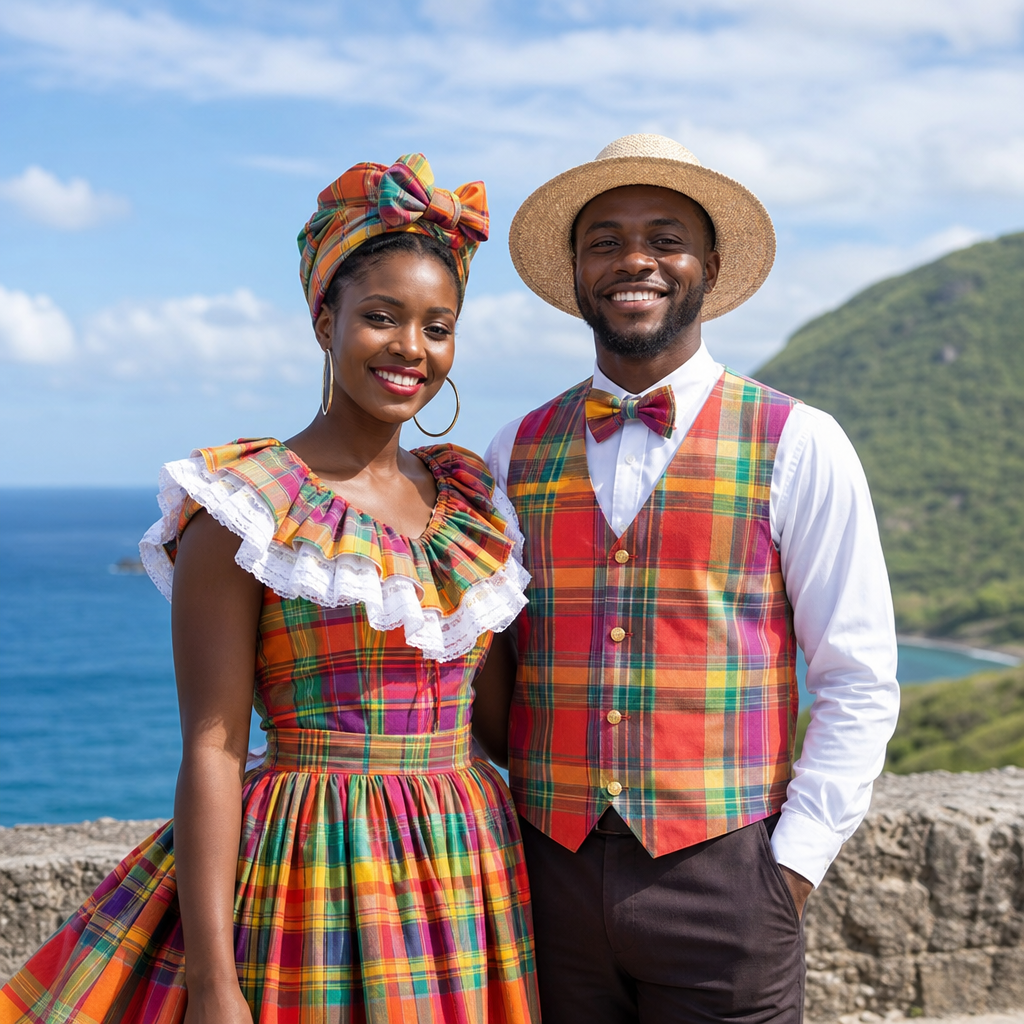
Saint Kitts’ national dress is best understood as a folk ensemble rather than a single fixed uniform. While there are variations by community, performing group, and occasion, the core elements are consistent enough to be immediately identifiable. Women commonly wear a full skirt in plaid or madras-style cotton, a white blouse, an apron, and a headpiece known locally as a head tie or turban. Men often wear dark trousers, a white shirt, a sash or cummerbund, and a vest or waistcoat in matching fabric. The colors may echo festive Caribbean palettes, but the design language points to older creole dress traditions developed across the British West Indies. In practice, these garments are selected to communicate respectability, rural heritage, and African-Caribbean continuity. The fabrics are not random. Checks and plaids became culturally significant across the region because imported cottons and madras textiles were widely adopted, reworked, and imbued with local meaning. Over time, what began as practical cloth became shorthand for heritage attire.
There is no single government-issued national costume law in the way some countries formally regulate dress codes, yet cultural institutions, schools, and folk groups have helped standardize recognizable forms. That semi-formal process is common in the Caribbean. National dress often emerges through repeated public use, festival representation, and educational reinforcement rather than strict legal decree. In Saint Kitts, the result is a living tradition: stable enough to symbolize the nation, flexible enough to accommodate performance needs and contemporary tailoring.
Historical Roots in Slavery, Emancipation, and Creole Society
To understand why Saint Kitts’ national dress looks the way it does, you have to begin with the island’s plantation history. Saint Kitts was one of Britain’s earliest and most economically important Caribbean colonies, and its sugar economy depended on enslaved African labor for centuries. Clothing on plantations was shaped by hierarchy, climate, imported goods, and restriction. Enslaved people often received coarse fabric allowances, while free people of color, estate workers, artisans, and market vendors adapted available textiles into practical garments suited to tropical conditions. Dress became one of the clearest places where African retention and European imposition met. Headwrapping, layered skirts, aprons, and carefully styled Sunday wear all developed within this world of pressure and creativity.
After emancipation in 1834, clothing acquired an added symbolic charge. Respectable dress mattered in church, market life, weddings, Christmas festivities, and public gatherings because appearance challenged colonial assumptions about status and humanity. Across the Caribbean, post-emancipation communities invested in tailored clothing, pressed whites, decorative prints, and elaborately tied headscarves as markers of dignity and self-definition. Saint Kitts followed that wider pattern. What is now presented as national dress is partly a heritage reconstruction of those nineteenth-century creole styles. It is not a perfect replica of everyday historical clothing, but a curated memory of how ordinary people dressed, celebrated, and represented themselves in the decades after slavery.
This is why the dress resonates beyond aesthetics. It sits at the intersection of survival and pride. A skirt, head tie, or sash can evoke market women, church mothers, estate laborers, village dancers, and the many unnamed people who built communal life under hard conditions.
Key Garment Elements and Their Meanings
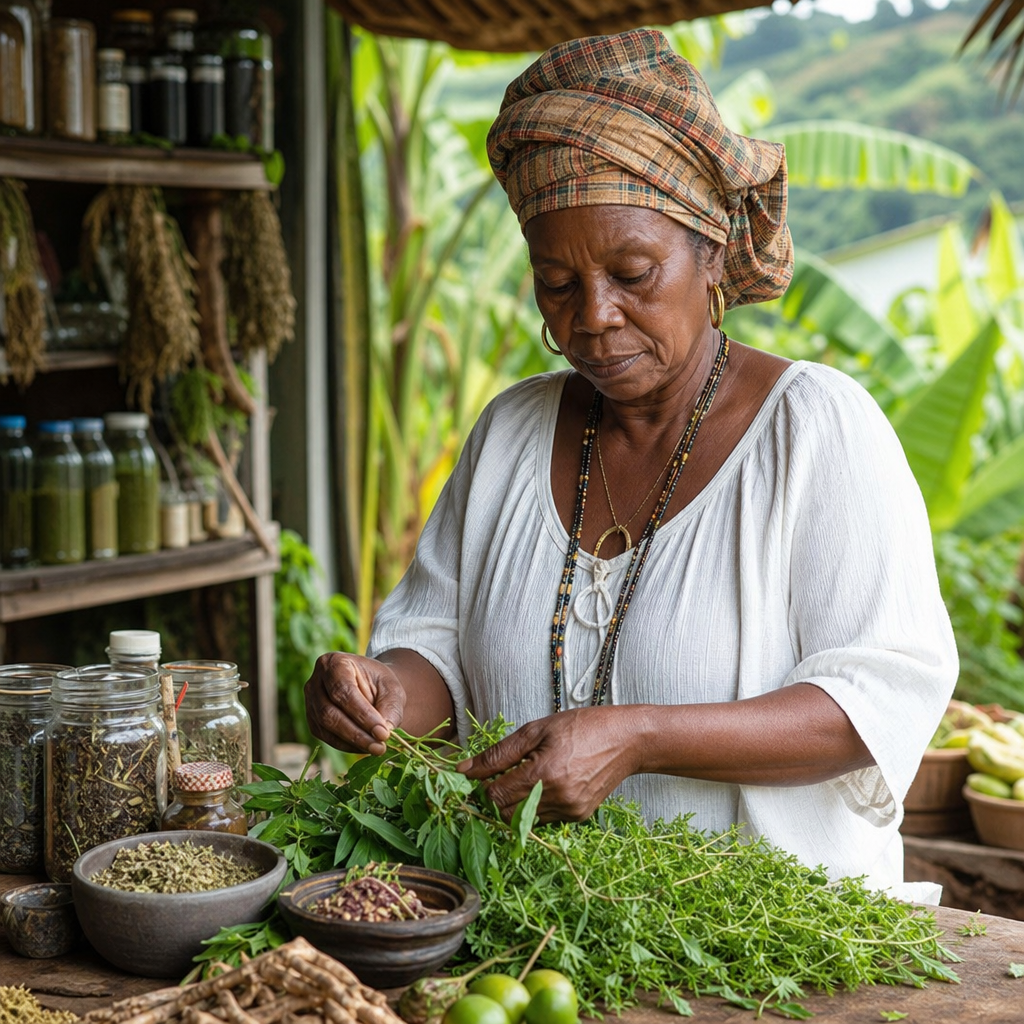
The women’s ensemble usually centers on four visible features: skirt, blouse, apron, and head tie. The skirt is often wide enough to move dramatically during folk dance, which is important because the garment must perform as well as symbolize. The blouse is typically white, signaling cleanliness and ceremonial presentation. The apron reflects older domestic and market traditions, when aprons were practical daily wear but also decorative. The head tie is perhaps the most culturally loaded piece. Across Afro-Caribbean societies, headwrapping has long carried meanings related to modesty, beauty, status, and African inheritance. Different tying styles can suggest age, occasion, or simply personal flair, though Saint Kitts does not enforce one universally fixed code.
Men’s dress usually communicates formality through simplicity. White shirts and dark trousers create a neutral base, while a plaid or madras-style vest, sash, neckerchief, or cummerbund adds national character. In performance settings, straw hats or other accessories may be added to reinforce rural and folk associations. The male ensemble often receives less public attention than women’s dress, but it plays an essential role in presenting a complete cultural image during dance and ceremony.
| Element | Common Form | Cultural Function | Typical Use |
|---|---|---|---|
| Head tie | Wrapped plaid or solid fabric | Signals Afro-Caribbean heritage and ceremonial identity | Festivals, dance, state events |
| Blouse or shirt | Usually white cotton | Represents neatness, respectability, and contrast | Formal folk wear |
| Skirt or trousers | Full skirt for women, dark trousers for men | Supports movement and creates recognizable silhouette | Performance and public celebrations |
| Apron or sash | Decorative layered accessory | Links dress to labor history and festive display | Heritage presentations |
| Vest or waistcoat | Matching patterned fabric | Adds structure and visual distinction to men’s attire | Folk ensembles and official cultural events |
These components matter because they turn abstract identity into something visible. They also allow local makers to preserve sewing, fitting, and styling traditions that might otherwise disappear.
National Dress in Festivals, Performance, and Public Life
Saint Kitts’ national dress is most visible when culture is being performed for both insiders and outsiders. Independence celebrations are a prime example. During September events, schools, cultural troupes, and official delegations use national dress to represent continuity between past and present. The garments appear in parades, stage programs, church services, and educational displays, making them a tool of civic education as much as celebration. Children often encounter the national dress first through school concerts and heritage days, which means the outfit functions as an introduction to history.
Carnival and Christmas season activities also create important space for national dress, although carnival includes many other forms such as troupe costumes, pageant wear, and masquerade regalia. Folk groups use the dress in quadrille, maypole, storytelling, and traditional music performances. In those settings, clothing is inseparable from movement. The swish of a skirt, the framing effect of an apron, and the disciplined contrast of white fabric on stage all help audiences read the performance as culturally rooted. Tourism events use the same visual cues because they are instantly legible. Cruise visitors may not know the island’s full history, but they understand that these garments signify authenticity and heritage.
That visibility brings advantages and risks. The benefit is clear: national dress becomes a memorable emblem of Saint Kitts. The risk is simplification. When garments are reduced to a tourist photo opportunity, their deeper historical meaning can fade. Strong cultural programming solves that problem by pairing visual display with interpretation, live music, oral explanation, and historical context.
Connections to Dance, Music, and Wider Caribbean Traditions
National dress in Saint Kitts cannot be separated from folk performance traditions. Quadrille dancing, ring games, drumming, fife-and-drum influences, and community festival music all rely on clothing to complete the presentation. I have found that audiences understand a performance more quickly when the clothing aligns with the music’s historical register. A folk song sung in contemporary casual wear can still be moving, but the national dress situates it in a recognizable cultural archive. It tells viewers that what they are seeing belongs to inherited practice, not just entertainment.
There are also important regional connections. Saint Kitts shares many dress features with other Eastern Caribbean societies, especially islands shaped by British colonial rule and Afro-creole social life. Dominica, Antigua and Barbuda, and Saint Lucia, for example, also use madras-inspired fabrics, head ties, aprons, and white blouses in their heritage wear. The similarities are not accidental; they reflect shared trade routes, imported textiles, church customs, and post-emancipation values around neatness and display. What makes Saint Kitts distinct is not complete isolation from its neighbors but the way local communities style, teach, and perform the ensemble within Kittitian history.
This wider Caribbean context is useful because it prevents romantic myths. The national dress is not ancient in an unbroken sense, nor is it purely local from origin to finish. It is creole: formed through exchange, adaptation, and reinterpretation. That hybridity is exactly what makes it historically truthful.
Craftsmanship, Preservation, and Modern Adaptation
Behind every well-presented national outfit is practical skill. Seamstresses, tailors, fabric sellers, cultural officers, teachers, and performers all help keep the tradition alive. Measurements must support dance movement, seams must withstand repeated wear, and head ties require styling knowledge that is rarely captured fully in written instructions. On small islands, these skills are often passed through family lines or community mentorship rather than formal fashion schools. That transmission is fragile. When experienced makers retire without apprentices, the quality and accuracy of national dress can decline quickly.
Modern adaptation is therefore necessary, not a betrayal. Contemporary makers often use easier-care cotton blends, improved fastenings, and standardized patterns for school groups. Some designers create formal wear inspired by national dress rather than reproducing it exactly, using plaid panels, ruffled sleeves, or headwrap motifs in modern silhouettes. This approach can broaden relevance, especially for younger Kittitians who want heritage reflected in everyday style. The key is discernment. Adaptation works when it respects the grammar of the tradition; it fails when it strips away meaning and leaves only a generic “Caribbean” look.
Preservation efforts are strongest when linked to documentation. Museums, cultural departments, oral history projects, and festival committees can record garment patterns, fabric choices, and dressing techniques. Schools can also do more than stage performances; they can teach why these garments emerged, who wore similar clothing historically, and how dress relates to labor, religion, and freedom.
Why the National Dress Remains a Cultural Hub
As a hub topic within Saint Kitts culture and history, national dress opens pathways into nearly every other “miscellaneous” subject that shapes cultural identity. It connects to food because festival wear appears at harvest celebrations and communal events. It connects to language because songs, proverbs, and performance commentary often accompany the clothing. It connects to religion through church-going respectability and feast-day presentation. It connects to economics through local sewing, fabric purchasing, and heritage tourism. It connects to politics through Independence ceremonies and official representation abroad. Few cultural symbols work across so many domains so effectively.
The enduring value of Saint Kitts’ national dress lies in that range. It is beautiful, but beauty is only the surface. The garments preserve memory, teach history without a textbook, and give communities a dignified way to see themselves in public. They also remind younger generations that identity is not abstract; it is made visible through repeated acts of care, from stitching a hem to tying a headwrap correctly. If you are building a deeper understanding of Saint Kitts, start here and then follow the links outward to folk dance, carnival traditions, emancipation history, craft industries, and national celebrations. The dress is an emblem, but it is also a map. Explore it closely, and the wider story of Kittitian cultural identity becomes much clearer.
Frequently Asked Questions
What is Saint Kitts’ national dress, and why is it important?
Saint Kitts’ national dress refers to the traditional, stylized clothing worn to represent the island’s cultural heritage during folk performances, national celebrations, heritage observances, tourism events, and community festivals. It is not simply a costume for display. Rather, it functions as a visual expression of the island’s history, social memory, and collective identity. In Saint Kitts, national dress helps connect present-day communities to the experiences of earlier generations whose lives were shaped by migration, enslavement, plantation labor, emancipation, village life, religious traditions, and festive customs.
Its importance lies in the way it gathers multiple strands of Kittitian life into one recognizable form. The garments often reflect influences from African heritage, European colonial-era dress conventions, Caribbean climate, and local ways of adornment and presentation. In that sense, national dress tells a story of adaptation and resilience. It shows how a people can transform difficult historical legacies into symbols of dignity, pride, and belonging. When worn in public, it reinforces a sense of continuity between ancestors and younger generations, reminding viewers that culture is something lived, remembered, and performed.
It is also important because it serves as a public emblem of nationhood. For a small island society, visual symbols matter deeply, especially at moments of representation. Whether on a festival stage, at an official ceremony, or in a school heritage program, national dress gives Saint Kitts a distinct cultural presence. It allows Kittitians to honor their roots while presenting themselves with confidence to visitors, the wider Caribbean, and the world.
What are the typical features of Saint Kitts’ national dress?
Saint Kitts’ national dress typically includes bright, carefully coordinated garments designed to evoke tradition, elegance, and folk identity. While styles can vary depending on the event, the wearer, and the performing group, women’s outfits often feature full skirts, blouses with ruffles or lace trim, aprons, headwraps or headties, and coordinated accessories. Men’s versions may include shirts, trousers, waistcoats, sashes, scarves, and hats, often styled in a way that references historical workwear or festive formalwear adapted into national representation.
Color plays an important role. Many versions use vivid, eye-catching combinations that stand out during dances, parades, and ceremonies. Plaids, checks, stripes, and patterned fabrics may be used, sometimes alongside solid-color trims that create a distinctive silhouette. The choice of fabric and decoration is often practical as well as symbolic. Because Saint Kitts is a tropical island, clothing for cultural display must be suitable for heat and movement, especially when worn during outdoor festivals or energetic folk performances.
Another key feature is the balance between historical reference and modern stylization. National dress in Saint Kitts is usually not an exact reproduction of everyday clothing from one specific historical era. Instead, it is a curated cultural form. It draws inspiration from the island’s past while shaping that inspiration into garments that can be recognized instantly as traditional and representative. This is why the clothing often appears more polished, colorful, and coordinated than what people may have worn in ordinary village or plantation life. The result is a dress tradition that is both rooted in history and designed for ceremonial and cultural significance.
How does Saint Kitts’ national dress reflect the island’s history and cultural identity?
Saint Kitts’ national dress reflects the island’s history by embodying the layered experiences that have shaped Kittitian society over centuries. The island’s culture developed through encounters and upheavals involving African ancestry, European colonial rule, plantation economies, forced labor, emancipation, religious observance, and continuing Caribbean cultural exchange. National dress visually gathers those histories into garments that symbolize endurance, creativity, and self-definition.
African influence is especially significant in the broader cultural meaning of the dress. Even where exact historical lines are difficult to trace in every garment detail, the emphasis on expressive color, headwrapping traditions, rhythmic movement in performance, and communal presentation echoes the enduring presence of African-descended cultural memory in Caribbean life. At the same time, certain garment structures, such as blouses, skirts, aprons, shirts, and waistcoats, also show the impact of European dress forms introduced during the colonial period. What makes the national dress distinctly Kittitian is the way these elements have been reworked locally rather than simply preserved unchanged.
The dress also reflects identity through context. In Saint Kitts, these garments are often worn at moments when the community is actively telling its own story: Independence celebrations, folk festivals, state occasions, school programs, and cultural showcases. The clothing becomes part of a larger performance of identity, one that says the island’s history is not forgotten and its people remain connected to one another through shared memory. In this way, national dress is both historical record and living cultural language. It helps Saint Kitts affirm who it is, where it has come from, and what values of pride, resilience, and belonging continue to matter.
When is Saint Kitts’ national dress worn today?
Today, Saint Kitts’ national dress is most commonly worn during occasions that call for cultural representation, heritage celebration, and public performance. These include Independence events, national holidays, folk festivals, community parades, school heritage days, tourism presentations, and formal ceremonies where local identity is being highlighted. Folk dance groups, cultural ambassadors, performers, and students often wear national dress to bring historical and cultural traditions to life in a visible and memorable way.
It is especially prominent in settings where music, dance, and storytelling are involved. Traditional performances gain added meaning when the clothing reinforces the historical atmosphere and cultural symbolism of the event. Audiences do not just hear the culture through songs and rhythms; they see it through fabric, color, and design. In that sense, national dress plays an active role in performance, helping transform a presentation into an experience of heritage.
The dress is also important in tourism and diplomatic representation. When Saint Kitts presents itself to visitors or at regional and international cultural events, national dress offers an immediate visual statement of local tradition. It signals that the island values its history and is proud of its cultural inheritance. Even so, it is not everyday wear for most people. Its power comes partly from the fact that it appears in meaningful settings, where its symbolism can be fully appreciated. Each appearance reinforces the idea that national dress is a special marker of identity, memory, and ceremonial pride.
Why does Saint Kitts’ national dress matter to younger generations and cultural preservation?
Saint Kitts’ national dress matters to younger generations because it provides a tangible connection to heritage in a world where cultural knowledge can easily become fragmented or overshadowed by global trends. For many young people, history can feel distant when it exists only in textbooks or speeches. National dress makes that history visible and immediate. When children and teenagers wear it for school programs, folk performances, or national observances, they participate directly in a tradition rather than simply learning about it from the outside.
That participation supports cultural preservation in practical ways. It encourages conversations about ancestry, village customs, craftsmanship, music, dance, emancipation history, and the meaning of national identity. It also keeps traditional presentation skills alive, from tying headwraps to assembling garments correctly for ceremonial use. In communities where elders, teachers, and cultural organizers pass on this knowledge, national dress becomes part of intergenerational transmission. It is one of the ways memory moves forward.
Just as importantly, the dress helps younger Kittitians understand that identity is not abstract. It is expressed through symbols, rituals, and shared public moments. In a small island nation, that understanding can be deeply empowering. It teaches that culture is worth preserving not because it is old, but because it continues to give meaning, continuity, and confidence to the community. By wearing and respecting the national dress, younger generations help ensure that Saint Kitts’ story remains visible, valued, and proudly carried into the future.