Nevis in literature reveals how a small Caribbean island can hold an outsized place in the written imagination, linking colonial history, travel writing, poetry, fiction, family memory, and modern Caribbean identity. In this context, literature means more than novels set on Nevis. It includes memoirs, plantation records, slave narratives, travel journals, local folklore, historical studies, oral storytelling transcribed into print, and contemporary works by writers who use the island as setting, symbol, or source of ancestry. I have worked on Caribbean culture content long enough to see the same pattern repeatedly: readers arrive asking for a single famous book about Nevis, then discover a much richer archive shaped by migration, empire, sugar, religion, language, and resistance. That matters because Nevis is often overshadowed by larger islands in literary discussions, yet it offers a compact case study of how place enters writing. The island’s literary presence helps explain how Caribbean societies remember trauma, preserve community knowledge, and reinterpret the past for new generations. For a culture and history hub, Nevis is especially useful because its literary footprint crosses genres and centuries, making it a gateway topic for anyone exploring the wider intellectual life of the Eastern Caribbean.
The most important starting point is to understand that “Nevis in literature” operates on three levels at once. First, there are texts produced on or about the island during the colonial period, many of them written by officials, travelers, missionaries, and planters. Second, there are later literary works that revisit Nevis historically, often to examine slavery, emancipation, race, family lineage, and belonging. Third, there are cultural texts rooted in local voice: folktales, songs, anecdotes, and community memory that have been preserved through performance and later publication. A hub article must connect all three because no single shelf in a library captures the whole story. Readers interested in Caribbean literature, Alexander Hamilton’s birthplace, plantation history, or postcolonial writing are all touching the same archive from different angles. The value of this miscellaneous hub is that it gathers those strands into one usable map, showing where to begin, what to read next, and why Nevis continues to appear in literary conversations far beyond its shoreline.
Colonial texts and the earliest written images of Nevis
The earliest literary record of Nevis is inseparable from colonization. Seventeenth- and eighteenth-century descriptions of the island appeared in imperial correspondence, merchant accounts, missionary reports, and travel books rather than in what modern readers would call imaginative literature. These texts are still foundational because they established enduring themes: fertile land, sugar wealth, strategic location, disease risk, and social hierarchy. Writers described Nevis as productive and picturesque while often minimizing the violence required to sustain plantation life. That bias matters. When I evaluate early sources for cultural history pages, I treat them as evidence of mentality as much as evidence of fact. They show how colonists wanted the island to be seen.
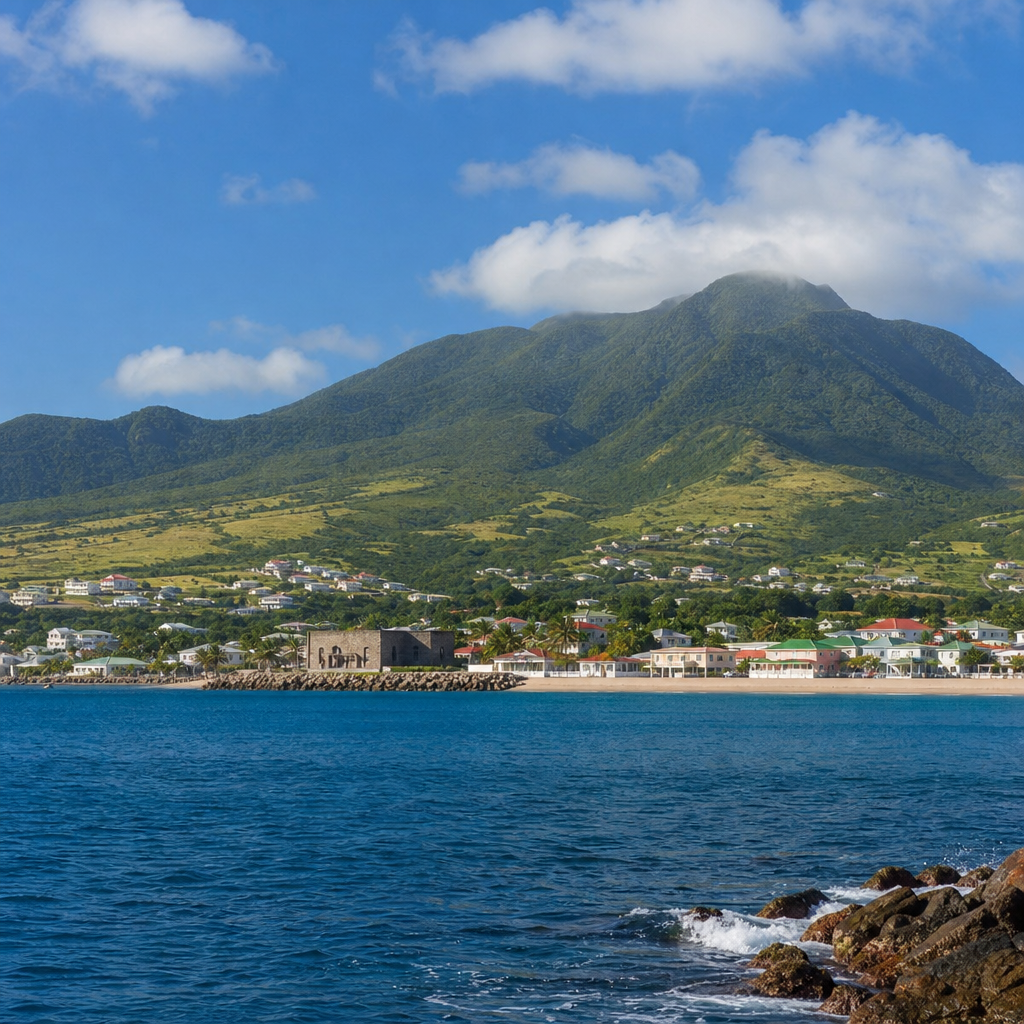
Works such as Bryan Edwards’s histories of the British West Indies and later compilations by colonial chroniclers framed islands like Nevis within the economics of sugar and slavery. These accounts usually emphasized export value, governance, and military significance, but they also shaped literary perception by turning Caribbean islands into narrative settings of abundance and danger. Travel writers frequently noted Nevis Peak, the hot springs, and the island’s compact geography, details that made the island vivid on the page. Yet enslaved Africans, free people of color, and poor whites generally appeared through the observer’s hierarchy. Reading these texts now requires context: they are indispensable records, but they are not neutral descriptions.
Church records, legal documents, wills, and plantation inventories also feed into the literary history of Nevis. While not literary in a narrow sense, they underwrite later historical fiction and family memoir by preserving names, landholdings, kinship ties, and evidence of coerced labor. Many modern narratives about Nevis, including genealogical and diasporic works, depend on archives first created for colonial administration. That tension is central to the island’s literary afterlife. The same documents that enforced power now help descendants reconstruct obscured lives.
Nevis as setting, symbol, and memory in Caribbean writing
In modern literature, Nevis often functions less as a backdrop and more as a compressed symbol of Caribbean history. Its scale makes it narratively powerful. Writers can represent empire, plantation society, migration, and memory within a setting small enough for family stories and public history to collide. This is especially clear in works connected to Kittitian and Nevisian writers, as well as authors from the wider Caribbean who use the Leeward Islands to examine social inheritance.
One of the most significant contemporary figures linked to Nevis is Jamaica Kincaid, whose writing on Antigua, colonial education, gardening, and historical memory has influenced how many readers approach smaller Eastern Caribbean islands. Although her primary subject is not Nevis, her method matters here: she demonstrates how island history can be read through landscape, botany, tourism, and intimacy. That framework helps readers understand texts about Nevis that move between personal reflection and structural critique. In practice, literature about Nevis often asks a direct question: how does a place marked by slavery and migration continue to shape private life generations later?
Another recurring literary pattern is return. Characters leave Nevis for Britain, the United States, Canada, or larger Caribbean territories, then revisit the island through memory, family obligation, inheritance disputes, or mourning. This mirrors real demographic history. Nevisian families are deeply diasporic, and literature reflects that movement. A novel or memoir may mention Charlestown, village churches, former estates, or school life not simply to establish local color, but to test what home means after departure. That is why Nevis appears frequently in family histories and memoir fragments even when it is not the sole focus of the book.
| Literary lens | What it shows about Nevis | Typical sources or examples |
|---|---|---|
| Colonial observation | How outsiders framed land, labor, and wealth | Travel journals, imperial histories, missionary reports |
| Historical reconstruction | How later writers revisit slavery and plantation society | Historical fiction, archival nonfiction, family memoir |
| Diasporic memory | How migration reshapes belonging and identity | Memoirs, autobiographical essays, multigenerational novels |
| Local cultural voice | How community stories preserve humor, warning, and values | Folktales, oral histories, festival narratives, school anthologies |
Oral tradition, folklore, and community storytelling
No serious hub on Nevis in literature can stop with published books. Oral tradition is a core part of the island’s literary culture. Folktales, proverbs, church testimonies, wake stories, market humor, and village anecdotes circulate with remarkable persistence. Across the Caribbean, Anansi stories, trickster motifs, duppy tales, and moral narratives have long carried historical memory in forms that print culture often overlooked. On Nevis, these stories encode practical lessons about power, cleverness, social conduct, and spiritual danger. They also preserve speech rhythms that formal colonial writing flattened or ignored.
When oral material is collected in school readers, heritage projects, museum programming, or local anthologies, it becomes legible to wider audiences without losing its communal roots. The Museum of Nevis History and cultural organizations across St. Kitts and Nevis have helped keep public attention on stories attached to estates, emancipation sites, churches, and family lineages. In my experience, these local compilations are often more revealing than broad regional surveys because they retain place-specific detail: who lived near a particular ghaut, which house was associated with a tale, how a proverb was actually used in conversation, or why a festival performance mattered to one district and not another.
Folklore also complicates the written archive. It offers narratives from below, though not in a pure or untouched form. Oral traditions change with each teller. That flexibility is a strength, not a weakness. It lets communities reinterpret old material for new realities such as tourism, emigration, economic change, and environmental vulnerability. For readers building a deeper knowledge base, folklore is not supplementary. It is one of the primary ways Nevisian cultural meaning survives.
Biography, history, and the global reach of a small island
Nevis enters world literature and popular reading lists through biography as much as through fiction. The island is widely known as the birthplace of Alexander Hamilton, and that fact has generated an extensive body of writing: biographies, historical essays, educational texts, museum interpretation, and adaptations that bring Nevis into discussions of Atlantic history. Whether readers arrive through Ron Chernow’s biography, broader Revolutionary-era studies, or heritage tourism material, they encounter Nevis as part of a transatlantic network linking the Caribbean to North America and Britain.
Hamilton-related writing can be useful, but it can also narrow the lens. The risk is reducing Nevis to a footnote in someone else’s story. The stronger approach is to use Hamilton as an entry point into larger literary and historical questions: What did colonial Nevis look like socially? How did class, illegitimacy, commerce, and slavery shape opportunity? What other lives from the island deserve narrative attention? Once those questions are asked, readers usually move beyond biography toward plantation studies, emancipation history, women’s history, and local memory.
Scholarly history plays a major role here. Research on Caribbean slavery, the sugar economy, creolization, and free colored communities gives literary interpretation its backbone. Titles from university presses may not read like mainstream literary works, but they explain the conditions that novels and memoirs dramatize. For a hub page, that distinction matters: if you want to understand Nevis in literature fully, read both the story and the scholarship that explains the world behind it.
How to read Nevis-related literature critically
The best way to read literature about Nevis is comparatively. Start by asking who is speaking, when the text was produced, and for whom it was written. A planter’s journal, a heritage brochure, a local oral history pamphlet, and a diasporic memoir all present different versions of the island because they serve different purposes. Reliable interpretation depends on recognizing that difference. I regularly advise readers to pair at least one colonial source with one modern Caribbean source and one community-based source. That immediately exposes omissions and recurring myths.
Language is another clue. Descriptions such as “fertile,” “peaceful,” “quaint,” or “undeveloped” may seem harmless, but in Caribbean writing they often carry a political charge. They can erase labor history or market the island as scenery for outsiders. By contrast, local narratives may emphasize family names, labor routes, school districts, and church affiliations that outsiders would miss. Those details are not trivial. They are how social reality is mapped.
Readers should also watch for archive gaps. Enslaved people rarely left extensive written records under their own names, so historians and writers reconstruct lives through ledgers, court cases, baptismal registers, runaway notices, and oral memory. That method is careful and necessary, but it has limits. Good literature about Nevis acknowledges uncertainty where evidence is thin. That restraint builds credibility and usually leads to better storytelling.
Building your reading path from this hub
As a miscellaneous hub within culture and history, this page works best as a launch point. A practical reading path begins with a concise history of St. Kitts and Nevis to establish chronology. Next, read a Caribbean travel or colonial account for perspective on early representation, then balance it with modern scholarship on slavery and plantation society. After that, move into memoir, oral history, and fiction that foreground family memory and migration. If Alexander Hamilton brought you here, expand outward rather than stopping there. If folklore brought you here, follow the oral tradition into festivals, language, and community heritage projects.
Internal topic clusters naturally branch from this subject: Nevisian heritage sites, Charlestown history, plantation houses, emancipation, Caribbean genealogy, island folklore, and the literary cultures of the wider Leeward Islands. Together, these areas show why Nevis deserves more than a passing mention in regional studies. It is a small island with a layered textual life, and that makes it unusually valuable for readers who want history grounded in place. Explore the linked articles in this culture and history section, build a reading list that mixes archives with living voices, and use Nevis not as a sidebar to Caribbean literature, but as one of its clearest windows.
Frequently Asked Questions
What does “Nevis in literature” actually include beyond novels set on the island?
“Nevis in literature” is much broader than fiction with a Nevisian backdrop. It includes travel writing, memoirs, plantation records, letters, historical studies, poetry, oral histories, family narratives, folklore, and even archival documents that reveal how the island has been imagined, described, and remembered over time. In the case of Nevis, literary meaning often emerges from the intersection of formal published works and historical texts that were not originally created as literature at all. A planter’s journal, a missionary account, a slave narrative, or a family memoir can all contribute to the literary picture of the island because each one shapes how readers understand Nevis’s land, society, and historical experience.
This wide definition matters because small islands are often underrepresented in conventional literary canons. If readers look only for famous novels, they may miss the richest evidence of how Nevis appears in the written imagination. The island’s literary presence is scattered across genres and periods: colonial descriptions of plantation life, post-emancipation reflections, transcribed oral storytelling, diaspora writing, and contemporary Caribbean work that revisits identity, ancestry, and memory. Taken together, these forms show that Nevis is not just a setting. It is a subject through which writers explore empire, displacement, belonging, race, family lineage, and the ongoing negotiation between local history and global attention.
Why does a small island like Nevis have such a significant place in literature?
Nevis holds a significant place in literature precisely because its scale contrasts so sharply with the size of the histories attached to it. Small islands often become powerful literary spaces because they concentrate major historical forces in a visible, human-scaled way. In Nevis’s case, those forces include colonial expansion, plantation slavery, migration, creole culture, emancipation, economic change, and the making of Caribbean identity. Writers are drawn to places like Nevis because the island becomes a lens through which large questions can be examined in intimate detail. A hillside estate, a family archive, a village memory, or a coastal landscape can open up much wider stories about empire, exploitation, resilience, and cultural survival.
Nevis also occupies an important position in the Caribbean imagination because it carries layers of historical and symbolic meaning. It can be written as paradise, colony, homeland, memory-site, or contested inheritance depending on who is writing and when. That variety gives it literary richness. To colonial travel writers, it may have appeared exotic or strategic; to descendants of enslaved people, it may represent pain, endurance, and rootedness; to contemporary authors, it may function as a place where personal identity and historical truth meet. Literature returns to Nevis not because the island is large, but because it is dense with stories. Its compact geography intensifies the relationship between land and memory, making it especially compelling to writers across genres.
How have colonial history and plantation life shaped writing about Nevis?
Colonial history and plantation life are central to nearly any serious literary discussion of Nevis. Much of the island’s documented past was first recorded through colonial systems: estate papers, official correspondence, commercial records, missionary reports, and travel accounts. These texts preserve important information, but they also reflect unequal power. They were often written from the viewpoint of colonial administrators, slaveholders, or outside observers, which means they do not simply describe Nevis; they frame it according to imperial assumptions and economic interests. Reading Nevis in literature therefore involves more than gathering references to the island. It requires asking who wrote the text, for whom, and what realities were left out or distorted.
Plantation life shaped the island materially and imaginatively. The plantation was not only an economic structure but also a social and narrative one, producing records, silences, hierarchies, and inherited trauma. Writers and historians who engage Nevis frequently revisit this plantation past to uncover hidden lives and challenge sanitized versions of Caribbean history. The landscape itself often appears in literature as marked by plantation memory, with estates, ruins, fields, and house sites functioning as reminders of labor, violence, and survival. Modern Caribbean and diasporic writers, in particular, often read against the colonial archive, recovering the voices of the enslaved, the free black population, women, workers, and families whose experiences were minimized in official records. As a result, literature about Nevis becomes an act of re-interpretation: not just retelling history, but exposing how history was written and reclaiming what earlier texts tried to control.
What role do memory, oral storytelling, and family history play in writing about Nevis?
Memory, oral storytelling, and family history are essential to understanding Nevis in literature because they preserve experiences that formal archives often overlook. In many Caribbean contexts, including Nevis, historical documentation can be fragmented, biased, or incomplete, especially when it comes to the lives of ordinary people, enslaved communities, rural families, and women. Oral storytelling helps fill those gaps. Stories passed through generations carry local knowledge about place names, kinship, migration, hardship, humor, spiritual beliefs, and community life. When these stories are transcribed into print or influence memoir, poetry, and fiction, they expand the literary record and challenge the idea that only official written documents count as authoritative sources.
Family history is especially powerful because it connects the island’s public history to intimate experience. A single family story can reveal how broader events like emancipation, labor change, education, migration, or diaspora affected real lives over time. Writers who draw on grandparents’ memories, inherited anecdotes, and domestic rituals often show Nevis not as an abstract historical location but as a lived world shaped by relationships and remembrance. This creates a layered literary image of the island, where the past is never fully gone but continues to surface in speech, custom, foodways, land ownership, and emotional attachment. In that sense, literature about Nevis often works like an archive of feeling as much as an archive of facts, preserving the textures of life that official history alone cannot capture.
How do contemporary writers use Nevis to explore modern Caribbean identity?
Contemporary writers use Nevis to explore modern Caribbean identity by treating the island as a space where history, migration, and self-definition intersect. Rather than presenting Nevis only as a scenic setting or colonial relic, many modern authors approach it as a living place shaped by layered identities: local and diasporic, African and European inheritances, ancestral and contemporary realities, rootedness and movement. In these works, Nevis can represent home, return, estrangement, inheritance, or rediscovery. Writers may focus on what it means to belong to an island physically, emotionally, or imaginatively, especially in a world where Caribbean identity is often formed across multiple locations rather than in one fixed place.
This makes Nevis especially valuable in literature about memory and diaspora. A writer may use the island to examine what happens when descendants look back toward a homeland through fragments: old documents, family stories, photographs, ruins, and inherited silences. Others may portray Nevis as part of a wider Caribbean conversation about tourism, postcolonial identity, environmental vulnerability, and cultural continuity. In all of these cases, the island becomes more than geography. It becomes a way of thinking through how Caribbean people narrate themselves after empire, how they recover suppressed histories, and how they maintain connection across generations and borders. That is why Nevis continues to matter in literature today: it offers writers a compact but deeply resonant setting for exploring what Caribbean identity has been, what it has endured, and what it is still becoming.