Exploring local markets in Saint Kitts is one of the clearest ways to understand how the island lives beyond beaches, cruise schedules, and postcard views. A market is more than a place to buy produce or souvenirs; it is a public stage where agriculture, memory, language, music, religion, and daily economics meet. In Saint Kitts, often called St. Kitts, local markets reveal the practical rhythm of island life: fishermen returning with the morning catch, farmers arriving with breadfruit and pumpkin, cooks discussing spice blends, and artisans translating heritage into woodwork, textiles, and small handmade goods. For travelers who want a deeper cultural journey, these spaces offer direct access to the people and practices that shape the nation.
Saint Kitts is the larger island in the Federation of Saint Christopher and Nevis, a two-island state in the Eastern Caribbean. Its market culture reflects that geography. Limited land, a tropical climate, colonial history, African heritage, and close community ties have all influenced what appears on market tables and how trade happens. The island’s transition from a sugar-dominated economy to a more diversified economy built around tourism, services, small-scale farming, and entrepreneurship has made local markets even more important as symbols of continuity and adaptation. In my experience visiting Caribbean markets, Saint Kitts stands out for the way everyday exchange still feels personal. Buyers ask where produce was grown. Vendors know repeat customers by name. Prices can be straightforward, but conversation remains part of the transaction.
For readers exploring local life and experiences in Saint Kitts, this hub article covers the miscellaneous side of the topic comprehensively: where markets are found, what they sell, how to shop respectfully, what foods and crafts to look for, and why these places matter culturally and economically. It also helps answer practical questions a visitor typically has: Which market should you visit first? What local products are worth buying? When is the best time to go? How do you avoid treating the market as a performance rather than someone’s livelihood? Understanding these details changes the experience. Instead of passing through quickly, you begin to read the market as a living archive of Kittitian identity.
Where to Find Local Market Life in Saint Kitts
The best-known concentration of market activity is in and around Basseterre, the capital, where formal and informal vending overlap. Basseterre’s public market area and nearby streets often provide the widest cross-section of produce, herbs, snacks, flowers, and household goods. Depending on the day and season, you may also encounter roadside stands outside the capital, village-based vendors, and pop-up stalls near busy transport routes. Unlike massive urban markets in larger countries, markets in Saint Kitts tend to be compact. That smaller scale is part of their value. You can move slowly, speak with vendors, compare goods, and observe patterns without feeling overwhelmed.
Morning is usually the best time to visit. Produce is fresher, heat is lighter, and vendors are still setting the tone for the day. If cruise ships are in port, areas near the center of Basseterre can become busier with visitors, which changes the atmosphere and sometimes the product mix. The most authentic experience usually happens slightly away from the pure tourist corridor, where local residents are shopping for lunch ingredients, weekly staples, or fruit for home. Seasonal shifts matter too. Mangoes, soursop, tamarind, and sugar apples are not always available in the same abundance. Rainfall, import schedules, and small-farm output shape what you will actually see.
Travelers often ask whether Saint Kitts has a single signature market comparable to famous central markets elsewhere in the Caribbean. The better answer is that the island’s market culture is distributed rather than concentrated in one iconic structure. Basseterre is the main anchor, but the full experience includes roadside commerce, event-based vending during festivals, and neighborhood-level selling that blurs the line between market, family business, and community service. This matters because a cultural journey in Saint Kitts is not about checking off one landmark. It is about noticing how trade is woven into ordinary life.
What Local Markets in Saint Kitts Actually Sell
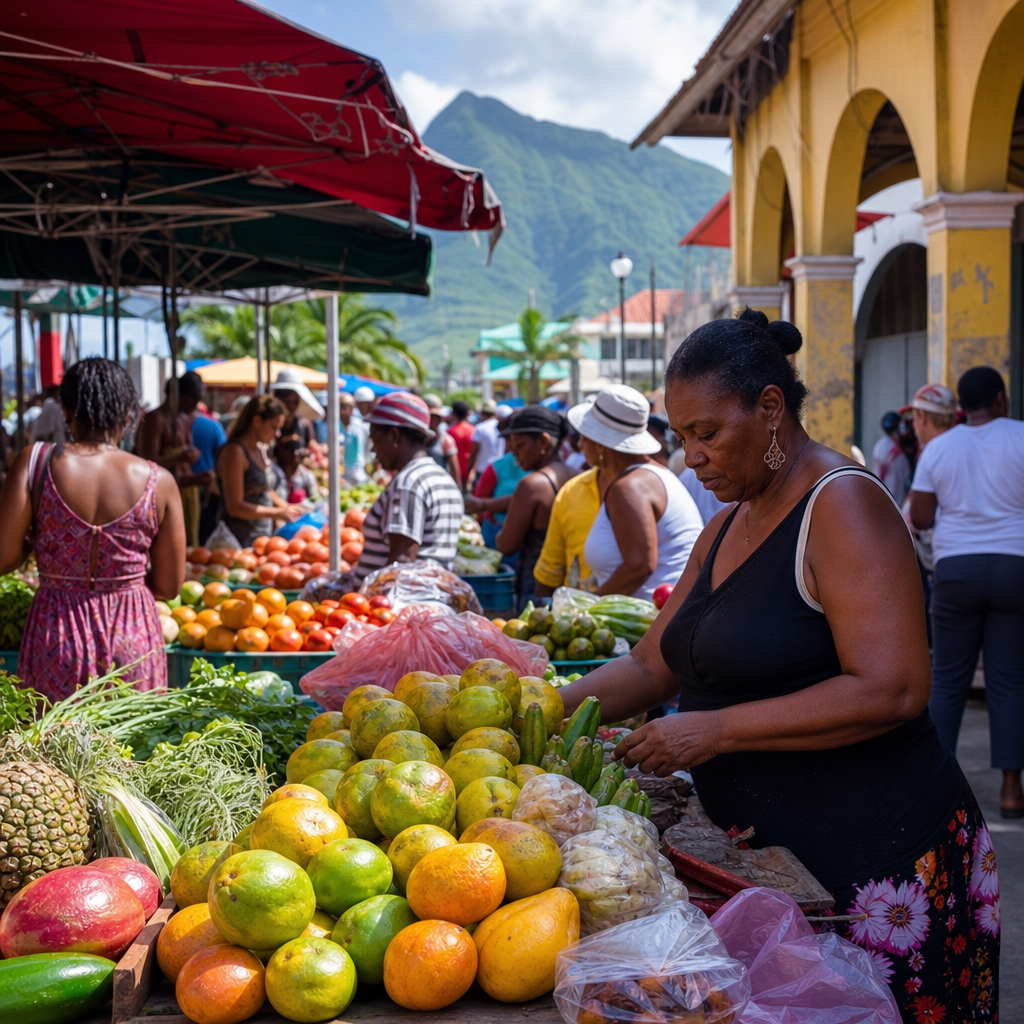
Fresh produce is the foundation. Expect staples such as plantains, green bananas, yams, sweet potatoes, cassava, eddoes, pumpkin, and breadfruit, all central to Caribbean home cooking. You may also find callaloo, thyme, scallions, hot peppers, cucumbers, tomatoes, okra, coconuts, and seasonal fruit. These ingredients are not decorative; they are the base of soups, stews, ground provisions, side dishes, and juices served across the island. A market visit becomes more meaningful when you recognize what these foods become on the plate: goat water, cook-up style meals, provision dishes, fresh salads, saltfish breakfasts, and fruit juices sold chilled on hot days.
Fish and seafood appear in some selling areas, especially through direct local exchange rather than polished retail presentation. Snapper, mahi-mahi, conch when available and legally sourced, and lobster in season may be discussed or offered depending on local catch and regulations. It is important to understand that marine products are shaped by conservation rules, weather, and small-vessel realities. Responsible vendors know these constraints. The best conversations happen when you ask what is in season rather than demanding a specific fish.
Crafts and locally made goods add another layer. Visitors often see carved items, woven baskets, handmade jewelry, spices, sauces, soaps, and small artworks. Quality varies, as it does in every market. Some goods are genuinely handmade in Saint Kitts; others are imported regional souvenirs. If local provenance matters to you, ask directly who made the item, what materials were used, and whether the design has a Kittitian story behind it. Serious artisans usually answer with detail. They can explain wood type, technique, symbolism, or family tradition. That conversation often becomes the most valuable part of the purchase.
| Category | Common Items | Why It Matters Culturally | Best Buying Tip |
|---|---|---|---|
| Ground provisions | Yams, cassava, sweet potatoes, breadfruit | Core ingredients in traditional home cooking | Ask how locals prepare each item |
| Fresh fruit | Mangoes, soursop, tamarind, guava | Reflects seasonality and small-scale farming | Buy what is in peak season, not what looks familiar |
| Herbs and spices | Thyme, scallion, hot pepper, spice mixes | Shows flavor foundations of island dishes | Ask vendors which blend suits fish or stews |
| Craft goods | Jewelry, carvings, baskets, soaps | Connects tourism spending with local creativity | Confirm whether the item is locally made |
How Markets Reflect Kittitian Culture and History
To understand local markets in Saint Kitts, you need to place them in the island’s historical context. Saint Kitts was deeply shaped by plantation agriculture, British colonial rule, African enslavement, emancipation, and long dependence on sugar production. Even after the sugar industry officially ended in 2005, its legacy remained visible in land use, labor patterns, and community memory. Markets became one of the spaces where people maintained food traditions outside large export systems. Small producers, backyard growers, fishers, cooks, and vendors preserved local knowledge that industrial agriculture rarely values.
That history explains why provisions and seasoning ingredients carry meaning beyond nutrition. Breadfruit, cassava, and yams are tied to survival, adaptation, and Afro-Caribbean foodways. Herbal knowledge passed through families still influences what is sold for teas, home remedies, and flavoring. Language also matters. In market interactions, you may hear expressions, rhythms, and humor that reveal Kittitian social style: direct but warm, practical but playful. These exchanges are not staged for visitors. They are living forms of culture.
Markets also show how tourism intersects with local life. In Saint Kitts, that relationship is neither wholly positive nor wholly negative. Visitor spending can support farmers and artisans, especially when purchases are made thoughtfully. At the same time, high tourism demand can encourage standard souvenir stock at the expense of distinctive local goods. The most resilient markets balance both audiences. They remain useful to residents while welcoming outsiders. When that balance is preserved, the market stays culturally alive rather than becoming a set piece.
How to Shop Respectfully and Get a Better Experience
The best market etiquette in Saint Kitts is simple: arrive curious, be patient, and remember that people are working. Ask before photographing a vendor or stall. Some will gladly say yes; others may not want their image taken, especially if they are busy. Greet people first. A straightforward good morning is not a minor courtesy in the Caribbean; it often sets the tone for the entire exchange. I have consistently found that respectful greeting opens more conversation than immediate bargaining ever does.
Bargaining is possible in some cases, especially for crafts, but it should not be aggressive. Saint Kitts is not a place where extreme haggling is admired. For produce, prices are often modest already, and shaving off a small amount can feel disrespectful when margins are thin. If you want value, buy in quantity, ask what is freshest, or request guidance on the best local item within your budget. Those questions invite expertise rather than confrontation.
Cash is still useful, particularly for small vendors, although digital payment is becoming more common in some businesses. Bring small denominations when possible. Reusable bags help, as sustainability and waste reduction are practical concerns on islands with limited disposal capacity. Most importantly, buy with intention. A single meaningful purchase from a knowledgeable farmer or artisan often contributes more to the local economy than a rushed handful of generic souvenirs.
Food, Festivals, and the Social Energy Around Markets
Local markets in Saint Kitts cannot be separated from the island’s wider food culture and calendar of events. During busy festive periods, especially around Carnival season, vending expands beyond routine produce trading. Street food, sweets, drinks, grilled meats, and handmade items become more visible, and the mood shifts from purely practical to celebratory. This does not replace the regular market; it amplifies the community energy already present there.
Food is the quickest bridge for most visitors. If you see tamarind balls, coconut drops, sugar cake, black pudding, saltfish preparations, pepper sauces, or fresh fruit juices, you are looking at everyday culinary identity, not novelty products. Ask what pairs well with local fish, which fruit is best for juice, or how a provision is boiled, roasted, or mashed. Vendors usually answer with specifics because these foods belong to real kitchens. That practical detail is exactly what turns a market stop into cultural understanding.
Markets also function as informal information networks. People exchange news, discuss politics, compare weather expectations, and recommend who has the best avocados or the hottest peppers. For an outsider, this social circulation can be easy to miss, but it is central to why markets endure. They are places of commerce, yes, but also places of recognition. In a small-island society, being seen and spoken to matters.
Using This Hub to Explore Local Life More Deeply
As a hub within the broader local life and experiences topic, this page should guide your next steps. If you want to understand Saint Kitts through everyday practice rather than packaged excursions, start with markets and follow the connections outward. Markets lead naturally to local food traditions, roadside eating, village rhythms, seasonal produce, handmade crafts, fishing culture, and festival life. Each of those subjects deserves its own deeper article because each reveals a different side of Kittitian identity.
A useful approach is to build an itinerary around questions instead of attractions. Where do residents shop for produce? Which ingredients define a Sunday meal? What craft techniques are genuinely local? How does seasonality affect what appears in kitchens and on stalls? Which vendors source directly from farms or boats? Asking those questions leads to better experiences than simply searching for the “best market” in generic travel terms. It also helps you support businesses that keep local knowledge active.
Exploring local markets in Saint Kitts is ultimately a cultural journey because it teaches you how the island feeds itself, presents itself, and remembers itself. You leave with more than fruit or gifts. You leave with sharper awareness of history, labor, taste, and community. If you are planning time in Saint Kitts, put a morning market visit on your itinerary, speak with vendors respectfully, and use this hub as your starting point for discovering the island’s everyday life in greater depth.
Frequently Asked Questions
What makes local markets in Saint Kitts such an important part of the island’s culture?
Local markets in Saint Kitts offer one of the most direct windows into everyday life on the island. While beaches and historic landmarks tell part of the story, markets reveal how people actually live, work, eat, trade, and connect. They bring together farmers, fishers, cooks, artisans, transport vendors, and families in one shared public space, making them a living expression of community rather than just a shopping destination. In these spaces, visitors can see how agriculture still shapes daily routines, how coastal life influences what people cook, and how generations of knowledge are passed along through food, storytelling, and exchange.
What makes these markets especially meaningful is their role as a meeting point between tradition and modern life. You may find locally grown produce such as breadfruit, pumpkin, yams, plantains, and herbs beside handmade goods, fresh juices, and prepared dishes rooted in Kittitian home cooking. The language, humor, bargaining style, music, and social energy all contribute to the experience. Even a simple conversation about fruit in season or how to prepare saltfish can reveal deep connections to ancestry, resourcefulness, and island identity. For travelers who want to understand Saint Kitts beyond the resort view, the market is one of the clearest and most authentic places to begin.
What kinds of foods and products can visitors expect to find at markets in St. Kitts?
Visitors to markets in St. Kitts can expect a colorful mix of fresh produce, seafood, spices, handmade items, and ready-to-eat local foods. Depending on the day and season, stalls may feature breadfruit, pumpkin, cassava, sweet potatoes, green bananas, mangoes, papayas, coconuts, soursop, and bundles of fresh herbs. These ingredients are not simply produce displays; they reflect the island’s farming patterns, household cooking traditions, and seasonal rhythms. For anyone interested in local cuisine, seeing these foods in the market provides useful context for dishes served across the island.
Seafood is another important part of the market experience, especially when fishers bring in the morning catch. Snapper, conch, lobster when in season, and other local varieties may appear depending on weather, timing, and availability. In addition to raw ingredients, visitors often encounter prepared foods such as patties, rotis, saltfish dishes, tamarind balls, local cakes, fresh fruit juices, and other snacks that are popular in everyday island life. Some markets also include craft vendors selling woven items, jewelry, soaps, spices, or souvenirs with a stronger local character than mass-produced tourist goods. Together, these products show how markets function as both economic hubs and cultural archives, preserving tastes, techniques, and forms of expression that are central to Saint Kitts.
When is the best time to visit a local market in Saint Kitts for the fullest experience?
The best time to visit a local market in Saint Kitts is usually in the morning, when activity is at its highest and the selection is often freshest. Early hours are when farmers arrive with produce, fishers may be unloading or delivering their catch, and regular shoppers are out completing daily or weekly errands. This is when the market feels most alive: conversations are flowing, prices are being discussed, food is being prepared, and the atmosphere is active without yet becoming too hot. If your goal is to experience the market as a true center of island life rather than a casual stop, morning is typically the ideal window.
It is also helpful to keep in mind that local markets can vary by day, season, and shipping or harvest conditions. Rainfall, fishing conditions, holidays, and crop cycles all influence what appears on the stalls. A market visit during a busy local period may feel very different from one timed around cruise traffic or a quieter week. For the richest cultural experience, it helps to go with flexibility and curiosity rather than a fixed shopping list. Arriving early, taking time to observe, and speaking with vendors about what is in season will usually lead to a much deeper understanding of the island than simply passing through in the middle of the day.
How should travelers behave when visiting markets in St. Kitts to show respect and connect with locals?
The best approach is to enter the market with patience, politeness, and genuine interest. In St. Kitts, as in many Caribbean communities, courtesy matters. A simple greeting before asking prices or questions goes a long way, and respectful conversation is often appreciated more than rushing from stall to stall. Travelers should remember that these markets primarily serve local people, not just visitors, so observing how others interact can be useful. Taking time to ask where produce comes from, how an ingredient is used, or what dish a vendor recommends often opens more meaningful exchanges than focusing only on buying souvenirs.
It is also wise to ask before photographing vendors, stalls, or prepared food, since not everyone wants to be part of a visitor’s travel album. Bargaining, if it happens, should remain friendly and modest; aggressive price negotiation can come across as disrespectful, especially when many vendors are working within tight margins. Carrying small cash is practical, and supporting local sellers by making a purchase after a conversation is a thoughtful gesture. Most importantly, travelers who show interest in the people behind the products often leave with more than goods. They gain stories, cooking tips, local recommendations, and a much stronger sense of the social fabric that gives Saint Kitts its character.
Why is exploring local markets in Saint Kitts better than relying only on beaches, resorts, or cruise excursions?
Beaches, resorts, and cruise excursions certainly highlight the natural beauty and convenience of Saint Kitts, but they often present the island in a curated way. Local markets offer something less polished and far more revealing: direct contact with the working life of the community. In the market, visitors encounter the island not as a packaged destination but as a place sustained by labor, memory, family networks, and everyday exchange. You can see what people are growing, cooking, valuing, and talking about in real time. That kind of insight is difficult to gain from formal tours alone.
Markets also encourage a slower, more participatory form of travel. Instead of moving through a fixed itinerary, you respond to smell, sound, conversation, and chance discovery. A conversation with a produce vendor may lead to learning about traditional cooking methods, seasonal shortages, or the changing role of farming on the island. A stop at a food stall may introduce flavors tied to family recipes and local celebrations. In this way, the market becomes a cultural classroom without walls. For travelers who want a fuller understanding of Saint Kitts, local markets provide context that scenic overlooks and organized excursions often cannot: they show the island as lived experience, not just as a beautiful backdrop.