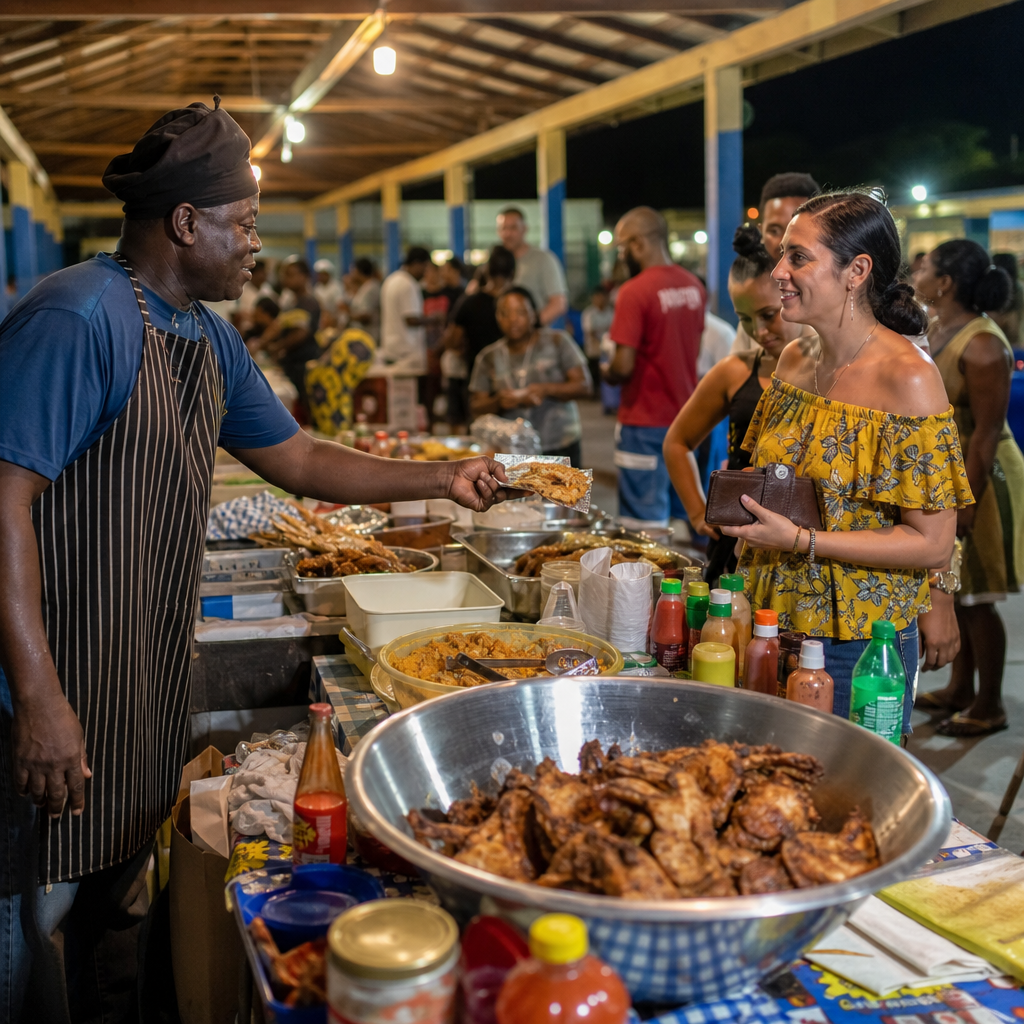
Nevis night markets offer one of the clearest windows into local life, combining food, music, craft, and conversation in a way that formal restaurants rarely can. On this small Caribbean island, a night market is more than a place to buy dinner. It is a social gathering point where farmers, fishers, cooks, artisans, taxi drivers, hotel guests, and families all move through the same space and share the same rhythms. For travelers focused on local cuisine and dining, these markets reveal how Nevisians actually eat, celebrate, and trade after sunset.
The term night market in Nevis usually refers to an evening event rather than a permanent daily bazaar on the scale seen in large Asian cities. Some are weekly community gatherings, some are seasonal festival-style pop-ups, and some appear around public holidays, waterfront celebrations, or village events. The common thread is direct access to local vendors selling grilled seafood, stewed meats, rotis, conch dishes, fresh juices, rum-based drinks, baked goods, and handmade products. Visitors also hear soca, reggae, and gospel, watch children play, and see everyday island life unfold without the filter of a resort dining room.
This matters because food tourism on Nevis is often reduced to notable restaurants, plantation inns, and beach bars. Those are important, but they tell only part of the story. A complete understanding of local cuisine and dining must include informal food economies, home-style recipes, seasonal ingredients, and community spaces where price, taste, and tradition meet. I have found that the best conversations about goat water, johnny cakes, tamarind sauce, or the proper texture of coconut dumplings happen while standing at a market stall, not while reading a menu. For anyone building a deeper itinerary around Nevis food culture, night markets serve as a practical starting point and a bridge to every related article in this subtopic.
What Nevis Night Markets Are and What You Will Find There
Nevis night markets are best understood as community food events anchored by small vendors and local entertainment. They may be held in village centers, near waterfront areas, at festival grounds, or in open public spaces that can support cooking stations and live music. Because Nevis is compact and community ties are strong, these markets feel intimate. You can often meet the person who caught the fish, baked the sweet bread, mixed the pepper sauce, or stitched the straw bag. That direct connection is a defining feature of the local experience.
The food range is broad. Expect grilled lobster when in season, fish cooked whole or in fillets, jerk chicken, barbecue pork, mutton, curried dishes, pelau, rice and peas, macaroni pie, plantains, fried festival-style bakes, and local soups. One dish visitors should know by name is goat water, Nevis’s famous slow-cooked goat stew seasoned with herbs and spices. Depending on the event, you may also find coconut tarts, guava pastries, black cake, cassava bread, soursop drinks, ginger beer, seamoss beverages, and fresh cane juice. These are not novelty items made for tourists. They are part of the island’s living food vocabulary.
Beyond food, markets often include handmade jewelry, woodwork, locally sewn clothing, paintings, herbal products, and small-batch preserves. Some vendors sell pepper sauces, jams, spice rubs, and sweets that work well as edible souvenirs. Music is central. A steelpan performer, a small band, or a DJ can shift the mood from relaxed browsing to a full community lime within minutes. That blend of dining and social life is exactly why this topic belongs at the center of any guide to local cuisine and dining on Nevis.
Signature Foods That Define the Market Experience
If your goal is to understand Nevis through its night markets, start with the dishes that locals order repeatedly. Goat water is the obvious anchor because it is both iconic and deeply specific to the island. Traditionally made with goat meat, bread, flour dumplings, and a savory broth enriched with aromatics, it is filling, practical, and historical. It emerged from communal cooking traditions and remains a staple at gatherings. A well-made bowl should taste layered rather than overly salty, with tender meat and dumplings that absorb the stock without disintegrating.
Seafood is another defining category because Nevisian cooking remains closely tied to the sea. Grilled snapper, mahi-mahi, lobster, and conch appear often, with preparation depending on season, supply, and the cook’s style. Simpler seasoning is usually a good sign. Fresh fish does not need much beyond green seasoning, citrus, pepper, and fire. In my experience, the stalls with the shortest written menus often produce the strongest seafood because they cook what arrived that day rather than stretching across too many options.
Side dishes matter just as much as mains. Rice and peas, provisions such as yam or sweet potato, fried plantains, coleslaw, and macaroni pie reveal local preferences for balance, texture, and satiety. Then there are the sauces: tamarind, mango chutney, hot pepper blends, and gravies built from pan drippings. Drinks also carry cultural meaning. Sorrel appears around the Christmas season, ginger beer is common year-round, and rum punches vary widely in strength and sweetness. Sampling these combinations is the fastest way to learn how Nevisian flavor profiles work in practice.
How Night Markets Connect to the Wider Local Cuisine and Dining Scene
As a hub within the local cuisine and dining topic, Nevis night markets should point readers toward the wider ecosystem of eating on the island. Markets intersect with nearly every dining subtopic. If you want to understand seafood restaurants, start by seeing which fish are celebrated at informal stalls. If you want to evaluate breakfast culture, buy local bakes or pastries from a market baker and compare them with hotel offerings. If you are researching vegetarian options, markets can show where ital-inspired plates, callaloo dishes, vegetable roti fillings, and fresh fruit preparations fit into everyday eating.
The same is true for beverages and culinary traditions. A market stall selling bush tea, mauby, or fresh juices opens the door to a deeper article about nonalcoholic local drinks. A vendor selling pepper sauce or guava jam naturally leads into a guide on edible souvenirs and pantry staples. A night market known for live grilling can connect to beach barbecue culture, while a market held during a holiday celebration can connect to festival foods and seasonal dining customs. In other words, this page works as a map: it introduces the most mixed and accessible setting, then branches into specialized experiences.
That hub function matters for trip planning. Travelers with only a few evenings on Nevis can use a market visit to decide where to spend the rest of their dining budget. If a certain cook’s curry stands out, ask where else they cater or cook. If you enjoy local sweets, find out which bakery supplies them. If a fisherman recommends a lunch spot for fresh catch, follow that lead. On a small island, food intelligence travels by conversation, and markets are where those conversations begin.
What to Expect: Atmosphere, Pricing, and Practical Details
Most visitors ask three practical questions: what does a Nevis night market feel like, how much does it cost, and how should you prepare? The atmosphere is usually casual, communal, and family-friendly. Dress codes are informal. You may see people arriving straight from work, children running between stalls, and visitors from nearby hotels mixing with regulars who know every vendor by name. Service can be warm but unhurried. These are social spaces, not fast-food lines, so patience is part of the experience.
Pricing is generally more approachable than resort dining, though costs vary with seafood, event scale, and tourist demand. A simple plate of grilled chicken with sides may be modestly priced, while lobster or specialty seafood can rise significantly. Cash is useful because some vendors may not accept cards, and small bills help. It is also smart to arrive neither too early nor too late. Going soon after opening gives you the widest food selection, while arriving at peak time gives you the fullest atmosphere. If an event is well known, popular dishes can sell out.
| What to Consider | Typical Nevis Night Market Reality | Best Visitor Approach |
|---|---|---|
| Food availability | Popular items may sell out before the event ends | Arrive early for signature dishes like goat water or grilled seafood |
| Payment | Cash is often easiest, especially for small purchases | Carry small denominations in Eastern Caribbean dollars |
| Atmosphere | Relaxed, social, and sometimes crowded near music or grills | Expect a slower pace and spend time talking with vendors |
| Menu style | Short menus often reflect fresh ingredients and vendor specialization | Choose stalls focused on a few dishes done well |
| Family friendliness | Many markets welcome all ages and feel community-centered | Visit with children early, before the crowd grows denser |
Transport planning is straightforward but important. If you are staying near Charlestown, some events may be a short taxi ride away, while others require prearranged transport. Ask accommodation staff which markets are active during your stay, because schedules can change with season, weather, or local programming. The island’s tourism office, hotel concierge teams, and active local social media pages are often the most reliable current sources.
How to Find the Best Vendors and Eat Like a Respectful Guest
The simplest strategy for finding the best food is to watch local behavior. Long lines of residents are usually a stronger signal than polished signage. Look for stalls with steady turnover, clean work areas, hot food moving quickly from grill to plate, and cooks who can explain what is in the dish. Ask direct questions: Is the fish local? Is the goat water spicy? What side do people usually pair with this? Good vendors answer confidently because they know their product and cook it often.
Respect matters. Nevis is welcoming, but a market is still a local space first. Greet people, wait your turn, and avoid treating stalls like props for social media content. If you want photos, ask. If you are unsure what to order, ask for recommendations rather than demanding substitutions that disrupt a vendor’s flow. Try at least one unfamiliar item. Supporting small producers with a drink, dessert, or jar of sauce in addition to your main meal makes a real difference because margins in small-scale food vending are often tight.
There are also health and comfort basics. Choose busy stalls where cooked food is held properly and ingredients seem fresh. If you have allergies, be explicit, especially around shellfish, peanuts, dairy, and pepper sauces. Bring water, tissues, and insect repellent if the event is outdoors. These are simple habits, but they help you focus on the experience itself: listening to music, talking with cooks, and tasting the island in a form that feels immediate and unpolished.
Seasonality, Events, and the Role of Culture After Dark
Night markets on Nevis are shaped by seasonality and the island’s event calendar. Seafood offerings depend on catch, weather, and closed seasons that protect marine resources. Fruit drinks and desserts shift with harvest cycles, so mango, tamarind, guava, and soursop may be more prominent at different times of year. Holiday periods can transform a standard market into a broader celebration with extra vendors, performances, and specialty foods tied to Christmas, Culturama energy, or community fundraisers.
This seasonal variation is not a drawback. It is the point. Markets reflect real local supply rather than fixed tourist expectations. That means one visit may feature exceptional lobster and another may be stronger for stewed meats, pastries, and live music. Travelers who accept that variability usually have better experiences than those chasing a rigid checklist. Ask what is good tonight, not what should always be available. The answer tells you more about Nevis than any static menu can.
Culturally, night markets matter because they keep public social life visible. In many destinations, visitors interact mainly with hospitality workers. At a Nevis market, they witness community exchange in a broader sense: local entrepreneurship, intergenerational recipes, church fundraising, school performances, and neighborhood identity. That makes a market visit valuable even if you already have fine-dining reservations. It rounds out the picture of the island and grounds your culinary experience in the people who sustain it.
Nevis night markets deserve a central place in any serious guide to local cuisine and dining because they combine the island’s flavors, people, and rhythms in one accessible setting. They are where signature dishes such as goat water meet fresh seafood, handmade sweets, local drinks, and casual conversation. They also function as a practical hub for every related dining experience on the island, helping travelers discover restaurants, bakers, fish vendors, festival foods, and edible souvenirs through direct local recommendations.
The key takeaway is simple: if you want to taste local life on Nevis, start after dark in a market space where residents actually gather. Come hungry, carry cash, ask questions, and follow the busiest stalls. Use what you learn there to shape the rest of your trip, from breakfast stops to beach lunches and special dinners. For a more complete Nevis itinerary, explore the related articles in this local cuisine and dining section and build your trip around the foods locals return to again and again.
Frequently Asked Questions
What makes Nevis night markets different from eating at a restaurant?
Nevis night markets offer a much closer view of everyday island life than a typical restaurant experience. While restaurants can showcase excellent Caribbean cooking, a night market places visitors directly inside the flow of the community. You are not just ordering a meal and sitting at a table. You are moving among stalls, talking with cooks, watching food prepared in real time, hearing local music, and seeing neighbors greet one another as the evening unfolds. The atmosphere is informal, social, and deeply rooted in the rhythms of the island.
For travelers interested in local cuisine, this matters because the market reveals how food fits into Nevisian life beyond the menu. You may find grilled fish, goat water, barbecue, roti, johnny cakes, fresh juices, and seasonal produce all presented in ways that reflect family recipes and practical island cooking. At the same time, craftspeople, farmers, fishers, and families share the same space, making the market feel like a community gathering rather than a tourist performance. That combination of food, conversation, and culture is what makes Nevis night markets so memorable.
What kinds of food and drink can you expect to find at Nevis night markets?
The exact lineup can vary by evening, season, and vendor, but most Nevis night markets highlight a broad range of local flavors. Fresh seafood is often a major draw, especially grilled or fried fish prepared simply and served hot. Visitors may also come across chicken dishes, pork, stewed meats, rice and peas, plantains, festival-style breads, and soups or stews that reflect traditional island cooking. Goat water, the famous hearty stew associated with Nevis, is one of the dishes many travelers hope to try because it speaks directly to the island’s culinary identity.
Beyond main dishes, the markets are often excellent places to discover everyday favorites and small bites. You might see patties, roasted corn, fritters, coconut-based sweets, tamarind treats, or homemade sauces and seasonings. Fresh fruit juices are another highlight, sometimes made with local ingredients such as passion fruit, soursop, tamarind, sorrel, or ginger. Depending on the setting, there may also be rum punch or other island drinks available. One of the advantages of a night market is the chance to sample several things in one visit, which makes it ideal for travelers who want a wider taste of Nevis than a single restaurant meal can usually provide.
Are Nevis night markets mainly for tourists, or are they genuinely local?
Nevis night markets are valuable precisely because they tend to be genuinely local spaces. Visitors are welcome, of course, but the heart of the experience comes from the fact that residents also attend for the same reasons: to eat, meet friends, support vendors, listen to music, and spend time outdoors in a lively setting. It is common to find a mix of people in the same space, including families, workers finishing their day, artisans selling handmade goods, taxi drivers stopping for dinner, and travelers looking for a more grounded experience of the island.
That local participation changes the atmosphere in an important way. Instead of feeling staged, the evening feels lived-in and authentic. Conversations happen naturally, and travelers often leave with a better understanding of Nevisian hospitality, humor, and social life. If you approach the market with curiosity and respect, it can become one of the easiest and most enjoyable ways to connect with the island beyond resort walls or formal dining rooms. In that sense, the market is not just a place to observe local culture. It is a place where local culture is actively happening.
What is the best way to experience a night market in Nevis as a visitor?
The best approach is to arrive with time, flexibility, and an appetite to explore. Rather than rushing in for one dish and leaving, plan to wander slowly, see what different vendors are offering, and ask questions when appropriate. Many of the best moments come from simple interactions: asking what is fresh that night, learning how a dish is traditionally prepared, or getting a recommendation from a vendor or local customer. Because market offerings can change, being open to trying what is available that evening often leads to the most rewarding meal.
It is also wise to bring cash, dress casually, and expect a relaxed pace. Some stalls may have limited quantities of the most popular dishes, so arriving earlier in the evening can be a good idea if there is something specific you want to try. At the same time, staying a little longer allows you to enjoy the social side of the market, including music, people-watching, and the overall energy of the crowd. Visitors who treat the market as a cultural experience rather than just a food stop usually get the most out of it. The goal is not only to eat well, but to take part, even briefly, in a shared community evening.
Why are Nevis night markets important for understanding the island’s culture?
Nevis night markets bring together several parts of island life in one place: food, music, craftsmanship, conversation, and community exchange. That makes them especially useful for anyone trying to understand the character of Nevis beyond its beaches and hotels. The market reflects how people source ingredients, what they cook for comfort and celebration, how they support small vendors, and how public social life works on the island. In a very practical sense, it shows how culture is lived from week to week.
For travelers interested in dining, the importance goes even further. Markets demonstrate that cuisine in Nevis is not only about polished presentation or special-occasion meals. It is also about accessibility, familiarity, seasonality, and personal connection. Recipes often carry family history, ingredients may come from local farms or nearby waters, and the meal is shaped by direct interaction with the person preparing it. That immediacy helps visitors appreciate the island’s food traditions in a more complete way. A night market is therefore not just a fun evening out. It is one of the clearest, most direct windows into the everyday soul of Nevis.