Saint Kitts’ organic food scene reflects a broader shift in Caribbean dining toward healthier eating, local sourcing, and agricultural resilience. On an island better known internationally for beaches, cruise stops, and historic sugar plantations, a quieter food movement has taken root in farms, market stalls, guesthouses, and restaurant kitchens. Organic food, in this context, generally refers to produce and ingredients grown with minimal synthetic pesticides, fertilizers, and herbicides, often using composting, crop rotation, mixed planting, and natural pest management. In Saint Kitts, the term can also overlap with “local,” “small farm,” and “naturally grown,” because many producers follow low-input methods even when they do not hold formal certification. That distinction matters for travelers, residents, and anyone exploring local cuisine and dining, because understanding how food is produced helps people choose meals that support both personal health and the island’s long-term sustainability.
Having worked with Caribbean food tourism content and spoken with growers, chefs, and market vendors across small-island destinations, I have seen the same pattern repeatedly: where imported food once dominated menus, locally grown organic and near-organic ingredients now create a fresher and more distinctive dining culture. Saint Kitts is a strong example. Limited arable land, shifting rainfall, high import dependence, and rising interest in wellness have pushed farmers and food businesses to rethink what is grown and served. The result is not a rigid, fully certified organic system on the model of large North American or European markets. Instead, it is a practical ecosystem built on kitchen gardens, mixed farms, seasonal vegetables, tropical fruits, herbs, free-range eggs, and community relationships. For readers using this page as a hub within the wider Local Cuisine and Dining topic, the key takeaway is simple: Saint Kitts’ organic food scene is less about labels and more about traceability, freshness, and sustainable choices that connect field to plate.
What “organic” means in Saint Kitts and why local context matters
In Saint Kitts, organic food is best understood through production methods rather than branding alone. Formal third-party certification can be expensive and administratively heavy for small farmers, especially on islands where plots are modest and distribution chains are short. As a result, many growers use organic principles without prominently marketing certified status. They rely on compost, manure, mulching, manual weeding, companion planting, and low-volume natural treatments to protect crops such as lettuce, kale, pak choi, tomatoes, sweet peppers, cucumbers, pumpkins, and herbs. Consumers often buy directly from the person who grew the food, which creates a level of transparency that can matter as much as a printed seal. Asking how the produce was grown is normal and useful.
This local context affects how people should shop and dine. A visitor searching only for the word “organic” on a menu may miss excellent ingredients sourced from responsible nearby farms. A better approach is to look for wording such as local produce, farm-to-table, seasonal specials, kitchen garden herbs, or island-grown greens. Restaurants that rotate menus based on supply are often signaling genuine local sourcing. So are cafés that feature fresh juices made with island fruits, soups built around breadfruit or pumpkin, and salads using recently harvested greens. In practical terms, Saint Kitts rewards diners who ask direct questions: Where did this come from? Is it in season? Do you work with local farmers? Those questions usually lead to the most sustainable and flavorful choices.
How the island’s farming conditions shape healthy and sustainable food choices
Saint Kitts’ agricultural environment strongly influences what organic eating looks like on the island. The tropical climate supports year-round production, but weather patterns, soil management, water access, storms, and pest pressure make farming unpredictable. Small islands also face high freight costs, which raise the price of imported produce and packaged health foods. That challenge creates an opening for local farmers who can supply fresher ingredients with fewer transport miles. When I review island food systems, one point always stands out: produce harvested in the morning and sold the same day usually retains better texture, aroma, and practical nutrient value than items shipped over long distances and stored in cold chains for days.
Sustainable choices in Saint Kitts therefore begin with seasonality. Mangoes, papayas, soursop, guavas, coconuts, plantains, breadfruit, cassava, sweet potatoes, and leafy greens all fit naturally into healthier eating patterns while aligning with local growing conditions. These foods also support menu diversity beyond imported lettuce mixes and processed side dishes. Breadfruit, for example, is high in complex carbohydrates and fiber, and it can replace heavily refined starches in roasted, mashed, or chip form. Callaloo and other dark leafy greens provide iron, carotenoids, and folate. Herbs such as thyme, chive, basil, and parsley add flavor without excess sodium. When restaurants center these ingredients, they make healthy eating more accessible and reduce dependence on imported products that carry a larger environmental footprint.
Where to find organic and naturally grown food in Saint Kitts
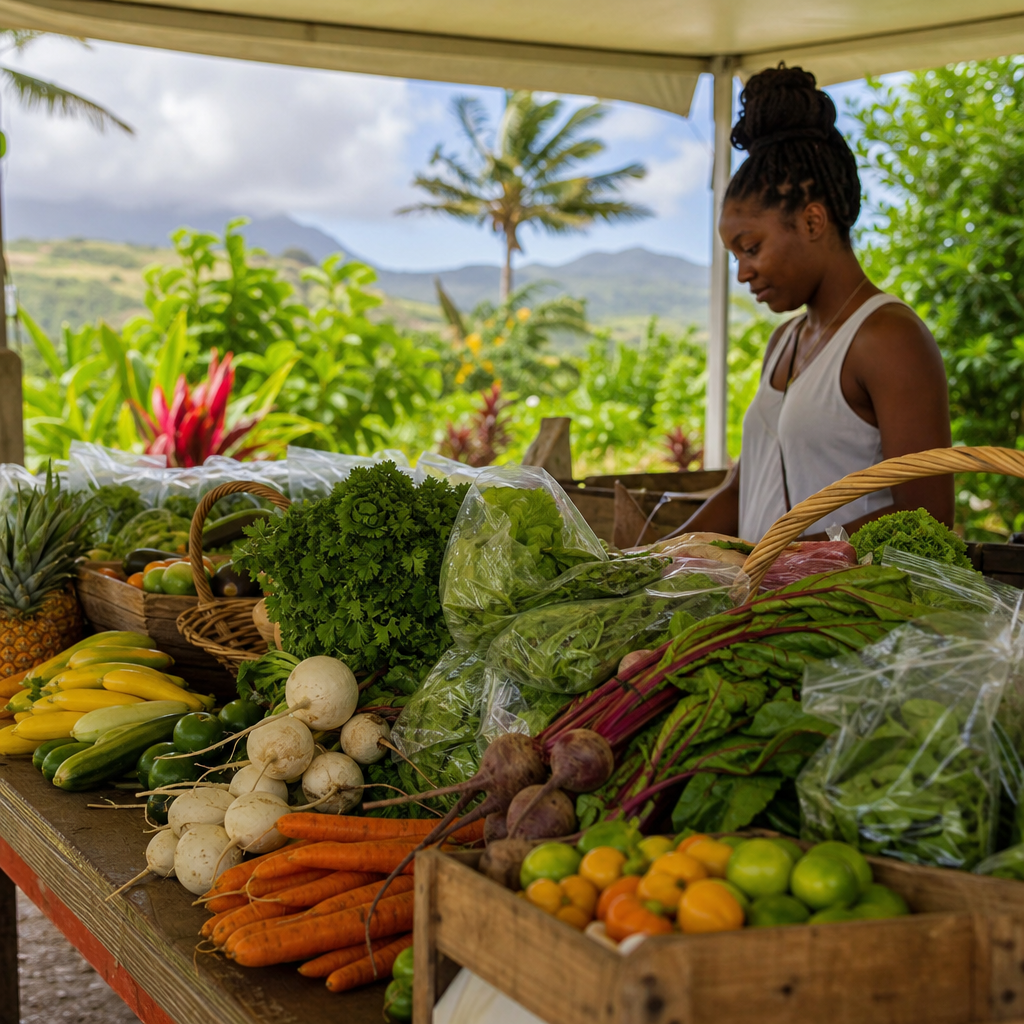
The best places to find organic and naturally grown food in Saint Kitts are farmers markets, roadside produce stalls, community events, small groceries that highlight island suppliers, and restaurants with direct farm relationships. Basseterre and surrounding communities often provide the widest mix of produce sellers, but some of the most interesting purchases come from informal channels: a vendor with just-picked herbs, a guesthouse growing its own salad greens, or a farm supplying eggs, vegetables, and fruit boxes to repeat customers. Cruise visitors may only see the retail front of the food scene, yet residents and longer-stay travelers usually discover that asking hotel staff, taxi drivers, or restaurant owners for a reliable produce source leads to better options than relying solely on supermarkets.
Supermarkets still play an important role, especially for pantry goods, but they cannot always match the freshness or source transparency of direct sales. A useful buying framework is to prioritize highly perishable items locally: leafy greens, tomatoes, cucumbers, herbs, tropical fruit, eggs, and fresh juices. Then use retail stores for staples such as oats, rice, legumes, nut butters, teas, and imported specialty items when needed. If you are building a healthy vacation routine, this combination works well. Buy fruit and greens from local suppliers, choose grilled fish or vegetable-focused meals at restaurants, and keep simple breakfast items in your accommodation. On islands, small decisions like that support local agriculture while improving meal quality.
| Source | Best for | Main advantage | What to ask |
|---|---|---|---|
| Farmers market | Seasonal produce, herbs, eggs | Direct access to growers and freshest harvest | How was it grown, and when was it picked? |
| Roadside stall | Fruit, root crops, coconuts | Convenient, often highly local supply | Which farm or district did this come from? |
| Restaurant with local sourcing | Prepared organic-friendly meals | Chef selection and menu creativity | Which ingredients are island-grown today? |
| Supermarket | Pantry staples and backup produce | Consistency and one-stop shopping | Is any produce locally sourced or pesticide-reduced? |
What to eat: ingredients, dishes, and healthier menu patterns
Saint Kitts’ organic food scene becomes most meaningful when translated into actual meals. The strongest choices usually combine local vegetables, tropical fruit, fresh seafood, legumes, and traditional ground provisions. Look for breakfasts built around fresh fruit, coconut, oats, eggs, and herbal teas instead of imported pastries and sugary cereals. At lunch, salads with island greens, grilled fish, pumpkin soup, bean dishes, or provisions such as yam and sweet potato offer steadier energy than heavily fried fast food. For dinner, the best menus balance protein with vegetables and starches that reflect the island’s agricultural base.
Several ingredients deserve special attention because they bridge health and sustainability particularly well. Breadfruit is versatile, filling, and locally adapted. Pumpkin supports soups, roasted sides, and purées with natural sweetness and good fiber content. Callaloo, whether served as a side or in soups and stews, is one of the island’s smartest nutrient-dense options. Fresh fish paired with herbs, lime, and vegetables can be both lighter and more representative of Saint Kitts than imported red meat dishes. Fruit-based drinks also matter. Choosing fresh juices or smoothies made from mango, papaya, soursop, passion fruit, and coconut water is usually better than consuming sweetened bottled beverages, especially when the fruit is grown on island.
That said, healthy eating in Saint Kitts is not about rejecting local comfort food. It is about recognizing preparation methods and portion balance. Many Caribbean dishes can be made lighter without losing identity: grilled instead of deep-fried fish, steamed vegetables instead of excess starch, fresh herb seasoning instead of heavy salt, and fruit for dessert instead of packaged sweets. Restaurants that understand this balance are often the most rewarding, because they preserve local flavor while aligning with modern wellness expectations.
The role of restaurants, resorts, and food entrepreneurs
Restaurants and resorts influence the island’s organic food scene more than casual observers may realize. They shape demand, purchasing standards, and diner expectations. When a hotel chef commits to buying local greens, herbs, eggs, or seasonal fruit every week, that regular demand gives farmers confidence to plant more. When a restaurant highlights the source of its produce on the menu, it teaches customers to value origin and seasonality. I have seen this dynamic across island destinations: one chef deciding to feature local salad greens instead of imported mixes can create a small but meaningful market shift.
In Saint Kitts, independent cafés, wellness-focused eateries, juice bars, and boutique accommodations are especially important because they often experiment faster than large hospitality operations. They introduce vegetarian plates, vegan bowls, fresh-pressed juices, herb-forward cooking, and lighter Caribbean menus that showcase local ingredients. Food entrepreneurs also fill gaps through meal prep services, farm boxes, small-batch preserves, herbal products, and educational pop-ups. These businesses may seem modest individually, but together they build the supporting infrastructure that makes healthy and sustainable eating normal rather than niche.
Large resorts can contribute at a different scale. They have the purchasing power to contract growers, invest in kitchen gardens, reduce food miles for selected items, and use composting systems to return organic waste to the soil. Their challenge is consistency. Guests expect year-round availability, but local supply naturally fluctuates. The most credible operations solve this by being honest about seasonal sourcing rather than claiming everything is local all the time. Menus that identify specific island-grown ingredients are usually more trustworthy than vague sustainability slogans.
Challenges, tradeoffs, and what the future looks like
Saint Kitts’ organic food scene is promising, but it is not without constraints. Price is the most obvious issue. Small-scale production often costs more per unit than imported bulk goods, particularly when labor, irrigation, and post-harvest losses are considered. Weather is another factor. Heavy rain, drought periods, and storm risk can affect both yield and quality. Pest management on small tropical farms requires constant attention, and limited cold storage can shorten selling windows for delicate produce. These realities explain why supply may be inconsistent and why restaurants sometimes struggle to keep local organic items continuously available.
There is also a language challenge. Because certification is limited, consumers must navigate terms such as organic, naturally grown, pesticide-free, local, and sustainable with care. None of these words should be accepted blindly. The practical solution is informed curiosity. Ask vendors about inputs, growing methods, and harvest schedules. Ask restaurants which farms they buy from. Ask whether a menu special changes with the season. In my experience, businesses that answer specifically tend to be the ones doing the real work.
Looking ahead, the island’s prospects are strong if stakeholders continue investing in farmer-chef partnerships, protected agriculture, soil improvement, water management, and public education around local food value. School gardens, culinary training, and community markets can all strengthen demand. For readers exploring Saint Kitts through its Local Cuisine and Dining offerings, this hub matters because organic food connects many threads at once: health, taste, environment, culture, and economic resilience. Choose meals built around island-grown produce, support businesses that name their sources, and treat every market visit as part of the destination experience. That approach delivers the clearest benefit of Saint Kitts’ organic food scene: better food that sustains both the person eating it and the island producing it. Whether you are planning a trip or refining your dining guide, start with one step today—seek out a local grower, ask what is in season, and let that answer shape your next meal.
Frequently Asked Questions
What does “organic” usually mean in Saint Kitts’ food scene?
In Saint Kitts, the term “organic” often reflects a practical, small-island approach rather than a rigid, large-scale certification system. Many growers focus on cultivating fruits, vegetables, herbs, and other crops with minimal use of synthetic pesticides, chemical fertilizers, and herbicides, even if they do not carry formal international organic certification. That is because farming on the island is frequently done on a small scale, through family plots, mixed farms, kitchen gardens, and community-based agricultural efforts where sustainable methods are part of tradition as much as modern health awareness.
For consumers, this means organic food in Saint Kitts is often closely tied to trust, transparency, and local relationships. Shoppers may speak directly with farmers at roadside stands or markets to learn how produce was grown, what pest-control methods were used, and whether composting or natural soil-building practices were part of the process. In many cases, “organic” also overlaps with “locally grown,” “seasonal,” and “fresh-picked,” which are important markers of quality on the island. While definitions can vary from one producer to another, the broader idea centers on healthier cultivation practices, reduced chemical input, and a stronger connection between the land, the farmer, and the food being served.
Why is organic and locally sourced food becoming more popular in Saint Kitts?
The rise of organic and locally sourced food in Saint Kitts is part of a wider Caribbean shift toward better health, stronger local economies, and more resilient agriculture. Many residents and visitors are increasingly interested in knowing where their food comes from and how it was produced. Fresh produce grown on-island can often reach kitchens much faster than imported food, which supports better flavor, higher perceived freshness, and less dependence on long supply chains. That matters on an island where imported goods have historically played a major role in the food system.
Health is another major driver. As more people become conscious of diet-related concerns and the long-term effects of heavily processed foods, interest in vegetables, fruits, herbs, and naturally raised ingredients has grown. Organic and low-chemical farming methods appeal to consumers who want cleaner eating habits and a more wholesome approach to meals. At the same time, chefs, guesthouses, and restaurants have recognized that local ingredients can elevate the dining experience by offering authentic Caribbean flavors tied to the island’s soil, climate, and seasons.
There is also an important sustainability angle. Supporting local farmers helps keep agricultural knowledge alive, creates economic opportunities in rural areas, and strengthens food security. In a region vulnerable to shipping disruptions, climate pressures, and fluctuating import costs, investing in local production is not just a lifestyle choice; it is a practical strategy. Organic food in Saint Kitts therefore represents more than a trend. It reflects a growing commitment to nourishment, environmental care, and agricultural resilience.
Where can visitors and residents find organic or sustainably grown food in Saint Kitts?
Organic and sustainably grown food in Saint Kitts can often be found in a mix of informal and hospitality-based settings rather than only in specialty grocery stores. Farmers’ markets, roadside produce stalls, small community vendors, and direct-from-farm sales are some of the most common ways people access fresh local food. These spaces are especially valuable because they allow buyers to ask questions directly, compare seasonal offerings, and build familiarity with growers who use low-input or eco-conscious methods.
Many guesthouses, villas, and locally minded restaurants also play a growing role in the island’s organic food culture. Some source herbs, leafy greens, root crops, fruits, and spices from nearby farms or even maintain their own gardens for kitchen use. Menus that highlight local catch, island-grown vegetables, tropical fruits, and fresh herbs often signal a commitment to sustainable sourcing, even when the word “organic” is not heavily advertised. In Saint Kitts, the food movement is often understated, so visitors may discover some of the best options by asking hotel staff, restaurant servers, market vendors, or residents where locally grown produce is coming from.
For the best experience, it helps to shop seasonally and stay flexible. Availability can shift based on weather, harvest cycles, and farm size. Instead of expecting a supermarket-style year-round selection, consumers will often find a rotating variety of produce shaped by the island’s natural rhythms. That seasonality is part of what makes Saint Kitts’ organic food scene distinctive, fresh, and closely connected to place.
What are the benefits of choosing organic food in Saint Kitts?
Choosing organic food in Saint Kitts offers benefits that are nutritional, environmental, cultural, and economic. From a health perspective, many people prefer organic or minimally treated produce because it aligns with a cleaner eating philosophy centered on fresh ingredients and reduced exposure to synthetic agricultural chemicals. While consumers may have different reasons for prioritizing organic foods, the appeal often lies in simplicity: more whole foods, less processing, and ingredients that feel closer to their natural state.
Environmentally, organic and sustainable farming practices can help support healthier soils, reduce chemical runoff, encourage biodiversity, and promote better long-term land stewardship. On a small island, land and water resources are especially valuable, so practices that protect ecosystems carry added significance. Farmers who use compost, crop rotation, mixed planting, and lower-input methods contribute to a more balanced agricultural model that can be better suited to long-term resilience.
There are also important community benefits. Buying from local farmers helps circulate money within Saint Kitts, supports agricultural livelihoods, and encourages younger generations to see farming as meaningful and viable work. It reinforces the island’s food identity at a time when imported products can easily overshadow local harvests. For visitors, choosing organic and local food can create a more authentic travel experience, one rooted not just in scenery but in the island’s daily life, traditions, and evolving values around sustainability. In that sense, every purchase can help strengthen a food system that is healthier for people and more supportive of the island itself.
Are there any challenges facing Saint Kitts’ organic food movement?
Yes, Saint Kitts’ organic food movement has clear promise, but it also faces real structural and environmental challenges. One of the biggest is scale. Because the island has limited land, many farms are relatively small, which can make it difficult to produce large volumes consistently. Weather conditions, including heavy rains, drought periods, and storm threats, can also affect yields and crop reliability. These factors make organic farming more labor-intensive and sometimes more vulnerable than imported food systems that draw from larger regional or international supply networks.
Another challenge is the cost and complexity of inputs, distribution, and certification. Formal organic certification may be expensive or impractical for many small producers, even when their methods closely align with organic principles. Transportation, storage, and market access can also create barriers, particularly if farms are trying to supply hotels, restaurants, and households on a regular schedule. Consumers may at times encounter higher prices for local organic produce, not because of excess profit, but because small-scale farming on an island often comes with higher production risks and fewer economies of scale.
Education and awareness are also part of the picture. Some consumers may not fully understand the difference between imported produce, conventionally grown local produce, and sustainably farmed or near-organic local crops. That makes communication essential. Farmers, chefs, hospitality operators, and community advocates all play a role in helping people appreciate why local organic food matters. Despite these challenges, the movement continues to grow because it addresses issues that are deeply relevant to Saint Kitts: public health, environmental stewardship, food independence, and the preservation of local agricultural knowledge. Its progress may be gradual, but its long-term importance is substantial.