Saint Kitts’ full moon hikes turn an ordinary island walk into a lunar experience shaped by volcanic terrain, sea air, and the quiet glow that settles over the Caribbean after sunset. On this island, a full moon hike usually means an organized evening trek on established trails, most often led by local guides who know the ridgelines, forest edges, and weather patterns that can change quickly after dark. The experience matters because it combines several reasons people visit Saint Kitts in the first place: dramatic scenery, outdoor adventure, local storytelling, and a pace that feels more reflective than a daytime excursion. For travelers exploring adventure and activities on the island, this topic also works as a practical hub because it connects to broader interests such as hiking, wellness travel, photography, guided eco-tours, and seasonal events.
I have planned and reviewed Caribbean hiking experiences for travelers who wanted more than a beach itinerary, and full moon walks on Saint Kitts stand out for one simple reason: the island’s landscape does real work after dark. Moonlight catches the contours of old sugar lands, illuminates coastal overlooks, and creates enough contrast in open sections of trail to make the terrain feel theatrical without becoming inaccessible to reasonably fit beginners. At the same time, these hikes are not casual moonlit strolls everywhere on the island. Route quality, cloud cover, humidity, and group management all affect safety and enjoyment, which is why choosing the right guide and understanding conditions is essential.
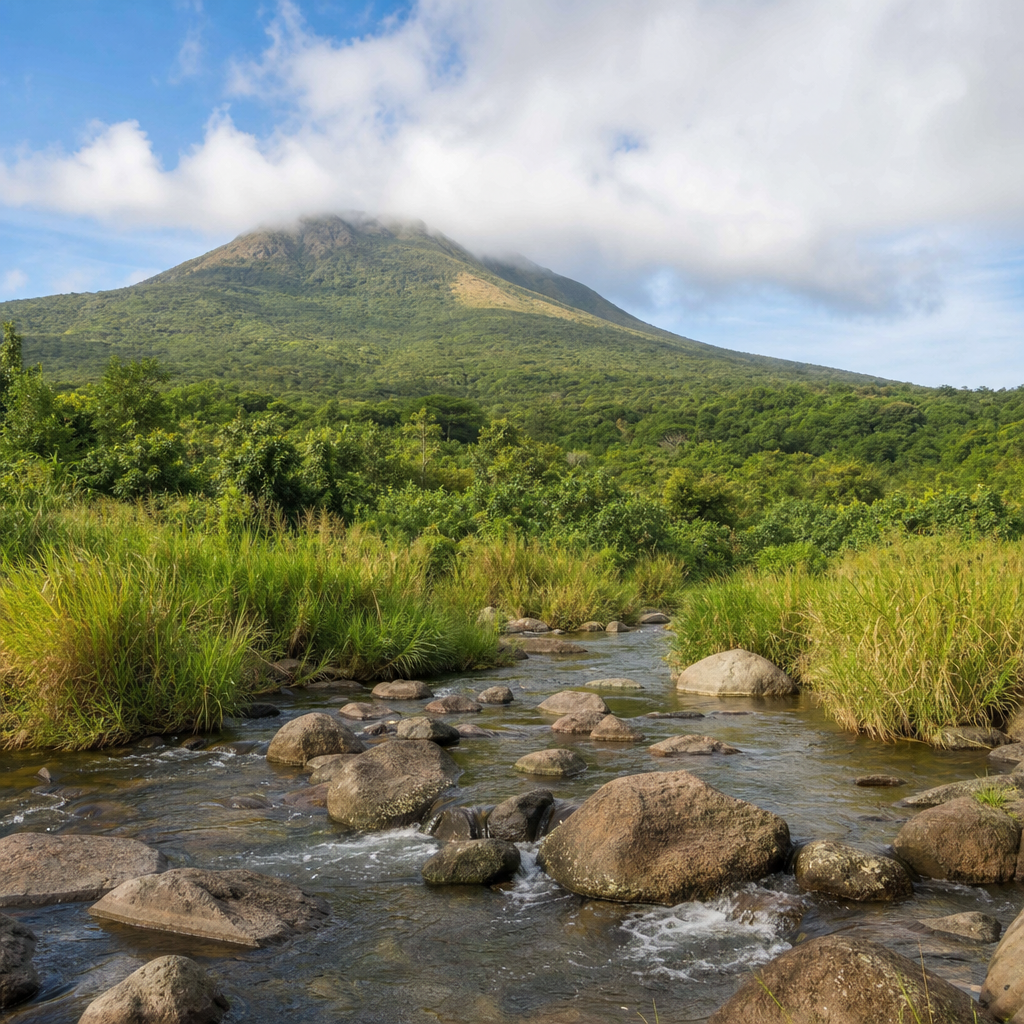
Saint Kitts itself is well suited to this activity. The island’s interior rises toward Mount Liamuiga, a stratovolcano that defines local geography, while lower elevations include former plantation lands, rainforest margins, and coastal viewpoints. That range of terrain creates multiple options for after-dark outings, from gentle walking routes to more strenuous climbs timed around moonrise or moonset. In practical terms, travelers often ask the same questions: what should you expect, who is it for, when should you go, what should you bring, and is it safe? A strong guide operation should answer each one clearly before departure.
As a hub topic within miscellaneous adventure and activities, full moon hiking also links naturally to adjacent experiences. Visitors who enjoy a lunar trek often book sunrise volcano hikes, historical estate visits, stargazing sessions, night photography outings, beach dinners, or catamaran cruises scheduled near the full moon. That makes this subject broader than a single event. It is a gateway into how Saint Kitts uses landscape and culture together. The best full moon hikes are not only about seeing the moon; they are about understanding the island differently when daylight recedes and sound, temperature, and perspective change.
What a full moon hike in Saint Kitts is really like
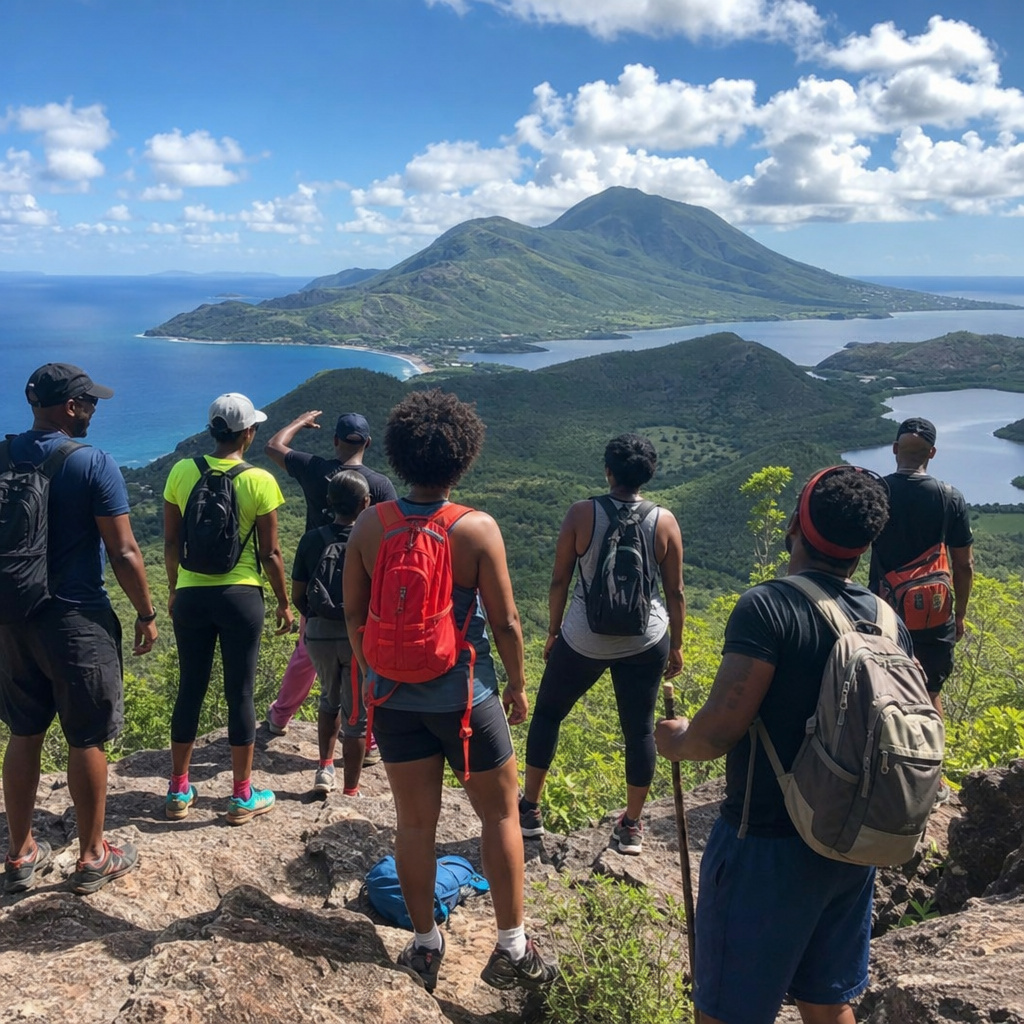
A full moon hike in Saint Kitts is typically a guided group walk scheduled within a day or two of the full moon, when lunar illumination is strongest and trail visibility is at its most reliable. Most operators choose routes that balance scenery and safety rather than attempting the island’s most technical terrain after dark. In practice, that often means moderate trails with open stretches, known footing, and stopping points where participants can look toward the coast, Basseterre, or neighboring Nevis across The Narrows. The mood is calmer than a daytime group adventure. People speak more quietly, guides pause more often, and the sensory experience shifts from broad views to details like tree silhouettes, insects, wind through grass, and the changing brightness of the moon as clouds move.
The most memorable routes usually combine elevation with exposure to the sky. Rainforest interior sections can be beautiful, but dense canopy limits moonlight, so many of the strongest lunar hikes include ridges, old estate roads, pasture edges, or lookout areas. On Saint Kitts, guides may frame the experience around natural history, plantation-era landscapes, or folklore, which adds texture beyond the physical challenge. This is where the island differs from destinations that market moon hikes as pure fitness activities. Here, the walk can feel interpretive as much as athletic.
Expect a slower pace than a daytime hike of comparable distance. Even experienced groups move more deliberately at night, and good leaders build in time for adaptation to darkness, hydration checks, and regrouping. A four-mile route after sunset can feel fuller and more immersive than a longer daytime outing because attention is heightened. For travelers deciding whether this activity belongs on their Saint Kitts itinerary, the answer is yes if they want a guided outdoor experience that is scenic, distinctive, and less commercial than many standard excursions.
Best routes, terrain, and who should join
The best route depends on fitness, weather, and what kind of lunar experience you want. Beginners usually do best on moderate trails with gradual ascent, wide footing, and regular stopping points. More advanced hikers may prefer longer climbs with steeper grades, but these should still be attempted only with a reputable guide who knows night navigation on Saint Kitts. Mount Liamuiga is the island’s signature hiking objective, yet a true summit-oriented night ascent is not the default choice for most visitors. Full moon hikes are often more enjoyable on lower or mid-elevation trails where moonlight enhances the surroundings instead of disappearing under thick canopy or becoming secondary to a demanding scramble.
Terrain on Saint Kitts can shift quickly from compact earth to loose stone, roots, mud, and grass. Even relatively short routes become more technical when dew settles or when afternoon rain leaves slick surfaces. The island’s volcanic soils and tropical vegetation make proper footwear nonnegotiable. Trail shoes with grip are usually enough for moderate routes; open sandals are not. Travelers with average mobility and moderate stamina can often participate successfully if they are honest about their limits and choose the right outing.
| Route Type | Typical Features | Best For | Main Caution |
|---|---|---|---|
| Coastal or estate road walk | Gentle grades, open sky, broad views | Beginners, families, photographers | Less shade before sunset, uneven gravel |
| Mid-elevation ridge trail | Cooler air, moonlit overlooks, moderate climb | Most active travelers | Roots, narrow sections, weather changes |
| Rainforest edge route | Lush vegetation, wildlife sounds, humid conditions | Nature-focused hikers | Reduced moonlight under canopy, slippery ground |
| Strenuous volcanic ascent | Serious elevation gain, dramatic terrain | Experienced hikers with guides | Fatigue, footing, greater safety demands |
Who should join? Couples looking for a distinctive evening activity are a natural fit, but so are solo travelers who want a social guided outing and small groups interested in active sightseeing. Families with older children can also enjoy suitable routes if the operator clearly states age and fitness requirements. Travelers who should think twice include anyone with poor balance, unmanaged asthma, inadequate footwear, or unrealistic expectations about pace. Night hiking is rewarding precisely because it is different, and that difference requires preparation.
Safety, gear, and planning details that matter
The safest way to do a full moon hike in Saint Kitts is with an experienced local guide, even if the route seems straightforward on a map. Night travel reduces depth perception, and tropical conditions introduce variables that visitors often underestimate. A guide should know alternative exits, expected trail times, cell coverage gaps, and how moonlight behaves on different sections of the route. Cloud cover can darken a trail fast. So can tree cover, especially after participants have become comfortable walking under bright moonlight in open terrain.
Bring a headlamp even if the hike is marketed as moonlit. This is standard best practice, not a contradiction. The moon improves ambiance and visibility, but a personal light is essential for steep sections, sudden cloud banks, and emergency use. I also recommend lightweight long sleeves, insect repellent, water, electrolytes, and a small daypack rather than carrying loose items by hand. On warm Caribbean nights, people often underestimate hydration because they are not walking in direct sun. Humidity still drives fluid loss.
Check the lunar calendar and the weather forecast together. A full moon date alone does not guarantee ideal conditions. The best outings usually occur when moonrise aligns well with the hike window and precipitation chances are moderate to low. Operators should also be transparent about cancellations or route changes. If a company is vague about leader qualifications, group size, or emergency procedures, book elsewhere. Reputable outfitters treat night hiking as a managed activity, not a novelty.
Transportation planning matters too. Some hikes start from inland meeting points or estate properties rather than central Basseterre. Confirm return timing, especially if you are staying on a different part of the island or arriving by cruise ship. Cruise passengers should be conservative with excursion timing and choose only operators with a strong punctuality record. The experience is meant to feel serene, not rushed by logistics.
Culture, wildlife, and photography under the full moon
One reason Saint Kitts’ full moon hikes deserve a place in a wider adventure hub is that they sit at the intersection of outdoor activity and cultural context. The island’s walking routes often pass through landscapes shaped by agriculture, colonial history, and ecological recovery. Old estate roads, stone ruins, and former sugar lands tell part of the story, while guides add the lived detail that turns scenery into place. On a night hike, these elements feel less museum-like and more atmospheric. The moonlight softens edges, and history feels embedded in the land rather than presented as a separate attraction.
Wildlife is another draw, although expectations should remain realistic. You are more likely to notice insect calls, frogs, bats, and the soundscape of the island than to see a parade of large animals. The value lies in attention. Night hiking teaches travelers to observe differently, listening first and looking second. In more open areas, the sky and horizon become part of the experience, with Nevis often appearing as a dark mass beyond the water. On clear nights, that view alone can justify the outing.
Photography under a full moon is possible, but it requires patience and the right equipment. Modern phones can capture atmospheric images, especially of groups at overlooks, but dedicated cameras perform better in low light. A tripod, a fast lens, and manual exposure control help significantly. The challenge is balancing moon brightness with dark foregrounds. Many visitors expect daylight-like results and are disappointed; the better goal is to capture mood, silhouette, and scale. Guides who understand photography can point out stable surfaces for tripods and safe spots for stopping without blocking the trail.
This broader mix of scenery, local interpretation, and creative possibility is why full moon hikes connect well to other miscellaneous adventure content. They appeal to travelers who want exercise, but they also serve people interested in storytelling, ecology, and sensory travel. Few activities combine those elements as naturally.
How to choose the right operator and build an itinerary around it
Choosing the right full moon hike operator in Saint Kitts starts with specificity. Look for companies that identify route difficulty, elevation profile, duration, meeting point, equipment needs, and maximum group size. Those details signal professionalism. Reviews should mention guide attentiveness, pace management, and local knowledge rather than only saying the experience was fun. The strongest operators often have experience leading daytime volcano hikes or nature tours, because those skills transfer directly to route judgment and interpretation.
Ask direct questions before booking. Is the hike fully guided from trailhead to return transfer? Are headlamps provided, or should guests bring their own? What happens in partial cloud cover or light rain? Is there a minimum age? Can dietary needs be accommodated if refreshments are included afterward? Operators who answer clearly tend to deliver more consistent experiences. Those who rely on vague promises about magical moonlight usually underdeliver.
To build an itinerary around a full moon hike, keep the surrounding day light. Avoid pairing it with a long offshore excursion, a difficult summit climb, or heavy evening drinking. A relaxed beach afternoon, a heritage site visit, or a low-key lunch in Basseterre pairs much better. The hike then becomes the centerpiece of the day rather than an afterthought. If you are staying several nights, schedule the lunar trek early in your trip. That leaves time to follow it with related activities such as a daytime rainforest hike, a scenic railway excursion, or a catamaran sail that lets you view the same coastline from the water.
For tourism businesses and travel planners, this is the real value of Saint Kitts’ full moon hikes as a hub topic. They connect multiple visitor interests at once and encourage longer stays, broader exploration, and a deeper impression of the island.
Saint Kitts’ full moon hikes offer more than a pretty evening walk. They give travelers a structured way to experience the island’s volcanic geography, coastal views, and cultural landscape after dark, when familiar places feel newly layered and surprisingly calm. The best outings are guided, well paced, and chosen for terrain that works with moonlight rather than against it. When you match the route to your fitness level, bring the right gear, and pay attention to weather and operator quality, the experience is both accessible and memorable.
As part of the broader adventure and activities scene, these hikes belong in the miscellaneous category because they bridge several kinds of travel at once. They appeal to hikers, photographers, couples, eco-travelers, and anyone looking for a quieter alternative to standard nightlife. They also create natural links to other Saint Kitts experiences, from volcano hikes and estate visits to sailing and scenic touring. That versatility is exactly what makes them valuable for trip planning: one activity can open the door to a fuller understanding of the island.
If you want an evening in Saint Kitts that feels active, grounded, and distinctly local, put a full moon hike on your itinerary. Choose a reputable guide, plan around the lunar calendar, and let the island show you how different adventure can feel under a bright Caribbean moon.
Frequently Asked Questions
What is a full moon hike in Saint Kitts, and what makes it different from a daytime hike?
A full moon hike in Saint Kitts is typically a guided evening walk or moderate trek held on established island trails during or near the night of the full moon. What makes it unique is the way the landscape changes after sunset. Familiar terrain takes on a softer, more dramatic character under moonlight, and hikers experience the island through cooler temperatures, quieter surroundings, and the subtle sounds of night. Instead of the bright greens and sweeping daytime views that define many Caribbean hikes, a lunar hike emphasizes silhouette, texture, and atmosphere. Volcanic ridgelines, coastal breezes, forest edges, and open viewpoints all feel different when illuminated by the moon rather than the sun.
In Saint Kitts, these hikes are often led by local guides, which is an important distinction. Night hiking on an island with changing weather, uneven ground, and shifting visibility is not the same as taking a casual sunset stroll. Guides know which routes are appropriate after dark, how cloud cover can affect visibility, and how to pace a group safely over rocky or root-covered sections. They also add context that turns the outing into more than exercise, explaining the island’s terrain, natural features, and local hiking culture. For many visitors, that combination of moonlight, sea air, and knowledgeable guidance is what transforms the experience from a simple walk into something memorable and distinctly Saint Kitts.
Are Saint Kitts full moon hikes suitable for beginners, or do you need hiking experience?
Many full moon hikes in Saint Kitts are accessible to reasonably fit beginners, but suitability depends on the specific trail, the pace of the group, and current conditions. Organized hikes are often designed to be enjoyable for a broad range of participants rather than only experienced trekkers, especially when they follow established routes with local guides. That said, “beginner-friendly” does not necessarily mean effortless. Hiking after dark requires more attention to footing, balance, and awareness than a daytime walk, even on a well-known trail. Uneven volcanic terrain, roots, loose stones, and occasional damp patches can make sections feel more challenging at night.
If you are new to hiking, the best approach is to choose a guided hike with a clearly described difficulty level and ask questions before booking. Find out the expected distance, elevation gain, trail surface, and approximate duration. It is also wise to ask whether the route includes steep climbs, narrow sections, or long stretches without rest stops. Visitors who are comfortable walking for a couple of hours on uneven ground will usually do well on moderate moonlight treks, especially if they wear proper footwear and follow the guide’s instructions. More advanced hikers may seek routes with stronger elevation or more rugged terrain, but for most travelers, the appeal lies less in technical difficulty and more in the unusual atmosphere of seeing Saint Kitts under a full Caribbean moon.
What should you bring and wear for a full moon hike in Saint Kitts?
The most important items are sturdy closed-toe shoes with good grip, comfortable lightweight clothing, water, and a small light source such as a headlamp or flashlight if the organizer recommends one. Even under a bright full moon, visibility can change quickly when clouds move in or when the trail passes through tree cover. Proper footwear matters far more than many first-time visitors expect. Sandals, slippery soles, or casual beach shoes are not appropriate for volcanic trails or uneven paths after dark. Breathable activewear works well in Saint Kitts’ warm climate, but it is smart to bring a light extra layer in case the breeze picks up on exposed sections or higher ridges.
You should also consider practical extras that make the experience more comfortable. Insect repellent can be useful, especially around vegetation or in more humid conditions. A small backpack is better than carrying loose items by hand, and a reusable water bottle is essential because even evening hikes can be dehydrating in the tropics. Some hikers prefer a fully charged phone for emergencies and photos, but it should not replace a proper light source if one is advised. Avoid overpacking, since balance and comfort matter on night trails. If the hike is guided, follow the organizer’s gear list first, as local operators know whether moonlight is typically sufficient on a given route or whether additional lighting is part of standard safety practice.
Is it safe to do a full moon hike in Saint Kitts?
Yes, full moon hikes in Saint Kitts can be very safe when they are organized properly and led by experienced local guides. Safety comes from planning, route selection, and local knowledge rather than from moonlight alone. While a full moon improves visibility, it does not eliminate the risks that come with hiking at night. Trails may include rocks, roots, steep sections, or sudden changes in footing, and weather conditions on the island can shift quickly after dark. A guide understands how to manage those variables, monitor the group, and adapt if visibility or trail conditions change.
For visitors, the best safety decision is to choose a reputable guided hike instead of attempting an unfamiliar route independently at night. Established operators typically use known trails, set an appropriate pace, and provide instructions on what to wear and bring. Hikers should also take personal responsibility by staying with the group, wearing suitable shoes, carrying water, and mentioning any medical or mobility concerns in advance. It is also important to recognize your own fitness level. Night hiking is more enjoyable and safer when you choose a route that matches your comfort and stamina. In short, Saint Kitts’ full moon hikes are generally safe when approached as guided outdoor activities rather than spontaneous moonlit wanderings.
What can you expect to see and feel during a Saint Kitts full moon hike?
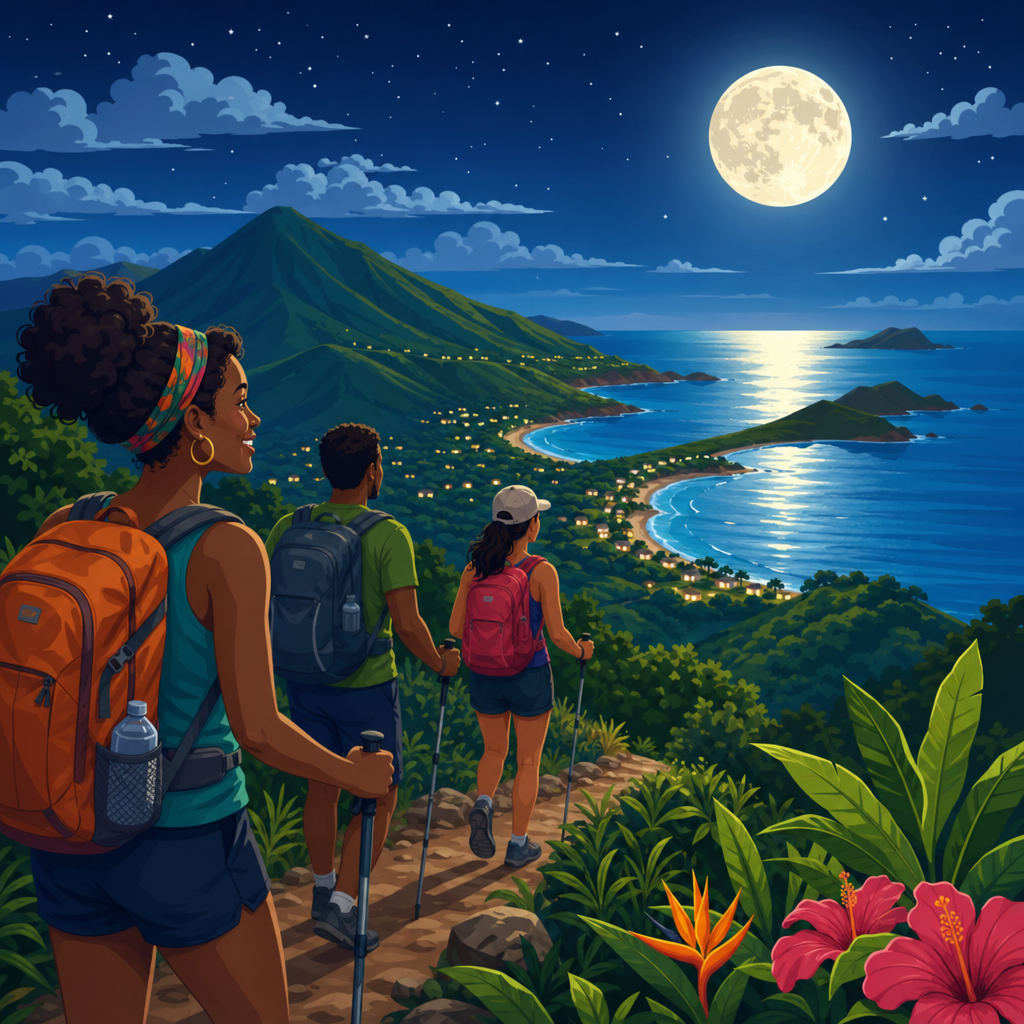
Expect a quieter, more atmospheric version of the island than you experience during the day. The visual effect is often the first thing people notice. Under a full moon, the contours of Saint Kitts’ volcanic landscape appear more dramatic, while the sea reflects light in a way that can make coastal viewpoints feel almost unreal. Open ridgelines, forest margins, and elevated overlooks become less about vibrant color and more about shape, movement, and contrast. Depending on the route and the weather, you may see moonlit vegetation, distant shoreline lights, and broad silhouettes of the island’s terrain against the night sky.
Just as memorable is the sensory experience. The air is usually cooler than it is during the day, and the breeze off the Caribbean can make the walk feel refreshing rather than draining. Without the distractions of midday heat and bright sun, hikers often become more aware of sounds such as wind in the trees, insects, or the rhythm of footsteps on the trail. There is also a strong sense of stillness that many travelers do not associate with a Caribbean island vacation. That contrast is part of the appeal. A full moon hike in Saint Kitts is not only about reaching a viewpoint; it is about experiencing the island in a calmer, more reflective way, shaped by lunar light, local terrain, and the guidance of people who know the landscape well.