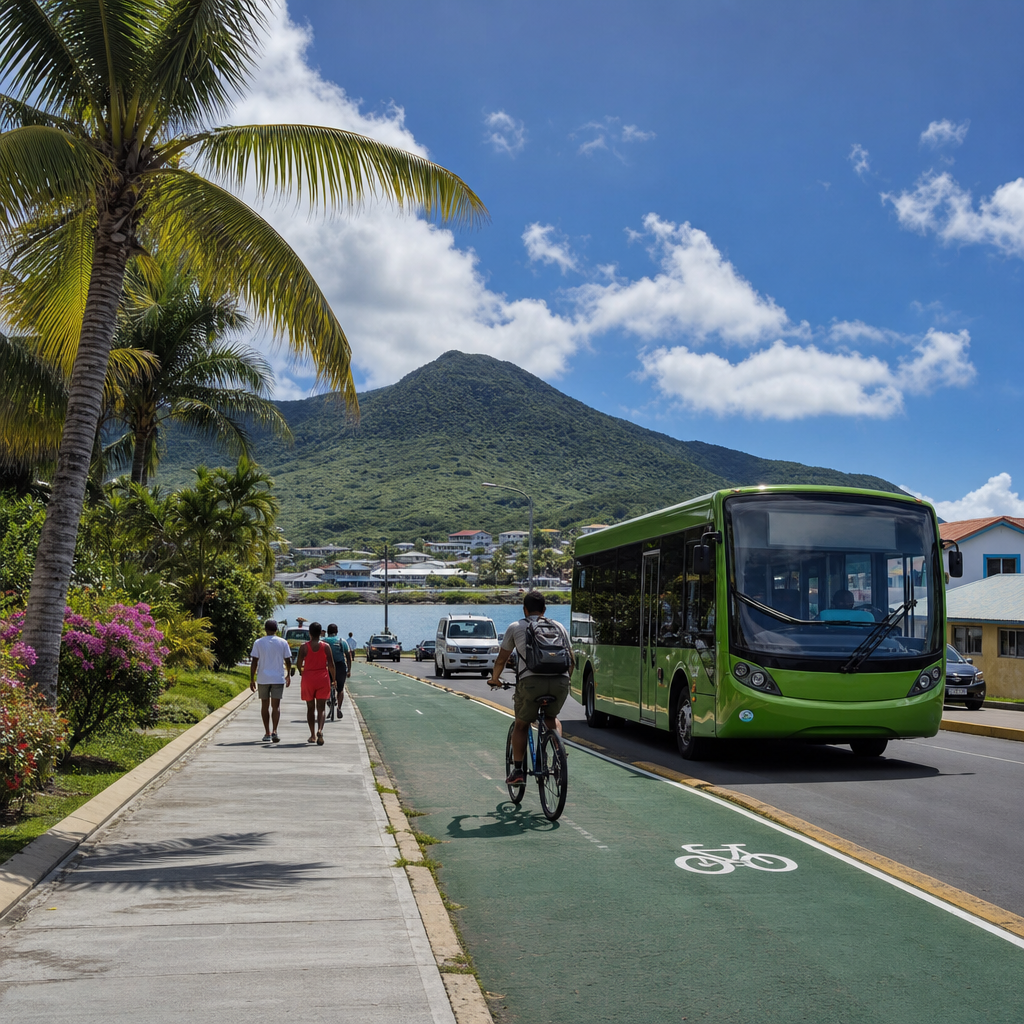
Sustainable transportation solutions in Saint Kitts are moving from a niche policy discussion to a practical business and investment priority. In this context, sustainable transportation means moving people and goods in ways that reduce fuel consumption, lower emissions, improve safety, and strengthen economic resilience without sacrificing reliability. For Saint Kitts, that definition matters because transport shapes tourism, trade, labor mobility, land use, and household costs on a small island where distance is short but energy dependence is high. I have worked on island market assessments where transport inefficiency quietly raised the cost of almost everything, from hotel operations to food distribution, and Saint Kitts fits that pattern clearly.
Saint Kitts has several characteristics that make the issue urgent and promising at the same time. The road network is limited, trip distances are manageable, visitor flows are concentrated around cruise ports, hotels, and airport corridors, and imported fossil fuels expose operators to volatile global prices. Those same factors also create favorable conditions for cleaner fleets, better public transit scheduling, electric vehicle charging, walkable tourism zones, and smarter logistics. When an island can match route design to dense demand clusters, the return on transport improvements is often faster than in sprawling mainland markets.
For investors and local businesses, the opportunity is broader than electric cars alone. It includes fleet modernization, shuttle services, charging infrastructure, route software, bicycle and micro-mobility services, maintenance training, solar-powered depots, and data systems that help government and operators manage traffic, safety, and asset life cycles. It also includes policy-linked services such as concession design, public-private partnerships, and climate finance preparation. As a hub topic within business and investment opportunities, sustainable transportation in Saint Kitts connects infrastructure, tourism, renewable energy, real estate, retail, and workforce development into one practical market.
The key question is not whether Saint Kitts should pursue sustainable transportation, but which solutions fit local geography, demand patterns, power infrastructure, and financing capacity. The best answers are rarely imported off the shelf. They are adapted to island operating conditions, high humidity, salt exposure, variable maintenance capacity, seasonal tourism peaks, and public expectations about affordability and convenience. That is where disciplined planning turns a worthy idea into a durable commercial ecosystem.
Why sustainable transportation matters for Saint Kitts
Transportation has an outsized effect on small island economies because imported fuel is a structural cost. When diesel and gasoline prices rise, bus operators, taxi owners, delivery companies, hotels, and construction firms all feel the impact quickly, and those costs are passed through to residents and visitors. In Saint Kitts, where tourism is central to economic activity, transport quality also shapes the visitor experience. Airport transfers, cruise passenger circulation, excursions, and hotel shuttles all contribute to how efficiently tourism revenue moves across the island.
There is also a climate and resilience case. Road transport is a significant source of local air pollution and greenhouse gas emissions in many Caribbean states. Cleaner vehicles reduce tailpipe emissions in high-traffic areas, while diversified transport systems reduce vulnerability when fuel supply chains are disrupted by storms or external shocks. I have seen islands discover during supply interruptions that basic movement for workers and goods depends too heavily on a single fuel pathway. Sustainable transport planning addresses that operational risk directly.
Health and urban quality matter too. Walkable districts, safer crossings, shaded pedestrian routes, and better traffic management improve public life while supporting retail spending. In compact island settings, transport upgrades can create visible quality-of-place benefits faster than large industrial projects. That matters for investment attraction because businesses look for efficient, stable, and livable operating environments.
Core transportation solutions with commercial potential
The most viable sustainable transportation solutions in Saint Kitts combine technology with operational discipline. Electric vehicles are the most discussed option, and they make sense first in fleets with predictable routes: hotel shuttles, rental fleets, airport transfers, government vehicles, utility service vans, and last-mile delivery. Short driving distances reduce range anxiety, while centralized depots simplify charging. Battery electric buses can also work on fixed routes if charging windows, spare vehicle ratios, and maintenance practices are carefully designed from the outset.
Public transit improvement is just as important as vehicle electrification. A cleaner fleet that still runs on inconsistent schedules will not shift traveler behavior. Operators need route rationalization, timed dispatching, digital fare systems, and passenger information tools. In tourism-heavy corridors, app-based demand forecasting can help match vehicle size and frequency to cruise ship arrivals and hotel occupancy. That reduces idle time, saves energy, and improves service quality.
Micro-mobility has targeted potential rather than island-wide potential. Bicycles, e-bikes, and shared scooters work best in flatter, high-activity zones with safe road design, secure parking, and clear rules. Around waterfronts, mixed-use districts, university areas, and hotel clusters, these modes can reduce short car trips. Freight is another overlooked opportunity. Consolidated deliveries, route optimization software, and low-emission vans can cut operating costs for distributors serving supermarkets, pharmacies, restaurants, and construction sites.
| Solution | Best local use case | Main investment need | Primary challenge |
|---|---|---|---|
| Electric cars and vans | Hotels, rentals, delivery fleets, government use | Vehicles, chargers, technician training | Upfront cost and parts availability |
| Electric buses and shuttles | Airport, cruise, and fixed commuter corridors | Depot charging, spare vehicles, route planning | Service reliability during peak demand |
| Digital transit systems | Shared buses, private shuttles, dispatch centers | Software, ticketing, data integration | Operator adoption and interoperability |
| Micro-mobility | Tourism districts and short urban trips | Docking, lane design, insurance | Safety and weather exposure |
| Smart logistics | Retail, hospitality, wholesale distribution | Fleet software, warehouse coordination | Fragmented delivery practices |
Infrastructure, energy, and charging requirements
Transport sustainability depends on infrastructure quality more than marketing claims. For electric mobility, the first question is where vehicles dwell long enough to charge predictably. In Saint Kitts, that usually means hotels, depots, public facilities, office compounds, and transport hubs rather than random curbside locations. Level 2 chargers may be enough for overnight fleet charging, while fast chargers are better reserved for high-utilization commercial operations and strategic corridors. Overspending on fast charging too early is a common mistake in small markets.
Grid readiness must be assessed honestly. Load profiles, transformer capacity, interconnection procedures, and demand charges all affect economics. In practice, the strongest projects pair charging deployment with energy management software and, where feasible, solar generation plus battery storage. That combination can lower electricity costs, reduce peak load stress, and improve resilience during outages. For island settings, resilience is not a bonus feature; it is part of the core business case.
Physical durability matters as well. Equipment installed near the coast must withstand salt corrosion, heat, humidity, and heavy rainfall. Procurement should specify ingress protection ratings, marine-grade enclosures where necessary, and service-level agreements for replacement parts. I have seen otherwise sound projects underperform because charger uptime was undermined by weak maintenance contracts rather than flawed technology. Reliable operation depends on spare parts planning, remote monitoring, and local technician capability.
Policy, regulation, and financing models
Private capital moves faster when the rules are clear. Saint Kitts can accelerate sustainable transportation through import duty reform for cleaner vehicles and parts, streamlined permits for charging sites, fleet procurement standards, and concession structures that reward service quality rather than simple vehicle counts. Building codes can also help by requiring wiring readiness in new commercial and residential developments. These measures reduce friction without forcing the market into unrealistic timelines.
Financing should match asset life and revenue certainty. Fleet operators often benefit from leases, vendor financing, or blended structures that combine commercial debt with concessional support. Development finance institutions, climate funds, and multilateral programs have backed low-carbon transport across small island states, especially where projects show measurable emissions reduction and strong operational governance. Results-based financing can work for public fleet upgrades if reporting systems are in place.
Public-private partnerships are especially relevant where charging infrastructure serves both commercial fleets and the wider public. A hotel group, utility, charging operator, and government agency can each play a defined role, reducing risk concentration. Good contracts address tariffs, uptime standards, land access, data ownership, and maintenance obligations. Investors should be cautious of projects that rely entirely on optimistic consumer adoption without anchor demand from fleets. Anchor users create cash flow stability during the early market phase.
Tourism, logistics, and investment opportunities
Tourism is the clearest demand engine for sustainable transportation solutions in Saint Kitts. Visitors increasingly notice whether destinations provide low-emission transfers, walkable districts, clean buses, and modern mobility options. Resorts can differentiate themselves by offering electric airport transfers, shared guest shuttles, and charging for rental fleets. Cruise-related transport is another strong niche because demand arrives in concentrated bursts that can be modeled and staffed in advance. Well-managed shuttle loops reduce congestion and improve visitor flow to retail and cultural sites.
Logistics presents a less visible but often stronger business case. Delivery operators care about total cost of ownership, route predictability, maintenance downtime, and fuel exposure. On short urban and peri-urban routes, electric vans can outperform combustion vehicles when utilization is high and charging is controlled. Route optimization platforms such as Samsara, Geotab, and Verizon Connect already help fleets cut mileage, idling, and service delays. For Saint Kitts, these tools can be valuable even before full electrification because operational efficiency itself is a sustainability gain.
Supporting industries also create investable niches. Technical training centers can certify mechanics for high-voltage systems and charger maintenance. Insurance firms can design products for fleet electrification and battery risk. Property developers can market charging-ready commercial space. Data firms can support traffic counts, curb management, and mobility dashboards. As a hub within the broader business and investment landscape, this subtopic connects naturally to renewable energy, hospitality services, digital infrastructure, construction, and climate-smart finance.
Practical implementation roadmap for businesses and government
The most effective strategy is phased execution. Start with a baseline: fleet size, trip lengths, fuel use, maintenance history, traffic bottlenecks, parking patterns, and power availability. Then identify high-probability pilots, usually captive fleets with repeatable routes. A hotel shuttle program, municipal service fleet, or airport transfer loop can prove demand, charging performance, and maintenance assumptions before larger rollout. Pilot metrics should include uptime, cost per kilometer, passenger satisfaction, charger utilization, and avoided fuel consumption.
Next, build the enabling layer. That means training drivers and technicians, standardizing procurement specifications, securing maintenance contracts, and integrating digital dispatch or telematics. Government should align permits, tariffs, and data collection while avoiding premature mandates that outpace infrastructure. Businesses should negotiate energy terms carefully and model depreciation, residual value, and spare vehicle requirements. In island transport, downtime can erase projected savings quickly, so resilience planning must be part of every financial model.
Finally, scale what works and retire what does not. Saint Kitts does not need to copy every mobility trend. It needs solutions that reduce operating costs, improve service, and fit the island’s physical and economic realities. That includes cleaner fleets, smarter routing, reliable charging, safer walking environments, and logistics systems that waste less fuel and time. For investors, the advantage is clear: sustainable transportation is not a side issue but a gateway market touching tourism, energy, infrastructure, and daily commerce. The next step is practical—identify one corridor, one fleet, or one partnership and build a bankable pilot that can grow.
Frequently Asked Questions
What does sustainable transportation mean in Saint Kitts, and why is it important now?
Sustainable transportation in Saint Kitts refers to moving residents, workers, visitors, and goods in ways that use less fuel, produce fewer emissions, improve road safety, and remain dependable for everyday life and business activity. On a small island, transport decisions have an outsized impact because distances may be short, but the economic consequences of congestion, fuel imports, inefficient routing, and vehicle maintenance can be significant. Transportation affects tourism access, employee commutes, freight movement, school travel, and the cost of living, so improving it is not just an environmental goal. It is a practical economic strategy.
The issue matters now because Saint Kitts is balancing growth, tourism demand, infrastructure needs, and energy resilience at the same time. Heavy dependence on imported fuel exposes the island to global price volatility, which can increase operating costs for households, taxi operators, logistics firms, and public services. Sustainable transportation solutions help reduce that vulnerability by improving efficiency and diversifying mobility options. That can include cleaner vehicle fleets, better public transport systems, safer road design, more walkable commercial areas, and smarter planning that reduces unnecessary trips.
Just as importantly, sustainable transportation is increasingly relevant to investors, developers, and policymakers who want infrastructure that supports long-term competitiveness. Visitors are paying more attention to sustainability, businesses want predictable logistics and labor access, and governments need transport systems that support resilience rather than strain budgets. In that context, sustainable transportation is no longer a niche policy concept. It is becoming a core part of how Saint Kitts can strengthen productivity, improve quality of life, and position itself for durable economic development.
Which sustainable transportation solutions are most realistic for Saint Kitts?
The most realistic solutions for Saint Kitts are typically the ones that can deliver measurable benefits without requiring oversized, high-cost systems that are difficult to maintain on a small island. In practice, that means prioritizing improvements to public and shared transport, introducing electric vehicles in targeted segments, modernizing fleet management, improving walking conditions in key corridors, and using land-use planning to reduce avoidable travel demand. These are scalable actions that can be phased in over time rather than pursued as one large, disruptive transition.
Public transport improvements are often among the strongest starting points. More reliable routes, better scheduling, safer pickup points, clearer passenger information, and integration with major employment and tourism hubs can make shared transport more attractive and reduce single-occupancy vehicle use. Even modest upgrades can improve affordability and ease congestion in busy areas. For commercial fleets, efficiency gains can come from route optimization, anti-idling policies, preventive maintenance, and right-sizing vehicles to match demand. These are not always headline-grabbing measures, but they often produce fast operational savings.
Electric mobility is also realistic, especially for use cases with predictable daily mileage such as government fleets, hotel shuttles, rental fleets, taxis, and delivery vehicles. Because Saint Kitts has relatively short trip distances, many electric vehicle applications can work well if charging infrastructure is placed strategically. However, electrification is most effective when paired with grid planning, maintenance capacity, financing options, and operator training. In parallel, walkability and road safety upgrades can deliver broad social value, particularly in town centers, school zones, and commercial districts where many short trips could shift from vehicles to walking if conditions were safer and more comfortable. Taken together, these practical measures create a transportation system that is cleaner, more efficient, and better aligned with the island’s scale and economic structure.
How can sustainable transportation support tourism, business growth, and investment in Saint Kitts?
Sustainable transportation can directly strengthen tourism by improving the visitor experience while reducing the operating costs and environmental footprint associated with travel on the island. Tourists value convenience, reliability, and safety, and transportation is often one of the first and most visible parts of that experience. Clean, efficient airport transfers, dependable hotel shuttle services, safer pedestrian connections, organized taxi systems, and low-emission excursion transport can all reinforce Saint Kitts’ reputation as a high-quality destination. In an increasingly competitive tourism market, sustainability is not just a branding advantage. It can shape customer satisfaction and repeat visitation.
For businesses, transportation performance influences labor mobility, delivery schedules, customer access, and overall cost structure. When employees can commute more reliably and goods can move more efficiently, businesses face fewer disruptions and lower indirect costs. Sustainable transport measures such as better route planning, upgraded roads in critical corridors, fleet electrification where feasible, and improved interconnection between residential and commercial areas can raise productivity across multiple sectors. This is especially important for hospitality, retail, construction, wholesale distribution, and other industries that rely on predictable movement of people and materials.
From an investment perspective, sustainable transportation signals long-term planning and institutional readiness. Investors often look for infrastructure environments that reduce operating uncertainty and support future demand without creating excessive environmental or fuel-related exposure. A transport strategy that lowers dependence on imported fuel, supports tourism development, improves urban functionality, and aligns with broader resilience goals can make Saint Kitts more attractive for real estate, hospitality, logistics, and infrastructure investment. In short, sustainable transportation is not separate from economic growth. It is part of the platform that makes growth more efficient, resilient, and investable.
What challenges could Saint Kitts face when adopting sustainable transportation, and how can they be addressed?
Saint Kitts may face several common transition challenges, including limited capital budgets, the cost of imported vehicles and equipment, infrastructure constraints, maintenance capacity, and the need to coordinate across public agencies and private operators. On small islands, even well-designed transportation projects can struggle if they rely on technologies or systems that are expensive to service locally. There is also the practical issue of public adoption. People are more likely to support change when new transportation options are clearly reliable, affordable, and convenient, not simply promoted as environmentally beneficial.
One important challenge is sequencing. If electric vehicles are promoted before charging access, technician training, financing options, and fleet suitability are addressed, adoption may remain slow or uneven. Likewise, if public transport reforms do not improve actual service quality, people may continue to rely on private cars. Another challenge is data. Effective transport planning depends on understanding where trips occur, when congestion peaks, what freight routes matter most, and which user groups are underserved. Without that information, investments may be less targeted and less effective.
These barriers can be addressed through phased implementation and realistic project design. Pilot programs can test electric fleets in high-use corridors or defined commercial applications before wider expansion. Public-private partnerships can help spread costs and encourage innovation. Maintenance and workforce development should be built into every project rather than treated as an afterthought. Policymakers can also improve outcomes by focusing first on high-impact measures such as fleet efficiency, safer roads, better transport coordination, and strategic charging infrastructure. The key is to pursue solutions that match Saint Kitts’ scale, institutional capacity, and economic priorities. Sustainable transportation works best when it is practical, locally maintainable, and designed around actual travel behavior.
What should policymakers, businesses, and communities prioritize first to build a more sustainable transportation system in Saint Kitts?
The most effective first step is to establish a clear set of transportation priorities tied to measurable outcomes such as lower fuel use, reduced operating costs, fewer road safety incidents, improved travel reliability, and better access to jobs and services. For policymakers, that means identifying the corridors, user groups, and economic sectors where transportation improvements will have the greatest return. Rather than trying to transform the entire system at once, it is usually smarter to focus on a few visible, high-value interventions that can build momentum and public confidence.
For businesses, early priorities often include fleet audits, route optimization, preventive maintenance programs, and assessment of where electric or hybrid vehicles can make financial sense. Hotels, logistics providers, tour operators, rental companies, and government agencies can all benefit from evaluating trip patterns and vehicle utilization. In many cases, the biggest near-term gains come from efficiency and management improvements rather than major new vehicle purchases. Communities, meanwhile, benefit when local planning includes safer walking routes, better road crossings, improved school-zone design, and transport options that serve workers, seniors, and low-income households more reliably.
A strong starting agenda for Saint Kitts would likely include better public transport organization, targeted electrification of suitable fleets, strategic charging deployment, road safety upgrades, and closer coordination between transportation planning and land development. Supporting actions such as data collection, operator training, financing tools, and public education are also essential. The long-term goal is not simply to replace one set of vehicles with another. It is to create a transport system that is more efficient, more affordable to operate, safer for users, and better able to support tourism, commerce, and community life. That kind of foundation can produce benefits well beyond transportation itself, extending into energy resilience, investment readiness, and national competitiveness.