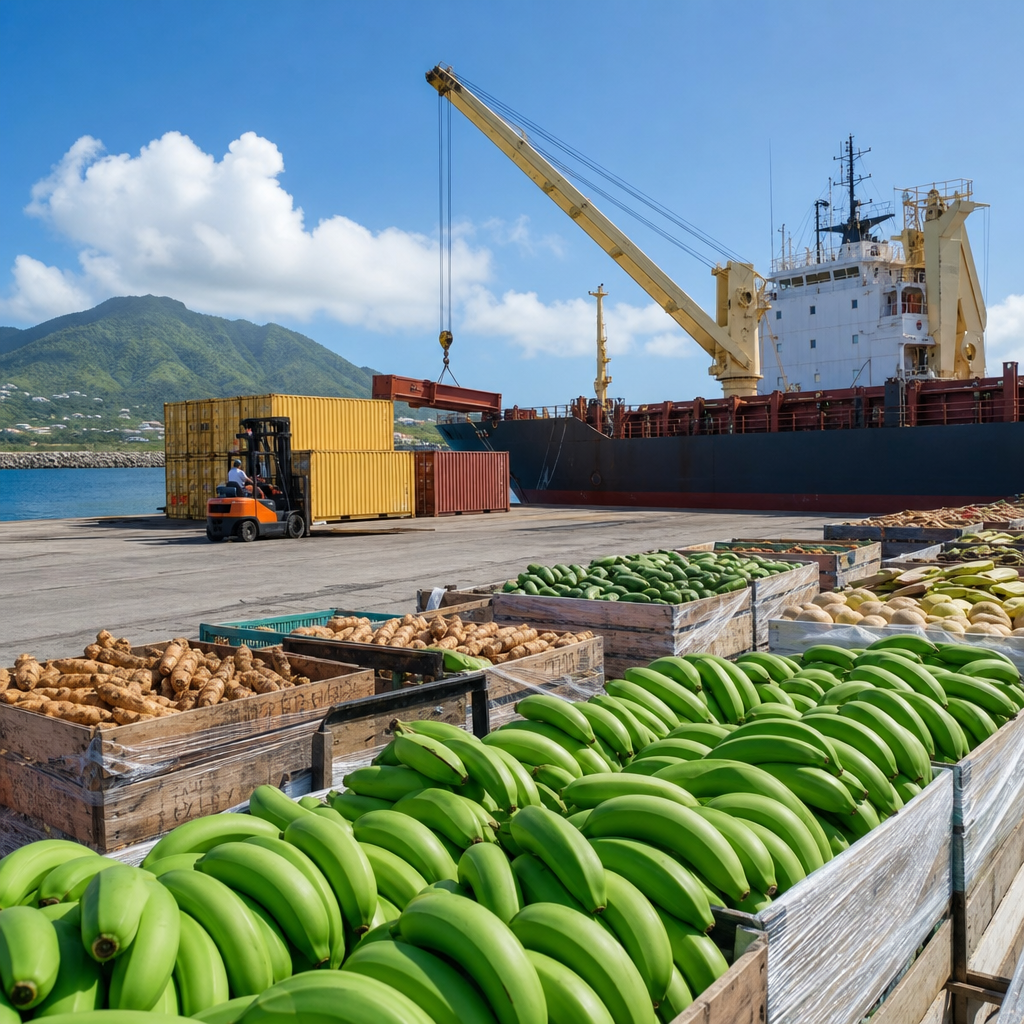
Saint Kitts’ agricultural exports sit at an important crossroads, where a small island economy with limited land can still build profitable export niches through quality, branding, and market alignment. Agricultural exports are the crops, processed foods, and farm-based products sold to buyers outside the country, while opportunities and markets refer to the products with commercial potential and the destinations most likely to buy them consistently. For Saint Kitts, this matters because agriculture can diversify national income beyond tourism, create jobs in rural communities, reduce import dependence, and support related sectors such as logistics, food processing, retail, and hospitality. Having worked with Caribbean market-entry planning and agro-export assessments, I have seen that the strongest export strategies for small islands do not depend on volume alone; they depend on targeting the right buyers with products that solve specific demand. Saint Kitts cannot outproduce large agricultural exporters on bulk commodities, but it can compete in premium fresh produce, specialty crops, value-added foods, and products tied to Caribbean identity. Buyers increasingly want traceable supply, consistent standards, climate-smart production, and authentic origin stories. Those trends create room for Saint Kitts to position itself more effectively in regional and diaspora markets, and in selected premium channels farther abroad.
The country’s agricultural history also shapes today’s opportunities. Saint Kitts was long associated with sugar, but the post-sugar era forced a broader conversation about diversification, land use, and rural enterprise. That transition opened space for fruits, vegetables, root crops, herbs, livestock products, and agro-processed goods. In practice, export success now depends on more than growing crops well. Producers need reliable aggregation, post-harvest handling, cold-chain management, food safety controls, packaging that meets retailer expectations, and shipping schedules aligned with perishability. Exporters also need to understand tariffs, sanitary and phytosanitary rules, labeling laws, and buyer specifications. A product can be excellent and still fail if residue testing is missing, carton sizes are wrong, or delivery windows are inconsistent. This hub article examines the full landscape of Saint Kitts’ agricultural exports, including promising products, realistic destination markets, compliance requirements, commercial obstacles, and practical actions that investors, farmers, processors, and policymakers can take. The central opportunity is not a return to old plantation logic. It is the development of high-value, carefully managed agricultural exports that fit the realities of a small island state and the expectations of modern buyers.
Export-ready products with the strongest potential
The best agricultural export opportunities for Saint Kitts are products that combine local growing suitability with strong demand in nearby islands, diaspora communities, and premium specialty channels. In my experience, exporters in small Caribbean states perform best when they focus on crops that travel reasonably well, can be harvested in manageable volumes, and offer price premiums over generic commodities. Fresh vegetables such as sweet peppers, cucumbers, tomatoes, pumpkin, and leafy greens can work regionally when production is timed around supply gaps in neighboring islands. Root crops including sweet potato, yam, cassava, and tannia also have export promise because they are familiar to Caribbean consumers, relatively durable in transit, and versatile for both fresh and processed sales. Tropical fruits such as mango, papaya, soursop, guava, and breadfruit can attract interest, especially when sold to diaspora buyers who value flavor and authenticity.
Herbs and spices deserve particular attention. Lemongrass, thyme, basil, parsley, hot peppers, ginger, turmeric, and seasoning blends can command higher margins than many staple crops, especially when sold in cleaned, graded, and branded formats. Hot pepper products are especially attractive because they can move up the value chain into sauces, pastes, and dried seasonings. Caribbean pepper sauces already have established demand in export markets such as the United States, the United Kingdom, and Canada. Coconut products, honey, herbal teas, jams, jellies, fruit pulps, and dried fruit also fit the profile of small-island export winners because they extend shelf life and reduce the logistics risks associated with perishables. When I review agro-processing businesses in the region, the most resilient ones are often those that convert seasonal gluts into stable packaged products. That approach helps farmers sell more of what they grow and lets exporters ship goods with lower spoilage risk and greater pricing power.
Priority markets and buyer segments
Saint Kitts should approach agricultural exports through a layered market strategy rather than chasing distant markets first. The Caribbean region is the most practical starting point because transport times are shorter, tastes are familiar, and many products require less adaptation. Nearby islands often import fresh produce and processed foods to support supermarkets, hotels, restaurants, and cruise-linked catering. Regional trade also benefits from established political and commercial relationships within the Caribbean Community. The next major opportunity is the diaspora market in the United States, Canada, and the United Kingdom. Caribbean diaspora consumers actively seek products connected to home, including peppers, ground provisions, tropical fruits, seasonings, sauces, teas, and traditional snacks. These buyers are often less price-sensitive than mainstream supermarket shoppers because they prioritize taste, nostalgia, and cultural fit.
Beyond diaspora channels, premium health-conscious and specialty food markets can be viable for selected products. Herbal teas, natural sweeteners, minimally processed fruit products, and artisanal condiments can appeal to gourmet stores and online buyers if packaging, labeling, and certifications are strong. Hotels and restaurants within Saint Kitts and on neighboring islands are also strategic buyers because they can validate products locally before exporters scale abroad. In several Caribbean export programs I have supported, local hospitality demand became a testing ground for product consistency, shelf life, and branding before companies entered overseas retail. Exporters should distinguish clearly between wholesale buyers, supermarket distributors, foodservice importers, ethnic retailers, and direct-to-consumer online channels. Each has different expectations on price, pack size, payment terms, and certification. Selling a pallet of fresh pumpkin to a regional distributor is not the same commercial model as selling branded ginger tea to a London specialty grocer. Matching product to buyer type is one of the most important decisions in the export process.
How Saint Kitts can compete despite small scale
Small scale is often treated as a weakness, but in agricultural exports it can become an advantage if Saint Kitts competes on precision instead of volume. Large exporters win on cost per unit and year-round throughput. Saint Kitts is more likely to win on freshness, distinctive flavor, origin branding, and fast response to niche demand. Buyers in premium segments do not always need huge volumes; they need dependable quality and a supplier who communicates well. I have seen buyers accept higher prices from Caribbean exporters when the product arrives properly graded, attractively packed, and on time. A small country can also adapt faster to market trends, introducing new herb mixes, limited-batch sauces, or specialty fruit products without the bureaucracy that often slows larger systems.
Another competitive advantage is the potential integration of agriculture with tourism. Visitors who encounter local sauces, teas, jams, honey, or fresh fruit at hotels and restaurants become future export customers when they return home. That is effectively live product sampling at national scale. Saint Kitts can also use geographic identity more deliberately. Products associated with volcanic soils, tropical climate, and Caribbean culinary traditions can stand out when branding is authentic and consistent. The key is discipline. Premium positioning only works when defects are low, traceability is credible, and presentation meets market norms. A premium story cannot rescue poor post-harvest handling. This is why packhouse operations, grading standards, temperature control, and production planning are not optional technical details; they are the basis of export competitiveness for a small island economy.
| Product category | Best market fit | Why it works | Main export challenge |
|---|---|---|---|
| Root crops | Regional islands, diaspora wholesalers | Familiar demand, stronger shelf life | Consistent grading and volume |
| Fresh herbs and peppers | Hotels, restaurants, specialty distributors | High value per kilogram, repeat demand | Cold-chain and rapid delivery |
| Tropical fruits | Diaspora retailers, processors | Strong cultural appeal and flavor premium | Short shelf life and bruising |
| Sauces and seasonings | Diaspora retail, online, gourmet stores | Value-added, branded, lower spoilage | Food safety and labeling compliance |
| Teas, honey, preserves | Gift, wellness, specialty channels | Shelf-stable and brand friendly | Packaging quality and market visibility |
Standards, logistics, and compliance requirements
Export agriculture succeeds or fails on execution, and execution is mostly about standards and logistics. Fresh and processed agricultural products must satisfy sanitary and phytosanitary requirements in destination markets. That means exporters need documented pest management, clean harvesting practices, traceability records, and in many cases inspection or certification from competent authorities. Processed foods must also comply with food labeling rules, ingredient declarations, allergen statements where applicable, batch coding, and shelf-life validation. For larger or more demanding buyers, systems based on Hazard Analysis and Critical Control Points are often expected. Good Agricultural Practices and Good Manufacturing Practices are equally important because they reduce contamination risk and improve consistency. These are not theoretical checklists. Buyers use them to decide whether a supplier is credible.
Logistics create a second layer of complexity. Saint Kitts must manage shipping frequency, air and sea freight costs, refrigerated storage where needed, and cargo consolidation. In my work with exporters, the hidden cost is often not freight alone but poor coordination. A shipment can lose value quickly if produce waits too long after harvest, if cartons are not ventilated correctly, or if customs paperwork is incomplete. For fresh produce, timing from field to market is critical. For processed goods, packaging integrity and moisture control matter just as much. Exporters should also plan around Incoterms, insurance, landed cost calculations, and foreign exchange exposure. Regional exports may move through importers who want delivered pricing, while overseas retail often involves multiple margin layers that must be understood before a product is priced. No agricultural export strategy is realistic unless it includes post-harvest infrastructure, laboratory access, documentation capacity, and a workable freight plan.
Investment opportunities across the agricultural value chain
The strongest business opportunities are not limited to farming itself. Investors can participate across the agricultural value chain, often with lower production risk than primary agriculture. Packhouses that provide washing, grading, cooling, and packing services are one example. These facilities help small farmers meet buyer requirements and aggregate volumes that no single producer could supply alone. Agro-processing is another major opportunity. Facilities producing pepper sauces, fruit concentrates, dried herbs, teas, jams, and frozen or pureed products can turn variable harvests into predictable inventory. Cold storage, reefer logistics, nursery operations, irrigation systems, greenhouse technology, and agricultural input distribution also deserve attention because they improve export readiness across the sector.
There is also space for contract farming and buyer-linked production models. Under these arrangements, farmers produce to agreed specifications, while an aggregator or processor provides seedlings, technical support, and guaranteed purchase terms. This reduces market uncertainty for farmers and improves raw material consistency for exporters. Digital tools can strengthen these models. Farm management apps, inventory tracking, QR-based traceability, and demand forecasting improve decision-making and make it easier to satisfy sophisticated buyers. Financing remains a bottleneck, especially for small producers who need working capital for packaging, certification, and crop establishment. That creates room for blended finance, cooperative lending, and public-private support mechanisms tied to export performance. In practical terms, Saint Kitts will gain more from a network of coordinated, medium-scale export businesses than from a single flagship project that lacks linkages to local producers.
Risks, constraints, and the actions that unlock growth
Saint Kitts faces real constraints that should be addressed directly. Limited arable land, labor shortages, climate vulnerability, water management challenges, and high input costs all affect export competitiveness. Hurricanes, drought, and pest pressure can disrupt supply quickly. Freight costs in the Caribbean are structurally high, and irregular shipping can undermine buyer confidence. Another recurring issue is inconsistent production planning. Farmers may plant what they know rather than what confirmed buyers need, which creates gluts in one crop and shortages in another. Export markets punish inconsistency more than they punish modest scale. A buyer who loses shelf space because shipments fail to arrive on schedule may not return.
The way forward is practical and achievable. First, organize producers around crop calendars and market-led production plans. Second, invest in post-harvest systems, especially packhouses, cooling, and transport coordination. Third, strengthen extension services so farmers use modern practices for irrigation, integrated pest management, and record keeping. Fourth, prioritize a shortlist of products and markets instead of scattering effort across too many ideas. Fifth, build brands that emphasize origin, quality, and Caribbean culinary use, supported by packaging that looks export-ready. Sixth, use local hotels, supermarkets, and diaspora distributors as proving grounds before broader expansion. Seventh, support exporters with testing, certification guidance, and trade promotion. Saint Kitts’ agricultural exports can grow if the country treats agriculture not as a residual sector, but as a focused commercial system. The main benefit is economic diversification rooted in products the island can produce distinctively and sell credibly. Businesses, investors, and producers should now identify one priority product, one target market, and one capability gap, then move from discussion to execution.
Frequently Asked Questions
1. What agricultural export products offer the strongest opportunities for Saint Kitts?
Saint Kitts is best positioned to compete in agricultural exports by focusing on high-value, differentiated products rather than trying to win on bulk volume. Because the island has limited land and a relatively small farming base, the strongest opportunities are usually in niche crops, specialty foods, and value-added products that can command premium prices abroad. Fresh tropical fruits, spices, herbs, hot peppers, specialty vegetables, coconuts, and products made from these raw materials can all fit this model when quality is consistent and supply is organized. Beyond fresh produce, processed goods such as sauces, seasonings, jams, dried fruit, teas, and packaged traditional foods often have even greater export potential because they travel better, have longer shelf life, and allow producers to capture more value before the product leaves the island.
Another promising area is branding products around origin, freshness, and Caribbean identity. Buyers in many export markets are not just purchasing food; they are purchasing a story, a flavor profile, and a lifestyle association. Saint Kitts can benefit by positioning its agricultural exports as premium island-grown products with strong traceability and distinct taste characteristics. This is especially relevant for products that appeal to diaspora communities, health-conscious consumers, gourmet retailers, and hospitality buyers. In practical terms, the best opportunities are not simply the products that grow well locally, but the ones that can be produced reliably, packed professionally, priced competitively, and marketed in a way that makes importers see clear commercial value.
2. Which export markets are most realistic and attractive for Saint Kitts’ agricultural sector?
The most realistic and attractive markets for Saint Kitts are usually those where the country can take advantage of geographic proximity, cultural familiarity, trade relationships, and manageable shipping times. Regional Caribbean markets are often a natural starting point because they may already have demand for fresh produce, processed foods, and specialty agricultural items that are recognizable and culturally aligned. Exporting within the Caribbean can also help producers gain experience with packaging, documentation, and buyer expectations before scaling into larger international markets. These regional channels can be particularly valuable for products that are perishable or produced in relatively small batches.
Beyond the region, the United States, Canada, and the United Kingdom are especially important target markets, largely because of Caribbean diaspora populations and established demand for Caribbean flavors and products. In these destinations, there is often interest in traditional foods, spices, condiments, and tropical agricultural products that connect consumers to home or introduce non-Caribbean buyers to authentic island cuisine. However, these markets are also more demanding in terms of food safety, labeling, traceability, consistency, and importer compliance. That means Saint Kitts must approach them strategically. The best path is often to target specific buyer segments such as ethnic grocery chains, specialty food distributors, restaurants, hotels, and online retailers rather than trying to enter mass-market supermarket channels too early. In short, the most attractive markets are not always the biggest ones, but the ones where Saint Kitts can meet standards, deliver reliably, and build long-term buyer trust.
3. What are the main challenges Saint Kitts faces in expanding agricultural exports?
Saint Kitts faces several structural challenges that are common to small island economies, and these directly shape what is possible in agricultural export growth. The first is limited scale. With finite land, small farm sizes, and weather-related risks, it can be difficult to produce enough consistent volume to satisfy overseas buyers who want regular shipments. Even when farmers grow strong products, exporters may struggle to consolidate supply, maintain uniform quality, and keep delivery schedules predictable. This is a serious issue because international buyers value consistency just as much as product quality. One missed shipment or one batch with uneven standards can damage a supplier relationship quickly.
Other major challenges include high production costs, logistics constraints, and compliance requirements. Shipping from a small island can be expensive, and limited freight options can make both fresh and processed exports more difficult to price competitively. Farmers and agro-processors may also face challenges with packaging materials, cold storage, post-harvest handling, certification, and export documentation. On top of that, overseas markets increasingly expect clear food safety practices, proper labeling, and traceability systems. For Saint Kitts, overcoming these barriers will require coordination across the value chain. That includes stronger links between farmers, processors, exporters, and public agencies; better technical support for standards and certification; and investments in infrastructure that reduce spoilage and improve product presentation. The good news is that these challenges are manageable when export development is focused, market-driven, and built around a few products with proven demand.
4. Why is value-added processing so important for Saint Kitts’ agricultural export strategy?
Value-added processing is important because it helps Saint Kitts earn more from each unit of agricultural output while reducing some of the disadvantages that come with being a small producer. Exporting raw crops alone can limit profitability, especially when products are perishable, seasonal, or vulnerable to price fluctuations. By processing agricultural goods into sauces, preserves, dried products, spice blends, teas, oils, or ready-to-use food items, producers can extend shelf life, reduce waste, improve transportability, and create products that stand out in competitive markets. This is especially useful for Saint Kitts, where shipping costs and small production volumes can make it difficult to compete in commodity-style trade.
Processing also opens the door to stronger branding and market positioning. A packaged product with attractive labeling, clear quality standards, and a recognizable Saint Kitts identity is often easier to market than a generic raw product. It can reach supermarket shelves, gift markets, hotel supply chains, diaspora retailers, and e-commerce channels in ways that fresh produce sometimes cannot. Just as importantly, value-added products help spread income across the agricultural system by creating opportunities in manufacturing, packaging, marketing, and distribution, not only farming. For a country seeking to diversify its economy and strengthen rural livelihoods, this matters a great deal. In many cases, the most sustainable export strategy is not to export more tonnage, but to export smarter products with higher margins and stronger market loyalty.
5. What would help Saint Kitts build a more competitive and sustainable agricultural export sector?
To build a more competitive and sustainable agricultural export sector, Saint Kitts will need a practical combination of market focus, production planning, quality control, and business support. One of the most important steps is selecting a realistic set of priority products based on actual demand rather than assumptions. Not every crop should be treated as an export crop. The strongest results usually come from identifying products where Saint Kitts has a clear advantage, then aligning farmers and processors around those opportunities. This means understanding buyer requirements in advance, organizing supply chains, improving planting schedules, and making sure post-harvest handling supports export-grade quality. Export success is rarely just about growing something well; it is about delivering the right product, in the right form, to the right buyer, repeatedly.
Long-term competitiveness also depends on strengthening institutions and private-sector capabilities. Producers need better access to training, financing, extension services, packaging solutions, and export readiness support. Exporters need reliable systems for aggregation, quality assurance, documentation, and logistics coordination. Public agencies can play a major role by helping businesses meet sanitary and phytosanitary standards, supporting trade promotion, and building links with buyers in target markets. Sustainability should also remain central. Climate resilience, water management, soil health, and disaster preparedness are essential in an island environment where weather shocks can disrupt production quickly. Ultimately, Saint Kitts can build a stronger export sector by focusing on quality over quantity, branding over commodity competition, and disciplined market alignment over opportunistic selling. That approach gives the country the best chance to create profitable, durable agricultural export niches.