The influence of African heritage in Nevis is woven into everyday life, from language and food to music, religion, craft, and community traditions. Nevis, one of the two islands in the Federation of Saint Kitts and Nevis, was shaped profoundly by the forced migration of Africans through the Atlantic slave trade and by the resilience of their descendants who rebuilt culture under brutal plantation conditions. African heritage in Nevis is not a museum subject or a single commemorative event. It is a living framework that continues to define local identity, social values, artistic expression, and the way residents interpret history, family, and belonging.
To understand Nevis properly, it helps to define what African heritage means in this context. It includes inherited customs, spiritual ideas, agricultural knowledge, foodways, storytelling patterns, musical rhythms, speech forms, healing practices, and shared approaches to kinship and celebration that survived slavery and adapted over generations. Heritage is not a frozen copy of West or Central African life. In Nevis, it is a creolized inheritance, shaped by African memory, European colonial rule, Christian institutions, labor struggles, and Caribbean realities. That mixture is exactly why the topic matters. Anyone exploring local life and experiences in Nevis will encounter African influence in places both obvious and subtle.
I have found that visitors often expect heritage to appear only in formal settings such as museums, monuments, or cultural performances. In Nevis, the more accurate approach is to look at ordinary life. Watch how elders season goat water, hear the cadence of village conversation, follow the drumming and dance during festival time, or listen when families trace ancestry through generations despite incomplete written records. These are practical expressions of continuity. They also explain why this subject works as a hub within a broader local life and experiences guide: it connects history, cuisine, religion, folklore, music, architecture, agriculture, and community memory into one coherent story.
African heritage matters in Nevis for another reason: it provides historical balance. Colonial plantation narratives once centered estate owners, export profits, and imperial administration. A fuller account restores the labor, knowledge, and creativity of African-descended people who built the island’s economy and cultural foundations. Sugar plantations did not run on land alone; they depended on skilled cultivation, animal care, water management, food preparation, craftsmanship, and communal survival strategies carried and adapted by enslaved Africans. Recognizing that truth changes how people read landscapes, villages, great houses, churches, and ruins across the island.
Historical roots of African heritage in Nevis
Nevis became an important English colony in the seventeenth century and developed into a plantation society centered on sugar. As sugar production expanded, enslaved Africans were transported in large numbers to meet labor demand. By the eighteenth century, African-descended people formed the majority of the population, a demographic pattern common across the British Caribbean. That majority mattered culturally. Even under severe repression, African languages, beliefs, agricultural practices, music, and family structures left durable marks because they were sustained collectively, not individually. Heritage survived through repetition in work gangs, provision grounds, household spaces, burial customs, and seasonal gatherings.
Emancipation in the British Empire in 1834, followed by apprenticeship and full freedom in 1838, did not erase plantation hierarchies, but it did open more space for African-derived community expression. Formerly enslaved people built villages, churches, mutual aid networks, and independent livelihoods where possible. In Nevis, as elsewhere in the Caribbean, many traditions persisted by adapting to Christian calendars, school systems, and wage labor realities. This is why African heritage in Nevis should be understood as survival through change. It was preserved not by isolation, but by constant negotiation with power, economics, and modernity.
Language, oral tradition, and the Nevisian worldview
One of the clearest influences of African heritage in Nevis appears in speech. Nevisian Creole English carries vocabulary, syntax, cadence, and expressive strategies that developed in plantation societies where African and European languages met. Linguists do not reduce Caribbean Creoles to “broken English”; they are rule-governed languages with their own grammatical logic. In Nevis, code-switching between standard English and Creole reflects education, formality, and audience, but the local speech rhythm remains a strong identity marker. Proverbs, teasing styles, repetition, call-and-response patterns, and metaphor-rich storytelling all preserve oral traditions with African roots.
Storytelling has long served practical functions: teaching caution, preserving family history, entertaining children, and passing on moral lessons without direct confrontation. Folkloric figures found across the Caribbean, including trickster characters such as Anansi in neighboring traditions, reflect broader African continuities even where names or details shift. In Nevis, oral history is especially important because official archives rarely captured the full lives of enslaved and working-class people. Families therefore became archives themselves. Listening to elders discuss land, migration, market days, storms, church life, and old customs often reveals more about African continuity than a formal plaque ever could.
Foodways, farming knowledge, and everyday resilience
Nevisian cuisine preserves African influence through ingredients, preparation methods, and the social meaning of shared meals. Dishes such as goat water, cook-up style combinations, ground provision plates, saltfish pairings, and stews built around yam, sweet potato, cassava, plantain, and breadfruit reflect the practical food systems of plantation survival and post-emancipation village life. Enslaved Africans often relied on provision grounds to supplement restricted rations, using agricultural knowledge to grow crops suited to local conditions. That expertise helped communities endure scarcity and shaped a cuisine that remains central to island identity today.
Cooking methods also tell the story. One-pot meals, heavy seasoning, slow simmering, and the skilled use of every available ingredient show a tradition built on thrift, flavor, and communal labor. These are not just recipes; they are records of adaptation. In many kitchens, the difference between a visitor meal and a family meal still reflects inherited values about hospitality, abundance, and respect for elders. I have seen how food opens conversations about ancestry faster than almost any other subject. Ask about a soup, a market ingredient, or a festival dish, and local memory quickly expands into stories about grandparents, village customs, and older ways of living.
| Cultural area | How African heritage appears in Nevis | Everyday example |
|---|---|---|
| Food | Provision-ground crops, one-pot cooking, layered seasoning | Goat water served at gatherings and public events |
| Language | Creole grammar, proverbs, oral performance | Elders using idioms to teach lessons indirectly |
| Music and dance | Polyrhythmic drumming, call-and-response, communal movement | Festival performances and village celebrations |
| Spiritual life | African-derived cosmologies blended with Christianity | Funeral customs, revival practices, ancestral respect |
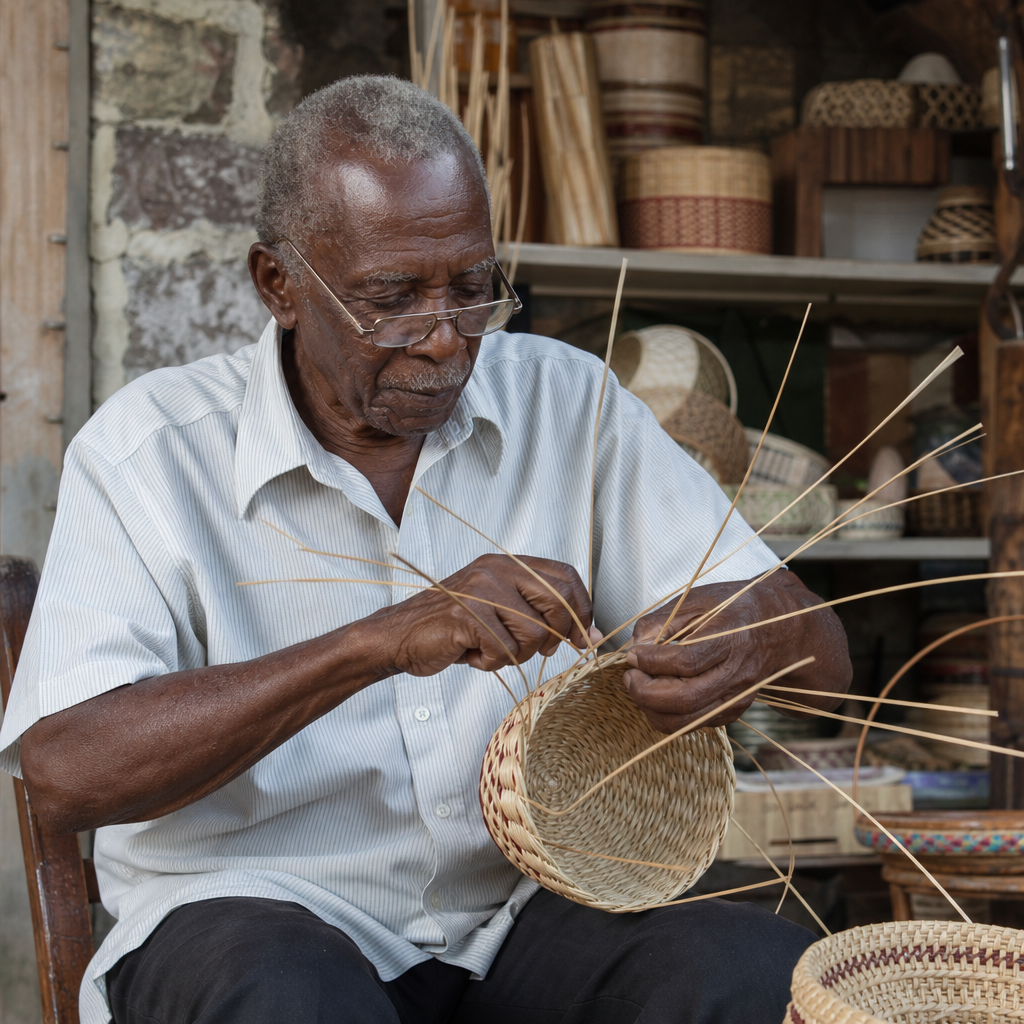
| Craft and labor | Practical knowledge adapted under plantation and village life | Basket use, herbal remedies, small-scale farming skills |
Music, dance, festival, and performance
Music is one of the most visible carriers of African heritage in Nevis. Rhythmic structure, percussion emphasis, improvisation, communal participation, and performance as social commentary all point to African continuities found across the Caribbean. Masquerade traditions, drumming, folk dance, and seasonal festival culture embody this inheritance. These forms are not merely entertainment for tourists. They function as memory systems, social glue, and public declarations of identity. The body itself becomes an archive through repeated steps, gestures, and performance codes learned from older generations.
Nevis Culturama, the island’s major cultural festival, provides a clear example of heritage in motion. During festival season, audiences encounter costume traditions, music, dance, pageantry, and food that reflect both historical continuity and modern reinvention. African influence is strongest not because every performance is ancient, but because the core structure values collective rhythm, expressive freedom, satire, resilience, and celebration after hardship. In practical terms, festival culture keeps heritage visible for younger people who may not learn all of it through formal education. Performance makes history memorable, embodied, and socially rewarding.
Religion, healing, and community belief systems
Religion in Nevis is often discussed through its Christian denominations, especially Anglican, Methodist, Moravian, Pentecostal, and other Protestant traditions. Yet African heritage remains present in the ways faith is practiced, felt, and interpreted. Across the Caribbean, African-descended communities adapted Christianity while retaining understandings of spirit, protection, dreams, ancestors, sacred music, healing, and collective ritual. In Nevis, this blending can appear in funeral observances, revival-style worship, respect for spiritual warnings, and the continued use of herbal knowledge alongside formal medicine.
Traditional bush remedies are one example. Knowledge of leaves, roots, teas, poultices, and household treatments survived because communities needed practical healthcare when doctors were inaccessible or unaffordable. While not every remedy is uniquely African in origin, the pattern of transmitting healing knowledge through elder networks strongly reflects African-descended community practice throughout the region. The key point is balance: herbal traditions are part of cultural heritage, but serious illness still requires trained medical care. Respecting the tradition means documenting it accurately, not romanticizing it or treating it as a substitute for evidence-based treatment.
Family, memory, and the cultural landscape
African heritage in Nevis also shapes how people understand family and place. Extended kin networks, godparent relationships, neighbor obligations, and the moral authority of elders remain important in many communities. These social patterns developed partly as survival systems during and after slavery, when formal protections were weak and people relied on broad networks of care. The result is a local culture where identity is often anchored in village, family line, church connection, and remembered ancestry rather than individual biography alone.
The island’s landscape preserves these histories materially. Plantation ruins, former estates, village roads, churches, burial grounds, and provision areas are not neutral scenic sites. They are evidence of labor, struggle, adaptation, and African-descended presence across centuries. The New River Estate, for example, is often visited for its preserved structures, but its deeper significance lies in the human system it represents: extraction on one side, endurance and cultural creation on the other. Heritage tourism in Nevis is most meaningful when guides and visitors read these places through that fuller lens instead of focusing only on colonial architecture.
Why this heritage matters for local life and responsible travel
For residents, African heritage in Nevis is a source of identity, continuity, and pride, but it is also a framework for difficult conversations about slavery, inequality, migration, and representation. For travelers, understanding that heritage leads to a more accurate and respectful experience of the island. It changes what people notice. A meal becomes a history lesson in survival agriculture. A festival becomes a record of memory through performance. A village story becomes an archive. That depth is the real value of local life and experiences content: it helps people move beyond surface sightseeing and engage with Nevis as a lived culture.
If you are using this article as a hub for exploring miscellaneous aspects of local life in Nevis, follow the connections it highlights. Learn the history behind plantation sites, ask about traditional dishes, attend cultural events, listen carefully to local speech, and support guides, cooks, artists, and historians who interpret the island through community knowledge. The main takeaway is simple: African heritage is not one influence among many in Nevis; it is one of the island’s defining foundations. Understanding that foundation makes every other local experience clearer, richer, and more honest. Keep exploring Nevis through that lens, and the island will reveal far more than its scenery.
Frequently Asked Questions
How has African heritage shaped everyday life in Nevis?
African heritage shapes everyday life in Nevis in ways that are both visible and deeply embedded in routine customs. Its influence can be seen in speech patterns, family structures, oral storytelling, food preparation, music, religious expression, and the strong emphasis placed on community connection. Rather than existing only in historical records or formal cultural celebrations, African heritage continues to inform how people gather, celebrate, mourn, work, and pass knowledge from one generation to the next.
This lasting influence developed under extraordinarily harsh conditions. Enslaved Africans brought to Nevis through the Atlantic slave trade came from different regions, languages, and cultural traditions, yet they preserved and adapted beliefs, skills, and practices despite plantation brutality. Over time, these traditions blended with local realities and with other cultural influences, creating something distinctively Nevisian. That is why African heritage in Nevis should be understood not simply as a legacy of the past, but as a living foundation of identity that continues to shape the island’s social and cultural character today.
What role does African heritage play in Nevisian music and dance?
African heritage is central to the rhythms, movement, and communal spirit of music and dance in Nevis. Many performance traditions on the island reflect African ideas about call-and-response, layered percussion, improvisation, and the close relationship between music, memory, and social life. In African-derived traditions, music is often not just entertainment; it is a way to tell stories, mark important events, strengthen communal ties, and express joy, grief, resistance, and spiritual meaning. Those same functions have long been important in Nevis.
Festivals, public celebrations, and community gatherings often reveal this heritage most clearly. Drumming patterns, group dancing, masquerade forms, and performance styles linked to Carnival and Christmas traditions reflect continuities with African expressive culture, even when they have evolved over centuries. These traditions survived because descendants of enslaved Africans protected them, adapted them, and passed them on. In Nevis, music and dance remain powerful examples of how African heritage lives not only in historical origin, but in active performance, collective memory, and everyday cultural pride.
How is African heritage reflected in Nevisian food and cooking traditions?
Food is one of the most immediate and meaningful ways African heritage is experienced in Nevis. The island’s culinary traditions reflect survival, adaptation, and creativity under plantation-era constraints. Enslaved Africans often had to make nourishing meals from limited provisions, local ground foods, greens, legumes, salted meats, and whatever could be grown or gathered. Out of those conditions came cooking traditions rooted in resourcefulness, strong seasoning, slow preparation, and a deep understanding of how food sustains both body and community.
Today, African influence can still be recognized in the use of staple ingredients, one-pot cooking methods, hearty soups and stews, and the social importance of shared meals. Certain techniques and flavor combinations echo broader African diasporic foodways found throughout the Caribbean. Just as important is the cultural meaning of cooking itself. Recipes are often taught informally within families, and meals are tied to gatherings, celebrations, and remembrance. In that sense, Nevisian food is not only about taste; it is also a record of endurance and a living expression of African-descended cultural continuity.
Why is African heritage in Nevis considered a living culture rather than just history?
African heritage in Nevis is considered a living culture because it continues to shape current identity, values, and daily practices rather than existing only in monuments, archives, or annual observances. It is present in how elders pass down stories, how communities celebrate milestones, how faith and spirituality are expressed, how crafts and skills are preserved, and how people understand resilience and belonging. A culture is living when it is practiced, adapted, and felt in ordinary life, and that is exactly the case in Nevis.
This perspective is especially important because African heritage on the island emerged through survival against systems designed to erase it. The descendants of enslaved Africans did not simply inherit fragments of the past; they rebuilt culture in real time, under pressure, and continued to refine it across generations. As a result, African heritage in Nevis is dynamic rather than frozen. It appears in language, performance, foodways, religious life, communal ethics, and cultural memory. Recognizing it as living culture honors both historical truth and the continuing creativity of Nevisian people.
How can visitors and readers better understand and appreciate the influence of African heritage in Nevis?
The best way to understand African heritage in Nevis is to approach the island with curiosity, respect, and an awareness that culture is not a performance staged solely for visitors. Readers and travelers should look beyond the familiar surface of beaches and scenic landscapes and pay attention to the stories carried in local traditions, community events, historical sites, cuisine, music, craft, and conversation. African heritage is often most meaningful when encountered in the everyday practices of the people who continue to sustain it.
It is also important to understand the historical context. The influence of African heritage in Nevis cannot be separated from the violence of slavery, the plantation system, and the extraordinary resilience of those who endured and transformed that experience. Appreciating this heritage means recognizing both suffering and cultural brilliance. Listening to local voices, engaging with heritage spaces thoughtfully, supporting local artisans and cultural practitioners, and learning about emancipation-era history all help deepen that understanding. In doing so, visitors and readers gain a fuller picture of Nevis as a place where African heritage is not peripheral, but central to the island’s identity and cultural life.