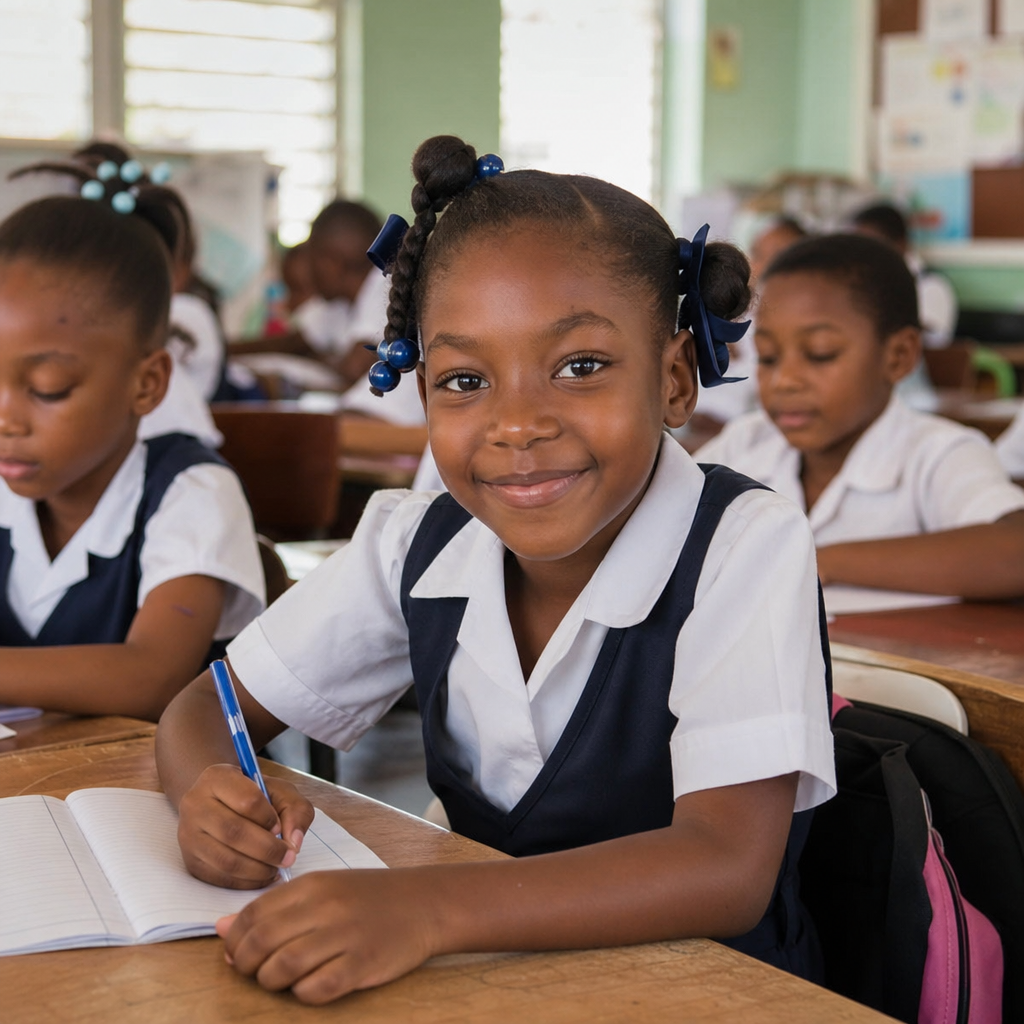
Saint Kitts’ school life blends Caribbean warmth with British-influenced structure, creating an education system that is small enough to feel personal yet formal enough to prepare students for regional and international opportunities. For families relocating, returning nationals, and local parents comparing options, understanding education on the island means looking beyond exam results. School life includes daily routines, transportation, uniforms, classroom culture, extracurricular activities, support services, costs, and the transition points that shape a child’s experience from preschool through college. On Saint Kitts, education is not just a public service; it is one of the clearest windows into community life, social expectations, and future mobility.
In practical terms, school life on Saint Kitts refers to how children and young adults move through early childhood education, primary school, secondary school, and tertiary pathways within the federation’s national framework. The island follows a system shaped by Commonwealth traditions, including age-based progression, formal assessments, and a strong emphasis on literacy, numeracy, and discipline. English is the language of instruction, which simplifies entry for many expatriate families, but local speech patterns, teaching styles, and school norms still require adjustment. Parents often ask the same questions: What are the best public and private options? How competitive are admissions? What are classrooms like? How safe and reliable is the day-to-day experience?
Those questions matter because education choices on a small island carry visible consequences. Commutes affect work schedules. Limited seats in sought-after schools can determine where a family chooses to live. Subject availability in the upper forms may shape university options later. In my work reviewing relocation planning and community infrastructure across Caribbean destinations, I have seen that families who understand the local school landscape early make better decisions about housing, budgeting, and long-term settlement. Saint Kitts is no exception. Its schools can offer strong community ties, committed teachers, and relatively close parent-school contact, but they also reflect the realities of a small system: finite resources, uneven facilities, and variation between institutions.
This hub article covers the essentials comprehensively so readers can use it as a starting point for deeper exploration across the broader Local Life and Experiences topic. It explains how the system is organized, what families can expect in everyday school life, where public and private education differ, how exams and postsecondary routes work, and what practical challenges deserve attention. If you want a grounded picture of education on the island, this is the place to begin.
How the education system on Saint Kitts is structured
Saint Kitts and Nevis provides education through a mix of government, government-assisted, and private institutions. The broad structure is familiar to anyone who knows Caribbean or British-derived systems: early childhood education, primary education, secondary education, and tertiary study. Children typically begin in preschool or daycare settings before entering primary school, where foundational subjects such as mathematics, English language, science, social studies, and physical education dominate the timetable. From there, students move into secondary school, where subject specialization gradually increases and formal examinations become more important.
Compulsory school age and the formal organization of grades can shift through policy updates, but the practical pattern remains consistent: primary schooling covers the early academic years, secondary school carries students through adolescence, and upper-level study depends heavily on exam performance. The system has historically used the Caribbean Examinations Council framework, especially the Caribbean Secondary Education Certificate, commonly called CSEC. That matters because it gives students a regional standard recognized across the English-speaking Caribbean and by many overseas institutions. For families relocating from North America or Europe, this is one of the most important concepts to understand: progression is not driven only by classroom grades but also by external exams.
Government schools are central to the system and serve most families. Private schools, however, attract parents seeking smaller classes, different teaching philosophies, faith-based education, or continuity with international expectations. On a small island, the distinction is not simply about prestige. It is often about fit. A child who thrives in a highly structured environment may do well in one school, while another child benefits from closer pastoral support or a narrower class size elsewhere.
What daily school life looks like for students and parents
Daily school life on Saint Kitts is defined by routine, visibility, and community familiarity. Uniforms are standard and taken seriously. Students typically wear school-specific colors and styles, and presentation is tied to discipline. Morning assembly, attendance, and punctuality remain important features in many schools. Because the island is small, parents quickly learn that school reputation is shaped not only by academics but by behavior, leadership, and how students carry themselves in public. Teachers, principals, and families often know one another directly or through extended networks, which can be a real advantage when communication is strong.
Transport varies. Some students use school buses or private transport arrangements, while others are driven by parents or guardians. Traffic patterns near Basseterre and around major school routes can affect the morning schedule more than newcomers expect. Families who assume island distances always mean easy travel are often surprised by how much school commuting influences daily planning. If parents work in hospitality, healthcare, offshore services, or government roles with fixed hours, school drop-off and pickup logistics deserve early attention.
Classroom culture tends to be more formal than in many progressive international schools. Respect for teachers is explicit. Homework is expected. Uniform compliance, attendance, and conduct are usually treated as integral parts of education rather than separate issues. At the same time, many schools maintain strong extracurricular traditions in sports, music, religious activities, and national events. Inter-school competitions, athletics, and community celebrations play a significant role in student identity. On Saint Kitts, school is one of the main social anchors of childhood, not just an academic venue.
Public and private schools: how they compare in practice
Choosing between public and private education on Saint Kitts requires looking at more than fees. The better question is what type of environment your child needs and what tradeoffs your family can manage. Public schools offer integration into local community life, exposure to the national curriculum, and in many cases experienced teachers who know how to prepare students for regional exams. Private schools may provide smaller class sizes, more individualized attention, stronger facilities in some cases, and different approaches to enrichment or student support. Neither category is automatically better.
| Factor | Public Schools | Private Schools |
|---|---|---|
| Cost | Lower direct tuition burden for most families | Higher fees, plus uniforms, books, and activity charges |
| Curriculum | National and regional exam alignment | May follow national, religious, or blended academic models |
| Class Size | Can be larger, depending on school and grade | Often smaller, though not uniformly so |
| Community Integration | Strong connection to local networks and norms | May attract mixed local and expatriate populations |
| Student Support | Varies by campus resources and staffing | Can be more individualized where budgets allow |
In real terms, parents should evaluate teacher stability, leadership quality, exam performance trends, campus maintenance, and communication habits. Visit during an ordinary school day if possible. Ask how the school handles reading support, bullying concerns, attendance issues, and parent meetings. A polished brochure tells you very little; the tone of the principal, the condition of the classrooms, and the clarity of administrative answers tell you far more.
Curriculum, exams, and academic expectations
Academic life on Saint Kitts becomes increasingly exam-oriented as students move through secondary school. In the early years, strong literacy and numeracy foundations are critical because later progression depends on them. By adolescence, students are not only learning subjects but also preparing strategically for CSEC examinations administered under Caribbean Examinations Council standards. Typical subjects include English A, mathematics, integrated science or separate sciences, social studies, history, geography, information technology, and business subjects. Not every school offers the same mix at the same depth, so subject availability matters.
This exam structure has advantages. It creates recognized benchmarks and gives students credentials with regional currency. It also introduces pressure. Families used to broad, coursework-heavy systems should understand that external examinations carry substantial weight in school-leaving outcomes. Students often need structured revision, extra lessons, and careful subject selection. In practice, success depends on attendance, consistent homework habits, and access to support as much as on raw ability.
At the postsecondary level, students may continue into sixth form pathways where available, pursue technical and vocational education, or enroll in institutions such as Clarence Fitzroy Bryant College. For some families, especially those planning eventual university study abroad, it is wise to map the path backward from the intended destination. A student aiming for medicine, engineering, or international admissions should confirm prerequisite subjects early rather than assume they can be added later.
Teachers, resources, and the realities of a small-island system
One of the defining features of education on Saint Kitts is scale. Small systems can be highly responsive, but they are also vulnerable to staffing gaps, budget limits, and resource concentration. A strong principal can noticeably improve school culture. A shortage in one subject area can affect an entire year group. I have seen this repeatedly in island education environments: institutions are often judged as if they were large urban school districts, when in fact they operate with narrower recruitment pools and more visible infrastructure constraints.
That does not mean quality is weak. It means quality can be uneven. Many teachers are dedicated, experienced, and deeply invested in student outcomes. They often know families personally and can identify problems early. However, schools may differ in access to updated technology, specialist labs, learning support staff, and extracurricular breadth. Internet access and digital learning tools have improved across the region, yet implementation still depends on school budgets, maintenance capacity, and staff training.
Parents should pay attention to practical indicators: textbook availability, science lab use, computer access, reading intervention, counselor presence, and teacher-parent communication frequency. These details shape outcomes more than marketing claims do. In a small-island setting, asking current parents for candid feedback is one of the most reliable research methods available.
Social development, extracurriculars, and student wellbeing
School life on Saint Kitts is about more than academics. Students build identity through sports days, choir, clubs, church-linked events, debate, cultural performances, and national celebrations such as Independence-related activities. Cricket, football, netball, and track and field are common anchors of school culture, and participation often strengthens attendance, confidence, and peer relationships. On islands where community networks are tight, extracurricular involvement can be a major protective factor for children and teenagers.
Wellbeing, however, deserves realistic attention. Adolescents face the same pressures seen elsewhere: exam stress, social conflict, online influence, and questions about future opportunity. Mental health services in school settings may be less extensive than some international families expect, so parents should ask what pastoral systems are actually in place. Is there a guidance counselor? How are behavioral concerns documented? What is the escalation process for bullying or chronic absenteeism? Direct questions produce better decisions than assumptions.
For newly arrived families, belonging can take time. Children may adapt quickly to language but more slowly to social norms, humor, and peer expectations. Encouraging participation in sports or arts often helps faster than focusing only on grades. On Saint Kitts, the school community is one of the quickest routes into island life, and that social connection often determines whether a child merely attends or truly settles.
What families should consider before choosing a school
The best school choice balances academics, logistics, affordability, and fit. Start with nonnegotiables: age placement, commute, fees, curriculum, and support needs. Then examine the lived experience. Does the school communicate clearly? Are expectations consistent? Is discipline firm without being arbitrary? Are students engaged in classrooms, or just managed? If your child has special educational needs, ask specific questions about accommodations, screening, and referral pathways. On smaller islands, formal support may exist but remain limited in scope.
Families should also think long term. A good preschool is not necessarily the right primary school. A comfortable primary environment may not provide the best secondary subject range. If relocation is temporary, consider transferability of records and curriculum compatibility. If settlement is long term, prioritize community integration and sustainable routines over image. The strongest decisions usually come from campus visits, conversations with multiple parents, and a realistic review of the child’s temperament.
Saint Kitts offers an education environment that is intimate, structured, and deeply connected to island life. Its schools can provide strong foundations, close community visibility, and meaningful opportunities for growth, especially when families approach the system with clear expectations. The main takeaway is simple: there is no single “best” school for every child, but there is a best-fit pathway for each family. Understand the system, visit schools carefully, ask direct questions, and plan with both immediate needs and future goals in mind. If school life is central to your move or family planning, use this hub as your starting point and continue into school-specific, neighborhood, and relocation guides before making a final choice.
Frequently Asked Questions
What is the general structure of education in Saint Kitts?
Education in Saint Kitts follows a system shaped by both Caribbean realities and British educational traditions. Children typically move from early childhood settings into primary school and then on to secondary school, with progression marked by clear year levels, standardized expectations, and a strong emphasis on academic discipline. Families will often notice that the structure feels familiar if they have experience with Commonwealth-style education, especially in the use of uniforms, assemblies, formal school rules, and exam-oriented milestones.
At the same time, school life on the island is often more personal than in larger countries. Because communities are smaller, schools can feel closely connected to neighborhoods and families, and it is common for teachers, parents, and administrators to know one another beyond the classroom. This can be a real advantage for children who benefit from a strong sense of belonging and accountability. Parents exploring options should look not only at academic performance but also at school culture, class size, communication style, and how well a school supports a child’s social development, confidence, and long-term goals.
What is a typical school day like for students in Saint Kitts?
A typical school day in Saint Kitts is usually structured, orderly, and centered on routine. Students generally arrive in the morning in full uniform, often with clear expectations around punctuality, grooming, and readiness for the day. The school day commonly includes core academic subjects, scheduled breaks, lunch periods, and in some cases assemblies or form time. There is usually a strong emphasis on respect for teachers, attentiveness in class, and consistent completion of assignments. For many families, one of the defining features of school life is that it combines formal expectations with a warm, community-oriented atmosphere.
Daily routines can vary from one school to another, but parents should expect rules around attendance, behavior, and presentation to be taken seriously. Uniforms are an important part of school culture and are often seen as a reflection of pride, discipline, and equality. Classroom environments may feel more traditional than those in some North American systems, with a clear teacher-led structure, but many schools also encourage participation, teamwork, and extracurricular involvement. In practical terms, families should also think about transportation, school supply lists, lunch arrangements, and after-school pickup, since these logistics play a significant role in how smoothly children settle into island school life.
How do transportation, uniforms, and school routines affect family life on the island?
These everyday details have a major impact on family routines and are often just as important as curriculum when choosing a school. Transportation can depend on where a family lives, whether a child uses private drop-off, public transport, organized school transport, or a combination of options. Because island traffic patterns, road conditions, and distance between home and school can affect punctuality, many parents factor commute time heavily into their decision. A school that is academically strong but difficult to reach consistently may create unnecessary daily stress, especially for younger children.
Uniforms are another central part of school life in Saint Kitts. Most schools expect students to follow specific dress codes, sometimes including designated shoes, socks, hairstyles, belts, and physical education kits. For new families, this can be an adjustment, but it often helps create a sense of order and shared identity. School routines also tend to be quite structured, with expectations around attendance, homework, respectful conduct, and participation in official events. These routines can be especially helpful for children who thrive on predictability, though families relocating from more relaxed systems may need time to adapt. Understanding these practical expectations early makes the transition far smoother for both students and parents.
Are extracurricular activities an important part of school life in Saint Kitts?
Yes, extracurricular activities are an important and often overlooked part of education in Saint Kitts. While academic achievement remains a major focus, many schools also place value on sports, music, cultural activities, clubs, and leadership opportunities. These experiences are especially meaningful on a small island, where schools can play a central role in helping children build confidence, teamwork, identity, and community connection. Participation in activities outside the classroom can also help students develop practical skills that support later success in college, employment, and public life.
Parents should ask specifically what is available at each school rather than assuming all institutions offer the same options. Some schools may have stronger sports programs, while others may stand out in performing arts, debate, faith-based activities, or student leadership. Extracurricular involvement can also help new or returning students integrate socially, which is important for children adjusting to a different culture, curriculum, or peer environment. In many cases, school life on the island is shaped as much by these shared experiences as by formal lessons, so they should be considered a meaningful part of a child’s education rather than an optional extra.
What should relocating families or returning nationals consider when choosing a school in Saint Kitts?
Families moving to Saint Kitts or returning after time abroad should take a broad view of what makes a school the right fit. Academic reputation matters, but so do classroom culture, student support, communication with parents, transportation logistics, and how well a school handles transitions. A child coming from a different country may need time to adapt to new teaching styles, social expectations, uniform policies, or subject pacing. Parents should ask how the school supports new students, how discipline is managed, what the homework load is like, and whether the environment feels nurturing as well as academically serious.
It is also wise to consider long-term educational goals. Some families are focused on local continuity and community belonging, while others are thinking ahead to regional examinations, sixth form pathways, overseas university preparation, or eventual relocation again. In that context, the best school is not simply the one with the strongest public image, but the one that aligns with a child’s personality, learning needs, and future plans. Visiting schools, speaking with administrators, and asking detailed questions about routines, expectations, and support systems can provide far more useful insight than exam results alone. In Saint Kitts, where education is both personal and structured, choosing well often comes down to understanding how a school will shape everyday life as much as academic outcomes.