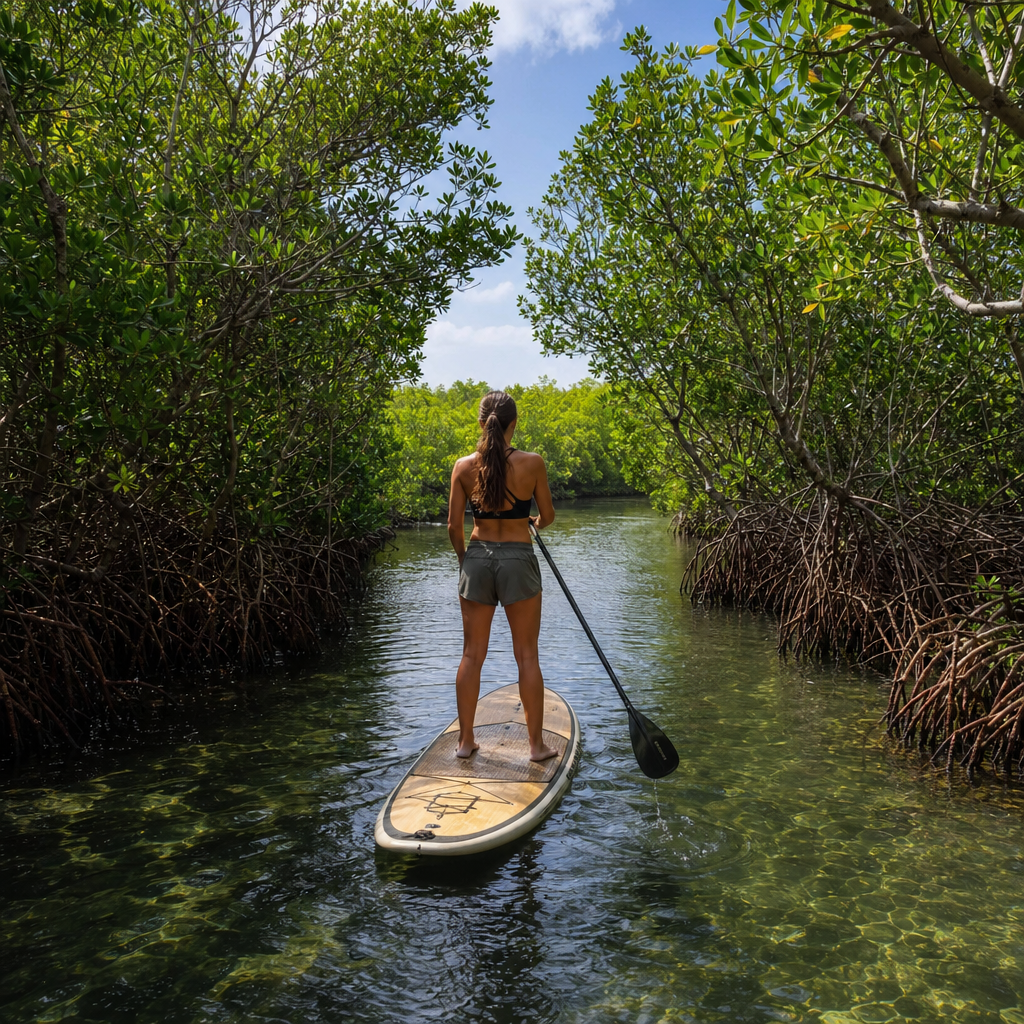
Paddleboarding through Nevis’ mangrove forests is one of the island’s most rewarding soft-adventure experiences, combining wildlife viewing, calm-water exploration, coastal ecology, and accessible outdoor activity in a single outing. On a small Caribbean island better known for volcanic slopes, heritage estates, and golden beaches, the mangrove fringe offers a different side of Nevis: quiet channels, shallow bays, seabird habitat, juvenile fish nurseries, and mirror-flat water that suits both first-time stand-up paddleboarders and experienced paddlers. In practical terms, paddleboarding means standing or kneeling on a wide board and moving with a single-bladed paddle; mangrove forests are salt-tolerant coastal woodlands that thrive where land and sea meet. Together, they create an excursion that feels adventurous without requiring technical skill, making it ideal for travelers who want more than a beach day but less intensity than open-water surfing, scuba certification, or a summit hike.
I recommend this activity often because it answers several traveler needs at once. It is scenic, low impact, family-friendly with the right guide, and deeply tied to Nevis’ natural systems. Mangroves matter because they reduce shoreline erosion, trap sediment, support biodiversity, store significant amounts of carbon in waterlogged soils, and buffer coasts during storms. Exploring them by paddleboard keeps noise low and draft shallow, which means better wildlife encounters and less disturbance than a motorized tour. For visitors building an itinerary under the broader Adventure and Activities theme, this hub also connects naturally to kayaking, birdwatching, snorkeling, beach-hopping, guided eco-tours, and photography outings around the island. Understanding how, when, and where to paddle through Nevis’ mangrove areas helps travelers choose the right operator, prepare properly for conditions, and appreciate the landscape beyond the surface beauty that first draws people onto the water.
Why Nevis’ mangrove forests are ideal for paddleboarding
Nevis works well for stand-up paddleboarding because many coastal stretches remain protected from heavy swell, especially in leeward and nearshore zones where mangroves establish themselves. Unlike destinations defined by powerful surf breaks or long exposed crossings, Nevis offers calmer environments where balance comes more easily and the pace can stay unhurried. That is important for beginners. A stable all-around board, a properly sized paddle, and ten minutes of instruction are often enough for a novice to start kneeling, stand carefully, and move through sheltered water with confidence. In mangrove-lined shallows, paddlers can pause frequently without feeling they are battling currents or wind every minute. The result is an activity that is accessible, yet still immersive.
From an ecological perspective, mangroves elevate the experience beyond simple recreation. Red mangroves with arching prop roots create habitat structure that attracts small fish, crabs, mollusks, and invertebrates. Egrets, herons, pelicans, and other coastal birds use these zones for feeding and roosting. On clear mornings, I have seen paddlers stop over a root system and watch schools of finger-length fish scatter in the filtered light. That level of observation is much harder from shore. The board becomes a quiet platform for reading the water, spotting movement, and learning how an island’s coastline functions. Travelers interested in nature often leave saying they expected a workout but ended up remembering the ecology lesson and the sense of calm.
The setting also fits a wide range of travel styles. Couples choose mangrove paddles as a relaxed morning excursion before lunch at the beach. Families with older children use guided tours to introduce basic water skills in controlled conditions. Solo travelers appreciate that many local operators combine safety briefings with route planning, so the outing feels independent without being risky. Cruise visitors and short-stay guests like it because a half-day tour delivers a strong sense of place in limited time. For return visitors to Nevis, mangrove paddleboarding often becomes the activity that reveals an area they previously overlooked from the road or resort. That repeat appeal is exactly why this topic deserves hub status within miscellaneous adventure options.
What you will see on the water
The most immediate attraction is the visual texture of the mangrove environment itself. Paddleboards glide through green corridors where root networks descend into tannin-tinted water and reflections create a near-symmetrical landscape. Light shifts constantly. Early in the day, low sun illuminates clear patches over sand and seagrass, while later hours can bring silver glare and stronger breeze. In many places around Nevis, mangrove edges transition into open shallows, tidal flats, and beach zones, so a single route may include enclosed channels, broader lagoons, and coastal panoramas looking toward Nevis Peak. That mix prevents the excursion from feeling repetitive.
Wildlife is the second draw. While no reputable guide should promise guaranteed sightings beyond common fish and birds, paddlers regularly encounter herons stalking prey, brown pelicans diving offshore, and small reef-associated fish using mangrove roots as shelter. In some seasons, juvenile marine life is especially noticeable because mangroves function as nursery habitat before young fish move toward reefs or deeper water. The lesson here is practical: healthy reefs and healthy beaches begin partly in places that many visitors once dismissed as swampy margins. Once travelers understand that connection, the paddle becomes a richer ecological experience rather than only a scenic outing.
There is also a distinct sensory rhythm to mangrove paddleboarding. You hear paddle drip, light bird calls, occasional insect noise, and little else. Salt, mud, and warm vegetation create an earthy smell different from the open beach. The water often feels cooler near shaded edges. That quiet environment is why photographers and wellness-oriented travelers gravitate to these tours. Even people who usually prefer faster activities often appreciate the contrast. In itinerary planning, I treat mangrove paddleboarding as a reset day between more strenuous options such as hiking Saddle Hill, snorkeling longer reef sites, or taking a boat trip around the island.
Planning the best paddleboarding trip in Nevis
Timing affects safety and enjoyment more than most first-time visitors realize. The best paddleboarding conditions usually come in the morning, when winds are lighter, boat traffic is lower, and water clarity is better. Trade winds often strengthen later in the day, especially in exposed areas, turning an easy glide into a tiring return leg. Tides matter too. A very low tide can leave some mangrove channels too shallow for smooth passage, while an incoming or mid tide generally improves access and reduces the chance of scraping fins or stepping onto sensitive bottoms. Local guides track these details closely, which is one reason guided tours are the smart choice for most visitors.
Weather seasonality should also inform expectations. Nevis has warm temperatures year-round, but rainfall, wind, and tropical systems vary through the Caribbean wet and dry seasons. A passing squall can flatten visibility, create chop, and reduce comfort quickly, even if temperatures stay pleasant. Reputable operators cancel or adjust routes when conditions warrant; that flexibility is a sign of professionalism, not inconvenience. Equipment quality is another planning factor. Look for operators using stable boards, fitted personal flotation devices, leashes where appropriate for the environment, and dry bags for phones or valuables. Inflatable boards can perform very well for tours if they are high-quality, rigid when inflated, and matched to paddler weight.
| Planning factor | Best practice | Why it matters |
|---|---|---|
| Time of day | Book a morning tour | Lighter winds, cooler temperatures, calmer water |
| Tide | Ask for mid or rising tide routes | Better mangrove access and fewer shallow obstructions |
| Guide selection | Choose certified, locally experienced operators | Safer route decisions and better ecological interpretation |
| Clothing | Wear rash guard, hat, and quick-dry layers | Sun protection and comfort during splash exposure |
| Gear storage | Use a dry bag and leave extras ashore | Prevents water damage and reduces clutter on the board |
Travelers staying on Nevis should ask their accommodation about current launch points and tour providers, because conditions, access arrangements, and recommended routes can change. Good hotels and villa managers usually know which guides are dependable, punctual, and conservation-minded. If you are combining this excursion with other adventure activities, schedule it before an afternoon catamaran trip or a late beach session, not after, because sun and dehydration accumulate faster than people expect in the Caribbean. A two-hour paddle in tropical light can feel more demanding than a longer temperate-climate workout.
Technique, safety, and who this activity suits
Most people can learn enough stand-up paddleboarding technique for a mangrove tour in one session. Beginners usually start kneeling in the center of the board, paddle a few strokes on each side, then stand one foot at a time with knees bent and eyes on the horizon rather than at their feet. The key is not strength; it is posture, rhythm, and staying relaxed. Keeping the paddle vertical improves tracking, while short controlled strokes work better than dramatic sweeping movements. In narrow mangrove passages, small correction strokes and occasional back-paddling help with turning more efficiently than brute force. Anyone with basic balance and moderate mobility can usually participate, and many operators can advise when kayaking may be a better fit than standing.
Safety comes down to matching the route to conditions and the paddler. Even sheltered water deserves respect. Sun exposure is the biggest hazard for many visitors, followed by dehydration, slips during launching, and overconfidence in wind. Wear reef-safe sunscreen, a brimmed hat if practical, polarized sunglasses with a retainer, and hydration carried securely. A personal flotation device should be considered standard. Guides should explain how to fall away from the board, how to remount in shallow and deeper water, and how to avoid stepping directly onto seagrass beds, urchins, or muddy bottoms where footing is uncertain. If thunderstorms are forecast, reschedule. Tropical weather changes quickly and open water is not the place to negotiate lightning risk.
This activity suits a broad audience, but not everyone equally. It is excellent for active beginners, nature-focused travelers, couples, and older children comfortable around water. It may be less suitable for very young children, non-swimmers without close supervision, or travelers expecting a high-adrenaline sport. That distinction matters. Paddleboarding through mangroves is exploratory rather than extreme. Its payoff is observation, tranquility, and connection to place. When marketed honestly, it earns high satisfaction because it delivers exactly what it promises.
Responsible paddling and links to other Nevis adventures
The best mangrove tours in Nevis do more than move guests through pretty scenery; they teach low-impact behavior. Do not pull on roots to move the board. Do not chase birds for photographs. Avoid dragging fins across seagrass or stepping onto exposed root systems. Keep voices low, pack out every item you bring, and use reef-safe sun protection to reduce chemical impact in coastal waters. These practices matter because mangrove ecosystems recover slowly from repeated disturbance. The same nursery habitat that makes the route interesting is also what makes it vulnerable. Responsible paddling protects the experience for future visitors and supports the health of fisheries, reefs, and beaches used by local communities.
As a hub topic within miscellaneous adventures, mangrove paddleboarding also connects neatly to other Nevis activities. Travelers who enjoy this excursion often move next to guided birdwatching, shoreline photography walks, snorkeling over nearby reef systems, or sea kayaking for longer coastal distances. Those interested in land-and-sea contrast can pair a morning paddle with an afternoon visit to historical plantation sites or a hike on the island’s interior trails. This versatility is the central advantage of the activity: it slots easily into short stays and longer itineraries without dominating the schedule. For many visitors, it becomes the experience that ties together ecology, recreation, and island perspective.
If you are planning an Adventure and Activities itinerary for Nevis, put paddleboarding through the mangrove forests near the top of the list. It offers calm water, meaningful wildlife encounters, practical accessibility, and a direct view into one of the Caribbean’s most important coastal habitats. Book with a knowledgeable local guide, go early, dress for sun and splash, and approach the environment with patience. You will leave with better photos, a better understanding of the island, and a far stronger memory than you would get from seeing the mangroves only from shore. Start with this excursion, then use it as the gateway to the rest of Nevis’ outdoor experiences.
Frequently Asked Questions
What makes paddleboarding through Nevis’ mangrove forests different from other outdoor experiences on the island?
Paddleboarding through Nevis’ mangrove forests offers a very different perspective from the island’s more familiar attractions, such as its beaches, plantation history, and mountain scenery. Instead of open coastline or inland hiking routes, the mangrove zone introduces paddlers to a quiet, sheltered coastal ecosystem where the pace is slower and the focus shifts to observation, balance, and immersion in nature. The water is typically calm and shallow, which makes the experience feel approachable while still being rich in discovery. As you glide through protected channels and along the mangrove fringe, you are not just taking part in a watersport; you are moving through one of the island’s most important ecological habitats.
What makes the outing especially rewarding is the combination of soft adventure and environmental insight. Mangroves serve as nurseries for juvenile fish, feeding areas for birds, and natural buffers that help protect shorelines. From a paddleboard, you can often see details that are easy to miss from land or from a motorized boat, including root systems beneath the waterline, small marine life in the shallows, and bird activity along the branches. The stillness of the environment also creates a strong sense of connection to place. For many visitors, this becomes one of the most memorable ways to experience Nevis because it reveals a quieter, more intimate side of the island that contrasts beautifully with its volcanic interior and broad seaside views.
Is paddleboarding in Nevis’ mangrove forests suitable for beginners?
Yes, in many cases this is one of the most beginner-friendly paddleboarding environments on Nevis. Mangrove areas are often protected from larger swells and strong surf, so the water tends to be flatter and easier to navigate than on exposed beaches. That calm-water setting gives first-time paddlers a much better chance to find their balance, practice basic strokes, and build confidence without feeling rushed or overwhelmed. Many people who are hesitant about trying stand-up paddleboarding for the first time find that sheltered mangrove routes are far more comfortable than open-water conditions.
That said, beginner suitability still depends on conditions, route choice, and the quality of instruction. A guided tour is usually the best option for newcomers because guides can provide a quick land-based orientation, help with stance and paddling technique, explain how to enter and exit the board safely, and choose the most appropriate route based on weather and tides. Beginners should also know that it is perfectly acceptable to start on your knees and stand up only when ready. The goal is not speed or athletic performance, but steady, controlled movement through the water. With proper guidance, basic comfort around water, and normal safety precautions, paddleboarding through the mangroves is accessible to a wide range of ages and ability levels.
What kind of wildlife and scenery can you expect to see while paddleboarding through the mangroves?
The mangrove forests around Nevis can be surprisingly rich in wildlife, especially for paddlers who move quietly and take time to look closely. Birdlife is often one of the highlights. Depending on the season and exact location, you may spot herons, egrets, pelicans, shorebirds, and other seabirds using the area for feeding, resting, or nesting. Because paddleboards are relatively quiet and low to the water, they allow for a more intimate wildlife-viewing experience than louder craft. Early morning and late afternoon are often particularly rewarding times for bird activity, softer light, and calmer conditions.
Beneath the surface, the mangrove habitat supports juvenile fish and other small marine species that rely on the tangled root systems for shelter. In clear, shallow water, paddlers can sometimes see schools of fish moving below the board, along with crabs and other small coastal creatures near the edges of the mangroves. The scenery itself is a major part of the experience as well. Expect mirror-like water, intricate root patterns, quiet inlets, and changing reflections of sky, shoreline, and vegetation. In some stretches, the contrast between the low coastal ecosystem and the distant slopes of Nevis Peak creates a striking visual backdrop. The overall effect is peaceful rather than dramatic, which is exactly what many travelers value most about this kind of excursion.
When is the best time to go paddleboarding in Nevis’ mangrove forests, and what should you bring?
The best time to go is usually when winds are light and water conditions are calm, which often means earlier in the day. Morning tours are especially popular because the water is often smoother, temperatures are more comfortable, and wildlife tends to be more active. Seasonal conditions can vary, so it is wise to check with a local operator who understands current weather patterns, tide cycles, and the most suitable launch times. Even in a generally calm mangrove environment, factors such as wind direction, rainfall, and tidal depth can affect the route and overall ease of paddling.
As for what to bring, keep it practical and lightweight. Sun protection is essential, so a hat, reef-safe sunscreen, sunglasses with a retainer, and a lightweight long-sleeve top are all useful. Wear swimwear or quick-drying clothing that you do not mind getting wet, along with secure water-friendly footwear if recommended by your guide. A reusable water bottle is important for hydration, and a waterproof phone pouch or small dry bag can help protect valuables. If you enjoy photography, this is an excellent setting for a waterproof camera or phone case, but always prioritize balance and safety over getting the perfect shot. Most reputable operators will provide the paddleboard, paddle, and personal flotation device, and they may also offer a brief equipment overview before launching.
Why are Nevis’ mangrove forests ecologically important, and how can visitors explore them responsibly?
Mangrove forests are among the most valuable coastal ecosystems in the Caribbean, and Nevis’ mangrove areas play several important environmental roles. They help stabilize shorelines, reduce erosion, filter sediment, and provide habitat for birds, fish, and other marine life. Their root systems create protected nursery zones where young fish can grow before moving into larger coastal waters, which supports the broader health of nearshore ecosystems. Mangroves also contribute to water quality and act as natural buffers against storm impacts. For visitors, this means that a paddleboarding trip is not simply a scenic excursion; it is also an opportunity to witness an ecosystem that helps sustain the island’s coastal resilience and biodiversity.
Responsible exploration starts with recognizing that these habitats are sensitive. Paddlers should avoid striking or grabbing mangrove roots, refrain from entering nesting areas, and keep a respectful distance from birds and marine life. Littering should never be tolerated, and anything brought into the area should be carried back out. Using reef-safe sunscreen is another smart step, especially in shallow coastal environments. Choosing a knowledgeable local guide can make a major difference because good guides do more than lead the route; they also interpret the habitat, explain why certain areas should be avoided, and help ensure that visitors enjoy the setting without disturbing it. When approached thoughtfully, paddleboarding through Nevis’ mangrove forests becomes both a memorable adventure and a low-impact way to appreciate one of the island’s most important natural landscapes.