Saint Kitts’ parasailing delivers one of the island’s most memorable adventure experiences: a quiet, high-glavity ride above clear Caribbean water, with views that stretch from golden beaches to volcanic peaks. Parasailing is a recreational activity in which a rider is secured to a harness attached to a specially designed canopy, then towed by a boat until the wing lifts them into the air. In Saint Kitts, that simple setup becomes something far richer because of the island’s geography, marine conditions, and tourism infrastructure. Calm bays on the Caribbean side, warm trade winds, and sweeping views of Basseterre, Frigate Bay, the Southeast Peninsula, and neighboring Nevis create a setting that feels made for aerial sightseeing.
This matters because many travelers want adventure that is exciting without requiring advanced skill, heavy training, or extreme physical conditioning. I have planned shore-day itineraries in Saint Kitts for cruise passengers, couples, and multigenerational families, and parasailing consistently stands out as the activity that bridges those groups. It offers the rush people associate with watersports, but it remains accessible to first-timers, older travelers, and teens who meet operator age and weight requirements. It also works as a gateway to the island’s broader adventure scene, linking naturally to jet skiing, catamaran sails, snorkeling, beach-hopping, and scenic coastal tours.
As a hub within the Adventure and Activities section, this guide covers parasailing in Saint Kitts comprehensively while also pointing to the wider “miscellaneous” category that travelers often search when they are still exploring options. That category usually includes short-duration experiences, mixed-activity excursions, beach-based rentals, marine outings, and add-on adventures that do not fit neatly into hiking, diving, or cultural tours. Understanding parasailing in that broader context helps visitors decide when to book it, who it suits, what it costs, how safe it is, and how it compares with other island activities. If you are building a Saint Kitts itinerary and want one experience that combines adrenaline, scenery, and convenience, parasailing deserves a place near the top of the list.
What parasailing in Saint Kitts is really like
The core experience is straightforward, but the sensation surprises most first-time riders. You usually begin from a beach kiosk or marina check-in point, sign a waiver, receive a safety briefing, and board a parasail boat equipped with a launch platform and hydraulic winch. After the crew fits the life jacket and harness, you sit or stand at the stern while the canopy catches wind. The boat accelerates gradually, the line extends, and instead of a violent takeoff, you rise smoothly away from the deck. That controlled ascent is one reason so many hesitant travelers end up loving parasailing.
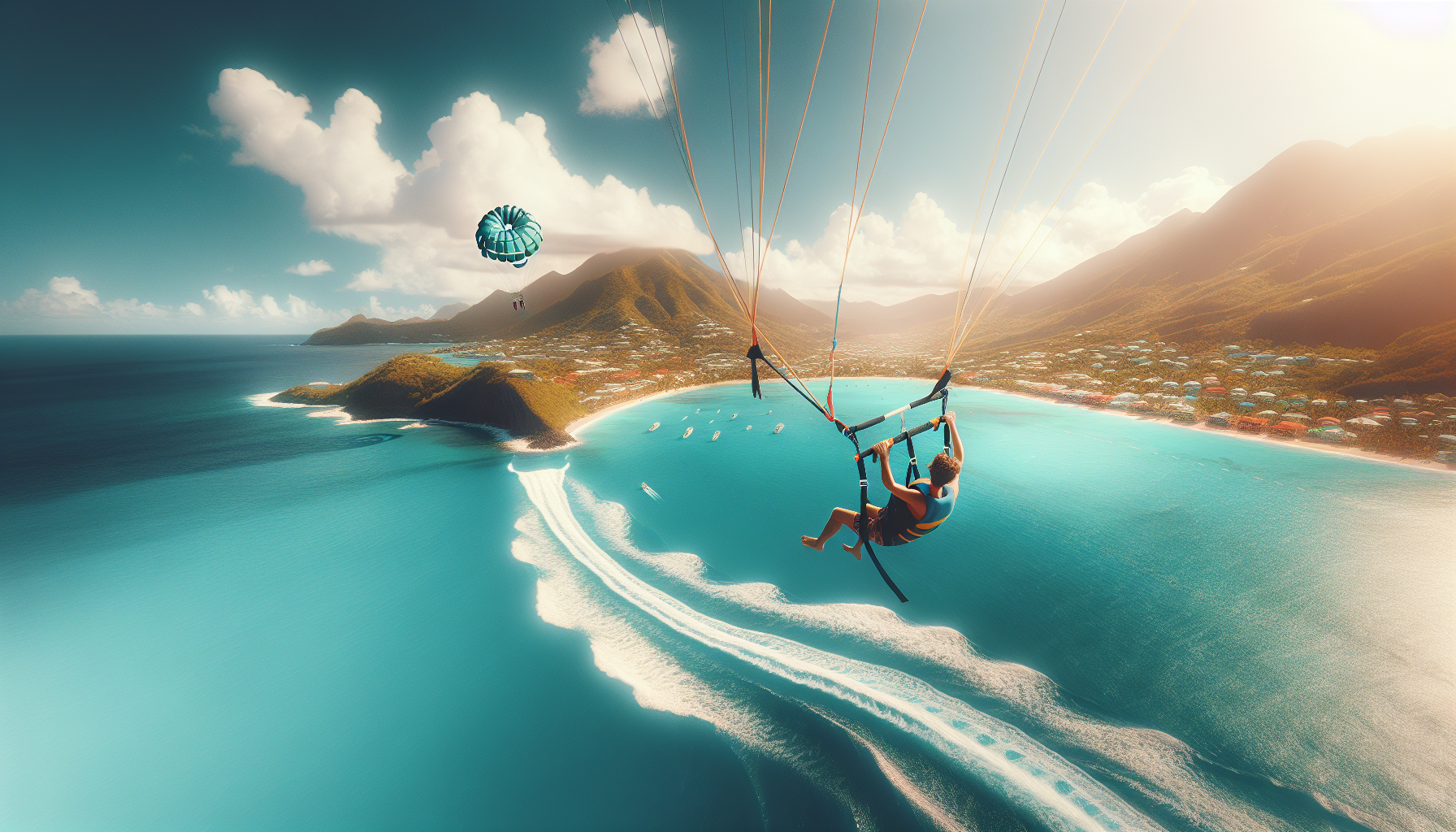
Once airborne, the ride becomes far calmer than the launch suggests. Sound drops away, replaced by wind and the distant engine below. On a clear day in Saint Kitts, you can often see the island’s green central mountains, the curve of South Friars Bay, the hotel clusters around Frigate Bay, and the narrows toward the Southeast Peninsula. Depending on the route and visibility, Nevis appears strikingly close across The Narrows. Operators commonly tow solo, tandem, or triple riders, subject to wind conditions and total weight. Flights often last around eight to twelve minutes in the air, though the full excursion runs longer because of boat loading, briefing, and turns for multiple guests.
What makes Saint Kitts especially appealing is variety. Cruise visitors often choose parasailing because it fits within a port day and provides a quick, high-value memory. Stayover guests use it as part of a broader beach day, combining a flight with lunch, swimming, and watersports. Photographers appreciate the aerial perspective, while couples book tandem flights for the shared experience. Some crews offer a gentle toe-dip at the end, lowering riders close enough to skim the water before winching them back aboard. It is not guaranteed, but when conditions are right it adds a fun finale without turning the ride into a rough or overly wet activity.
Why Saint Kitts is an ideal parasailing destination
Not every island offers equally good parasailing conditions. Saint Kitts benefits from a combination of marine geography, climate, and tourism access that supports dependable operations. The leeward Caribbean side is generally calmer than the Atlantic coast, making areas near Frigate Bay and the Southeast Peninsula attractive for watersports. The island sits within the northeast trade wind belt, and while wind strength varies by season and weather system, operators can often find workable conditions during much of the tourism year. Warm water temperatures, commonly around 26 to 29 degrees Celsius, also make the experience more comfortable if you get splashed or take a dip.
Topography adds another advantage. From sea level, Saint Kitts is beautiful; from a few hundred feet up, it becomes legible. The island’s volcanic origin creates dramatic relief, with Mount Liamuiga dominating the north and lower coastal development framing the south. Aerial riders can understand the shape of the land, the meeting of beach and hillside, and the close relationship with Nevis in a way that is hard to grasp from the ground. This scenic payoff is why parasailing here is not just a thrill ride. It functions as a short panoramic tour.
Accessibility matters too. Robert L. Bradshaw International Airport brings stayover visitors in quickly, and Port Zante delivers a steady stream of cruise passengers close to major excursion areas. That infrastructure has encouraged operators to build streamlined booking systems, transportation partnerships, and combo packages. In practice, it means travelers can book parasailing without committing a full day. For a destination where many visitors balance beach time, island tours, and dining reservations, that flexibility is valuable. Saint Kitts turns parasailing into an efficient adventure rather than a logistical project.
Safety standards, weather, and who should ride
Parasailing is widely considered a moderate adventure activity, but safety depends on operator quality, equipment maintenance, crew training, and weather judgment. Reputable operators use purpose-built parasail boats with winch systems, maintain harnesses and tow lines, conduct preflight briefings, and monitor wind and sea state continuously. In the Caribbean, changing squalls and gust fronts can develop quickly, especially in hurricane season, so the best crews cancel or delay without hesitation. If an operator seems casual about weather, overloaded flights, or worn gear, that is a reason to walk away.
Travelers often ask whether parasailing is safe for beginners. In well-managed conditions, yes. Riders do not need prior experience, swimming strength, or exceptional fitness because takeoff and landing happen from the boat platform rather than through a beach run. The key limitations usually involve age, body size, pregnancy, recent injuries, severe back or neck issues, and certain heart or mobility concerns. Operators set minimum and maximum weight thresholds because total load affects canopy performance. Children may be permitted only in tandem with an adult, and exact rules vary by company and weather. Listening to the crew is essential; they balance rider comfort with aerodynamic reality.
The best time for parasailing in Saint Kitts is generally during the dry season, roughly December through April, when tourism peaks and weather is often more settled. That said, shoulder months can also be excellent, with fewer crowds and warm sea conditions. Morning flights sometimes offer smoother water and steadier air, although local conditions matter more than the clock alone. Travelers prone to motion sickness should consider taking precautions before boarding, since the boat ride between flights can feel more challenging than the parasailing itself.
| Factor | What to expect in Saint Kitts | Why it matters |
|---|---|---|
| Wind | Steady trade winds, but variable with squalls and seasonal systems | Determines whether flights can operate safely and comfortably |
| Sea state | Usually calmer on the Caribbean side near key resort areas | Affects boat stability, launch quality, and passenger comfort |
| Weight limits | Minimums and maximum combined weights set by each operator | Ensures the canopy lifts correctly and lands predictably |
| Age rules | Teens commonly allowed; young children may need adult pairing | Balances excitement with harness fit and judgment requirements |
| Medical limits | Pregnancy and serious back, neck, or cardiac issues often restricted | Reduces risk during takeoff, towing, and landing |
Booking, pricing, and how to choose the right operator
Parasailing prices in Saint Kitts vary by season, departure point, ride length, and whether transportation or photo packages are included. In practical terms, expect pricing similar to other established Caribbean cruise and resort islands rather than bargain-basement rates. Solo flights may cost less per person than tandem or triple arrangements in some cases, but many operators price by seat and availability. Shore-excursion bookings through cruise lines usually carry a premium in exchange for convenience and schedule coordination. Direct bookings with local operators can offer better value, especially for stayover guests, but require you to check transportation, cancellation terms, and weather policies yourself.
When I evaluate an operator, I look beyond the headline price. Start with the boat itself: purpose-built parasail vessels with a rear platform and mechanical winch are the modern standard. Ask whether launches and landings happen on the boat, whether life jackets are included, how long the actual air time lasts, and whether the crew is trained in marine first aid. Read recent reviews carefully for specifics such as professionalism, clear instructions, punctual pickups, and weather-related decision making. Generic praise matters less than comments describing how the team handled nervous riders, shifting conditions, or rescheduling.
It also helps to understand package design. Some operators combine parasailing with jet ski rentals, beach chairs, snorkeling stops, or catamaran transfers. These bundles can be smart for travelers who want a half-day activity block, but they are not automatically better. If parasailing is your priority, avoid itineraries that compress timing so tightly that you spend more effort moving between stations than enjoying the experience. Cruise passengers should build a buffer for port return. Independent travelers should confirm whether images are delivered digitally, whether lockers exist, and whether weight-based groupings could separate their party across different flights.
How parasailing fits the wider Saint Kitts adventure scene
As a sub-pillar hub, this page sits within the island’s miscellaneous adventure category because parasailing often acts as the connector between specialized pursuits. Travelers who are not ready for scuba certification, backcountry hiking, or technical watersports still want memorable activity, and parasailing fills that gap. It pairs naturally with beach clubs at Frigate Bay, snorkeling in sheltered water, catamaran cruises to Nevis, sunset sailing, and casual marine recreation like kayaking or paddleboarding. In itinerary planning, it is one of the easiest activities to combine with other experiences because the time commitment is short and the recovery time is minimal.
It also competes with other headline thrills, so comparison matters. Jet skiing provides speed and active control, but it demands more physical input and carries a different risk profile. Ziplining, where available in the region, delivers a land-based adrenaline rush but not the same panoramic coastal perspective. Scenic island tours show more geography but less excitement. Parasailing occupies a distinctive middle ground: visually dramatic, emotionally accessible, and logistically simple. That balance explains why destination planners and concierge desks recommend it so often to first-time visitors.
For content architecture across an adventure site, parasailing should link outward to related topics including best beaches in Saint Kitts, cruise port excursions, family-friendly activities, romantic experiences, watersports safety, and weather by season. It also deserves connections to narrower guides on what to wear, how to photograph marine activities, and whether to book direct or through a resort. In other words, parasailing is not an isolated attraction. It is a decision point that helps travelers discover the rest of the island’s activity ecosystem, from laid-back beach leisure to high-energy sea adventures.
Practical tips for getting the best experience
A few simple choices will improve the ride significantly. Wear secure swimwear or quick-dry clothing, and avoid loose hats, oversized sunglasses without straps, or anything that can blow away. Use reef-safe sunscreen before boarding, but let it absorb so harness straps do not slide. Bring a waterproof phone case only if the operator permits phones in the air; otherwise, ask about photo packages and focus on the view. If you wear prescription glasses, use a retainer strap. Leave passports, bulky wallets, and unnecessary electronics at your hotel or in a secure locker rather than on the boat.
Timing matters. Book early in your trip if possible, especially during the rainy season, because weather delays are easier to rework when you have flexibility. Morning slots can be ideal for smoother conditions and clearer visibility, while late afternoon sometimes adds beautiful light for photos. If you are arriving by cruise ship, confirm transfer duration realistically instead of trusting approximate maps; island traffic and port procedures can affect return times. Stay hydrated, eat lightly beforehand, and mention any anxiety to the crew. Experienced teams can explain exactly what takeoff feels like and often pair nervous riders with calm, confident staff guidance.
Finally, manage expectations the right way. Parasailing feels thrilling, but it is not usually extreme in the way people imagine from action footage. The real reward is the blend of lift, quiet, and perspective. On Saint Kitts, that means seeing the coastline, hills, and sea colors from above while doing something adventurous enough to become a trip highlight. If you choose a reputable operator, check the weather, and build your day around the experience instead of rushing it, parasailing becomes one of the island’s highest-value activities.
Saint Kitts’ parasailing stands out because it combines ease, scenery, and excitement better than almost any other short adventure on the island. It is simple for beginners, appealing to couples and families, and flexible enough for both cruise visitors and longer-stay travelers. The island’s calmer Caribbean waters, dependable tourism infrastructure, and exceptional aerial views give the activity an edge over many comparable destinations. More importantly, parasailing serves as a smart hub experience within the broader adventure landscape, connecting naturally to beaches, boating, snorkeling, and other miscellaneous activities that shape a well-rounded Saint Kitts itinerary.
The key takeaway is straightforward: book with a reputable operator, respect weather conditions, understand the basic weight and health limits, and choose a time slot that fits your wider plans. Do that, and parasailing becomes more than a thrill ride. It becomes one of the fastest ways to understand the beauty of Saint Kitts from a completely different angle. If you are mapping out your Adventure and Activities plans, start with parasailing, then build the rest of your island experiences around that view from above the sea.
Frequently Asked Questions
What is parasailing in Saint Kitts like, and what makes it different from other island activities?
Parasailing in Saint Kitts combines the excitement of flight with the calm beauty of the Caribbean in a way few activities can match. After takeoff from the boat’s stern platform, riders are lifted steadily into the air beneath a colorful parasail canopy, rising high above the coastline without the noise, turbulence, or intensity many people expect from aerial adventures. What surprises most first-time participants is how peaceful it feels once they are airborne. Instead of a fast, jarring thrill, the experience is often smooth, quiet, and panoramic, with wide views over turquoise water, sandy stretches of shore, reef patterns, and the island’s dramatic green interior.
What sets Saint Kitts apart is the scenery. From above, the island’s blend of golden beaches, clear sea, rolling hills, and volcanic peaks creates a striking visual contrast that is difficult to appreciate fully from land. Depending on weather and launch location, riders may also see boats moving across the bay, changing shades of blue in the water below, and the broader curve of the coastline. It is both an adventure and a sightseeing experience, making it especially appealing for travelers who want something memorable but not overly extreme. For many visitors, parasailing becomes a highlight because it offers a rare perspective on Saint Kitts that feels exhilarating, scenic, and surprisingly serene all at once.
Is parasailing in Saint Kitts safe for beginners and families?
Yes, parasailing in Saint Kitts is generally considered beginner-friendly when operated by a reputable, licensed provider that follows established safety procedures. No prior experience is needed, and most guests receive a clear pre-flight briefing before the boat leaves or before their turn begins. Operators typically explain how the harness works, how takeoff and landing are handled, and what riders should expect while in the air. Because the ascent and descent are controlled by the tow boat and winch system, the activity is designed to be straightforward for participants. In most cases, riders simply sit back into the harness during launch and landing while the crew manages the technical aspects.
Families often choose parasailing because it offers adventure without requiring advanced athletic skill. Many companies accommodate tandem or triple flights, depending on total weight, weather conditions, and equipment limits, which can make the experience more comfortable for children, couples, or nervous first-timers who prefer to fly with another person. That said, age, weight, and health restrictions vary by operator. Pregnant travelers and guests with certain heart, neck, or back conditions are commonly advised not to participate. Weather also plays a major role in safety, and responsible operators will postpone or cancel trips if winds, sea state, or visibility are not suitable. The best approach is to book with a well-reviewed company, listen carefully to crew instructions, and ask questions ahead of time about safety standards, equipment checks, and passenger requirements.
What can you see while parasailing above Saint Kitts?
The aerial views are one of the biggest reasons parasailing in Saint Kitts stands out. Once you are lifted above the water, the island opens up in layers. Closest below is the sea itself, often shimmering in bands of turquoise, aqua, and deep blue, with patches that may reveal reefs, seagrass, or shifting sandy bottom. Looking inland, riders can often take in palm-lined beaches, resort areas, marinas, and the lush rising terrain that gives Saint Kitts its distinctive profile. On clear days, the island’s volcanic character becomes especially impressive, with green peaks and ridgelines framing the coast in the distance.
The view also changes constantly during the flight. As the boat moves, the angle of the shoreline shifts, making each moment feel a little different from the last. You may spot catamarans offshore, swimmers and beachgoers far below, or the curve of a bay stretching away into the horizon. The height creates a sense of scale that makes familiar beach scenes look almost cinematic. While exact sights depend on launch point, weather, and time of day, the overall impression is consistent: parasailing offers one of the best vantage points on the island. It allows you to appreciate Saint Kitts not just as a beach destination, but as a place where sea, land, and mountain scenery come together in a single sweeping view.
Do you need any special preparation before parasailing in Saint Kitts?
Preparation is relatively simple, but a few smart choices can make the experience more comfortable and enjoyable. Wear secure, lightweight clothing suited to warm coastal weather, and choose swimwear or quick-drying attire in case you get splashed. Many operators offer a dry flight, where you take off and land directly from the boat, but some may include a light dip near the water depending on conditions and your preference. Sunglasses with a strap can be helpful, though some people prefer not to wear them to avoid losing them. Sunscreen is highly recommended, especially because reflection from the water can intensify sun exposure even during a short outing.
It is also wise to bring minimal valuables unless you have a waterproof storage option. Phones and cameras should only be taken if they are securely protected and permitted by the operator. If you are prone to motion sickness, consider taking precautions before the boat ride, since the tow boat portion may feel more uncomfortable than the flight itself. Most importantly, arrive with enough time to check in, complete any waivers, and listen to the crew’s safety instructions without feeling rushed. Before booking, confirm weight requirements, age guidelines, and any health restrictions. A reputable operator will be happy to answer these questions in advance and explain what is included, whether transportation is provided, and how weather-related changes are handled.
When is the best time to go parasailing in Saint Kitts?
The best time to go parasailing in Saint Kitts is usually when weather and sea conditions are calm, skies are relatively clear, and visibility is strong. In practical terms, that often means choosing a day with light to moderate wind and manageable water conditions rather than focusing only on season. Parasailing depends heavily on the operator’s assessment of safety, so even during popular travel periods, flights may be delayed or canceled if winds become too strong or the sea becomes unsettled. That flexibility is actually a good sign, because it shows the company is prioritizing safe, comfortable conditions over keeping a rigid schedule.
From a visitor’s perspective, morning and late-morning outings can be especially appealing because the light is often excellent and the atmosphere can feel less hazy than later in the day. Visibility may be better for taking in the island’s beaches, hills, and volcanic landscape, and boat traffic can sometimes be lighter depending on the area. If you are visiting during a cruise stop or peak holiday period, booking in advance is a smart idea, since parasailing slots can fill quickly. At the same time, it is best to leave some room in your itinerary in case the operator recommends a weather-based adjustment. Ultimately, the ideal parasailing day in Saint Kitts is one when the sea is inviting, the wind is cooperative, and the views are clear enough to fully appreciate the island from above.