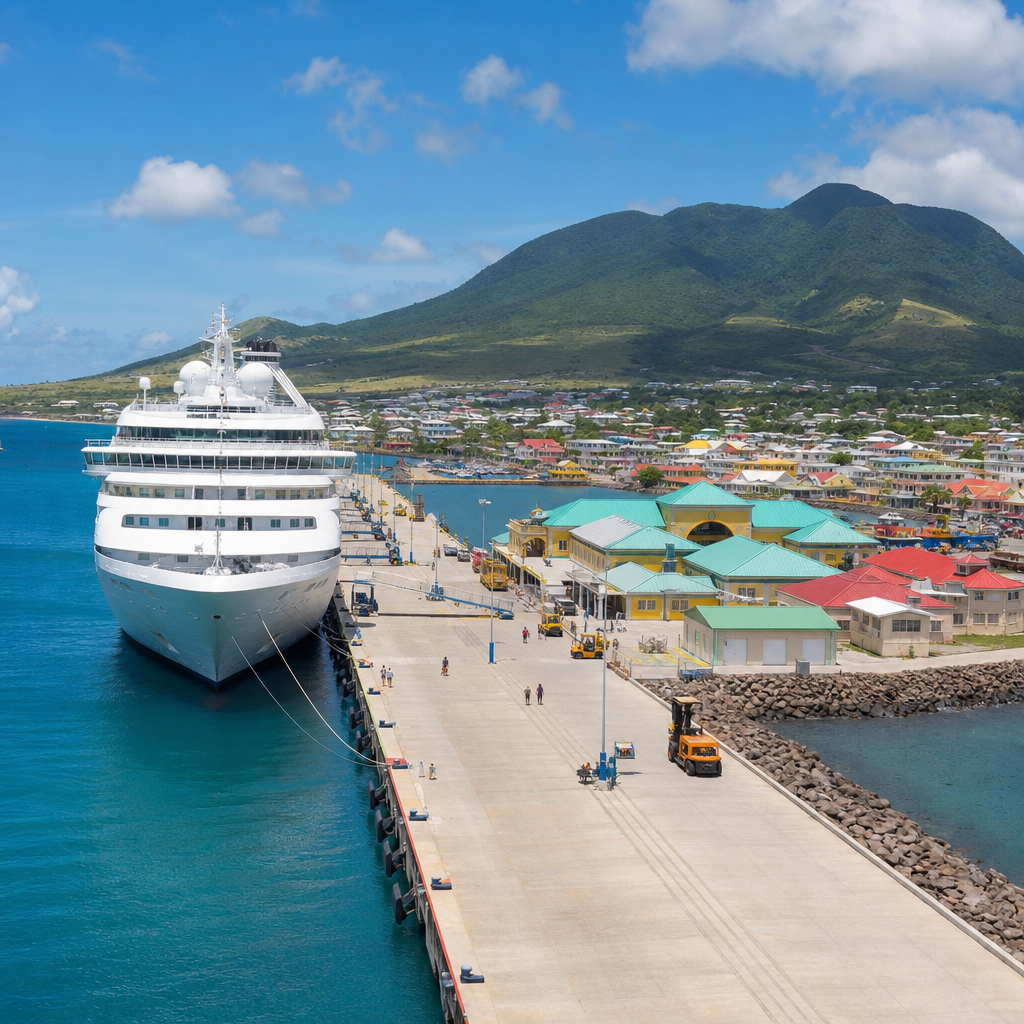
Saint Kitts’ port development sits at the center of the federation’s next phase of growth, linking trade efficiency, cruise tourism, urban regeneration, and private investment into one practical national agenda. For businesses evaluating Caribbean opportunities, port development means more than docks and dredging. It includes cargo handling capacity, cruise berths, marina services, customs processes, waterfront real estate, logistics technology, and the supporting ecosystem of transport, retail, hospitality, and professional services. In Saint Kitts, the conversation is especially important because the country’s small domestic market depends heavily on external connectivity. Almost every imported consumer good, construction material, fuel shipment, and tourism input reaches the island through maritime infrastructure, while a large share of visitor spending begins at the waterfront. Having worked on market-entry assessments for island economies, I have seen that port performance often predicts broader business performance: when vessels move smoothly, supply chains stabilize, visitor experiences improve, and investor confidence rises. Saint Kitts is therefore not simply upgrading a harbor; it is strengthening the main gateway through which trade and tourism revenues flow.
The term port development covers physical expansion, operational reform, and commercial diversification. Physical expansion can include deeper channels, stronger quays, cargo yards, passenger terminals, and shore-side utilities. Operational reform covers berth scheduling, digital documentation, security protocols aligned with the International Ship and Port Facility Security Code, and customs modernization. Commercial diversification includes duty-free retail, excursion management, yachting, bunkering, cold-chain services, and mixed-use waterfront projects. For Saint Kitts, these layers matter because the economy already relies on tourism and imported inputs, yet still has room to capture more value from cruise calls, inter-island trade, and maritime services. Investors, policymakers, and local firms all need a clear view of where the opportunities sit, what constraints remain, and which adjacent sectors will benefit most. This hub article maps that landscape in practical terms, showing how port development can improve national competitiveness while creating openings for operators, suppliers, developers, and service businesses.
Why Port Development Matters to Saint Kitts’ Economy
Saint Kitts and Nevis is a service-led economy in which tourism, construction, financial services, and public spending all depend on reliable import channels and strong visitor arrivals. That makes port development an economy-wide issue rather than a niche infrastructure topic. Better ports reduce dwell time for containers, improve inventory planning for wholesalers, lower spoilage risks for food importers, and support fuel and building supply logistics. On the tourism side, efficient passenger movement shapes first impressions, excursion flow, retail conversion, and the overall appeal of Basseterre as a cruise destination. In practical terms, a delayed cargo vessel can affect supermarket shelves and hotel procurement within days, while a poorly managed cruise arrival can reduce spending per passenger almost immediately.
Saint Kitts has long benefited from its location within Eastern Caribbean shipping and cruise circuits, but geography alone does not guarantee competitiveness. Cruise lines compare ports on turnaround speed, berth quality, passenger safety, retail density, shore excursion variety, and destination reputation. Cargo carriers focus on channel access, crane availability, documentation efficiency, and landside transport. If Saint Kitts improves these fundamentals, it can strengthen its position relative to neighboring islands competing for the same vessel itineraries and logistics flows. If it does not, carriers and cruise planners can shift volume elsewhere. That is why port development has strategic significance: it protects existing revenue streams while creating space for higher-value services and investment projects around the waterfront.
Trade Opportunities Created by Better Maritime Infrastructure
For trade, the most immediate benefit of port development is lower friction. Importers care about predictable vessel windows, faster cargo release, reduced congestion, and safer handling. In a small-island setting where warehousing space is limited and inventory buffers are expensive, even modest improvements in turnaround times can materially improve cash flow. A distributor bringing in refrigerated food, for example, benefits from dependable plug-in points, efficient customs inspection, and quick onward trucking. Construction firms importing cement, steel, fixtures, and heavy equipment benefit from stronger quays and better yard management because delays on one shipment can slow an entire building schedule.
Port upgrades also create more specialized trade opportunities. Cold-chain facilities can support pharmaceutical imports, premium food distribution, and potentially higher-value agricultural exports from the region. Improved cargo handling can encourage third-party logistics providers to establish bonded warehousing, consolidation, and last-mile delivery services. Maritime support businesses, including stevedoring, equipment maintenance, security, vessel agency services, and freight forwarding, expand alongside throughput. In my experience reviewing Caribbean port-linked business plans, these secondary services often provide the strongest risk-adjusted opportunities because they earn from recurring operational demand rather than one-off construction cycles.
Saint Kitts can also gain from closer integration with regional trade patterns. The CARICOM market rewards islands that can move goods efficiently, especially for re-export, food distribution, packaging, and niche manufacturing. While Saint Kitts is unlikely to become a large transshipment giant, it can become a dependable, high-service node for selected cargo categories. That distinction matters. Investors should look less at volume fantasies and more at profitable specialization: marine supplies, hospitality procurement, temperature-sensitive imports, customs brokerage, and digital freight coordination are realistic growth areas tied directly to port capability.
Tourism Opportunities Beyond the Cruise Berth
When most people hear port development in Saint Kitts, they think of cruise tourism first, and for good reason. Cruise arrivals feed retail outlets, taxis, tour operators, attractions, restaurants, and cultural vendors. Yet the strongest opportunity is not simply adding more passengers; it is increasing value per call. A well-designed passenger arrival area reduces bottlenecks, improves wayfinding, and makes travelers more comfortable spending money near the port and in the wider city. Clean terminal design, visible security, shaded waiting areas, and intuitive transport staging all raise satisfaction and support repeat itinerary inclusion by cruise lines.
There is also significant upside in waterfront placemaking. Travelers respond to coherent experiences, not isolated storefronts. If port areas connect smoothly with heritage districts, public spaces, craft markets, and curated excursion departures, Saint Kitts can capture more spending without feeling overly commercialized. Basseterre has the advantage of compact urban geography, allowing visitors to move from ship to shops, cultural landmarks, and local dining within a short time. That proximity is valuable. It supports independent exploration by passengers who may not book formal excursions, and it helps small businesses participate in tourism demand.
Beyond cruise passengers, port development can support yachting and marina-related tourism. Yacht visitors typically spend differently from day-trippers, often purchasing repairs, provisioning, dining, and longer-stay accommodation. Even limited enhancement of marina services, customs clearance for pleasure craft, and technical support can create a higher-spend niche segment. This is especially attractive because yachting demand can complement cruise seasonality and spread benefits across marine trades, restaurants, and transport operators.
Where Investors Can Participate
Port development creates a layered investment map, ranging from core infrastructure to adjacent commercial services. The most obvious opportunities involve public-private partnerships for terminal upgrades, equipment leasing, dredging support, utility systems, and waterfront redevelopment. However, many investors will find better entry points in businesses that rely on improved port performance rather than owning the port itself. These include logistics parks, bonded storage, customs technology, destination retail, excursion platforms, marine repair, food distribution, and hospitality concepts near passenger flows.
The table below summarizes practical areas of participation and what makes each attractive in the Saint Kitts context.
| Opportunity area | What it involves | Why it fits Saint Kitts | Main watchpoints |
|---|---|---|---|
| Cargo logistics | Warehousing, freight forwarding, customs brokerage, cold storage | Import dependence creates stable demand for efficient handling | Scale is limited, so margins depend on specialization |
| Cruise retail | Duty-free, local crafts, food and beverage, curated shopping zones | High passenger concentration near port creates immediate footfall | Success depends on product mix and passenger conversion rates |
| Excursions and transport | Tours, taxis, digital booking, shore experience packaging | Compact geography supports quick, marketable experiences | Service quality must stay consistent across operators |
| Marina and yachting services | Berths, repairs, provisioning, concierge, fuel, clearance support | Adds a higher-spend segment beyond cruise traffic | Requires technical capability and regulatory clarity |
| Waterfront real estate | Mixed-use retail, hospitality, office, entertainment | Port zones can anchor broader urban regeneration | Needs careful planning to avoid congestion and oversupply |
For local entrepreneurs, the lesson is straightforward: the best opportunities often sit one step away from the quay. Businesses that solve friction points, such as baggage handling, excursion coordination, short-term storage, food supply, transport dispatch, or visitor information, can grow quickly if they align with actual port traffic patterns.
Infrastructure, Regulation, and Operational Priorities
Successful port development is not achieved by construction alone. In every Caribbean project I have assessed, physical upgrades underperform when procedures, governance, and landside systems remain weak. Saint Kitts needs alignment across infrastructure, regulation, and operations. Infrastructure priorities typically include berth resilience, dredging where needed, passenger terminal quality, yard layout, utility reliability, drainage, and road connectivity from the port into commercial districts. For cargo, equipment uptime matters as much as new equipment purchases; a single inoperable handler can disrupt an entire week’s schedule.
Regulatory efficiency is equally important. Investors and operators look for transparent tariffs, predictable concessions, streamlined customs procedures, and compliance with recognized maritime security and safety standards. Digital pre-arrival documentation, risk-based inspection, and coordinated border management can reduce delays without weakening control. These changes are often less visible than a new terminal building, but they can produce stronger economic returns. The World Customs Organization’s facilitation principles and international port security requirements provide a clear baseline for modernization, and Saint Kitts benefits when local procedures align with what global carriers already expect.
Landside coordination deserves special attention. Cruise success depends on organized taxi dispatch, excursion staging, pedestrian safety, signage, waste management, and public realm maintenance. Cargo success depends on truck flow, storage discipline, delivery scheduling, and communication between shipping agents, customs brokers, and importers. A port that works at the berth but fails at the gate still loses value. That is why serious development plans treat the port and the surrounding urban logistics zone as one operating system.
Risks, Constraints, and What Smart Businesses Should Evaluate
Saint Kitts offers real opportunity, but prudent businesses should assess the limits clearly. First, the domestic market is small, so scale assumptions must be conservative. A strong business model usually depends on specialization, operational excellence, or tourism-linked demand rather than sheer volume. Second, cruise tourism can be sensitive to itinerary changes, weather disruptions, global fuel prices, and macroeconomic shifts in source markets. Companies dependent on passenger traffic should build flexible cost structures and diversify revenue where possible.
Third, infrastructure projects face execution risk. Delays in procurement, permitting, utility upgrades, or complementary road works can postpone returns for surrounding businesses. Fourth, resilience matters. Caribbean ports must account for hurricane exposure, storm surge, corrosion, and climate adaptation. Investors should examine engineering standards, insurance costs, business continuity planning, and drainage performance, not just headline project announcements. Fifth, labor capability can become a bottleneck if new facilities require specialized technical skills in crane maintenance, digital systems, marine engineering, or high-touch tourism operations.
Due diligence should therefore cover more than land availability or concession terms. Review vessel call patterns, berth occupancy, passenger spending behavior, customs release times, utility reliability, workforce depth, and the policy direction of tourism and trade authorities. Speak with shipping agents, retailers, taxi associations, hoteliers, and importers. On island economies, informal operating knowledge often reveals more than promotional material. Businesses that do this homework usually identify realistic niches and avoid overestimating demand.
The Broader Business Case for Saint Kitts
Port development in Saint Kitts should be understood as a platform strategy. Better maritime infrastructure supports tourism receipts, trade reliability, urban investment, and service-sector growth at the same time. It can raise the quality of visitor arrivals, improve import efficiency for residents and businesses, and unlock new revenue streams in logistics, waterfront commerce, and marine services. That combination is powerful because it spreads benefits across both international investors and local enterprises. A stronger port is not only a transport asset; it is a commercial multiplier for the wider economy.
For decision-makers, the key takeaway is focus. Saint Kitts does not need to imitate the largest Caribbean ports to win. It needs to be efficient, reliable, visitor-friendly, and commercially integrated with Basseterre and the national economy. That means targeted infrastructure, disciplined operations, transparent regulation, and investment in the businesses that surround the port. For investors, the best opportunities are often practical rather than flashy: logistics support, curated tourism experiences, marine services, and waterfront concepts grounded in real traffic data. If you are exploring business and investment opportunities in Saint Kitts, start with the port. Study how goods and visitors move, where friction persists, and which services are missing. That is where the next wave of durable opportunity will emerge.
Frequently Asked Questions
Why is Saint Kitts’ port development so important to the country’s economic future?
Saint Kitts’ port development matters because it brings several major growth priorities together in one place. At the most practical level, a modern port improves how goods move in and out of the country. That means faster cargo handling, better storage, more predictable shipping schedules, and lower friction for importers, exporters, distributors, and retailers. For an island economy, those improvements can have an outsized impact on business costs, inventory planning, and overall competitiveness.
At the same time, port development supports tourism, especially cruise tourism, which remains a major source of visitor arrivals and spending. Expanded or upgraded cruise berths, better passenger processing, improved waterfront access, and stronger visitor amenities can help Saint Kitts welcome more ships, manage passenger flows more efficiently, and encourage travelers to spend more time and money onshore. That creates benefits for tour operators, transportation providers, restaurants, retailers, cultural attractions, and hospitality businesses.
Beyond trade and tourism, ports often serve as anchors for urban regeneration. Waterfront areas can evolve into mixed-use districts that combine transport infrastructure with retail, leisure, marina services, public spaces, and commercial real estate. In Saint Kitts, that makes port development relevant not just to shipping companies, but also to developers, investors, logistics firms, service providers, and entrepreneurs looking for opportunities tied to a more active and better-connected waterfront economy.
In short, the port is not simply a transport asset. It is a platform for national development, private sector participation, and long-term competitiveness. When planned well, port investment can improve efficiency, attract visitors, create jobs, support real estate activity, and strengthen Saint Kitts’ position within regional Caribbean trade and tourism networks.
What trade opportunities could emerge from improvements to Saint Kitts’ cargo and logistics infrastructure?
Improved cargo and logistics infrastructure can open the door to a wider range of commercial activity in Saint Kitts. First, greater cargo handling capacity allows the port to process higher volumes more efficiently, reducing bottlenecks and turnaround times. That matters to import-dependent sectors such as wholesale distribution, construction, food supply, manufacturing support, and consumer retail, all of which benefit from more reliable supply chains and better inventory visibility.
Second, better logistics infrastructure can make Saint Kitts more attractive for regional distribution and value-added services. Businesses often look beyond raw port capacity and focus on the full ecosystem: warehousing, customs processing, inland transport links, digital cargo tracking, cold chain options, and professional services tied to shipping and trade compliance. If these components are upgraded alongside the port itself, Saint Kitts could strengthen its position as a more efficient node for selected regional trade flows and specialized logistics activity.
There are also opportunities in customs modernization and trade facilitation. Faster clearance procedures, improved documentation systems, and better coordination between port operators, customs authorities, freight forwarders, and brokers can significantly reduce delays and administrative costs. For investors and operating companies, those improvements are often just as important as physical infrastructure because they shape the day-to-day ease of doing business.
Additional opportunities may develop around marine services, equipment maintenance, bunkering support, freight consolidation, and small-scale export growth. Local producers can benefit when port systems become more dependable and internationally aligned, especially if they need regular outbound shipping access. For businesses evaluating Caribbean expansion, the key takeaway is that Saint Kitts’ port development could create opportunities not only in cargo movement itself, but across logistics technology, warehousing, transport services, compliance, and supply chain support industries.
How can Saint Kitts’ port development create new tourism and waterfront investment opportunities?
Tourism-related opportunities from port development extend well beyond the arrival of more cruise passengers. A modernized port can improve the entire visitor experience, from disembarkation and transport coordination to retail access, excursion management, and waterfront presentation. When passengers can move safely and efficiently from ship to shore, destination appeal increases, and local businesses have a better chance of capturing spending.
That creates direct opportunities for retail operators, food and beverage concepts, cultural attractions, tour companies, taxi and transfer providers, and hospitality brands. Cruise tourism works best when the surrounding waterfront functions as an integrated commercial environment rather than a narrow transit zone. Thoughtful planning can encourage passengers to linger, explore, shop, dine, and book experiences, all of which improve local economic retention from each ship call.
There is also significant potential in marina and yachting services. If port and waterfront development includes marina facilities, maintenance support, provisioning, and premium visitor services, Saint Kitts can broaden its appeal beyond cruise lines to include yacht owners, charter operators, and marine leisure travelers. That helps diversify tourism demand and can stimulate higher-value spending across hospitality, real estate, and lifestyle sectors.
From an investment perspective, waterfront regeneration often creates opportunities in mixed-use real estate, including retail space, entertainment venues, boutique accommodations, offices, dining districts, and public-private redevelopment projects. Investors tend to pay close attention to locations where infrastructure improvements coincide with rising visitor traffic and stronger public realm planning. In Saint Kitts, that combination could support a more dynamic waterfront economy that benefits both tourism operators and long-term property investors.
What should businesses and investors look for when evaluating opportunities linked to Saint Kitts’ port expansion?
Businesses and investors should look at port expansion through a full ecosystem lens rather than focusing only on construction works or berth capacity. The most attractive opportunities usually emerge where physical upgrades are matched by operational efficiency, policy clarity, and complementary commercial activity. In practical terms, that means assessing cargo throughput potential, cruise traffic trends, customs performance, road connectivity, utility reliability, waterfront land use planning, and the availability of supporting services.
It is also important to understand the structure of participation. Some opportunities may be direct, such as terminal operations, marina development, warehousing, logistics technology, engineering services, retail concessions, or waterfront real estate. Others may be indirect, including hospitality supply chains, ground transport, maintenance services, security, digital systems, professional advisory work, and tourism experience design. Businesses that identify where they fit within the broader port value chain are often better positioned than those looking only for headline infrastructure contracts.
Regulatory visibility is another key factor. Investors should pay attention to concession models, public-private partnership frameworks, permitting processes, customs reforms, land tenure arrangements, and any incentives tied to tourism, logistics, or urban redevelopment. A well-structured investment environment can significantly improve project bankability and reduce execution risk.
Finally, businesses should evaluate whether Saint Kitts’ port development aligns with long-term demand drivers. These may include sustained cruise line interest, growth in regional trade, increased demand for modern waterfront experiences, and national priorities around job creation and competitiveness. The strongest opportunities are usually those that respond to real operational needs while also fitting the country’s broader development strategy. In that sense, successful investors will likely be the ones who view the port not as an isolated asset, but as the commercial heart of a larger trade, tourism, and urban growth story.
What challenges could affect the success of Saint Kitts’ port development, and how can they be addressed?
Like any major infrastructure initiative, port development in Saint Kitts comes with challenges that need active management. One of the main issues is balancing multiple uses within a limited coastal footprint. Cargo operations, cruise arrivals, marina activity, public waterfront access, and real estate development can all compete for space, funding, and policy attention. Without careful planning, these priorities may clash rather than reinforce one another.
Another challenge is ensuring that infrastructure upgrades are matched by institutional and operational improvements. New berths, dredging work, or terminal facilities alone will not deliver their full value if customs processes remain slow, digital systems are fragmented, or last-mile transport connections are weak. Successful port development depends on integrated execution across agencies, operators, service providers, and investors.
Financing and project structuring are also critical. Large port and waterfront projects can require substantial capital, phased implementation, and clear risk allocation between public and private stakeholders. If the financing model is unclear or expected returns are not well supported by traffic and revenue assumptions, projects may face delays or underperformance. Transparent planning, realistic market analysis, and well-designed partnership structures can reduce those risks.
Environmental and community considerations are equally important. Coastal development must account for marine ecosystems, shoreline resilience, climate exposure, and the needs of nearby communities and businesses. In the Caribbean context, resilience is especially important given storm risk and the broader realities of climate adaptation. Thoughtful design, stakeholder engagement, and resilient infrastructure standards can help ensure that the benefits of port development are durable and broadly shared.
Ultimately, the success of Saint Kitts’ port development will depend on coordination, sequencing, and vision. If the country can align trade efficiency, tourism growth, waterfront planning, and investor confidence within one coherent strategy, the port can become a powerful engine of national development rather than just another infrastructure project.