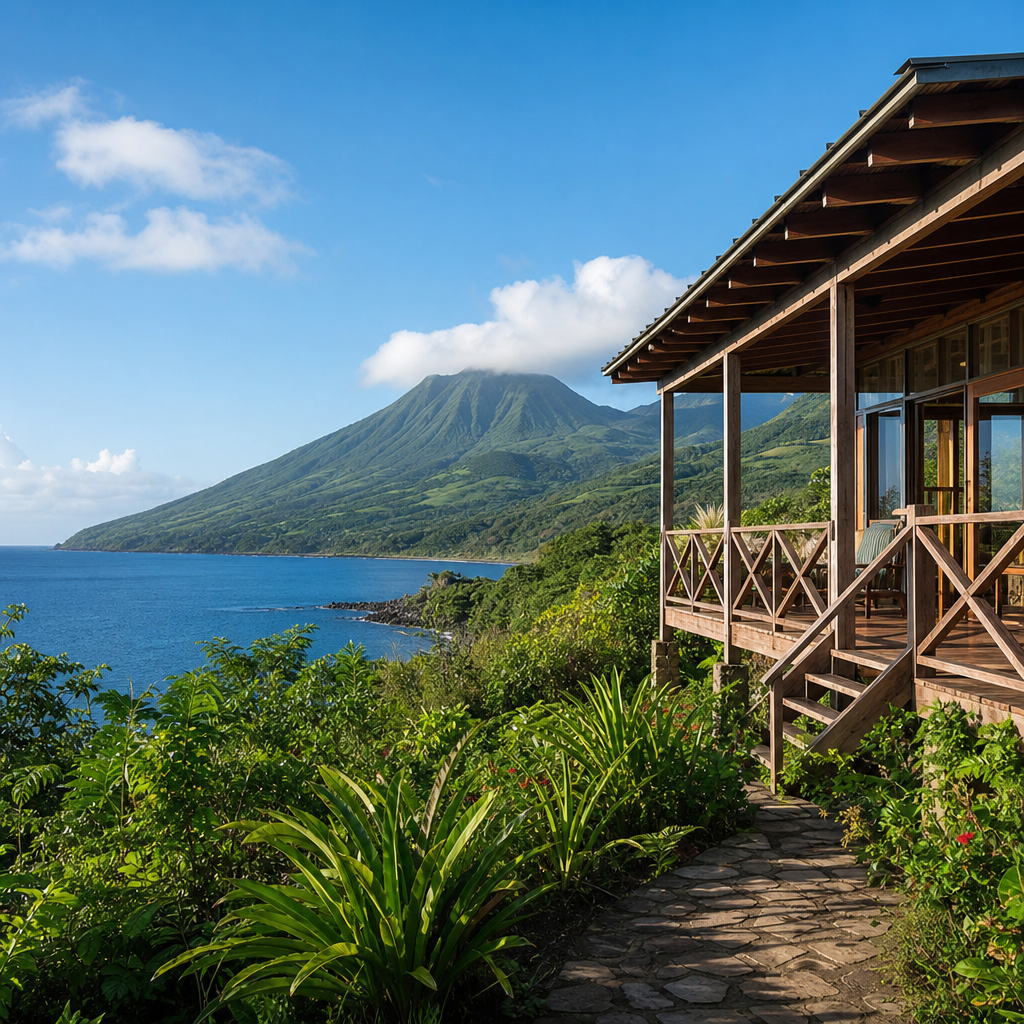
Eco-resorts in Nevis sit at the intersection of Caribbean tourism, climate-conscious development, and long-horizon real estate strategy. For investors looking beyond conventional hotel assets, Nevis offers a distinct niche: a small-island destination with premium tourism appeal, limited land supply, and growing relevance for sustainable investment. In practical terms, an eco-resort is not simply a hotel with solar panels. It is a hospitality asset designed and operated to reduce environmental impact through efficient energy systems, water conservation, resilient construction, waste reduction, local sourcing, and protection of natural and cultural resources. In Nevis, those principles matter because the island’s value proposition depends on preserving exactly what attracts guests: beaches, reefs, hiking landscapes, historic charm, and a quieter, lower-density visitor experience.
I have worked on destination-positioning and hospitality-market assessments in island economies, and Nevis consistently stands out for one reason: scarcity. It is not trying to compete with mass-market Caribbean destinations on room count or cruise volume. It competes on exclusivity, authenticity, and environmental quality. That changes the investment equation. Instead of maximizing occupancy through scale alone, well-structured projects can target higher average daily rates, longer stays, wellness travelers, remote professionals, and affluent guests who increasingly expect visible sustainability standards. This article serves as a hub for the miscellaneous side of business and investment opportunities in Nevis, bringing together the core issues that matter when evaluating eco-resorts as an asset class, an operating business, and a long-term development play.
Why Nevis fits the eco-resort investment model
Nevis is part of the Federation of Saint Kitts and Nevis, but its tourism identity is distinct. The island is smaller, more intimate, and widely perceived as upscale and low-key. Investors should understand that this is not a limitation; it is the market advantage. Luxury travelers, wellness guests, and experience-led visitors increasingly choose destinations where environmental quality and privacy are part of the product. A compact island with limited developable coastal land naturally supports a boutique resort model better than a large inventory expansion strategy.
Several structural factors reinforce this fit. First, land scarcity can support pricing power for carefully located projects, especially where views, beach access, or heritage-adjacent settings are involved. Second, utility costs on islands are often high, so energy efficiency has direct operating value, not just branding value. Third, water management is a material issue in many Caribbean locations, making low-flow systems, rainwater capture, and drought-tolerant landscaping financially relevant. Fourth, travelers are paying closer attention to how resorts handle plastics, wastewater, food miles, and biodiversity impact. In Nevis, where the destination image relies on natural integrity, sustainability is not an add-on; it protects the underlying tourism economy.
From an investment perspective, eco-resorts also align with the island’s lower-density character. A 25-key or 40-key resort with strong design, high service levels, and credible environmental systems may be better positioned than a much larger project that strains infrastructure and dilutes exclusivity. Investors evaluating miscellaneous opportunities within the broader business landscape should see eco-resorts as a platform asset. They create demand not only for lodging, but for local agriculture, marine excursions, spa services, construction trades, renewable-energy contractors, transportation providers, and cultural programming.
What makes an eco-resort financially credible
A sustainable resort becomes investable when environmental design improves revenue durability or lowers controllable costs. The strongest projects do both. On the revenue side, eco-resorts can command premium rates when sustainability is visible, measurable, and connected to the guest experience. Examples include passive cooling design that enhances comfort, farm-to-table dining sourced from local growers, reef-safe water sports policies, electric shuttle service, and architecture that uses native materials and natural ventilation without compromising luxury. Guests are willing to pay more when the environmental story is tangible rather than decorative.
On the cost side, islands reward efficiency. Solar photovoltaic systems can offset expensive grid power. Battery storage can improve resilience during outages and reduce generator dependence. Variable refrigerant flow air-conditioning, occupancy sensors, high-performance insulation, and heat-pump water heating can materially reduce utility bills. Water-efficient fixtures, linen reuse systems, leak detection, and greywater reuse lower both water consumption and wastewater pressure. Waste separation, composting, and supplier packaging controls reduce disposal loads. In my experience, developers often underestimate how quickly these measures move from design features to profit-protection tools once the resort is operating in a high-cost island environment.
Financial credibility also depends on right-sizing. Investors should model total development cost per key, stabilization period, labor profile, maintenance reserves, insurance costs, and seasonality. Sustainable design can raise upfront capital expenditure, especially for resilient materials, energy systems, and water infrastructure. However, life-cycle costing often justifies the premium. A cheaper roof, cooling system, or wastewater solution may save money at construction and erode returns for years afterward. In hurricane-prone regions, resilience and sustainability overlap. Better envelopes, drainage planning, stormwater control, and backup power are not idealistic features; they are asset-preservation decisions.
Key development considerations for investors
Before acquiring land or advancing a concept, investors should evaluate site ecology, planning constraints, infrastructure access, and disaster exposure. Coastal parcels may seem obvious for resort development, but setback requirements, erosion risk, sea-level considerations, and habitat sensitivity can materially affect feasibility. Inland or hillside sites can support compelling eco-luxury concepts if access, views, and water strategy are well planned. The best projects start with environmental fit rather than forcing a generic resort template onto the land.
Due diligence should include geotechnical review, stormwater modeling, solar orientation analysis, transportation access, and wastewater options. On a small island, utility reliability and road logistics can be as important as aesthetics. Investors should also assess labor availability for both construction and operations. Sustainable buildings require commissioning, preventive maintenance, and staff training. A sophisticated energy system that local teams cannot maintain will underperform. Strong operators address this early by selecting proven technologies, simplifying where possible, and building local technical capacity.
Certification can help, but only if used intelligently. Frameworks such as LEED, Green Globe, and EarthCheck provide structure and external validation. Yet certifications should support the business model, not replace it. I have seen projects spend heavily on points that guests never notice while neglecting water resilience or service training that truly matters. For Nevis, the practical standard is simple: can the property document lower resource use, protect the site, deliver a premium guest stay, and operate reliably under island conditions? If yes, the sustainability proposition is commercially meaningful.
| Investment factor | Why it matters in Nevis | Practical investor focus |
|---|---|---|
| Land scarcity | Supports boutique positioning and potential pricing power | Prioritize irreplaceable sites over oversized concepts |
| Energy costs | Island utilities can materially compress margins | Model solar, storage, efficient cooling, and hot water systems |
| Water management | Supply constraints and wastewater handling affect operations | Use rainwater capture, low-flow fixtures, and reuse systems |
| Climate resilience | Storm exposure affects insurance, downtime, and capex | Invest in resilient materials, drainage, and backup power |
| Market positioning | Nevis performs best as low-density, premium hospitality | Target wellness, luxury, and experience-led travelers |
| Local integration | Authenticity strengthens brand and spreads economic benefit | Build partnerships with farmers, guides, artisans, and suppliers |
Demand drivers shaping the market
Why would travelers choose an eco-resort in Nevis instead of a conventional Caribbean resort? The short answer is that demand has shifted from standardized sun-and-sand packages toward differentiated stays. Wellness tourism continues to expand globally, and travelers increasingly connect rest, nature, food quality, movement, and environmental values. Nevis is well suited to this profile because it combines beaches with hiking, thermal and spa concepts, sailing, heritage sites, and a calm atmosphere that supports slow travel.
Remote and flexible work has also changed trip patterns. A guest who once booked five nights may now stay ten or fourteen if the property offers reliable connectivity, quiet workspace, healthy food, and meaningful experiences. Eco-resorts can serve this segment especially well by designing outdoor working areas, shaded communal spaces, and programming that balances productivity with restoration. Family travel is another driver. Parents with higher disposable income are increasingly interested in resorts that teach children something about nature, food systems, or conservation rather than offering only passive entertainment.
Importantly, sustainability influences booking behavior differently across segments. Some travelers actively search for certified low-impact properties. Others simply prefer resorts that feel healthier, quieter, and more connected to place. Investors should not assume every guest will ask about carbon accounting, but many will notice whether the resort avoids single-use plastics, uses local ingredients, protects beachfront vegetation, and explains conservation practices clearly. Those details shape reviews, repeat visitation, and brand reputation. In a market like Nevis, where word-of-mouth among affluent travelers matters, that reputational effect can be significant.
Operational strategy, partnerships, and risk management
An eco-resort succeeds operationally when sustainability is embedded in daily management rather than isolated in marketing materials. That starts with procurement. Local sourcing reduces transport emissions, but more importantly it strengthens supply resilience and guest authenticity. Menus built around seasonal island produce are easier to sustain than imported luxury items with volatile shipping costs. Partnerships with local fishers, farmers, wellness practitioners, taxi operators, and excursion providers can extend guest spend across the economy while differentiating the resort experience.
Staffing is equally important. Housekeeping teams need training on chemical use, linen protocols, and waste separation. Engineering teams must understand building management systems, solar monitoring, pool efficiency, and leak detection. Front-desk staff should be able to explain sustainability measures without sounding scripted. In the best properties, guests see consistency: refillable amenities, natural shading, thoughtful landscaping, reef-safe guidance, and transparent communication on what the resort is doing and why.
Risk management deserves direct attention. Caribbean hospitality investors must model hurricane exposure, business interruption, insurance pricing, and supply-chain delays. Sustainable projects are not immune to these risks, but they can be better prepared. Native landscaping can reduce irrigation demand and recover faster after storms. Distributed energy systems can keep essential operations running. Elevated equipment rooms, durable finishes, and storm-resistant glazing can reduce downtime. I advise investors to treat resilience spending as core underwriting, not optional enhancement. The project that reopens faster after a disruption protects market share, staff continuity, and lender confidence.
How eco-resorts connect to wider business opportunities in Nevis
As a hub topic within business and investment opportunities, eco-resorts matter because they catalyze other sectors. A single successful property can create reliable demand for local agriculture, artisanal food products, marine services, wellness businesses, construction maintenance, transport, and cultural enterprises. That multiplier effect is especially important in a smaller economy, where interconnected demand can strengthen entrepreneurship beyond the resort gates. Investors should view eco-resort development not as an isolated real estate play but as part of a wider commercial ecosystem.
There are also adjacent investment angles for those not building a resort from scratch. These include villa-management platforms with sustainability standards, boutique redevelopment of heritage properties, renewable-energy service companies supporting hospitality assets, eco-tour operators, organic farming partnerships, water-treatment solutions, and waste-reduction logistics. In other words, the miscellaneous category around eco-resorts is commercially rich. It includes suppliers, technology providers, experience curators, and property-service firms that benefit from the same macro trend: travelers and developers want environmentally credible hospitality.
For investors comparing Caribbean markets, Nevis offers a clear proposition. It is not the cheapest place to build, and it is not suited to high-volume resort replication. Its strength is selective, premium, low-density development aligned with environmental stewardship. That makes disciplined underwriting essential, but it also creates defensible positioning.
The central takeaway is straightforward: eco-resorts in Nevis represent a niche because the island itself is a niche. Its tourism appeal depends on conserving environmental quality, limiting overdevelopment, and delivering a refined visitor experience tied to place. For investors, that creates an opportunity to back assets that match the destination rather than fight it. The best projects combine resilient design, efficient operations, strong local partnerships, and pricing strategies built around authenticity and quality. They do not treat sustainability as decoration. They use it to preserve margins, protect the site, attract the right guest, and strengthen long-term asset value.
This matters within the broader business and investment landscape because eco-resorts can anchor multiple revenue streams and stimulate surrounding enterprises. They support farmers, guides, wellness providers, renewable-energy specialists, and property-service businesses. They also fit a global travel market that increasingly rewards credible environmental practice and distinctive experiences over generic scale. In Nevis, where scarcity and identity are powerful economic forces, that alignment is unusually strong.
If you are assessing opportunities in Nevis, start by asking disciplined questions: Is the site resilient? Does the concept suit the island’s low-density premium market? Can sustainability measures be verified in operating performance, not just design intent? And will the project deepen the destination’s value rather than dilute it? Answer those well, and eco-resort investment in Nevis becomes more than a trend. It becomes a practical strategy worth serious consideration.
Frequently Asked Questions
1. What makes eco-resorts in Nevis different from conventional resort investments?
Eco-resorts in Nevis differ from conventional resort investments because the value proposition extends well beyond room inventory, beachfront access, and standard hospitality metrics. A true eco-resort is planned, built, and operated around resource efficiency, environmental stewardship, and long-term resilience. That includes elements such as low-impact site design, renewable or hybrid energy systems, water conservation, waste reduction, biodiversity protection, and construction methods that respond to the island’s climate and terrain. In other words, it is not just a luxury hotel with green branding. It is a real estate and operating model designed to lower environmental impact while strengthening long-term asset performance.
From an investment standpoint, Nevis adds another layer of differentiation. It is a small-island market with limited developable land, a premium tourism profile, and a more intimate destination identity than many larger Caribbean islands. That scarcity can support pricing power, especially for properties that appeal to travelers seeking privacy, authenticity, and sustainability. For investors, this creates an opportunity to participate in a niche segment where brand positioning, environmental performance, and destination exclusivity can reinforce one another.
Conventional resorts often compete on scale, amenities, and volume. Eco-resorts in Nevis are more likely to compete on quality of experience, operational resilience, and alignment with evolving traveler preferences. That can influence everything from guest mix and average daily rates to financing narratives and exit strategies. Investors increasingly recognize that sustainability is not only a marketing message but also a practical framework for managing utility costs, regulatory risk, supply constraints, and climate exposure over the life of the asset.
2. Why is Nevis considered an attractive niche for sustainable hospitality investment?
Nevis is attractive because it combines several conditions that rarely align in one market. First, it has strong appeal as a high-end Caribbean destination, known for natural beauty, relative tranquility, and a more boutique tourism identity. Second, it has limited land supply, which can support asset scarcity and discourage overdevelopment. Third, the island’s scale naturally favors carefully curated hospitality concepts rather than mass-market resort expansion. For investors interested in sustainable hospitality, those factors make Nevis less about chasing volume and more about building durable, differentiated assets.
The sustainable investment angle is especially relevant in a destination like Nevis because climate-conscious development is becoming more important to travelers, operators, lenders, and public stakeholders. Eco-resorts that integrate energy efficiency, water management, and landscape-sensitive design may be better positioned to reduce operating volatility while also appealing to guests who increasingly care about how and where they travel. In a premium destination, that alignment can translate into stronger brand equity and more defensible market positioning.
Nevis also fits investors with a long-horizon mindset. This is not typically a quick-turn, high-density development story. It is better understood as a strategy centered on scarcity, preservation, and long-term value creation. Investors who are willing to think in decades rather than quarters may find the market compelling because sustainable design choices made early in development can improve resilience, lower lifecycle costs, and help future-proof the asset against changing consumer expectations and environmental realities.
3. What sustainability features should investors look for in a true eco-resort project in Nevis?
Investors should look for sustainability features that are integrated into the project from the earliest planning stages, not added later as cosmetic enhancements. A credible eco-resort begins with the site itself: how the land is used, how natural drainage and vegetation are preserved, how structures are positioned to reduce heat gain, and how the development minimizes disruption to surrounding ecosystems. Passive design matters greatly in the Caribbean, where orientation, shading, airflow, and material selection can meaningfully reduce energy demand before mechanical systems are even considered.
Energy and water systems are also central. Investors should assess whether the project incorporates solar generation, battery storage where feasible, energy-efficient cooling systems, smart controls, LED lighting, and well-insulated building envelopes suited to a tropical climate. On the water side, important features may include rainwater harvesting, greywater reuse, efficient fixtures, drought-tolerant landscaping, and wastewater treatment approaches designed to protect coastal and marine environments. Because island utilities can face constraints, these systems are not just environmental upgrades; they are operational and strategic safeguards.
Beyond infrastructure, investors should evaluate how the resort plans to operate. That includes waste management, food sourcing, supply chain practices, staff training, local employment, and guest programming tied to conservation or community engagement. A strong eco-resort model in Nevis should show that sustainability is embedded in operations, not limited to architecture. Third-party certifications, measurable reporting standards, and transparent environmental targets can add credibility, but the fundamentals remain practical: lower resource intensity, better resilience, and a guest experience that feels authentically connected to the island rather than imposed upon it.
4. What are the main risks and challenges of investing in an eco-resort in Nevis?
Like any hospitality and real estate investment, eco-resort projects in Nevis come with execution risk, market risk, and regulatory considerations. Development on a small island can involve higher logistics costs, longer procurement timelines, specialized infrastructure needs, and greater dependence on imported materials or equipment. Sustainable building systems may also require more upfront planning and, in some cases, higher initial capital expenditures. That does not necessarily reduce investment appeal, but it does mean underwriting must be disciplined and realistic.
Climate exposure is another major consideration. Caribbean assets face risks related to hurricanes, coastal conditions, water availability, and broader climate variability. For eco-resorts, the answer is not to ignore these issues but to design directly for them. Investors should pay close attention to elevation, drainage, storm resilience, building materials, backup systems, insurance assumptions, and the durability of infrastructure under stress. In many cases, a well-designed eco-resort can be better prepared for these realities than a conventional property, but only if resilience is treated as a core investment criterion rather than a secondary design theme.
There is also the risk of “greenwashing,” where a project markets itself as sustainable without meaningful environmental performance. That can weaken brand trust, create reputational exposure, and undermine long-term returns. Investors should be careful to distinguish between projects that merely use eco-language and those that demonstrate measurable efficiency, responsible land use, and thoughtful operations. In Nevis, where destination character and natural assets are central to tourism appeal, authenticity matters. The strongest projects are usually the ones where sustainability improves both the economics and the guest experience instead of functioning as a superficial label.
5. How should investors evaluate long-term returns from eco-resorts in Nevis?
Long-term returns should be evaluated through a broader lens than short-term occupancy or simple development margin. With eco-resorts in Nevis, investors should consider how sustainability features influence revenue quality, operating efficiency, asset durability, and future marketability. A property that commands premium rates because it offers a distinctive low-impact experience may perform differently from a conventional resort that depends more heavily on scale or discounting. Likewise, a project that reduces energy and water dependence can improve margins over time, especially in island environments where utilities and logistics may be costly or volatile.
It is also important to assess return potential in relation to scarcity and exit value. Nevis is not a market defined by unlimited land availability or mass resort replication. That limited supply can support long-term positioning for well-executed assets, especially those aligned with premium tourism and sustainable travel trends. Investors should ask whether the resort is being built as a durable, differentiated property that will still feel relevant ten or fifteen years from now. Design integrity, environmental resilience, and operational discipline can all contribute to stronger valuation narratives at refinance or sale.
Finally, investors should think in terms of strategic fit. Eco-resorts in Nevis are often best suited to portfolios seeking exposure to experiential hospitality, climate-aware development, and hard assets in high-barrier destinations. The right benchmark is not always the nearest conventional hotel project. Instead, it may be a combination of hospitality cash flow, real estate scarcity, and sustainability-driven resilience. When those elements are properly aligned, eco-resorts in Nevis can represent a compelling long-horizon investment niche rather than just a thematic tourism play.