Marine biodiversity of Saint Kitts in December reveals how a small Caribbean island supports a surprisingly complex web of coral reefs, seagrass beds, mangroves, open water species, and seasonal visitors. In practical terms, marine biodiversity means the variety of life in the sea, from microscopic plankton and reef-building corals to turtles, reef fish, sharks, rays, seabirds, and marine mammals. A December overview matters because this month sits within the dry season transition, when calmer seas, clearer water, and cooler trade-wind conditions shape visibility, animal behavior, and visitor access. For naturalists, divers, researchers, and families planning coastal excursions, understanding what lives around Saint Kitts in December helps set realistic expectations and supports better stewardship. It also connects separate wildlife interests into one coherent picture, making this page a useful hub for broader Nature and Wildlife coverage focused on the island’s marine environment, habitats, species interactions, and conservation priorities.
Saint Kitts sits in the Leeward Islands, where volcanic shorelines and fringing reefs create multiple marine habitats in a relatively compact area. The island’s underwater life is influenced by Atlantic exposure on one side, Caribbean conditions on the other, riverless coastal runoff patterns, and the close ecological connection with neighboring Nevis and the Narrows channel. I have found December to be one of the best months for explaining these relationships because visibility often improves, water temperatures commonly remain around 26 to 28 degrees Celsius, and many popular snorkel and dive sites become easier to interpret for non-specialists. This article serves as a comprehensive miscellaneous hub: it does not focus on a single species group alone, but instead brings together habitats, signature species, seasonal patterns, threats, and responsible ways to explore. If you want a clear answer to what marine life you can expect around Saint Kitts in December, this overview gives it directly and places each example in ecological context.
Key marine habitats around Saint Kitts in December
The most important fact about marine biodiversity of Saint Kitts is that habitats drive everything else. Coral reefs provide three-dimensional structure for fish, invertebrates, and algae. Seagrass beds act as nurseries for juvenile fish, grazing grounds for turtles, and sediment stabilizers. Mangroves, where present in the wider coastal system, shelter young marine animals and help filter runoff before it reaches reef zones. Sandy bottoms host garden eels, rays, mollusks, and burrowing invertebrates, while deeper pelagic waters support migratory fish and occasional cetaceans. In December, lower rainfall compared with wetter months often means reduced turbidity at many sites, so observers can see habitat boundaries more clearly. That clarity is not just good for tourism; it also improves field identification and habitat mapping.
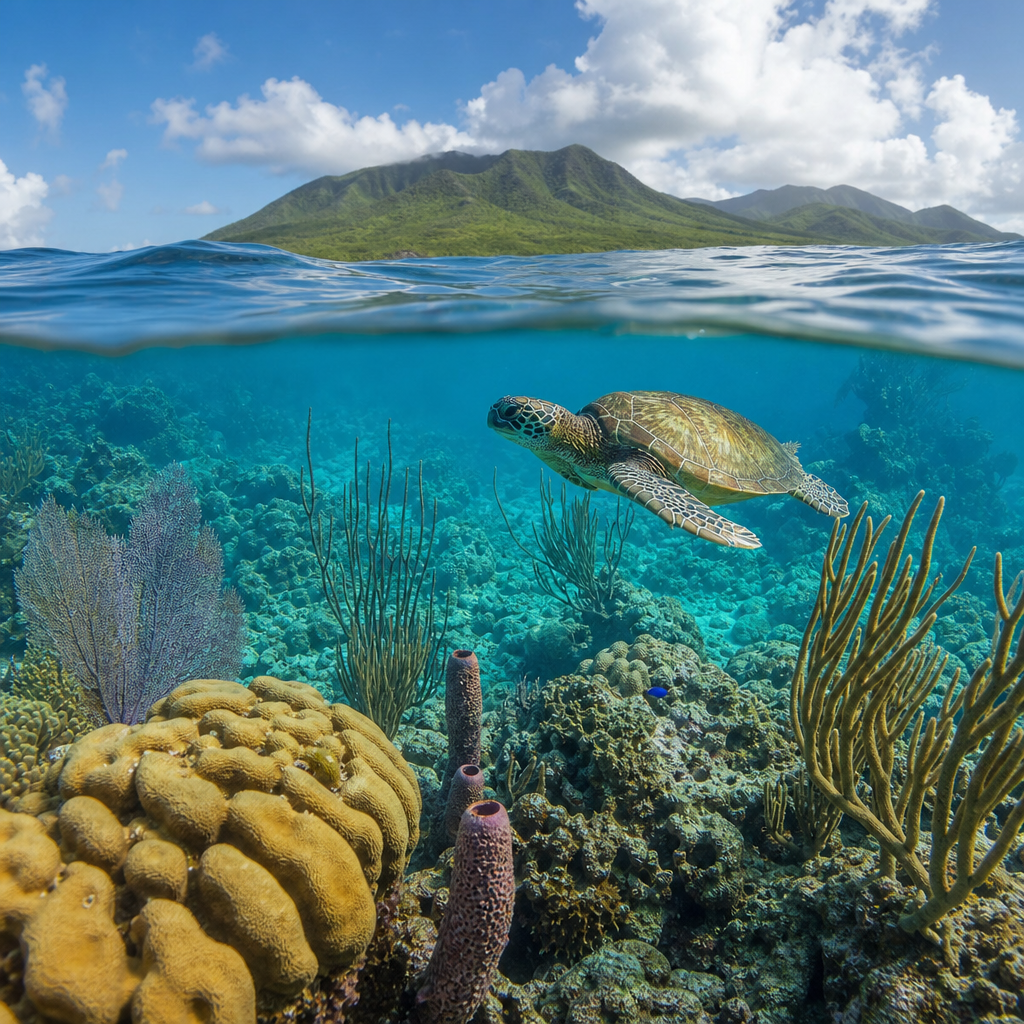
Along Saint Kitts, reef communities vary from shallow patch reefs suitable for beginners to steeper walls and wreck sites used by advanced divers. Healthy reef sections commonly include hard corals such as brain coral, star coral, and elkhorn remnants, alongside sea fans, sponges, and encrusting organisms. Sponges are especially important in the Caribbean because they filter water and provide shelter for crustaceans and juvenile fish. Seagrass meadows often receive less attention than coral sites, yet they are critical to the island’s biodiversity. Green turtles feed in these areas, and commercially important species may spend early life stages there before moving to reefs. When people ask where marine life is most abundant, the accurate answer is not one place but the connection between these habitats. December conditions make that ecological connectivity easier to appreciate during boat trips, shoreline observation, snorkeling, and citizen-science photography.
Reef fish, corals, and invertebrates visitors commonly encounter
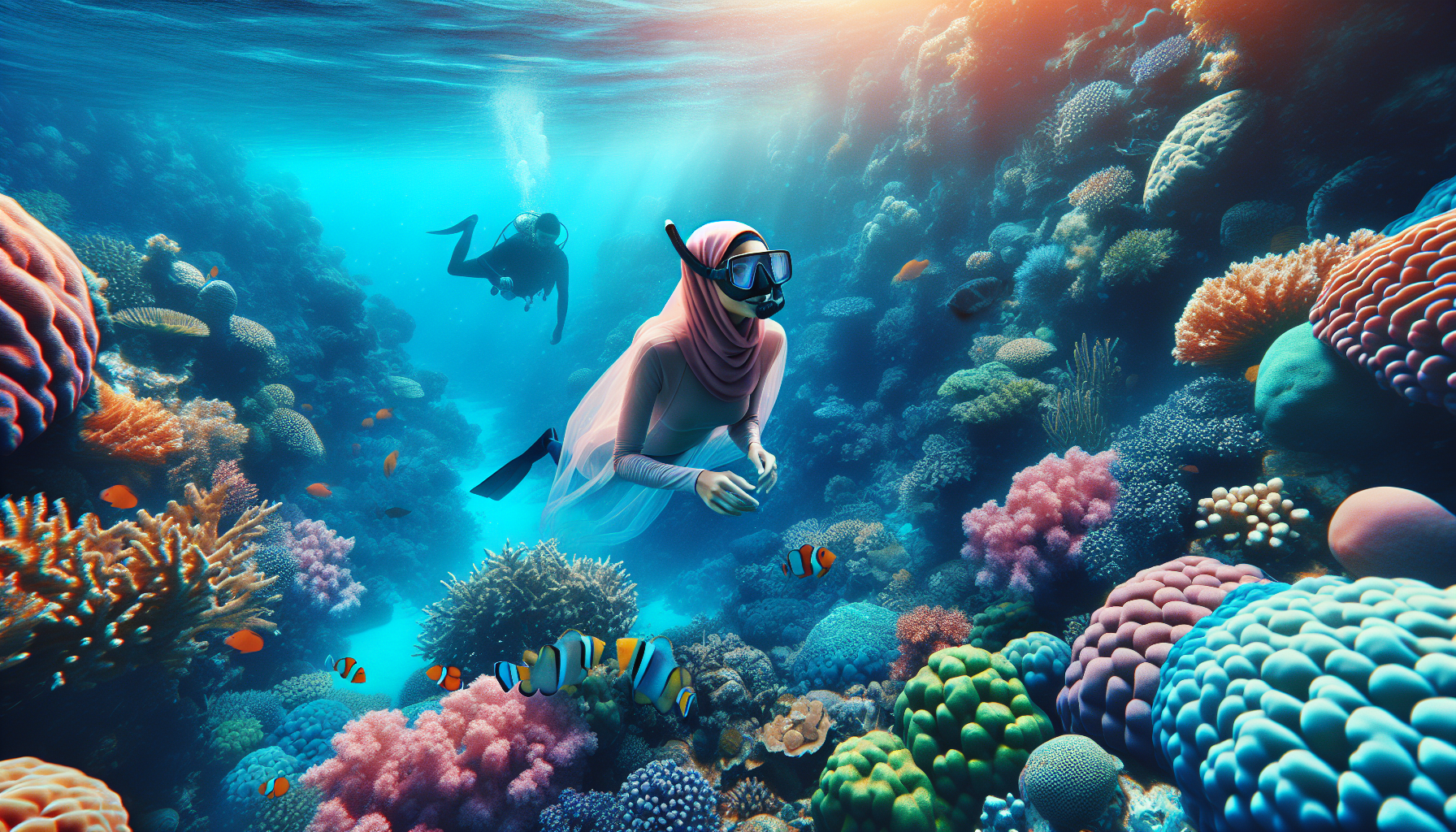
December is a strong month for seeing the everyday biodiversity that defines Saint Kitts beneath the surface. Snorkelers and divers frequently report blue tang, French grunt, sergeant major, trumpetfish, parrotfish, wrasse, damselfish, and angelfish around reef structures. Larger individuals such as barracuda, horse-eye jack, and mutton snapper may appear near drop-offs or around wrecks. These fish are not random decorations; they occupy defined ecological roles. Parrotfish scrape algae and help prevent reef overgrowth. Grunts and snappers move nutrients between feeding and resting areas. Cleaner gobies and shrimp remove parasites from larger fish, demonstrating the small-scale mutualisms that keep reefs functioning.
Corals and invertebrates deserve equal attention because they form the living architecture of the reef. Brain corals create massive boulder structures that can persist for decades. Sea fans and soft corals bend with surge and capture plankton from moving water. Sea urchins, especially where populations are recovering, play a major grazing role by reducing algal competition. Lobsters, cleaner shrimp, Christmas tree worms, sea cucumbers, and octopus add diversity that rewards slow observation. In December, calmer water can make macro life easier to spot, especially in crevices and under ledges. One lesson I emphasize on guided marine interpretation is that biodiversity is not measured only by large animals. A reef with visible sponge growth, juvenile fish sheltering among branching coral, and active invertebrate communities is often ecologically richer than a site where visitors only chase charismatic species.
Sea turtles, rays, sharks, and seasonal open-water wildlife
Among the most sought-after animals in Saint Kitts are sea turtles, especially green turtles and hawksbill turtles. Green turtles are commonly associated with seagrass feeding areas, while hawksbills are more tightly linked to reef habitat where they feed on sponges. Loggerheads are less routinely encountered but remain regionally relevant. December does not mark a nesting peak, yet it is still a good month for in-water observation because visibility can be favorable and feeding behavior is easier to watch in calm conditions. The correct viewing approach is passive: keep distance, never block surfacing paths, and avoid flash or pursuit.
Southern stingrays, eagle rays, and occasional nurse sharks add to the island’s broader marine appeal. Nurse sharks are generally calm bottom-dwelling animals, often resting under ledges during the day, while spotted eagle rays are more likely to be seen gliding across sandy or mixed habitats. Reef sharks are less commonly encountered around heavily visited nearshore areas, but they remain an important part of Caribbean marine ecosystems as mesopredators or apex predators depending on local food-web structure. Offshore, December can also bring interest in pelagic species, including tuna, wahoo, and mahi-mahi in regional waters, though these are more often noted by fishers than casual wildlife watchers. Humpback whales are better known around the wider eastern Caribbean in migration season, and while Saint Kitts is not the single most famous whale-watching base, regional cetacean movement makes marine mammal sightings possible at times.
What December conditions mean for visibility, behavior, and trip planning
December conditions shape both what visitors see and how professionals interpret the coast. The month generally falls within a drier, breezier period compared with late summer and autumn. Water clarity often improves, especially on the Caribbean side, making reefs easier to observe from both snorkeling depth and dive boats. Sea state can still vary with wind exposure, so site selection matters. Leeward locations may offer smoother access than Atlantic-facing stretches when trade winds freshen. This is why local guides often adjust itineraries morning by morning rather than promising a fixed wildlife outcome.
Animal behavior also changes with conditions. Fish may school more visibly over reef edges in clear water, turtles may be easier to track over seagrass, and predators such as jacks or barracuda can stand out at cleaning stations or current points. For photographers, December often brings better ambient light penetration and less suspended sediment, which improves color capture for reef scenes. For families, it is one of the more approachable months for combining beach time with wildlife-oriented snorkeling. The main limitation is that natural systems are variable. A calm, clear December week can produce excellent sightings, while a windy spell may reduce access to exposed sites. Good planning therefore means choosing licensed operators, asking about habitat type rather than only fish names, and understanding that biodiversity is best experienced through patient observation.
Major species groups and their December relevance
| Species group | Typical habitat around Saint Kitts | Why December is notable |
|---|---|---|
| Reef fish | Fringing reefs, wrecks, patch reefs | Clearer water often improves visibility for schooling and cleaning behavior |
| Sea turtles | Seagrass beds, coral reefs | Feeding activity is often easier to observe in calm conditions |
| Corals and sponges | Shallow to mid-depth reef structures | Better light and lower turbidity help observers distinguish reef composition |
| Rays and nurse sharks | Sandy bottoms, reef ledges, mixed habitat | Stable conditions can make bottom-associated species easier to spot |
| Pelagic fish and cetaceans | Offshore waters, channels | Regional migration and fishing activity increase interest in open-water sightings |
Conservation pressures affecting marine biodiversity of Saint Kitts
Saint Kitts shares many of the same marine pressures seen across the Caribbean, and understanding them is essential to any honest December overview. Coral reefs face thermal stress, disease, storm damage, anchor damage, sedimentation, and nutrient pollution. Even when December conditions look pristine to visitors, long-term reef resilience may still be under strain from warmer seas and repeated bleaching events. Overfishing or poorly managed fishing pressure can alter reef balance by removing herbivores or top predators. Coastal development can increase runoff and habitat fragmentation, especially when shorelines are hardened without adequate drainage control.
Plastic debris, ghost fishing gear, and careless wildlife interaction remain preventable problems. Turtle harassment, standing on coral, touching sea fans, and feeding fish all change animal behavior or damage habitat. In my experience, the most effective conservation messaging is specific rather than abstract: one fin kick can break decades of coral growth; one discarded line can entangle a turtle; one irresponsible anchoring event can scar seagrass used by juvenile fish. The island benefits from local marine operators, conservation advocates, and regional frameworks that promote protected areas, reef monitoring, and better fisheries awareness. However, conservation success depends on consistent enforcement, public education, and visitor compliance. Biodiversity is not protected by appreciation alone; it requires rules, funding, and everyday restraint on the water.
Responsible ways to explore Saint Kitts marine life in December
The best way to experience marine biodiversity of Saint Kitts in December is to match your activity to the habitat and your skill level. Beginners usually do best on calm snorkel excursions over shallow reef and seagrass zones, where species diversity is high and entry stress is low. Certified divers can expand into wrecks, walls, and deeper reef slopes, where sponge growth, larger fish, and habitat relief are often more dramatic. Kayaking and glass-bottom tours can work for travelers who want wildlife access without full immersion, though they offer less detailed observation than snorkeling.
Responsible practice is straightforward. Use reef-safe sun protection where possible, though the bigger priority is covering up to reduce product wash-off. Maintain neutral buoyancy if diving. Never touch turtles, rays, corals, or starfish. Choose operators who brief guests on spacing, current, and species etiquette. If you want to contribute beyond recreation, join a cleanup, submit photographs to identification platforms such as iNaturalist, or ask dive centers whether they support reef monitoring or lionfish management. December is ideal for this kind of engaged wildlife travel because conditions often allow longer, more comfortable sessions on the water. The deeper benefit is that informed visitors notice more: not just a turtle sighting, but the seagrass meadow supporting it; not just colorful fish, but the coral complexity and grazing processes making that color possible.
Marine biodiversity of Saint Kitts in December is best understood as a connected coastal system rather than a checklist of isolated sightings. Reefs, seagrass beds, sandy bottoms, mangrove-linked nurseries, and offshore waters each support different species, yet the real value lies in how they function together. December stands out because clearer water, manageable temperatures, and generally favorable access often make those relationships visible to ordinary travelers as well as dedicated wildlife enthusiasts. Visitors can expect reef fish, corals, sponges, turtles, rays, and occasional larger open-water species, but they should also recognize the limits imposed by wind, habitat health, and natural variability.
The main takeaway is simple: the most rewarding marine experiences in Saint Kitts come from informed observation and low-impact behavior. Knowing where species live, why December helps, and what pressures threaten the ecosystem turns a casual excursion into meaningful nature travel. As a miscellaneous hub within Nature and Wildlife, this overview gives you the foundation needed to explore more focused topics, from reef fish and turtles to snorkeling sites and conservation issues. Use it to plan better questions, choose better operators, and spend more time noticing the details that make Saint Kitts remarkable. If you are heading to the island in December, make marine stewardship part of your itinerary and explore with patience, curiosity, and respect.
Frequently Asked Questions
What makes Saint Kitts marine biodiversity especially interesting in December?
December is an especially useful month for understanding the marine biodiversity of Saint Kitts because it marks part of the transition into the drier season, when sea conditions often become calmer and underwater visibility can improve. That combination makes it easier to observe the island’s marine habitats and the species that depend on them. Around Saint Kitts, biodiversity is not limited to coral reefs alone. It includes reef-building corals, sponges, algae, seagrass communities, mangrove-associated life, open-water fish, sea turtles, rays, sharks, seabirds, and even occasional marine mammals moving through regional waters.
What makes the island so biologically rich is the close connection between these habitats. Coral reefs provide structure, feeding grounds, and shelter for reef fish and invertebrates. Seagrass beds act as nurseries and grazing areas, especially for juvenile fish and turtles. Mangroves, where present in the broader coastal system, help stabilize shorelines and support young marine life before it moves offshore. In December, these linked ecosystems can be observed in a relatively balanced seasonal moment: hurricane season has passed, waters may be clearer, and many resident species remain active year-round. That allows both scientists and visitors to appreciate how a small island sustains a remarkably complex marine web.
Which marine habitats around Saint Kitts support the greatest variety of species?
The greatest variety of species around Saint Kitts comes from the combined influence of coral reefs, seagrass beds, nearshore rocky zones, sandy bottoms, and open coastal waters. Coral reefs are often the most visually diverse habitat. They support hard and soft corals, sponges, sea fans, crustaceans, mollusks, and large communities of reef fish such as parrotfish, surgeonfish, wrasses, damselfish, groupers, and snappers. Reefs also attract predators and scavengers, creating a layered food web that is central to the island’s marine ecology.
Seagrass beds are equally important, even if they appear less dramatic at first glance. These underwater meadows provide food for green turtles, refuge for juvenile fish, and habitat for many small invertebrates that feed larger animals. Nearby sandy areas may host burrowing organisms, rays, and foraging fish, while rocky coastal sections offer crevices and attachment points for algae, urchins, and reef-associated species. Open waters offshore add another dimension, bringing in pelagic fish, seasonal visitors, and migratory species that interact with the island’s coastal ecosystems. In practical terms, Saint Kitts is biologically rich because no single habitat works in isolation; the diversity comes from the way all of these marine environments connect and support one another.
What kinds of marine animals are most likely to be seen around Saint Kitts in December?
In December, the species most likely to be seen around Saint Kitts are the island’s year-round residents, especially reef fish, corals, sponges, sea urchins, and turtles, along with occasional sightings of larger roaming animals. Divers and snorkelers commonly encounter schools of small reef fish, angelfish, butterflyfish, parrotfish, trumpetfish, grunts, and wrasses moving through coral formations. More cryptic animals, such as blennies, gobies, crabs, lobsters, and octopus, may be present as well, although they are less immediately obvious. Coral heads and reef crevices often reveal a remarkable concentration of life once observers slow down and look carefully.
Sea turtles are among the most recognizable animals in these waters, particularly in seagrass and reef-adjacent areas. Rays may also be seen gliding over sandy bottoms, and depending on location and conditions, larger species such as barracuda or reef-associated sharks can occasionally appear. Offshore waters may hold transient pelagic fish or marine mammals passing through the wider Caribbean. December is not defined by a single dramatic migration event in the same way some ecosystems are, but it is valuable because many different resident and visiting species can be observed under comparatively favorable sea conditions. The result is a broad, realistic snapshot of how marine life functions around Saint Kitts on a seasonal basis.
How do coral reefs, seagrass beds, and mangroves work together in Saint Kitts’ marine ecosystem?
These habitats function as an interconnected support system, and that relationship is one of the keys to understanding marine biodiversity around Saint Kitts. Coral reefs provide the structural backbone offshore. They create shelter, feeding surfaces, and breeding areas for a wide variety of animals. Seagrass beds, usually found in shallower and more protected waters, trap sediment, improve water clarity, and offer nursery habitat for young fish and invertebrates. They also serve as important grazing grounds for species such as green sea turtles. Mangroves, where they occur as part of the coastal environment, contribute by buffering shorelines, filtering runoff, and protecting juvenile marine life in their root systems.
The ecological value comes from movement between these habitats. A fish may begin life in a sheltered mangrove or seagrass nursery, then move to a reef as it matures. Nutrients and organic matter circulate among habitats, supporting food webs at multiple levels. Reefs also benefit when nearby seagrass beds and mangroves help reduce sediment stress and improve coastal stability. In December, when weather patterns may be more settled than during the wet and storm-prone months, the health and visibility of these habitat links can be easier to appreciate. Looking at Saint Kitts this way shows that biodiversity is not just a list of species; it is the ongoing interaction between habitats that allows marine life to thrive.
Why is protecting marine biodiversity in Saint Kitts important for both nature and local communities?
Protecting marine biodiversity in Saint Kitts is essential because healthy seas support both ecological resilience and human well-being. From a natural systems perspective, diverse ecosystems are generally more stable and better able to recover from stress. Coral reefs, seagrass beds, and coastal habitats help cycle nutrients, support food webs, provide nursery grounds, and create refuge for countless organisms. Biodiversity also strengthens the overall adaptability of the marine environment in the face of warming seas, pollution, habitat loss, and storm impacts. When species and habitats decline, the effects can ripple outward quickly, altering fisheries, shoreline stability, and ecosystem balance.
For local communities, the benefits are practical and immediate. Marine biodiversity supports fisheries, tourism, recreation, education, and coastal protection. Visitors are drawn to Saint Kitts for snorkeling, diving, wildlife watching, and the scenic value of healthy coastal waters. Fishers depend on productive marine habitats to sustain fish stocks over time. Coral reefs and related habitats can also reduce wave energy, helping protect shorelines and infrastructure. December is a good reminder of these links because the clearer, calmer seasonal conditions often make the richness of marine life more visible. The better people understand that richness, the stronger the case for conservation measures such as habitat protection, responsible tourism, sustainable fishing practices, and improved water quality management.