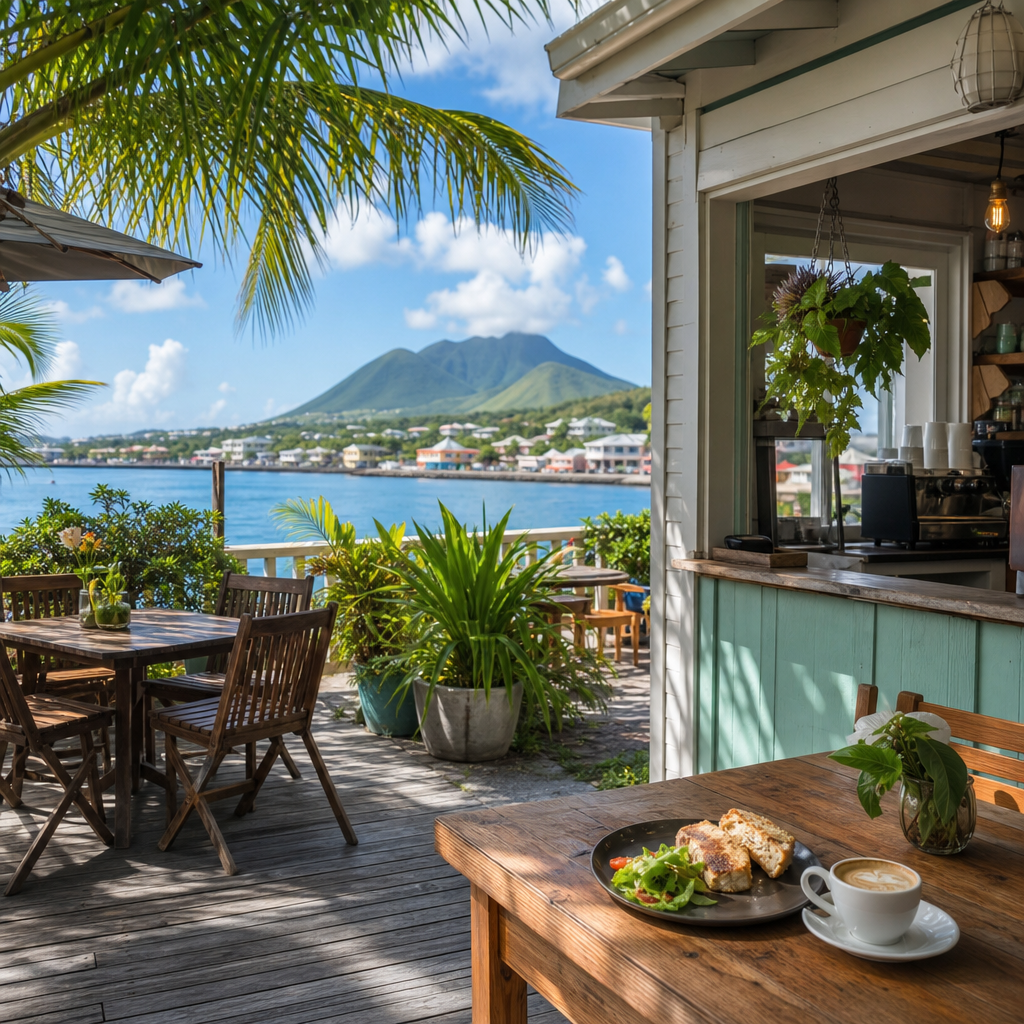
Saint Kitts closes the year with a landscape that feels both intimate and astonishing: rainforest ridges wrapped around a dormant volcano, black-sand coves under Atlantic trade winds, and coastal wetlands that hold birds, crabs, fish, and mangroves in a tight ecological weave. A year-end reflection on Saint Kitts’ natural wonders is more than a scenic overview. It is a practical way to understand how the island’s ecosystems connect, what travelers can responsibly experience, and why this small Caribbean nation deserves serious attention within any Nature and Wildlife guide.
When people speak about Saint Kitts, they often mean Saint Christopher Island, the larger island in the federation of Saint Kitts and Nevis. Its natural character is shaped by volcanic geology, a tropical maritime climate, and a land-use history that moved from Indigenous stewardship to colonial sugar cultivation and, more recently, conservation-minded tourism. Terms matter here. A watershed is the area draining rainfall into streams and the sea. A littoral zone is the nearshore coastal habitat influenced by tides and waves. Endemic species are native organisms found only in a defined geographic area, while migratory species move seasonally across regions and depend on islands like Saint Kitts as stopover or wintering habitat.
This matters because Saint Kitts condenses unusual ecological variety into a manageable footprint. In a single day, I have walked shaded mountain trails around Mount Liamuiga, watched brown pelicans dive near Basseterre’s coast, and ended at a beach where offshore reef structure calmed the water enough for juvenile fish to shelter in seagrass. That compact range makes the island ideal for a hub article: visitors want one reliable guide that explains the terrain, wildlife, seasons, and practical access points before diving into more specialized pages on hiking, birding, beaches, marine life, and conservation.
Year-end is the right lens because December encourages comparison. You notice what the wet season replenished, what the dry months reveal, and how migration, fruiting cycles, surf patterns, and visibility change the experience of each site. On Saint Kitts, “natural wonders” does not only mean dramatic viewpoints. It includes cloud-kissed forest, ghauts that channel intense rainfall, salt ponds used by shorebirds, coral habitats under stress yet still biologically important, and old cane landscapes now being reinterpreted as green corridors. Taken together, these places tell the island’s environmental story more clearly than any postcard can.
Volcanic Landscapes and Mountain Forests
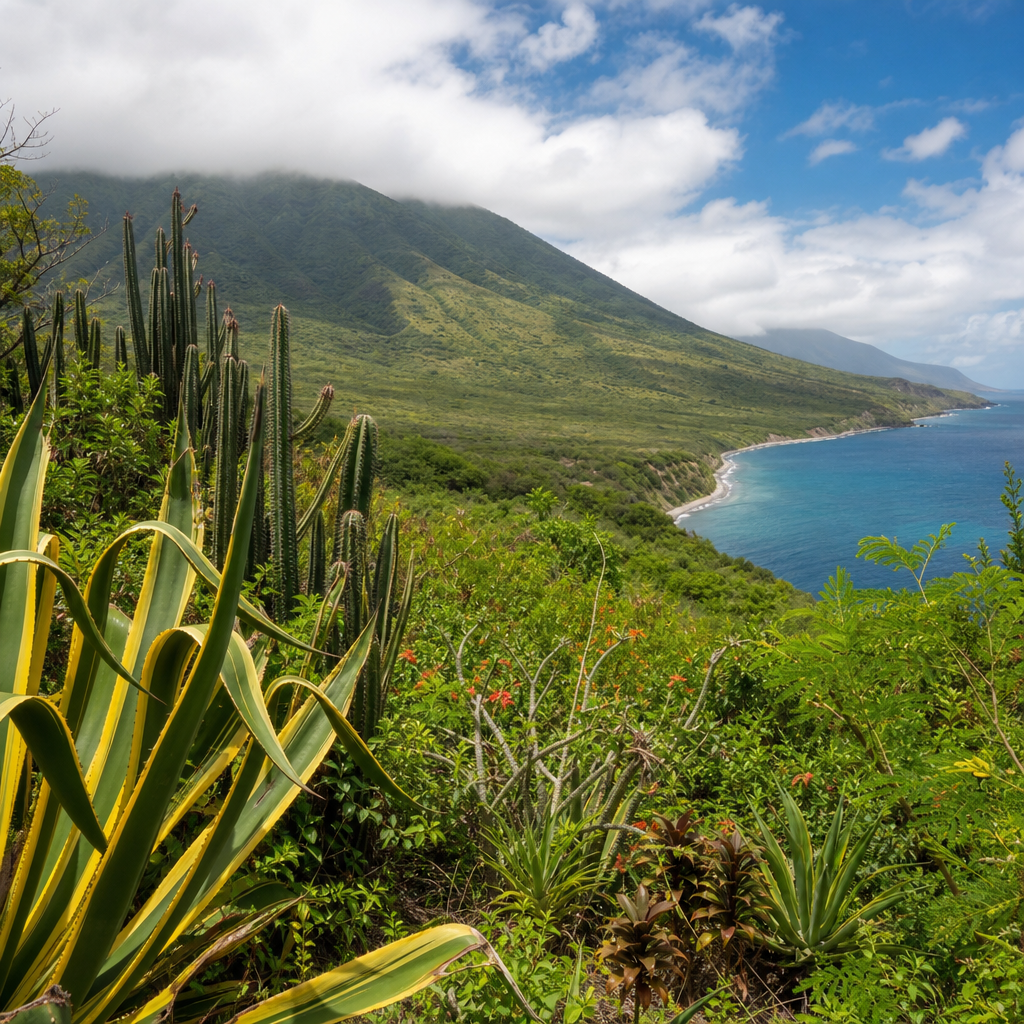
The defining landform on Saint Kitts is Mount Liamuiga, a stratovolcano rising to about 1,156 meters, or 3,792 feet. Its crater, upper slopes, and radiating ridges create the island’s central spine and influence weather, drainage, and biodiversity. Higher elevations intercept moisture from trade winds, producing cooler temperatures and persistent cloud cover that support lush vegetation. In practical terms, that means hikers moving inland from the coast pass through distinct ecological bands: cultivated foothills, secondary forest, wetter montane forest, and elfin vegetation nearer the summit. Few Caribbean islands offer such a clear vertical sequence in such a short distance.
From field experience, the forest feels most alive in the early morning after overnight moisture has settled. Tree ferns, philodendrons, mosses, and lianas thrive in damp conditions, while vervet monkeys, introduced centuries ago, often appear at edge habitats where forest meets old agricultural land. The monkeys are charismatic but ecologically complicated; they are now part of the visual identity of Saint Kitts, yet they are not native wildlife in the strict biological sense. Native birdlife, by contrast, includes species such as the Antillean bullfinch, Caribbean elaenia, and Lesser Antillean flycatcher, all easier to detect by call than by sight in dense cover.
Mount Liamuiga hikes are among the island’s signature nature experiences, but they require realistic expectations. Trails can be muddy, roots become slick after rain, and summit scrambles often involve rope-assisted sections guided by local operators. The reward is not only the crater view. Along the route, you see how volcanic soils support dense plant growth and how steep topography channels water into ravines and seasonal streams. For a hub page, this mountain zone anchors related subtopics: rainforest walks, geology tours, endemic flora discussions, and articles on safe guided hiking during wetter months.
Coasts, Beaches, and the Atlantic-Caribbean Contrast
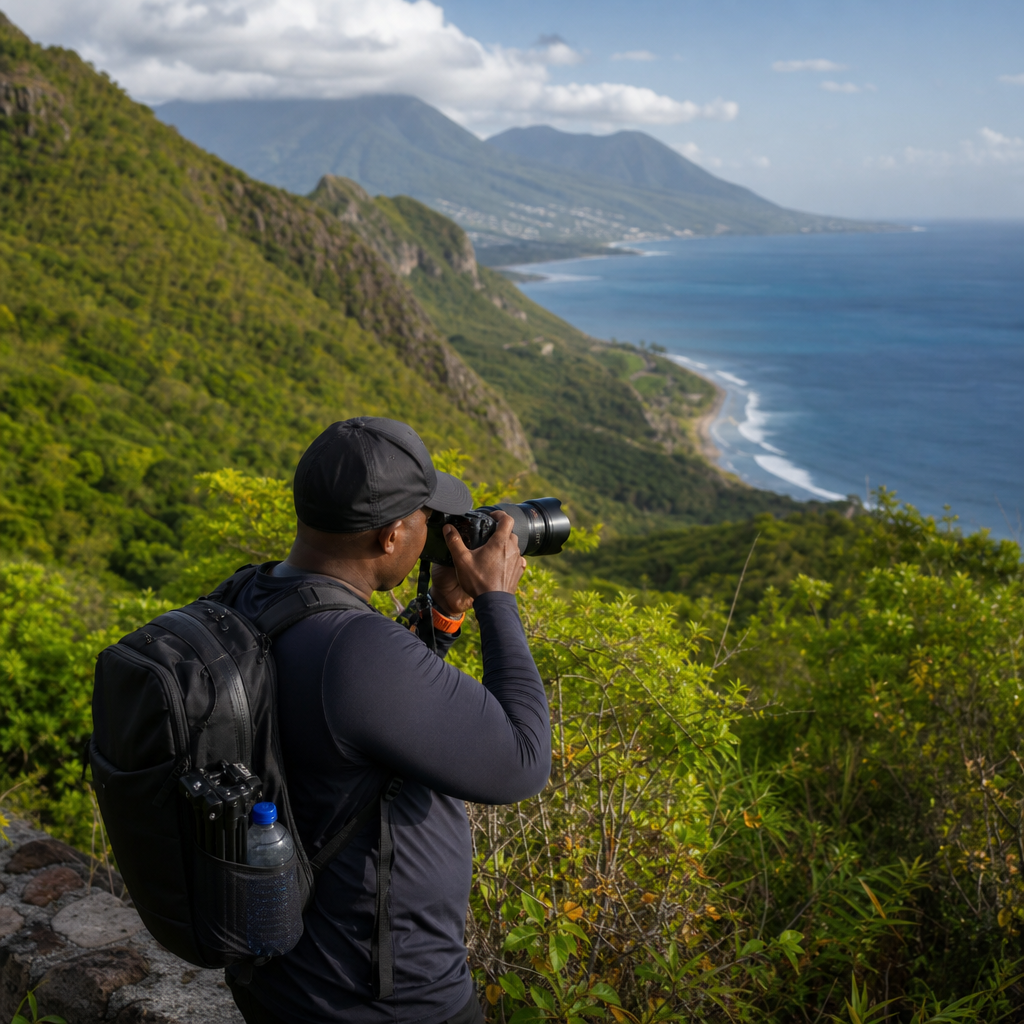
Saint Kitts’ coastline changes character dramatically depending on exposure. The Caribbean side is generally calmer, with more sheltered bays and easier swimming conditions. The Atlantic side is often windier and rougher, with stronger wave action, narrower beach profiles in places, and a sense of rawer energy. Understanding that contrast helps visitors choose experiences wisely. South Friars Bay, Cockleshell Bay, and stretches near the Southeast Peninsula are often associated with leisure and accessible marine activity, while the Atlantic-facing coast rewards observation, photography, and respect for dynamic surf conditions.
Beach composition also varies. Some shores are pale sand mixed with shell fragments; others are distinctly darker because Saint Kitts is volcanic. These black-sand and gray-sand beaches are not curiosities alone. They signal mineral-rich sediments derived from the island’s volcanic past and influence heat retention, nesting suitability, and shoreline appearance. Turtle Beach and nearby areas on the peninsula may draw attention for scenery and wildlife sightings, but conditions change seasonally with currents, sargassum influxes, and weather systems. Responsible year-end reflection means noting beauty without promising uniform conditions every day.
Coastal habitats extend beyond the visible beach. Behind some strandlines lie scrub, ponds, or mangrove patches that buffer wind and storm surge. Offshore, reef and seagrass systems can reduce wave energy and create nurseries for fish. When travelers think only in terms of “best beach,” they miss the ecological chain that keeps these places functional. As a central Nature and Wildlife hub, this miscellaneous page should point outward to more detailed content on beach ecology, coastal safety, snorkeling sites, and seasonal sea conditions, because Saint Kitts’ shoreline is best understood as a living system rather than a string of isolated attractions.
Wetlands, Mangroves, and Birdlife
Wetlands are among Saint Kitts’ most underrated natural assets. Salt ponds, brackish lagoons, seasonal marshes, and small mangrove-fringed inlets create feeding and resting habitat for resident and migratory birds. These areas may look quiet at first glance, especially in midday heat, but dawn and late afternoon reveal why birders return repeatedly. Shorebirds probe exposed mud, herons stalk shallows, and terns work the coastlines where baitfish gather. Because island wetlands are small and vulnerable, even modest disturbance from dumping, careless driving, or shoreline construction can have outsized ecological effects.
The Southeast Peninsula is especially important in conversations about habitat diversity. It combines dry scrub, pond systems, coastal flats, and marine margins within a narrow corridor, making it one of the best places to observe habitat transitions quickly. In winter, migratory species from North America increase the island’s avian interest. Visitors may encounter ruddy turnstones, sandpipers, plovers, and occasionally less common records depending on weather and migration timing. Brown pelicans, magnificent frigatebirds, and various egrets are more consistently seen and help newcomers appreciate the island’s marine-food-web connection.
For readers planning wildlife-focused outings, the table below summarizes the main habitat types and what they typically offer at year-end.
| Habitat | Typical Locations | What You May See | Best Time |
|---|---|---|---|
| Montane forest | Mount Liamuiga slopes, central highlands | Forest birds, monkeys, orchids, ferns | Early morning |
| Salt ponds and wetlands | Southeast Peninsula, coastal lowlands | Shorebirds, herons, egrets, crabs | Dawn or late afternoon |
| Beaches and nearshore waters | South Friars Bay, Cockleshell Bay, Turtle Beach | Pelicans, reef fish, sea turtles seasonally | Calm mornings |
| Rocky Atlantic coast | Eastern and northeastern shores | Frigatebirds, wave-washed geology, dramatic surf | Dry, clear days |
Mangroves deserve special emphasis because they perform work that visitors rarely see directly. Their roots trap sediment, shelter juvenile fish, and help stabilize coasts. They also store significant amounts of carbon relative to their footprint, a fact recognized across tropical coastal science. On Saint Kitts, mangrove patches are not vast compared with those on larger islands, which makes every surviving stand more valuable. If a traveler asks where to find “miscellaneous” natural wonders beyond famous beaches or peaks, the honest answer includes these quiet edge habitats, because they often support the greatest biological productivity per square meter.
Marine Life, Reefs, and Underwater Realities
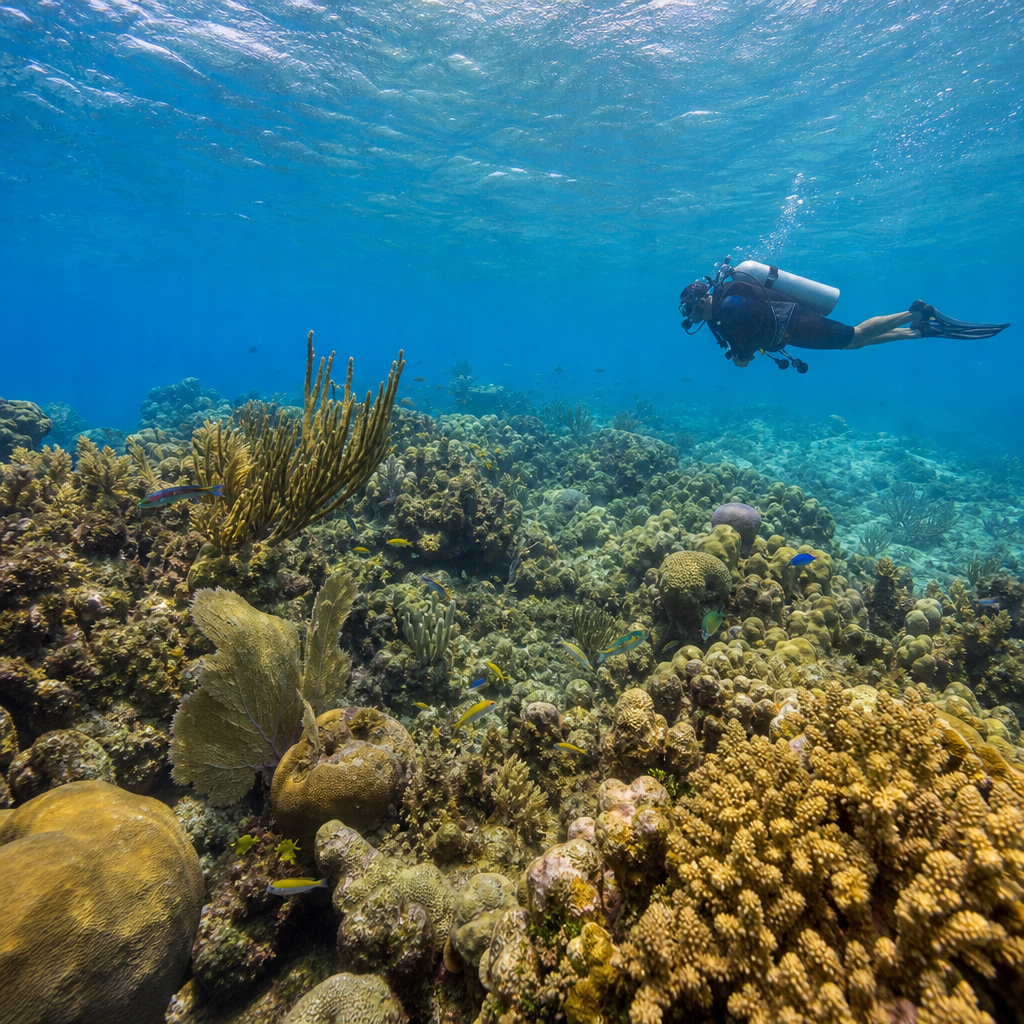
Saint Kitts’ marine environment is central to its identity, even for visitors who never dive. Fringing reefs, patch reefs, seagrass beds, and rocky substrates support fish communities that include parrotfish, surgeonfish, grunts, snappers, wrasses, and juvenile stages of commercially important species. Hawksbill and green turtles occur in regional waters, and reef-associated invertebrates such as sea urchins, sponges, and soft corals contribute to habitat complexity. On good days, snorkeling reveals exactly why tropical islands depend on healthy nearshore ecosystems: the water is not empty blue space but a nursery, feeding ground, and protective buffer.
That said, no responsible reflection should romanticize reefs without acknowledging stress. Across the Caribbean, coral ecosystems face warming seas, bleaching events, storm damage, sedimentation, anchor impacts, and pollution. Saint Kitts is not exempt. In my experience, the difference between a respected operator and a weak one is obvious underwater: good guides brief guests on buoyancy, forbid standing on coral, choose sites appropriate to conditions, and explain what a healthy reef should look like. That educational layer matters because tourism can either reinforce conservation values or quietly erode them.
For travelers comparing activities, shallow snorkeling near calm bays offers immediate access to reef fish and seagrass life, while certified divers can explore more structured reef terrain, walls, and wreck-related sites through licensed operators. Even shoreline observation has value. Watching pelicans plunge-dive where fish school, or seeing water clarity drop after heavy rain, teaches the same lesson as a marine biology briefing: land and sea are connected. Runoff from hillsides, construction, and road drainage eventually reaches the reef. Anyone building a deeper itinerary from this hub should treat marine life as inseparable from watershed management and coastal planning.
Seasonality, Conservation, and Responsible Exploration
Year-end conditions on Saint Kitts generally bring warm temperatures, lower rainfall than the late wet season peak, and strong appeal for hiking, beach visits, and birding. Still, “dry season” does not mean ecological dormancy. Vegetation remains vibrant at elevation, migratory birds are present, and seas can shift quickly with wind exposure and winter swells. December and early January are often excellent for mixed itineraries because visibility on trails and roads is usually reliable, humidity can be less oppressive than in late summer, and holiday demand encourages advance planning with guides, parks staff, and transport providers.
Conservation on Saint Kitts is a practical, on-the-ground issue rather than an abstract ideal. The island’s biodiversity sits inside a small, heavily used landscape where roads, housing, tourism, agriculture, and heritage sites overlap. Effective stewardship therefore depends on cumulative habits: staying on marked trails to reduce erosion, using reef-safe sun protection where possible, avoiding wildlife feeding, supporting operators who follow marine mooring practices, and respecting seasonal closures or local guidance around sensitive habitats. These choices sound minor, but on small islands repeated visitor behavior can alter nesting success, vegetation recovery, and reef condition.
Saint Kitts is also compelling because nature and history visibly overlap. Old sugar estate lands now host secondary growth, pasture mosaics, and habitat edges that support birds and monkeys. Scenic rail journeys originally tied to cane transport now frame wetlands, coastlines, and volcanic slopes for visitors who may not hike deep into the interior. Brimstone Hill Fortress National Park, while celebrated for military and architectural significance, also sits within a broader environmental setting that helps people understand topography, strategic viewsheds, and the relationship between geology and human settlement. For a miscellaneous hub, that crossover is a strength, not a distraction.
The clearest year-end takeaway is that Saint Kitts rewards attentive travel. Its natural wonders are not limited to one headline attraction, and they are best appreciated as connected systems: volcano to watershed, watershed to coast, coast to reef, reef to fisheries and birdlife. Mount Liamuiga explains the island’s shape. Wetlands explain its seasonal rhythms. Beaches and marine habitats explain both its beauty and its vulnerability. Even seemingly modest sites, such as a salt pond alive with shorebirds or a mangrove edge holding juvenile fish, carry as much ecological meaning as the island’s most photographed viewpoints.
As the central miscellaneous page within a broader Nature and Wildlife section, this article should serve as your starting map. Use it to identify which parts of Saint Kitts interest you most, then continue into focused guides on hiking, birdwatching, marine excursions, beach ecology, and conservation travel. If you visit at year-end, slow down enough to notice how each habitat changes with light, tide, wind, and elevation. That attention will give you more than a checklist of sights. It will give you a truer understanding of Saint Kitts, and that is the best reason to explore further today.
Frequently Asked Questions
What makes Saint Kitts’ natural landscape so distinctive at the end of the year?
Saint Kitts feels especially vivid at year’s end because its landscapes reveal how much ecological variety exists within a relatively small island. The central highlands, anchored by the dormant Mount Liamuiga volcano, collect moisture and support rainforest growth, while the coasts shift dramatically between calmer Caribbean-facing shores and more wind-shaped Atlantic edges. That contrast creates a compact but remarkably layered environment where cloud-kissed ridges, dry coastal stretches, black-sand coves, and mangrove-lined wetlands all exist within short distances of one another. For travelers and nature enthusiasts, this makes a year-end reflection especially meaningful: you are not simply admiring isolated scenic points, but seeing a connected island system at work.
Seasonally, the close of the year often invites a more reflective style of travel. The light can feel clearer, the trade winds more noticeable, and the island’s textures more defined, from forested slopes to salt ponds and shoreline vegetation. It becomes easier to appreciate how elevation, rainfall, wind exposure, and coastal geography shape what grows, what survives, and what visitors experience. In practical terms, this is what makes Saint Kitts so distinctive: it offers a complete ecological story in a setting that still feels personal, accessible, and deeply grounded in place.
How do Saint Kitts’ rainforest, volcano, beaches, and wetlands connect as one ecosystem?
Although they may appear separate at first glance, Saint Kitts’ natural features are closely linked. The volcanic interior helps define the island’s topography, rainfall patterns, and soil composition. Higher elevations capture moisture, which supports rainforest habitats and influences streams, runoff, and groundwater movement downslope. Those forested areas do more than provide scenic hiking terrain. They stabilize soils, moderate water flow, and create habitat for birds, insects, reptiles, and plant communities that help sustain broader ecological balance across the island.
As water and nutrients move from upland areas toward the coast, they influence lower-lying habitats, including coastal plains, ponds, estuaries, and mangrove wetlands. Wetlands act as transition zones where land and sea interact. They provide shelter and nursery grounds for fish and crustaceans, feeding areas for birds, and natural buffers that help reduce erosion and absorb storm impacts. Beaches and black-sand coves, meanwhile, reflect the island’s volcanic origins and coastal energy patterns. Together, these environments form a tight ecological weave: the health of the highlands affects the coast, and the condition of the coast affects marine life, shoreline resilience, and biodiversity. Understanding Saint Kitts in this connected way gives a much richer perspective than treating each site as a separate attraction.
What are the best natural experiences travelers can enjoy responsibly in Saint Kitts?
Some of the most rewarding experiences in Saint Kitts are also the simplest, especially when approached with care. Guided hikes in the rainforest and on the slopes of Mount Liamuiga are among the island’s most compelling adventures because they allow visitors to understand the terrain, native vegetation, and geological history directly from knowledgeable local guides. Coastal walks, scenic viewpoints, birdwatching near wetlands, and visits to quieter coves are also excellent ways to experience the island without placing unnecessary pressure on fragile habitats. Travelers who value slower, observant exploration often come away with the strongest appreciation for the island’s natural complexity.
Responsible travel here means making choices that protect the very places you came to enjoy. Stay on marked paths during hikes to prevent erosion and damage to plant life. Avoid disturbing nesting, feeding, or resting wildlife, especially in wetland areas where birds and aquatic species depend on minimal disruption. Do not remove shells, plants, rocks, or other natural materials from beaches or trails. Use reef-safe sun protection when entering coastal waters, carry out all litter, and support local operators who emphasize conservation-minded practices. It is also wise to remember that not every beautiful place is meant for heavy foot traffic or casual recreation. In Saint Kitts, respectful observation is often the best form of engagement.
Why are coastal wetlands and mangroves so important to Saint Kitts’ natural heritage?
Coastal wetlands and mangroves are essential because they perform ecological work that is both visible and invisible. On the visible side, they create rich habitats where birds forage, crabs move through muddy edges, juvenile fish find shelter, and specialized plants thrive in changing salinity. These areas often feel quieter than beaches or mountain trails, but they are among the most biologically active landscapes on the island. They support food webs, create refuge for wildlife, and contribute to the overall diversity that makes Saint Kitts such a compelling destination for nature-based travel.
Less visibly, wetlands and mangroves protect the island itself. Their root systems help stabilize shorelines, reduce erosion, and slow the force of water movement during storms or high tides. They can improve water quality by trapping sediment and filtering runoff before it reaches the sea. In a small island setting, these functions matter enormously because coastal resilience is directly tied to long-term environmental and community well-being. A year-end reflection on Saint Kitts is incomplete without recognizing these habitats as more than scenic backdrops. They are protective, productive, and foundational to the island’s environmental future.
How can a year-end reflection on Saint Kitts’ natural wonders deepen a visitor’s understanding of the island?
A year-end reflection encourages visitors to move beyond checklist tourism and toward a more integrated understanding of place. In Saint Kitts, that means noticing how beauty and function coexist: the rainforest is not only lush, it regulates water and supports biodiversity; the volcanic ridges are not only dramatic, they shape the island’s climate and soils; the black-sand coves are not only striking, they tell a geological story; and the wetlands are not only peaceful, they are critical nurseries and buffers. Reflecting on these relationships turns sightseeing into ecological awareness, which is often the difference between a pleasant trip and a meaningful one.
It also helps travelers see why small islands carry outsized environmental significance. Saint Kitts may be compact, but its ecosystems demonstrate how interdependent natural systems really are. When visitors understand those links, they are more likely to travel thoughtfully, support conservation-conscious businesses, and value the island for more than its postcard appeal. In that sense, a year-end reflection is both personal and practical. It invites gratitude for what can be seen in a single journey, while also reinforcing the responsibility to protect landscapes whose health depends on informed, respectful attention.