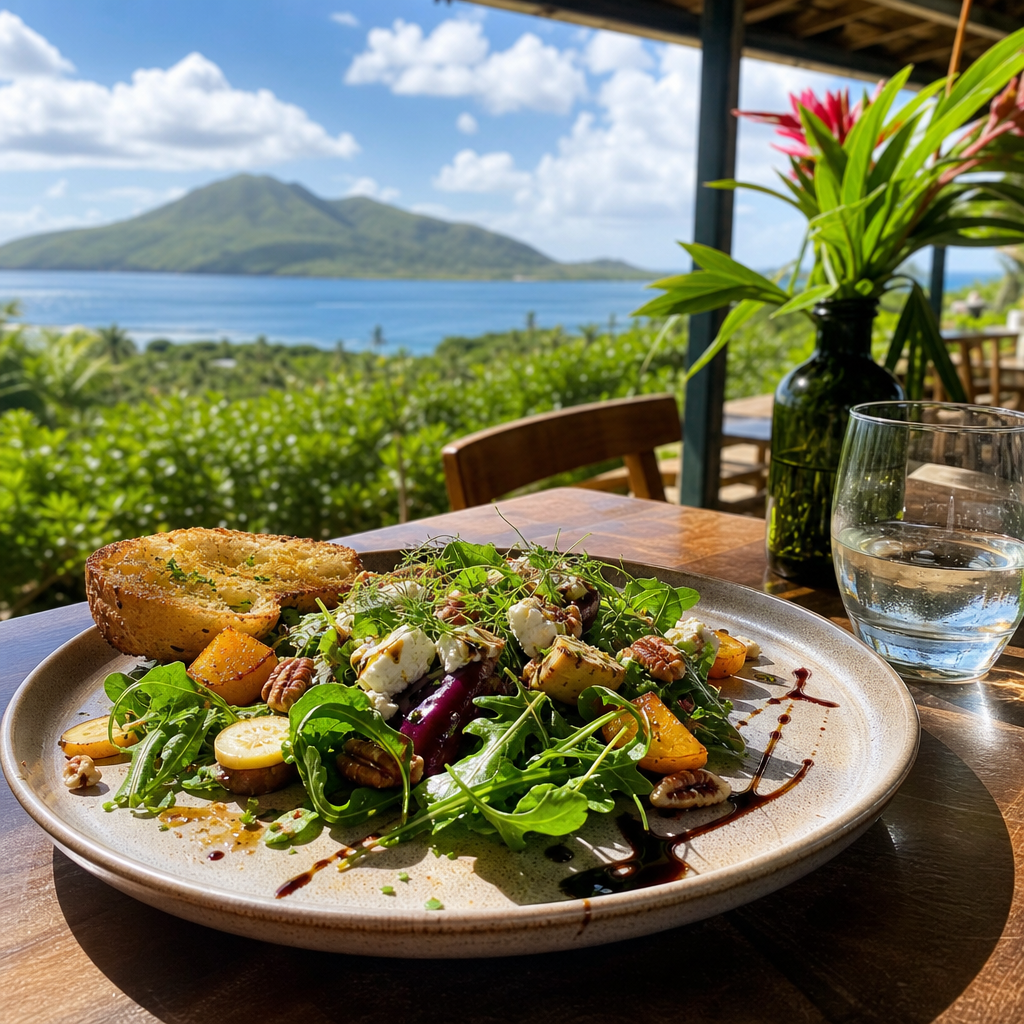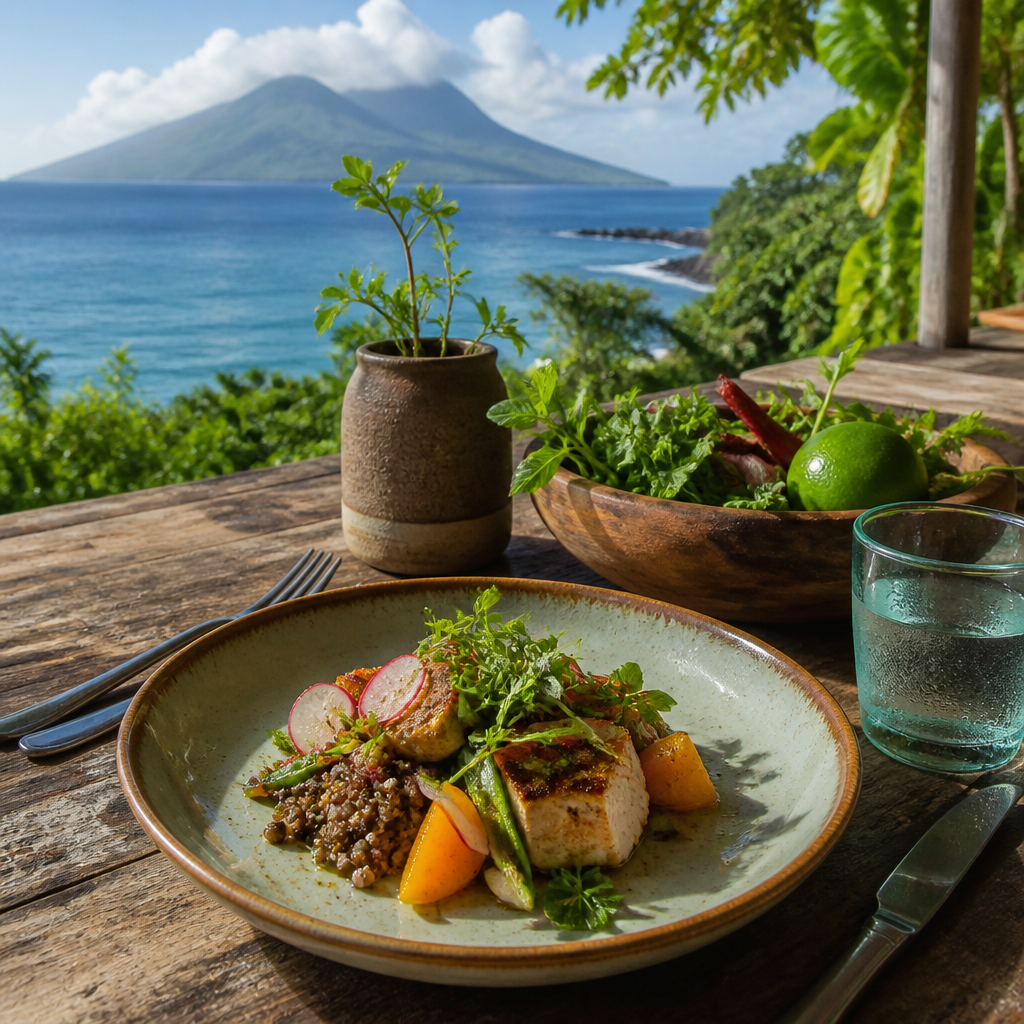
Green dining in Nevis blends Caribbean flavor with practical sustainability, giving travelers a clear way to support the island’s land, sea, and community with every meal. In this context, locally sourced means restaurants buy ingredients grown, raised, caught, baked, or prepared on Nevis or nearby St. Kitts whenever possible. Sustainable dining goes further. It includes seasonal menus, lower food miles, reduced plastic, responsible seafood choices, composting, fair treatment of staff and producers, and dining experiences that protect the island’s cultural and ecological assets rather than draining them.
Nevis is exceptionally well suited to this approach because its tourism economy depends on preserving exactly what visitors come to enjoy: fertile slopes below Nevis Peak, small farms, coastal fisheries, clean beaches, historic estates, and a slower rhythm that favors quality over volume. On a small island, the link between plate and place is visible. When a hotel buys herbs from a nearby grower, uses breadfruit from a village tree, or features line-caught fish rather than imported meat, that decision supports local income and cuts transport emissions at the same time. I have seen chefs in Nevis redesign menus around weather, fishing conditions, and crop availability because importing everything may be easy on paper but weakens resilience in practice.
For travelers researching sustainable tourism in Nevis, green dining is not a side issue. It is one of the most direct, measurable, and enjoyable choices you can make. Meals account for a meaningful share of visitor spending, and restaurants influence farmers, fishers, waste systems, beverage suppliers, and even transport patterns. This hub article explains how locally sourced and sustainable dining works in Nevis, what to look for when choosing a restaurant, where the limits and tradeoffs are, and how this topic connects to broader sustainability themes across the island.
At its best, green dining in Nevis does three things at once. First, it strengthens the local economy by keeping more tourism revenue in circulation among island businesses. Second, it protects natural resources by reducing waste and encouraging better agricultural and fishing practices. Third, it delivers a better meal because fresher ingredients usually taste better and reflect the island’s identity more honestly than standardized imports. Visitors want authenticity; local sourcing is one of the clearest ways to find it.
What Green Dining Means on a Small Caribbean Island
Green dining in Nevis is not a single certification or a fixed checklist. It is a practical operating model shaped by island geography, import dependence, seasonality, and hospitality standards. A sustainable restaurant in Nevis typically prioritizes local produce, uses seafood in line with availability and conservation concerns, minimizes single-use packaging, manages leftovers carefully, and trains staff to explain ingredient origins. Some venues are highly formal, especially within resorts. Others are beach bars, plantation restaurants, cafes, or family-run eateries that follow sustainable practices without marketing them aggressively.
Because Nevis is small, supply chains are shorter and more transparent than in many destinations. A chef often knows exactly which farm supplied tomatoes, which baker made the bread, or which fisher landed the day’s mahi-mahi. That transparency matters. It allows restaurants to maintain quality, adapt quickly when crops fail or rough seas limit catches, and tell a credible sourcing story to guests. It also makes greenwashing easier to spot. If a menu claims everything is local during a week when weather disrupted harvests, an informed diner should ask specific questions.
The strongest examples of sustainable dining also respect carrying capacity. On an island, food waste, water use, and packaging disposal all have outsized consequences because landfill space is limited and supply infrastructure can be fragile. A restaurant that portions carefully, filters water in reusable glass bottles, composts prep scraps, and avoids overstocking imported perishables is doing more than saving money. It is reducing pressure on systems that residents depend on year-round.
Why Local Sourcing Matters in Nevis
Local sourcing matters in Nevis because islands face high import exposure. Food shipped long distances arrives with transport emissions, refrigeration demands, packaging waste, customs complexity, and vulnerability to delays. Hurricanes, fuel price spikes, and global supply disruptions can all affect availability and cost. When restaurants source more ingredients from nearby farms and fishers, they reduce some of that exposure while building a more resilient visitor economy.
There is also a multiplier effect. Money spent on local ingredients can circulate through farms, equipment suppliers, transport providers, market vendors, and households rather than leaving the island immediately through imports. Economists often describe this as local economic retention. In tourism-dependent places, retention is critical because headline visitor numbers mean less if spending leaks offshore through imported food, foreign-owned supply chains, and external intermediaries. A sustainably minded restaurant that buys callaloo, mangoes, pumpkins, herbs, goat, eggs, and fresh fish locally contributes to stronger community value than one built mostly around imported products.
Local sourcing improves food quality as well. Produce harvested close to service can be riper and more flavorful because it does not need to survive a long cold chain. Caribbean ingredients such as breadfruit, plantain, tamarind, sorrel, christophene, and coconut become far more compelling when treated as core menu items rather than novelty sides. Travelers notice that difference immediately. They may not remember every garnish, but they remember the sweetness of a just-cut papaya, a snapper grilled the same day it was landed, or a curry built around vegetables actually in season.
How Restaurants Build Sustainable Menus
Building a sustainable menu in Nevis starts with flexible planning rather than fixed promises. Chefs who do this well create dishes that can shift with harvests and catches without losing identity. A seafood special may alternate between tuna, mahi-mahi, wahoo, or lobster depending on conditions and legal or ethical considerations. A salad may feature whatever greens and herbs are strongest that week. Root crops can replace imported starches. Soursop, guava, and passion fruit can anchor desserts or drinks when available.
I have found that the most credible menus usually show restraint. They are not trying to offer every global cuisine every night. Instead, they balance guest expectations with local reality. That might mean a concise menu with a few dependable signatures, daily specials based on supply, and straightforward explanations from servers. This model lowers waste because kitchens carry fewer ingredients with uncertain demand. It also gives local producers confidence that restaurants will buy what is abundant rather than rejecting variation in size, color, or yield.
Sustainability in menu design also includes the less visible choices: using whole fish where possible, preserving fruit into syrups or jams, turning herb stems into stocks, and planning prep around cross-utilization. These are standard waste-reduction methods in serious kitchens. On Nevis, they are especially valuable because replacement inventory can be costly and disposal options are constrained.
| Dining practice | How it works in Nevis | Main sustainability benefit |
|---|---|---|
| Seasonal menus | Dishes change with harvests, rainfall, and catches | Lower waste and better ingredient quality |
| Farm purchasing | Restaurants buy produce, herbs, eggs, and fruits from local growers | More income stays on island |
| Responsible seafood use | Chefs adjust species and portions based on availability | Reduced pressure on marine resources |
| Filtered water service | Reusable bottles replace imported single-use plastic bottles | Less packaging and transport waste |
| Prep-to-compost systems | Kitchen scraps are diverted where facilities or partnerships exist | Reduced landfill burden |
Ingredients, Farms, Fisheries, and Seasonal Realities
Travelers often ask what local food in Nevis actually looks like beyond a vague farm-to-table label. In practice, common local and regional ingredients may include fresh fish, lobster in season, goat, chicken, leafy greens, peppers, pumpkin, sweet potato, yam, breadfruit, cassava, coconut, mango, papaya, pineapple, tamarind, and herbs such as thyme and chive. Rum, cane products, and Caribbean spice profiles also shape drinks and desserts. The exact mix depends on weather, water, labor, and procurement relationships.
Seasonality is real, even in the tropics. Rainfall patterns affect yields. Storms interrupt fishing. Heat can shorten shelf life. Small farms may have excellent produce but limited volume. That means local sourcing in Nevis is not absolute. Most restaurants still rely on imports for some meats, wines, specialty dairy, dry goods, and premium products demanded by international guests. Sustainable dining is therefore about prioritization, not purity. The best operators are transparent about which ingredients are local, which are regional, and which are imported for quality or practicality.
Fisheries deserve special attention. Seafood can be a sustainability win when sourced responsibly, but island marine ecosystems are vulnerable to overfishing and habitat stress. A good restaurant does not simply advertise “fresh fish” as a virtue. It pays attention to species, season, size, and source. Servers should be able to explain what the catch is, how it is prepared, and whether substitutions are common. That level of communication is a useful sign that a venue takes sourcing seriously.
How to Identify a Truly Sustainable Restaurant in Nevis
The easiest way to identify a truly sustainable restaurant in Nevis is to ask direct questions and listen for specific answers. Generic claims like “eco-friendly” mean little on their own. Better signals include named farms, daily catch explanations, reusable water systems, visible efforts to reduce plastic, and menus that reflect seasonality instead of pretending every ingredient is always available. Staff should be comfortable discussing sources, not surprised by the question.
Look at menu structure. A smaller menu with changing specials is often greener than an oversized menu that depends on broad imports and overstocking. Notice beverages too. House-made juices, local rum cocktails, and refillable water service usually align with lower packaging and transport impacts. Pay attention to portions and presentation. Excessive garnishes, individually wrapped condiments, and decorative waste are small but revealing indicators.
Physical operations also tell a story. Does the restaurant use durable tableware for dine-in service instead of disposables? Are takeout containers minimal and reasonably chosen? Is there evidence of composting, herb gardens, or supplier acknowledgments? In resort settings, ask whether culinary teams work with local farmers or run kitchen-garden programs. Some properties do, and those efforts can meaningfully expand local purchasing if they move beyond token plots.
Finally, read sustainability claims with balance. A luxury restaurant can be highly committed to local sourcing yet still have a larger energy footprint than a simpler venue. A beach bar may use local fish but generate more packaging waste. Sustainable dining is not all-or-nothing. Compare tradeoffs, then choose places making the strongest good-faith effort across sourcing, waste, and community benefit.
The Role of Travelers, Hotels, and the Wider Sustainable Tourism Network
Green dining in Nevis works best when it is part of a broader sustainable tourism network rather than an isolated restaurant trend. Hotels shape demand through breakfast sourcing, event catering, minibar choices, and supplier contracts. Tour operators influence where guests stop for lunch. Cooking classes, farm visits, and food tours can deepen understanding of local food systems when they are run respectfully and compensate producers fairly. Even transportation matters, because guests who dine near where they stay may reduce unnecessary car trips.
This is why a hub article on sustainable tourism should treat dining as a connector topic. It links agriculture, fisheries, culture, waste management, hospitality training, heritage preservation, and community economics. A traveler who chooses a restaurant serving local produce is also, indirectly, supporting landscapes that might otherwise be underused or vulnerable to development pressure. Food heritage matters here too. Traditional ingredients and recipes preserve identity in a tourism market that often rewards sameness.
Visitors can strengthen the system with simple habits. Choose restaurants that mention local suppliers. Be open to seasonal substitutions. Order what is abundant rather than demanding imported preferences every night. Carry a reusable bottle if your accommodation supports refills. Avoid wasting buffet food. Tip fairly, because service workers are part of the sustainability equation as much as producers are. If you are planning a longer stay, use this page as a starting point, then explore related guides on eco-conscious hotels, low-impact activities, heritage sites, and responsible beach and marine experiences in Nevis.
Conclusion: Eating Well While Supporting Nevis
Green dining in Nevis is one of the clearest ways to practice sustainable tourism because it turns an everyday choice into direct support for local people, local landscapes, and local culture. The core idea is simple: restaurants that source thoughtfully, waste less, and adapt to island realities create meals that are fresher, more resilient, and more authentic. For travelers, that means better flavor and a stronger connection to place. For Nevis, it means more tourism value stays on island while pressure on imports, packaging, and fragile ecosystems is reduced.
The key takeaway is not that every ingredient must be local or every restaurant must look the same. The real standard is honest effort backed by transparent sourcing, seasonal flexibility, and respect for community and environment. Ask where your food comes from, choose venues that answer clearly, and reward businesses that make sustainability visible through action rather than slogans.
If you want your visit to Nevis to have a lighter footprint and a richer local impact, start with your next reservation. Seek out restaurants that celebrate what the island grows, catches, and creates, and use this hub to guide the rest of your sustainable tourism planning.
Frequently Asked Questions
What does “green dining” actually mean in Nevis?
In Nevis, green dining means choosing restaurants and food experiences that actively reduce environmental impact while supporting the island’s local economy and culture. At the most practical level, it starts with sourcing ingredients close to where they are served. That includes produce grown on Nevis, fish caught in nearby waters, bread and baked goods made by local bakeries, and meats, herbs, spices, and prepared foods supplied by businesses on Nevis or neighboring St. Kitts whenever possible. This keeps food miles lower, helps preserve freshness, and directs more visitor spending back into the local community.
It also goes beyond where the food comes from. Sustainable dining on Nevis often includes seasonal menus, so chefs work with what is naturally available rather than relying heavily on imported items. Many green-minded kitchens also try to reduce single-use plastics, limit food waste, compost scraps when possible, and make thoughtful seafood choices to avoid overfished species or damaging harvesting practices. Just as important, truly sustainable dining includes the human side of hospitality: fair treatment of staff, respectful relationships with farmers and fishers, and a commitment to keeping more of the food value chain on the island. For travelers, green dining is not about giving up flavor or comfort. It is about enjoying Caribbean food in a way that better protects Nevis’s land, sea, and community.
How can travelers tell if a restaurant in Nevis is genuinely locally sourced and sustainable?
A good first sign is specificity. Restaurants that genuinely prioritize local sourcing are usually able to say where ingredients come from, whether that means produce from Nevis farms, seafood landed by local fishers, or baked goods supplied by a nearby bakery. Menus may mention seasonal ingredients, island-grown fruits and vegetables, or daily fish based on what was responsibly caught. Staff should also be able to answer simple questions about sourcing without sounding vague or scripted. If a restaurant can clearly explain what is local, what is seasonal, and why certain items change, that is often a strong indicator that sustainability is part of daily operations rather than just a marketing phrase.
Travelers should also look for small operational clues. Restaurants committed to greener practices may use fewer disposable items, serve water without unnecessary plastic, avoid excessive packaging for takeout, and build menus around what is freshest instead of offering every ingredient year-round. Some may highlight composting, kitchen garden use, lower-waste preparation, or partnerships with local growers and producers. Responsible seafood practices are another important marker, especially on an island. Asking whether the fish is locally caught and what species are commonly served can reveal whether a restaurant is making careful choices. In general, authenticity shows up in consistency: local ingredients, transparent sourcing, seasonal flexibility, and visible effort to reduce waste all point to a restaurant that is serious about sustainable dining in Nevis.
Why is locally sourced food especially important on an island like Nevis?
Locally sourced food matters on Nevis because islands face unique environmental and economic pressures. Many imported foods travel long distances by ship or plane, which increases transportation emissions, packaging waste, and cost. Imported ingredients can also be less fresh by the time they reach the plate. When restaurants buy from farms, fishers, bakers, and producers on Nevis or nearby St. Kitts, they shorten the supply chain significantly. That often means better flavor, better texture, and menus that reflect the island’s real agricultural and culinary identity rather than relying too heavily on outside inputs.
There is also a strong community impact. Money spent on local ingredients is more likely to circulate within the island economy, supporting jobs not only in restaurants but also in farming, fishing, food preparation, and transport. This helps strengthen local resilience, which is especially valuable in places where global shipping disruptions, weather events, or seasonal tourism patterns can affect supply and pricing. From a sustainability perspective, local sourcing can encourage crop diversity, preserve food traditions, and reduce dependence on imported goods wrapped in excess packaging. For visitors, choosing locally sourced meals becomes a direct and meaningful way to support Nevis beyond the dining table. Every meal can help sustain the people and natural systems that make the island distinctive.
What kinds of foods and dining experiences best reflect sustainable eating in Nevis?
The most sustainable dining experiences in Nevis usually feature foods that are fresh, seasonal, and closely tied to the island’s landscape and waters. That can include locally caught fish, island-grown vegetables, tropical fruits, fresh herbs, ground provisions, and dishes built around what is available at that moment rather than a fixed, import-heavy menu. Meals that highlight Caribbean flavors through simple, ingredient-driven preparation are often a strong fit for green dining because they let local products shine. Travelers may also find sustainable value in farm-to-table style meals, chef specials based on the day’s catch or harvest, and restaurants that bake, preserve, or prepare more of their food in-house rather than depending on heavily packaged imports.
Just as important is the overall dining approach. Sustainable eating in Nevis is not limited to fine dining. It can include casual eateries, beachside spots, guesthouse kitchens, or community-oriented restaurants that source thoughtfully and waste less. A menu that changes with the season, offers vegetarian options based on local produce, or uses the whole ingredient more efficiently can be just as meaningful as a restaurant with formal sustainability messaging. Responsible seafood choices are especially important, so diners should favor places that are transparent about local catch and avoid treating all seafood as automatically sustainable. In short, the best green dining experiences in Nevis are those that combine local ingredients, practical waste reduction, and respect for the island’s culinary traditions without losing the warmth and flavor travelers expect from Caribbean hospitality.
How can visitors support sustainable dining in Nevis beyond just choosing the right restaurant?
Visitors can make a real difference by treating every meal as part of a broader travel footprint. One of the simplest ways to help is to order with intention: choose dishes built around local ingredients, be open to seasonal specials, and understand that a shorter menu can be a sign of thoughtful sourcing rather than limited quality. Asking informed questions about local produce, seafood, and house practices also encourages restaurants to keep sustainability visible. If a restaurant uses reusable service ware, avoids straws by default, or offers water in a low-waste way, supporting those choices instead of requesting extras helps reinforce better habits.
Travelers can also reduce waste personally by carrying a reusable water bottle where appropriate, declining unnecessary disposable cutlery or napkins with takeaway meals, and being realistic about portion sizes to avoid food waste. Supporting local markets, bakeries, and small food producers is another powerful step, because sustainable dining depends on a healthy local supply network, not just individual restaurants. Tipping fairly and respecting the work behind locally produced food matters as well, since sustainability includes fair treatment of staff and producers, not only environmental measures. Ultimately, visitors help most when they value freshness, seasonality, transparency, and community benefit over convenience or familiarity. In Nevis, that approach allows dining to become a practical, enjoyable way to support the island’s environment and the people who feed it.