Farm-to-table restaurants in Saint Kitts bring diners closer to the island’s land, sea, and culinary traditions by serving meals built around ingredients grown, caught, or raised nearby. In practical terms, farm-to-table means a shorter supply chain: chefs buy from local farmers, fishers, market vendors, and small producers instead of relying mainly on imported food. On an island where import dependence has historically shaped menus and prices, that shift matters. It affects freshness, supports rural livelihoods, preserves regional food knowledge, and gives travelers a more accurate taste of Saint Kitts than any generic resort buffet can offer.
Saint Kitts, the larger island in the Federation of Saint Kitts and Nevis, has fertile volcanic soil, a tropical climate, and a food culture influenced by African, British, French, and wider Caribbean traditions. Local staples include breadfruit, green banana, pumpkin, coconut, cassava, sweet potato, plantain, mango, papaya, soursop, tamarind, herbs, and line-caught or net-caught seafood such as snapper, mahi-mahi, lobster, and conch when in season and legally available. Goat water, saltfish, coconut dumplings, callaloo, pepper pot, stewed fish, and grilled meats all appear across the dining landscape. The best farm-to-table restaurants in Saint Kitts do not simply add a few local garnishes; they organize the menu around what the island can supply that week.
I have seen the difference firsthand in Caribbean restaurant operations: the kitchens that build relationships with farmers write tighter menus, waste less product, and can explain exactly why today’s pumpkin soup tastes sweeter after recent rainfall or why the snapper is off the menu after rough seas. That kind of sourcing creates trust. It also solves a real problem for visitors searching for “fresh local eats in Saint Kitts.” They are not only asking where to dine. They are asking which restaurants reflect the island itself, which dishes are worth trying, how seasonal availability works, and whether local food can meet modern expectations for quality, sustainability, and service.
This hub article answers those questions and maps the broader miscellaneous side of Saint Kitts farm-to-table dining. That includes independent restaurants, beach bars with serious sourcing standards, chef-led tasting experiences, market-driven brunch spots, and hotel restaurants that partner with local producers. It also includes the practical realities behind the concept: seasonality, menu changes, pricing, import substitution, and the limits of local agriculture on a small island. If you want a smarter way to choose where to eat, start by looking for menus that name farms, feature daily catches, rotate sides with harvest cycles, and treat Kittitian ingredients as the core of the meal rather than a tourist-friendly afterthought.
What Farm-to-Table Means in Saint Kitts
In Saint Kitts, farm-to-table is less about a rigid certification and more about a sourcing model. A restaurant qualifies in spirit when it uses local produce, seafood, herbs, meats, eggs, or value-added products as a meaningful share of the menu and adapts offerings to availability. Because the federation imports a large volume of food, no restaurant can source every ingredient locally year-round. Wheat flour, many cheeses, wines, some beef cuts, and specialty pantry items often come from abroad. A credible farm-to-table operation is transparent about that reality while maximizing local procurement where it counts most: proteins, vegetables, fruits, spices, and seasonal specials.
On the island, sourcing often runs through several channels at once. Chefs may buy direct from small farms in areas such as Cayon, Sandy Point, Dieppe Bay, or villages in the interior; supplement from public markets in Basseterre; work with fishers landing catch near Old Road or coastal communities; and maintain kitchen gardens for herbs like thyme, basil, chive, mint, and seasoning pepper. This mixed model is practical. It reduces the risk of one supplier failing to deliver and allows restaurants to keep menus stable without abandoning local ingredients. The strongest operators also train staff to explain substitutions clearly, which improves the dining experience rather than making seasonality feel like inconsistency.
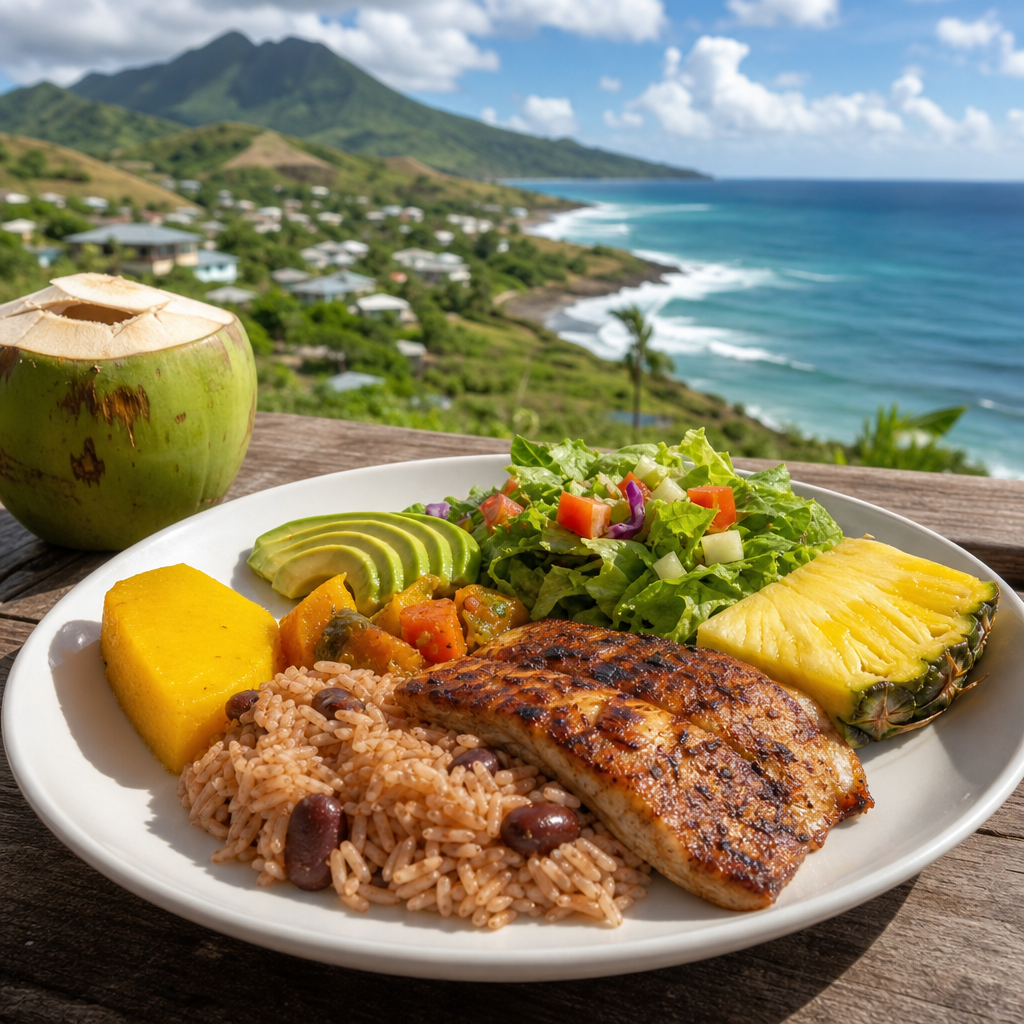
For diners, the simplest definition is this: a farm-to-table restaurant in Saint Kitts serves food that tastes of place because the ingredients were harvested nearby and handled with restraint. You can see it in grilled mahi-mahi with roasted breadfruit instead of imported fries, in callaloo made with local greens rather than frozen spinach, and in desserts built around tamarind, guava, coconut, or mango. When the concept is executed well, freshness is obvious on the plate. Fish has firmer texture, herbs are aromatic, fruit is fully ripe, and side dishes carry more character than standard starch fillers.
Signature Ingredients and Dishes to Look For
The most useful way to identify true fresh and local eats is to know the ingredients that anchor Kittitian cooking. Breadfruit is a standout. Roasted, fried, mashed, or turned into chips, it is one of the island’s most versatile starches and a strong alternative to imported potatoes. Plantain and green banana appear boiled, sautéed, or paired with saltfish. Cassava shows up in puddings, chips, or sides. Sweet potato and pumpkin are common in soups and purées. Callaloo, often made from leafy greens similar to amaranth or taro leaves depending on local usage, creates rich soups and savory sides with coconut milk, onion, garlic, and thyme.
Seafood is central to many local menus. Fresh snapper, tuna, mahi-mahi, wahoo, and lobster can all feature prominently, though availability depends on weather, season, and fisheries rules. A farm-to-table restaurant that respects local ecosystems will not promise the same fish every day. Instead, it may list “catch of the day” with a preparation such as escovitch, charcoal grilling, pan-searing with herb butter, or creole-style stewing. That flexibility is a good sign. It means the kitchen is buying what is actually being landed rather than forcing supply through frozen imports.
Traditional dishes also reveal whether a restaurant understands local foodways. Goat water, Saint Kitts and Nevis’s famous spiced stew, should have depth from slow cooking, not just heat. Stewed saltfish with dumplings should balance salinity with sweetness from tomato, pepper, and onion. Conch, when legally sourced and properly tenderized, should be delicate rather than rubbery. Even a simple breakfast of johnnycakes, eggs, and seasonal fruit says a great deal about sourcing standards if the fruit is local and ripe rather than imported and cold-stored.
| Ingredient or Dish | What It Signals | Best Restaurant Use |
|---|---|---|
| Breadfruit | Commitment to local starches | Roasted wedges, mash, chips, stuffed sides |
| Catch of the day | Responsive seafood sourcing | Grilled fillet, fish stew, ceviche-style starter |
| Callaloo | Use of regional greens and coconut | Soup, sautéed side, savory tart filling |
| Goat water | Respect for national culinary identity | Slow-cooked lunch special or tasting menu course |
| Mango, tamarind, guava | Seasonal dessert and drink creativity | Sorbets, sauces, chutneys, cocktails |
Where the Best Local Sourcing Happens
The strongest farm-to-table experiences in Saint Kitts are not limited to one restaurant category. Independent chef-driven restaurants often lead because they can change menus quickly and buy in small volumes. These are the places most likely to run a handwritten fish special, switch sides based on that morning’s market visit, or build a weekend menu around a bumper crop of mangoes or breadfruit. They also tend to have owners or chefs on the floor who can explain suppliers, preparation methods, and substitutions in detail, which matters if you want the story behind the meal rather than just a plate of food.
Beach restaurants and elevated shacks are another important part of the scene. On many Caribbean islands, the most memorable fresh fish meals happen at informal seaside spots, not white-tablecloth dining rooms. In Saint Kitts, a well-run beach venue may buy directly from fishers, grill whole fish over open flame, and pair it with local slaw, festivals, plantain, or rice and peas. The setting can be simple, but the product quality can be exceptional. The key signs are short menus, visible turnover, and staff who can tell you exactly what was caught locally that day.
Resort and boutique hotel restaurants deserve attention too, especially those that maintain supplier networks or kitchen gardens. Larger properties have purchasing power and cold storage, which can help smooth supply disruptions. The best of them use that scale responsibly by contracting with local growers for herbs, salad greens, tropical fruit, eggs, and seafood. Others use “local” loosely while relying mostly on imported goods. A serious operation will identify local produce on the menu, feature island-inspired dishes beyond one token item, and train service staff to answer sourcing questions with precision.
Markets and pop-up dining events also function as gateways into the island’s local food system. A chef pop-up centered on lionfish, breadfruit, or a mango season tasting can showcase Saint Kitts produce more vividly than a static menu. Visitors who care about fresh local eats should ask hotel concierges, drivers, or residents about weekend food events, market breakfasts, and culinary festivals. Those temporary experiences often reveal the island’s strongest farm-to-table talent before it appears in guidebooks.
How to Choose a Genuine Farm-to-Table Restaurant
Not every restaurant that uses the language of freshness truly operates with local sourcing discipline. I usually start with the menu structure. If a place offers dozens of dishes across unrelated cuisines, year-round, with the same seafood and produce every day, it is probably supply-chain driven rather than harvest-driven. A more credible menu is focused. It changes often, includes seasonal sides, names local ingredients, and accepts that some items may run out. Selling out is not a flaw in this context; it can indicate honest purchasing and a refusal to overstore delicate product.
Next, listen to how staff answer basic questions. Ask where the fish came from, what produce is local this week, or which dish best represents Saint Kitts. Strong teams answer directly: “The mahi came in this morning from local boats,” or “The breadfruit and pumpkin are from farms inland.” Weak teams answer with vague phrases like “everything is fresh” or “our ingredients are Caribbean style.” Specificity is the difference between marketing and operations.
Online signals help, but they need interpretation. Photos of whole fish, visible local sides, and changing specials are useful. So are reviews that mention market-fresh ingredients or named dishes such as goat water or callaloo. Be cautious with generic rankings that reward atmosphere over sourcing. A beachfront location does not guarantee local food, and a polished dining room does not guarantee quality. The most reliable indicator is consistency between menu language, staff knowledge, and what arrives on the plate.
Benefits, Limits, and the Future of Fresh Local Eats
The benefits of farm-to-table dining in Saint Kitts are practical, not abstract. Fresh ingredients usually taste better because they travel less and spend less time in storage. Restaurants can support local agriculture and fisheries, keeping more food spending within the island economy. Menus built around local crops also reduce exposure to shipping delays, which matter in island settings where weather and logistics can disrupt imported supply. For travelers, the payoff is cultural accuracy: you eat what people grow, catch, and cook locally, not a standardized international menu that could be served anywhere.
There are limits, and honest restaurants acknowledge them. Local supply can be uneven in volume and quality. Heavy rain, drought, rough seas, labor shortages, and pest pressure all affect availability. Small farms may not meet large restaurant demand every week. Some ingredients remain more affordable when imported at scale. Seasonality can also challenge guests who expect the same dish every night of a seven-day stay. That is why the best operators blend idealism with procurement skill, using local food wherever possible without compromising safety, consistency, or sensible pricing.
The future is promising because demand is rising from both residents and visitors. Diners increasingly value traceability, lower-waste kitchens, and recognizable island ingredients. Chefs are responding with tighter menus, preservation methods such as pickling and jam-making, and stronger farmer partnerships. More restaurants are realizing that “local cuisine and dining” is not a side category; it is one of Saint Kitts’s clearest competitive advantages. If you are building an itinerary, prioritize places that celebrate breadfruit, callaloo, local fish, tropical fruit, and traditional stews with modern care. Start with one well-chosen meal, ask questions, and follow the ingredients. That is the simplest way to find the real farm-to-table Saint Kitts offers.
Frequently Asked Questions
What does “farm-to-table” really mean in Saint Kitts?
In Saint Kitts, farm-to-table refers to restaurants that build their menus around ingredients sourced as close to the kitchen as possible. That often means produce from local farms, herbs grown on-site or nearby, seafood landed by local fishers, and goods supplied by small market vendors or independent island producers. Rather than depending primarily on imported meats, vegetables, and packaged ingredients, these restaurants work with what is seasonally available on the island and in surrounding waters. The result is a shorter supply chain, which usually translates to fresher food, less time between harvest and service, and menus that reflect the real character of Saint Kitts.
On an island where imported food has long played a major role in hospitality and dining, this approach is especially meaningful. Farm-to-table in Saint Kitts is not just a style of cooking or a trend-driven label. It is a practical and cultural shift that reconnects restaurants with local agriculture, local fishing traditions, and the rhythms of the island’s environment. Diners may notice more seasonal specials, more native or regionally familiar ingredients, and dishes that are shaped by availability rather than by a fixed, import-heavy menu. In that sense, farm-to-table dining offers a more authentic and grounded way to experience the island.
Why does eating at farm-to-table restaurants matter for Saint Kitts?
Choosing farm-to-table restaurants in Saint Kitts has an impact well beyond the plate. When restaurants buy from local farmers, fishers, and small producers, more of the money spent by diners stays within the island’s economy. That supports livelihoods in agriculture and fishing, encourages local food production, and helps strengthen business relationships across the community. In a destination where tourism is economically important, farm-to-table dining can create a stronger connection between visitor spending and local enterprise, rather than sending a large share of food-related dollars off-island through imports.
It also matters from a food resilience standpoint. Islands can be vulnerable to supply chain disruptions, shipping delays, and fluctuating import costs. Restaurants that invest in local sourcing help build a more adaptable food system by creating dependable demand for ingredients grown or caught in Saint Kitts. At the same time, diners benefit from meals that are often fresher and more seasonal. There is also a cultural value: local sourcing helps preserve culinary knowledge, highlights traditional ingredients, and gives both residents and visitors a better understanding of what the island naturally produces. In short, farm-to-table dining supports freshness, community, sustainability, and a more distinctive sense of place.
What kinds of local ingredients can you expect at farm-to-table restaurants in Saint Kitts?
Farm-to-table restaurants in Saint Kitts often highlight a mix of tropical produce, fresh seafood, herbs, roots, fruits, and regionally familiar staples. Depending on the season and the restaurant’s supplier network, you may see dishes featuring ingredients such as local fish, lobster when available and responsibly sourced, leafy greens, tomatoes, cucumbers, peppers, okra, sweet potatoes, yams, breadfruit, plantains, pumpkin, coconut, mango, papaya, tamarind, and other tropical fruits. Chefs may also incorporate island-grown herbs, fresh juices, house-made sauces, and locally inspired seasonings that give dishes a strong sense of Caribbean identity.
The exact selection can change regularly, and that is part of the appeal. A true farm-to-table menu in Saint Kitts is often shaped by weather patterns, harvest cycles, fishing conditions, and what small producers are able to supply that week. Instead of offering the same ingredients year-round regardless of season, these restaurants tend to adapt. That flexibility can lead to more creative menus and more distinctive meals. Diners may find that one visit emphasizes line-caught seafood and garden vegetables, while another spotlights fruit-forward desserts, root crops, or locally influenced breakfast items. The common thread is freshness and a stronger link to the island’s own land and sea.
How can you tell if a restaurant in Saint Kitts is genuinely farm-to-table?
A genuinely farm-to-table restaurant in Saint Kitts usually offers clear signs of local sourcing rather than relying on vague marketing language. One of the strongest indicators is menu transparency. Restaurants that truly work with local suppliers often mention seasonal ingredients, identify nearby farms or fishers, or explain that menu items may change based on availability. Staff should also be able to speak confidently about where key ingredients come from, what is in season, and which dishes best reflect current local supply. If a restaurant promotes freshness but cannot explain its sourcing in any meaningful way, that is a reason to look more carefully.
Another sign is how the menu is structured. Farm-to-table restaurants tend to embrace flexibility, so you may see daily specials, rotating seafood offerings, or dishes built around current harvests instead of a long, static menu that promises everything at all times. It is also worth paying attention to the food itself. Ingredients that taste vibrant, ripe, and recently harvested often reflect shorter supply chains. That said, authenticity does not necessarily mean every single ingredient is local; on an island, some imported items may still be necessary. The most credible restaurants are usually the ones that are honest about that balance while making a visible and consistent effort to source as much as possible from Saint Kitts and the surrounding region.
What should diners expect from the farm-to-table dining experience in Saint Kitts?
Diners should expect a meal that feels fresher, more seasonal, and more connected to the island than a standard import-driven restaurant experience. In practical terms, that can mean brighter produce, seafood that reflects recent local catches, and dishes that showcase Caribbean flavors in a more natural and ingredient-focused way. Menus may be smaller or change more often, but that is usually a strength rather than a limitation. It allows chefs to cook with what is truly available and at its best. The experience often feels more personal as well, because the story behind the meal includes the people who grew, caught, or supplied the ingredients.
Guests should also be open to a slightly different rhythm of dining. A farm-to-table restaurant in Saint Kitts may not promise every ingredient every day, and certain dishes may sell out if supply is limited. For many diners, that variability is part of the value, because it reflects real local sourcing rather than a manufactured concept. You can also expect a stronger sense of place: flavors tied to the island’s climate, traditions, and agricultural possibilities. Whether you are a visitor looking for an authentic culinary experience or a resident interested in supporting local producers, farm-to-table dining in Saint Kitts offers more than just a meal. It offers a closer connection to the island’s food system, culture, and community.