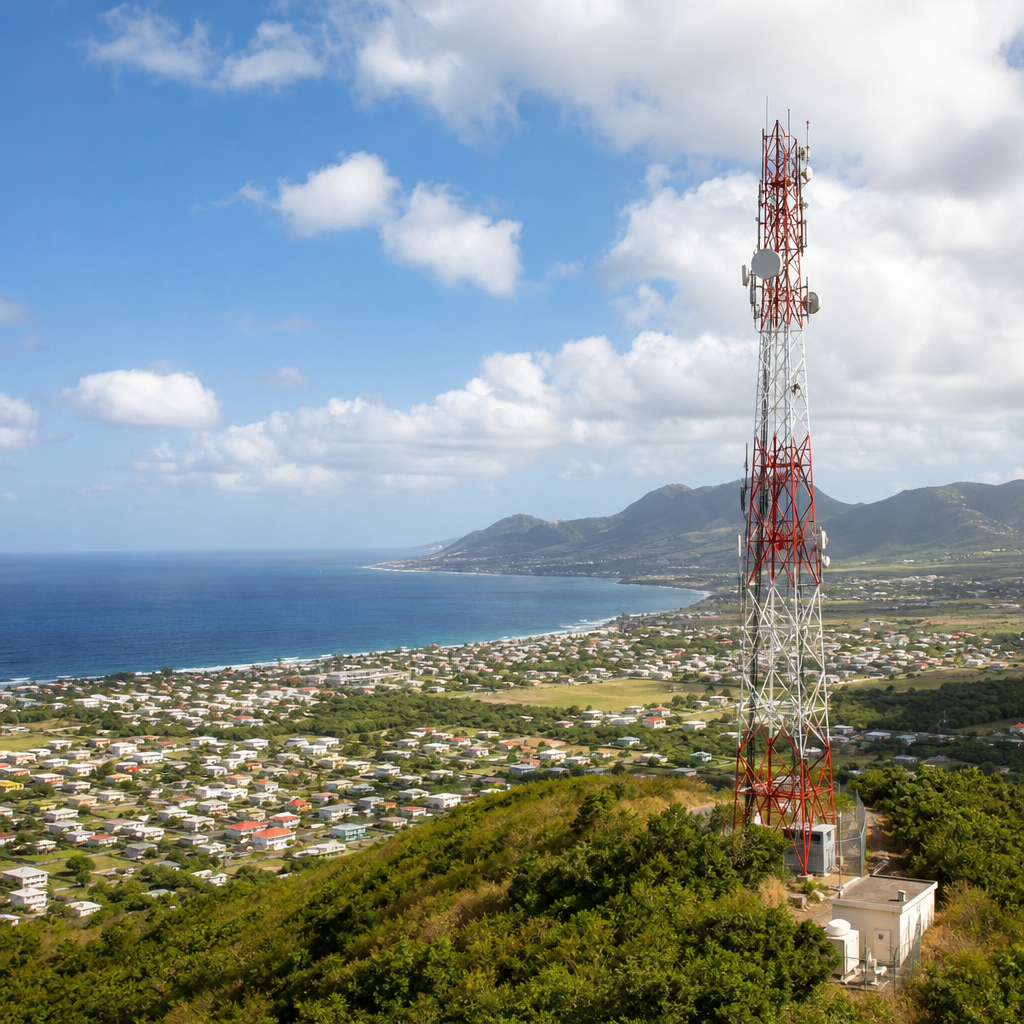
Saint Kitts’ telecommunications industry sits at the center of the federation’s wider business and investment story because modern connectivity now shapes tourism, banking, education, public services, and cross-border commerce. In practical terms, telecommunications covers the networks and services that move voice, data, video, and digital transactions: mobile service, fixed broadband, submarine cable capacity, wireless infrastructure, enterprise connectivity, cloud access, and the regulations that govern them. In Saint Kitts and Nevis, this sector matters beyond consumer convenience. It determines whether hotels can support remote-working guests, whether small firms can sell online, whether financial institutions can meet compliance expectations, and whether government can digitize services efficiently.
I have worked on market assessments where telecom quality changed investment decisions faster than tax incentives did. An investor might tolerate a small market, but not unreliable connectivity. That is why Saint Kitts’ telecommunications industry deserves close attention within any discussion of business and investment opportunities. The country’s compact geography creates advantages, including lower last-mile build complexity in dense areas, but scale also creates constraints. Operators must recover network investment across a limited subscriber base, imported equipment carries logistics costs, and resilience planning is essential in a hurricane-prone region. Understanding those realities is the first step toward judging where the real opportunities sit.
The market is also important because it is no longer a standalone utility. Telecommunications now underpins fintech adoption, digital nomad programs, e-government, online education, cybersecurity readiness, and business continuity. A robust sector can improve productivity across the economy, while weak service can quietly suppress growth. For companies evaluating Caribbean expansion, Saint Kitts offers a useful case study in how a small island state balances liberalization, infrastructure investment, regional integration, and consumer affordability. For policymakers and local entrepreneurs, the industry raises clear questions: where can capital be deployed, what gaps still exist, and which adjacent services can grow around the core network? This hub answers those questions and maps the landscape.
Market structure and the role of telecom in the wider economy
Saint Kitts and Nevis operates within the Eastern Caribbean’s shared regulatory tradition, and that context matters. The sector is overseen by the Eastern Caribbean Telecommunications Authority, widely known as ECTEL, working alongside national authorities. ECTEL was created to promote liberalization, competition, consumer protection, and efficient spectrum use across several member states. That regional framework gives investors a degree of predictability because licensing, interconnection principles, and regulatory practice are not built from scratch in each market. In a small economy, that consistency reduces policy uncertainty and can accelerate rollout decisions.
The industry’s economic importance is larger than its direct revenue line suggests. Tourism is the clearest example. Hotels, villas, cruise-linked retail, restaurants, and transport operators all depend on stable broadband and mobile coverage for booking systems, card payments, guest communications, property management, and digital marketing. A resort with weak Wi-Fi loses premium guests quickly, especially as remote work and blended travel become normal. I have seen hospitality operators treat bandwidth upgrades not as IT spending but as revenue protection. That framing is useful in Saint Kitts, where tourism performance and telecom quality increasingly move together.
Financial services and professional services also rely on telecommunications capacity. Law firms, trust providers, banks, insurers, and accounting practices need secure connections, redundancy, and low-latency access to external platforms. The same is true for schools, call-center style operations, and government agencies digitizing records or service delivery. In emerging markets, telecom investment often has a multiplier effect because one upgraded network supports many sectors at once. Saint Kitts follows that pattern. Better connectivity improves transaction speed, customer experience, and operational resilience, making the overall business climate more investable.
Infrastructure foundation: mobile networks, broadband, and international links
The backbone of Saint Kitts’ telecommunications industry is a mix of mobile infrastructure, fixed broadband networks, and international connectivity delivered through submarine cable systems and regional interconnection. In small island markets, network resilience depends on redundancy. One cable path, one switching point, or one major tower cluster is not enough when storms or power disruptions are possible. Serious investors should therefore look beyond headline coverage and ask how traffic is rerouted, what backup power exists at key sites, and how operators manage restoration time after outages.
Mobile connectivity remains the dominant access method for many users, as in much of the Caribbean. Fourth-generation networks have improved speeds and made streaming, digital payments, app-based services, and hotspot use routine. The next question is not simply whether faster mobile technology arrives, but whether the economics support dense enough deployment to deliver a consistently good experience. In small markets, spectrum strategy, backhaul quality, and tower placement usually matter more than marketing claims. A carrier can advertise advanced mobile service, but if fiber backhaul to cell sites is thin, user performance will still vary sharply during peak periods.
Fixed broadband is equally significant for businesses, schools, medical facilities, and households with multiple connected devices. Fiber-to-the-premises or fiber-fed fixed wireless solutions can transform service quality, but rollout economics differ by neighborhood density and terrain. Saint Kitts benefits from relatively concentrated demand in some corridors, which supports targeted upgrades. At the same time, universal high-capacity coverage is expensive. Investors should pay attention to where fiber already reaches business districts, hospitality zones, and residential communities because those footprints often indicate where adjacent digital services can scale fastest.
| Infrastructure Area | Why It Matters for Investment | Typical Opportunity in Saint Kitts |
|---|---|---|
| Mobile network upgrades | Supports tourism, mobile payments, and business continuity | Capacity expansion in high-traffic zones and transport corridors |
| Fixed broadband and fiber | Enables enterprise service quality and remote work | Fiber extension to hotels, offices, and residential clusters |
| International connectivity | Reduces bottlenecks and improves resilience | Redundant upstream links and better traffic management |
| Towers, rooftops, and edge sites | Improves coverage and network densification | Shared infrastructure and lease-based returns |
| Power and backup systems | Keeps networks operating during outages and storms | Battery, generator, and energy-efficiency upgrades |
International links deserve special emphasis because island economies are only as strong as their external bandwidth pathways. Capacity costs have generally improved over time, but reliability, latency management, and route diversity remain strategic issues. If Saint Kitts wants to attract more digital businesses, offshore support functions, and compliance-heavy professional services, it must continue strengthening that external connectivity layer. Investors looking at data-driven ventures should evaluate not just average speeds advertised to consumers, but enterprise service-level agreements, outage history, and redundancy design.
Regulation, competition, and operating realities
Any clear view of Saint Kitts’ telecommunications industry must account for regulation and market scale. ECTEL’s regional framework has generally supported competition and consumer safeguards, but small markets never behave exactly like large liberalized economies. With fewer subscribers, operators face tighter margins on capital-intensive upgrades. This can slow investment cycles, especially where imported equipment, specialized technical labor, and energy costs remain high. That does not make the market unattractive; it means the best opportunities usually come from focused deployment, infrastructure sharing, and value-added services rather than brute-force scale.
Competition tends to improve service quality and pricing discipline, but there are tradeoffs. Too many fragmented investments in a tiny market can produce duplicated costs without meaningfully better outcomes. That is why tower sharing, wholesale arrangements, and practical interconnection rules matter. In my experience, the most sustainable telecom environments in small island states are not those with the loudest competition claims; they are the ones where regulation encourages efficient duplication where it helps consumers and shared infrastructure where duplication wastes capital. Saint Kitts is well positioned for that balanced approach.
Licensing and spectrum management also shape the opportunity set. Spectrum is a finite public resource, and efficient assignment determines how well mobile broadband performs. Operators need enough spectrum in suitable bands to deliver coverage and capacity, while regulators need to prevent warehousing and anti-competitive outcomes. For investors, this means regulatory diligence is not optional. Before backing a tower company, managed service provider, broadband reseller, or enterprise solutions business, it is important to understand licensing terms, universal service obligations, data protection requirements, lawful intercept rules, and rights-of-way processes for network expansion.
Consumer expectations are rising as well. Users increasingly compare local service to experiences in North America and Europe, especially in premium tourism and professional segments. That creates pressure for better customer support, transparent pricing, stronger cybersecurity, and more stable speeds. Operators that meet these expectations can defend margins more effectively than those competing only on price. In a market like Saint Kitts, brand trust and service reliability are strategic assets, not marketing extras.
Investment opportunities across the telecom value chain
The strongest business and investment opportunities in Saint Kitts’ telecommunications industry are often adjacent to the core networks rather than limited to conventional carrier ownership. Infrastructure sharing is one example. Independent tower assets, rooftop leasing, in-building distributed antenna systems, and neutral-host coverage solutions can all generate durable demand where multiple operators need efficient site access. Hospitality properties, ports, commercial buildings, and dense urban zones are natural candidates. These assets can become especially attractive when landlords and operators both want to improve coverage without each party building duplicate structures.
Enterprise services are another promising area. Small and midsize firms increasingly need managed Wi-Fi, cloud migration support, secure virtual private networks, unified communications, backup connectivity, and cybersecurity monitoring. Many local businesses do not want to stitch these solutions together from multiple vendors. They prefer a trusted provider that can bundle connectivity with management and support. In Saint Kitts, that opens room for telecom-adjacent businesses serving hotels, clinics, schools, law offices, retailers, and government contractors. Margins can be stronger here than in pure consumer access because the customer values reliability and service integration.
Fintech and digital commerce also create telecom-linked opportunities. Mobile connectivity supports payment acceptance, merchant tools, customer messaging, and app-driven service delivery. As more local businesses digitize sales and reservation systems, they need dependable internet, secure routers, point-of-sale connectivity, and cloud-based software access. A company that combines telecom expertise with business IT support can capture recurring revenue from this shift. The same is true for remote work infrastructure. Saint Kitts has lifestyle advantages that appeal to consultants, founders, and location-independent professionals, but those users expect enterprise-grade uptime from residential or hospitality connections.
There is also a meaningful resilience market. Backup power for cell sites, hardened equipment enclosures, environmental monitoring, disaster recovery planning, and rapid-response field maintenance all become more valuable in island settings exposed to severe weather. These are not side issues. After storms, telecom restoration affects emergency coordination, tourism recovery, banking operations, and public confidence. Investors who understand resilient infrastructure can find niche opportunities with long-term relevance.
Challenges, risks, and what smart investors should watch
No serious analysis of Saint Kitts’ telecommunications industry should ignore the constraints. The first is simple scale. The subscriber base is limited, which means every major network upgrade must be justified carefully. The second is cost structure. Equipment, replacement parts, and specialist support are frequently imported, exposing operators to shipping delays and foreign exchange pressures. The third is resilience risk from hurricanes, flooding, and power instability. These realities can compress returns if a business model depends on mass-market volume alone.
There are also execution risks. Demand can be overstated if investors rely on headline penetration figures without studying actual usage quality, churn, prepaid versus postpaid behavior, and enterprise willingness to pay for higher-grade services. I have seen projects fail because they assumed every user who wanted faster internet would pay enough to support premium infrastructure. In reality, affordability remains critical. The best strategies align premium service offers with customer segments that truly monetize better connectivity, such as hotels, financial services firms, medical providers, and remote-work households.
Cybersecurity and data governance deserve close scrutiny. As more services move online, telecom operators and managed service providers become custodians of sensitive traffic and business continuity. A weak security posture can damage not only one company but confidence in the broader digital economy. Investors should examine network monitoring practices, incident response capability, vendor management, backup discipline, and compliance alignment. Strong telecom markets are not defined only by speed tests; they are defined by secure, dependable service that businesses can trust for mission-critical operations.
The practical conclusion is that Saint Kitts is not a volume game. It is a precision market. Success comes from disciplined infrastructure planning, partnership with strong local institutions, realistic demand modeling, and services tailored to high-value sectors.
Saint Kitts’ telecommunications industry is a foundational emerging-market opportunity because it connects directly to tourism performance, enterprise productivity, digital government, and the country’s ability to compete for modern investment. The sector combines real strengths, including a supportive regional regulatory structure, concentrated demand corridors, and rising need for reliable digital services, with clear constraints such as market size, weather exposure, and imported infrastructure costs. Investors who understand both sides of that equation can identify practical openings in fiber expansion, shared infrastructure, enterprise connectivity, resilience services, managed IT, and telecom-enabled commerce.
The main takeaway is straightforward: connectivity in Saint Kitts should be evaluated as economic infrastructure, not just as a utility. Better networks improve revenue in hotels, efficiency in professional services, payment reliability in retail, and service delivery in government and education. That broad impact is exactly why telecom remains one of the most strategic miscellaneous subtopics within business and investment opportunities. It touches nearly every other sector and often determines whether broader development goals can be executed at commercial speed.
For businesses, advisors, and investors building a Caribbean strategy, the next step is to map specific opportunities against real infrastructure conditions, regulatory requirements, and customer segments. Start with demand in tourism, finance, enterprise IT, and resilient connectivity, then assess where local partnerships and targeted capital can close service gaps profitably. That disciplined approach will reveal where Saint Kitts’ telecommunications industry offers the strongest returns.
Frequently Asked Questions
Why is Saint Kitts’ telecommunications industry so important to the country’s broader economy?
Saint Kitts’ telecommunications industry is more than a utility sector; it is a core enabler of the federation’s wider economic activity. Reliable mobile networks, broadband access, international data links, and enterprise communications support nearly every major pillar of the local economy. Tourism depends on strong connectivity for hotel operations, online bookings, card payments, guest Wi-Fi, digital marketing, and the expectations of travelers who increasingly choose destinations where they can work remotely or stay continuously connected. Financial services and banking rely on secure, low-latency communications for transaction processing, compliance reporting, digital customer service, and links to regional and international systems.
The sector also matters because it strengthens public administration and social infrastructure. Schools, colleges, healthcare providers, and government agencies increasingly depend on digital platforms for instruction, records management, telehealth, e-government services, and communication with residents and businesses. For local entrepreneurs and established firms alike, telecommunications makes cross-border commerce possible by connecting Saint Kitts to suppliers, customers, cloud platforms, payment gateways, and global business tools. In that sense, telecom is not just an industry operating alongside the economy; it is the infrastructure layer that allows the modern economy to function efficiently, competitively, and at scale.
What services and infrastructure are typically included in Saint Kitts’ telecommunications industry?
In practical terms, Saint Kitts’ telecommunications industry includes the full ecosystem of networks and services that carry voice, data, video, and digital transactions. At the consumer level, this means mobile voice and data services, prepaid and postpaid plans, fixed-line communications where available, and residential broadband delivered through fiber, cable, wireless, or hybrid technologies. At the business level, it includes dedicated internet access, private data circuits, managed networking, hosted communications, cybersecurity support, and access to cloud-based applications and storage. These services are essential for hotels, banks, retailers, call centers, government offices, schools, and medical facilities that need dependable connectivity to operate.
The infrastructure side is equally important. Telecommunications in Saint Kitts depends on mobile towers, radio systems, fiber backbones, international gateways, submarine cable links, data transport equipment, switching facilities, and last-mile access networks that connect end users to the wider internet and communications ecosystem. Wireless infrastructure helps extend coverage across populated and commercial areas, while submarine cable capacity is critical because it provides international bandwidth and redundancy for a small island economy that must remain linked to global markets. The industry also includes the regulatory and operational framework that governs spectrum use, licensing, competition, quality of service, consumer protection, and investment. Taken together, these assets form the backbone of the country’s digital capability.
How does telecommunications investment influence business growth and foreign investment in Saint Kitts?
Telecommunications investment is a direct signal of economic readiness. Investors evaluating Saint Kitts look closely at network reliability, broadband speed, mobile coverage, international connectivity, and the overall digital business environment before committing capital. A jurisdiction with strong telecom infrastructure is better positioned to attract hotels, real estate developers, financial services firms, professional services providers, and technology-enabled businesses because these sectors require uninterrupted communications and efficient digital workflows. Modern networks reduce operational friction, support remote management, improve customer experience, and make it easier for firms to integrate with international partners and platforms.
For domestic businesses, telecom investment raises productivity and expands market reach. Small and medium-sized enterprises can use broadband and mobile services to sell online, manage inventory, process payments, market to overseas audiences, and communicate with clients in real time. Enterprise-grade connectivity enables larger employers to deploy cloud software, cybersecurity tools, customer relationship management systems, and distributed work models. In tourism especially, connectivity has become part of the product itself: visitors expect seamless mobile service, high-quality hotel internet, and digital convenience throughout their stay. As a result, improvements in telecom infrastructure can have a multiplier effect across sectors, enhancing competitiveness, encouraging innovation, and making Saint Kitts more appealing as a destination for both investment and long-term business operations.
What are the main challenges and opportunities facing Saint Kitts’ telecommunications sector?
Like many small island markets, Saint Kitts faces a distinctive mix of structural challenges and strategic opportunities. One challenge is scale: smaller populations can limit the speed at which operators recover large infrastructure investments, especially in capital-intensive areas such as fiber deployment, network modernization, and redundancy upgrades. Geographic and climate-related realities also matter. Island networks must be designed with resilience in mind because severe weather events, power disruptions, and damage to physical infrastructure can affect service continuity. In addition, maintaining affordable services while investing in next-generation capacity can be difficult in a market where operators must balance commercial returns with the need for broad national coverage and quality service.
At the same time, the opportunities are substantial. Saint Kitts can use telecommunications as a platform for digital transformation across tourism, education, healthcare, public administration, and financial services. Better connectivity can support smarter hotels, more efficient ports and logistics, stronger e-government systems, improved distance learning, and wider adoption of digital payments and cloud-based business tools. There is also opportunity in strengthening international connectivity through resilient submarine cable arrangements and in expanding enterprise services for local and international firms operating in the federation. As global demand grows for remote work, digital entrepreneurship, and service-based business models, a well-developed telecom sector can help Saint Kitts position itself as a modern, connected, investment-friendly jurisdiction rather than simply a small domestic market.
What should businesses, policymakers, and investors watch when evaluating the future of telecommunications in Saint Kitts?
Several factors are especially important when assessing the sector’s future direction. First is network quality: businesses and investors should pay attention to broadband speeds, mobile coverage, service reliability, latency, and redundancy. These metrics influence everything from hotel guest satisfaction to bank transaction performance and cloud application usability. Second is international capacity and resilience. Because Saint Kitts depends on external links for global internet and data services, the strength, diversity, and redundancy of submarine cable and international gateway arrangements are critical. A robust international connectivity framework improves business continuity and helps reduce vulnerability to outages or bottlenecks.
Equally important is the regulatory environment. Clear licensing rules, fair competition policies, transparent spectrum management, and a stable investment climate all influence whether operators will continue expanding and upgrading networks. Policymakers should also focus on digital inclusion, cybersecurity readiness, and the use of telecom infrastructure to support national development goals in education, healthcare, and public services. For investors, the most promising outlook is one in which Saint Kitts continues aligning telecommunications with broader economic modernization. If the country can sustain reliable connectivity, encourage infrastructure investment, and integrate telecom policy with its business and public-sector priorities, the industry is likely to remain a central driver of growth, resilience, and international competitiveness.