Nevis, the smaller island of Saint Kitts and Nevis, has produced an outsized number of historical figures whose influence reached far beyond its volcanic shoreline. When readers search for famous historical figures of Nevis and their impact, they usually want more than a list of names. They want to understand who these people were, what shaped them on the island, and why Nevis still claims an important place in Caribbean, Atlantic, and world history. That broader view matters because Nevis was never isolated. From the seventeenth century onward, it sat inside trade routes, colonial rivalries, plantation economies, migration networks, and intellectual currents that connected Britain, Africa, North America, and the wider Caribbean.
In practical terms, a historical figure is someone whose actions, ideas, or symbolic importance changed events, institutions, or collective memory. On Nevis, that includes political leaders, military officers, writers, reformers, and people whose birth or early life on the island later became globally significant. The island’s history also requires nuance. Some celebrated individuals advanced freedom and self-government; others were tied to systems of colonial power and slavery. A serious account of Nevisian heritage must hold both truths at once. That balanced perspective is especially important on an island where place names, family lines, churches, estates, and public monuments still carry the legacies of conquest, resistance, and nation-building.
I have found that the most useful way to approach Nevisian historical biography is to connect each person to a larger theme: colonial settlement, Atlantic commerce, emancipation, federation, labor politics, education, or cultural identity. Doing so turns biography into history rather than trivia. It also helps visitors, students, and researchers use this page as a hub for deeper reading across the culture and history of Nevis. The figures below are not the only important people in Nevisian history, but they are among the most discussed because they illuminate the island’s changing role from the early colonial period to independence-era statehood. Their impact can still be traced in heritage tourism, public debate, school curricula, and the national story told across Saint Kitts and Nevis today.
Alexander Hamilton and the global legacy of a Nevis birth
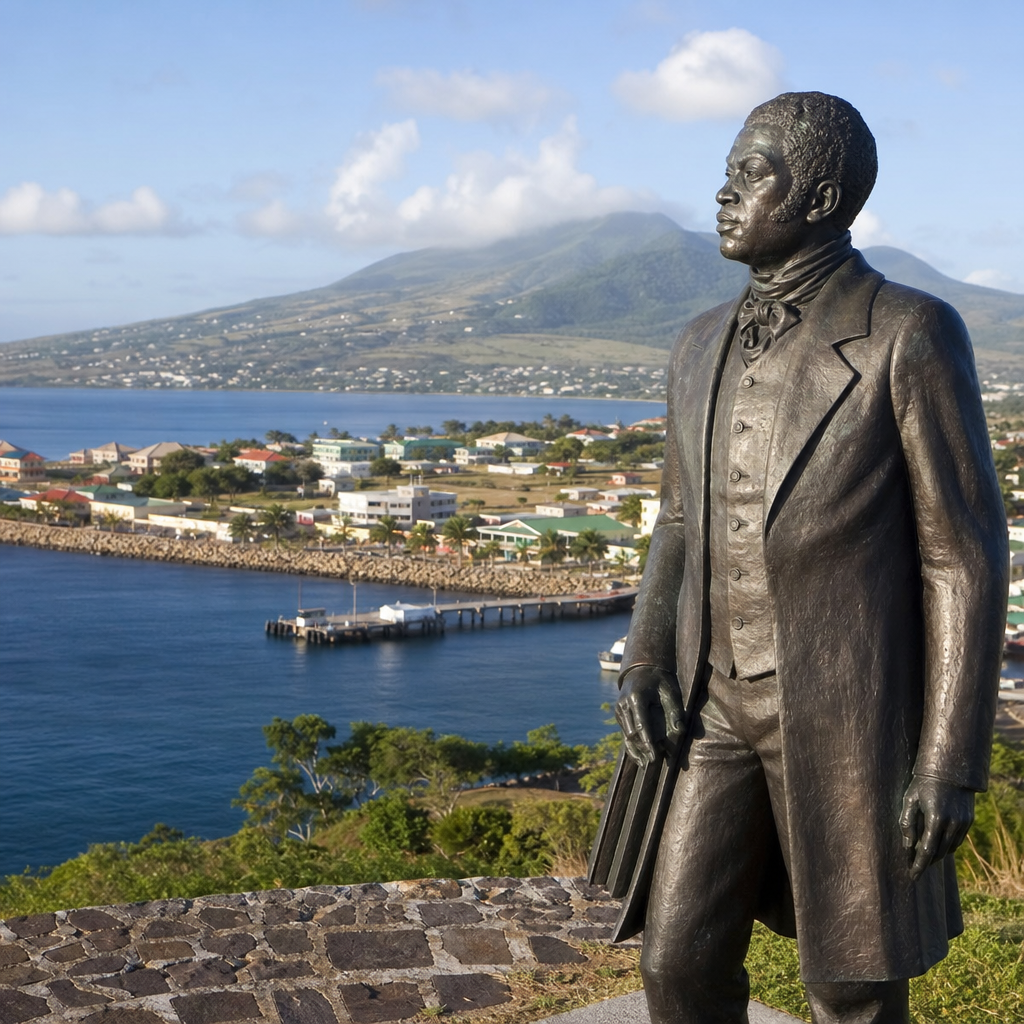
The most internationally famous person associated with Nevis is Alexander Hamilton, who was born on the island in either 1755 or 1757, according to differing historical records. His exact birth year remains debated, but his Nevis connection does not. Although he spent only part of his youth in the Leeward Islands before moving to St. Croix and later North America, Nevis remains central to how the world remembers his origins. Hamilton became a leading figure in the American Revolution, aide-de-camp to George Washington, principal author of many Federalist Papers, and the first United States Secretary of the Treasury. His financial system, including federal assumption of state debts, support for a national bank, and development of public credit, shaped the United States permanently.
For Nevis, Hamilton’s importance is twofold. First, he gives the island a rare direct link to the founding of the United States, making Charlestown a place of international historical interest. The Alexander Hamilton Museum in Nevis reflects this draw. Second, Hamilton’s Caribbean beginnings matter for interpretation. He was formed in a plantation world defined by trade, class hierarchy, and slavery, and scholars often note that his understanding of finance, risk, shipping, and imperial commerce emerged from that early environment. While he later became a symbol of ambition and statecraft, his story also opens harder conversations about how Caribbean plantation societies fed Atlantic wealth. In that sense, Hamilton is not just Nevis’s most famous son; he is a lens through which the island’s entanglement with world history becomes visible.
Admiral Horatio Nelson, Fanny Nisbet, and Nevis in imperial history
Nevis also occupies a notable place in British imperial history through Admiral Horatio Nelson and Frances “Fanny” Nisbet. Nelson was not Nevisian by birth, but his marriage to the widowed Fanny Nisbet at Montpelier Estate in 1787 made the island part of one of the best-known biographies in British naval history. During his Caribbean service, Nelson navigated not only military duties but also colonial society, plantation elites, and trade disputes in the Leeward Islands. His years in the region helped shape his professional development before his later victories, including the Battle of the Nile and Trafalgar, made him an icon of Britain’s naval age.
Fanny Nisbet is significant in her own right because she represents the locally rooted planter class and the social structures that linked Nevis to wider imperial networks. Her family connections, property, and status reflected the island’s place within the sugar economy. Montpelier, where the marriage took place, remains one of the most recognizable heritage sites on Nevis and demonstrates how personal relationships can elevate a location into global historical memory. Yet the Nelson story should not be romanticized without context. The wealth and social order behind these estates were inseparable from enslaved labor. For modern readers, the impact of Nelson and Fanny on Nevis lies not simply in ceremony or celebrity but in how their story embodies the island’s role in war, empire, and plantation society.
Cottle Church, John Cottle, and the contradiction of faith and slavery
One of the most revealing figures in Nevisian history is John Cottle, the planter associated with Cottle Church, one of the island’s most evocative heritage landmarks. Built in the 1820s, the church is often described as one of the first places in the Caribbean intended for both enslaved and free worshippers, though its history is more complex than a simple narrative of benevolence. Cottle was a plantation owner operating inside a slave society, and the church stands as a reminder that religious practice in the Caribbean could challenge social boundaries while still remaining entangled with coercive systems.
In heritage interpretation, I have seen Cottle Church discussed as a site where architecture forces moral clarity. Its stone walls and roofless remains are beautiful, but beauty should not blur context. The church represents a moment when Christian worship, social control, and limited reform overlapped uneasily. That contradiction matters because Nevisian history is filled with layered figures whose impact cannot be judged in a single dimension. John Cottle’s legacy is not national heroism in the modern sense. Instead, his historical importance comes from what his church reveals about race, hierarchy, religion, and the transitional years before emancipation. For students of Nevis culture and history, it is one of the best examples of how an individual can matter less for personal fame than for the institution and questions he left behind.
Joseph Nathaniel France and the rise of modern political leadership
No modern discussion of famous historical figures of Nevis is complete without Sir Joseph Nathaniel France. Born in Nevis in 1907, France became one of the most influential political leaders in Saint Kitts and Nevis during the twentieth century. A trained medical doctor, he combined professional authority with public service at a time when Caribbean societies were pressing for constitutional reform, labor rights, and broader political participation. He served in senior leadership roles, including as Chief Minister of Saint Kitts-Nevis-Anguilla from 1960 to 1966, and his name remains deeply embedded in national life through institutions such as the J.N. France General Hospital.
France’s impact was practical rather than symbolic alone. He belonged to the generation that moved the islands from colonial administration toward greater self-government. Leaders like France had to balance local needs with British oversight, economic limits, and intense political competition. In plain terms, this meant dealing with health services, education, infrastructure, and representative government at the same time. His medical background also mattered. Throughout the Caribbean, doctors often became political leaders because they were among the few locally trained professionals with island-wide reputations and direct experience of poverty, sanitation problems, and public welfare. France’s legacy in Nevis therefore reaches beyond politics. He helped define what responsible governance looked like in a small-island society facing the long transition out of colonial rule.
Nevisian figures and their lasting impact at a glance
For readers comparing major names, the table below summarizes how several figures connect to Nevis and why they remain historically important. It is useful as a starting point before exploring each life in greater depth through dedicated pages in this culture and history hub.
| Figure | Connection to Nevis | Main sphere | Lasting impact |
|---|---|---|---|
| Alexander Hamilton | Born on Nevis | Statecraft and finance | Linked Nevis to the founding of the United States and global discussions of Atlantic commerce |
| Frances Nisbet | Nevis planter elite | Colonial society | Represents estate culture, inheritance, and imperial social networks |
| Horatio Nelson | Married on Nevis | Naval and imperial history | Placed Nevis in the biography of Britain’s most famous admiral |
| John Cottle | Planter and church founder | Religion and plantation society | Highlights tensions between worship, reform, and slavery |
| J.N. France | Born on Nevis | Medicine and politics | Advanced modern public service and constitutional development |
Simeon Daniel and the case for Nevisian self-determination
Simeon Daniel is one of the defining political figures in Nevis’s modern history and a central name for anyone studying the island’s identity within the federation of Saint Kitts and Nevis. Born in 1934, Daniel became the first Premier of Nevis after the office was established in 1983, the same year the federation achieved independence from Britain. He was the founder of the Nevis Reformation Party, a movement rooted in concerns that Nevis’s interests required stronger constitutional protection and more direct local control. In everyday terms, Daniel translated long-standing grievances into organized democratic politics.
His impact was structural. Nevis today has its own Island Assembly and a distinct place within the federation’s constitutional order, and Daniel’s leadership was crucial in shaping that arrangement. He argued that small islands inside larger political unions can be overlooked unless institutions guarantee representation, fiscal fairness, and policy autonomy. That argument has resonated widely beyond Nevis, particularly in other island territories where balance between local identity and national unity remains contested. Daniel is remembered not simply because he held office, but because he gave modern political language to Nevisian self-determination. Roads, public discussions, and historical writing on the island still reflect his influence. If Hamilton symbolizes Nevis in world history, Simeon Daniel symbolizes Nevis speaking for itself in the late twentieth century.
How figures from Nevis shaped heritage, education, and public memory
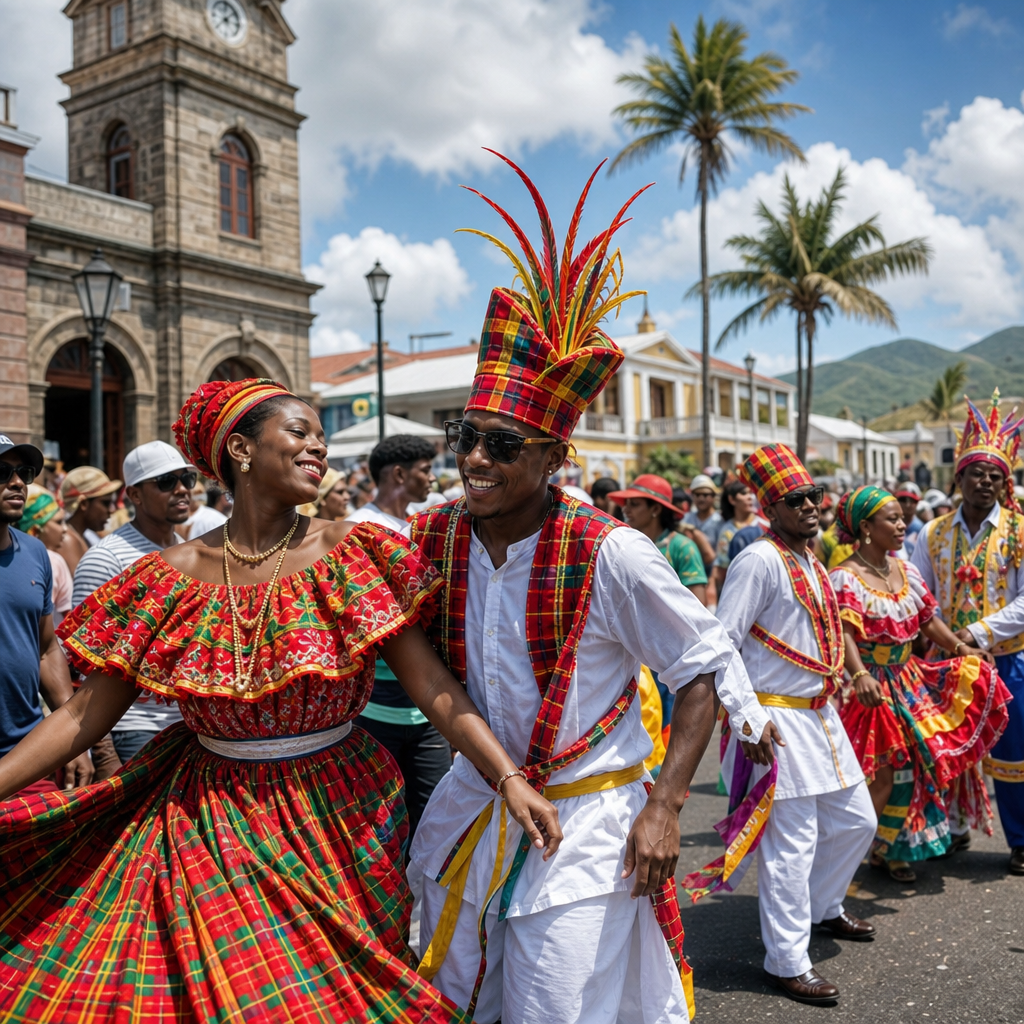
The impact of famous historical figures in Nevis is not confined to textbooks. It is built into the island’s heritage economy, museum practice, civic education, and commemorative landscape. Heritage sites such as the Alexander Hamilton Museum, Montpelier Estate, and Cottle Church transform biography into place-based learning. Visitors do not encounter history as abstraction; they walk through it. This matters economically as well as culturally. Heritage tourism gives Nevis a way to differentiate itself within the Caribbean market by emphasizing depth, authenticity, and links to world events rather than only beach promotion.
Schools and public institutions also keep these figures alive, though the framing has evolved. Older narratives often celebrated elite or imperial personalities without much discussion of slavery, labor, or inequality. Contemporary interpretation is broader and more honest. It places Hamilton in the plantation Caribbean, reads Nelson through empire, and treats local political leaders as agents of constitutional change rather than minor colonial administrators. That shift is healthy because public memory should become more accurate over time. It also opens the door for recovering lesser-known Nevisians, including educators, clergy, community organizers, and labor advocates who may not yet have the same international profile. A strong history hub should therefore do two things at once: explain the best-known names clearly and point readers toward the wider social world that made their lives possible.
Nevis’s historical figures matter because they show how a small island can influence major currents of world and regional history. Alexander Hamilton connects Nevis to the creation of the modern American state. Horatio Nelson, Fanny Nisbet, and the estates of the island place Nevis inside the story of empire, naval power, and plantation wealth. John Cottle and Cottle Church reveal the moral contradictions of religion in a slave society. J.N. France and Simeon Daniel demonstrate how Nevisians themselves shaped modern governance, public service, and constitutional identity. Together, these figures show that Nevisian history is neither marginal nor merely local. It is woven into larger histories of finance, war, freedom, and political change.
For readers using this page as a culture and history hub, the main benefit is context. Knowing the names is useful, but understanding their impact is what makes Nevis legible as a historical place. Each figure opens a path into a wider subject: colonial society, emancipation-era tensions, federation politics, or heritage preservation. Explore those paths next by reading deeper profiles, visiting key sites, and comparing how Nevis remembers different kinds of historical influence. The island’s past rewards close attention, and the more precisely you study its people, the more clearly Nevis emerges as one of the Caribbean’s most historically significant small islands.
Frequently Asked Questions
Who are the most famous historical figures associated with Nevis?
Nevis is most commonly linked with a remarkable group of historical figures whose lives connect the island to Caribbean, British, and American history. The best-known is Alexander Hamilton, one of the Founding Fathers of the United States, who was born on Nevis in the eighteenth century and spent part of his early life there before leaving for North America. His rise from a small Caribbean island to international significance has made Nevis central to discussions of Atlantic history. Another major figure is Cuffy, also known as Kofi, who was born on Nevis before being enslaved and taken to Berbice, where he became a leading figure in the 1763 slave rebellion in what is now Guyana. Nevis is also associated with Frances “Fanny” Nisbet, a prominent plantation owner and social figure who became the wife of Admiral Horatio Nelson, linking the island to naval and imperial history. In the religious sphere, John Jeaffreson, an important early colonial settler, and later clerical and plantation families helped shape the island’s social institutions, though they are less internationally famous than Hamilton or Cuffy. Together, these figures represent different sides of Nevisian history: colonial power, plantation wealth, resistance to enslavement, and the mobility of people whose lives were transformed by the Atlantic world.
Why is Alexander Hamilton so closely connected to Nevis?
Alexander Hamilton is closely connected to Nevis because the island was his birthplace and an important setting in his early life. He was born in Charlestown, Nevis, in either 1755 or 1757, depending on the source, and his origins there shaped both the mythology and the reality of his story. Hamilton grew up in a Caribbean world defined by trade, empire, slavery, hurricanes, and social instability, and those early experiences are often seen as critical to understanding his later political and economic vision. Nevis in the eighteenth century was not a remote backwater; it was part of a wealthy sugar-producing region deeply tied to British imperial commerce. Living in that environment would have exposed Hamilton to the workings of shipping, credit, mercantile networks, and colonial administration long before he entered public life in North America. Today, his connection to Nevis is preserved through local historical memory and sites such as the Museum of Nevis History in Charlestown, which highlights his early years. For readers trying to understand his impact, the key point is that Hamilton’s global significance did not emerge in isolation. His formative world was Caribbean, and Nevis was part of the foundation of the intellect, ambition, and practical knowledge that later made him a transformative figure in the creation of the United States.
How did people from Nevis influence history beyond the island itself?
People from Nevis influenced history far beyond the island because Nevis was deeply embedded in the wider Atlantic world. In the colonial period, even a relatively small island could produce individuals whose lives touched major developments in politics, warfare, commerce, and resistance. Alexander Hamilton is the clearest example of a Nevis-born figure who went on to shape the institutions of another nation, especially in finance, governance, and constitutional thought. But the island’s influence was not limited to elite or celebrated political figures. Cuffy’s life demonstrates how people taken from Nevis through slavery carried with them experiences and identities that later fueled resistance elsewhere in the Caribbean and South America. Nevis also mattered through family networks, marriage alliances, military service, and trade connections that linked local residents to Britain, North America, and neighboring Caribbean colonies. Plantation society on Nevis generated wealth, but it also generated migration, displacement, and conflict, meaning the island’s people were constantly moving through wider imperial and revolutionary currents. That is why Nevis deserves attention in world history: it was small in size but large in consequence, producing individuals whose actions reflected the central forces of the era, including colonial expansion, slavery, rebellion, and state formation.
What role did slavery and plantation society play in shaping Nevis’s historical figures?
Slavery and plantation society were fundamental to shaping Nevis’s historical figures because they defined the island’s economy, social structure, and daily life for centuries. Nevis became one of the early sugar islands of the British Caribbean, and sugar wealth transformed the island into a place of intense labor exploitation, racial hierarchy, and international commerce. Historical figures connected to Nevis emerged from that world whether they benefited from it, resisted it, or were scarred by it. Alexander Hamilton’s early life unfolded in a Caribbean economy built on slavery, and many scholars argue that his familiarity with trade and empire cannot be separated from that context. Cuffy’s story reveals the other side of the system: the violence of enslavement and the capacity for organized resistance against it. Figures such as Fanny Nisbet were tied to the planter class and therefore to the social and economic structures that sustained plantation power. Understanding Nevisian history means recognizing that the island’s most famous names did not arise from a neutral setting. They were formed by a plantation society that concentrated wealth for some while inflicting suffering on many others. This is also why Nevis is historically important. It allows readers to see how one small island can illuminate the full complexity of Caribbean history, including prosperity, oppression, resilience, and the far-reaching consequences of colonial rule.
Why does Nevis still matter in discussions of Caribbean and world history today?
Nevis still matters because its history captures several of the most important themes in Caribbean and world history within a single small island. It was an early center of British colonization and sugar production, making it part of the economic engine that helped build Atlantic empires. It was also a site where the realities of slavery, race, migration, and social stratification were sharply visible. The island’s association with globally recognized figures such as Alexander Hamilton gives it an immediate place in popular historical memory, but its importance goes much deeper than one famous name. Nevis helps historians and readers understand how the Caribbean was not peripheral to world events but central to them. The island’s people, plantations, ports, and family networks linked Europe, Africa, North America, and the wider Caribbean in ways that shaped modern history. Even today, heritage sites, local museums, and public history projects on Nevis preserve that legacy and invite visitors to see the island as more than a scenic destination. In discussions of famous historical figures of Nevis and their impact, the island remains relevant because it shows how local histories can have global consequences. Nevis stands as a vivid example of how a small place can produce influential lives and reveal the larger forces that transformed the Atlantic world.