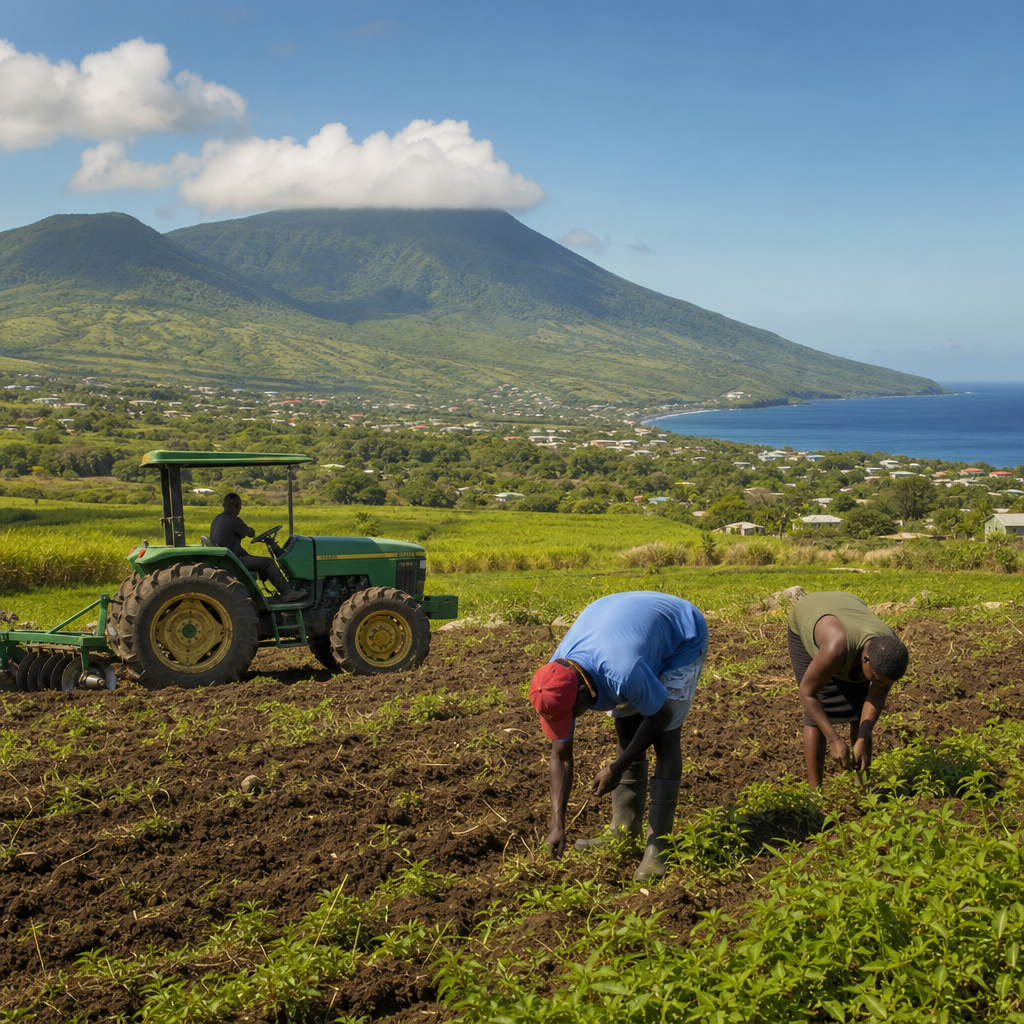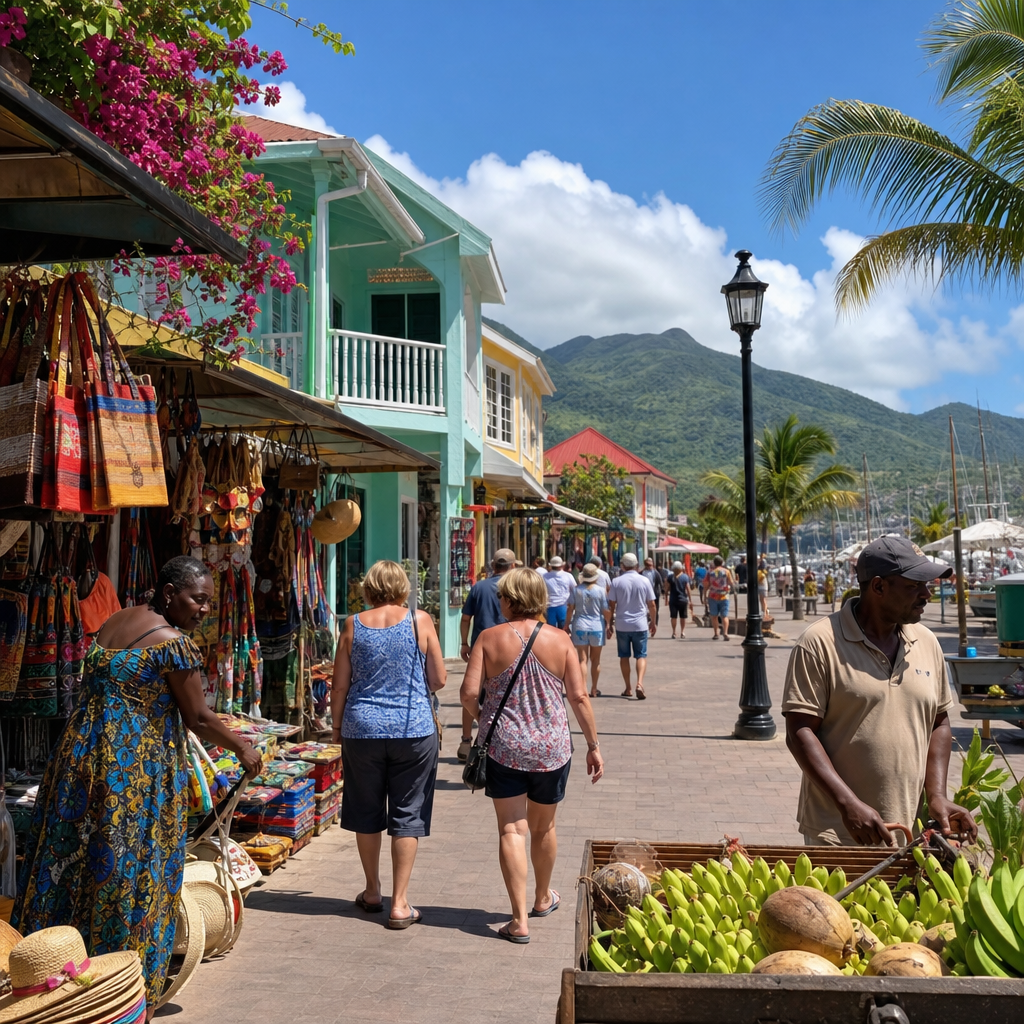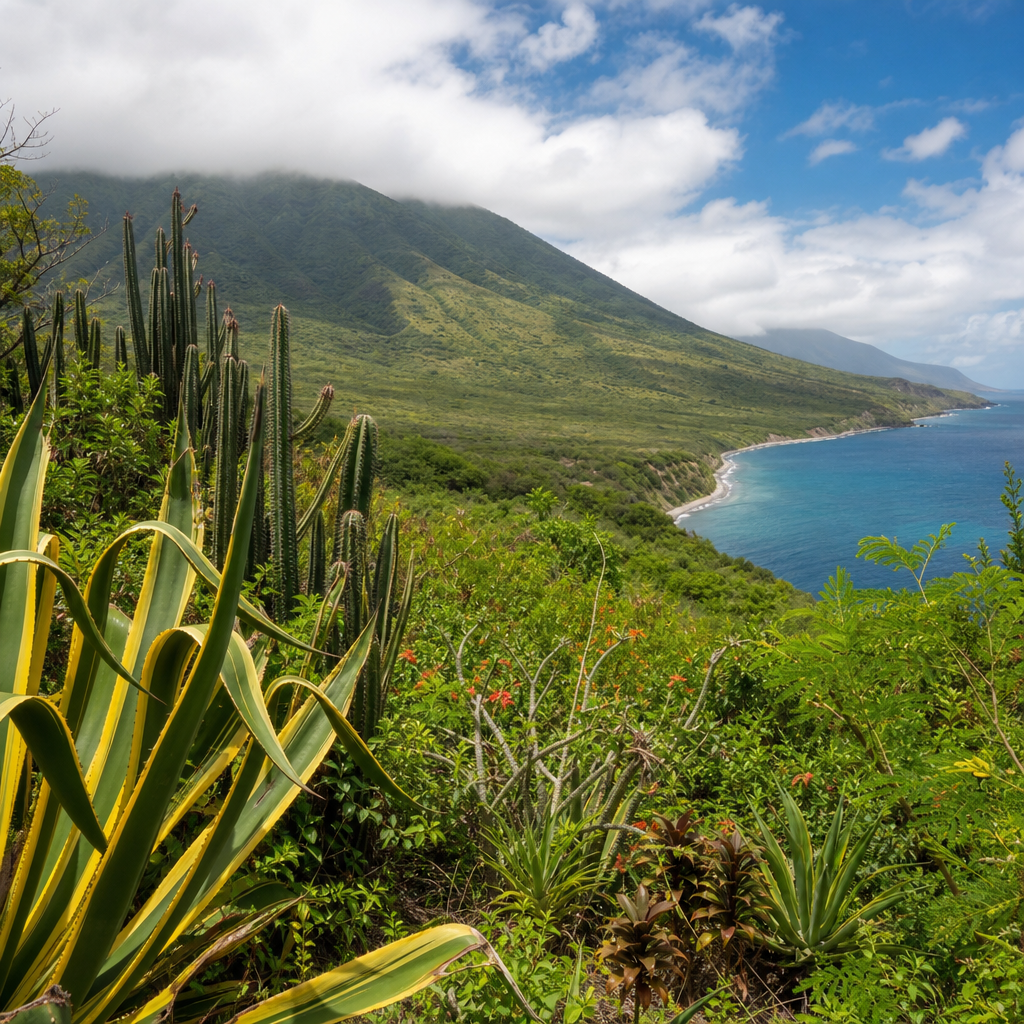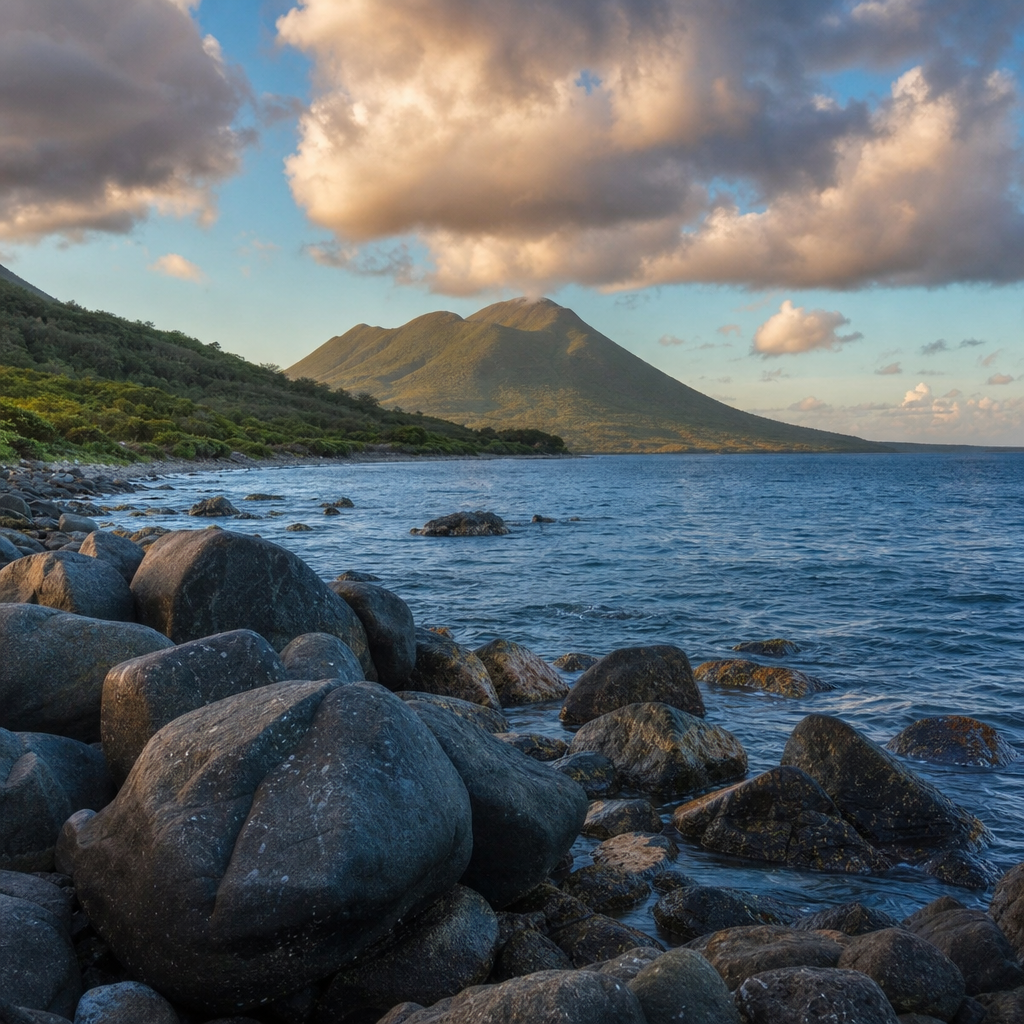
Nevis is often introduced through postcard images of Pinney’s Beach, the green slope of Nevis Peak, and the quiet elegance of Charlestown, yet the island’s deepest identity lives in its stories. Local legends and myths of Nevis are the tales people repeat at roadside bars, family verandas, school assemblies, and heritage tours to explain unusual places, warn children, remember injustice, and keep ancestral memory alive. In this context, a legend is a story tied to a real location or person, while a myth is a broader narrative that explains the unknown through spirits, omens, sacred landscapes, and supernatural forces. On a small island where African heritage, British colonial history, seafaring life, Christianity, and older folk beliefs have long overlapped, these stories are not decorative extras. They shape how residents talk about land, weather, danger, morality, and belonging.
I have worked with Caribbean cultural content long enough to see that visitors often search for “what myths are told in Nevis” when they are really asking a wider set of questions. Which stories are considered genuinely local? How do ghost stories connect with plantation history? Why are mountains, roads, and old houses so often linked to spirits? What can folklore reveal that official history leaves out? Nevis offers strong answers because oral tradition remains unusually visible in everyday life. Storytelling here functions as memory storage. It preserves names, habits, warnings, and emotional truths even when written records are thin or biased. For a hub page under local life and experiences, that matters because legends are one of the fastest ways to understand how Nevisians interpret their island beyond brochures and timelines.
The most important thing to understand is that Nevisian folklore is varied rather than fixed. One village may tell a story differently from another, and one elder may insist a haunting was real while another treats it as a lesson dressed in drama. That flexibility is normal in oral culture. It does not weaken the stories; it shows they are alive. Across the island, recurring themes appear again and again: duppies lingering near old estates, mysterious lights on lonely roads, protective warnings tied to rivers and ghauts, shape-shifting creatures known across the wider Caribbean, and tales linked to famous sites such as Nevis Peak, Bath village, old sugar lands, and colonial-era houses. Together, these stories form a practical map of fear, respect, humor, and resilience that helps explain local life far better than a checklist of attractions ever could.
Why folklore matters in Nevisian everyday life
On Nevis, folklore works as social knowledge. A ghost story may sound entertaining, but it often teaches a concrete rule: do not walk isolated roads late at night, respect burial grounds, do not mock the dead, and do not treat old estate lands casually. In communities shaped by plantation labor, storms, migration, and tight kinship networks, stories have historically helped adults pass on survival habits without formal instruction. That is why many local legends contain a warning at their core. A child told not to wander near a ravine might hear of a spirit there. A young man tempted to boast after drinking may hear of someone lured into darkness by strange music. The supernatural framing keeps the lesson memorable.
These stories also preserve emotional history. Plantation houses, abandoned mills, and stone ruins are not neutral architecture in Nevis. They are reminders of enslavement, class hierarchy, and the hard labor that built export wealth. When residents say a former estate is haunted, they are often expressing more than belief in spirits. They are acknowledging that suffering leaves a residue. Folklore gives language to places where official plaques may say little. I have seen this pattern across the Caribbean, and Nevis is a clear example: haunting becomes a community way of naming unresolved memory, especially where written archives center owners, governors, and merchants more than workers and families.
Folklore also strengthens belonging. Repeating a local tale signals that you know the island beyond maps. It ties generations together because grandparents, parents, and children can all share the same story even when they disagree on details. For travelers, this is valuable context. Hearing a legend in Nevis should not be treated as quaint entertainment detached from real life. It is better understood as a living archive that sits beside church records, archaeology, family memory, and landscape itself.
Common figures in Nevis legends and myths
Several recurring figures appear in Nevisian storytelling, many shared with the wider Eastern Caribbean but adapted to local settings. The best known is the duppy, a spirit of the dead. In practice, duppy stories range from a brief sighting on a road to a full haunting in an old house. Some duppies are malicious, some restless, and some simply repeat an action linked to how they died. Nevisians may describe footsteps in an empty gallery, a figure crossing a yard at dusk, or a voice calling someone by name when no person is there. The point is not always terror. Often the story marks a place as spiritually charged and deserving of respect.
Another figure recognized across Afro-Caribbean folklore is the jumbie, a broad term for supernatural beings that can include ghosts, tricksters, and harmful presences. Local usage varies, but in Nevis conversation the word can describe something uncanny that is not easily classified. Then there is the soucouyant, a shape-shifting old woman in regional legend who sheds her skin at night and moves like fire to prey on the vulnerable. Not every Nevisian family tells soucouyant stories in the same way, yet the figure remains part of the folklore vocabulary that connects Nevis to neighboring islands such as Dominica, Antigua, and St. Lucia.
Obeah also appears in discussions of local myth, though it is not itself a legend figure. Obeah refers to a complex set of spiritual practices, protective work, and feared ritual power rooted in African-Caribbean traditions and shaped by colonial suppression. In storytelling, rumors of someone “working obeah” can explain sudden illness, family conflict, bad luck, or uncanny events around a home. Serious treatment requires balance: many people use the term loosely, and folklore can unfairly stigmatize individuals. Still, understanding Nevisian myths without acknowledging obeah would leave out an essential part of how supernatural causation is discussed in the region.
Places on Nevis most often linked to legend
Specific landscapes attract stories, and on Nevis the mountain is central. Nevis Peak, usually wrapped in cloud, naturally invites myth because it is both visible and unreachable for many residents and visitors. Mountains in Caribbean folklore often symbolize hidden power, weather control, ancestral presence, and danger. On Nevis, stories about strange mists, disorientation on the slopes, and unseen watchers fit a wider pattern in which elevated interior spaces are treated with caution. The peak is also ecologically distinct, with thicker vegetation, rapid weather changes, and reduced visibility, all conditions that easily generate tales of disappearance or uncanny encounters.
Old estate lands form another major category. Places such as ruined sugar mills, great houses, former slave quarters, and overgrown plantation roads invite stories because they combine visible age with historical trauma. A site may be called haunted because workers heard chains, saw lights, or felt an oppressive atmosphere after dark. Whether one interprets that literally or symbolically, the story usually reflects a real memory of exploitation tied to the land. Bath, with its historic spring and long colonial use, also carries a layered atmosphere that supports folklore. Water sources throughout the Caribbean frequently gather myths because they sustain life while also posing risk, especially in flood-prone gullies and isolated bathing areas.
Roads and crossroads matter too. Islands produce many tales about being followed on a lonely road, seeing a woman in white vanish, or hearing footsteps match your pace. These stories make sense geographically. Nevis has stretches where homes thin out, lighting drops, and sound travels strangely at night. Crossroads in African diasporic belief systems can represent spiritual thresholds, and that symbolic meaning often survives in folk narratives even when speakers present the tale casually rather than ritually.
| Place type | Typical legend theme | What the story usually signals |
|---|---|---|
| Mountain slopes | Mist, disappearance, unseen presence | Respect nature, avoid risky travel, acknowledge mystery |
| Estate ruins | Hauntings, footsteps, voices, chains | Memory of plantation violence and unease |
| Springs and ghauts | Spirits, warnings, strange lights | Danger near water and sacred association |
| Roads and crossroads | Vanishing figures, pursuit, nighttime apparitions | Caution after dark and threshold symbolism |
| Old houses | Repeated sounds, shadows, cold rooms | Attachment of memory to family or property |
How history shapes Nevis ghost stories
The strongest local legends and myths of Nevis are inseparable from history. The island was deeply involved in the sugar economy from the seventeenth century onward, and that economy depended on enslaved African labor. Any honest reading of folklore must begin there. Ghost stories attached to estates are not random. They emerge from landscapes where people worked brutally long hours, faced punishment, experienced family separation, and were denied control over their lives and bodies. When a ruin is said to hold voices, that story often functions as a vernacular history of pain. It is one of the few forms in which ordinary people can insist that the past is still present.
Colonial architecture contributes to this effect. Thick stone walls, shuttered rooms, empty galleries, and decaying staircases produce sound distortions that make old houses feel animate. Yet architecture alone does not explain why one building becomes legendary and another does not. Reputation matters. If a property was associated with a severe owner, an unexplained death, a burial, or a family scandal, folklore will often attach itself to that fact and expand it over time. I have found that local people usually distinguish between a house that is merely old and one that “has something with it.” That phrasing captures the blend of caution and certainty common in Nevisian storytelling.
Natural disasters add another layer. Hurricanes, earthquakes, and fires have repeatedly altered life in St. Kitts and Nevis. Sudden destruction creates the kind of rupture that legends absorb well. A story about a spirit returning to a damaged home, or lights appearing where a settlement once stood, can be read as a way of processing collective shock. In this sense, myths are not an escape from reality. They are one of the island’s methods for organizing difficult reality into memorable narrative.
Typical Nevis legends visitors may hear
Visitors asking about local legends in Nevis commonly hear a few recurring story types even if names and locations change. One is the haunted great house: staff members or residents hear movement in upper rooms, doors open without wind, and a female or male figure appears briefly before fading. Another is the roadside apparition, often described as a person requesting a ride, walking ahead impossible distances, or disappearing once approached. A third is the cautionary mountain tale, in which hunters, hikers, or workers lose their bearings in weather that shifts too quickly to explain comfortably.
You may also hear stories of drums, music, or voices near former estate lands late at night. Across the Caribbean, auditory folklore is common because sound travels in unusual ways through open land, sea breeze, and stone structures. On Nevis, such stories often point back to plantation memory or to gatherings imagined to continue beyond death. Then there are family-based accounts: an elder predicts a death through a dream, a relative sees a recently deceased person before news arrives, or a household experiences a sign that confirms an ancestor’s presence. These stories are especially important because they reveal that folklore in Nevis is not confined to public landmarks. It also lives inside private grief, intuition, and kinship.
Not every local person believes every tale literally, and that distinction matters. Some tell these stories as inherited truth, some as possibility, and some with a smile that says the lesson matters more than the event. The shared factor is seriousness about place. Even when the speaker is joking, the island itself is treated as alive with memory.
How to experience Nevis folklore respectfully
The best way to explore local legends and myths of Nevis is to treat them as cultural knowledge, not as a novelty hunt. Ask guides, heritage workers, artists, and longtime residents open questions about places with stories attached to them. Listen for context. If someone mentions a haunting at an estate, ask what happened there historically. If a family member describes a dream or sign, do not press for proof. Folklore is often offered as trust, and respectful listening matters more than deciding whether the supernatural detail can be verified.
Avoid sensational behavior at cemeteries, ruins, and abandoned properties. Do not enter restricted sites, photograph private homes without permission, or frame every old building as a “spooky attraction.” On Nevis, many legendary places are also sites of mourning, labor history, or family significance. Responsible cultural tourism means letting those meanings lead. The most rewarding approach is to pair storytelling with local history museums, plantation studies, village conversations, and landscape walks. Do that, and the island’s legends become a guide to Nevisian values: respect for the dead, caution toward pride, intimacy with weather and terrain, and a refusal to let difficult history disappear.
For anyone exploring local life and experiences on Nevis, folklore is not a side topic in miscellaneous culture. It is the connective tissue linking history, spirituality, memory, landscape, and daily speech. The key takeaway is simple: local legends and myths of Nevis tell you how people on the island interpret what they inherit, what they fear, and what they choose to remember. From duppies on estate lands to mysterious mountain warnings and family stories carried across generations, these narratives preserve truths that archives alone cannot hold. If you want to understand Nevis more deeply, make room for the stories. Speak with local guides, visit heritage sites thoughtfully, and listen closely when a resident says, “Let me tell you what happened there.”
Frequently Asked Questions
What kinds of legends and myths are most commonly associated with Nevis?
Nevisian folklore usually blends history, spirituality, landscape, and community memory. The most common local legends are tied to specific places such as old estates, burial grounds, mountain paths, springs, and coastal roads. Some stories explain why a place feels unusual or sacred; others warn people to behave respectfully, avoid danger, or remember what earlier generations endured. On Nevis, a legend is often rooted in a real setting or a known historical person, even if the story itself has grown more dramatic with retelling. A myth, by contrast, may speak more symbolically about the island’s origins, unseen forces, or the moral order of everyday life.
Many of these stories feature spirits, mysterious lights, protective ancestors, haunted houses, or unexplained sounds near old plantation lands. That is not surprising, because Nevis carries layers of Indigenous presence, colonization, enslavement, emancipation, migration, and religious belief. Folklore becomes a way of holding all of that together. A ruined sugar estate is not just architecture in these tales; it can become a witness. A mountain path is not just a route; it may be described as a threshold between the ordinary world and something older and less visible. Even beaches and ghuts can become story sites where local people attach warnings, miracles, or family memory.
What makes Nevisian legends especially compelling is that they are rarely told as distant fantasy. They are shared as something that happened to someone’s grandmother, a neighbor, a fisherman, a night watchman, or a schoolchild coming home after dark. That closeness gives the stories authority. Whether a listener believes every detail literally is almost beside the point. The stories endure because they help explain place, shape identity, and reinforce a distinctly Nevisian way of understanding the island.
Why are old estates, ruins, and plantation sites so prominent in Nevis folklore?
Old estates and plantation ruins loom large in Nevis folklore because they are among the island’s most visible reminders of a difficult and deeply formative past. These sites are not empty relics in the local imagination. They are places where labor, wealth, violence, resistance, faith, and survival all intersected. When a community repeatedly passes by a stone mill, a great house, a neglected cemetery, or overgrown estate land, stories naturally gather around those spaces. Folklore becomes one way of interpreting what the ruins cannot say on their own.
In many local traditions across the Caribbean, former plantation sites are believed to retain emotional and spiritual residue. On Nevis, that may appear in stories about apparitions, unexplained footsteps, voices on the wind, or a feeling that one should not enter certain places carelessly. These legends do more than try to frighten listeners. They often express a moral truth: the past is not gone simply because the buildings have crumbled. Memory remains present, especially in landscapes shaped by enslavement and inequality. A haunting, in that sense, can represent unresolved history as much as a supernatural event.
These tales also preserve perspectives that formal records often ignore. Written colonial archives tend to document owners, exports, and official events, but folklore remembers workers, families, punishments, uprisings, disappearances, and acts of endurance. A story connected to a ruined estate may quietly honor people whose names were never recorded in full. It can also function as social commentary, reminding younger generations that beautiful landscapes may contain painful histories. That is why plantation ruins in Nevisian storytelling are rarely just scenic backdrops. They are active memory sites, and the legends attached to them help keep that memory alive.
Are Nevis legends mainly ghost stories, or do they serve a broader cultural purpose?
They serve a much broader cultural purpose. Ghost stories are certainly part of the tradition, and they are often the most memorable to visitors because they are vivid, suspenseful, and easy to retell. But reducing Nevisian folklore to hauntings would miss the point. These stories act as community teaching tools, historical reminders, moral lessons, entertainment, and expressions of spiritual worldview. They help explain how people should treat elders, land, the dead, and one another. They also preserve local ways of speaking and interpreting experience.
For example, a tale about a spirit on a lonely road may also be a warning to children not to wander late at night. A story about a cursed act may reinforce the idea that greed, cruelty, or disrespect has consequences. A legend linked to a spring, tree, or mountain trail may teach reverence for the natural environment and caution against taking certain places lightly. Stories of ancestral presence can offer comfort as well as fear, suggesting that the dead continue to watch over the living or that justice, even when delayed, is never entirely absent.
Folklore also strengthens belonging. When Nevisians share stories on verandas, at community events, in schools, or during heritage tours, they are passing on more than plot. They are teaching listeners how to read the island itself. A road bend, a ruined wall, a tamarind tree, or a churchyard becomes legible through story. In that way, local legends help turn geography into lived culture. They preserve memory in a form that is personal, portable, and emotionally powerful, which is exactly why they remain relevant long after the circumstances that produced them have changed.
How have local legends and myths of Nevis been passed down through generations?
The primary vehicle has always been oral tradition. Nevisian stories have long been passed from grandparents to grandchildren, from parents to children, and from elders to younger community members in everyday settings rather than formal archives. A family veranda at dusk, a roadside bar, a village gathering, a school program, a church function, or a heritage celebration can all become places where folklore is renewed. The storyteller’s tone, pauses, gestures, and choice of local detail are often just as important as the storyline itself. That oral performance gives each retelling life and authority.
Because these stories live in speech, they naturally adapt over time. Details may change depending on who tells them, what lesson they want to emphasize, or which audience is listening. One generation may focus on fear and warning, while another highlights resistance, faith, or hidden history. That flexibility is not a weakness; it is how folklore survives. A story that can shift slightly with time remains useful to the community. It can speak to changing realities while still preserving a core memory about a place or event.
Today, the transmission of Nevisian legend also happens through schools, local historians, tour guides, cultural organizations, radio discussions, recorded interviews, and digital media. Visitors may encounter these tales in heritage presentations, while younger Nevisians may hear them online as well as at home. Even so, the spoken version still matters most. Folklore gains its force from hearing someone say, with conviction, that this happened near a certain road, in a certain family, or at a certain estate. That personal link between speaker, listener, and place is what keeps Nevis’s legends from becoming museum pieces. They remain part of living culture.
How should visitors and readers approach Nevisian myths and legends respectfully?
The best approach is with curiosity, humility, and an understanding that these stories are not just tourist entertainment. They are part of Nevis’s cultural memory. Even when a legend sounds dramatic or supernatural, it may carry real emotional weight because it is tied to family history, enslavement, loss, faith, or community identity. Visitors should listen carefully, avoid mocking what they do not fully understand, and recognize that folklore often preserves truths that official histories leave out. Respect begins with taking the storyteller and the setting seriously.
It also helps to pay attention to place. If a local person points out a ruin, spring, cemetery, village road, or mountain path associated with a story, treat that place with the same respect you would give a historic site or sacred ground. Do not assume every location exists only for photography or thrill-seeking. Some stories are told to educate and commemorate, not simply to entertain. Asking thoughtful questions about the history behind a legend often opens a richer conversation than asking whether the tale is “really true.”
Finally, readers and travelers should understand that belief can operate on several levels at once. A Nevisian storyteller may present a legend as literal fact, moral lesson, family memory, and cultural inheritance all at the same time. There is no need to force a strict choice between history and imagination. The deeper value lies in what the story reveals about the island’s people, their relationship to the land, and the ways they remember the past. Approached respectfully, Nevisian myths and legends offer far more than mystery. They provide one of the clearest windows into the island’s identity.