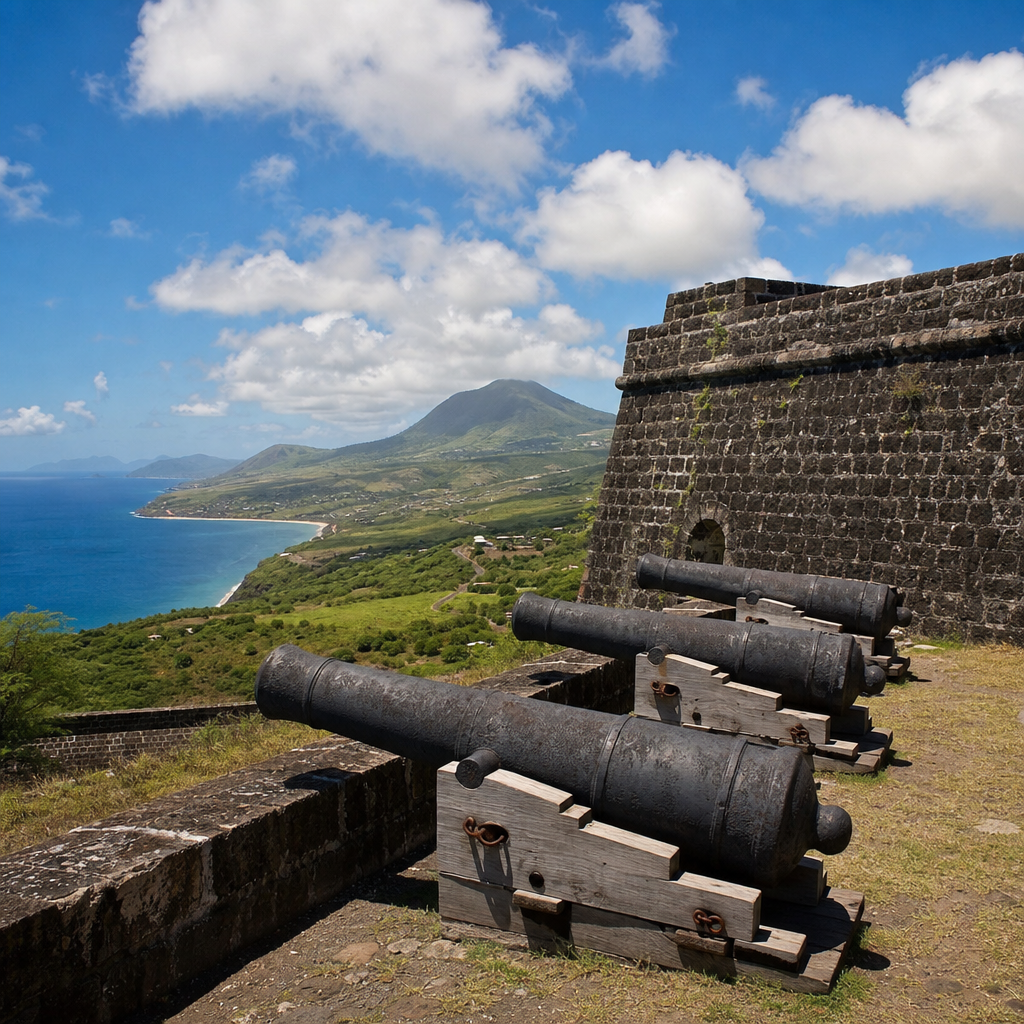
Saint Kitts has played a larger role in Caribbean regional politics than its size suggests, and understanding that role requires looking at centuries of colonial rivalry, labor struggle, federation debates, diplomatic innovation, and modern statecraft. In this historical overview, Saint Kitts refers to the island officially paired with Nevis in the Federation of Saint Christopher and Nevis, while regional politics means the shifting relationships among Caribbean territories, metropolitan powers, and multilateral institutions that have shaped governance, trade, security, and identity across the Eastern Caribbean and wider West Indies. I have worked through archival records, constitutional documents, and regional policy material on the federation, and one conclusion stands out: Saint Kitts repeatedly functioned as a testing ground for ideas that later mattered across the region. From the early British colonial period to independence in 1983 and onward into today’s Caribbean Community, the island has influenced debates about plantation economics, federal union, decolonization, migration, citizenship, and small-state diplomacy. Its political importance lies not in military power or market size, but in its strategic position in the Leeward Islands, its long administrative centrality, and its ability to convert limited resources into regional relevance. For readers exploring Caribbean culture and history, Saint Kitts offers a compact case study of how local events can shape regional outcomes.
Colonial Foundations and the Making of a Regional Actor
Saint Kitts became one of the earliest and most consequential English colonies in the Caribbean. Settled by the English in 1623, and shortly afterward by the French, it was among the first islands where European imperial competition in the Lesser Antilles became entrenched. That dual colonization mattered regionally because Saint Kitts helped establish patterns later repeated elsewhere: plantation agriculture, enslaved African labor, militarized borders, and alternating treaties that rearranged control without resolving conflict. The island’s location between the Greater and Lesser Antilles made it a strategic stepping stone for both commerce and conquest. When Britain eventually secured full control in the eighteenth century, Saint Kitts had already served as a proving ground for imperial governance in the Eastern Caribbean.
The rise of sugar transformed the island into a node in the Atlantic economy and, by extension, in regional politics. Sugar wealth linked Saint Kitts to merchant houses in London, neighboring colonies, and shipping networks that connected Barbados, Antigua, Jamaica, and North America. Political decisions on Saint Kitts were therefore rarely local in effect. Laws concerning labor discipline, militia organization, landholding, and customs duties reflected broader British Caribbean priorities. Like other plantation societies, Saint Kitts depended on the forced labor of enslaved Africans, and resistance by enslaved people shaped colonial security policy across the region. The memory of major uprisings, including the 1733 rebellion on neighboring Saint John and the 1760 revolt in Jamaica, sharpened British attention to islands like Saint Kitts where demographic imbalance produced constant fears of revolt. In practice, this placed Saint Kitts inside a regional system of surveillance, military preparedness, and legal restriction.
After emancipation in 1834, followed by apprenticeship and full freedom, Saint Kitts continued to influence regional thinking because planters and officials there faced the same question troubling all sugar colonies: how could a plantation economy survive without slavery. Their answers included wage suppression, estate consolidation, and efforts to preserve monocrop production. These were not unique to Saint Kitts, but the island’s administrative links with neighboring territories made local experimentation visible. Economic stress, labor protest, and recurring debates over constitutional reform positioned Saint Kitts within the wider transition from slave colony to modern Caribbean society.
The Leeward Islands, Administrative Centrality, and Federal Experiments
Saint Kitts’ most direct contribution to regional politics came through administration and federation. Under British rule, the island occupied a prominent place in the Leeward Islands colonial arrangement, which at various times connected Antigua, Montserrat, Dominica, the Virgin Islands, Nevis, and Anguilla under shared institutions. Basseterre served as an administrative center for important periods, and that practical role gave Saint Kitts influence beyond its population. Decisions made there could affect public finance, courts, communications, and inter-island governance across the northeastern Caribbean. In archival correspondence from the late nineteenth and early twentieth centuries, British officials repeatedly treated Saint Kitts not as an isolated island but as a pivot in managing smaller territories.
This mattered because the Leeward model previewed later federation debates. Caribbean federation has always faced the same core challenge: how to balance efficiency with insular identity. Saint Kitts lived that challenge daily. Its political relationship with Nevis and Anguilla exposed the tensions embedded in any multi-island state. Shared administration could lower costs and simplify governance, yet it could also produce resentment if one island appeared dominant. In the case of Saint Kitts, Basseterre’s status as the political center often drew criticism from Nevisians and Anguillians who felt underrepresented or economically neglected. Those grievances were local, but they mirrored regional obstacles that later complicated the West Indies Federation from 1958 to 1962.
Saint Kitts therefore occupies an important place in the history of Caribbean federalism. The island demonstrated both the promise and fragility of political union among small territories. It showed that transportation constraints, uneven development, and identity politics could undercut formal constitutional arrangements. At the same time, it proved that cooperation was not theoretical. Shared courts, civil service structures, and legislative frameworks did function, even if imperfectly. For regional politics, that is the lasting lesson: integration in the Caribbean has always been practical before it becomes emotional, and durable institutions must account for local dignity as much as administrative logic.
Labor Politics, Social Reform, and Anti-Colonial Momentum
By the early twentieth century, Saint Kitts had become a significant site of labor activism, and that activism resonated across the British Caribbean. The sugar economy remained dominant, with large estates and a narrow export base producing profound inequality. Workers faced low wages, insecure employment, and limited political representation. Conditions on Saint Kitts were comparable to those in Antigua, Saint Lucia, and British Guiana, where labor unrest would become one of the main drivers of constitutional change. Regional politics shifted decisively in the 1930s because colonial governments could no longer ignore the social consequences of depression-era contraction in export agriculture.
On Saint Kitts, labor organization and political mobilization helped translate economic grievance into institutional reform. The emergence of leaders such as Robert Llewellyn Bradshaw was especially important. Bradshaw, later the first Premier and then the first Prime Minister of independent Saint Christopher and Nevis, built influence through the labor movement and the Saint Kitts-Nevis-Anguilla Trades and Labour Union. He belonged to a wider generation of Caribbean labor leaders, including Grantley Adams in Barbados, Alexander Bustamante in Jamaica, and T. Albert Marryshow in Grenada, who linked worker demands to self-government. In this sense, Saint Kitts was not peripheral; it was part of the political engine that moved the British Caribbean away from oligarchic colonial rule.
The Moyne Commission, appointed after unrest across the West Indies in 1938, gave official recognition to conditions labor leaders had long described. Its findings on poverty, health, housing, and wages validated reformist arguments throughout the region. On Saint Kitts, as elsewhere, the post-Moyne period strengthened trade unions, expanded the policy horizon of government, and advanced universal adult suffrage. These changes had regional consequences because they normalized the expectation that Caribbean governments should pursue social welfare, not simply protect plantation output. Saint Kitts contributed to that transformation by producing organized political pressure within a small-island context where labor and state were closely entangled.
From Associated Statehood to Independence and Regional Diplomacy
The decades after World War II brought faster constitutional change. Saint Kitts participated in the short-lived West Indies Federation, and although that federation collapsed, the experience sharpened local and regional understanding of sovereignty. The next phase came with associated statehood in 1967, when Saint Christopher-Nevis-Anguilla gained internal self-government while Britain retained responsibility for defense and external affairs. What followed showed how local disputes could reshape regional politics. Anguilla rejected rule from Saint Kitts, leading to the Anguilla crisis, British intervention, and eventual separation. The episode became a cautionary example across the Caribbean: constitutional design could not ignore island-level legitimacy.
Saint Kitts and Nevis nevertheless moved toward independence, achieved on 19 September 1983. The constitution reflected lessons from earlier conflicts by granting Nevis a significant degree of autonomy and even a pathway, under defined conditions, to secession. Few Caribbean constitutions contain such a clear acknowledgment of internal asymmetry. That feature alone makes Saint Kitts important in regional constitutional history. It recognized that small states are not automatically politically simple; they may require flexible arrangements to remain viable.
Since independence, Saint Kitts and Nevis has pursued the classic repertoire of successful Caribbean small-state diplomacy: active participation in CARICOM, engagement with the Organisation of Eastern Caribbean States, support for the Eastern Caribbean Currency Union, and strategic use of international forums. In negotiations on trade, climate vulnerability, debt, and disaster recovery, the country has often aligned with other small island developing states to amplify influence. It has also used diplomatic recognition policy, citizenship by investment regulation, and development partnerships to expand its room for maneuver. The country does not set the regional agenda alone, but it consistently helps shape coalitions that matter.
| Period | Political Role | Regional Significance |
|---|---|---|
| 1620s-1700s | Early English and French colony | Model for imperial rivalry and plantation expansion |
| 1800s | Sugar colony under British rule | Part of post-emancipation labor and governance transition |
| Late 1800s-1900s | Administrative center in Leeward arrangements | Preview of regional federal governance challenges |
| 1930s-1950s | Labor mobilization and constitutional reform | Contributed to anti-colonial momentum across the British Caribbean |
| 1967-1983 | Associated state, then independent federation | Highlighted limits of imposed union and value of autonomy safeguards |
| 1983-present | CARICOM and OECS member state | Active small-state diplomacy on trade, finance, and climate issues |
Contemporary Relevance in Caribbean Politics
Today, Saint Kitts’ role in regional politics is best understood through influence by participation rather than dominance. Within the OECS, the country benefits from and contributes to shared institutions in monetary policy, judicial cooperation, pharmaceutical procurement, and education. The Eastern Caribbean Central Bank, headquartered in Saint Kitts and Nevis, is one of the region’s most successful integration mechanisms, maintaining a long-standing exchange rate peg and encouraging fiscal discipline within a currency union that many larger states have never matched. That alone gives the federation continuing importance in regional governance.
Saint Kitts and Nevis also matters in debates over economic diversification after sugar. The closure of the sugar industry in 2005 marked the end of a structure that had defined politics for centuries. The transition toward tourism, financial services, education services, and investment migration mirrored broader Caribbean adaptation to global competition. Other regional governments watched closely because the same basic challenge confronts many island economies: how to replace declining preferential commodity exports with sustainable revenue streams. The record is mixed. Tourism and citizenship by investment have generated income, but they also create exposure to external shocks, regulatory scrutiny, and reputational risk. Saint Kitts’ experience therefore offers both a model of adaptation and a warning about concentration in new sectors.
In practical regional politics, the federation remains influential because small states often succeed through coalition behavior. On climate change, hurricane resilience, blacklisting disputes, and concessional finance, Saint Kitts and Nevis speaks as part of a Caribbean bloc whose bargaining power depends on coordinated messaging. Its leaders have repeatedly framed vulnerability as a development issue rather than a humanitarian afterthought, a position now widely accepted in international climate discussions. For anyone studying Caribbean history and culture, this continuity is striking: the same island once shaped plantation-era administration now helps shape twenty-first-century arguments about sovereignty, resilience, and fair treatment in global systems.
Saint Kitts’ historical role in regional politics can be summarized clearly: it has been a strategic colony, an administrative hub, a site of labor-driven reform, a case study in federation, and a modern practitioner of small-state diplomacy. Across each phase, the island’s importance came from leverage rather than scale. It mattered because empires competed there, because the Leeward Islands were governed through it, because workers organized there, because constitutional tensions with Nevis and Anguilla exposed the limits of centralized rule, and because independent Saint Kitts and Nevis learned to act effectively within Caribbean institutions. The broad lesson is that regional politics in the Caribbean has never belonged only to the largest territories. Smaller islands often reveal the region’s deepest political patterns first.
For readers using this Culture and History hub to explore related subjects, Saint Kitts provides a gateway into miscellaneous but connected themes: colonial rivalry, sugar and slavery, emancipation, trade unionism, federation, constitutional design, migration, monetary integration, and climate diplomacy. Each deserves deeper reading, yet the overview remains consistent. Saint Kitts helped shape how the Caribbean thinks about cooperation, representation, and survival in unequal international systems. If you are building out your understanding of the region, use this article as a starting point, then continue into the linked subtopics on governance, society, economy, and identity to see how this small federation influenced the wider Caribbean story.
Frequently Asked Questions
Why has Saint Kitts mattered so much in Caribbean regional politics despite its small size?
Saint Kitts has mattered because its history intersects with many of the biggest forces that shaped the Caribbean as a region. Although geographically small, the island sat at the center of early European imperial competition, especially between Britain and France, making it one of the earliest and most symbolically important colonial footholds in the Eastern Caribbean. That early prominence gave Saint Kitts an outsized place in debates about military control, plantation expansion, labor systems, and colonial administration. In many ways, the island functioned as a kind of political microcosm of the wider Caribbean, where conflicts over sovereignty, trade, and social hierarchy played out in concentrated form.
Its importance also grew from its role within British colonial governance. Saint Kitts was often linked administratively with neighboring territories, especially Nevis and Anguilla, and later became involved in wider conversations about how smaller Caribbean islands could be governed efficiently, represented fairly, and integrated regionally. These arrangements were rarely simple. They raised recurring questions about local identity, political autonomy, and regional cooperation that would continue into the twentieth century and beyond. Because Saint Kitts was embedded in these constitutional experiments, its political experience helped inform broader regional debates.
Just as important, Saint Kitts became significant through labor politics and anti-colonial activism. The struggles of workers on sugar estates, the rise of organized labor, and the emergence of mass politics connected the island to larger Caribbean movements for reform, self-government, and social justice. Leaders associated with Saint Kitts and Nevis participated in ideas and networks that extended beyond the federation itself, linking domestic concerns to regional and international currents. For that reason, Saint Kitts’ influence has never depended simply on population size. It has come from the fact that the island repeatedly stood at the crossroads of empire, labor mobilization, federation debates, and postcolonial diplomacy.
How did colonial rivalry shape Saint Kitts’ place in the political history of the Caribbean?
Colonial rivalry was foundational to Saint Kitts’ regional role. In the seventeenth and eighteenth centuries, the island became one of the earliest sites of sustained competition between European powers, particularly Britain and France. Because both empires saw Caribbean islands as strategic assets for trade, military positioning, and plantation wealth, Saint Kitts became more than just another colony. It was a contested political prize. Control over the island represented influence in the Lesser Antilles and helped determine the balance of imperial power in the eastern Caribbean.
This rivalry had long-term consequences. Repeated shifts in authority, military conflict, and treaty settlements made Saint Kitts part of the diplomatic architecture of the Atlantic world. Decisions made in European capitals affected local governance, landholding patterns, taxation, and defense, while developments on the island fed back into imperial strategy. In that sense, Saint Kitts was woven into a larger political system where local and global power were tightly connected. Its experience helps explain how the Caribbean was shaped not only by plantation economics but also by ongoing negotiations among metropolitan powers.
The legacy of this rivalry also influenced political identity in the region. Colonial competition intensified plantation slavery, militarization, and racial hierarchy, but it also laid the groundwork for later regional consciousness. As Caribbean territories experienced the instability and extraction that came with imperial competition, shared patterns emerged across the archipelago. Saint Kitts’ history illustrates that process clearly. The island’s contested past made it an early example of how external power struggles could shape Caribbean institutions, social divisions, and regional alignments. Understanding Saint Kitts in this context helps explain why regional politics in the Caribbean have always involved both internal relationships among islands and the influence of larger external powers.
What role did labor struggle and social change in Saint Kitts play in wider Caribbean politics?
Labor struggle was one of the most important ways Saint Kitts influenced regional politics. Like many Caribbean territories, the island’s social and political order was built on plantation agriculture, especially sugar, and on systems of coercive labor that began with slavery and continued in altered form after emancipation. Even after formal emancipation, economic inequality remained severe, and plantation owners retained substantial power over wages, land access, and political life. This made labor unrest in Saint Kitts not just a domestic issue but part of a broader Caribbean confrontation over who would control post-emancipation society.
As labor organization grew in the late nineteenth and twentieth centuries, Saint Kitts became increasingly tied to regional currents of working-class activism, trade unionism, and constitutional reform. Workers’ demands for better pay, improved conditions, and political representation echoed similar struggles across islands such as Trinidad, Jamaica, Barbados, and Antigua. These movements were rarely isolated. Ideas, leaders, newspapers, and strategies circulated across the Caribbean, creating a shared political language of reform and resistance. In Saint Kitts, labor politics helped challenge elite colonial authority and pushed the political system toward broader participation.
This mattered regionally because labor activism often served as the bridge between social protest and modern party politics. The emergence of organized mass politics in Saint Kitts and Nevis contributed to a Caribbean-wide transformation in which workers, small farmers, and ordinary citizens demanded a voice in government. These developments influenced how regional leaders thought about decolonization, welfare, economic planning, and self-rule. In other words, Saint Kitts’ labor history was not simply about industrial relations on one island. It formed part of the Caribbean’s larger political transition from colonial plantation society to modern democratic and nationalist politics.
How was Saint Kitts involved in Caribbean federation debates and regional integration efforts?
Saint Kitts was deeply involved in federation debates because it belonged to a part of the Caribbean where small territories faced a shared political question: how could they achieve meaningful self-government and economic viability without being isolated? During the twentieth century, this question became central to regional politics, especially under British rule. Saint Kitts, together with Nevis and Anguilla in various constitutional arrangements, participated in recurring discussions about whether closer union among Caribbean territories would create stronger institutions, more bargaining power, and a clearer path toward independence.
The most famous of these efforts was the West Indies Federation, established in 1958. Although short-lived, the federation represented a major experiment in regional governance, and Saint Kitts’ participation reflected the aspirations and tensions common across the British Caribbean. Supporters saw federation as a practical and visionary response to colonial fragmentation. Critics, however, worried about unequal influence, limited local autonomy, financial burdens, and the difficulty of uniting territories with distinct histories and priorities. For Saint Kitts, these concerns were sharpened by its own internal relationships with Nevis and Anguilla, where questions of representation and political balance were especially sensitive.
After the collapse of the West Indies Federation, regional integration did not disappear. Instead, it evolved into new forms, including functional cooperation and institutions such as CARICOM and the Organisation of Eastern Caribbean States. Saint Kitts and Nevis became an active participant in these frameworks, helping demonstrate that regionalism in the Caribbean could survive even without full political union. Its experience showed both the promise and the difficulty of integration: small states often benefit from collective diplomacy, shared services, and economic coordination, yet they remain protective of sovereignty and local identity. That tension has defined Caribbean regional politics for decades, and Saint Kitts has been a clear example of how states navigate it.
What has Saint Kitts and Nevis contributed to modern Caribbean diplomacy and statecraft?
In the modern era, Saint Kitts and Nevis has contributed to Caribbean diplomacy by showing how a very small state can exercise influence through strategic engagement, coalition-building, and institutional participation. Since independence in 1983, the federation has operated in a regional environment shaped by decolonization, Cold War legacies, globalization, climate vulnerability, and changing economic models. Rather than relying on size or military power, Saint Kitts and Nevis has used diplomacy, multilateralism, and legal sovereignty to make its voice heard in regional and international forums.
One major contribution has been its role in organizations that amplify the concerns of small island states. Through CARICOM, the OECS, the Commonwealth, the United Nations, and other bodies, Saint Kitts and Nevis has participated in collective efforts on trade, climate policy, financial regulation, public health, and development financing. These issues are central to modern regional politics because they affect not only national well-being but also the Caribbean’s ability to negotiate with larger powers and international institutions. Saint Kitts and Nevis has helped reinforce the principle that small states can act effectively when they coordinate regionally and speak with clarity on shared interests.
The federation has also contributed a valuable model of modern Caribbean statecraft by balancing domestic complexity with external engagement. Internally, the relationship between Saint Kitts and Nevis has required continuous attention to constitutional design, representation, and local autonomy. Externally, the country has had to protect economic stability, diversify beyond sugar, manage tourism and investment, and respond to evolving geopolitical pressures. This combination of internal negotiation and outward-facing diplomacy reflects a broader Caribbean reality. In that sense, Saint Kitts and Nevis remains politically significant not because it dominates the region, but because its history and conduct illuminate the central challenges of Caribbean governance: sovereignty, cooperation, resilience, and adaptation in a world shaped by larger powers.