Independence Day in Saint Kitts is more than a public holiday; it is the island’s most visible expression of national identity, community pride, and shared memory. Celebrated each year on September 19, the day marks Saint Kitts and Nevis becoming an independent nation in 1983 after centuries of colonial rule and decades of constitutional change. For visitors, it can look like a colorful week of parades, music, food, and speeches. For locals, it carries deeper meaning: it is a reminder of self-determination, hard-won progress, and the responsibility of building a small Caribbean nation together. Having spent time on the ground during the September season, I have seen how neighborhoods prepare weeks ahead, schools rehearse performances, and families plan gatherings with the same care they would give Christmas or Carnival.
Understanding Independence Day in Saint Kitts starts with a few key terms. “Saint Kitts” is the larger island in the two-island Federation of Saint Kitts and Nevis. “Independence Day” refers specifically to September 19, while “Independence celebrations” usually describes the broader calendar of events that can stretch across several days and include state ceremonies, church services, cultural showcases, pageants, athletic competitions, and community activities. Locals may also speak about “the Independence season,” meaning the period when national colors appear everywhere, patriotic songs return to the airwaves, and schools, ministries, and village groups host events tied to the anniversary. This distinction matters because the lived experience is not confined to one date on the calendar; it is a national season with official, cultural, and family dimensions.
The holiday matters because Saint Kitts is a small state whose sense of nationhood is shaped by close-knit communities, migration, and a history of plantation society. Public rituals play an outsized role in keeping that identity visible. In practical terms, Independence Day creates a yearly moment for civic education, especially for younger Kittitians who may know the flag and anthem but not the constitutional story behind them. It also supports local life in ways that travelers often miss. Vendors sell food and flags, tailors make outfits in green, yellow, black, red, and white, performers get bookings, and communities use the season to spotlight local talent. As a hub topic within local life and experiences, this subject opens into many related themes: heritage, music, food, religion, schools, sport, and the rhythms of village life. To understand how locals celebrate, you have to see all of those pieces working together.
The historical meaning behind the celebration
Saint Kitts and Nevis achieved independence from the United Kingdom on September 19, 1983, becoming a sovereign state within the Commonwealth. That date is the anchor of every modern celebration. The federation’s political path included colonial administration, the short-lived West Indies Federation, associated statehood in 1967, and then full independence. Locals do not treat this history as abstract constitutional detail. It shows up in speeches, school recitations, church reflections, radio programs, and newspaper features throughout September. In many communities, elders explain the transition in personal terms: what changed in governance, what expectations people had, and how independence redefined responsibility for education, infrastructure, and public institutions.
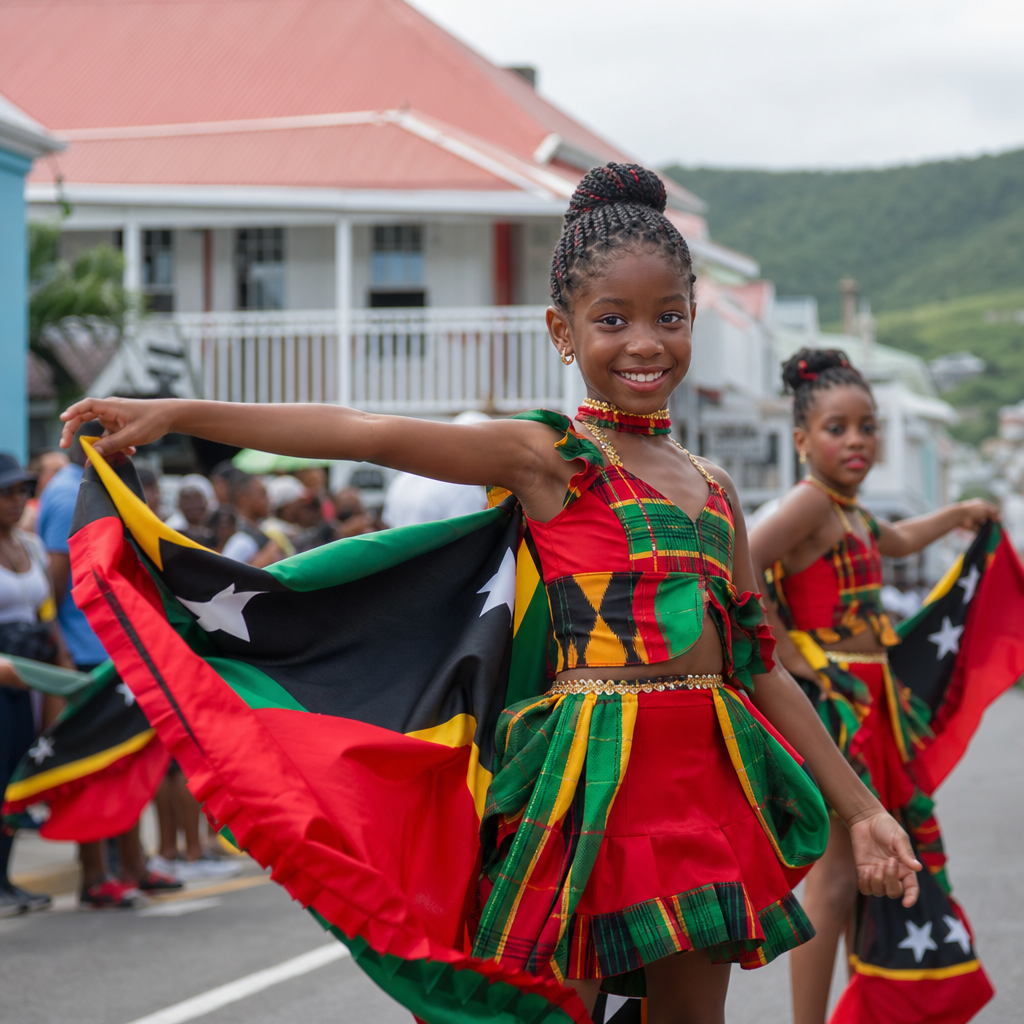
National symbols become especially important during this period. The flag, with its diagonal black band edged in yellow, green and red fields, and two white stars, is displayed prominently at schools, government buildings, and private homes. The stars are widely understood to represent hope and liberty. The national anthem, “O Land of Beauty!,” is performed at official ceremonies and often sung in schools before holiday programs. The coat of arms and patriotic slogans also appear on banners and stage backdrops. These symbols are not decorative extras. They are central teaching tools in a society where formal civic participation and cultural memory are reinforced through public ceremony. When locals dress children in national colors for school activities, they are not simply matching a theme; they are making the symbols familiar through repetition and celebration.
What happens on Independence Day itself
The official day usually begins with formality and protocol. A ceremonial parade, often involving the security forces, youth organizations, and uniformed groups, is one of the most recognizable features. Marching units practice timing, salutes, and formations in advance, and residents line the streets to watch. The parade serves several purposes at once: it honors the state, showcases discipline and service, and creates a public gathering point where patriotism is visible rather than private. Government officials, diplomats, clergy, and community leaders typically attend flag-raising ceremonies or commemorative events, and national addresses often reflect on both achievements and unfinished work such as economic resilience, youth development, and public health.
Church services are another major part of the day. In Saint Kitts, where religious institutions remain influential in community life, thanksgiving services are woven naturally into national observance. These services usually include prayers for leaders, choirs singing patriotic selections, scripture readings tied to stewardship and unity, and sermons connecting faith with nation-building. Even people who are not regular churchgoers may attend because the service carries social as well as spiritual importance. It is common for families to dress well, gather afterward, and use the day to reconnect with relatives. The holiday therefore blends state ceremony with church tradition in a way that reflects the island’s social structure.
After the official events, the tone often becomes more relaxed and communal. Families cook large meals, visit beaches, attend concerts, or gather in villages where smaller events continue into the evening. You may see children with miniature flags, cars decorated in national colors, and community grounds hosting cultural items or food sales. Unlike Carnival, which is built around masquerade and revelry, Independence Day feels more grounded in reflection and collective pride. There is celebration, but it is framed by a clear civic purpose. That balance is one reason the holiday remains meaningful across generations.
How communities, schools, and villages shape the season
If you want to understand how locals celebrate Independence Day in Saint Kitts, look beyond Basseterre and pay attention to schools and villages. Much of the real energy comes from community-level programming. Primary and secondary schools host assemblies, poetry recitals, debates, dance performances, and exhibitions focused on national history. Teachers use the season to review the meaning of the flag, anthem, coat of arms, and the date of independence. In my experience, school events are often where you hear the most heartfelt patriotism because children deliver it directly, whether through folk songs, dramatic sketches, or short speeches about national heroes and responsibilities.
Villages often organize their own competitions and social events, ranging from sports days and community cleanups to calypso shows and family fairs. These activities matter because local identity in Saint Kitts is strong. People proudly identify with places such as Sandy Point, Cayon, Old Road, Saddlers, and Dieppe Bay, and the Independence season gives each community a chance to contribute to the national story. Friendly rivalry can be part of the atmosphere, especially when schools, dance troupes, or pageant contestants represent their area. This local pride does not compete with nationalism; it strengthens it by making participation personal and visible.
Government ministries and cultural agencies usually coordinate a broader calendar that may include youth awards, heritage showcases, art competitions, and public lectures. These structured programs help connect official themes with everyday life. They also create opportunities for residents who are not interested in parades or church services to take part in another way. A student may join a debate, a chef may enter a food event, a musician may perform at a concert, and a small business may benefit from increased local traffic. The celebration therefore works as a network of events rather than a single ceremony.
Music, food, dress, and other local traditions
Culture gives Independence Day its warmth. Music can include brass bands, gospel, string band influences, drumming, and contemporary Caribbean genres played at public events and on radio stations. Patriotic songs return each year, but so do tracks associated with local pride and island identity. In some celebrations, folklore and traditional performance styles are given dedicated stage time, which helps younger audiences connect national history with living culture rather than textbook facts. Emcees often move easily between English and local speech patterns, another reminder that independence is expressed not only through flags and protocol but through voice, humor, and everyday forms of belonging.
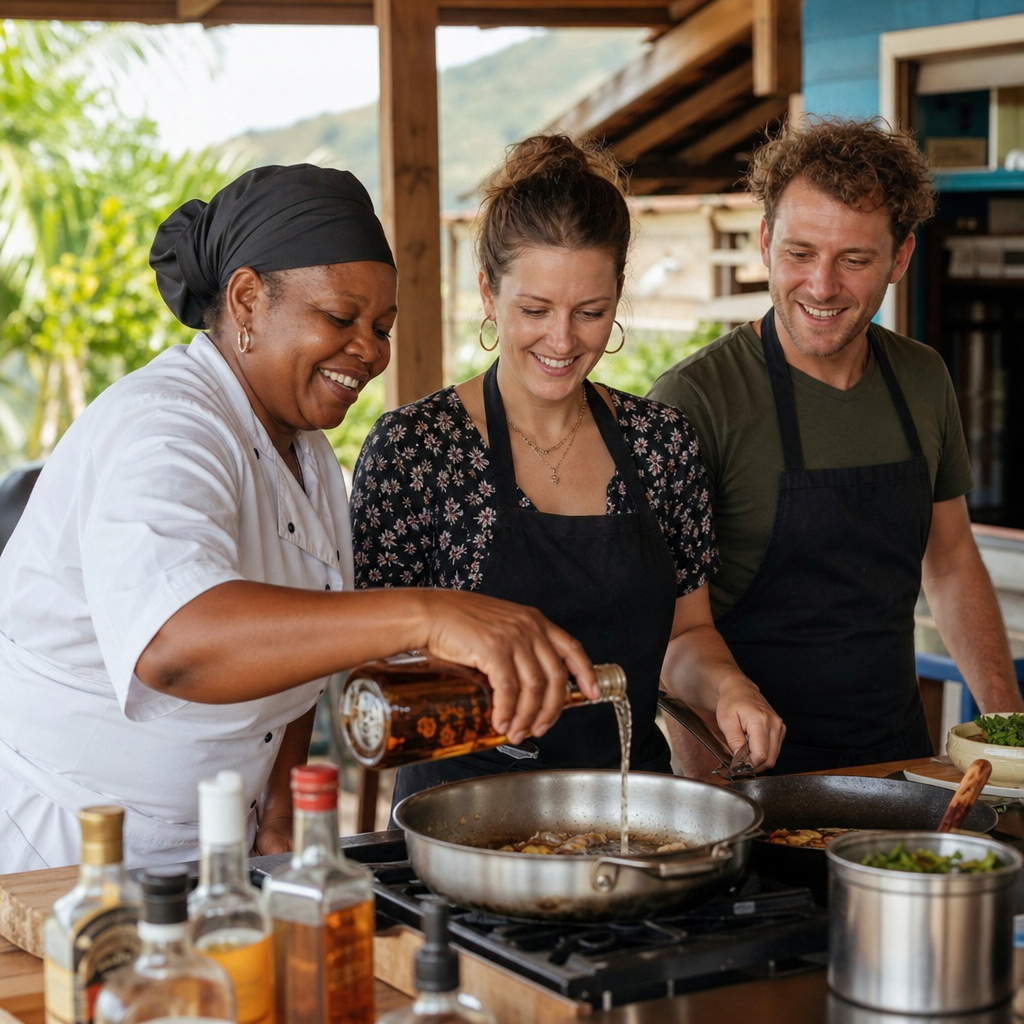
Food is equally important. Family gatherings may feature goat water, stewed saltfish, pelau, rice and peas, roast breadfruit, provisions, conch, chicken, fresh juices, and rum-based drinks for adults. Street vendors and community booths often sell accessible favorites such as barbecue, fried fish, patties, johnny cakes, and local sweets. What stands out is not a single “Independence dish” but the way the holiday creates space for local food traditions to anchor social connection. A public celebration without food would feel incomplete because sharing meals is one of the clearest ways Kittitians turn a national event into lived community.
Dress also carries meaning during the season. Schools, offices, and households often wear the national colors, and event organizers encourage coordinated outfits for photos, performances, and parades. Some people choose flag-themed shirts, while others prefer formal clothing accented with ribbons, jewelry, or headwraps in patriotic shades. The point is not strict uniformity. It is visible participation. When streets, stages, and social media fill with those colors, the effect is cumulative: independence becomes something the public can see instantly.
| Celebration element | How locals take part | Why it matters |
|---|---|---|
| Official ceremonies | Attend parades, watch flag raising, listen to national addresses | Reinforces civic identity and state institutions |
| School programs | Children perform songs, poems, debates, and dramatic pieces | Teaches history and passes values to younger generations |
| Church services | Families join thanksgiving worship and community prayer | Links national celebration with moral responsibility and unity |
| Village events | Residents join fairs, sports, cleanups, and concerts | Turns patriotism into local participation |
| Food and music | Share traditional dishes and enjoy local performers | Makes the holiday social, memorable, and distinctly Kittitian |
How Independence Day differs from Carnival and other holidays
Travelers sometimes confuse Saint Kitts Independence celebrations with Sugar Mas, the federation’s Carnival season, because both involve music, costumes, and public events. Locals understand the difference clearly. Carnival is festive, entertainment-driven, and rooted in masquerade traditions, street celebration, and end-of-year revelry. Independence Day is patriotic, commemorative, and explicitly civic. The music may overlap in places, and both seasons can showcase local creativity, but the emotional center is different. Independence asks citizens to reflect on who they are as a nation and what they owe one another. Carnival asks them to celebrate release, performance, and cultural expression on a broader social stage.
The distinction matters for anyone trying to read local life accurately. On Independence Day, speeches, school lessons, and ceremonial protocol are not side content. They are the core. The enjoyment grows around them, not the other way around. This is also why the season appeals to many older residents and families who may not participate deeply in Carnival. It offers a more intergenerational format, one where grandparents, parents, and children can all engage comfortably. In that sense, Independence Day functions as one of the federation’s broadest communal holidays.
Tips for experiencing the holiday respectfully
If you are visiting Saint Kitts during the Independence season, the best approach is simple: treat the holiday as a national observance first and a spectacle second. Attend official events if they are open to the public, stand respectfully during the anthem, and expect some road closures or schedule changes around parades and ceremonies. Ask hotel staff or local hosts about school programs, church services, or community fairs, because those smaller gatherings often provide the clearest window into how residents actually celebrate. Dress neatly for formal events, avoid obstructing parade routes, and remember that photography is easiest when paired with basic courtesy.
It also helps to spend money locally. Buy food from community vendors, attend performances featuring local artists, and choose locally made souvenirs in national colors rather than imported novelty items when possible. These choices support the very communities that keep the holiday meaningful. Most important, listen. When residents explain what independence means to their family, village, or generation, that conversation will teach you more than any brochure. Independence Day in Saint Kitts is a living expression of local life, tying history, faith, education, food, and performance into one season. To experience it well, follow the community’s lead, and let the celebration show you how a small island nation tells its own story with pride.
Frequently Asked Questions
What does Independence Day mean to people in Saint Kitts?
Independence Day in Saint Kitts is much more than a date on the calendar or a reason for a public holiday. For many locals, it represents the moment the nation stepped fully into self-government and claimed its own political and cultural identity. Saint Kitts and Nevis became independent on September 19, 1983, and that milestone still carries emotional weight because it followed centuries of colonial rule, plantation history, and gradual constitutional change. The day is often understood as a reminder of how hard-won nationhood can be, especially in a small Caribbean state where history, community, and family memory are closely connected.
Locals often see the celebration as a public expression of pride, resilience, and belonging. It is a time to reflect on the sacrifices of earlier generations, the responsibilities of citizenship, and the achievements of the country since independence. While there is plenty of festivity, there is also a serious undertone: speeches, church services, school programs, and national ceremonies all reinforce the idea that independence is not only something to celebrate, but something to protect and strengthen. That deeper meaning is what gives the holiday its staying power in everyday life.
How do locals in Saint Kitts typically celebrate Independence Day?
Celebrations usually combine official national events with lively community participation. In the days leading up to September 19, there are often flag-raising ceremonies, cultural showcases, school performances, patriotic displays, public addresses, and organized gatherings that build momentum across the island. On the day itself, locals may attend parades, watch uniformed groups march, listen to speeches from national leaders, and take part in events designed to honor the country’s history and unity. The national colors are prominently displayed, and many people wear patriotic clothing to show support and pride.
Beyond the formal ceremonies, the celebration becomes distinctly local through music, food, neighborhood gatherings, and shared family traditions. People may spend time with relatives, attend community events, enjoy local performances, or visit public festivities where the atmosphere feels both celebratory and meaningful. Independence is often observed as a collective experience rather than a private one, with communities coming together in visible and energetic ways. That blend of civic ritual and everyday social life is one of the defining features of how Saint Kitts marks the occasion.
What kinds of music, food, and cultural traditions are part of the celebration?
Music and food play an important role in making Independence Day feel unmistakably Kittitian. Local celebrations often feature Caribbean rhythms, brass bands, drumming, folkloric performances, and other live entertainment that reflect the island’s cultural character. Patriotic songs, school choirs, dance troupes, and community performers may also appear during official programs and public festivities. These performances are not simply background entertainment; they help connect the modern celebration to the island’s African heritage, Creole traditions, and long-standing forms of communal expression.
Food is equally important because it brings people together in a familiar and deeply local way. Families and vendors may prepare traditional dishes, festive meals, and island favorites that turn public celebration into shared experience. Whether in homes, at roadside stalls, or during larger community events, food becomes part of how people mark the day with hospitality and joy. Cultural traditions can also include storytelling, historical reflection, church observances, youth presentations, and symbolic acts such as wearing national colors or decorating spaces with flags. Together, these elements give the holiday warmth, continuity, and a strong sense of identity.
Why is Independence Day in Saint Kitts especially important for national identity?
In a small nation, public holidays tied to statehood often carry exceptional significance, and that is certainly true in Saint Kitts. Independence Day serves as one of the clearest annual reminders that the country governs itself, defines its own future, and preserves its own story. Because Saint Kitts and Nevis is a federation with a distinctive political and historical path, the anniversary of independence helps reinforce a shared national narrative while also encouraging reflection on unity, democracy, and citizenship. It is a moment when the symbols of nationhood become highly visible and widely discussed.
The holiday also matters because it links the present generation to the island’s longer historical journey. Colonialism, labor struggles, social change, and constitutional development are not abstract topics in Saint Kitts; they are part of the lived memory of families and communities. Independence Day creates space to remember that past while also asking what independence should mean in practical terms today, including opportunity, education, development, and cultural confidence. For locals, the celebration is therefore not only about what happened in 1983, but about what kind of country Saint Kitts continues to build.
What should visitors know if they experience Independence Day celebrations in Saint Kitts?
Visitors should understand that while the celebrations are colorful, welcoming, and enjoyable, they are also deeply meaningful to the people of Saint Kitts. It is helpful to approach the holiday with respect and curiosity rather than treating it only as entertainment. Attending public events, watching parades, listening to speeches, and observing how families and communities participate can give visitors a fuller understanding of the island’s identity. Wearing the national colors when appropriate, supporting local vendors, and engaging politely with the history behind the occasion are all good ways to show appreciation.
It is also worth knowing that the tone of the day can shift between festive and reflective. One moment may feature music and celebration, while another may focus on remembrance, patriotism, or national purpose. Visitors who recognize that balance often come away with a much richer impression of the island than they would from sightseeing alone. Independence Day offers a rare chance to see Saint Kitts expressing itself publicly through ceremony, culture, and community pride, and that makes it one of the most meaningful times to witness local life firsthand.