Nevis’ community art classes are doing more than filling free afternoons; they are building creative confidence, preserving cultural memory, and creating practical pathways for local talent to grow. In Nevis, where community life is closely tied to schools, churches, village events, and small business networks, art classes have become an accessible meeting point for children, teens, working adults, retirees, and visiting learners who want to make, learn, and connect. When people talk about community art classes here, they usually mean low-cost or publicly supported sessions in drawing, painting, crafts, textile work, music-linked visual projects, carnival costume design, ceramics, and heritage-based making led by artists, teachers, or skilled residents.
This matters because small-island creative ecosystems need local participation to stay alive. Talent does not develop in isolation. It needs materials, mentors, practice time, feedback, exhibition space, and a reason to continue when progress feels slow. I have seen this pattern repeatedly in Caribbean arts programming: the classes that make the biggest difference are rarely the flashiest ones. They are the steady, recurring workshops held in community centers, school rooms, libraries, church halls, or open-air spaces where learners can return week after week. In Nevis, that consistency is especially valuable because it helps transform art from an occasional hobby into part of everyday local life.
As a hub within Local Life and Experiences, this guide covers the broader miscellaneous landscape around community art classes in Nevis: who joins, what is taught, why the classes work, what challenges remain, and how these programs support culture, wellbeing, tourism, and entrepreneurship. It also answers a practical question many residents and visitors ask: are community art classes really worth investing time and money in? The short answer is yes. When well organized, they encourage local talent at every level, strengthen community ties, and create opportunities that extend far beyond the classroom.
What community art classes in Nevis actually include
Community art classes in Nevis are broader than formal fine-art instruction. A strong local program usually mixes foundational skills with culturally relevant making. That can include pencil drawing, watercolor, acrylic painting, mixed media collage, batik, mask-making, carnival costume embellishment, pottery, jewelry, wood-based craft, mural design, and recycled-material sculpture. Some classes focus on technique, while others are project-based, such as preparing work for an independence celebration, a school exhibition, a heritage fair, or a village festival. This flexibility matters because learners enter at very different skill levels and with different goals.
In practice, the most effective classes balance creative freedom with structure. Beginners need instruction on line, shape, color mixing, composition, texture, and tool handling. More advanced learners need critique, portfolio guidance, and exposure to professional standards such as presentation quality, pricing, and conservation basics. In island communities, classes also work best when they accommodate limited supplies. Good instructors teach how to stretch acrylics safely, prepare surfaces, repurpose found materials, and protect finished work from humidity and salt air. Those details may seem small, but they determine whether students can keep practicing at home after class ends.
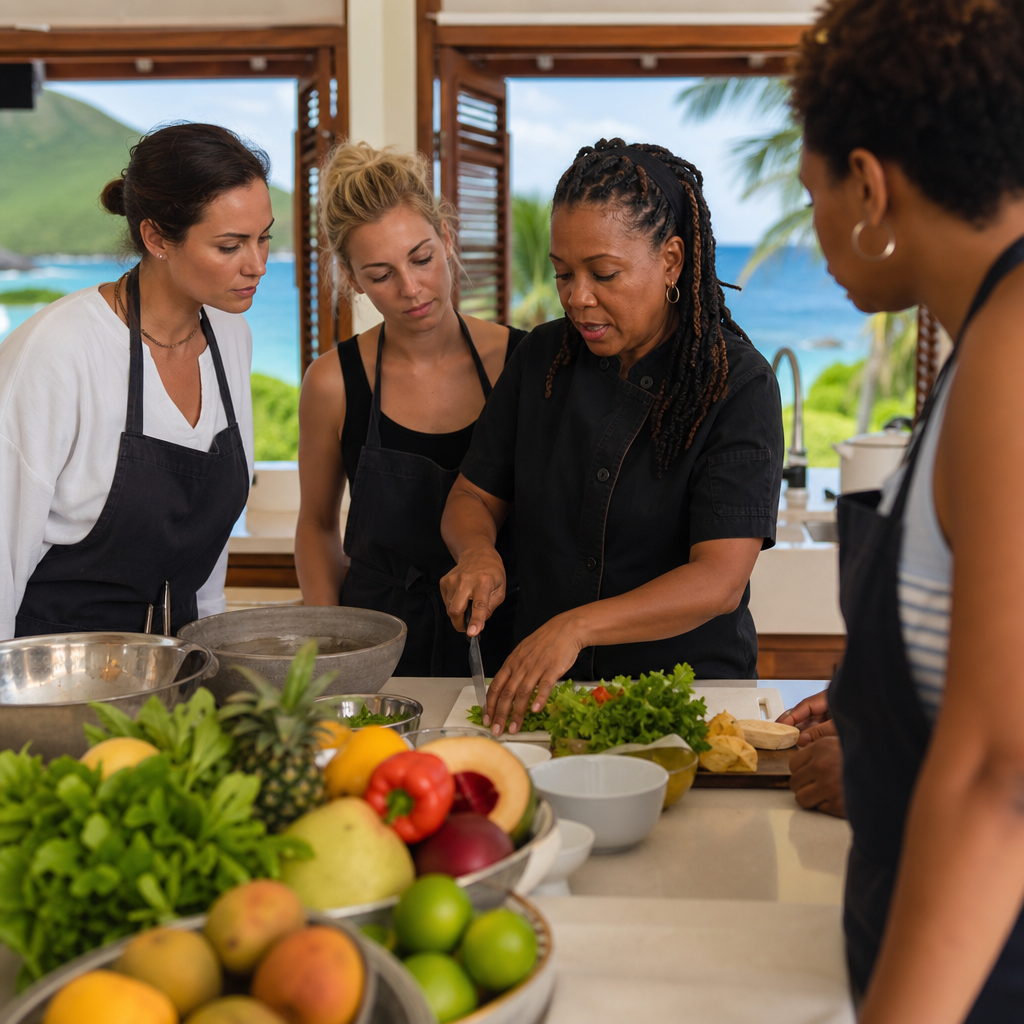
Another defining feature is intergenerational participation. Unlike rigid academic settings, community art classes often welcome multiple age groups. A retired resident experimenting with watercolor may learn alongside a teenager interested in digital-style illustration translated into paint, while a younger child practices basic shapes nearby. That format reflects how creative knowledge often moves in Nevis: socially, informally, and across age lines. It also allows traditional skills, including decorative techniques and heritage motifs, to be passed on in a natural way rather than treated as museum pieces disconnected from daily life.
How these classes encourage local talent
Local talent grows when people receive repeated exposure, useful feedback, and visible proof that improvement is possible. Community art classes supply all three. A child who sketches casually at home may never realize they have strong observational ability until an instructor points out proportion, edge control, or color sensitivity. An adult who once believed art was only for the naturally gifted may discover that technique can be learned through drills, repetition, and guided projects. I have watched hesitant beginners become consistent makers simply because someone took their effort seriously and gave them a framework for practicing.
Encouragement is not just emotional support. It is also the practical design of the class itself. Good programs create early wins, such as a finished postcard painting, a simple clay vessel, or a collaborative mural panel. These small completions matter because they replace intimidation with momentum. From there, instructors can introduce harder concepts like perspective, tonal values, underpainting, glazing, or thematic development. Students begin to identify themselves as artists, even if they are not seeking a career. That shift in identity is one of the strongest predictors of continued participation.
Visibility is another driver. When community classes end with exhibitions in public libraries, school corridors, local events, hotel lobbies, or pop-up markets, learners receive social validation. Their families see progress. Potential buyers see emerging work. Organizers can then connect standout participants to commissions, scholarships, or advanced workshops. In a place like Nevis, where personal networks carry real weight, these public touchpoints help talent move from private interest to recognized contribution.
Cultural preservation and contemporary expression
Community art classes in Nevis do important cultural work because they keep local stories in circulation while allowing new interpretations. Traditional imagery, village landmarks, seascapes, flora, historical figures, emancipation themes, and carnival aesthetics all provide rich visual material. When instructors build assignments around local architecture, fishing life, market scenes, folklore, or ceremonial color palettes, students learn that their own environment is worthy subject matter. That lesson is powerful. It counters the idea that serious art must imitate styles imported from larger markets.
At the same time, the best classes avoid freezing culture in the past. Students should be encouraged to reinterpret heritage using modern methods, abstract forms, graphic approaches, or environmentally focused themes. A project on Hamilton Estate ruins, for example, can become a realistic watercolor, a textured mixed-media piece using sand and paper, or a bold contemporary poster design. A carnival-inspired session can teach pattern, movement, and material layering while still leaving room for personal style. This combination of preservation and experimentation keeps local culture active rather than nostalgic.
There is also a language of place embedded in materials and methods. In island arts education, using locally available fibers, natural textures, recycled glass, driftwood, seed pods, or fabric remnants can connect creativity to environment and resourcefulness. These choices make classes more affordable, but they also express a distinct aesthetic shaped by local conditions. That matters for learners who may later sell work to residents or visitors; originality rooted in place is far more memorable than generic souvenir art.
Social, educational, and economic benefits
The value of community art classes extends well beyond artistic output. Socially, they create low-pressure spaces for interaction across neighborhoods and generations. Educationally, they reinforce observation, patience, sequencing, problem-solving, and fine motor control. For children, art supports confidence and communication, especially for those who are less comfortable in purely academic settings. For adults, it can offer stress relief and a constructive routine. For older residents, classes often provide community connection and mental stimulation that help reduce isolation.
Economically, the long-term impact is often underestimated. Not every participant becomes a full-time artist, but many develop income-adjacent skills. Someone who learns design and surface decoration may create greeting cards, painted accessories, event signage, custom gifts, festival items, or tourism-friendly products. Others may move into teaching assistance, workshop facilitation, set design, or community event production. In small economies, creative income is frequently diversified rather than singular, and community classes are often where that diversification begins.
| Benefit area | How classes help | Example in Nevis context |
|---|---|---|
| Talent development | Builds technique through regular practice and critique | A young painter progresses from sketching at home to exhibiting at a local fair |
| Cultural continuity | Uses heritage themes, local symbols, and traditional craft methods | Students create carnival-inspired pieces based on village celebrations |
| Education | Strengthens focus, planning, and visual communication | School-age learners improve project work and presentation skills |
| Wellbeing | Provides calm, social interaction, and purposeful routine | Retirees attend weekly painting sessions and build new friendships |
| Economic potential | Supports product making, commissions, and creative side income | Craft participants sell handmade items at markets and seasonal events |
Tourism also intersects with this ecosystem. Visitors increasingly seek meaningful local experiences rather than passive sightseeing alone. A well-run art class, whether a one-off batik workshop or a weekly painting session, can become part of the island’s experience economy. If managed carefully, that creates income without displacing residents. The strongest model prioritizes local access first and then layers visitor participation in a way that supports materials, instructor fees, and exhibition opportunities.
What makes a community art program successful
Successful community art classes in Nevis usually share five characteristics: consistency, affordability, capable instruction, visible outcomes, and local partnerships. Consistency matters most. A single workshop can inspire, but recurring sessions build skill. Weekly or biweekly scheduling allows learners to practice, return with questions, and develop discipline. Affordability is equally important. Programs should keep fees low, offer subsidized places, or secure sponsorship from cultural agencies, businesses, schools, or hotels. When classes rely only on participant payments, access narrows quickly.
Instruction quality is the next differentiator. Good artists are not automatically good teachers. Strong facilitators break techniques into manageable steps, demonstrate clearly, set realistic project goals, and adapt to mixed ability levels. They also understand critique. Effective critique is specific and actionable: adjust contrast here, simplify the background there, rotate the composition, seal the surface differently. Generic praise feels nice, but it does not build skill. Instructors should also understand safeguarding and inclusive teaching, especially when classes involve children or vulnerable adults.
Visible outcomes keep programs credible. Exhibitions, open studios, portfolio reviews, mural unveilings, and market days show participants that their effort leads somewhere concrete. Partnerships make these outcomes possible. Schools can provide space, libraries can host displays, businesses can sponsor materials, tourism operators can promote workshops, and local government or cultural departments can support logistics. In my experience, the most resilient arts programs are networked. They do not operate as isolated passion projects; they become part of a community infrastructure.
Common challenges and practical solutions
Despite their benefits, community art classes in Nevis face real constraints. Materials can be expensive, especially imported paints, quality paper, canvases, glazes, and tools. Shipping delays and limited local inventory disrupt planning. Space can also be inconsistent. Community halls may have scheduling conflicts, and outdoor teaching is vulnerable to weather. Another common challenge is retaining participants after the first burst of enthusiasm. Life responsibilities, transport issues, and competing priorities can erode attendance over time.
Practical solutions exist. Programs can reduce cost by standardizing beginner kits, purchasing in bulk, and incorporating recycled or locally sourced materials where appropriate. Instructors can design modules that stand alone, so a participant who misses one week can rejoin without embarrassment. Mobile teaching models also work well on islands: facilitators bring supplies to villages rather than expecting every learner to travel. Simple communication systems, including WhatsApp groups and printed calendars, improve attendance more than many organizers expect.
Evaluation is another overlooked issue. If a program wants funding or public support, it should track useful metrics: attendance, completion rates, age range, number of exhibitions, participant feedback, and any sales or commissions generated. Photographic documentation, with consent, is valuable evidence. So are before-and-after skill examples. Funders and partners respond to proof of impact. The more clearly Nevisian programs can show how classes encourage local talent, the easier it becomes to sustain and expand them.
How residents and visitors can support Nevis’ art class ecosystem
Supporting community art classes in Nevis does not require being an artist. Residents can enroll, encourage children to attend, volunteer with setup, donate supplies, or buy work directly from student showcases. Businesses can sponsor class series, provide wall space for exhibitions, or commission community-made art for offices, guest spaces, and events. Schools and nonprofits can collaborate on holiday camps, after-school sessions, and heritage-themed projects. These practical supports matter more than broad statements about valuing creativity.
Visitors can help responsibly by choosing authentic locally led workshops, paying fair rates, and purchasing directly from makers when possible. They should look for classes that clearly identify the instructor, materials included, session length, and learning outcome. A credible class usually explains what participants will make, who it suits, and how the activity connects to local culture. That transparency benefits everyone. It helps visitors choose well and reinforces standards for quality programming on the island.
Nevis’ community art classes deserve attention because they convert creative interest into skill, pride, and opportunity. They give emerging artists a place to start, returning learners a reason to continue, and communities a way to celebrate their own stories in visual form. As this hub for miscellaneous local life and experiences shows, the strongest arts ecosystems are built from regular participation, trusted teaching, cultural relevance, and public support. If you live on Nevis or plan to visit, seek out a local class, attend a showcase, or support a working artist. Small actions keep local talent growing.
Frequently Asked Questions
1. How do Nevis’ community art classes help encourage local talent?
Nevis’ community art classes encourage local talent by giving people a consistent, welcoming place to explore their creativity without needing formal training or expensive equipment. For many participants, the first benefit is confidence. Children learn that their ideas have value, teens discover healthy ways to express themselves, and adults often reconnect with creative interests they had set aside because of work or family responsibilities. That confidence matters because talent does not grow in isolation; it grows when people have opportunities to practice, receive guidance, and share their work with others.
These classes also create a practical bridge between interest and development. Instead of creativity remaining something informal or private, participants gain access to instruction in drawing, painting, craft, design, and mixed-media techniques that help them improve step by step. In a close-knit place like Nevis, that progress can quickly lead to broader opportunities, including school art projects, village exhibitions, church events, cultural celebrations, and small-business ventures. Community art classes help people see that artistic ability is not just a hobby but something that can become part of local identity, community contribution, and even income generation.
2. Why are community art classes important for preserving culture and local identity in Nevis?
Community art classes play an important role in preserving culture and local identity because they give people a way to document, interpret, and celebrate the stories that shape life in Nevis. Art often reflects everyday experiences that may not always be captured in official records, such as village traditions, family histories, local landscapes, music, festivals, market life, and the influence of schools and churches on community relationships. When these themes appear in paintings, crafts, murals, and collaborative projects, they become part of a living cultural record that can be shared across generations.
These classes also create space for intergenerational learning, which is especially valuable in communities where memory and tradition are passed on through conversation, example, and shared activity. Older residents may bring knowledge of symbols, materials, techniques, and stories that younger artists can reinterpret in fresh ways. At the same time, younger participants often introduce new styles, contemporary design ideas, and digital influences, helping local art remain relevant rather than frozen in the past. In that sense, community art classes do more than teach technique; they strengthen cultural continuity by turning creativity into a community conversation about who Nevisians are, where they come from, and how they want to represent themselves in the future.
3. Who can benefit from community art classes in Nevis?
One of the strongest features of community art classes in Nevis is their accessibility across age groups and backgrounds. Children benefit because art supports imagination, motor skills, observation, patience, and self-expression. Teenagers often benefit in a different way, using art as a constructive outlet during an important stage of personal development. It can help them build discipline, discover interests that may shape future studies or careers, and find a sense of belonging in a positive group setting. For working adults, community classes can provide a meaningful break from routine, reduce stress, and open new creative or entrepreneurial possibilities. Retirees may value the social connection, mental stimulation, and satisfaction that comes from learning new skills or sharing existing ones.
Visiting learners and members of the wider community can benefit as well. Because Nevis has strong social ties through neighborhoods, schools, churches, and local events, art classes often become meeting points where people connect across occupations and generations. That kind of environment makes creative learning less intimidating and more community-centered. Whether someone joins with long-term artistic goals or simply wants to try something new, these classes offer both personal and social value. They help participants feel included, capable, and connected to the island’s creative life.
4. Can community art classes in Nevis create real economic or career opportunities?
Yes, community art classes can create real economic and career opportunities, especially when they are treated as part of a broader local development ecosystem. Artistic skills learned in community settings can lead to practical outcomes such as commissioned portraits, handcrafted items, event decorations, murals, greeting cards, home décor, festival displays, and branded products for local businesses. In a place like Nevis, where entrepreneurship often grows through personal networks and community trust, art classes can serve as an early platform for artists to build visibility and credibility.
Beyond direct sales, these classes can help participants develop habits that matter in creative careers: consistency, attention to detail, presentation, collaboration, and the ability to complete projects on deadline. Students may go on to showcase their work at exhibitions, school functions, village celebrations, markets, or tourism-related spaces. Some may branch into teaching, community projects, or partnerships with cultural organizations. Others may use the skills as a foundation for design, crafts, creative branding, or digital content. Not every participant will pursue art professionally, but community classes make that path more realistic by showing local talent how creativity can connect with business, culture, and public life in tangible ways.
5. What makes Nevis’ community art classes valuable beyond the artwork itself?
The value of Nevis’ community art classes goes well beyond the finished pieces because the real impact is often found in the process of creating together. Art classes encourage focus, patience, problem-solving, and resilience. People learn that mistakes are part of growth, that improvement comes with practice, and that personal expression deserves time and attention. Those lessons are useful far outside the studio. They support emotional well-being, strengthen communication, and help individuals develop a stronger sense of identity and capability.
There is also a deep community benefit. In Nevis, where daily life is shaped by relationships and shared spaces, art classes provide a meaningful setting for connection. They can reduce isolation, encourage mentorship, and create positive social routines around learning and collaboration. Group projects, exhibitions, and class discussions help participants appreciate each other’s perspectives and talents, which strengthens community pride. Over time, this kind of creative participation can contribute to a healthier cultural environment—one where local voices are visible, talent is nurtured early, and artistic expression is recognized as an important part of education, heritage, and community development.